WEEKLY DIGEST OF rc
DAILY MEDITATIONS

June 7, 2026 – Food for Our Spiritual Journey

26-06-07-DM

Solemnity of the Body and Blood of Christ (Corpus Christi)

John 6:51-58

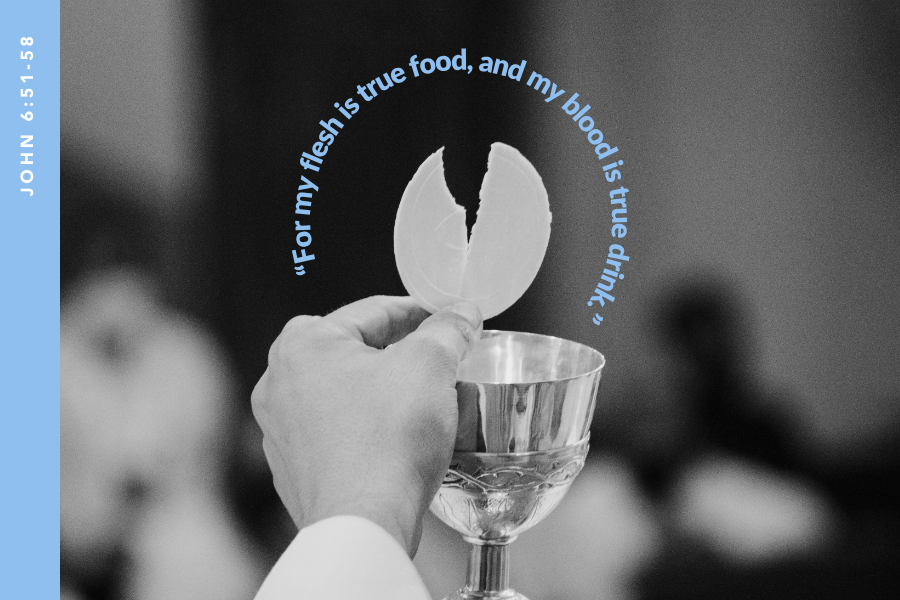
Jesus said to the Jewish crowds: “I am the living bread that came down from heaven; whoever eats this bread will live forever; and the bread that I will give is my flesh for the life of the world.” The Jews quarreled among themselves, saying, “How can this man give us his flesh to eat?” Jesus said to them, “Amen, amen, I say to you, unless you eat the flesh of the Son of Man and drink his blood, you do not have life within you. Whoever eats my flesh and drinks my blood has eternal life, and I will raise him on the last day. For my flesh is true food, and my blood is true drink. Whoever eats my flesh and drinks my blood remains in me and I in him. Just as the living Father sent me and I have life because of the Father, so also the one who feeds on me will have life because of me. This is the bread that came down from heaven. Unlike your ancestors who ate and still died, whoever eats this bread will live forever.”

Opening Prayer: Your goodness, O Lord, surrounds me like the atmosphere surrounds the earth. Your faithfulness is like the mountains, the snow-covered mountains—firm and constant and dependable. Your wisdom is like the ocean, always moving and murmuring, vast and inexhaustible. You are my God, my Father, my Savior. You are my refuge, my fortress, my hiding place. I come to you today to fill my heart with your grace and to praise you with the offering of my heart and mind. Blessed be your name, O Lord, for ever and ever. 

Encountering Christ:

  1. Bread From Heaven: Seven times in today’s Gospel passage Jesus tells us that eating his flesh and drinking his blood is the path to eternal life. What a strange thing to say! In fact, it was so strange that in the next few verses of this Gospel passage St. John explains how many of Jesus’s followers abandoned him that day. Maybe they thought he was crazy. And yet, in a certain sense, they should have understood. Throughout the Old Testament, God was preparing his people for the gift of the Eucharist, the sacrament of Christ’s true presence, the food of angels–as today’s sequence puts it–which is given to us as food for our journey into eternity. Think about it. So many times in the Old Testament food is central to the story. At the very beginning, Adam and Eve committed original sin through eating the forbidden fruit. Then, when God rescued his people from slavery in Egypt, he instructed them to have a ritual meal in which they ate the paschal lamb. While they were journeying through the wilderness, he fed them with manna from heaven—a miraculous food that kept them going on their journey to the promised land. All of these biblical references–and we could mention more–show that communion with Christ through the Eucharist was part of God’s plan for us from the very beginning. Somehow, as human beings who are a mysterious unity of body and spirit, our path to salvation includes this sacramental union with God through consuming the Eucharist. Seven times Jesus emphasizes this truth in today’s Gospel. Seven is the number of completion, of fullness. How much do I emphasize the Eucharist in my own life? How much do I value the communion I receive at Mass? Am I on the same page with Jesus about this mysterious sacramental gift?


  2. The Eucharist and the Mass: The Eucharist comes to us through the Mass. The words of the Mass, especially those of the Eucharistic prayers, make clear what happens at Mass. Mass is the perfect prayer, the perfect act of worship, the re-presentation of Christ’s own sacrifice on Calvary so that we can bring the grace and glory of that sacrifice into the here-and-now of our lives—every single day. Through the Mass, every day and every corner of the world is swept up into the story of salvation. Through the Mass, our own prayers and sacrifices are united to Christ’s perfect prayer and sacrifice and thus enhanced, elevated, and given the power to build up his everlasting Kingdom. And then, during the rite of communion, God responds to the offerings we gave him during the Eucharistic prayer by giving us in return the food of eternal life. When we receive Holy Communion we are receiving sacramental nourishment for our hearts and minds. If we receive Holy Communion worthily–with humility, gratitude, and an awareness of its true nature–our faith, hope, and love are strengthened by that sacrament and we become more like Christ. As St. Augustine put it centuries ago, normal food is transformed into the one who eats it, but the Sacrament of the Eucharist does the contrary: through it we are transformed more and more fully into Christ. How fully do I really understand what happens at Mass? How much have I studied the meaning and the history of the different parts of the Mass? How central a place does the Mass play in my own life and the life of my family? Without the Mass, we would have no access to Christ’s Kingdom, and we would have no Eucharist. The Celebration of the Eucharist at Mass truly is the “source and summit of Christian life” (CCC 1324), and so it should be the same for my life. What can I do to make sure it is?


  3. Christ’s Loving Invasion: Over the centuries, the Holy Spirit gradually guided the Church to an awareness of Christ’s ongoing sacramental presence in the Eucharist. As the Eucharist was reserved after Mass so that Holy Communion could be brought to the sick, we began to realize that we could extend the worship and praise, and the prayers of intercession and supplication, offered to God during the Mass by adoring the Lord in the Eucharist outside of Mass. Eventually churches constructed tabernacles where we could reserve the Blessed Sacrament. Gradually we developed the liturgical practice of Eucharistic exposition, adoration, and benediction. Today, it is impossible to know how many tabernacles there are in the world. So many parish churches, convents and monasteries, oratories and residences of religious orders! In every corner of the world–indeed, in every corner of time and space–Jesus is with us, wanting to accompany us and to be available so that we can come to him in the Eucharist and open our hearts to him. He is drawing the whole world into his Sacred Heart through his silent, respectful, loving, generous presence in countless tabernacles throughout the earth. What does this decision on God’s part tell me about his love and interest in my life? How have I responded to this gift? How would I like to respond from now on?

Conversing with Christ: Your gift of the Eucharist is too marvelous for me to comprehend, Lord! You give yourself to me as supernatural food. You stay with me and invite me to involve you in all that I am and all that I do. You, the Creator and the Redeemer of the universe, are always present in the little tabernacle of my parish church, humbling hoping that I will come and accompany you and let you accompany me. The Eucharistic host is so simple, Lord—small, fragile, so plain and tasteless and undramatic. And that is how you chose to remain with me. You don’t want to overpower me; you want to be with me. You don’t want to enslave me; you want to nourish and encourage me. I believe in your true presence in the Eucharist, Lord, and I bow down before you, amazed at your infinite goodness and wisdom, and full of a sincere desire to live my life as you would have me live it.

Resolution: Lord, today by your grace I will make an extra visit to a chapel or a church where I can be with you in the Eucharist. And I will take time there simply to enjoy your presence and thank you for all the things for which I am grateful. I will let you love me through your Eucharistic presence today, Lord, and I will pray for all those who haven’t yet discovered that you love them.

For Further Reflection: Food for the Journey: A Retreat Guide on the Sacrament of the Eucharist

Fr John Bartunek, LC, is an author, speaker, and Creative Director at RCSpirituality, an online spirituality center providing a variety of resources for spiritual growth.
June 8, 2026 – The Real Path to Fulfillment

26-06-08-DM

Monday of the Tenth Week in Ordinary Time

Matthew 5:1-12

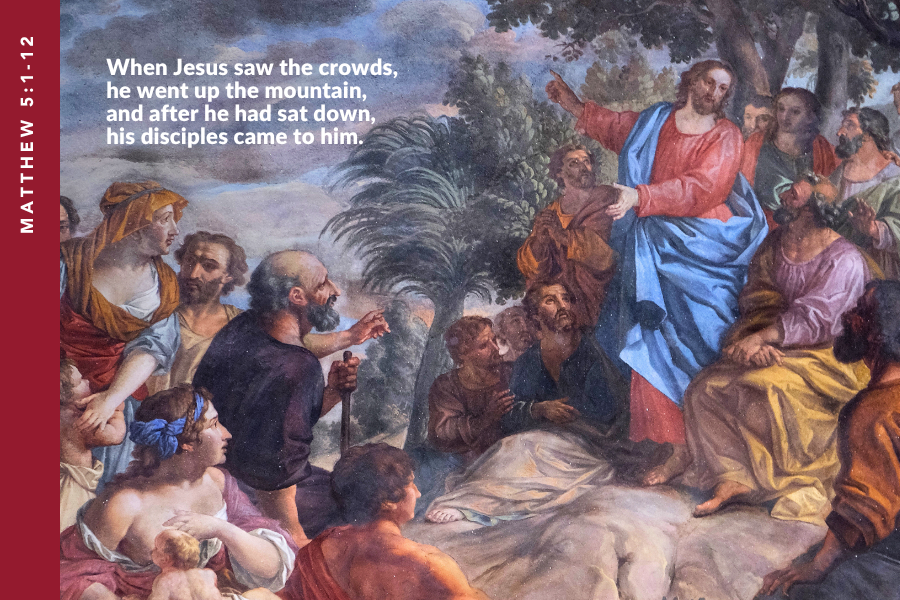
When Jesus saw the crowds, he went up the mountain, and after he had sat down, his disciples came to him. He began to teach them, saying: “Blessed are the poor in spirit, for theirs is the Kingdom of heaven. Blessed are they who mourn, for they will be comforted. Blessed are the meek, for they will inherit the land. Blessed are they who hunger and thirst for righteousness, for they will be satisfied. Blessed are the merciful, for they will be shown mercy. Blessed are the clean of heart, for they will see God. Blessed are the peacemakers, for they will be called children of God. Blessed are they who are persecuted for the sake of righteousness, for theirs is the Kingdom of heaven. Blessed are you when they insult you and persecute you and utter every kind of evil against you falsely because of me. Rejoice and be glad, for your reward will be great in heaven. Thus they persecuted the prophets who were before you.”

Opening Prayer: Dear Lord, I turn to you and to your words in the Gospel because I believe in you. I believe that you want what is best for me and are able to lead and guide me along the path of spiritual growth and true happiness. I am familiar with these words of the Gospel, but I know you always have something more to say to me, and I always need to hear what you have to say. Open my mind and my heart to courageously welcome the grace you want to give me today.

Encountering Christ:

  1. Christ’s Core Teachings: Today we begin our annual review of Jesus’ Sermon on the Mount, which St. Matthew presents to us in Chapters 5-7 of his Gospel. Most biblical scholars agree that what St. Matthew combines into one long sermon is most likely a summary of many different discourses Jesus gave repeatedly throughout the years of his public ministry. In other words, the Sermon on the Mount contains the key lessons Jesus wanted to give through his teaching. He reinforced these lessons through his other activities, especially his miracles and his Passion, as well as through the teaching he gave with parables—most of those appear later in St. Matthew’s Gospel. The Church is so wise to have us go through these core teachings of Our Lord every year as we leave behind the liturgical season of Easter and get back into Ordinary Time. As human beings living in a fallen world, burdened with our own fallen human nature, we constantly need to be reminded of what is essential for Christian living. We need to keep going back to the basics, just like athletes who drill the fundamentals at the beginning of every new training season. How open am I to hear what God wants to say to me in this particular season of my life through these core teachings of Jesus Christ?


  2. What Jesus Wants for Us: The very first word Jesus uses at the beginning of this summary of his core teachings is “blessed.” The Greek word, makarios, implies a state of being fully and unassailably prosperous. It means the kind of happiness that comes from living life to the full, from having all that we need to feel fully alive. That’s the first word Jesus speaks as he begins revealing his message about Christian living. This means that his most ardent desire for each one of us, for every one of his followers and potential followers, is for us to live life to the full, to discover the path of meaning and fulfillment that we all yearn for. Human history is littered with countless philosophies and religions that have desperately, and unsuccessfully, searched for the secret to the truly happy life. Jesus knows that our deepest desire is precisely that—to live life to the full, to find the meaning we were created to enjoy. By beginning his Sermon on the Mount with the world “blessed,” and by repeating it nine times, he is opening his own heart to us and saying, as St. John the Evangelist puts it later in his Gospel: “I came so that they might have life and have it more abundantly” (Jn 10:10). That’s what Jesus wants for us— everything he taught, did, and lived, was to help us achieve that goal. Is that how I see Our Lord?


  3. A Counter-Cultural Path: These first verses of the Sermon on the Mount are known as the “Beatitudes,” because the word in Latin for “blessed” is “beatus.” Each Beatitude contains a behavior and a reward. Jesus is teaching us that how we choose to behave in this world has consequences. If we choose to behave in harmony with God’s design for human nature, we will experience more and more the meaning and fulfillment we were created to experience. The Beatitudes are the initial presentation of these behaviors, this way of life, and the rest of the Sermon on the Mount explains them and illustrates them. And they need to be explained, because they are not popular behaviors from the world’s perspective. So much of our popular culture promotes the contrary behaviors: Instead of poverty of spirit, the world invites us to seek happiness in material wealth and popularity; instead of being sorrowful in the face of sin and its horrible consequences, the world invites us to delight in self-indulgence; instead of being merciful, the world invites us to foster revenge and resentment, to put down others and reject them instead of forgiving them. The Beatitudes, and the whole Sermon on the Mount for that matter, show clearly that being a follower of Christ is a counter-cultural choice that takes courage, self-sacrifice, and perseverance. In other words, it can be hard. But Jesus invites us to “rejoice and be glad” when we experience that difficulty, because it is a sign we are on the right path and moving in the right direction, and that’s what really matters.

Conversing with Christ: Lord Jesus, I can hear your voice through these words of the Gospel. I can hear the love and the eagerness with which you reveal this path of a meaningful life. I can see the light in your eyes, a light filled with hope that I will truly listen to your teaching and do my part to put it into practice in my life. But I also know how easy it is for me to let the noise of the world drown out your voice, and to let the glitter of the world obscure the light of your eyes. Help me, Lord, to “hunger and thirst for righteousness,” for everything that you desire for me. Help me to follow the path of the Beatitudes, the path of true joy and meaning.

Resolution: Lord, today by your grace I will respond to moments of difficulty, sadness, or frustration by calling to mind the first word of your Sermon on the Mount and remembering what it tells me about your desire for my life: “Blessed”—a life lived to the full.

For Further Reflection: Blessed Are the Poor in Spirit: A Retreat Guide on the First Beatitude

Fr John Bartunek, LC, is an author, speaker, and Creative Director at RCSpirituality, an online spirituality center providing a variety of resources for spiritual growth.
June 9, 2026 – Eternal Repercussions

26-06-09-DM

Tuesday of the Tenth Week in Ordinary Time

Matthew 5:13-16

Jesus said to his disciples: “You are the salt of the earth. But if salt loses its taste, with what can it be seasoned? It is no longer good for anything but to be thrown out and trampled underfoot. You are the light of the world. A city set on a mountain cannot be hidden. Nor do they light a lamp and then put it under a bushel basket; it is set on a lampstand, where it gives light to all in the house. Just so, your light must shine before others, that they may see your good deeds and glorify your heavenly Father.”

Opening Prayer: I believe that you are here with me now, Lord. I believe that you are looking upon me with love, that you desire to be with me. I too desire to be with you. I want to offer you my time and presence as an act of love and worship. I need your grace, Lord, and you deserve my praise. Please send your Holy Spirit to quiet my soul so that I can hear what you want to tell me today, and to strengthen me so that I can respond to your words with courage and generosity.

Encountering Christ:

  1. Salt of the Earth: In Jesus’ time, refrigeration had not yet been invented. The most common way to preserve meat and other perishables was through using salt. Salt not only gave flavor to food, but also preserved it. As Jesus continues unfolding his core teachings at the beginning of the Sermon on the Mount, he tells us that we, as his followers, are meant to be—are called and equipped to be—the salt of the world. Filled with his truth and grace, we bring zest and meaning to life wherever we go. And yet, Jesus warns us that it is possible for us to lose sight of this mission, of this identity we have in him. When salt loses its taste, it becomes utterly useless. Jesus is pointing out that what really makes our life worth living is our Christian identity and mission. If we let that get watered down, if we compromise that, we lose everything that really matters. Is my Christian identity and mission the central reality of my life, the force behind what I think, say, and do? Or have I perhaps relegated my faith to one sector of my life? What helps me keep my saltiness? What influences in my life tend to weaken and water down my Christian identity?


  1. Light of the World: Original sin disrupted God’s plan for this world. Evil, suffering, death—these were not part of God’s design for the human family. Original sin obscured the human mind and darkened the human heart. Jesus came to roll back that darkness and redeem us from sin. When he reveals to his disciples that they—that we—are the “light of the world,” he is entrusting us with the mission to spread this redemption. The candlelight service on the Easter Vigil, when the light from the Easter candle is passed on to every person in the church, one by one, until the whole space is illuminated, is a symbol for the Church’s mission in the world as a whole. Each one of us receives the light of Christ—

what he has revealed as true about God, the world, and human happiness, as well as the grace to live in harmony with that revelation—and is called and equipped to pass that light onto others. Does my life shine with the light of Christ? What inhibits it from shining? What helps it shine more? In what ways am I spreading that light to others? In what ways is God asking me to spread that light?


  1. Our Mission Matters: God didn’t have to make us partners in his redemption. He could have reserved to himself all the work involved in his plan of salvation. But he didn’t. He chose to make us his coworkers, his ambassadors, his companions in the great adventure of building up an eternal Kingdom. Why? God created human nature. He knows the needs and desires of our hearts more deeply than we ourselves know them. And he knows that one of our deepest needs is for authentic We are spiritual beings, even though we live in a material world. And so merely material kingdoms—material achievements, pleasures, accumulations—will neversatisfy us. By inviting us to be partners in building up his eternal Kingdom, he actually opens up the possibility for our decisions and actions in this world to impact the world to come. That can give real, everlasting meaning to our lives here on earth. When we faithfully engage in our mission to build up Christ’s Kingdom, to be the salt of the earth and the light of the world, we are doing things that will reverberate into eternity. That is something that can satisfy the desires of our heart.

Conversing with Christ: Thank you, Lord, for inviting me to be your coworker. Thank you for giving me the grace to be light and salt for this needy world. Thank you for giving true, lasting meaning to my life. So often I get caught up in the demands of life on earth and lose sight of the bigger picture. Help me to know how to be salt and light in the midst of my daily activities. Give me a heart like yours, which was always looking for ways to bring people closer to God and put them on the road to eternal life. I want to live my life as your ambassador. I want to invest my time, talent, and treasure in building up a Kingdom that will have no end.

Resolution: Lord, today by your grace I will consciously embrace my call to be salt and light for the world by proactively performing some kind of work of mercy, either a corporal work of mercy (feeding the hungry, clothing the naked, housing the homeless, visiting the sick, visiting the imprisoned, burying the dead, giving alms to the poor) or a spiritual work of mercy (counseling the doubtful, comforting the sorrowful, instructing the ignorant, admonishing the sinner, forgiving injuries, bearing wrongs patiently, praying for the living and the dead).

For Further Reflection: Read Go! 30 Meditations on How Best to Love Your Neighbor as Yourself.

Fr John Bartunek, LC, is an author, speaker, and Creative Director at RCSpirituality, an online spirituality center providing a variety of resources for spiritual growth.
June 10, 2026 – God’s Consistency

26-06-10-DM

Wednesday of the Tenth Week in Ordinary Time

Matthew 5:17-19

Jesus said to his disciples: “Do not think that I have come to abolish the law or the prophets. I have come not to abolish but to fulfill. Amen, I say to you, until heaven and earth pass away, not the smallest letter or the smallest part of a letter will pass from the law, until all things have taken place. Therefore, whoever breaks one of the least of these commandments and teaches others to do so will be called least in the Kingdom of heaven. But whoever obeys and teaches these commandments will be called greatest in the Kingdom of heaven.”

Opening Prayer: I come before you today, Lord, feeling my weakness and my need for your grace and mercy. I turn towards you, confidently praying with the psalm: “You will show me the path to life, fullness of joys in your presence, the delights at your right hand forever” (Ps 16:11). This is what I desire. I want to stay close to you, to obey your teaching, to experience your love for me. Grant me your grace, Lord, during this time of prayer, so that I can know you better and experience your goodness afresh.

Encountering Christ:

  1. God Knows What He Is Doing: This history of salvation began from the moment after original sin and will continue until Jesus comes again to judge the living and the dead. God has been faithfully executing his plan of salvation throughout the history of the world. All that he did throughout the Old Testament was his wise and providential preparation for the coming of Jesus, and all that the Holy Spirit continues to do through the Church is the faithful unfolding of what Jesus began. This is what Jesus wants us to understand when he tells us: “I have not come to abolish the law or the prophets… but to fulfill them.” The Catechism reminds us that “The New Testament lies hidden in the Old and the Old Testament is unveiled in the New” (CCC 129). If we want to continue to get to know God and his plan for our lives, we can do so by digging into the whole Bible and seeing how God revealed himself through his words and actions in every period of history. Discovering the connections between all the different books of the Bible can help us know Christ better and grow in the wisdom that brings peace and joy to our souls.


  2. God’s Power and Faithfulness: The teaching of Jesus brings the teaching of the Old Testament to its fullness. The first commandment in the Old Testament’s Ten Commandments was the commandment to worship only the one, true God, to avoid worshipping idols and false gods. This is the commandment being violated by King Ahab and many of the Israelites at the time of the prophet Elijah. Many of them had begun to worship foreign gods. They continued to worship the Lord, but they would also worship these other gods—kind of hedging their bets. Elijah challenges them to make a decision: either be true to their identity as Israelites, God’s chosen people, or abandon that identity, but don’t sit on the fence. And so he throws down the gauntlet to the prophets of the false gods. God works a miracle in response to Elijah’s prayers, exposing the pagan gods as false and thus rekindling his people’s faith. God’s power and faithfulness come out vividly in that Old Testament encounter. God’s power and faithfulness come out vividly in the life, death, and Resurrection of Jesus as well. And it is God’s power and faithfulness, his wisdom and love, that ought to motivate our obedience to his commandments. God knows what we need; he knows how we can live the meaningful life we long to live; all of his teachings and his commandments are meant to guide us along that path. Today Jesus invites us to renew our faith in these God-given means.


  3. Subtle Idolatry: Idolatry, the violation of the very first commandment, can take many different forms. Only God, only Jesus, can “show us the path of life” (Ps 16:11). Only God can bring us true happiness in this life and in the life to come. Any time we seek that happiness from any other source, we are falling into idolatry—we are putting something else in the place of God. We may think that money, or success, or popularity will fill our hearts with the happiness we yearn for. But they can’t. And when we seek from them what only God can give, we “multiply our sorrows” (Ps 16:4). This is as true today as it was at the time of Elijah and at the time of Jesus. Where am I seeking happiness? What do I think will bring me interior peace, satisfaction, fulfillment? Sometimes, we can begin to trick ourselves, saying that Jesus is in the center of our lives while starting to crowd him out with little idols. We can always tell where our real hopes and priorities are by looking at our calendar and our checkbook. If Jesus isn’t central in those two telltale areas of our daily lives, some idols are probably creeping into our hearts and “multiplying our sorrows.” Where are you, Jesus, in my calendar? Where are you in my checkbook? Where do you want to be?

Conversing with Christ: Lord, you gave us your teaching and your commandments for a reason—because you want us to make good choices with our precious gift of freedom. You want us to find “the path of life” that we yearn to find. You have not hidden your wisdom and your truth; you have continued to reveal them to us, for our good. I want to follow your commandments. I want to believe in your goodness. I want to help others follow your commandments. But life seems so complicated sometimes. I am not always sure what you want me to do, or how you want me to do it. Keep teaching me, Lord; keep instructing me; keep guiding me. “Keep me safe, O God; you are my hope.”

Resolution: Lord, today by your grace I will examine my calendar and my checkbook to see how my relationship with God is reflected in the way I use my time and my money.

Fr John Bartunek, LC, is an author, speaker, and Creative Director at RCSpirituality, an online spirituality center providing a variety of resources for spiritual growth.
June 11, 2026 – The Strength of Meekness

26-06-11-DM

Memorial of St. Barnabas, Apostle

Matthew 5:20-26

Jesus said to his disciples: “I tell you, unless your righteousness surpasses that of the scribes and Pharisees, you will not enter into the Kingdom of heaven. You have heard that it was said to your ancestors, ‘You shall not kill; and whoever kills will be liable to judgment.’ But I say to you, whoever is angry with his brother will be liable to judgment, and whoever says to his brother, ‘Raqa,’ will be answerable to the Sanhedrin, and whoever says, ‘You fool,’ will be liable to fiery Gehenna. Therefore, if you bring your gift to the altar, and there recall that your brother has anything against you, leave your gift there at the altar, go first and be reconciled with your brother, and then come and offer your gift. Settle with your opponent quickly while on the way to court with him. Otherwise your opponent will hand you over to the judge, and the judge will hand you over to the guard, and you will be thrown into prison. Amen, I say to you, you will not be released until you have paid the last penny.”

Opening Prayer: I come before you today, Lord, full of a deep desire to know you better and to let your grace and truth transform my life. I know I am just a pilgrim journeying through this earth on my way to the Father’s house. But this journey is often difficult and confusing, even painful. I need your help, your healing, your protection. I turn to you exercising my faith in your presence and your goodness. Confident in your own promise that whoever asks will receive, I humbly ask you to grant me a fresh outpouring of your Holy Spirit through my prayer today.

Encountering Christ:

  1. Becoming a Peacemaker: Three of the Beatitudes have to do explicitly with how we treat other people. In the verses from today’s Gospel, Jesus expounds on them as he develops the meaning behind the fifth commandment, “Thou shalt not kill.” Jesus explains that we are meant to live in a profound communion with each other. Strife and conflict between people are not part of God’s original plan for the human family. Created in God’s own image and likeness, we are called to mirror in our relationships with each other the communion between the three persons of the Trinity. Every human being shares the same human dignity, and Jesus died for each one. Whenever we let resentment or anger close our hearts to another person, we are contradicting our very nature as children of God. Practically speaking, we cannot dictate how other people will treat us or respond to us, but we certainly can control our own attitudes and behaviors towards them. This is what Jesus challenges us to be aware of in today’s Gospel. Seeking reconciliation and harmony in response to life’s inevitable conflicts is one way we become the “peacemakers” Jesus praises in the Beatitudes.


  2. Meekness and Mercy: Jesus warns us about anger in this passage. Anger can be a healthy response to injustice, as in the case of Jesus himself when he encountered the money-changers in the Temple. But often anger flows from self-centeredness rather than righteousness, and even righteous anger can lead us to act in destructive rather than constructive ways. Meekness, praised by Jesus in the third Beatitude, is the virtue that helps us govern feelings of anger. To be meek is to be strong enough to channel anger in positive and constructive directions. Meekness means never harming our neighbor, never lashing out at others in irrational violence, even when they may be in the wrong. Mercy, praised by Jesus in the fifth Beatitude, goes even one step further, forgiving those who have offended us. Jesus will speak about mercy again later in the Sermon on the Mount, but even in this passage we see how important it is for us to keep our hearts open towards others, always and everywhere.


  3. The Truth About Our Neighbor: Jesus emphasizes the consequences of our actions in this passage. If we fail to treat others with respect and goodness, we will be “liable to judgment” and “liable to fiery Gehenna” and “thrown into prison.” By sinning against other people, we actually damage ourselves. A mysterious connection links all people to each other, and so when we harm others, we also harm ourselves. This truth comes across clearly in the prayer Jesus taught us, where we address God as “Our Father.” Every human being is created by God and called to live in communion with him. Every human being is our brother or sister. We are all united in God’s eyes, and by the fact of sharing the same human nature and the same destiny. When we fail to live out this truth, we belittle ourselves as well as others, and we distance ourselves from God. Jesus’ vivid language and concrete comparisons in this passage are trying to bring this lesson home to us: We must always seek to build up other people, because we are all in the same boat and called to fellowship in the same family of God. To sin against our neighbor, then, is to turn away from life’s true destination.

Conversing with Christ: Dear Lord, you never give up on anyone. You came to offer your friendship and grace to every single person. Your heart is universal. And mine? You know how hard it is for me to overcome my prejudices and moods. You know how easy it is for me to give in to resentment and foster division. So often people misunderstand me, and their flaws and faults cause me problems and damage. How can I be meek and merciful in the face of all that? I don’t know, Lord, but you know. Please teach me to treat everyone with respect. Teach me to manage my own emotions with the courage of meekness. Make my heart, O Lord, more and more like yours every single day.

Resolution: Lord, today by your grace I will reach out to someone with whom I have had a falling out and try to do my part to reconcile with them.

For Further Reflection: Messenger of Mercy: A Retreat Guide on St. Paul

Fr John Bartunek, LC, is an author, speaker, and Creative Director at RCSpirituality, an online spirituality center providing a variety of resources for spiritual growth.
June 12, 2026 – The Yoke That Frees

26-06-12-DM

Solemnity of the Most Sacred Heart of Jesus

Matthew 11:25-30

At that time Jesus exclaimed: “I give praise to you, Father, Lord of heaven and earth, for although you have hidden these things from the wise and the learned you have revealed them to little ones. Yes, Father, such has been your gracious will. All things have been handed over to me by my Father. No one knows the Son except the Father, and no one knows the Father except the Son and anyone to whom the Son wishes to reveal him. Come to me, all you who labor and are burdened, and I will give you rest. Take my yoke upon you and learn from me, for I am meek and humble of heart; and you will find rest for yourselves. For my yoke is easy, and my burden light.”

Opening Prayer: On this day when you remind us of the love in your Sacred Heart, O Lord, I come before you eager to be reminded. I believe in your infinite goodness and in your deep, personal interest in my life. I want to come to you more fully today, to find rest for my soul in a deeper experience of your grace. Open my mind to receive the grace you have in store for me today, Lord, and receive the offering of my life for your glory and for the advance of your everlasting Kingdom.

Encountering Christ:

  1. Jesus Rejoices: Jesus rejoices at the beginning of today’s Gospel passage because at least some of his followers have trusted him enough to accept his teaching and his grace. Many refused—especially the well-educated and the powerful. But many of those who were humble, maybe not so well instructed, maybe not so popular and influential—many of “the little ones” accepted the gift of friendship with God that Jesus came to the world to offer all of us. And nothing fills Jesus with more joy than when we accept his gift of friendship by trustfully believing in what he taught and following where he leads. It’s interesting to think about that: Jesus himself, the Word of God, the Second Person of the Holy Trinity experiences joy or sadness at our response to his invitations. This is perhaps the most striking thing about the revelations of the Sacred Heart. When Jesus revealed his heart to St. Margaret Mary back in the seventeenth century, it was encircled by thorns. Whenever someone says no to Jesus, whenever someone refuses to accept his gifts, whenever someone damages themselves and others by choosing to sin, it hurts Jesus. He truly cares. He cares more deeply than we can imagine. How firmly do I believe that? How real is that for me?


  2. I Am Chosen: In the first reading for today’s Mass, God reminds us through the words of Moses that “the Lord set his heart on you and chose you.” We matter to God, just because of who we are. He has “set his heart” on me. He has chosen This is true. This has happened. All the symbols involved in the rite of baptism reverberate with this personal, wild love God has for each of us personally. As the priest sprinkles the baptismal water on the person being baptized, he pronounces the person’s name. He anoints the person on the forehead and the chest, blessing the person’s lips and ears. The person being baptized is given a new garment, a white garment. The person is given godparents and a candle lit from the Easter Candle. The whole ceremony rejoices in this person being welcomed and embraced into God’s own family, chosen to participate fully in the new life of Christ and even to share in Christ’s own mission. God didn’t have to do any of this. He didn’t have to create us. He didn’t have to redeem us. He doesn’t have to reach out to us, to reveal himself to us, to walk with us. He chooses to. We matter to him. Going back to the words of Moses in today’s first reading, we need to courageously and humbly apply them to ourselves, to ask for the grace to see ourselves as God sees us: “You are a people holy to the Lord, your God… the Lord set his heart on you and chose you…” (Deut 7:6-7). I believe, Lord—help my unbelief!


  3. Resting in the Lord: Jesus’ invitation at the end of today’s Gospel passage includes some of the most comforting words in all of sacred Scripture: “Come to me, all you who labor and are burdened, and I will give you rest. Take my yoke upon you and learn from me, for I am meek and humble of heart; and you will find rest for yourselves. For my yoke is easy, and my burden light.” Jesus wants to journey with us, right beside us—when two people are yoked together they are united in all they do; they are never alone and never have to carry their burdens by themselves. Jesus knows that our lives in this fallen world are hard, with the weight of our own fallen nature always pressing down upon us. If we trust him enough to repent from our self-centered ways and follow him—obeying his commandments and seeking to “remain in his love,” as the second reading puts it—our lives truly will change. They will be transformed by the fire of his love, of his Spirit, symbolized in the Sacred Heart revelations by the flames reaching out from Our Lord’s heart. Fire transforms what it comes into contact with, making it like itself by setting it aflame. When we trust Jesus enough to allow him to come into contact with every corner of our lives, we are transformed by him, become more like him, filled with his own Spirit and wisdom and courage and goodness. And that’s when our burdens also are transformed. They become places of redemption. That’s when our weariness is transformed. It is filled with the joy of hope that comes from knowing that we are heard, understood, valued, and accompanied.

Conversing with Christ: How can I come to you, Lord? Teach me. How can I take your yoke upon me? Show me, because I truly yearn to walk by your side, in friendship with you, every single moment of my life. I believe in your care for me. I don’t fully understand how you can transform my burdens and give me rest. But I trust in you. I just need you to show me how to believe in you more firmly, how to follow you more courageously, how to let your heart set mine on fire with the love of your Holy Spirit.

Resolution: Lord, today by your grace I will make a special visit to a place with the Eucharist reserved in a tabernacle, and sit quietly with you, trying to silence the noise in my mind and heart so that I can simply give you the joy of receiving the love you have for me.

For Further Reflection: Fire and Thorns: A Retreat Guide on the Sacred Heart of Jesus

Fr John Bartunek, LC, is an author, speaker, and Creative Director at RCSpirituality, an online spirituality center providing a variety of resources for spiritual growth.

June 13, 2026 – A Powerful Gift

26-06-13-DM

Memorial of the Immaculate Heart of Mary

Luke 2:41-51

Each year Jesus’ parents went to Jerusalem for the feast of Passover, and when he was twelve years old, they went up according to festival custom. After they had completed its days, as they were returning, the boy Jesus remained behind in Jerusalem, but his parents did not know it. Thinking that he was in the caravan, they journeyed for a day and looked for him among their relatives and acquaintances, but not finding him, they returned to Jerusalem to look for him. After three days they found him in the temple, sitting in the midst of the teachers, listening to them and asking them questions, and all who heard him were astounded at his understanding and his answers. When his parents saw him, they were astonished, and his mother said to him, “Son, why have you done this to us? Your father and I have been looking for you with great anxiety.” And he said to them, “Why were you looking for me? Did you not know that I must be in my Father’s house?” But they did not understand what he said to them. He went down with them and came to Nazareth, and was obedient to them; and his mother kept all these things in her heart.

Opening Prayer: I believe in you, Lord, because you are truth itself. I hope in you, because you are infinite mercy and are faithful to your promises. I love you, because you are infinitely lovable. I need your grace, and as I come into your presence I thank you ahead of time for whatever grace you wish to give me today. Help me to recognize it, receive it, and respond generously to it.

Encountering Christ:

  1. Responding With Faith: Yesterday we celebrated Jesus’ Sacred Heart, the eloquent and powerful revelation of just how thoroughly and passionately God loves us. Today we celebrate Mary’s Immaculate Heart, the inspiring model of how we as human beings can respond to God’s love. Mary’s experiences with Christ were not always easy to endure or understand. Losing him in the Temple, as today’s Gospel passage shows, filled her with “great anxiety.” Her experience on Calvary, watching her son be rejected and crucified, filled her with great sorrow—usually symbolized in images of the Immaculate Heart by a sword piercing Mary’s heart. God’s ways are not our ways, and even for the Blessed Virgin Mary, who had been preserved by God’s grace from the effects of original sin, being faithful to God’s will in her life was hard. It was risky. It was at times confusing. But through it all, she continued to anchor her life firmly and definitively on the rock foundation of her faith. This is why St. Elizabeth was able to say to Mary, “Blessed are you who believed that what was spoken to you by the Lord would be fulfilled” (Lk 1:45). How do I respond to the challenging, confusing, painful circumstances of my life? How healthy is my faith?


  2. Learning to Be Contemplative: Artistic renditions of Mary’s Immaculate Heart usually show her heart encircled by blooming roses. A flower in bloom is open to receiving the light and warmth of the sun and the moisture of life-giving rain. This is why such flowers traditionally symbolize openness to God’s grace. And that was one of Mary’s special characteristics. She was “full of grace” and continued to be open to God’s action in her life. This comes across beautifully in the last line of today’s Gospel passage: “… and his mother kept all these things in her heart.” The Greek word for “kept” is “diaterei.” It has connotations of taking care of something attentively, preserving and storing it up as valuable, even treasuring it. Mary’s heart was a place where she did all those things. It was a place of encountering God and contemplating God’s works and actions with that kind of attention and affection. Her heart was like the rich soil Jesus described in his parable of the sower—soil ready to welcome and nourish the seeds God wants to plant there. Here too Mary teaches us about following God; she shares her motherly wisdom. We all must learn to be contemplative, to keep our hearts and minds open to God’s action and give ourselves time to absorb and be enriched by all that he gives us. In a fast-paced, frenetic, noisy world like today’s, this is harder than ever. But if we want our Christian lives to grow and flourish, we have to face that challenge. How do I carve out time and space for quiet contemplation of God’s goodness and action in my life? How can I become more contemplative even in the midst of my activity?


  3. A Presence We Need: Mary not only instructs us by modeling how to live the Christian life. She also accompanies and intercedes for us. She is meant to be a presence in our life. She is, as the Catechism puts it, “a mother to us in the order of grace” (CCC 968). Throughout the history of the Church Mary has made her presence felt in myriad ways: her many apparitions through the centuries; her feast days in the liturgy; inspiring Marian images; devotional practices like the rosary. In images of the Immaculate Heart this loving, grace-filled presence is symbolized by the living flames burning from her heart. In our increasingly post-Christian culture, motherhood and the life-giving genius of authentic femininity is becoming as sidelined as fatherhood and authentic masculinity. God gave us Mary’s presence because he knew we would need it, and we need it more than ever today. We don’t worship Mary as if she were some kind of divinity, as some critics of Catholicism claim we do. Rather, we look to her spiritually as a beacon of hope, a model of virtue, and a caring mother—we look to her now, in our lives as God’s children, just the way Jesus looked at her when he was a child in Nazareth. At least, we are invited and called to do so.

Conversing with Christ: Lord, I know you didn’t do anything by mistake, and I know that through the Holy Spirit you have continued to guide your Church in every age. So the presence of your Mother in every corner of our Catholic lives is something you want for us—for me. Thank you for truly making yourself my brother and inviting me into your family. Thank you for working such marvels of grace in Mary, your mother. And thank you for giving her to me as my mother in the order of grace. Help me to value her and learn to relate to her in my life the way you want me to.

Resolution: Lord, today by your grace I will learn something new about the Blessed Virgin Mary, and I will put one of my favorite images of her in a place where I can frequently see it.

For Further Reflection: The Fire and the Rose: A Do-It-Yourself Retreat Guide on the Immaculate Heart of Mary

Fr John Bartunek, LC, is an author, speaker, and Creative Director at RCSpirituality, an online spirituality center providing a variety of resources for spiritual growth.
June 14, 2026 – Time and Talents

26-06-14-DM

Eleventh Sunday in Ordinary Time

Matthew 9:36 – 10:8

At the sight of the crowds, Jesus’ heart was moved with pity for them because they were troubled and abandoned, like sheep without a shepherd. Then he said to his disciples, “The harvest is abundant but the laborers are few; so ask the master of the harvest to send out laborers for his harvest.” Then he summoned his twelve disciples and gave them authority over unclean spirits to drive them out and to cure every disease and every illness. The names of the twelve apostles are these: first, Simon called Peter, and his brother Andrew; James, the son of Zebedee, and his brother John; Philip and Bartholomew, Thomas and Matthew the tax collector; James, the son of Alphaeus, and Thaddeus; Simon from Cana, and Judas Iscariot who betrayed him. Jesus sent out these twelve after instructing them thus, “Do not go into pagan territory or enter a Samaritan town. Go rather to the lost sheep of the house of Israel. As you go, make this proclamation: ‘The kingdom of heaven is at hand.’ Cure the sick, raise the dead, cleanse lepers, drive out demons. Without cost you have received; without cost you are to give.”

Opening Prayer: Lord, I believe in you. I believe that you love me, that you are close by my side and that you will be walking with me throughout this day. I trust in you, Lord. I trust you more than I trust myself, because you are infinitely good and all-powerful. I love you, Jesus. I love you because you died on the cross for me, to save me.

Petition: Lord, help me to maximize the use of the talents you have given me.

Encountering Christ:

  1. “Sheep Without a Shepherd”: Many people suffer because no one is there to assist them. They are abandoned and left to fend for themselves. Many times, perhaps, Jesus’ words are forgotten: “Whatever you did for one of these least brothers of mine, you did for me” (Mt 25:40). Our own lethargy or omission can become the cause of the suffering of others. It is easy to think that it is up to priests and consecrated persons to provide for the spiritual and material needs of everyone. However, our neighbor is not just the responsibility of an ecclesial institution; he is also our responsibility. If we truly want to be who we say we are—Catholics—then we have to practice charity. “Charity is the greatest social commandment. It respects others and their rights. It requires the practice of justice, and it alone makes us capable of it. Charity inspires a life of self-giving” (CCC 1889).


  2. “The Kingdom of Heaven Is at Hand”: It is easy to get caught up in our daily activities and lose sight of what matters in life. It is easy for us to think that the Kingdom of heaven will come at a later time, like the end of the world. However, the Kingdom of heaven has arrived with Christ’s arrival, and it is now. Christ came to proclaim that his Kingdom is already among us. As Christians, we are the presence of the Kingdom in this world, the leaven that has to transform it. Not only do we have to help ourselves get into the Kingdom, but we have a duty to remind our brother of it as well, and help him get there.


  3. “Without Cost You Have Received; Without Cost You Are to Give”: God has given each of us talents to be used not just for ourselves, but for others. When we finish our life on earth, he will ask us, “What did you do with the talents I gave you? Your faith, your baptism, the sacraments, your family, your intelligence, your talents, your time…?” We are merely stewards of God’s gifts; but it is up to us to make the most of them during the limited time we have on this earth—for our own good and the good of others. 

Conversation with Christ: Lord, I want to use the talents you have given me as you want and for as long as you want. I know that they are not mine to use as I please. I know my time to use them is short, so help me to use them well.

Resolution: I will take action, in some specific way, to use my time and talents better, especially in order to help someone in need.

For Further Reflection: The Faithful Steward: A Lenten Retreat Guide on St. Joseph

Fr Robert DeCesare, LC, was born and raised in Maryland with three brothers and two sisters in a faith-filled Catholic family. He entered the seminary in 1993 and was ordained in 2003. He is currently the Assistant to the Admissions Director for Sacred Heart Apostolic School in Rolling Prairie, IN.

Scroll to Top

Events

Looking for another country?

Contact Regnum Christi near you

News & Resources

News & Resources

The Regnum Christi Mission

The Regnum Christi Identity

Alex Kucera

Atlanta

Alex Kucera has lived in Atlanta, GA, for the last 46 years. He is one of 9 children, married to his wife Karmen, and has 3 girls, one grandson, and a granddaughter on the way. Alex joined Regnum Christi in 2007. Out of the gate, he joined the Helping Hands Medical Missions apostolate and is still participating today with the Ghana Friendship Mission.

In 2009, Alex was asked to be the Atlanta RC Renewal Coordinator for the Atlanta Locality to help the RC members with the RC renewal process. Alex became a Group Leader in 2012 for four of the Atlanta Men’s Section Teams and continues today. Running in parallel, in 2013, Alex became a Team Leader and shepherded a large team of good men.

Alex was honored to be the Atlanta Mission Coordinator between 2010 to 2022 (12 years), coordinating 5-8 Holy Week Mission teams across Georgia. He also created and coordinated missions at a parish in Athens, GA, for 9 years. Alex continues to coordinate Holy Week Missions, Advent Missions, and Monthly missions at Good Shepherd Catholic Church in Cumming, GA.

From 2016 to 2022, Alex also served as the Men’s Section Assistant in Atlanta. He loved working with the Men’s Section Director, the Legionaries, Consecrated, and Women’s Section leadership teams.

Alex is exceptionally grateful to the Legionaries, Consecrated, and many RC members who he’s journeyed shoulder to shoulder, growing his relationship with Christ and others along the way. He knows that there is only one way, that’s Christ’s Way, with others!