Food for the Journey | A Regnum Christi Retreat Guide on the Eucharist with Fr. John Bartunek, LC

Food for the Journey: A Retreat Guide on the Sacrament of the Eucharist

God’s plan for the human family was disrupted by eating. When Adam and Eve ate the forbidden fruit, they betrayed their friendship with God, losing the only source of lasting happiness, and put the whole world under the influence of evil. Eating the forbidden fruit also introduced death into the human family, because original sin also cut us off from God’s gift of the Tree of Life. So there you have it: God’s plan for us was messed up by eating. But God drew up a plan to restore that lost friendship and renew the lost promise of eternal life. And, in a wonderful stroke of divine wisdom, this plan of restoration also involves eating. In this Retreat Guide, Food for the Journey, we will reflect on this amazing gift.

  • The two meditations will highlight some of its wonders and refresh our appreciation for it.
  • And the conference will offer some practical advice for getting more out of Mass, the quintessential celebration of the Eucharist.

Video

Audio

Food for the Journey: A Retreat Guide on the Sacrament of the Eucharist Read More »

Regnum Christi Spirituality Center Ask a Priest

“Ask a Priest: Why do humans feel the way they do even when it is sinful?”

Q: I know people say sins are a choice, which I agree with to an extent. Sometimes I honestly believe people cannot help who they are. For example, I am more predisposed to anxiety, vanity, etc. Yes, I should stop. It is not always that easy. I understand how to stop doing sins in action, but feelings are difficult to control. Does the Bible ever explain this? I honestly feel I cannot help being envious of others at times. Someone in the same position may feel differently, but still that is how I feel. I know it is sinful to get very angry, envious, etc. Why do humans feel the way they do even when it is sinful? -Y.

Answered by Fr. Edward McIlmail, LC

A: Your question touches on an age-old problem. St. Paul summed up the struggle he felt within himself when he wrote, “What I do, I do not understand. For I do not do what I want, but I do what I hate” (Romans 7:15).

The heart of the problem is original sin. One of the results of the fall of Adam in the Garden of Eden (see Genesis 3) was that human nature was damaged, and just about all of us inherited original sin as a consequence. (The Blessed Virgin Mary by a special grace of God did not inherit it.)

Original sin isn’t what we call an actual sin — it is not something we commit. Rather, original sin is a defect in human nature (see the Catechism, No. 389). Original sin is taken away by baptism, but it leaves an aftereffect. This aftereffect is called concupiscence. It is a tendency to evil. Experience teaches that it is all around us. People more easily lean toward laziness and lying and envy and greed and lust than to hard work and honesty and humility and chastity. It isn’t easy to overcome vices.

In that sense it is understandable that you find yourself prone to anxiety and vanity and anger. You are human and therefore you have a fallen human nature like the rest of us.

Does this mean we should just throw up our hands and give up? No. What it means is that we need to be humble. We need to recognize that we are sinners and that we need God’s help.

And God calls all of us to be holy. Jesus exhorts us to “be perfect, just as your heavenly Father is perfect” (Matthew 5:48). Jesus isn’t expecting us literally to be as perfect as God — only God can be as perfect as God. Rather, Jesus is urging us to strive for perfection as much as possible, counting on his help. “For God all things are possible” (Matthew 19:26).

So where does this leave you? First, if you are aware of your tendency to sin, that is a good start — at least you recognize sin for what it is. What you need to do next is not be satisfied with staying in sin. You need to realize that God is calling you to holiness and that you need to start overcoming your bad habits. This isn’t easy, but God will help you.

Second, be patient! Real growth in virtue takes time, it is gradual. Our Lord hints at this in the Gospel. “This is how it is with the kingdom of God; it is as if a man were to scatter seed on the land and would sleep and rise night and day and the seed would sprout and grow, he knows not how. Of its own accord the land yields fruit, first the blade, then the ear, then the full grain in the ear” (Mark 4:26-28). Growth in the virtue follows a dual track: our effort (like the farmer) and God’s grace. For grace builds on nature.

Let me add a word about feelings. They are spontaneous, they come and go. And that is why they are a weak basis for anything solid. One goal in the spiritual life is to integrate our feelings and not to let them dictate our lives. We need to bring our will power to bear and to make decisions based on prayer and reflection rather than passing feelings. This takes time but it is doable if we remain humble and persevering in prayer and effort.

So work on your prayer life. Make time for prayer every day, preferably in the morning, at midday and at night, at least. Frequent the sacraments, especially confession.

And try to come up with a program of life. Just as a company has a business plan for the year, so it helps to have a plan for our spiritual life.

The first step is to try to identify our root sin. There are three major root sins: pride, vanity, and sensuality. With pride, we put ourselves first. With vanity, we put other people’s opinions first. With sensuality, we put pleasure first.

Most people have a combination of all three vices, but one usually sticks out. To help identify yours, see this post.

Once you identify your root sin, you want to fight it systematically by drawing up and following a program of life. For more reading click here.

Above all, don’t count yourself short. And don’t underestimate the power of God’s grace. Count on my prayers for you. God bless!

“Ask a Priest: Why do humans feel the way they do even when it is sinful?” Read More »

Regnum Christi Spirituality Center Ask a Priest

“Ask a Priest: Do I Have to Practice Catholicism Even If I Don’t Believe in It?”

Q: I was baptized and raised Catholic. My family was not very involved in the Church and I never felt any connection to God while attending Mass, Sunday school, etc. As an adult, I found a non-denominational church and for the first time ever felt the presence of God. I attend every Sunday, serve with the childrens ministry, give money to the church, and read my Bible and daily devotionals. I am closer to God than I ever was as a Catholic. My mom persecutes me almost daily about how I was baptized a Catholic and obligated to be a Catholic. She says I am a Catholic whether I like it or not. I am newly engaged and now she says my marriage will be invalid before God if I am not married by a priest. This breaks my heart that she feels this way. I believe that God will be very present in my marriage as my fiancé and I are both very strong in our faith. I would be going against what I believe to be true in my heart if I posed as a Catholic. I’m trying to find some guidance for both myself and my mother in this situation. I feel so much love for God and have faith that I will be saved and that he will be present in all aspects of my life. Am I wrong? Do I have to practice Catholicism even if it is not what I believe in? Does God care more about which church I attend than what is in my heart? Are the sacraments more important than leading a life in imitation of Christ? -D.C.

Answered by Fr. Edward McIlmail, LC

A: I am happy to hear that you feel God is very present in your life and that you love him so much. Your question raises three issues that I would like to address: the first on religious liberty and conscience; the second on Catholic baptism; and the third on your family situation.

Let me say at the start that the Catholic Church forces no one to believe in something against his or her will. The Church at the Second Vatican Council (1962-1965) affirmed this in its declaration on religious freedom, Dignitatis Humanae.

No. 2 of that declaration said: “This Vatican Council declares that the human person has a right to religious freedom. This freedom means that all men are to be immune from coercion on the part of individuals or of social groups and of any human power, in such wise that no one is to be forced to act in a manner contrary to his own beliefs, whether privately or publicly, whether alone or in association with others, within due limits.”

Moreover, the Catechism of the Catholic Church affirms the importance of following one’s conscience. No. 1776 says, “Deep within his conscience man discovers a law which he has not laid upon himself but which he must obey. Its voice, ever calling him to love and to do what is good and to avoid evil, sounds in his heart at the right moment.”

No. 1778 adds, “Conscience is a judgment of reason whereby the human person recognizes the moral quality of a concrete act that he is going to perform, is in the process of performing, or has already completed. In all he says and does, man is obliged to follow faithfully what he knows to be just and right.”

In other words, all things considered, you have the right and duty to follow your conscience.

Now, you mentioned that you were baptized as a Catholic. Catholics understand that one of the effects of the sacrament is that it brings a person into the Church. The Catechism in No. 1267 says, “Baptism makes us members of the Body of Christ: ‘Therefore … we are members one of another.’ Baptism incorporates us into the Church.”

Thus the Church sees you as a beloved daughter. And as a mother the Church will, in a sense, always see you and love you as a daughter.

The Church understands that part of its mission from Christ is to minister and watch over the sacraments, including marriage. That is why it requires a Catholic to follow Church law regarding marriage. (For more information see the website.)

If in the future you want to return to the sacraments in the Catholic Church (that is, be able to receive the sacraments of confession, the Eucharist, etc.), then you would need to have your marriage blessed, or convalidated, by the Church. (For further reading see this article.)

A third factor is your family background. You mention that your family wasn’t very involved in the Church as you grew up. Yet now, your mother is “persecuting” you and insisting that you live as a Catholic. It sounds as if Mom has been on her own spiritual journey — which doesn’t quite match your own. That is understandably causing tensions.

You might consider contacting your mom’s parish and speaking with a priest there. Being closer to the situation, he might able to help you and your mom reach some kind of accord.

Also, you could ask the priest about how the Church views your specific status. Specifically you might ask the priest about No. 1124 of the Code of Canon Law. That canon says, “Without express permission of the competent authority, a marriage is prohibited between two baptized persons of whom one is baptized in the Catholic Church or received into it after baptism and has not defected from it by a formal act and the other of whom is enrolled in a Church or ecclesial community not in full communion with the Catholic Church.”

That phrase about defection from the Church “by a formal act” can be open to various interpretations. A parish priest could give you more details.

In the meantime, continue to go deeper into your relationship with Christ. And if ever you find that there is something that your non-denominational church can’t give you, remember the Catholic Church who loves you and stands ready to serve. I will pray for you and your family. God bless!

“Ask a Priest: Do I Have to Practice Catholicism Even If I Don’t Believe in It?” Read More »

Regnum Christi Spirituality Center Ask a Priest

“Ask a Priest: How can I defend the Church’s teaching on mortal sin?”

Q: I am having trouble defending the Church’s teaching on mortal sin — specifically the idea that one can fall from grace through one act of disobedience. I am not having trouble defending this logically, but it just seems to many people to be a little rigid and mechanical, as well as a bit harsh in some cases. For example, people will often bring up the case of a good and faithful Catholic, who misses Sunday Mass, and dies the next day without confessing — according to the teaching on mortal sin, he dies out of God’s favor and then goes to hell. I am finding it hard to justify this to inquirers. Actually in general, people seem to find Catholicism to be a little “cluttered” with rules and often ask (though again, seeing the logic of its teachings) whether they are too much of an obstacle for people coming to the faith. Wouldn’t God want to make it easier for people to come in, they say, and therefore provide a simpler means, a simpler religion? -M.K.

Answered by Fr. Edward McIlmail, LC

A: It is good to learn that you are actively defending and explaining the Catholic faith. No doubt, some things in the Church are harder to accept than others. A full answer to your questions would fill a bookshelf or two. But let me touch on some key points.

That one can fall from grace through one act of disobedience is certainly plausible. It only took one sin of disobedience — that of Adam (see Genesis 3) — to bring an ocean of anguish into the world.

As to one mortal sin leading to the loss of a soul, yes, that is a sobering truth. The Catechism in No. 1857 tells us, “Mortal sin is sin whose object is grave matter and which is also committed with full knowledge and deliberate consent.”

By its nature, mortal sin implies some radical break with God. “It turns man away from God, who is his ultimate end and his beatitude, by preferring an inferior good to him” (Catechism, No. 1855). It is true that deliberately missing Mass on a day of obligation can be objectively called a grave sin — after all, we owe due worship to God. And if God asks us to give him at least an hour a week spent at a Eucharistic celebration, is that too much to deny him? After all, Christianity is all about a personal relationship with God in Jesus — and mortal sin is just a way of labeling when we purposely walk out on that relationship. We can always turn around and walk back into it — that is called repentance.

For the record, the Catechism in No. 1861 adds, “However, although we can judge that an act is in itself a grave offense, we must entrust judgment of persons to the justice and mercy of God.”

Still, it is worth noting that hell isn’t something God inflicts on a serious sinner as much as it is something that the sinner, in effect, chooses for himself. The deeper issue here, then, is not that you need to justify this teaching to skeptics as much as the skeptics need to justify to God why they might exclude him from their lives.

As to the Catholicism being “cluttered” by rules, well, even Pope Francis agrees with that contention to an extent. In his apostolic exhortation The Joy of the Gospel, he writes, “In her ongoing discernment, the Church can also come to see that certain customs not directly connected to the heart of the Gospel, even some which have deep historical roots, are no longer properly understood and appreciated. Some of these customs may be beautiful, but they no longer serve as means of communicating the Gospel. We should not be afraid to re-examine them. At the same time, the Church has rules or precepts which may have been quite effective in their time, but no longer have the same usefulness for directing and shaping people’s lives” (No. 43).

Here, an analogy might help. We are body and soul united. Sometimes we need a hospital or pharmacy to take care of our bodies. The pharmacy stocks lots of medicines. If they work for us, do we complain about the complexity of the labels? Or if we need heart surgery or cancer treatment, will we complain about the hospital’s range of complex technology — its CT scans, heart monitors, chemotherapy treatments, etc. — if it ultimately helps us?

Put another way, if we had cancer, would we pass up a chance to go to the Mayo Clinic because its procedures are complicated, and opt for the simpler walk-in emergency clinic down the street?

Now think of our souls, which also need help. Sometimes we just need the equivalent of an aspirin — for instance, the recitation of a prayer or a visit to the Blessed Sacrament. Other times we need something more complex and involved — for instance, catechesis to prepare for confirmation or guidance on how to make moral decisions about health care for an aging parent. The Church can offer us the help we need, even if the process isn’t always simple.

If Catholicism seems complicated at times, it is because the effects of original sin have wreaked havoc on human nature. We sometimes need emergency-room care, at other times intensive care. And to help run this “hospital of the soul,” yes, the Church has rules and procedures. But it also offers lots of preventative care. And if we take advantage of that kind of care, we might rarely need the more complex care.

“Cluttered with rules” is also a relative term. Consider one comparison. The Church has about 1.2 billion members, and its entire Code of Canon Law, in English, runs about 125,000 words and could fit in about 200 pages of 10-point text. The U.S. Affordable Care Act, by contrast, already has generated 11,000 pages of regulations (see worldwidehttp://www.usatoday.com/story/opinion/2013/10/23/affordable-care-act-pages-long/3174499/). And that is just one law, in one country.

Another point to consider: God’s original plan might not have been to give us a “cluttered” religion. Rather, he gave our first parents, Adam and Eve, one simple directive: “You are free to eat from any of the trees of the garden except the tree of knowledge of good and evil. From that tree you shall not eat; when you eat from it you shall die” (Genesis 2:16-17). That command wasn’t followed, and the history of salvation has been a process of trying to save us from the fallout of that one act of disobedience. If the Church seems complicated, it is because we need lots of specialized care.

After the fall in the Garden of Eden, God promised a redeemer. That redeemer is Jesus Christ, the fullness of God’s revelation. The purpose of revelation is to help us reach heaven. So whatever Jesus did and revealed, he did and revealed for our salvation. Now, part of what Jesus did was to found a Church. To that Church he gave authority. “Whatever you bind on earth shall be bound in heaven, and whatever you loose on earth shall be loosed in heaven” (Matthew 18:18).

It is that Church that guides us, ministers the sacraments, teaches us, helps interpret the Scriptures for us. Its rules are generally geared to help it fulfill its mission. Can some rules be updated or simplified or eliminated? Probably. But most of them are valid and help us navigate through this valley of tears.

My guess is that many Catholics don’t feel overwhelmed with rules. As one grows in the faith, things seem to become simpler. One appreciates a predictable liturgy or an orthodox interpretation of Scripture. The Church’s rich patrimony of teachings guides us through all kinds of moral minefields.

Even at a human level, the best institutions have lots of rules yet they seem to make things easy. We feel confident stepping onto an airliner because of the thousands of rules that are being followed by mechanics and pilots and ground crews. Sometimes rules point to simplicity, not away from it. I hope this helps. God bless!

“Ask a Priest: How can I defend the Church’s teaching on mortal sin?” Read More »

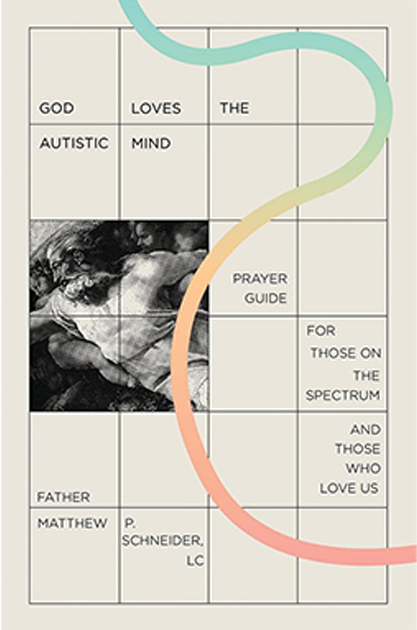
God Loves the Autistic Mind

Prayer Guide for Those on the Spectrum and Those Who Love Us

Fr. Matthew Schneider, a priest on the autism spectrum, knows the challenges that autistics face in prayer, as well as the autistic traits that can be leveraged to deepen one’s prayer. With clarity and honesty, he shares from his own experience and that of others on the spectrum to give hope and confidence to readers. This ground-breaking book includes 52 meditations, which provide a coherent progression of material for prayer that can be used on a daily or weekly basis.

Father Matthew P. Schneider is an openly autistic Catholic priest. He’s originally from Calgary, Canada, but since joining the Legionaries of Christ, has done ministry across North America. He has written for many publications including the National Catholic Register, America, Crux, and Aleteia. [, and you] You can find him on social media at @FrMatthewLC, @AutisticicPriest, and FrMatthewLC.com. He currently lives in Northern Virginia, writing a doctoral thesis in moral theology.

God Loves the Autistic Mind Read More »

Scroll to Top

Events

Looking for another country?

Contact Regnum Christi near you

News & Resources

News & Resources

The Regnum Christi Mission

The Regnum Christi Identity

Alex Kucera

Atlanta

Alex Kucera has lived in Atlanta, GA, for the last 46 years. He is one of 9 children, married to his wife Karmen, and has 3 girls, one grandson, and a granddaughter on the way. Alex joined Regnum Christi in 2007. Out of the gate, he joined the Helping Hands Medical Missions apostolate and is still participating today with the Ghana Friendship Mission.

In 2009, Alex was asked to be the Atlanta RC Renewal Coordinator for the Atlanta Locality to help the RC members with the RC renewal process. Alex became a Group Leader in 2012 for four of the Atlanta Men’s Section Teams and continues today. Running in parallel, in 2013, Alex became a Team Leader and shepherded a large team of good men.

Alex was honored to be the Atlanta Mission Coordinator between 2010 to 2022 (12 years), coordinating 5-8 Holy Week Mission teams across Georgia. He also created and coordinated missions at a parish in Athens, GA, for 9 years. Alex continues to coordinate Holy Week Missions, Advent Missions, and Monthly missions at Good Shepherd Catholic Church in Cumming, GA.

From 2016 to 2022, Alex also served as the Men’s Section Assistant in Atlanta. He loved working with the Men’s Section Director, the Legionaries, Consecrated, and Women’s Section leadership teams.

Alex is exceptionally grateful to the Legionaries, Consecrated, and many RC members who he’s journeyed shoulder to shoulder, growing his relationship with Christ and others along the way. He knows that there is only one way, that’s Christ’s Way, with others!