Q: Aside from times of the year when fasting is encouraged or required, when is it appropriate to fast? Also, are there any prayers for fasting? I haven’t had much luck finding any. Thank you! – J.R.
Answered by Fr. Edward McIlmail, LC
A: Fasting is prescribed by the Church for the faithful, aged 18 to 59, only twice a year, on Ash Wednesday and Good Friday.
Other times are optional, and the day and frequency depends on each person. Some people might do it once a month, perhaps on a Friday. Some do it every Friday. Some might do it for a special intention. There are no set rules on this.
Fasting has two basic purposes in our spiritual life.
The first has to do with our need to discipline our natural desires and cravings. Ever since the coming of original sin, we have had built-in tendencies to overindulge in pleasures, which can even lead to idolizing them — that is, thinking that certain pleasures or material things can satisfy our deepest needs and give meaning to our lives. These tendencies need to be recognized and disciplined. Fasting helps us to do that.
The second purpose of fasting is to willingly share in Christ’s own redeeming self-sacrifice. When we voluntarily choose to make a sacrifice, we can unite it to Christ’s self-offering through a simple prayer, offering up our discomfort or suffering for the conversion of sinners, the reparation of sins, and the strengthening of Christians everywhere. To learn more about this spiritual discipline of “offering it up,” you can watch or read the conference portion of the retreat guide called “A Mother’s Tears.”
With that in mind, it is worth mentioning that fasting can take a lot of different forms. The traditional form of eating less, or making small sacrifices at meals, is tried and true. But you can also “fast” for certain periods from the Internet or from watching movies, for example. Periodic “digital fasts” can open up space in our lives for prayer and greater intimacy with God, in addition to the other benefits of fasting.
Fasting requires a bit of caution. Sometimes we can overdo fasting, only to swing back to the other extreme “to make up” for lost meals. It is good to check with a spiritual director or confessor if you want to undertake a routine of fasting.
Perhaps an alternative to fasting would be to simply give up a little something at each meal — by taking a smaller dessert or forgoing gravy on the meat, for instance. Sometimes the ongoing little sacrifices can be just as valuable as fasting.
I’m not familiar with prayers for fasting, per se. HERE is one sample you might find helpful.
One of the values of fasting is that it can make our other prayers more meritorious. For that reason a special prayer for fasting might not be essential. What you could do is make a simple prayer of your own: “Lord, I offer up my fasting today for X.”
Today’s secular world throws curve balls at us all the time. AskACatholicPriest is a Q&A feature that anyone can use. Just type in your question or send an email to AskAPriest@rcspiritual.wpenginepowered.com and you will get a personal response back from one of our priests at RCSpirituality. You can ask about anything – liturgy, prayer, moral questions, current events… Our goal is simply to provide a trustworthy forum for dependable Catholic guidance and information. So go ahead and ask your question…
Q: I am employed in a temporary position over the summer, and my office is filled with unhappy people. I’m doing my best to keep a positive attitude and to find strength in God, but I’m having a hard time keeping the negativity out of my personal life. I am an education student and all I want to do is teach. I want to help kids grow in their knowledge and thrive in our ever-changing world, but my job is filled with people who never did — or could — find a passion as I found in teaching. The longer I stay around my co-workers, the harder I find it to seek out God for comfort and strength. It has me questioning everything about my life — not just my faith, but my purpose. Why did God put me in this job if not to help my co-workers to hate their jobs less? I wish there was a priest in my community whom I could turn to, but I’ve never been to church outside of school functions and would feel out of place going to a service. I’ve been keeping my faith as much as possible, but I end up feeling more alone. Thank you for any advice you can give me. – M.
Answered by Fr. Edward McIlmail, LC
A: Our Lord might have allowed this cross in your life right now to help you grow in your faith — not lose it!
We can tell our faith is strong when it doesn’t get shaken very easily.
Perhaps this experience of being around unhappy people can serve a few purposes.
First, it gives you the chance to go deeper in your relation with Christ and to realize that he ultimately is the only source of your happiness. At best we will find a relative, limited happiness in this world. Our happiness shouldn’t depend on other people in the sense that we allow their problems to sour our outlook on life.
Second, it gives you even more insight into human nature. It can give you more motivation to help your current and future students base their lives on something solid and worthwhile — that is, faith in God and selfless love for other people.
Third, think of this office as a classroom – and you are the student. It would help to look for ways to consciously keep a positive attitude. One suggestion is to always speak positively of everyone. Never get involved in gossip or backbiting.
Also, remember that this summer job is only a temporary situation. There are plenty of teachers out there who have the passion that you have. In God’s providence, you will likely meet some of them along your journey. Keeping your passion strong in the face of this difficulty could be a way to purify and strengthen it, to make you more convinced and more courageous.
Fourth, and this is related to the first point, this office situation might be a motivation for you to connect with a church community. Being part of a faith community is crucial for nourishing the faith. We are meant to form a family united in Christ. So if the negativity of the office seems overwhelming, try to reach out to people who will support you — such as a parish. Until you find a real-life faith community, you might find it useful to explore some of our other resources designed to help people like you grow in their faith and deepen their spiritual lives, such as our Retreat Guide on “The Complete Christian: A Retreat Guide on the Calling of the Twelve Apostles,” for example.
In the meantime it would be good to pray for your co-workers daily, and to let them know in subtle ways that you are concerned for them. This might help sow a few seeds that could change their outlook on life. The kind of thing you will be doing as a teacher countless times.
Today’s secular world throws curve balls at us all the time. AskACatholicPriest is a Q&A feature that anyone can use. Just type in your question or send an email to AskAPriest@rcspiritual.wpenginepowered.com and you will get a personal response back from one of our priests at RCSpirituality. You can ask about anything – liturgy, prayer, moral questions, current events… Our goal is simply to provide a trustworthy forum for dependable Catholic guidance and information. So go ahead and ask your question…
(picture above: Fr. Michael Sliney runs in a half-marathon in Brooklyn in the snowy weather)
Legionaries and consecrated members of Regnum Christi have hobbies and pastimes like anyone else. For some, it’s running. A few take this a little more seriously, including Fr. Daniel Pajerski, LC, Fr. Michael Sliney, LC, Fr. Brian Hoelzen, LC, Fr. Stephen Dyas, LC, Tony MacDonnell (Consecrated Man) and Katie Tuttle (Consecrated Woman), who all ran marathons recently. All four priests ran their marathons within nine days of each other.
Fr. Brian Hoelzen, LC and Fr. Michael Sliney, LC after the Hartford Marathon
For Fr. Michael, running marathons has a spiritual aspect: “I wanted to offer up that effort for vocations: that’s what drove me during my practice runs and especially during the Marathon itself. When it hurt, I thought about all the kids thinking about the vocation, trying to gain graces for them.” Fr Sliney had offered up his marathon two years ago for a woman then battling cancer, who is now cancer free.
Fr. Daniel takes a more stoic approach, noting: “I’m one of those guys who has their ‘nothing box,’ and when I’m running, I just focus on running, so I can’t have a lot deep prayer going on in the moment, but I try to make intentions beforehand.”
Katie got started in Michigan: Fr. Pajerski had mentioned he was running the Boston Marathon and asked for sponsors. People were generous, and he raised about $10,000 for the seminary in Cheshire. She shared, “I ran track and cross-country in high school, and I was sitting there thinking, ‘I’d like to race and raise money for vocations.’” She said that she always offers her races for vocations.
Katie also reflected on 1 Corinthians 9:25 in light of running marathons. St Paul says, “Every athlete exercises self-control in all things. They do it to receive a perishable wreath, but we an imperishable.” Katie reflected, “Training for the marathon was really a motivation for my life. I want to be a saint. I want to go to heaven; that’s really my goal. I want to strive each day to reach that goal.”
Fr. Michael, Fr. Daniel, Tony and Katie had each run marathons before. Fr. Pajerski is definitely the fastest at 3:12:29, in fact an analysis of all marathon finishers found that only about 9.2% finished under 3:30. Katie Tuttle wasn’t far behind at 3:30. Most of the others had times between 3:30 and 4 hours which puts them in the top 30% of finishers.
Tony MacDonnell, Lay Consecrated Man of Regnum Christi, at the New York Marathon
They ran in four different marathons.
Fr. Dyas ran the Rockway Marathon on Long Island on October 7, 2017.
Fr. Sliney and Fr Hoelzen ran the Hartford Marathon on October 14, 2017.
Fr. Pajerski ran the Detroit Marathon on October 15, 2017where they had thunderstorms that almost cancelled the race.
Tony MacDonnell ran the New York Marathon on November 5, 2017.
Katie Tuttle ran the Houston Marathon on January, 2018 and qualified for the Boston Marathon.
Fr. Michael and Fr. Daniel both mentioned how the marathon training helps them. Fr. Michael spoke of health: “It’s a great way to stay in shape and keep your mind and body running on all cylinders.” Fr. Daniel instead focused on how it helps him organize, “It helps me use my time well because it requires discipline in my time to get training in.”
Independently, Fr. Pajerski, Fr. Sliney and Katie Tuttle all adopted the Hanson training method this time. The Hanson method is about 4 to 5 months of training where you run 25 to 50 miles a week , then take one day off, have one long run of 10-16 miles, one strength or speed run which is 5 to 7 miles of hard running, either an interval or in short bursts, and another marathon pace run of 6-10 miles where you run the pace you want to maintain through the marathon. One of the unique aspects of this method is that it focuses on weekly miles without having any overly long runs, with the longest run being 16 miles.
Katie Tuttle, Consecrated Woman of Regnum Christi, after the Woodlands Marathon
Katie Tuttle noted, “The whole experience of training for and running a marathon is a very spiritual experience for me. Sometimes, when it’s an easy run day, I’ll pray; I’ll take in the scenery and reflect, and pray a rosary. But the days it’s a hard run, the only prayer I get out is, ‘Lord, help me get through this workout.’” She finds inspiration from people in tough circumstances who run, like a blind person, or someone with prosthetic legs.
This time, Fr. Sliney had an extra challenge: about halfway through training, he pulled a hamstring. After asking around, he decided he could go on if changed his running style to be more on the toes of his feet. That took the pressure off of the hamstring, but caused issues with his toes and calves. He took it as one more of life life’s obstacles, saying, “We can either give up, or we can find a way to make it work.”
Fr. Sliney had a time of 3:49 in a previous marathon, and had the goal to do better. He had a strong pace the first 20 miles, but around mile 18 he started having cramps. He had to run through the pain for the last 8 miles. This reminded him of vocations, and his own priesthood. “Sometimes it’s going to hurt to persevere in this thing, and there’s a finish line.” He said, “I wanted to die as a faithful priest and this is a little test which could have spiritual ramifications: I can’t give up.” His final time was a little slower at 3:59 but he was satisfied, given all the pain he battled through.
When he was asked what he’d say to other Legionaries, consecrated men or women, or Regnum Christi members thinking about a marathon, Fr. Pajerski responded: “If you have the desire, try it.”
Q:Why were the accounts of Jesus after age 12 not recorded or revealed to the public? Someone told me that it’s not important and was uneventful. I know Christ gave us everything we needed when he began preaching and performing miracles. Even so, Jesus is one in being with God, so wouldn’t even the smallest, most uneventful thing still be somewhat important — or at least give us a better understanding of Our Lord? He was, after all, astonishing the doctors in the Temple with his knowledge at the age of 12. It would seem we could have learned much from Jesus during those missing 18 years before his public ministry. What are your thoughts? – F.M.
Answered by Fr. Edward McIlmail, LC
A: Thanks for your note. At first glance it does seem unusual that there is that biblical “gap” in the account of the life of Christ.
You touched on part of the answer, however. God gave us what we needed to have included in Scripture, no more, no less. We, of course, don’t rely solely on Scripture for our faith. We also rely on Sacred Tradition, the oral teaching of Jesus that was passed down through the apostles. Without Tradition we wouldn’t have had Scripture. But back to your question.
Perhaps the “gap” was to emphasize how hidden a life Jesus led. The Catechism dedicates a few numbers to this very topic. Permit me to quote them in full:
The mysteries of Jesus’ hidden life
531 During the greater part of his life Jesus shared the condition of the vast majority of human beings: a daily life spent without evident greatness, a life of manual labor. His religious life was that of a Jew obedient to the law of God, a life in the community. From this whole period it is revealed to us that Jesus was “obedient” to his parents and that he “increased in wisdom and in stature, and in favor with God and man.”
532 Jesus’ obedience to his mother and legal father fulfills the fourth commandment perfectly and was the temporal image of his filial obedience to his Father in heaven. The everyday obedience of Jesus to Joseph and Mary both announced and anticipated the obedience of Holy Thursday: “Not my will…” The obedience of Christ in the daily routine of his hidden life was already inaugurating his work of restoring what the disobedience of Adam had destroyed.
533 The hidden life at Nazareth allows everyone to enter into fellowship with Jesus by the most ordinary events of daily life: The home of Nazareth is the school where we begin to understand the life of Jesus — the school of the Gospel. First, then, a lesson of silence. May esteem for silence, that admirable and indispensable condition of mind, revive in us … A lesson on family life. May Nazareth teach us what family life is, its communion of love, its austere and simple beauty, and its sacred and inviolable character… A lesson of work. Nazareth, home of the “Carpenter’s Son”, in you I would choose to understand and proclaim the severe and redeeming law of human work… To conclude, I want to greet all the workers of the world, holding up to them their great pattern their brother who is God.
534 The finding of Jesus in the temple is the only event that breaks the silence of the Gospels about the hidden years of Jesus. Here Jesus lets us catch a glimpse of the mystery of his total consecration to a mission that flows from his divine sonship: “Did you not know that I must be about my Father’s work?” Mary and Joseph did not understand these words, but they accepted them in faith. Mary “kept all these things in her heart” during the years Jesus remained hidden in the silence of an ordinary life. [end quoted material]
So there you have it. In its own way, the silence of Scripture on Jesus’ hidden life is meant to speak volumes.
Today’s secular world throws curve balls at us all the time. AskACatholicPriest is a Q&A feature that anyone can use. Just type in your question or send an email to AskAPriest@rcspiritual.wpenginepowered.com and you will get a personal response back from one of our priests at RCSpirituality. You can ask about anything – liturgy, prayer, moral questions, current events… Our goal is simply to provide a trustworthy forum for dependable Catholic guidance and information. So go ahead and ask your question…
During the first centuries of Christianity, the forty days leading up to Holy Week took on a special significance. Those forty days are called Lent, a name taken from the Old English word meaning “spring.” The liturgical season of Lent is meant to be a time of spiritual spring-training, so to speak: six weeks during which we pay particular attention to prayer, penance, and works of mercy in order to prepare for Holy Week. The more deeply we live Lent, the more abundantly we will be able to receive the spiritual renewal that God wants to give us during the holiest days of the liturgical year.
This Retreat Guide on the Last Supper, Teacher and Lord, will help make that happen.
The First Meditation takes us into what was going on in Christ’s own heart during his last meal with his closest followers.
The Second Meditation highlights the three precious gifts that Jesus left his Church during the Last Supper, and the hopes he had for how those gifts can transform our lives.
And the Conference provides practical tips for how we can deepen our friendship with Christ through the words we use.
The Personal Questionnaire/Group discussion questions are available in the Companion Guide Book or Small Group Companion Guide. Either download the PDF Companion Guide Book or purchase it. The Companion Guide Book is available for purchase in Kindle or Paperback from Amazon. Pause the video at any moment to go to the Companion Guide Book or continue to the next meditation.
Q: I am a single, Catholic, 44-year-old female. I have never been married and do not have children. I spent the better part of my life being overweight and as a result was seldom asked out. During the past two years with the help of a dietician I managed to slim down and would like to try dating. Unfortunately, so far things are not going well. Most people my age are already married. Other difficulties include that fact that many of the activities geared toward older singles revolve around the “bar scene,” and I am not that type of person. My beloved mother passed away a few years ago, and my remaining relatives are not sympathetic to my situation. To them I am simply an old maid who “missed the boat” and should be satisfied with activities like volunteer work to fill the hours not spent at my job. It is seems unfair to me that a person should be written off simply because they didn’t get married at a fairly young age and start a family. Surely there must be someone out there would enjoy the company of an intelligent, kindhearted woman who loves reading, movies, visiting museums, classical music and is a good cook. I would greatly appreciate any suggestions you might have to help me in my quest to meet someone special. – L.
Answered by Fr. Edward McIlmail, LC
A: I am sorry to hear about your situation. It must be very difficult to feel alone and “written off.”
Jesus certainly doesn’t write you off. Nor does the Church. You are a beloved daughter of God, for whom Our Lord shed his blood. So it’s good to remember that there is a Man who loves you deeply. Your relatives’ opinion doesn’t match Our Lord’s.
So where do you go from here?
First, it needs to be said that there are no guarantees of what lies ahead. You and I can’t foresee the future.
What you do have a handle on, though, is the present. You have a heart that is made to love and to be loved. At least for now you have control over half of that equation. You can love others now, through your prayers and acts of charity.
You mention your relatives and their suggestion about volunteer work. That is an idea worth revisiting. Getting involved in some kind of charitable work could have a lot of benefits.
First, it can help give you a sense of purpose. Your 9-to-5 work need not be your whole life. Volunteer would give you the chance to use your heart and reach out to others. You would see the struggles of other people, which could help put your own sufferings in perspective.
Also, it would increase your chances of meeting other good people, who could give you a network of support. It would certainly be a healthy alternative to the bar scene.
A key benefit is that volunteer work would help you be pro-active. It would keep you from staying stuck in idle. And people who are pro-active and helping others can be – let’s say it – more attractive. And thus more likely to meet that special someone.
Again, there are no guarantees. A spouse is a gift from God. God might have the gift in store for you, but he also might have other gifts in store. In any case, your getting involved in charitable works could give glory to God and help fill the void you feel.
It would be extremely helpful, too, to keep up a solid prayer and sacramental life. An occasional retreat might help, too. An online option is our Retreat Guides.
Stay close to the Blessed Virgin Mary. You might also want to pray to a saint, such as St. Anne, for help in finding a husband if it is God’s will.
Today’s secular world throws curve balls at us all the time. AskACatholicPriest is a Q&A feature that anyone can use. Just type in your question or send an email to AskAPriest@rcspiritual.wpenginepowered.com and you will get a personal response back from one of our priests at RCSpirituality. You can ask about anything – liturgy, prayer, moral questions, current events… Our goal is simply to provide a trustworthy forum for dependable Catholic guidance and information. So go ahead and ask your question…
Regnum Christi’s Ánahuac University in Mexico City recently ran a professional development course for journalists to help them cover religion.
Anahuac University, Mexico
“There’s a vast richness in all the liturgy, symbology and protocol of the Catholic Church,” affirmed some journalists who attended a professional development workshop on December 1st.
The Regnum Christi communications office in Mexico realized the need for such a course, and put it together, working with journalists. Pablo Pérez de la Vega, the communications director for Mexico and Central America noted, “We thought it would be important for us, and valuable as training for journalists, to organize a workshop that offered Catholic Church concepts regarding liturgy, protocol, teaching, hierarchy, etc. We coordinated it with the faculty of Humanities at the Ánahuac University, elaborating a valuable content to complete this iniciative.”
The workshop began with a friendly breakfast, informally sharing details of the life in journalism and joking about “media slips” they all knew about. Then they moved to one of the executive rooms of the postgraduate building for two presentations.
Professor Guillermo Macías Graue, coordinator of the Regina Apostolorum [Queen of the Apostles] Institute of the Ánahuac University, gave the first session. He shared anecdotes and cultural information to explain how the protocol works with the Vatican, the Holy See, and the Church as a whole.
Professor Ricardo Morales Arrollo, coordinator of the Evangelli Gaudium [Joy of the Gospel] Center, presented the second part.He explained various topics: the types of documents generated by a Pope and the Church in general, how the liturgy operates, the liturgical calendar, and terminology proper to the liturgy. He also answered a lot of questions the journalists had to help them better understand Catholic activities they’d seen so they could better report in the future.
The day ended with awards and a group photo. Journalists came from different type of media: national Mexican media, international media and Catholic media. The journalists asked that similar workshops be organized in the future which seemed to gain support from Fr Cipriano Sánchez, LC, rector of the Ánahuac and Prof. Carlos Lepe, Dean of the faculty of Humanities, Philosophy, and Spanish. You can read more about this event on the Spanish-language Regnum Christi site.
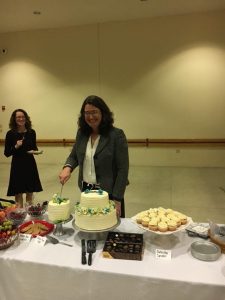
Joan Kingsland decided to give a year as a Regnum Christi volunteer. The year turned into a quarter century as a consecrated woman of the Movement, an anniversary marked January 25, 2018, at Our Lady of the Holy Spirit Center in Norwood, Ohio.
As her friends and colleagues would attest, Joan is a consummate teacher and academic. She also is renowned as a baker, with particularly famed chocolate-chip cookies and award-winning apple pie (secret is lard in the crust).
Joan (Dr. Kingsland in academic circles) has a demanding schedule, but took time to answer a few questions about her life as a Consecrated Woman of Regnum Christi.
How did you meet Regnum Christi and decide to become consecrated?
From when I was a young child I felt called to the religious life. I remember telling my mother this when I was about 12 years old and she answered: “No Joan, you need to become something different. Something where you give yourself completely to God but not as a religious.” I felt annoyed with my mother at the time, but her words returned to me when I met the Consecrated Women of Regnum Christi. I had originally gone to our center in Rhode Island with the intention of volunteering for a year in Italy in order to get the strength to answer my vocation to the religious life. But my heart immediately resonated with the spirit of Regnum Christi. It was there that I found the joy and peace to answer my vocation.
If you had not followed this path, what would you likely have done with your life?
I would have been a religious sister in a teaching order.
What books have you written and what do you have planned for the future?
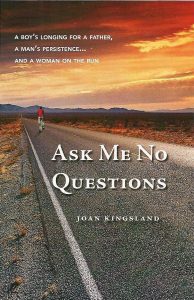
Ask Me No Questions, which is a novel involving a bioethical issue and You Make Me Mad, which is about how to overcome anger in a Christian way. Although I was short-listed in a Canadian book contest for You Make Me Mad, I haven’t followed through with getting this book published. That’s the next thing I’d like to do. There’s also been turning around in my mind and heart for a long time a book in the area of spirituality about walking in the company of the Lord.
What are the most memorable times as a teacher?
I ardently desire to help young women to become aware of their immense dignity and worth and to have the wherewithal to ask others to respect and uphold it. My most memorable moments as a teacher are related to this theme; and past students will often mention to me how much those particular lessons helped them, something that is a source of satisfaction for me!
Who have been your role models, mentors, people who you emulated?
My Aunt Maureen was an Ursuline Sister and as a little girl I admired her greatly and wanted to be like her.
What was your faith experience growing up in Canada, with your family?
My parents are devout Catholics and we grew up praying the rosary together as a family on Sundays. They have always given an example of involvement in their parish and loving service to others in many ways, something I admire very much. Their 60th wedding anniversary is not too many years down the road: I admire them for their example of fidelity! They also have passed down their love for nature to my five brothers and me. Every summer we go camping as a family.
Joan cuts the cake at her 25th anniversary celebration.
What are the most inspiring times in your consecrated life?
During the six years that I was studying for my doctorate in Rome I felt a strong desire to share what I was learning with young people. During the Christmas, Easter and summer breaks I had the opportunity to be a guide in Rome and Italy for pilgrims coming to Rome. One of my first times as guide was for a group of young women from the Slovak Republic. During the two-hour ride to Assisi from Rome I stood at the front of the rickety old school bus we were in and asked them if they wanted to hear a talk about “the Fullness of Love”. They said yes and so I gave them a long talk on that theme. Afterwards one of the young women asked to speak with me privately and wept as she exclaimed: “Why has nobody ever told me these things before?” I can still hear her voice and that reminds me of what a beautiful and good message we have to offer, and what it can mean for people to hear and experience it!
Hearing about how the lives of individual people are touched through our mission as Consecrated Women is a continual source of inspiration and joy for me. Jesus Christ is real. His personal, unconditional love for each person is real. It is wonderful to be involved in bringing people to experience and bask in that love in a real way! The pathway to heaven is a happy one even though there are thorns and brambles along the way.
What are the most difficult times in your consecrated life?
My most painful memories in consecrated life date back some years. The redemptive part for me is observing how I’ve always experienced Our Lord’s presence very close to me in my most difficult moments. This experience has been so consistent that it has taken the sting out of suffering and makes me face the future with great hope. I identify a lot with St. Paul’s words in Romans 8:34-39. If suffering cannot separate us from the love of Christ then what can?
How did you deal with the Movement’s “renewal” – ever think of leaving?
The hardest period for me was right around when many of our consecrated sisters separated and founded the public association of Totus Tuus. The best response to my doubts about leaving came from witnessing the sincerity of my fellow consecrated sisters! I could observe that they sought (and still seek) to grow in union with God and to bring Christ to others. It also helped that Cardinal de Paolis acted so quickly in granting an appropriate autonomy to the Consecrated Women.
What are you doing today and how do you see your role in the years ahead?
I’m an adjunct professor at the Archdiocesan Seminary in Cincinnati, I’m the Training and Development Specialist at Ruah Woods, a Theology of the Body Institute that is providing Theology of the Body curriculum for grades K-12. I’m also one of four councilors for the Territorial Director of the Consecrated Women of Regnum Christi here in the United States. Thus far I’ve been teaching these past 25 years. If that’s what I were to be doing in the next 25 years that would be fine with me. That said, I happily consecrated my life to Christ 25 years ago, putting my life into his hands. That includes a promise of availability and vow of obedience. So what I do envision for “my future role” however many years that lie ahead, is walking along a pathway home to heaven at the side of my beloved spouse, Jesus Christ. No doubt there will be unexpected turns in the road, but he will be with me.
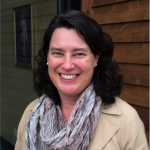
Joan Kingsland has been a consecrated member of the Regnum Christi Movement since 1993. She earned licentiate and doctoral degrees in moral theology at the John Paul II Institute for Marriage and the Family in Rome, as well as a Bachelor of Arts degree from Thomas Aquinas College, and a Master of Arts degree from the University of Toronto. She taught theology at Mater Ecclesiae College in Rhode Island from 2006-2015, where women discerning the consecrated life in the Regnum Christi Movement earned a Bachelor of Arts degree in Religious and Pastoral Studies. She served as president of Mater Ecclesiae College from 2014-2015. Joan is currently the Training and Development Specialist for Ruah Woods, a Theology of the Body Institute; and she teaches a few courses at the Athenaeum of Ohio, which is the archdiocesan seminary for Cincinnati. She is also a censor for the Archdiocese of Cincinnati.
Author’s note: Despite my high esteem for Joan Kingsland, she once did something quite mean to me and it should be on the record. She had done me the great honor of asking me to read the draft of her Ask Me No Questions. So there I was, reading along on my computer, making an occasional comment and approaching what proved to be an extremely tense and critical point in the story. The document ended and I didn’t know what happened, so I called Joan, who explained that she was still writing the rest of the story and I would have to wait. It was like watching a television program that stops at the most critical moment, when you don’t know whether the hero lives or dies, and the screen says: “To be Continued.” I asked her to tell me the ending and she refused, citing some sort of literary license, ethics, need for further editing or some such excuse. I forgave her, but not until she sent me some chocolate-chip cookies.
Q: For my earlier life I was brought up in the Catholic Church. But eventually my parents moved away from religion, and I just stopped attending. This happened before confirmation. Now as an adult, for the past few years especially, I have felt something pulling me toward the Church, but I’ve been holding back because, being honest, I’m a little scared. I don’t know where I stand exactly. Will I be welcome at church? Am I a Catholic without being confirmed? I just don’t know. – G.
Answered by Fr. Edward McIlmail, LC
A: You are most certainly welcome in the Church. You are still considered a beloved son of the Church. Your baptism brought you into her fold.
In fact, I would say that the desires you are discovering in your heart are a sure sign that God himself is moving you from within, inviting you to come closer to him and to discover the grace and meaning that he has in store for you.
You might want to consider a few steps.
First, it would be good to go to confession. There are lots of resources on the Internet that could help you prepare for this, you can find an example HERE. If the idea of going to confession makes you nervous, you might want to watch this little video about it: From Sorrow to Joy: A Retreat Guide on the Sacrament of Confession. Scroll down to the bottom to start the video.
Don’t worry about shocking the priest. He will be glad to have you come to confession. At any rate he cannot reveal anything said in confession.
Second, you might want to consider some kind of program that would prepare you for confirmation. The best thing would be to speak with someone at your local parish. Perhaps they would recommend theRCIA program.
In the meantime, it would be good to start attending Mass regularly (Sundays and holy days of obligation), and to make time for prayer every day. Try reading a bit of the Gospels daily, too. This book by my colleague Father John Bartunek might help you: “The Better Part: A Christ-Centered Resource for Personal Prayer.“
The key thing is to be pro-active. Try to make a plan for when you will contact the local parish, or plan a day to go to confession if you think you are ready. You will want to refrain from receiving Communion until you get to confession first.
Cultivate a devotion to the Blessed Virgin Mary, too. She can be a great help. And pray for your parents that they return to the faith. Praying for them will strengthen your own faith.
Today’s secular world throws curve balls at us all the time. AskACatholicPriest is a Q&A feature that anyone can use. Just type in your question or send an email to AskAPriest@rcspiritual.wpenginepowered.com and you will get a personal response back from one of our priests at RCSpirituality. You can ask about anything – liturgy, prayer, moral questions, current events… Our goal is simply to provide a trustworthy forum for dependable Catholic guidance and information. So go ahead and ask your question…
Alex Kucera has lived in Atlanta, GA, for the last 46 years. He is one of 9 children, married to his wife Karmen, and has 3 girls, one grandson, and a granddaughter on the way. Alex joined Regnum Christi in 2007. Out of the gate, he joined the Helping Hands Medical Missions apostolate and is still participating today with the Ghana Friendship Mission.
In 2009, Alex was asked to be the Atlanta RC Renewal Coordinator for the Atlanta Locality to help the RC members with the RC renewal process. Alex became a Group Leader in 2012 for four of the Atlanta Men’s Section Teams and continues today. Running in parallel, in 2013, Alex became a Team Leader and shepherded a large team of good men.
Alex was honored to be the Atlanta Mission Coordinator between 2010 to 2022 (12 years), coordinating 5-8 Holy Week Mission teams across Georgia. He also created and coordinated missions at a parish in Athens, GA, for 9 years. Alex continues to coordinate Holy Week Missions, Advent Missions, and Monthly missions at Good Shepherd Catholic Church in Cumming, GA.
From 2016 to 2022, Alex also served as the Men’s Section Assistant in Atlanta. He loved working with the Men’s Section Director, the Legionaries, Consecrated, and Women’s Section leadership teams.
Alex is exceptionally grateful to the Legionaries, Consecrated, and many RC members who he’s journeyed shoulder to shoulder, growing his relationship with Christ and others along the way. He knows that there is only one way, that’s Christ’s Way, with others!



 Professor Ricardo Morales Arrollo, coordinator of the Evangelli Gaudium [Joy of the Gospel] Center, presented the second part.He explained various topics: the types of documents generated by a Pope and the Church in general, how the liturgy operates, the liturgical calendar, and terminology proper to the liturgy. He also answered a lot of questions the journalists had to help them better understand Catholic activities they’d seen so they could better report in the future.

 Joan Kingsland has been a consecrated member of the Regnum Christi Movement since 1993. She earned licentiate and doctoral degrees in moral theology at the John Paul II Institute for Marriage and the Family in Rome, as well as a Bachelor of Arts degree from Thomas Aquinas College, and a Master of Arts degree from the University of Toronto. She taught theology at Mater Ecclesiae College in Rhode Island from 2006-2015, where women discerning the consecrated life in the Regnum Christi Movement earned a Bachelor of Arts degree in Religious and Pastoral Studies. She served as president of Mater Ecclesiae College from 2014-2015. Joan is currently the Training and Development Specialist for Ruah Woods, a Theology of the Body Institute; and she teaches a few courses at the Athenaeum of Ohio, which is the archdiocesan seminary for Cincinnati. She is also a censor for the Archdiocese of Cincinnati.
