Dear friends in Christ, I send you warm greetings in the midst of this Lenten season, during which the Church invites us to examine and purify our hearts to reorient them entirely towards God.
It has been prepared in light of the contributions collected during the territorial assemblies and the instructions received by the Congregation for Institutes of Consecrated Life and Societies of Apostolic Life.
The reasons behind the most important changes to the Draft General Statutes text are laid out in the introduction.
May God grant that we continue traveling this path with renewed hearts, trusting in the action of the Holy Spirit and under the care of the Blessed Virgin Mary.
Your brother in Christ and the Movement,
Fr. Eduardo Robles-Gil, LC
Watch Fr. Eduardo’s recent conference explaining the current developments in the identity and statutes of the Regnum Christi Movement here, and explore information about the renewal process at www.rcstatutes.org.
Q: My big issue is the right to baptize a baby that is born into a situation where he/she might or might not be brought up in the faith. I am told that there has to be some kind of assurance that the child will be brought up in the faith before the baptism can happen. Yet I was taught that we are all born with original sin, and that the purpose of baptism is to erase that sin. It seems that a child has a right to be baptized even if the parents are not living their Catholic faith. I have three great-grandchildren who are not allowed to be baptized even though their non-practicing parents have no problem with it. To me this is wrong and, yet, the Church takes this stand. If the children are never baptized, I do not think that Jesus is going to hold them responsible. I pray always that the Holy Spirit will touch them at some time and that they will find Our Lord and follow him. Maybe that is all I can do, but it just seems wrong to me to deny them this sacrament. Thanks for hearing me out. – R.
Answered by Fr. Edward McIlmail, LC
A: It is understandable and laudable that you are concerned about the great-grandchildren.
The Church’s rules, though, shouldn’t be seen as a punishment against the little ones. Far from it.
What the Church has in mind is this: It doesn’t want the non-practicing parents to think of baptism as simply a custom with no responsibilities attached. To baptize a child but not educate him in the faith is a grave disservice. It could leave a child with a distorted vision of baptism and of the value of the Catholic faith, as if they were cultural oddities with no real impact on his moral life. (Baptism is, however, allowed if a baby is in danger of death.)
The Church hopes that its norms on baptism could be a wake-up call to parents — a signal that they need to get serious about their faith and about passing it on to their children. For the parents will have to answer before God someday for how well (or poorly) they fulfilled their duty to teach their children the faith.
If the Church allowed baptism with no further requirements on parents, the meaning of the sacrament could quickly be lost.
You are right about Jesus’ mercy: He will certainly take it into consideration if children go through life without catechesis and without their experiencing a compelling reason for baptism. Our Lord won’t hold such children to the same standard that he holds the baptized and catechized members of the Church.
It sounds as though you already are doing the right thing by praying for these parents and children. Your prayers and example could certainly influence the little ones faster than you expect. And who knows? — maybe they will be asking for baptism within a few years.
This is a moment to draw deeper from the well of your own faith. The Church as guardian of the sacraments is not trying to deny anything to anyone, but rather to beckon Catholic parents to live up to their mission of educating their children in the faith.
Perhaps this is a moment to intensify your devotion to the Blessed Virgin Mary. Her intercession can move hearts. I hope some of this helps. Count on my prayers for you and your loved ones.
Today’s secular world throws curve balls at us all the time. AskACatholicPriest is a Q&A feature that anyone can use. Just type in your question or send an email to AskAPriest@rcspiritual.wpenginepowered.com and you will get a personal response back from one of our priests at RCSpirituality. You can ask about anything – liturgy, prayer, moral questions, current events… Our goal is simply to provide a trustworthy forum for dependable Catholic guidance and information. So go ahead and ask your question…
Save the date! The ECYD Boys’ National Convention will be held June 18-24, 2018 at Sacred Heart Apostolic School in Rolling Prairie, IN.
Fr. Robert DeCesare, LC Fr. Ronald Conklin, LC
Fr. Ronald Conklin, LC, and Fr. Robert DeCesare, LC, are leading the charge for rising 7th grade and older boys who wish to connect with each other and immerse themselves in ECYD life. Having attended ECYD Weeks 1, 2 & 3, each of Fr. Ronald and Fr. Robert have been trained in ECYD Identity, ECYD Mentoring and the five elements of ECYD life: see ECYD Statutes available here.
Boys will have the opportunity to experience a pilgrimage to Notre Dame, a trip to Warren Dunes Sate Park, visit Chicago and engage in a faith survey. Fr. Robert informs that the purpose of this event is “to gather together ECYD boys in the North American Territory to grow in ECYD, their love for ECYD and the ECYD spirit.”
As a continued means to strengthening boys, connecting ECYD boys in North America is a starting point to letting them know they are connected to ECYD boys all over the world, as described in this ECYD Discover video:
After the introductory week on Current Challenges in Bioethics from July 2-6, the second week course from July 9-13 is Human Enhancement: Bioethical Challenges of Emerging Technologies. The summer course is sponsored by the UNESCO Chair in Bioethics and Human Rights.
2-6 July 2018: Current Challenges in Bioethics
What can I do? What should I do? No human action can escape these questions.
The answers to them are not always clear; moral choices are often not at all easy. Complex situations arise when we face suffering or when we have to make life-or-death choices.
Other cases may be difficult only because they raise new questions for which we feel unprepared. Bioethics addresses all these questions and, with an interdisciplinary methodology that combines scientific knowledge with philosophical and theological reflections, it guides us to the right answers.
This Summer Course on Introduction to Bioethics offers an overview of bioethical issues in light of the basic principles that guide our practical choices. Some examples of such choices include whether to start a therapy that could have serious consequences, what a couple may ethically do in order to have or not have a child, what we should do with frozen embryos, how we should teach young people to respect their bodies and not play around with their lives, how we should deal with homosexual tendencies, and to what extent rapid progress in science and technology—cloning, neuroscience, nanotechnology—can “improve” man.
The course will address these and other situations relevant to bioethics, with the help of multimedia materials, lectures by professors from Regina Apostolorum and other experts, and group work. Because human action is always interwoven with ethical questions, we will seek the right answers together, investigating the truth for the sake of life.
This introductory course held from July 2-6, 2018, is offered for those who would like to have a greater comprehension of bioethics principles and different bioethical issues.
9-13 July 2018: Human Enhancement: Bioethical Challenges of Emerging Technologies
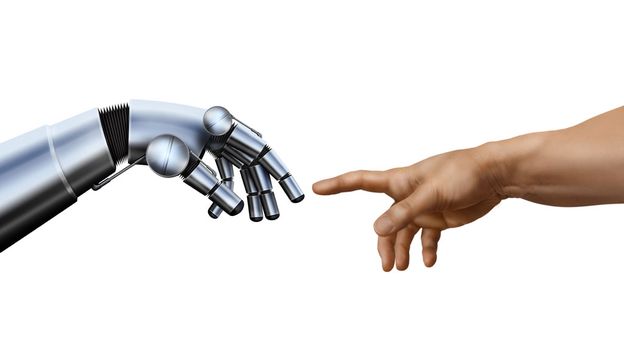
Human enhancement technologies are used not only to treat diseases and disabilities, but also to increase human capacities and qualities (motor, mental, emotional and aesthetic, and so on). Certain enhancement technologies are already available, for instance, reproductive technologies and plastic surgery. Other technologies are called emerging due to their innovative aspect, such as genetic engineering. There are also speculative technologies, which are only a work hypothesis in biomedical research, for example, mind uploading.
A study and analysis of human behavior, as well as the research, production and use of these technologies from bioethical, social, and legal standpoints, seem appropriate and necessary. On the one hand, the scientific community has taken an increasing interest in these innovations and allocated substantial public and private resources to them. On the other hand, such research can have an impact, positive or negative, on individuals, the society, and future generations.
The second week course from July 9-13 offers an interdisciplinary study of human enhancement to better understand the techniques, the benefits, and the inherent risks of these technologies. What will be the impact on our understanding of being human—human nature as we understand it today—and what are the possible consequences for future generations?
Practical information
The courses begin on Monday 2 July and 9 July 2018 respectively at 9 a.m. (Rome Time)
Via degli Aldobrandeschi 190, 00163 Rome
Room: Aula Master, 1st floor
How to join the event?
Registration is necessary in order to join the course.
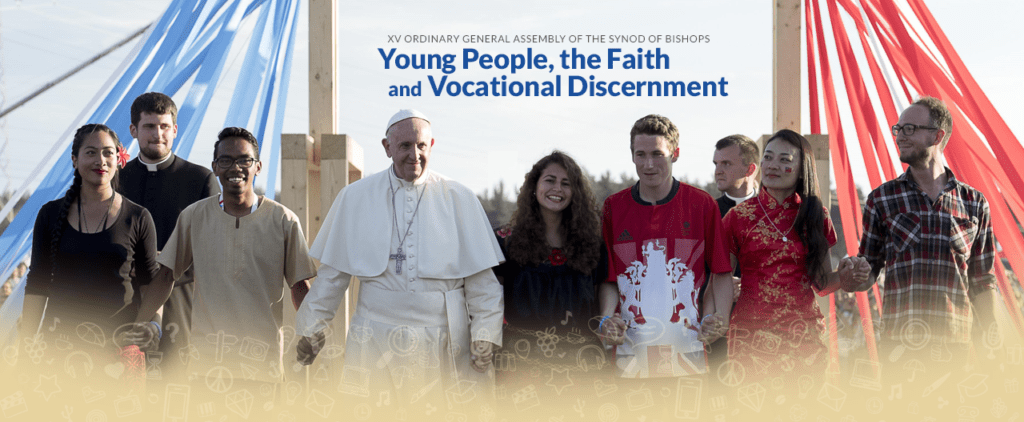
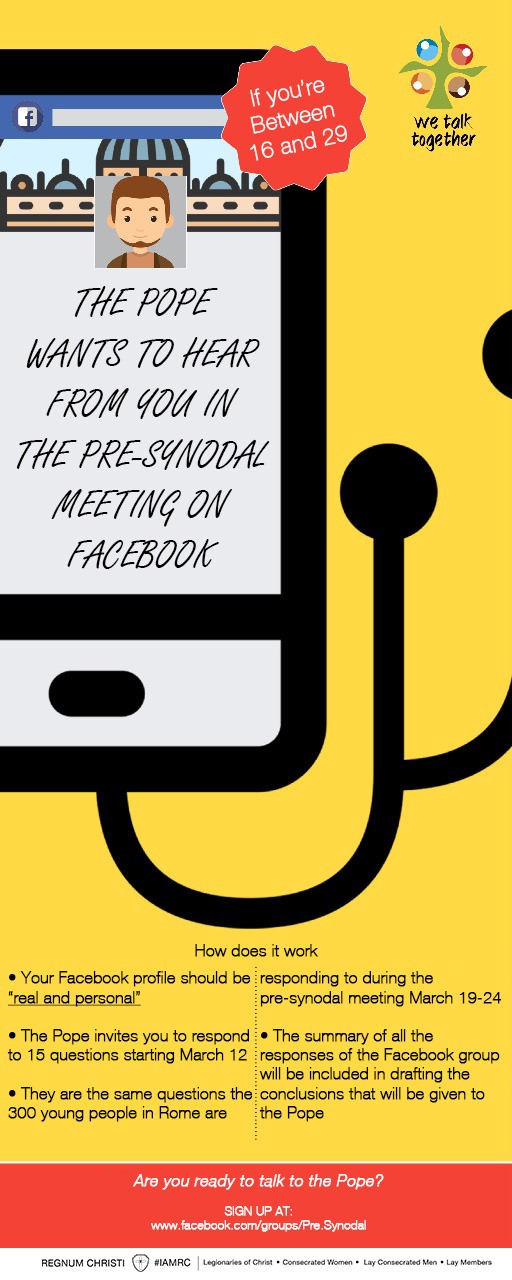
The Holy Father has convened a synod of bishops which will meet this year to discuss Young People, the Faith and Vocational Discernment. In preparation for the synod, he is hosting meetings with young people from across the world. 300 young people people are expected to come together for these meetings in the Vatican, March 19-24th, with the goal of producing a document that answers 15 relevant questions, which will be delivered to the pope and to all of the bishops who will participate in the synod, explaining the thoughts of young Catholics on these issues.
In a global social media outreach, the Vatican is inviting people age 16-29 to join a facebook page where they can answer the same questions that will be discussed at the pre-synod meeting with young people. The answers will be discussed during the pre-synod meetings, and a summary of them will be included in the document which will be delivered to the synod.
Q: My questions regard a general confession. I have a friend who has been out of the Church for many years. He is having a very difficult time on all levels (spiritually, emotionally and physically). Because I care for him and want to see him better in all these levels, I suggested that he start by returning to church on a regular basis and consider a general confession. He agreed to it, but when he approached the parish priest he was advised that a general confession was advised only for alcoholics and drug addicts. I know that priests, just like medical doctors, will have different diagnoses and experiences and therefore will give different prescriptions. I am a bit at a loss on this issue, and my friend is confused. Can you please shed light on this issue? – R.
Answered by Fr. Edward McIlmail, LC
A: Thanks for your note and for your concern about your friend.
In principle just about anyone can do a general confession, though this type of confession isn’t common.
Basically it is a confession in which a penitent does an overview of his life and admits to the full range of categories of sin that he committed, including categories whose sins have already been absolved.
The general confession helps a person put his relationship with God in perspective. It helps him see all the wrong he has done, offer a profound act of contrition, and to acknowledge all the mercy that the Almighty has shown. The general confession can have a cathartic effect, allowing a person to wrap up his past mistakes, put them in God’s hands, and move on.
General confessions are more commonly done when people are preparing to embark on a new way of life, for instance, marriage or the seminary. Or it might be done by people, especially religious, doing an annual retreat.
People who are returning to the faith after years might also do it. In that case even a “regular” confession might be so wide-ranging as to be similar to a general confession.
It simply isn’t true that a general confession is only for alcoholics or drug addicts. Perhaps there was some miscommunication between your friend and that priest. (An aside: The term “general confession” is sometimes used at rites involving general absolution. But that is another matter.)
Nevertheless, general confessions are sometimes not recommended. In the case of, say, a scrupulous person, a spiritual director might dissuade the person from making a general confession since it could dredge up too many problems and bad memories for the penitent.
You mention that your friend has spiritual and emotional problems. Depending on what and how serious they are, a general confession might or might be advisable. It’s hard to gauge this through an e-mail.
Today’s secular world throws curve balls at us all the time. AskACatholicPriest is a Q&A feature that anyone can use. Just type in your question or send an email to AskAPriest@rcspiritual.wpenginepowered.com and you will get a personal response back from one of our priests at RCSpirituality. You can ask about anything – liturgy, prayer, moral questions, current events… Our goal is simply to provide a trustworthy forum for dependable Catholic guidance and information. So go ahead and ask your question…
Q: I know this woman who does not believe in the sacrament of marriage. Her culture believes that living together is like being married. She has been living with a boyfriend for quite a while. Recently, she has shown a strong interest in me. I am Catholic and recognize a couple as married only if they did it in Church. My question is, if I pursue her and date her would it be considered adultery? I have been avoiding her out of fear of committing adultery, but technically she never got married. So what is the best approach? – J.
Answered by Fr. Edward McIlmail, LC
A: Technically, it wouldn’t be adultery if you simply date her. She isn’t married and, at least in theory, is eligible to date.
However, you might ask whether dating her is going to put you in the near occasion of grave sin. A woman who has been living with a man for a while is probably accustomed to and likely expects, shall we say, a certain level of physical intimacy in a relationship. Which in this case would mean fornication, an objectively grave sin.
Beyond that, there is the basic decision of whether you want to get involved with someone who is living with a man. This could lead to a lot of tension, to put it mildly. One wonders what this woman is thinking about, as she lives with one man and sends out signals to another.
You would want to proceed with great caution. Ideally any romantic relationship you are in should have marriage on the horizon, and a big part of marriage involves the spouses helping each other grow in holiness and get to heaven.
You might want to take this question to prayer: Is this a woman who will help you grow in holiness and reach heaven? I hope you decide wisely.
By the way, the Church respects marriages that are contracted between non-Catholics and non-Christians. There is a natural bond in marriage that needs to be respected, even if, in the case of non-Christians, the bond isn’t sacramental.
Today’s secular world throws curve balls at us all the time. AskACatholicPriest is a Q&A feature that anyone can use. Just type in your question or send an email to AskAPriest@rcspiritual.wpenginepowered.com and you will get a personal response back from one of our priests at RCSpirituality. You can ask about anything – liturgy, prayer, moral questions, current events… Our goal is simply to provide a trustworthy forum for dependable Catholic guidance and information. So go ahead and ask your question…
Fr. Martin Connor, LC, has worked with many married couples over his 17 years of priesthood. In this 7 minute talk he gives what he believes are the 3 key fundamentals to building a thriving marriage in today’s world.
Fr Martin Connor, LC, was born in Baltimore MD, grew up near Annapolis, one of eight children, the last two of which are Legionary priests.
Entered the Legionaries of Christ in 1990 after graduating from Boston College. Ordained to the priesthood in January 2001 in Rome with Fr John Connor who works in NY. Spent his first 7 years of his priesthood in Dublin Ireland where he was chaplain of a Catholic Elementary School and Director of a Family Center. During that time he was spiritual director to the youth and adults of the Regnum Christi Movement in both Ireland and Great Britain.
From 2007-2010 he worked as chaplain to the Conquest Youth programs of Regnum Christi that run in Northern Ohio and Indiana. He holds degrees in Philosophy and Theology from Boston College and from the Pontifical Atheneum Regina Apostolorum in Rome.
Currently, Father Martin resides in the Atlanta, GA LC community where he serves as theChaplain to the Lumen Atlanta Chapter and the RC Atlanta Local Director.
Our Lady of Bethesda’s “Three to Get Married” program succeeds in marriage prep.
Sam and Michelle surprised the staff at Our Lady of Bethesda Retreat Center. They just dropped by to spend a little time remembering their last visit.
They had participated in the marriage preperation program there a while back, and they just wanted to remember all that they have learned from that weekend. Sam was set to deploy to Afghanistan right after their wedding, and they realized now that the tools they had learned that weekend could help them get through the difficulty of separation.
Fr. John Hopkins, LC, the former president of Our Lady of Bethesda, sees couples transformed by the program everyday. He said families regularly come up to him and say things like: “I was at marriage prep 7 years ago. It changed our life. We are so happy for it. We didn’t go to Church before, and now we are really involved. We even put our kids in Catholic schools. Thank you for marriage prep.” In fact, after a recent parish Mass, four couples at the same Mass came up to thank him.
When Regnum Christi and the Legionaries of Christ acquired Our Lady of Bethesda Retreat Center in Metro Washington D.C. 25 years ago, they wanted to help the local Church. They saw a marriage prep program as a way to help because healthy marriages do so much good. Fr. John said, “If we are going to change society and change culture, the family has to come first. If we are really going to build great youth, we need to start with the family.”
The Three to Get Married program at Our Lady of Bethesda achieves success; but what is that based on? Those involved all have a deep desire to save marriages, and they have designed the program with a unique multi-disciplinary approach that allows them to meet engaged couples where they are, and present Catholic teachings charitably.
Motivated to Save Marriages
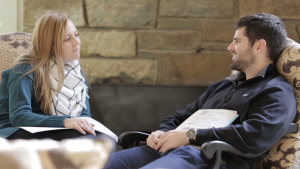
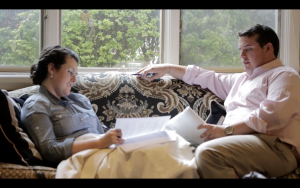
A couple dialoguing during their Three to Get Married weekend retreat.
Fr. John is motivated by seeing the special marriage his parents had, where Christ was at the center. They had some tough years early on because they took care of his grandfather with dementia, diabetes, and related complications. In high school, he noticed that there was something special about their marriage: it was strong while so many friends suffered because their parents had weak or failing marriages.
Jane Newstedt, the program director, makes a special effort to find volunteer presenter couples who have a heart to share with engaged couples; who are motivated to help the engaged couples’ marriages. She seeks couples whose stories resonate so the engaged couples can recognize and identify the struggles they have gone through.
Joe Truppo, a volunteer who does some of the talks with his wife, Helen, said: “I really enjoy sharing those personal experiences, in the hope that these couples have an experience that I kind of wish we had when I was engaged or first married – the experience of learning from the mistakes of other couples. I also like the fact we help give them a reality check.”
A Unique Combination
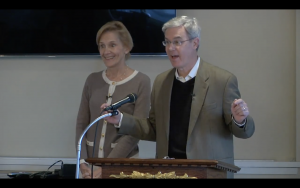
Married Couple giving a testimony at a Three to Get Married Weekend
Three to Get Married spans four days, running 3.5 hours on Thursday and Friday, and all day Saturday and Sunday. That makes it one of the longest programs in the area. However, when talking to those running the program, they emphasized how they use those hours and not just the quantity of them.
Mrs. Newstedt gives an introductory talk explaining why the couples are attending marriage prep. She says they need to learn about marriage in general, and their own marriages in particular. She points out that there are three categories of experts we can turn to to learn about what Jesus says about marriage: priests, psychologists, and married couples.
The priests’ talks cover conscience, the meaning of life, the nature of love, the sacrament of matrimony, and sacraments in general. Most of the talks by the priests are clustered on Sunday morning, which are referred to as a “retreat,” as it covers the spiritual aspects of Catholic marriage. At the end of the retreat, there are 3-4 priests hearing confessions and the majority of the Catholics attend the sacrament, even those who been away for a while.
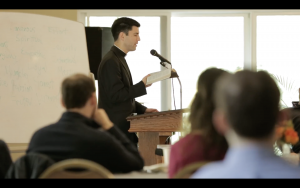
Fr. John Paul Duran, LC, speaking to participants
The second set of experts the course looks to are psychologists who have done a lot of solid research on relationships. They know what is needed for a emotionally healthy relationship. They only present a few talks, such as family of origin and parenting, but they help review all the talks to make sure they apply in a healthy way to all couples.
“The third group of experts we turn to are married couples who have lived the joys, the sorrows, the struggles and the challenges that every marriage faces,” said Jane. The engaged couples need to hear testimonies, not just information. Married couples give about half of the talks in the program, on things like money, communication and boundaries. Very often the engaged couples walk away with concrete ideas on how to deal with challenges from these volunteer couples.
From the beginning, Fr. John wanted to present clear Catholic teaching on marriage in a loving manner. In 1996, the Vatican came out with Preparation for the Sacrament of Marriage which serves as a model they still use today. The program is not designed to help “already perfect” Catholics, but to meet typical young Catholics where they are. One example of reaching people where they are is in how they present natural family planning (NFP). It is part of a talk on intimacy, which is given by a couple who used to use artificial contraception, but turned to NFP instead. They underline how that change really saved their marriage and helped them grow in intimacy. The couples tend to respond to that testimony more positively than they would to a list of reasons why NFP is a better choice.
The weekends include a lot of time for couples to talk together about the themes of the retreat.
Fr. John noted that one of the big changes they’ve done in their 25 years is moving to a greater focus on evangelization. Church documents speak of a remote preparation for marriage, which would provide evangelization during adolescence and young adulthood, but many have noted that is not happening with the majority of the engaged couples.
Now, he urges, “We need every single speaker to give witness of Jesus Christ in a subtle way. We need to bring them along to an experience of Christ and little-by-little re-introduce them into the life of the Church.”
With all the details they try to intertwine, once a year the team reviews all the elements of the program from various perspectives – priest, psychologist, organizer, presenter couples, and evaluations by engaged couples – and almost always make a few changes.
Happy Marriages
Currently, there is a waiting list for Three to Get Married. Some couples even come from out of state. One time, couples from New York, Pennsylvania and Indiana came to the same weekend. Deacon Dick Mattocks of St Raphael’s, a nearby parish, recommends the program because, “I ask those who go there ‘How was the marriage prep?’ and most of them say that it was surprisingly helpful. Those comments make me keep sending people back.” Fr. John noted how some who come say their friends told them, “You have to go to Our Lady of Bethesda, because it will change your life.”
After the weekend, many of the participants have share how it helped them. Jacob said it was, “An awesome opportunity to be conscious and thoughtful about marriage.” Mike said he would recommend it because it “prompted great conversations between my fiancée and me.” Timothy referred to the entire program as a “retreat” that he felt such spiritual nourishment from.
Even the volunteer presenter couples feel it improves their marriages. Helen Truppo noted, “It is a blessing for us to be able to talk to married couples. So for us, it’s a date night in a sense. It renews our own marriage.”
The staff at Our Lady of Bethesda aim to put happy couples in front of engaged couples, who will then form happy marriages. Fr. John said that running such a program involves a lot of work but, “when you see happiness return to marriage, it’s worth all the effort in the world.”
Note: all the names of couples taking the marriage prep program were changed for their privacy.
Alex Kucera has lived in Atlanta, GA, for the last 46 years. He is one of 9 children, married to his wife Karmen, and has 3 girls, one grandson, and a granddaughter on the way. Alex joined Regnum Christi in 2007. Out of the gate, he joined the Helping Hands Medical Missions apostolate and is still participating today with the Ghana Friendship Mission.
In 2009, Alex was asked to be the Atlanta RC Renewal Coordinator for the Atlanta Locality to help the RC members with the RC renewal process. Alex became a Group Leader in 2012 for four of the Atlanta Men’s Section Teams and continues today. Running in parallel, in 2013, Alex became a Team Leader and shepherded a large team of good men.
Alex was honored to be the Atlanta Mission Coordinator between 2010 to 2022 (12 years), coordinating 5-8 Holy Week Mission teams across Georgia. He also created and coordinated missions at a parish in Athens, GA, for 9 years. Alex continues to coordinate Holy Week Missions, Advent Missions, and Monthly missions at Good Shepherd Catholic Church in Cumming, GA.
From 2016 to 2022, Alex also served as the Men’s Section Assistant in Atlanta. He loved working with the Men’s Section Director, the Legionaries, Consecrated, and Women’s Section leadership teams.
Alex is exceptionally grateful to the Legionaries, Consecrated, and many RC members who he’s journeyed shoulder to shoulder, growing his relationship with Christ and others along the way. He knows that there is only one way, that’s Christ’s Way, with others!



 Please contact Fr. Ronald Conklin at
 The 17th International Summer Course in Bioethics is organized by the School of Bioethics of the Pontifical Ateneo Regina Apostolorum.with the collaboration of the

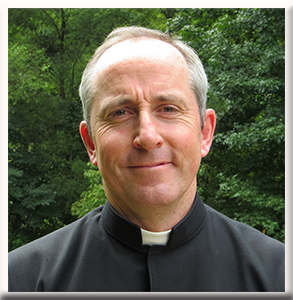 Fr Martin Connor, LC, was born in Baltimore MD, grew up near Annapolis, one of eight children, the last two of which are Legionary priests.