Regnum Christi Spirituality Center Ask a Priest

“Ask a Priest: What Is Rash Judgment About?”

Q: I have a question regarding the sin of rash judgment. I saw Father John Hardon’s definition of this sin, but I am still confused. Is it venially sinful to suspect people of venial or grave sins? For example, in St. Alphonsus’ sermons, he is constantly warning people about dying in a state of unrepentant mortal sin. Also he has a sermon about tepid souls (those who fall into easily avoidable venial sins). Is he not suspicious of the congregation? I heard a priest give a homily about the importance of getting anger and hatred out of our hearts, which is obviously important. But where I am confused is, it seems like a necessity for priests and members of the clergy to judge a little bit. But does this not go against the Church’s teaching about rash judgment? Is it a sin to suspect a friend of a grave sin “based on slight indications” if it is rooted in good intention (admonishing them)? I have a habit of suspecting lukewarm Catholics of committing sins against chastity. I don’t know if this is a venial sin on my part. Can you explain the rules in regards to rash judgment? – P.

Answered by Fr. Edward McIlmail, LC

A: Two short answers to your questions could be summed up in the adages “Hate the sin, love the sinner” and “Assume the best of people.”

It isn’t rash judgment for a homilist to speak out against objective evils. Part of his mission is to teach and to encourage people to do good and avoid evil. What would be inappropriate is for a homilist to attack people by name.

So, if a priest suspects that a number of his parishioners are hooked on pornography – perhaps he has heard wives complain about their husbands’ addiction – it is within his duty to somehow try to teach his flock about the seriousness of the evil. He could choose to do it in a homily, without singling out any individuals. At that point it’s up to each person to do an examen of conscience.

Now, if we notice things that are objectively wrong, we don’t have to turn a blind eye to it. In some cases, to do so might be a form of indifference, which isn’t good.

Nevertheless, seeing what we think is an objective evil doesn’t give us the right to go around and ruin a person’s reputation. That could be gravely sinful.

On the other hand, we do have a right to make prudential and discreet decisions. Let’s say you hear the guys at the office routinely engage in lewd talk. These same guys later invite you to join them for a few drinks after work.

You have the right to refuse to socialize with them, based on your impression that they aren’t the healthiest men to hang around with. True, you don’t know them 100%. Perhaps they are decent people, deep down. But you, not having a lot of time to research the situation, have to make a prudential decision on the spot. So you politely decline their invitation.

You could do this without judging them, per se. It’s just that, given incomplete information, you have to make a prudential decision. You might sense that joining them for “a few drinks” would lead to a less than morally uplifting activity.

But what if you decide in your heart that “These guys are worthless”? Then, you might be crossing a line. Perhaps the sin is venial in this case.

Where mortal sin could come in (aside from the above-mentioned case of ruining a person’s reputation) is if you fall into a habit of judging others or letting your judgment about a particular person harden to the point that you wish ill upon the person or you refuse crucial acts of charity or you let your judgment become a kind of active animosity. This can happen within families where relatives stop talking to each other for years at a stretch.

So what to do if you see or suspect someone is sinning? The best thing is to pray for the person. We are all sinners, after all, and Our Lord doesn’t want us to spend our time pointing fingers at others.

It also helps to keep in mind that even when we see someone else do something objectively wrong, we simply cannot see all the hidden, conscious and subconscious, motivations and influences that led them to do what they did — only God can see the “whole story” behind every person’s sins. Spontaneously, we tend to make excuses for ourselves when, for example, someone honks at us in traffic. Why not form the habit of doing the same for our neighbors? Wouldn’t this be a wonderful way to “love your neighbor as yourself”?

And what about that habit you have of assuming faults against chastity among “lukewarm Catholics”? Or suspecting grave sin “based on slight indications”?

This might be a moment to step back and see where that habit came from, because it isn’t healthy to assume the worst of others. Habitual judgmentalism could be a sign of pride as well as a distraction from one’s own failings. Rash judgment by its nature isn’t justified in any case.

These statements, by the way, are meant as an observation, not as a judgment on present company.

Keep learning more with Ask a Priest

Got a question? Need an answer?

Today’s secular world throws curve balls at us all the time. AskACatholicPriest is a Q&A feature that anyone can use. Just type in your question or send an email to AskAPriest@rcspiritual.wpenginepowered.com and you will get a personal response back from one of our priests at RCSpirituality. You can ask about anything – liturgy, prayer, moral questions, current events… Our goal is simply to provide a trustworthy forum for dependable Catholic guidance and information. So go ahead and ask your question…

“Ask a Priest: What Is Rash Judgment About?” Read More »

Regnum Christi at the 2019 March for Life

The 46th annual March for Life was held January 18, 2019.  Regnum Christi was there.  Many members, students from RC Education schools, Consecrated and Legionaries made the trip to support the sanctity of life and march in support of its protection at all ages and stages. Many other Regnum Christi members made the pilgrimage to march in support of the sanctity of life with their parishes and dioceses. Here’s a snapshot of some of their experiences.

Pinecrest Academy

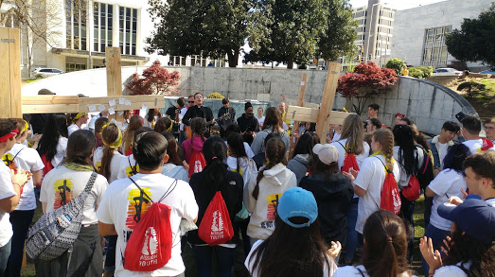
Dr. James Stone, the theology chair of Pinecrest Academy in Cumming, Georgia, led a group of high school juniors who spent the week leading up to the March in Washington D.C. exploring the sanctity of life in different facets. Alison Stone, Pinecrest Art Teacher and Chaperone said, “This journey began in the Our Lady of Guadalupe Chapel at Pinecrest Academy where the junior class learned the historic and spiritual significance of a pilgrimage as a voyage to historic and sacred sites. It has the purpose of bringing one closer to God and loving one’s neighbor in the process. During this expedition the students learned about the high ideals on which this country was based, namely, our inalienable God given rights of life and liberty. While on this trip they learned about legislation to protect the unborn. They learned the history of our great nation and got to experience it, too.

They had a walking tour of the White House, Treasury Building, Supreme Court, The Capitol, Library of Congress, the Memorials on the National Mall, the Newseum, Arlington National Cemetery, The Tomb of the Unknown Soldier, President John F Kennedy’s Grave, the Holocaust Museum, the Basilica of the Immaculate Conception, the Shrine of John Paul II, the Franciscan Monastery of the Holy Land in America, the Right To Life Youth Rally, the Mass for Life & the March for Life.” The evening before the March for Life, the students heard from Karen Cross, Political Director of the National Right to Life. Ms. Cross shared her experience of being a teenager confronted with an unplanned pregnancy, who chose abortion, regretted that decision, and has dedicated her life to protecting unborn babies and helping other women to choose life.


Everest Collegiate

Everest Collegiate & Academy students from Clarkston Michigan also made their trip to the March for Life a comprehensive week long educational and formative experience.  Part of that experience was meeting up with Pinecrest Academy students for Mass.  On the school’s blog, Miss Maria Mellis details,

“On Thursday evening, students joined fellow RC school students from Atlanta, Georgia’s Pinecrest Academy for an evening Mass, and Fr. Brian [Hoelzen, LC,] preached powerfully about our need to recognize and abandon tendencies of indifference in regards to all human life, be they the unborn, our peers, or the poor. He identified three modes of indifference: to not notice, to notice and not care, and finally, to both notice and care, but to take no action. The challenge to each of the participants was to choose caring and action over indifference in every relationship in our lives, including and extending beyond the unborn.”

Photo: Everest Collegiate and Pinecrest Academy students come together for Mass in Washington DC


Legionaries of Christ Novitiate and College of Humanities

35 Brothers from the Cheshire, CT, Novitiate and College of Humanitiescame to Washington DC for the prayer vigil, rally and March.  They also visited Arlington National Cemetery and the National Mall, praying for those who gave their lives in the service of the United States.

Photo:Brothers from the Legionaries of Christ Novitiate and College in front of the Supreme Court

The brothers came “to thank God for the gift of life, and to march to protect that gift for all,” according to Br. Peter Fagan, LC, who is originally from Denver Colorado and is currently serving in his internship as assistant to the rector of the seminary, Fr. Kevin Meehan.

Photo:Legionary brothers at the rally before the March for Life, “otherwise known as the wild party that begins way too early in the morning,” according to Br. Peter Fagan, LC


Sacred Heart Apostolic School

High school students from Sacred Heart Apostolic School, accompanied by Fr. Robert DeCesare, LC, Br. Christopher Daniels, LC, and Deacon Jesús Salinas, LC attended the March for Life and also visited some of the institutions of the United States Government and the American monuments in Washington, D.C.

Photo:Sacred Heart students at the Library of Congress

Several Legionaries, including Fr. Robert DeCesare, Deacon Jesús Salinas, Fr. Andreas Kramarz, Fr. John Sweeny and Fr. Stephen Liscinsky concelebrated with Archbishop Joseph Naumann of Kansas City at the Opening Mass of the Prayer Vigil for Life at the Basilica of the Immaculate Conception.

Photo:Preparing for the procession at the Opening Mass of the Vigil for Life


Photo: Fr. Robert DeCesare, LC, shares a priest’s eye view of the Opening Mass of the Prayer Vigil for Life at the Basilica of the Immaculate Conception

Fr. Matthew Schneider, LC, attended the March for Life with many other Regnum Christi members from Washington DC.  In his blog he rounds up 14 of the best signs he saw among the many thousands at the March for Life.

Photo:Fr. Matthew Schneider, LC, at the rally before the March for Life with pro-life Catholic speaker Obianuju Ekeocha

Regnum Christi at the 2019 March for Life Read More »

Regnum Christi Spirituality Center Ask a Priest

“Ask a Priest: Since Marriage Isn’t Eternal, Is It Worthwhile?”

Q: I am only 18, and my Catholic foundation is admittedly rocky on this subject. I have been feeling a deeper calling to my faith as of late, but cannot get over one matter that has consumed my thoughts for nearly a month: marriage. And not just marriage. But the irrational feeling that my future wife would die young. This was triggered when I read that earthly spouses will not have a similar relationship in heaven, which makes me feel that marriage is empty and somewhat pointless in the end. I always wanted to get married, but now I don’t know what to think. I have wondered if this is a calling to the religious life. If you could offer any thoughts or resources that could be useful I would greatly appreciate it. – N.

Answered by Fr. Edward McIlmail, LC

A: It is good to remember that marriage (between Christians) is a sacrament, which means that it points to something beyond itself. It is also a special conduit for God’s graces.

Marriage is an icon — an image if you will — of the love that unites the three Persons of the Trinity. It is also the means by which spouses cooperate with God in raising up new human life in the world.

True, marriage doesn’t last into heaven. But that is because no one will need it in heaven: There we will encounter the ultimate object of our love, God.

This doesn’t mean marriage doesn’t have any value. It is a foretaste of the love that awaits us in heaven.

If marriage didn’t have value because it doesn’t last for eternity, then nothing in this world really has value. But that seems to go against our intuitions. Things in this world are important. The way we choose to live is important. Our decisions have ramifications for our eternal destiny.

A better way of thinking might be this: We are pilgrims in this world, and we should make choices with an eye toward eternity. We should choose things that help us reach our ultimate end, which is union with God.

One of the great helps, for the vast majority of people, is marriage. It helps people get over their selfishness. It demands sacrificial love of spouses for each other and for their children. And a loving marriage gives a stable environment within which to raise children, as well as a great witness to the wider community.

Moreover, it is God’s chosen way of bringing new human life into the world. Remember his first command to the first couple: “Be fertile and multiply” (Genesis 1:28). You could read more about marriage in the Catechism, starting at No. 1601.

All of this is to say that marriage is by no means insignificant. It is a bedrock of any healthy society.

Now, returning to your particular situation: You mention about an “irrational feeling” that your future wife would die young.

True, there are no guarantees in marriage. Marriage requires faith in a loving God and his providence. It also demands that we go beyond the limits of our at-times narrow way of thinking.

Marriage is something of a leap of faith, for it calls people to venture into the unknown.

As such, it can make people vulnerable — hence we use the term “falling in love.” When we are falling, we feel helpless. That is part of the thrill of love. A person opens himself to another person who will accept and love him in return.

We all need to make a leap of faith sometime, whether we are called to marriage or priestly or religious life or even a path such as the military. At some point, we realize that unless we make a commitment to someone or something outside of ourselves, we will remain self-centered and become stagnant.

Perhaps it is worth taking some of this to prayer and asking the Holy Spirit for enlightenment. What is the basis of your fears? Are you afraid to be vulnerable? to have trust in God? to give of yourself to others?

Remember Jesus’ words, “Unless a grain of wheat falls to the ground and dies, it remains just a grain of wheat; but if it dies, it produces much fruit” (John 12:24).

Perhaps you might find our “Be Not Afraid“ online retreat guide useful. I hope some of this helps.

Keep learning more with Ask a Priest

Got a question? Need an answer?

Today’s secular world throws curve balls at us all the time. AskACatholicPriest is a Q&A feature that anyone can use. Just type in your question or send an email to AskAPriest@rcspiritual.wpenginepowered.com and you will get a personal response back from one of our priests at RCSpirituality. You can ask about anything – liturgy, prayer, moral questions, current events… Our goal is simply to provide a trustworthy forum for dependable Catholic guidance and information. So go ahead and ask your question…

“Ask a Priest: Since Marriage Isn’t Eternal, Is It Worthwhile?” Read More »

Millennials and Missions: A New Song for the Church

TKC!


The Church isn’t a club.  It is an organization that exists mainly for the sake of those who do not yet belong.  But reaching out to those on the periphery can be hard.  Does your local parish feel like a “members only” environment? Thankfully, it seems that millennials don’t much like the “club-church” model and are starting something new: the “mission-church” model.

Msgr. Edward J. Theinat Sacred Heart Basilica in downtown Atlanta understood this very well. He enthusiastically supported turning his parish Holy Week into “Mission Week”.  His secret sauce?  Millennials, mission work and music!

A large team of almost 100 young adults from the apostolate Mission Youth came to his parish for Holy Week. What they did was a radical new concept: instead of living Holy Week safely inside the doors of the parish, they took Holy Week out into the streets. They brought the message of Jesus to everyone willing to listen in soup kitchens, homeless shelters, street corners and more.  For this church, gone were the days of passively waiting for people to walk in the door. The kids were “commissioned” at the start of Holy Week during a special ceremony. Afterwards, they literally walked out into the streets!

“We even had our own theme song”, said Emily Roman, a consecrated woman of Regnum Christiwho helped organize the events. “These kids were singing the song as they walked the streets of Atlanta.  It was for me like watching the first apostles at Pentecost leaving the Upper Room!” she said.

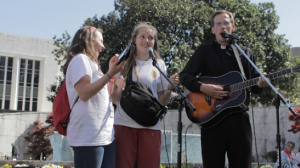
The theme song she is referring to was written by a young priest named Fr. John Klein.  His music has a punchy and fast style that appeals to the kids.  During the mission week he could be seen working alongside the kids with his guitar faithfully strapped to his back.   He wrote a song just for the occasion.  “Music is a great way to bring people together and spread the joy of the Gospel.  Going through the streets singing is a reminder to all of us of our mission to spread the joy of the Gospel by first living it ourselves!”said Fr John.

The theme song is called “Movement Rising”.  And they are a movement rising! It is as an overture to a musical score that has begun, revealing what is to come for the Church: millennials and missions.


For more information:

–How to Set-up a Holy Week Mission

– More info on Mission Youth Missions here.


Millennials and Missions: A New Song for the Church Read More »

Forming the Next Generation of Priests: 28thAnnual Course for Seminary Formators

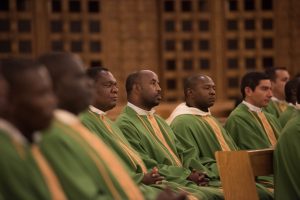
The Legionaries of Christ have run a course for diocesan and religious seminary formators from around the world for 28 years. This summer’s course had 86 participants from 27 countries.
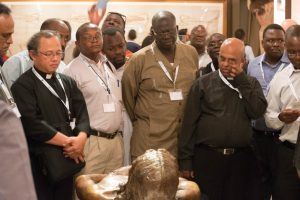
The RatioFundamentalis Institutionis Sacerdotalis, published by the Congregation for the Clergy in December 2016, recalls “seminarians, at various stages of their journey, need to be personally accompanied by those who have been in charge of formation.”

Seeking to offer a service to the Church and, in particular, to the seminary formators responsible for this “delicate mission of priestly formation” (Pastores Dabo Vobis132), the Sacerdos Institute of the Pontifical Athenaeum Regina Apostolorum organizes each year a course that, as over a month, it deals with the most important topics of the seminarian’s formation.

The XXVIII International Course for seminar formators took place over the summer (June 30thto July 30th) at the Pontifical International College Maria Mater Ecclesiae with 86 priests. It began with 5-day Ignatian spiritual exercises, preached by Fr. Bennet Tierney, LC.

“This course opened my eyes to the need to evangelize, but above all to the need to witness to the priestly life. The people of God expect much from us. We must be able to bring people closer to God for the sanctity of our life, “said Fr. Yesse Jean-Noel, of the Diocese of Berberati, Central African Republic.
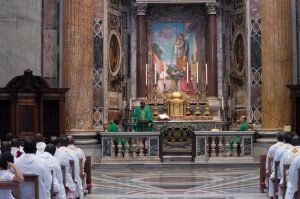
Fr. Luis Ramírez, LC, of the Sacerdos Institute, commented, “The course serves as a refresher for those already dedicated to the formation of future priests. It is presented as an opportunity to study, deepen and share experiences among formators who have the responsibility to accompany in the discernment, growth and maturation of seminarians.” Along this line, various professors and specialists gave lectures on relevant topics for seminar formators.

Among the participants were 24 rectors of seminaries, 3 vice-rectors, 30 formators, 6 spiritual directors, 1 vocational director and 1 novice teacher. Participants came from 27 countries: Australia, Brazil, Benin, Burkina Faso, Cameroon, Central African Republic, Chad, Colombia, Democratic Republic of the Congo (Kinshasa), Republic of the Congo (Brazzaville), Egypt, Ethiopia, Ghana, India, Malawi, Mexico, Nigeria, Slovakia, Slovenia, South Africa, Swaziland, Tanzania, Uganda, Venezuela, Vietnam, Zambia and Zimbabwe.

“It’s never too late to learn. The formation I received helped me and gave me the courage and joy to keep going. May the Spirit of God continue to encourage and enlighten us so that each one of us may be ‘another Christ’ and have the feelings of the Son,” said Fr. Edouard Tsimba, of the Archdiocese of Bangui, Central African Republic.

The month included a workshop on discernment. This workshop included the following presentations: “Christian Discernment” by Fr. Raffaele Di Muro, OFMConv, “Vocational Discernment” by Fr. Armando Santoro, OMV, “Discernment and affectivity” Fr. Amadeo Cencini, FdCC, and finally, “Discernment and conscience” by Msgr. Raffaelo Martinelli.
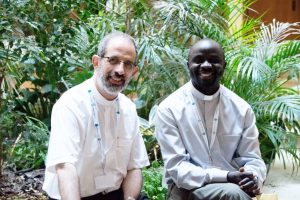
In addition to the conferences and workshops, the course included moments of work in small groups, where cases and real situations were analyzed, from the discussion and the listening in a team, to exercise in the decision making.

“I loved the time I spent with other formators from different seminars around the world. I liked being together, praying together and learning together because we are engaged in the same ministry: formation of future priests, pastors who have the smell of the people, “Fr. Edouard of the Central African Republic added.

The course was directed by Fr. Alex Yeung, LC, with the help of another Legionary priest and 14 Legionary brothers studying theology who helped with secretarial work, administration, simultaneous translation, logistics, and liturgy.

If a seminary formator in your diocese is interested, details on the 2019 course are here.

This article originally appeared on the Legionaries of Christ Site in Spanish.

Forming the Next Generation of Priests: 28thAnnual Course for Seminary Formators Read More »

Christ Alone is Enough | A Regnum Christi Retreat Guide with Fr. John Bartunek, LC

Christ Alone is Enough: A Retreat Guide on St. Paul’s Letter to the Colossians

Not unlike the culture of today, the young Christian community in Colossae was experiencing turbulence, with many teachers expounding false doctrines.

Some teachers there were claiming that Jesus, and the grace Jesus gives, were not sufficient for our salvation. Instead, so these teachers affirmed, we need to add on the mediation of angels and other spiritual forces, as well as various ritual practices that worked almost like magic when combined with special, secret knowledge beyond what Jesus had taught.

St. Paul recognized the danger in these kinds of false doctrines. His Letter to the Colossians functions as a kind of inoculation against those false teachings, and against the deadly virus of spiritual self-sufficiency that they were spreading. And that’s a virus that has reappeared in our own age. In this Retreat Guide, we will have a chance to renew our inoculation and discover again that Christ Alone is Enough.

  • In the two Meditations, we will touch on crucial passages linked to authentic, Christ-centered spiritual freedom.

  • And in the Conference, we will review the ancient practice of Lectio Divina, sacred reading, as a way to follow St. Paul’s advice to the Colossians to “let the word of Christ dwell in your richly.” The Conference will reflect on the symbolism present in the image itself, symbolism that can help stir up the spirit of Christmas in our souls.

The Personal Questionnaire/Group discussion questions are available in the Companion Guide Book or Small Group Companion Guide. Either download the PDF Companion Guide Book or purchase it. The Companion Guide Book is available for purchase as a paperback or in Kindle at Amazon. Pause the video at any moment to go to the Companion Guide Book or continue to the next meditation.

Let’s begin by quieting our hearts and turning our attention to the Lord, who never stops paying attention to us. And let’s ask him for all the graces we need, most especially, the grace to discover, once again, that Christ alone truly is enough.

Video

Audio

Christ Alone is Enough: A Retreat Guide on St. Paul’s Letter to the Colossians Read More »

Regnum Christi Spirituality Center Ask a Priest

“Ask a Priest: What If a Pro-life Candidate Doesn’t Seem Apt?”

Q: My question is about voting. I am pro-life, and I know that as Catholics we are not supposed to vote for a presidential candidate who is not pro-life. However, what should we do if we do not believe the pro-life candidate is fit for office? I disagree with so much of what one politician stands for. He is disrespectful to women, minorities, immigrants, and anyone who disagrees with him. I could go on, but I’ll just get to the point: I dread the thought of him winning a second term. I will not vote for him. The problem is, I know that most (if not all) of the opposing candidates will be pro-choice. So my question is, is it ever OK to vote for a pro-choice candidate for office (and obviously continue to fight for rights for the unborn), or do we simply just not vote (which also seems wrong)? Any advice you can give on this matter would be greatly appreciated! – M.R.

Answered by Fr. Edward McIlmail, LC

A: A more precise way of stating Catholic teaching would be to say that we couldn’t vote for candidates because of their pro-choice stance. That could count as formal cooperation with evil.

Unfortunately there aren’t a lot of candidates nowadays who reflect Christian values across the board. Sometimes the decision comes down to picking the lesser of two evils, so to speak. (Technically, we should never choose evil, per se; rather, we could choose something to avoid a greater evil.)

So where does this leave you?

This is something you will need to take to prayer. Included in that prayer could be a petition for more palatable candidates in the election.

If neither major-party candidate suits you, you could also write in a pro-life candidate. Or just skip that contest and vote in other races that have more-appealing candidates.

There are no easy choices here. Ours is a culture that has drifted far from its Christian moorings. A major turnaround is unlikely to occur anytime soon.

If you want to learn more about the basic principles underlying a healthy society from a Catholic point of view, you might want to look at our online course called Spirituality and Society: A Practical Overview of Catholic Social Teaching.

Perhaps for your own peace of mind, you might want to look for ways to become more active in the pro-life cause.

By helping with pro-life crisis pregnancy centers, for instance, you can make a difference and help to save lives here and now. For more ideas, see https://www.osv.com/OSVNewsweekly/ByIssue/Article/TabId/735/ArtMID/13636/ArticleID/418/15-ways-to-promote-the-sanctity-of-life.aspx.

Channeling our energy in these areas will help us avoid a sense of discouragement and helplessness with the larger political culture. This includes prayer and fasting. Ultimately, we want to focus on a goal far greater than any political office.

Keep learning more with Ask a Priest

Got a question? Need an answer?

Today’s secular world throws curve balls at us all the time. AskACatholicPriest is a Q&A feature that anyone can use. Just type in your question or send an email to AskAPriest@rcspiritual.wpenginepowered.com and you will get a personal response back from one of our priests at RCSpirituality. You can ask about anything – liturgy, prayer, moral questions, current events… Our goal is simply to provide a trustworthy forum for dependable Catholic guidance and information. So go ahead and ask your question…

“Ask a Priest: What If a Pro-life Candidate Doesn’t Seem Apt?” Read More »

Regnum Christi 2024 General Convention Rome Italy

January 16, 2019 – Jesus at Prayer

Wednesday of the First Week in Ordinary Time

Father Paul Campbell, LC


Mark 1:29-39


As soon as they left the synagogue, they entered the house of Simon and Andrew, with James and John. Now Simon´s mother-in-law was in bed with a fever, and they told him about her at once. He came and took her by the hand and lifted her up. Then the fever left her, and she began to serve them. That evening, at sundown, they brought to him all who were sick or possessed with demons. And the whole city was gathered around the door. And he cured many who were sick with various diseases and cast out many demons; and he would not permit the demons to speak, because they knew him. In the morning, while it was still very dark, he got up and went out to a deserted place, and there he prayed, and Simon and his companions hunted for him. When they found him, they said to him, “Everyone is searching for you.” He answered, “Let us go on to the neighboring towns, so that I may proclaim the message there also; for that is what I came out to do.” And he went throughout Galilee, proclaiming the message in their synagogues and casting out demons.


Introductory Prayer: Lord, thank you for this time we will spend together. I wish to step away from the world and all its activities to be alone with you now.  You are my beginning and my end: you created me, and you are leading me home to you in heaven. Thank you for your love. I know I deserve nothing from you and that my sins compound my unworthiness, yet you would still enfold me in your unfathomable love.


Petition: Lord, increase my love for prayer and the interior life.


  1. A Man for Others: Here is Jesus in action. He works tirelessly from morning to night. He never thinks of himself. He never says he’s too tired or too busy to serve someone or to give others part of his time. He is there for everyone, and he keeps pushing himself to do more and more. He loves, and his love compels him to give himself to everyone around him without counting the cost. The whole city gathers to see him, and he opens his heart to all. He teaches. He heals the sick. He casts out demons. He is a man for others.


  1. A Man of Prayer: After a full day of work, Jesus rested for just a little while, and then he rose early for prayer. There was a balance between his apostolic work and his life of prayer. Jesus wasn’t too busy to seek the solitude necessary to speak heart-to-heart with his Father. He found strength in prayer. He strengthened his resolve to follow his Father’s plan in prayer. He was absorbed in prayer for so long that the others began to go in search of him. Prayer wasn’t just a one-time activity: it was part of his daily routine.


  1. Everyone Is Searching for Him: “Everyone is searching for you,” they said when they found Christ. They expressed the desire of every person. We all need God. He is the deepest desire of the human heart. God is searching for us, too. Jesus gets up from his prayer and heads out to the next town. We are searching for Christ, and he is searching for us. Where do we meet him? In prayer. In prayer we speak heart-to-heart with the one whom we know loves us. In prayer we can speak about the things that are important to us and about those things that are most important to him. This vital encounter gives light and strength to every other encounter we will have during the rest of the day. Through prayer, our love for others is enkindled so that we can spend ourselves tirelessly for others as Jesus did. Through prayer, we can be a men and women for others.


Conversation with Christ: Lord, help me to put you first in my life by giving you the best of my time. Help me not to give into laziness, but to rise early in the morning so that I can be with you. I need you in my life. Help me to experience your love so that I can share it with others. Help me to give myself to your plan of salvation and to reach out to those who are searching for you. Help me to hunger for you alone so that you will satisfy my hunger.


Resolution: I will invoke Our Lord in short and simple prayers throughout today, telling him I love him and asking for the grace of a greater intimacy with him through prayer.

January 16, 2019 – Jesus at Prayer Read More »

Scroll to Top

Events

Looking for another country?

Contact Regnum Christi near you

News & Resources

News & Resources

The Regnum Christi Mission

The Regnum Christi Identity

Alex Kucera

Atlanta

Alex Kucera has lived in Atlanta, GA, for the last 46 years. He is one of 9 children, married to his wife Karmen, and has 3 girls, one grandson, and a granddaughter on the way. Alex joined Regnum Christi in 2007. Out of the gate, he joined the Helping Hands Medical Missions apostolate and is still participating today with the Ghana Friendship Mission.

In 2009, Alex was asked to be the Atlanta RC Renewal Coordinator for the Atlanta Locality to help the RC members with the RC renewal process. Alex became a Group Leader in 2012 for four of the Atlanta Men’s Section Teams and continues today. Running in parallel, in 2013, Alex became a Team Leader and shepherded a large team of good men.

Alex was honored to be the Atlanta Mission Coordinator between 2010 to 2022 (12 years), coordinating 5-8 Holy Week Mission teams across Georgia. He also created and coordinated missions at a parish in Athens, GA, for 9 years. Alex continues to coordinate Holy Week Missions, Advent Missions, and Monthly missions at Good Shepherd Catholic Church in Cumming, GA.

From 2016 to 2022, Alex also served as the Men’s Section Assistant in Atlanta. He loved working with the Men’s Section Director, the Legionaries, Consecrated, and Women’s Section leadership teams.

Alex is exceptionally grateful to the Legionaries, Consecrated, and many RC members who he’s journeyed shoulder to shoulder, growing his relationship with Christ and others along the way. He knows that there is only one way, that’s Christ’s Way, with others!