Q: I found this biblical quote on the Internet, from Romans 16:17-19 – “I appeal to you, brothers, to watch out for those who cause divisions and create obstacles contrary to the doctrine that you have been taught; avoid them. For such persons do not serve our Lord Christ, but their own appetites, and by smooth talk and flattery they deceive the hearts of the naive. For your obedience is known to all, so that I rejoice over you, but I want you to be wise as to what is good and innocent as to what is evil.” My question is: Is this from the Catholic Bible? This quote would go against God’s rule that says to love everyone, even the evil people you come across. I try to avoid these people as best as I can, but after I accepted Jesus into my life I’ve become too nice of a person to reject anybody. Also, what does God mean when he says to treat people as a gentile or tax collector? “If your brother sins, go and show him his fault in private; if he listens to you, you have won your brother. But if he does not listen to you, take one or two more with you, so that by the mouth of two or three witnesses every fact may be confirmed. If he refuses to listen to them, tell it to the church; and if he refuses to listen even to the church, let him be to you as a Gentile and a tax collector” (Matthew 18:15-17). Thanks so much for your time. – A.K.
Answered by Fr. Edward McIlmail, LC
A: It is good to hear that you have accepted Jesus into your life. He is “the way, the truth and the life” (John 14:6).
Let me mention at the start that you can find the New American Bible online. This is the version used in Masses in the U.S.
Regarding the two quotes you mention: You will basically find the same wording in any Catholic Bible.
The call to avoid people who can mislead others in the faith is simple prudence. We can still love those people, in the sense that we can pray for them and that we hope they reach heaven someday.
For this reason, we shouldn’t think of certain people as inherently evil; they too can have a conversion or come to the full knowledge of Jesus’ teachings. But loving someone doesn’t mean we are obligated to stay close to them and expose our faith to attacks.
And remember, that second quote is directly from Jesus. If he counsels people to keep their distance from someone who stubbornly opposed the faith, then we can be sure that that is good advice.
Being “nice” to people doesn’t mean we go to any extreme to accommodate them. The simple fact is, being Christian means to encounter opposition and at times ridicule. It also entails speaking out at times against the injustice and immorality we see around us. That will make us enemies. It made enemies for Jesus, but he didn’t water down his message.
Perhaps it would be good to read the Gospels with an eye toward how often Jesus faced opposition. That means we can expect opposition, too, if we really want to be his disciples.
Today’s secular world throws curve balls at us all the time. AskACatholicPriest is a Q&A feature that anyone can use. Just type in your question or send an email to AskAPriest@rcspiritual.wpenginepowered.com and you will get a personal response back from one of our priests at RCSpirituality. You can ask about anything – liturgy, prayer, moral questions, current events… Our goal is simply to provide a trustworthy forum for dependable Catholic guidance and information. So go ahead and ask your question…
Q: Can you tell me what else I can do besides praying night and day for peace and empathy in our world? It is hard not to enjoy the beautiful gifts God has given to me, without realizing everywhere I turn that there is endless suffering and hatred. Sometimes I wonder what heaven will be like, because only there will I know that suffering doesn’t exist. Please tell me whatever ways you think can help me cope. I enjoy volunteering when I can. I donate to the animal shelters when my finances permit, and I have a wonderful job as a nurse assistant helping the elderly at a nursing home. And I know that statement sounds as though I’m getting on a soapbox or something, but I just want to illustrate that I am trying to help others. And it does make me feel better. But at the end of the day I still have an awful depression hanging over me, knowing that there are people who are dealing with far worse things than I am. – B.
Answered by Fr. Edward McIlmail, LC
A: You are feeling what a lot of people are feeling nowadays — a sense that the world is a hopelessly nasty place that we can’t do much to change.
The world has a nasty place, thanks to original sin and its fallout. Genesis gives us a taste of this: Soon after the fall of Adam and Eve comes the infamous story of Cain and Abel.
Perhaps a few ideas are worth mentioning here.
First, God hasn’t given up on the world. In fact, he sent his own Son to suffer and die on a cross for our redemption. If Jesus hadn’t come into the world, the world would be a much nastier place. And he didn’t wait for the world to improve — he jumped in and offered a new message.
That message has transformed the lives of hundreds of millions of people. One result is that there is a lot of good around us that we can see.
Second, Jesus is God, and even he didn’t convert the world. We shouldn’t hope to do it, either. But we aren’t asked to change the world. We are asked to help change that little part of the world that God assigns to us.
That part of the world might be the nursing home where you work, or your family, or the block on which you live, or your parish. Use your energy to help the people around you, and you will have a sense of improving at least some lives.
Beyond the work, it would be good to cultivate your prayer life and sacramental life. That is one of the best ways to nourish a sense of hope. Do this, and you will better help the world, for your growth in holiness gives glory to God and lets him work through you more effectively.
At the end of the day it’s God who is in charge. He has his reasons for allowing evil to thrive here and there. Our Lord can bring good out of evil. His timing might be mysterious, and his ways might be mysterious, but that is to be expected. God works at a much higher level than we do.
It’s good to remember that Christianity isn’t about cursing the darkness. It’s about lighting a candle and dispelling the darkness little by little. In God’s time, not ours.
Today’s secular world throws curve balls at us all the time. AskACatholicPriest is a Q&A feature that anyone can use. Just type in your question or send an email to AskAPriest@rcspiritual.wpenginepowered.com and you will get a personal response back from one of our priests at RCSpirituality. You can ask about anything – liturgy, prayer, moral questions, current events… Our goal is simply to provide a trustworthy forum for dependable Catholic guidance and information. So go ahead and ask your question…
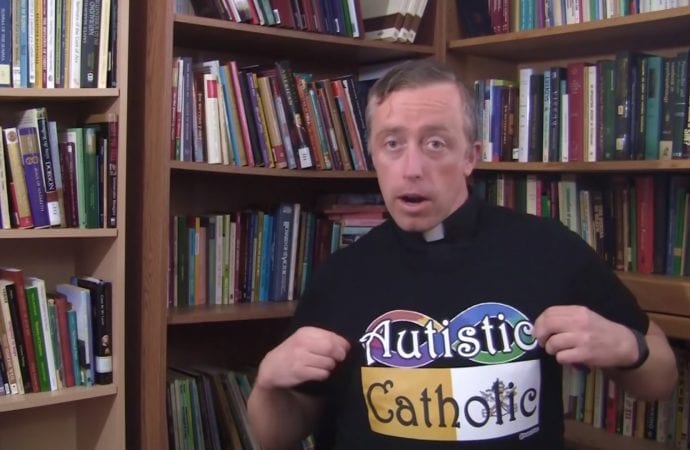
Fr. Matthew P. Schneider, LC, is a Legionary of Christ who was diagnosed with autism in 2016. He has decided to share his story publicly in hopes to reach the hearts of, and serve, those with autism.
Video Announcement
Fr. Matthew said that as a child he always felt a little different. He didn’t feel like he fit in and was often teased. However, he finished school, university, and formation as a priest without too many struggles. He noted that the clinical definition of autism has changed a lot since he was a kid: he didn’t meet the criteria back in the 1980s, but does meet it now.
Soon after he was ordained to the priesthood he was assigned to a position as a school chaplain. He explained to us that he didn’t do very well in the position and a few people, at that time, had suggested that he get tested for Asperger’s syndrome. Ultimately, this lead him to a diagnosis of Autism Spectrum Disorder in 2016, 2 years after he was ordained a priest.
In his online video, he thanked the Legionaries of Christ for their support stating: “In the Legion, my superiors have been helpful throughout this whole process, and when I brought up the possibility of talking about this publicly, they were supportive.”
He explained several reasons for being public about having autism He indicated that people with autism are still an underserved population in the Church and often on the peripheries. He feels that by sharing his story, and the work still to come, it’s a small step in the right direction. He dreams of helping those with autism, and their families, be more connected to their Catholic faith, and come back to the Church if they’ve fallen away. He wants to help the Church to better include those with autism. Right now, this segment of our population tend to be less religious than others are, in both belief and practice.
Media Interviews
Fr. Matthew also spoke to Catholic News Agency. He explained how he lives with the challenges of autism. He explained, “Realizing that I’m going to have these difficulties, I will try to put in as much effort as I can, even if that tires me.” He continued, “I’m not necessarily going to pick up every social cue, so I’m going to do the best I can and ask for clarification when I’m not sure.” He also mentioned that he needs to consciously do several things most people do unconsciously in social situations.
He also told Catholic News Agency of his nickname, Schneider-pedia, and why he was given it: “I have what’s kind of a stereotypical autistic memory, which is a very good memory of details and facts, which has been helpful in different ways as a priest.”
He explained that he hopes that being transparent and public about autism will pave the way for writing books on prayer or catechetical materials to help this underserved population. He stated that autism might make someone experience God differently, but God comes to each person as they are. Fr Matthew, explained, “We have the opportunity to experience God’s love in an autistic way.”
Speaking with Crux, Fr. Matthew explained how inculturatingthe Gospel to others with autism would work: “[As] someone who has the same kind of thinking patterns, which aren’t the same as the rest of society, I’m able to present the faith in a way that corresponds. It’s still the Catholic faith, just worded or phrased or explained slightly differently.”
Fr. Matthew also explained how he felt when diagnosed with autism. He stated, “I can tell you that on the drive home that day I was feeling really down about it. But, as I looked into it and read up over the following weeks and months, I realized that, oh, this is probably why I’ve had some of these struggles.” He said that overall being diagnosed was freeing and helped him better understand himself and what God was further asking him for.
Autism and Regnum Christi
We asked Fr. Matthew to explain how he sees his vision of serving those with a neurology like him fit with the charism of Regnum Christi. He mentioned four ways.
First, he noted that “we are called to go out to the peripheries and smell like the sheep.” He explained, “Autism is part of the peripheries. We often think of peripheries geographically, but so often the dividing line of the periphery is due to a trait the person has such as being on the spectrum. He says that autism is a periphery because the Church, generally speaking, has not been investing resources there.” Regarding smelling like the sheep, Fr. Matthew spoke about how having autism enables him to think like others on the spectrum, which he believes that this will allow him to reach this periphery better.
Second, he talked about forming apostles. He noted that although we don’t often think about those with autism as great leaders or apostles, he think they can become so in several ways. He believes that those on the spectrum can evangelize others like them more effectively. Also, people with autism are often very helpful in key positions in society where their unique skill-sets excel, and from there, we can lead others to Jesus.”
Third, he discussed our woundedness and vulnerability in Regnum Christi. He noted, “Given our history, we seem to have a special call as wounded Christians. In admitting my own condition, I offer a kind of transparency to my challenges that I think expresses this woundedness.”
Finally, he explained, “I think part of the Regnum Christi spirit is that each of us should use our talents to the best of our ability to transform culture, serve the Church and build the kingdom of Christ. I’m currently doing a doctorate to move into the intellectual field that better matches my skills and talents than running an ECYD section or being a school chaplain, as I found out early on. Being diagnosed with autism was part of what moved me in that direction.”
Fr. Matthew P. Schneider, LC, will be posting content on Catholicism and autism. Check him out on Facebook, Twitter, or YouTube.
His story was covered on CNN Español. He was also interviewed by EWTN Noticías (EWTN News in Spanish).
Would you like to raise the blood pressure of a faithful Catholic Parent?
It is easy; just announce a new sex education program for the local school system. Explain that you are bringing in government experts and recognized authorities in the field to make sure kids know everything the government health officials think they should know about the birds and the bees.
What is a Catholic family to do? One solid suggestion is to recommend a “Love” education program that complies fully with the teachings of the Catholic Church as presented in the Catechism, a program written by a true expert in the field who has been talking and writing the truth of love, life, and sexuality for more than two decades.
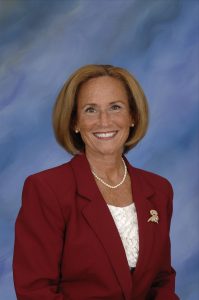
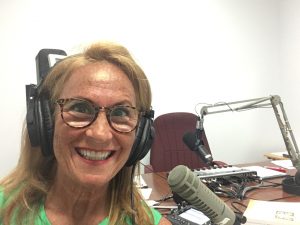
She is Coleen Kelly Mast, M.S., D.H.L., author of the Sex Respect® Love & Life, and LoveEd ® Programs, and Catholic Radio Talk Show Host on Ave Maria and EWTN. Her syndicated call-in radio advice show on Saturday mornings, “Mast Appeal” runs on more than 350 Catholic Radio Stations through EWTN as well as on Sirius Satellite Radio.
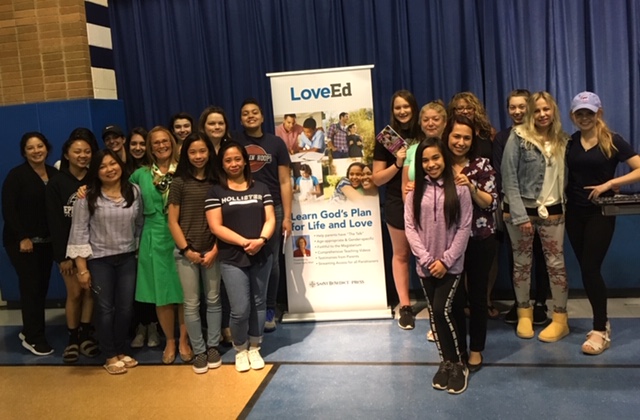
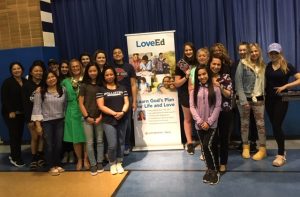
Mast, a pioneer in modern Catholic Family Life Education, has written the “Love & Life”(Ignatius Press) and “Sex Respect”(Respect, Inc.) chastity education programs, which include books for teachers, teens and parents. Her new video/discussion program ‘LoveEd’was recently released by Saint Benedict Press in English and Spanish. “LoveEd” includes 28 video clips and 6 workbooks in 5 seminars for a parish or Catholic school program that empowers parents to teach their children the meaning of life and the theology of the body along with the facts of life.
Mast’s family life programs have been sold in 26 countries and all 50 states. She has appeared on Oprah, Geraldo, Mother Angelica Live, 60 Minutes, and Steubenville High School Youth Conferences. Mast has debated the Presidents of SEICUS and Planned Parenthood on television, and debated ACLU representatives on public radio. She has trained Catechists in Hong Kong, Mexico City, Manila, Canada, Rome, and several others places around the world.
She assisted with the writing of the 1990 United States Council of Catholic Bishops (USCCB) document on Human Sexuality Education. In 1996, Mast was one of four US citizens invited to the Vatican by the Pontifical Council for the Family to present her Love & Life Program at an in-depth study of “Truth and Meaning of Human Sexuality” document when it was released. Coleen served as a member of the National Review Board for the United States Conference of Catholic Bishops from 2011-2015.
Mast is a lifelong Catholic, 2ndoldest of 9 children of an Irish Catholic family, and grew up in the northern suburbs of Chicago. She and husband Kent have five adult children and six grandchildren (so far).
While participating in Regnum Christi for 14 years, Mast helped start FAMILIA in the Chicago area. And as her professional CV suggests, she is one busy woman. But she took time to answer a few questions about her apostolic mission.
What inspired you to be an author, speak, and radio host?
None of this was my idea, it was all God’s idea. He planned me from the moment of conception; He chose my personality, my driven temperament, and my deep desire to love God and serve others. Really, now, who, coming of age in the 1970’s, would have thought of being a chastity educator and a Catholic Radio talk show host? None of those things existed then! I set out to serve the church and Catholic schools, knowing that required a person to develop many talents and virtues. God kept calling, I kept answering, sometimes for surprising tasks.
The only reason I became an author is that the high school religion classes I was teaching were turning out such committed Catholic students that the word spread, and I was invited to speak at several places around the country. Then people started asking if I would write down the curriculum I had produced. That’s how Love & Life (Ignatius Press) came to be. The “Sex Respect” public school program was born as my graduate school curriculum project, and again, people started contacting me from all over asking for copies so they could convincingly teach abstinence in their public schools, too. My new LoveEd video-discussion program was an outgrowth of the “Growing Up with Health and Virtue” Presentations that Archbishop Peter Sartain of Seattle (then bishop of Joliet, Illinois) asked me to write to help the parishes empower the ‘parents’ to be the primary educators of their children in matters of love, life, and marriage. I said ‘yes’ to the bishop, other dioceses found out about it, and now it is going international and is available in Spanish. Surprisingly, there was nothing else out there on the market like LoveEd that teaches the science combined with the theology and teaches through the parents, rather than having the parish or school do the job for them and ask the parents to have some follow up discussions.
[Several of my friends from Regnum Christi star in the LoveEd Parent video, including Pete and Angela Colarelli, and Arturo and Christina Gutiérrez.]
What is the purpose of your apostolates?
The purpose of each of my apostolates is to teach the TRUTHs of the faith clearly, and with love. Whether it is someone on the radio show that needs a gentle correction or words of encouragement, or it is a parish full of parents that don’t know how to handle the love and life questions that their kids are exposed to in today’s confused world. In my speaking apostolate, I also do motivation and entertainment that help people live the faith.
How does it serve the Church?
Assisting parishes with my programs and presentations, assisting parents and families with my books, videos, and Radio Show.
Funny truth: Even bishops and priests listen to my radio show, several of them are faithful weekly listeners, they tell me. The priests and bishops say they get ideas on my radio show of how to help the people who come to them for advice. It’s beyond me to think that I have helped bishops and priests – another one of those ideas from God, not me.
How does it support the mission of Regnum Christi?
I receive emails from RC members who are encouraged and inspired by my radio show, presentations, and books. Several RC groups have invited me out to speak in their sections, schools or parishes when they want to bring in a national speaker for a retreat or educational program. In the early years of the radio show, when the Conquest, Challenge, and Pure Fashion Apostolates were strong, I would often find opportunities on my radio show to promote those events as part of the solution to the caller’s problem.
What are the accomplishments to date?
– First and foremost, being married for more than 40 years and giving birth to five wonderful human beings.
– There are several, the first being a very fulfilling life, knowing that I have done what God has asked of me.
-Leading the public school abstinence movement with my Sex Respect Program with Teacher Manuals, Parents Guide and Student Workbook
– Writing Love & Life, the first Catholic chastity education program since Vatican II, still selling in schools throughout the world, complete with a Parent’s Guide for those intimate questions to be answered in the family.
-Being invited to the Vatican by the Pontifical Council for the Family to present my programs to an international audience in Rome.
-Traveling the world to give trainings at different diocese, having lunch with bishops and cardinals in the US and other countries.
-Serving the USCCB for 4 years on the National Review Board, working closely with the several bishops.
-Starting FAMILIA here in Chicago led to many new RC teams, many new ‘reversions’ of Catholics who are now living the faith and doing active apostolate, and – so beautifully – many more new babies born that may never have been conceived!
What are your plans/hopes for the future?
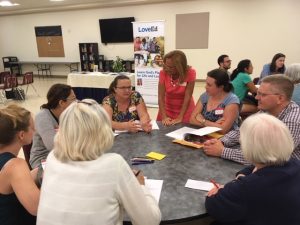
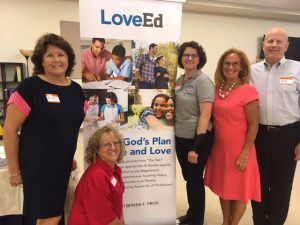
My new LoveEd program is just launching around the country. I hope to travel to many dioceses to train parish facilitators, or “launch” the parish and school LoveEd programs by facilitating the first set of (5) events for them. Parish leaders invite me to present the first Parent Seminar for parents of kids ages 3-14, and then to facilitate the father-son and mother-daughter video/discussion events for their initial year. After seeing how it is done, the selected parish leaders can take over and run the program themselves each year. The first diocese that brought me in to train their facilitators was the Diocese of Hawaii, so that first hope of travel has already been fulfilled.
In the future, I plan to keep listening to God and following his leads, which are sometimes pleasant, sometimes crosses, and sometime surprises.
What support or inspiration do you receive from the Legion/Regnum Christi?
As a member of Regnum Christi I received great formation and learned that I was not alone in doing active apostolate for the Church. I met many wonderful faithful people who also seek to love and serve God.
After joining RC and bringing in several of my friends, many of our children attended the apostolic school or consecrated school, as well as benefitted from the RC youth and adult apostolates. They are all happy for the effect this has had on their families.
My radio listeners have benefitted over the years from the additional formation – beyond my education – that I received in RC. In my travels, I have had people ask me “Are you in Regnum Christ? I figured you were since you are so charitable to your callers.”
What has been the RC impact on your family?
We had the blessing of having our son, Stuart, attending the Apostolic School from 7-12thgrade, and then went on to the Novitiate and 2 years of Humanities in Cheshire. He loved being in the Legion and living community life, so was disappointed to leave when he discerned he did not have a vocation to the priesthood. The nine years he spent in LC gave him an amazing formation and education that we could not have done at home on our own. He developed some wonderful friendships that are still important to him today. Thanks to his connections, he wrote and directed the Living Stations of the Cross for the Diocese of San Francisco this past Good Friday. What Catholic mother would not dream of having her 27-year-old son serve Our Lord like that in his spare time besides his day job?
My daughter Susie works at Everest Academy in Lemont, Illinois, and had taught at White Pines Academy, its precursor there. Now her three children attend Everest and are benefitting from the great formation there. My eighth grade grandson played the role of Jesus in the Living Stations this Lent at the school and did a beautiful job. His whole class participated with piety and fervor. This is not your average eighth grade. What more could a parent ask for?
What is your advice for someone considering an apostolate?
Pray, pray, pray. Listen to God who loves you, and give your time, talents and treasure over to Him. Give Him your all, and find others to join you in your service. It may be a wild adventure, with lots of good times and bad times, but He will always be with you. Be organized and diligent in your work, and love the people he puts in your path and calls you to serve, so that know you did your best for Him. It will be an amazing journey!
Q: I’m pretty sure that I am converting to Catholicism or Eastern Orthodoxy, which both mention the idea of a confessor or, as I’ve also heard it put, spiritual mother/father. This is something that I really feel I need, but I’m not sure precisely how that relationship is supposed to be established/maintained. I’ve wondered if one’s confessor is synonymous with the priest who hears one’s confession, but I’ve also heard the confessor role discussed in the context of a more complex, mentor-like relationship (such as checking in regularly in regard to sins or problems that might be impacting a person’s spiritual life or reading a challenging text such as “Dark Night of the Soul”). So, could you clarify precisely what the role of confessor entails and how that connection is established? – M.
Answered by Fr. Edward McIlmail, LC
A: It is good to hear that you feel drawn to Churches that have the full range of sacraments that Our Lord instituted in order to help us reach heaven.
Let me start with the Catholic perspective. A confessor, in this context, is a priest or bishop who hears confessions. Some Catholics have regular confessors, while others prefer to go to various confessors. The decision would be yours.
A spiritual director is someone you meet occasionally for in-depth discussions about your spiritual life. These discussions could cover your prayer life, the inspirations you are receiving from the Holy Spirit, the difficulties you are facing, the books you are reading, etc. The director could be a priest or deacon or consecrated person or a layperson.
Sometimes a person might have a regular confessor who also functions as a spiritual director.
Eastern Orthodoxy has a figure known as a starets (pronounced STAHR-its). A starets is a spiritual director or religious teacher, specifically a spiritual adviser, known for his piety, to whom monks or laymen turn for spiritual guidance. The starets need not be a priest.
In the Catholic realm, a layperson can be a spiritual director. In fact, it might be easier to find a layperson rather than a priest for spiritual direction, since it can be a time-consuming task and many priests are already swamped with work.
Sometimes a regular confessor can function as a spiritual director of sorts. If he gets to know you well, he could give advice within the sacrament of confession. This can be especially helpful since it is not always easy to find a good spiritual director.
Even if you can’t find a director, it will help to have a good reading list of spiritual books. A diet of solid spiritual reading can be the next best thing to having a director.
Count on my prayers as you continue your spiritual journey.
Today’s secular world throws curve balls at us all the time. AskACatholicPriest is a Q&A feature that anyone can use. Just type in your question or send an email to AskAPriest@rcspiritual.wpenginepowered.com and you will get a personal response back from one of our priests at RCSpirituality. You can ask about anything – liturgy, prayer, moral questions, current events… Our goal is simply to provide a trustworthy forum for dependable Catholic guidance and information. So go ahead and ask your question…
Q: Jesus commands us to love our enemies and to pray for them. My understanding is that the kind of love he is talking about is “willing the good of the other as other.” Love isn’t necessarily an emotion. Obviously, when we pray for our enemies, we should pray that they come to know the Truth who is Christ and his Church. But are we called to forgive them if they don’t ask for forgiveness? I’m talking about someone who has wronged you and is not sorry and has not asked for forgiveness. Is it just to forgive the unrepentant? It seems to me that it is not. God does not forgive the unrepentant (hence the existence of hell). Yet, I am troubled by one of the sayings from the cross: “Forgive them Father, for they know not what they do.” Does God forgive the unrepentant? Does he ask us to forgive the unrepentant? – J.H.
Answered by Fr. Edward McIlmail, LC
A: The short answer is yes, we should forgive even those who don’t ask forgiveness. Jesus on the cross didn’t wait for his persecutors to ask forgiveness; he went ahead and prayed for them. He left us a great model to follow.
In fact, when we angrily refuse to forgive others in our hearts, we allow their flaws and offenses to control us to an extent; resentment stews within us and impedes our spiritual freedom. But Jesus wants us to live freely, in the peace and the joy that comes from the Holy Spirit. Learning to forgive others, regardless of their own limitations, releases their control on our hearts.
It’s good to remember that our “forgiveness” is not the same as God’s forgiveness. We aren’t absolving someone of sin when we “forgive” them. We are simply letting go of any ill will we might have toward them, and in effect we are hoping that they reconcile with God.
God’s forgiveness does involve absolution, since sin is ultimately an offense against him. When someone offends us, it is really God who is being offended.
It is also good to remember that people act for all kinds of motives, sometimes out of ignorance. Ideally we should look on them with eyes of mercy, as Jesus did.
Real mercy doesn’t undercut justice. Rather, it perfects justice. And it can lead those of us who do forgive a little closer to Our Lord.
God, by the way, doesn’t force his mercy on anyone. If someone dies unrepentant of serious sin, God respects that decision. He is always ready to welcome a repentant sinner (his forgiveness is always being offered), but it is up to the sinner to be humble enough to receive the forgiveness. The soul gets for eternity what it chooses.
Today’s secular world throws curve balls at us all the time. AskACatholicPriest is a Q&A feature that anyone can use. Just type in your question or send an email to AskAPriest@rcspiritual.wpenginepowered.com and you will get a personal response back from one of our priests at RCSpirituality. You can ask about anything – liturgy, prayer, moral questions, current events… Our goal is simply to provide a trustworthy forum for dependable Catholic guidance and information. So go ahead and ask your question…
Spending hours of your life on the treadmill or commuting to and from work? Put them to good use by enjoying the formation offered in these podcasts and videos from Regnum Christi members of all vocations, in English and Spanish.
Regnum Christi Daily Meditations
Podcast meditations on the Gospel of the day, written and read by Legionaries of Christ and sent to your inbox every morning! The Daily Meditations are the single most popular offering on the Regnum Christi web site, with over 23,500 individual e-mails subscribed to the service in English, and over 100,000 subscribed across all six languages (Spanish, English, Portuguese, French, German, and Italian).
Podcasts from Priests of the Legionaries of Christ
Fr. John Bartunek, LC
Retreat Guides: Podcast versions of Retreat Guides from the RC Spirituality Center. These do-it-yourself retreats include five elements: an introduction, two meditation-starters, a conference, and a personal questionnaire.
Spiritual Smoothies: Looking for a spiritual pick-me-up or boost? Then Spiritual Smoothies are just for you! These short videos, two to three minutes long, include small excerpts from the library of longer retreat guides.
Afire Sunday Homilies: “One of the many joys of my priesthood is to live in a community of priests who are on fire for spreading the faith. Each Monday we gather for a little rest around the fire and share stories of our work of sharing the Gospel. So, inspired by our talks around the fire, welcome to ‘afire.’ It is the preaching of the Legionaries in the NY Tri-State, inspired by the charism of the Regnum Christi movement. My prayer is that it will be for you something of a ‘fireplace’ where you can find light, warmth, and inspiration as you come closer to Jesus Christ.” – Fr. Jason Smith, LC
Spiritual Sound Bites: Fr. Scott shares his insight and inspiration regularly on Soundcloud. To receive notifications each time Fr. Scott posts a new podcast, click on one of the podcasts and follow Fr. Scott on your Soundcloud account.
Autistic Priest: “I recently started this channel talk about autism and Christianity and I plan to do future videos on how to pray as an autistic, liturgy for autistics, understanding Christian theology using autistic logic, and other inculturation of the Gospel to the autistic mind.” – Fr. Matthew Schneider, LC
Theology of the Body: TOB Twenty aims to both help people become more acquainted with St. John Paul II’s teachings of the Theology of the Body and to help them transmit these teachings in an age-appropriate way. Perfect for listening in the car or during quiet moments of the day, these twenty recordings of around twenty minutes each supplement basic concepts of Theology of the Body with practical tips on how to convey these ideas to children and adolescents. This easy to access TOB content and practical advice is created specifically for teachers and catechists, but parents and grandparents will find it appealing as well. Your $10 purchase will allow you to download all of these wonderful podcasts anytime for a year. (Click “Subscribe to premium content now” in any Premium episode)
Mast Appeal: Coleen Kelly Mast, M.S., D.H.L., hosts Mast Appeal, on Ave Maria Radio. She is an enthusiastic speaker on family life topics, Catholic issues, motivation and inspiration. Mast received an Honorary Doctorate in Humane Letters from Quincy University, a Masters Degree in Health Education, and Secondary teaching certificates in four specialty fields: Theology, Health, Physical Education and Science. She has taught at the elementary, junior high and high school levels, as well as in religious education and adult education programs. She is married, the mother of five, and lives in Illinois.
Regular Catholic Guy Show: If you are the guy who goes to church on Sundays with his family and does not know a ton about your faith, you are in the right place. If you are a man that wants to just learn more about your faith, you are in the right place.
This is a blog and podcast for men that want to learn more about their faith and about being a man in today’s world. We cover things such as marriage, raising kids, prayer, what the Church teaches and lots of other topics. We frequently have guests on the podcast to share their stories.
Escuela de la Fe: Escuela de la Fe es un Intituto Pontificio de Pastoral Catequética cuya misión es la formación de líderes y educadores de la fe e a través de programas de formación integral en la doctrina cristiana, metodología catequética, formación espirituu al y apostólicas.
Radio en Vivo: Guadalupe Radio es una estación católica que promueve la formación espiritual y el desarrollo humano de la comunidad hispanohablante en los Estados Unidos y el mundo entero a través de la radio y las diferentes plataformas electrónicas con el fin de llevar más fieles a los pies de Cristo a través de la Santisima Virgen Maria.
Audio Evangelio: Evangelio en audio y meditacion. ¿Quieres escuchar el Evangelio cada día acompañado de una meditación breve en diálogo con Cristo? Aquí lo tienes.
Archbishop José Rodríguez Carballo, O.F.M., ordains 37 Legionaries of Christ.
1. The ceremony took place at the Basilica of St. John Lateran, in Rome, on May 4, 2019, at 10:00 a.m (4:00 am EST).
2. Approximately 2,000 people attended the ceremony in person and over 7,000 people tuned in to the livestreams available online, offered in both English and Spanish, on May 4, 2019.
3. Archbishop José Rodriguez Carballo, O.F.M., in speaking to the newly ordained priests, said “the priest, more than any other, must be considered a man of the people, for the people. Neither the lifestyle nor the language that he uses in the service of evangelization can separate him from the people…”
Q: I have been having so much worry and fear recently that God might be calling me to be a nun. The thought doesn’t leave my mind. But it doesn’t sound appealing to me. I do want to help people, but I don’t think I want to do it by being a nun. I dream of having a husband and kids someday, and I think I’d like to become a nurse. But the thought of God calling me to a vocation is making me upset and scared. I know God chooses what we will someday become, and I just need some help. If I feel this anxious and against becoming a nun, do you think he’s still calling me? I’m wondering if it’s just my anxiety making me feel this way and he’s not really calling me. I’d like some relief and not have to be worried that God is calling me. – C.
Answered by Fr. Edward McIlmail, LC
A: If you are a bit scared by the thought of being called to the religious life, then you have a lot in common with many people who are in religious life. They felt the same way at the start.
A religious vocation, like a priestly vocation, is an invitation to enter something that is beyond our human abilities and even, sometimes, our initial desires.
At a human level it is understandable that you want to have a husband and children. That shows that you are normal. Rare is the person who is naturally drawn to a life of poverty, celibacy and obedience.
But it is good to remember that we aren’t dealing with the merely natural when it comes to vocations. We are dealing with a special invitation from Jesus, backed up by the certainty that if he calls someone, he will give the person the necessary grace to follow the call.
If God is calling someone, and that person starts to follow the call, then things open up. Graces flow. Attitudes change. Hearts soften. A person can start to discover within herself the capacity for all kinds of sacrifices for the love of Christ.
Following a vocation is like being in the Bronx and getting on a bus bound for the ski slopes of Vail, Colorado. When you first pull out of the station you don’t see anything that even remotely looks like the Rocky Mountains. Why? Because you are just starting out. But with a map or GPS, and by checking the road signs, you can tell that you are indeed headed in the right direction.
So it is with a vocation. A person at the start of the journey needs time and guidance to reach the goal.
Now, I can’t say that you in fact have a vocation. That is something that would take time and lots of prayer and the help of a spiritual director or vocation director or religious superior to discern. Perhaps you really are meant to marry and have a family. If so, that would be God’s plan for your holiness.
Still, it might be too early to write off religious life. The thought of a vocation is obviously making an impact on you. For your long-term peace, it might be good to explore this religious option. Otherwise the doubt of having chosen the wrong path might hang over you the rest of your life.
This isn’t to say that God is vindictive if someone rejects a religious vocation. It’s just that, whatever path God calls us to will be the smoothest road to holiness and happiness. I use that word “smoothest” guardedly. We all will face the cross, no whatever what path we are on. And married people are not exempt from suffering, even heavy suffering.
A clarification is in order. You write, “I know God chooses what we will someday become.” In fact, God might call us to one path or another, but he respects our freedom and invites our cooperation. But he doesn’t force things on us. Our own decisions will go a long way in shaping what we become.
Essentially, we are all called to love and to lead lives of selfless dedication to God and neighbor. The point of discernment is to see how God ideally wants us to live that life of love.
As a practical level you might consider getting in touch with a religious or consecrated woman and explain your situation. What do you have to lose? Wherever God is calling you, he is doing it out of love for you.
Today’s secular world throws curve balls at us all the time. AskACatholicPriest is a Q&A feature that anyone can use. Just type in your question or send an email to AskAPriest@rcspiritual.wpenginepowered.com and you will get a personal response back from one of our priests at RCSpirituality. You can ask about anything – liturgy, prayer, moral questions, current events… Our goal is simply to provide a trustworthy forum for dependable Catholic guidance and information. So go ahead and ask your question…
Alex Kucera has lived in Atlanta, GA, for the last 46 years. He is one of 9 children, married to his wife Karmen, and has 3 girls, one grandson, and a granddaughter on the way. Alex joined Regnum Christi in 2007. Out of the gate, he joined the Helping Hands Medical Missions apostolate and is still participating today with the Ghana Friendship Mission.
In 2009, Alex was asked to be the Atlanta RC Renewal Coordinator for the Atlanta Locality to help the RC members with the RC renewal process. Alex became a Group Leader in 2012 for four of the Atlanta Men’s Section Teams and continues today. Running in parallel, in 2013, Alex became a Team Leader and shepherded a large team of good men.
Alex was honored to be the Atlanta Mission Coordinator between 2010 to 2022 (12 years), coordinating 5-8 Holy Week Mission teams across Georgia. He also created and coordinated missions at a parish in Athens, GA, for 9 years. Alex continues to coordinate Holy Week Missions, Advent Missions, and Monthly missions at Good Shepherd Catholic Church in Cumming, GA.
From 2016 to 2022, Alex also served as the Men’s Section Assistant in Atlanta. He loved working with the Men’s Section Director, the Legionaries, Consecrated, and Women’s Section leadership teams.
Alex is exceptionally grateful to the Legionaries, Consecrated, and many RC members who he’s journeyed shoulder to shoulder, growing his relationship with Christ and others along the way. He knows that there is only one way, that’s Christ’s Way, with others!



 None of this was my idea, it was all God’s idea. He planned me from the moment of conception; He chose my personality, my driven temperament, and my deep desire to love God and serve others. Really, now, who, coming of age in the 1970’s, would have thought of being a chastity educator and a Catholic Radio talk show host? None of those things existed then! I set out to serve the church and Catholic schools, knowing that required a person to develop many talents and virtues. God kept calling, I kept answering, sometimes for surprising tasks.
 – First and foremost, being married for more than 40 years and giving birth to five wonderful human beings.
 My new LoveEd program is just launching around the country. I hope to travel to many dioceses to train parish facilitators, or “launch” the parish and school LoveEd programs by facilitating the first set of (5) events for them. Parish leaders invite me to present the first Parent Seminar for parents of kids ages 3-14, and then to facilitate the father-son and mother-daughter video/discussion events for their initial year. After seeing how it is done, the selected parish leaders can take over and run the program themselves each year. The first diocese that brought me in to train their facilitators was the Diocese of Hawaii, so that first hope of travel has already been fulfilled.
 We had the blessing of having our son, Stuart, attending the Apostolic School from 7-12thgrade, and then went on to the Novitiate and 2 years of Humanities in Cheshire. He loved being in the Legion and living community life, so was disappointed to leave when he discerned he did not have a vocation to the priesthood. The nine years he spent in LC gave him an amazing formation and education that we could not have done at home on our own. He developed some wonderful friendships that are still important to him today. Thanks to his connections, he wrote and directed the Living Stations of the Cross for the Diocese of San Francisco this past Good Friday. What Catholic mother would not dream of having her 27-year-old son serve Our Lord like that in his spare time besides his day job?
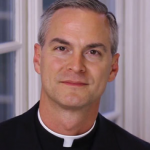 Fr. John Bartunek, LC
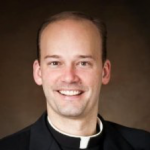
 Fr. Nathaniel Haslam
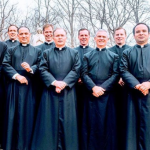 Legionaries of the Rye, New York Community
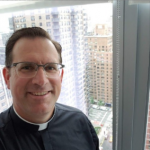 Fr. Scott Reilly
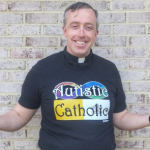
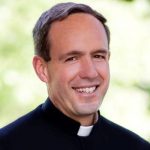 Fr. Michael Sliney LC
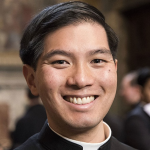 Fr. Brett Taira LC
 Dr. Joan Kingsland
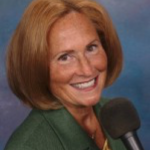 Colleen Kelly Mast
 Jeff Garrett
 Guadalupe Radio
 Radio en Vivo: Guadalupe Radio es una estación católica que promueve la formación espiritual y el desarrollo humano de la comunidad hispanohablante en los Estados Unidos y el mundo entero a través de la radio y las diferentes plataformas electrónicas con el fin de llevar más fieles a los pies de Cristo a través de la Santisima Virgen Maria.
 P Guillermo Serra LC

