Weekly Digest of the Regnum Christi Daily Meditations: October 18th – 25th 2026
WEEKLY DIGEST OF rc
DAILY MEDITATIONS
Week of October 18 - 25, 2026
Sunday, October 18, 2026 – Giving What Is Owed and Beyond
Monday, October 19, 2026 – Planning The Future?
Tuesday, October 20, 2026 – The Best Is Yet to Come
Wednesday, October 21, 2026 – God’s Will
Thursday, October 22, 2026 – Mission Statement
Friday, October 23, 2026 – One Step Closer
October 18, 2026 – Giving What Is Owed and Beyond
Twenty-Ninth Sunday in Ordinary Time
Matthew 22:15-21
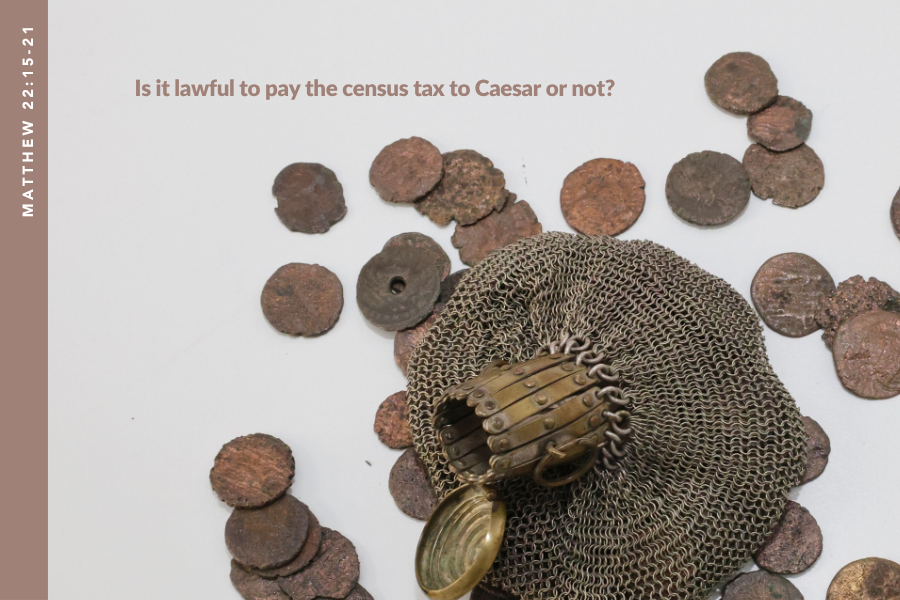
The Pharisees went off and plotted how they might entrap Jesus in speech. They sent their disciples to him, with the Herodians, saying, “Teacher, we know that you are a truthful man and that you teach the way of God in accordance with the truth. And you are not concerned with anyone’s opinion, for you do not regard a person’s status. Tell us, then, what is your opinion: Is it lawful to pay the census tax to Caesar or not?” Knowing their malice, Jesus said, “Why are you testing me, you hypocrites? Show me the coin that pays the census tax.” Then they handed him the Roman coin. He said to them, “Whose image is this and whose inscription?” They replied, “Caesar’s.” At that he said to them, “Then repay to Caesar what belongs to Caesar and to God what belongs to God.”
Opening Prayer: Holy Spirit, visit my soul in this moment of prayer. Widen my heart and sharpen my mind so that I can find what you have prepared for me.
Encountering Christ:
- What “Belongs to God?”: The Pharisees, we’re told, were trying to trap Jesus with this question about paying taxes. In general, their opposition to Our Lord was mounting. Jesus did not humiliate them with his answer. He simply invited them to give to God what belongs to God. The last line of this anecdote, which was not included in today’s reading, tells us, “When they heard this they were amazed, and leaving him they went away” (Mt 22:22). Were they amazed because they wondered what belongs to God? We can ask the same question today, “What belongs to God?” Specific things belong to God for what they are: Sundays, for example; or an object consecrated for sacred use only; or things that are owed to God by pure justice, like gratitude, praise, obedience, etc. There are also things that belong to God because we freely choose to give them to him, like our time, our energies, and our sacrifices.
- Things I Want to Give to God: Let’s stop here for a moment and consider and specify what kinds of things we have chosen to give to God. To make a free gift not rooted in justice or duty is an act of generosity and love. If you have given some of your belongings to God, call them to mind now. Talk to Jesus about it. Maybe you have given your talent to Jesus. Once more, reaffirm that gift. Or have you contributed your time? Conversely, are there things you have given over to God that you keep retracting? Look at these also, ponder them, and talk to Jesus about it. Ask for the grace to once again place them in Jesus’ loving, open hands.
- More Than Generosity: Loving God by giving to him our thoughts, words, actions, time, talents, and sufferings is an act more beautiful than we realize. It might feel like mere renunciation. But when we bring those treasures into the light of God, he lets them shine and sparkle. Handing them to God makes them even more precious. Hence, giving God what belongs to him warrants a celebration, because we don’t lose out; rather, we receive it back in greater splendor, even a hundredfold. As Jesus told St. Catherine of Siena,“… here they receive the fire of divine charity figured by the number of a hundred… And because they have received this hundredfold from Me, they possess a wonderful and hearty joy, for there is no sadness in charity, but the joy of it makes the heart large and generous, not narrow or double” (Dialogue of St. Catherine).
Conversing with Christ: Lord, I recognize that everything I have you have given me. Giving over what belongs to you means that you ask me to deeply acknowledge this fact. When I’m tempted to covet something—anything—remind me, Lord, of this truth. “My Lord and my God, take from me everything that distances me from you. My Lord and my God, give me everything that brings me closer to you. My Lord and my God, detach me from myself to give my all to you” (St. Nicholas of Flüe).
Resolution: Lord, today by your grace I will consciously give of my time, talent, or treasure in a particular moment or situation.
For Further Reflection: “And so, today, with great strength and great conviction, on the basis of long personal experience of life, I say to you, dear young people: Do not be afraid of Christ! He takes nothing away, and he gives you everything. When we give ourselves to him, we receive a hundredfold in return. Yes, open, open wide the doors to Christ—and you will find true life. Amen” (Homily of Pope Benedict XVI on Sunday, April 24, 2005, during the Mass for the beginning of the Petrine Ministry of the Bishop of Rome).
Father Gabriel von Wendt, LC, is a priest who works as a professor at the Pontifical Athenaeum Regina Apostolorum. He has a passion for philosophy and the role of Catholic faith in contemporary culture. He is a co-founding member of the Catholic Worldview Fellowship, a study-abroad program for talented college students who want to evangelize culture.
October 19, 2026 – Planning The Future?
Memorial of Saints John de Brébeuf and Isaac Jogues, Priests, and Companions, Martyrs
Luke 12:13-21
Someone in the crowd said to Jesus, “Teacher, tell my brother to share the inheritance with me.” He replied to him, “Friend, who appointed me as your judge and arbitrator?” Then he said to the crowd, “Take care to guard against all greed, for though one may be rich, one’s life does not consist of possessions.” Then he told them a parable. “There was a rich man whose land produced a bountiful harvest. He asked himself, ‘What shall I do, for I do not have space to store my harvest?’ And he said, ‘This is what I shall do: I shall tear down my barns and build larger ones. There I shall store all my grain and other goods and I shall say to myself, “Now as for you, you have so many good things stored up for many years, rest, eat, drink, be merry!”’ But God said to him, ‘You fool, this night your life will be demanded of you; and the things you have prepared, to whom will they belong?’ Thus will it be for the one who stores up treasure for himself but is not rich in what matters to God.”
Opening Prayer: Holy Spirit, take away from me now everything that distracts me from praying. I am here, and I am yours.
Encountering Christ:
- The Desire to Possess Things: When a person faces a good of any kind—an object, a value, another person—they not only experience the desire to enjoy it, but to possess it. It seems that this is related to the human capacity for reaching out beyond the present moment into the future. I call that projection. We understand ourselves not simply in the light of what is, but, at least as much, in the light of what will be. That is why people build barns: to guarantee that they will be able to rejoice in their goods in the future. The Gospel prompts us to reflect about our tendency to look ahead. Quite compellingly, Jesus points out that our future is really not as much in our control as we like to believe it is. I don’t think he wants us to be indifferent about the future. On the contrary, the capacity to project is crucial when it comes to living our lives and becoming who we are called to be. But, on the other hand, we have to check our urge to indiscriminately grab and store up the goods put before us. What barns have I built for the future, and what kinds of things am I storing there?
- The Temptation to Greed: God often presents us with goods that he wants us to share, invest, or even give up. Putting everything into a dark barn may feel safe for the moment, but it’s only appropriate if that’s what God has intended for us to do with it. We have to be discerning regarding our drive for possession. What feels “right” can be deceiving, and can turn into greed, compromising the goods that we were hoping to protect. We’re called to recognize that everything we have comes from God, and that we are merely stewards of these gifts. “As each one has received a gift, use it to serve one another as good stewards of God’s varied grace” (1 Pet 4:10).
- Life Does Not Consist of Possessions: We can all sometimes fall prey to the desire to measure our self-worth by our possessions. In our culture, we often idolize those with great wealth. Wealthy people seem to have it all. But Christ warns us in the Gospel to reject this assumption. Life does not consist of possessions. What matters is how well we love. As Mother Teresa told us, “There are many in the world who are dying for a piece of bread but there are many more dying for a little love” (A Simple Path). Our ultimate success will be measured by the love we share with others. “If I give away everything I own, and if I hand my body over so that I may boast but do not have love, I gain nothing” (1 Cor 13:3).
Conversing with Christ: Jesus, my life is filled with goods. Above all, I want to thank you for this “bountiful harvest.” I realize that many of these gifts are fundamental for my life, and I also acknowledge that none of them is guaranteed to last. In fact, what of it will last for eternity, Lord? My heart relishes the goods that make me happy. My nature urges me to continue to provide for that happiness. And yet I know nothing can guarantee it but you. I beg you, yes, I beg you, Lord: Fill me with the theological virtue of hope, so that I really rely completely on you when it comes to the future. I hope in you, and that means you alone are what I want to hold on to. I want to fill the barns of my heart with your goods alone.
Resolution: Lord, today by your grace I will look over my possessions and ask: “Among everything that I have received, what is the most precious in the light of eternity?”
For Further Reflection: “Romano Guardini relates in his autobiography how, at a critical moment on his journey, when the faith of his childhood was shaken, the fundamental decision of his entire life—his conversion—came to him through an encounter with the saying of Jesus that only the one who loses himself finds himself (cf. Mk 8:34ff.; Jn 12:25); without self-surrender, without self-loss, there can be no self-discovery or self-realization. But then the question arose: to what extent it is proper to lose myself? To whom can I give myself? It became clear to him that we can surrender ourselves completely only if by doing so we fall into the hands of God. Only in him, in the end, can we lose ourselves and only in him can we find ourselves. […] It is all summed up in the prayer of Saint Ignatius of Loyola—a prayer which always seems to me so overwhelming that I am almost afraid to say it, yet one which, for all its difficulty, we should always repeat: ‘Take O Lord, and receive all my liberty, my memory, my understanding, and my entire will. All that I have and all that I possess you have given me: I surrender it all to you; it is all yours, dispose of it according to your will. Give me only your love and your grace; with these I will be rich enough and will desire nothing more’” (Pope Benedict XVI during vespers on September 8, 2007).
Father Gabriel von Wendt, LC, is a priest who works as a professor at the Pontifical Athenaeum Regina Apostolorum. He has a passion for philosophy and the role of Catholic faith in contemporary culture. He is a co-founding member of the Catholic Worldview Fellowship, a study-abroad program for talented college students who want to evangelize culture.
October 20, 2026 – The Best Is Yet to Come
Tuesday of the Twenty-Ninth Week in Ordinary Time
Luke 12:35-38
Jesus said to his disciples: “Gird your loins and light your lamps and be like servants who await their master’s return from a wedding, ready to open immediately when he comes and knocks. Blessed are those servants whom the master finds vigilant on his arrival. Amen, I say to you, he will gird himself, have them recline at table, and proceed to wait on them. And should he come in the second or third watch and find them prepared in this way, blessed are those servants.”
Opening Prayer: Come, Holy Spirit, come! Be with me as I ponder these words of Scripture seeking wisdom for my day.
Encountering Christ:
- The Last Things: Maybe you are wondering about—or even growing tired of—the recurring theme of these days’ Gospels: the end of life, the end of time, the end of the world. The reason for this emphasis is that the yearly liturgical cycle is approaching its end, and this final stretch is dedicated precisely to the “last things.” In a few weeks, the liturgical year will culminate in the feast of Christ the King before commencing the new year with Advent. Let’s take these last days of the Church year to dive deeply into the themes of death, judgment, heaven, and hell, with the assurance that our contemplation of these realities will help us to grow in holiness.
- Ready and Waiting: How ready are we to meet the Master? As the days grow shorter and the light becomes dimmer, we observe that nature has reached the wise and fragile age of an old man. Is one not reminded that all the intense vigor of existence, all the fresh beauty of youth, all the accomplishments of life are fleeting? We can appreciate that this time of year helps to put us in the proper frame of mind to anticipate eternity. We are asked in this Gospel to be ready to meet Jesus face-to-face at any moment. If we’re vigilant, we can expect the Master’s blessing! What will that look like?
- The Master Waits on Us: Our Lord became man: Jesus lived among us, suffered, died and was buried, and rose from the dead, all for our benefit. That’s how much he loves us. But it seems more than incredible to imagine that Jesus would want to wait on us one day at the heavenly banquet. Yet he tells us so in this parable. What love! What humility! Truly, “What eye has not seen, and ear has not heard, and what has not entered the human heart, what God has prepared for those who love him” (1 Cor 2:9). Contemplating a love so incomprehensible should inspire us to drop the sparkly trinkets we sometimes cling to in this life and run to his waiting arms.
Conversing with Christ: Jesus, my heart is yours, and I will prepare for your visit: be it during my next holy Communion, be it at the end of my days, be it by means of your continuous visits throughout each day when you simply look out for my well-being. You are always welcome and expected here!
Resolution: Lord, today by your grace I will take a moment to meditate on the fact that earthly life is but the prelude before the reality of eternal life.
For Further Reflection: “Man needs eternity for every other hope is too brief, too limited for him. Man can be explained only if there is a Love which overcomes every isolation, even that of death, in a totality which also transcends time and space. Man can be explained, he finds his deepest meaning, only if there is God. And we know that God left his distance for us and made himself close. He entered into our life and tells us: ‘I am the resurrection and the life; he who believes in me, though he die, yet shall he live, and whoever lives and believes in me shall never die’” (Jn 11:25-26) (Pope Benedict XVI during General Audience on November 2, 2011).
Father Gabriel von Wendt, LC, is a priest who works as a professor at the Pontifical Athenaeum Regina Apostolorum. He has a passion for philosophy and the role of Catholic faith in contemporary culture. He is a co-founding member of the Catholic Worldview Fellowship, a study-abroad program for talented college students who want to evangelize culture.
October 21, 2026 – God’s Will
Wednesday of the Twenty-Ninth Week in Ordinary Time
Luke 12:39-48
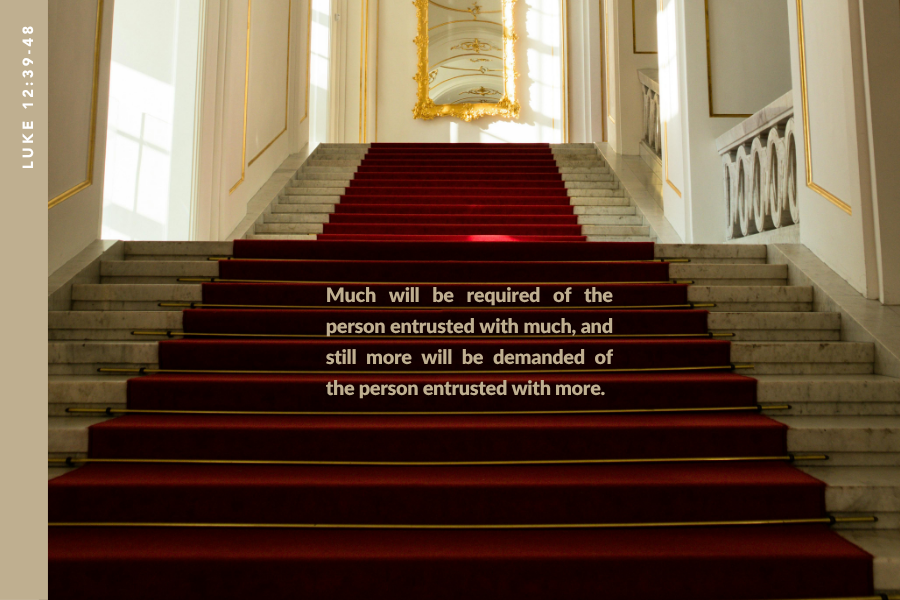
Jesus said to his disciples: “Be sure of this: if the master of the house had known the hour when the thief was coming, he would not have let his house be broken into. You also must be prepared, for at an hour you do not expect, the Son of Man will come.” Then Peter said, “Lord, is this parable meant for us or for everyone?” And the Lord replied, “Who, then, is the faithful and prudent steward whom the master will put in charge of his servants to distribute the food allowance at the proper time? Blessed is that servant whom his master on arrival finds doing so. Truly, I say to you, he will put him in charge of all his property. But if that servant says to himself, ‘My master is delayed in coming,’ and begins to beat the menservants and the maidservants, to eat and drink and get drunk, then that servant’s master will come on an unexpected day and at an unknown hour and will punish the servant severely and assign him a place with the unfaithful. That servant who knew his master’s will but did not make preparations nor act in accord with his will shall be beaten severely; and the servant who was ignorant of his master’s will but acted in a way deserving of a severe beating shall be beaten only lightly. Much will be required of the person entrusted with much, and still more will be demanded of the person entrusted with more.”
Opening Prayer: Holy Spirit, enter into my heart and enlighten my conscience so that I can perceive your whispering voice.
Encountering Christ:
- Trust: This parable displays a key fact about the essence of the Church: Jesus, the Master, has put the Church in charge of his household until the day of his return, and he expects us to be “faithful and prudent stewards.” While this is true in the first place for the pope and the bishops, to whom the leadership of the Church is entrusted, it casts light also on a fundamental truth of every Christian’s life: God trusts us. He trusts us to be faithful and prudent. We have the power to use our free will and direct our own lives as we wish, the power to shape the way we deal with each other, and the power to be stewards over nature as the home that he has created for us. How trustworthy are we?
- Faithfulness: The parable speaks of those who “knew the master’s will.” In order to respond faithfully to God’s trust, it is imperative that we know God’s will. To know God’s will is not always easy; in fact, Jesus emphasizes that there can be cases in which we are simply ignorant of what God wants from us. It is clear that, in such a situation, mistakes are far more forgivable. However, it is equally evident that true responsibility requires the genuine attempt to always discern what God’s will is. The Catholic spiritual teaching calls this “the formation of one’s conscience” (cf. CCC 1783-1785). Prayer, spiritual reading, and regular spiritual direction can help us to form our consciences according to God’s will.
- Responsibility: Because God trusts us with so much, we have great responsibility. Within the word “responsibility” can be found the word “response.” Today’s parable is an unmistakable reminder to whom we will have to respond regarding the exercise of our power as individuals, as humanity, and as his Church. How do we respond daily to Our Lord’s invitation to live according to his will, to love our neighbor as ourselves, and to be good stewards of all the gifts he has given to us?
Conversing with Christ: Jesus, thank you for your enormous trust in me. Help me to recognize your will better and better, and give me the strength to joyfully and responsibly fulfill my mission as a faithful and prudent steward.
Resolution: Lord, today by your grace I will examine my conscience and look for a small thing which you would like me to correct in my daily life.
For Further Reflection: Catechism of the Catholic Church, #1783 and #1785
“Conscience must be informed and moral judgment enlightened. A well-formed conscience is upright and truthful. It formulates its judgments according to reason, in conformity with the true good willed by the wisdom of the Creator. the education of conscience is indispensable for human beings who are subjected to negative influences and tempted by sin to prefer their own judgment and to reject authoritative teachings.”
“In the formation of conscience the Word of God is the light for our path,54 we must assimilate it in faith and prayer and put it into practice. We must also examine our conscience before the Lord’s Cross. We are assisted by the gifts of the Holy Spirit, aided by the witness or advice of others and guided by the authoritative teaching of the Church.”
Father Gabriel von Wendt, LC, is a priest who works as a professor at the Pontifical Athenaeum Regina Apostolorum. He has a passion for philosophy and the role of Catholic faith in contemporary culture. He is a co-founding member of the Catholic Worldview Fellowship, a study-abroad program for talented college students who want to evangelize culture.
October 22, 2026 – Mission Statement
Thursday of the Twenty-Ninth Week in Ordinary Time
Luke 12:49-53
Jesus said to his disciples: “I have come to set the earth on fire, and how I wish it were already blazing! There is a baptism with which I must be baptized, and how great is my anguish until it is accomplished! Do you think that I have come to establish peace on the earth? No, I tell you, but rather division. From now on a household of five will be divided, three against two and two against three; a father will be divided against his son and a son against his father, a mother against her daughter and a daughter against her mother, a mother-in-law against her daughter-in-law and a daughter-in-law against her mother-in-law.”
Opening Prayer: My Lord, send forth your Spirit and enkindle in me the fire of your love. In a world so divided, help me to be part of your divine solution.
Encountering Christ:
- Fire, Anguish, Strife: Powerful words such as fire, anguish, and strife paint the backdrop for a striking statement by the Lord which we can call a “mission statement” in the truest meaning of the words: “I have come to…” Jesus’ words in today’s Gospel allow us to more deeply contemplate his heart and discover how he understood his mission in this world. And what we see is a rock in the storm, a bastion of confidence, a heart ablaze. Let’s subjugate ourselves to this blazing Sacred Heart.
- “I Have Come to Set the Earth on Fire”: Jesus had come to save the world, to die for us, and to defeat death. But his mission was not reduced to the last hours of his earthly life. His whole life was part of that redemption, during which he revealed the mystery of who God is. Today, he shows us the passionate, epic character of God’s love. Let’s ask for the grace to share in the Lord’s passion.
- Imitating Christ: To love like Christ loved means to quest and strive for the good that he yearned for: the salvation of all. It also means that we are to seek ways to give of ourselves lovingly—a “baptism with which I must be baptized.” In St. John Paul II, we can identify an excellent example of a man who followed Christ closely and sought to imitate him in the way he loved—passionately, joyfully, generously—a man who adopted Christ’s mission statement wholeheartedly in his own life. May we do so as well.
Conversing with Christ: Jesus, you have come to love mankind and to save the world, and you have also made this mission our mission. As your disciple, I acknowledge that it is also my mission to love like you and to bring the message of your salvation to all people in my path.
Resolution: Lord, today by your grace I will look for an occasion to live out my mission as a Christian by imitating your love and spreading your message.
For Further Reflection: “The number of those who do not know Christ and do not belong to the Church is constantly on the increase. Indeed, since the end of the Council it has almost doubled. When we consider this immense portion of humanity which is loved by the Father and for whom he sent his Son, the urgency of the Church’s mission is obvious” (St. John Paul II, Redemptoris Missio, 3).
Father Gabriel von Wendt, LC, is a priest who works as a professor at the Pontifical Athenaeum Regina Apostolorum. He has a passion for philosophy and the role of Catholic faith in contemporary culture. He is a co-founding member of the Catholic Worldview Fellowship, a study-abroad program for talented college students who want to evangelize culture.
October 23, 2026 – One Step Closer

Friday of the Twenty-Ninth Week in Ordinary Time
Luke 12:54-59
Jesus said to the crowds, “When you see a cloud rising in the west you say immediately that it is going to rain—and so it does; and when you notice that the wind is blowing from the south you say that it is going to be hot—and so it is. You hypocrites! You know how to interpret the appearance of the earth and the sky; why do you not know how to interpret the present time? Why do you not judge for yourselves what is right? If you are to go with your opponent before a magistrate, make an effort to settle the matter on the way; otherwise your opponent will turn you over to the judge, and the judge hand you over to the constable, and the constable throw you into prison. I say to you, you will not be released until you have paid the last penny.”
Opening Prayer: My Lord, I come before you as your child, and I ask you to send your Spirit into my soul, so that his gifts might strengthen me, comfort me, sanctify me, and enlighten me to hear what you want to say today.
Encountering Christ:
- Complacency: Jesus’ admonishing words tell us a lot, between the lines, about the attitude of those to whom they were addressed. His listeners were utterly complacent. Jesus’ thundering reproach was probably meant to shake off that complacency; he challenged them to read the signs of the times, and he did all that he could to free them from their blindness. How frustrating it must have been for Jesus to come to those who had been praying for the Messiah, only to find that they neither accepted nor believed him, nor seemed willing even to have an open mind about him. We console Jesus when we fight against our own tendency to become complacent.
- Proactivity: It is not uncommon for a person to be quite focused on a specific goal (for example, to improve one’s prayer life or to grow in virtue), but to bluntly ignore the simple opportunities to actually advance toward that goal. A good program of lifewill help us to make concrete resolutions (little baby steps toward living a virtue) so that we can be more confident, by God’s grace, of growing in that virtue. It is true that the ideals of Christian life are lofty, but God always gives us some concrete step we can proactively take each day.
- Surrender: Ultimately, such a proactive attitude requires a lot of humility, for it underscores the fact that we cannot reach our high ideals with one powerful leap. Instead, our little steps to grow in virtue or to draw closer to God only have a chance of success to the degree in which they are aided, quickened, and elevated by God’s grace. Maybe that is why it is so difficult to proactively invest into our spiritual life; instead of relying on our control, it requires an increasing degree of surrender to the work of grace in us. May we be docile enough to allow Christ to work in our souls.
Conversing with Christ: Jesus, help me to shake off all types of complacency. Free me of my blindness. Grant me the grace “to interpret the present time” and the humility to make a small step in the right direction today.
Resolution: Lord, today by your grace I will set a spiritual goal for myself and take the first step toward growing in that virtue.
For Further Reflection: One Step Closer will help you take the next step in your spiritual life. Its forty doses of clear, practical, and bite-sized reflections will inspire you on your journey to holiness, happiness, and your life purpose. Each reflection comes with a memorable motivational quote. It’s a book that you can understand, written in simple language that resonates; it gives you practical means to work on your strengths and it challenges you to be better: One Step Closer: 40 Doses of Motivation, Hacks, and Experiences to Share with Millennial Catholics, by Anthony Freeman, LC.
Father Gabriel von Wendt, LC, is a priest who works as a professor at the Pontifical Athenaeum Regina Apostolorum. He has a passion for philosophy and the role of Catholic faith in contemporary culture. He is a co-founding member of the Catholic Worldview Fellowship, a study-abroad program for talented college students who want to evangelize culture.
October 24, 2026 – Fruits
Saturday of the Twenty-Ninth Week in Ordinary Time
Luke 13:1-9
Some people told Jesus about the Galileans whose blood Pilate had mingled with the blood of their sacrifices. He said to them in reply, “Do you think that because these Galileans suffered in this way they were greater sinners than all other Galileans? By no means! But I tell you, if you do not repent, you will all perish as they did! Or those eighteen people who were killed when the tower at Siloam fell on them—do you think they were more guilty than everyone else who lived in Jerusalem? By no means! But I tell you, if you do not repent, you will all perish as they did!” And he told them this parable: “There once was a person who had a fig tree planted in his orchard, and when he came in search of fruit on it but found none, he said to the gardener, ‘For three years now I have come in search of fruit on this fig tree but have found none. So cut it down. Why should it exhaust the soil?’ He said to him in reply, ‘Sir, leave it for this year also, and I shall cultivate the ground around it and fertilize it; it may bear fruit in the future. If not you can cut it down.’”
Opening Prayer: My Lord, I come before you as your child, as your disciple, and as a sinner. Look mercifully on my life and help me to grow, to thrive, and to yield fruit. Open my mind to the message you have for me today.
Encountering Christ:
- God Seeks Fruits: The parable about the fig tree shows that God is not indifferent to the way our lives play out. Just as the person in the parable who had planted the fig tree expected it to yield fruit, God has created us with a specific destiny and mission in mind. Over the years, if our lives do not correspond to that destiny, if we do not develop in the way he intended, or if we do not bring the expected fruit, then our Creator will rightly be as disappointed as the person in the parable. God created us, he has given us all we need to thrive, and he greatly cares about what will become of us.
- Which Fruits Is God Seeking in Us?: At first, we could think that God looks for fruits from our lives for his own benefit. In reality, however, there is nothing God needs that he does not already have. Jesus has taught us time and again what God seeks from us. The ultimate fruit of human life is to have known, loved, and served Our Lord, and to have overcome the corruption of sin so as to live eternally with him in heaven. God created us for heaven, and he wants us there with him.
- The Gardener: This parable highlights how difficult it is for man to live up to his destiny. As a free creature, man is able to take charge of his own human and spiritual development, but this rarely leads to the desired result of ultimate fulfillment. We can’t do it alone. The parable introduces the crucial role of the gardener. The gardener, God, is not only the Creator who examines the fruits of our lives, but he also patiently works with us, and within us, in order to help us reach our eternal destiny. We only become truly fruitful, and thus fully alive, in collaboration with God!
Conversing with Christ: My God, you have created me in your image, and so I know that I will become the best version of myself when my life yields fruits: fruits of joy, fruits of charity, fruits of holiness. Despite my frequent inadequacies, you do not overwrite my free will but patiently work with me, helping me to convert and to grow. Thank you for loving me that much.
Resolution: Lord, today by your grace I will ask for your help in a difficult area of my life—one which needs the attention of the gardener right now.
For Further Reflection: “Here we can glimpse the authentic meaning of Christian education: it is the fruit of a collaboration between educators and God that must always be sought. The Christian family is aware that children are a gift and a project of God. Therefore it cannot consider that it possesses them; rather, in serving God’s plan through them, the family is called to educate them in the greatest freedom, which is precisely that of saying ‘yes’ to God in order to do his will. The Virgin Mary is the perfect example of this ‘yes.’ Let us entrust all families to her, praying in particular for their precious educational mission” (Pope Benedict XVI on the Feast of the Holy Family, December 27, 2009).
Father Gabriel von Wendt, LC, is a priest who works as a professor at the Pontifical Athenaeum Regina Apostolorum. He has a passion for philosophy and the role of Catholic faith in contemporary culture. He is a co-founding member of the Catholic Worldview Fellowship, a study-abroad program for talented college students who want to evangelize culture.
October 25, 2026 – The Language of Selfless Love
Thirtieth Sunday in Ordinary Time
Matthew 22:34-40
When the Pharisees heard that he had silenced the Sadducees, they gathered together, and one of them, a scholar of the law, tested him by asking, “Teacher, which commandment in the law is the greatest?” He said to him, “You shall love the Lord, your God, with all your heart, with all your soul, and with all your mind. This is the greatest and the first commandment. The second is like it: You shall love your neighbor as yourself. The whole law and the prophets depend on these two commandments.”
Opening Prayer: Lord Jesus, I love you with all my heart, soul, mind, and strength. I thank you for creating and redeeming me and for inviting me to a deeper relationship with you. I believe in you and hope you will sustain me. I ask for the grace to love others as you do.
Encountering Christ:
- The First Commandment: Jesus teaches us to love God above all else. Love means taking the beloved into account before making important decisions. It is natural to avoid behaviors that would hurt, harm, or disrespect a loved one. So, too, we should be attentive that our actions are pleasing to God. If we consult a spouse before making a big decision, why wouldn’t we pray and consult God about what is happening in our lives? God is always ready to listen and to offer counsel. Let us turn to him when faced with important decisions, showing him the greatest love and respect, and full of confidence that he will guide us.
- The Second Commandment: “You shall love your neighbor as yourself” is a challenging admonition, yet living that way is completely fulfilling. A middle-aged woman once told me that she struggled to find the time to help a bedridden friend with household tasks. The sacrifices she made to find the time enriched her life. She felt truly blessed. God puts people in our path who long for love and support. He invites us to reach out in the same way that we would want others to reach out to us. Even the smallest acts of kindness can be signs of great love.
- The Whole Law: Our human laws work only as well as we are conformed to God’s laws—the laws of love God and love your neighbor. How well our political system would work if everyone was motivated by their love of neighbor! St. Teresa of Calcutta was able to win over adverse political officials by her acts of selfless love for the sick and dying. She entered countries closed to Christianity because those leaders saw her love. True love is a language that rises above politics and self-interest. May our selfless love be a testimony to our love of Christ.
Conversing with Christ: Dear Lord, I long for a peaceful and loving home and homeland. Teach me to be a vehicle of your peace by bringing love wherever I go!
Resolution: Lord, today by your grace I will look for a soul you place in my path and show him or her show true selfless love.
For Further Reflection: Fr. Leo Maasburg’s book Mother Teresa of Calcutta: A Personal Portrait outlines many inspiring acts of selfless love.
Renee Pomarico is Communications Director for the Consecrated Women of Regnum Christi. She is from Philadelphia, has been consecrated to God since 2000, and is currently stationed in Rome.
- LATEST ARTICLES

View this profile on InstagramRegnum Christi (@regnumchristi_english) • Instagram photos and videos
- RELATED POSTS
Weekly Digest of the Regnum Christi Daily Meditations: October 18th – 25th 2026 Read More »


 What Pleases God
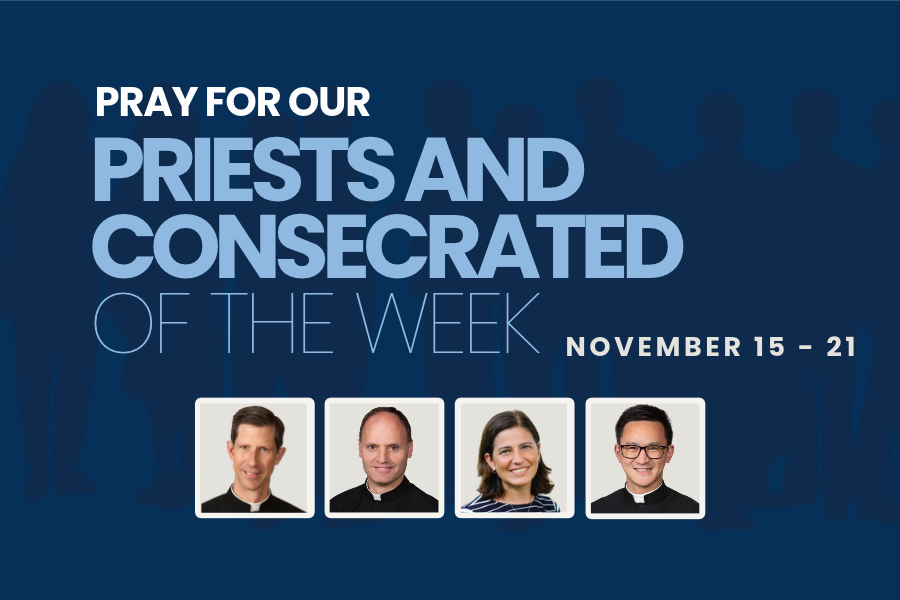
 A Week of Prayer for All of Our Priests and Consecrated Members: October 18 – 24
 It Begins with a Smile: RC Spotlight on Ellen Miller



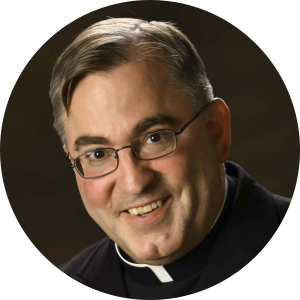 Fr. Walter Schu, LC, grew up on a small farm in southwestern Minnesota, and was ordained in 1994. For most of his priesthood, he has been involved in the ministry of formation and education, serving as a teacher and director of studies at schools, seminaries, and universities, including the Novitiate and College of Humanities of the Legionaries of Christ in Cheshire, Connecticut, and the International Center for Higher Studies in Rome. He is the author of The Splendor of Love on St. John Paul II’s theology of the body. He is currently an assistant professor and chaplain at Divine Mercy University in Virginia.
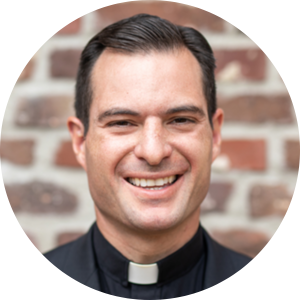 Fr. Ryan Richardson, LC, is from New Orleans, Louisiana and was ordained in 2016. During his years of priestly formation, he served as an assistant to the instructor of novices at the LC seminary in Cheshire, Connecticut, and co-founded The Upper Room Rome, an apostolate that networks English-speaking Catholic college students in the Eternal City. He has since served as chaplain of Young Catholic Professionals in Dallas, Texas, and as spiritual director for FOCUS New Staff Training. He is currently the chaplain at Benedictine College in Atchison, Kansas, and serves as the section director for the RC community on campus as well. Fr. Ryan is also the executive director of Catholic Worldview Fellowship, a summer study-abroad program in Germany and Italy for talented college students who seek to evangelize the culture.

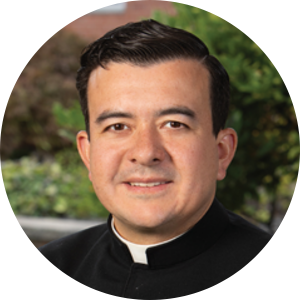 Fr. Víctor Hugo Jiménez, LC, is from Medellín, Colombia, and was ordained in 2019. He is currently the Rector of the program of Humanities at the Legionaries of Christ Novitiate and College of Humanities in Cheshire, Connecticut.