Ask a Priest: “How Should We Do With Racy Media All Around Us?”

Q: How should Christians properly assess the media they consume? For example, many movies and video games that are not adult entertainment still contain lustful elements (e.g., sex scenes or characters with revealing outfits). It’s seemingly inescapable and contributes to people envisioning others as objects. For example, there is a game that I was interested in playing. However, I had reservations about it because of the over-sexualization of the fictional characters. I do not have same-sex attraction, so it does not make me feel lustful. The problem is I know that it can make some people feel that way, so I felt it clashes with the virtue of chastity. What is your advice, Father? Thank you for everything. — A.O.

Answered by Fr. Edward McIlmail, LC:

A: You touch on one of the biggest problems in today’s culture: We swim in a media swamp.

What to do about it?

A short suggestion is this: Treat the media as you would a potential guest in your home.

Then ask yourself, would you invite someone to your dinner table who uses foul language? Or who dresses or speaks in provocative ways?

Would you invite someone who doesn’t share and in fact undercuts or mocks your religious and moral views?

The media we watch will impact and shape the way we think.

Our minds are like sponges, and if we soak them in a swamp, they won’t come out smelling like roses.

In any case, constant exposure to risqué material could cause us to lower our standards; it can get us accustomed to worse things.

So, consider a radical idea: Why not break with all the bad media right now?

And why not try a “zero-based budgeting” approach?

That is, start from scratch and ask yourself, “What comes up to my standards?” Allow only those things into your media diet that are worthy of your attention as a daughter of God.

This might take a bit of work. If good, modern things seem scarce, then look up old things on YouTube, such as Bishop Sheen talks.

Also, consider making reading a bigger part of your leisure time. Ignatius Press and other publishers have hundreds of worthwhile books that will help you live a Catholic life.

In short, don’t let the tail wag the dog: Don’t let bad media dictate your life. You can push back.

Ask a Priest: “How Should We Do With Racy Media All Around Us?” Read More »
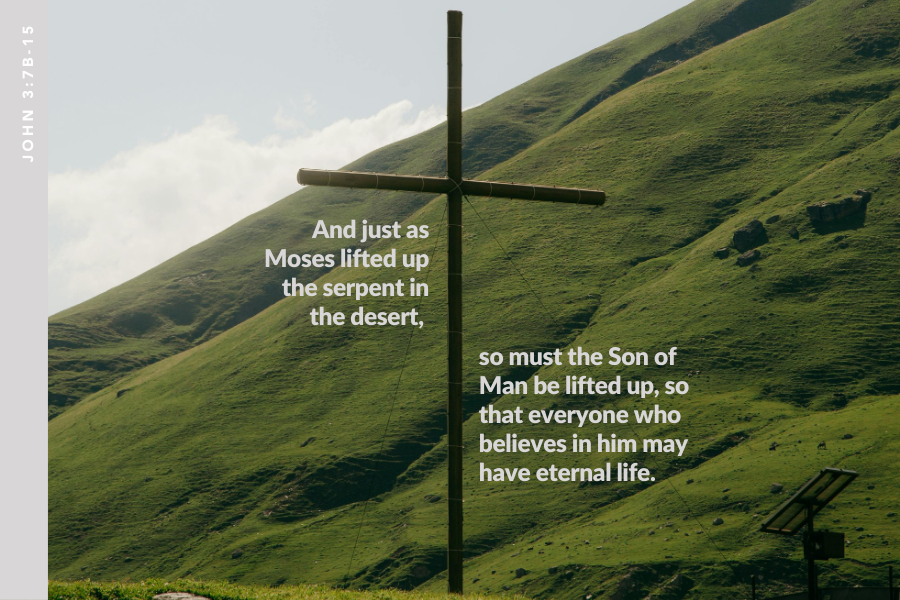
26-04-14-DM

April 14, 2026 – The Son of Man Lifted Up

Tuesday of the Second Week of Easter


John 3:7b-15

Jesus said to Nicodemus: “‘You must be born from above.’ The wind blows where it wills, and you can hear the sound it makes, but you do not know where it comes from or where it goes; so it is with everyone who is born of the Spirit.” Nicodemus answered and said to him, “How can this happen?” Jesus answered and said to him, “You are the teacher of Israel and you do not understand this? Amen, amen, I say to you, we speak of what we know and we testify to what we have seen, but you people do not accept our testimony. If I tell you about earthly things and you do not believe, how will you believe if I tell you about heavenly things? No one has gone up to heaven except the one who has come down from heaven, the Son of Man. And just as Moses lifted up the serpent in the desert, so must the Son of Man be lifted up, so that everyone who believes in him may have eternal life.”

Opening Prayer: Lord God, your words are difficult. How am I to understand this passage? I am made of flesh and my thoughts are fleshly, and I feel incapable of being spiritual. I beseech you, send forth your Holy Spirit! Things shall be created and you will renew the face of the earth!

Encountering Christ:

  1. “How Can This Happen?”: It’s all very well to speak of being born again, or born from above, or born of the Spirit. It sounds wonderful, in fact, this notion of transcending daily troubles and petty difficulties. But Nicodemus asked the same question I would have asked: But how can this happen? How? The wind blows where it wills, and the action of the Spirit is invisible; how can I perceive him? We are supposed to be teachers of Israel, and still we don’t understand your words, Jesus. How can this happen? We’ve tried to be holy, to follow your commands, and it doesn’t seem to work. We want to go up to heaven, but no one makes it up to heaven; only you have gone up to heaven because you came down from heaven. How can sanctity happen? How can we receive the Spirit? How?


  2. “He Came Down From Heaven”: The Son of Man “has come down from heaven.” We recite it every Sunday in the Creed, and it is the answer to all our yearnings for God. We are too weak to rise up and search God out in his heavens. Therefore, he has had mercy on us; he has come down from heaven. This is what sets Christianity apart from all other religions; God became man. “For us men and for our salvation, he came down from heaven.” Such is the absurdity of his love for us, that he would leave heaven to live with us. Such is the divine wisdom of the Incarnation. The Fathers saw this mystery prefigured in the Old Testament: “Thus she [wisdom] has appeared on earth, is at home with mortals” (Bar 3:38).


  3. The Serpent in the Desert: The reference to Moses lifting up the serpent in the desert comes from Numbers 21:4-9, which is read on Tuesday of the Fifth Week of Lent. The people complained against God and Moses because of the poor food and lack of water in the desert. As a result, they were plagued by fiery serpents who killed many of them. But God ordered Moses to craft a serpent and raise it up as a standard, and anyone who looked at it was healed. God always provides a way of repentance and salvation for his people. The Son of Man was also lifted up on the Cross, so that everyone who believes in Jesus crucified and risen has eternal life. This is why he came down from heaven. This is the “how” of our salvation.

Conversing with Christ: Lord Jesus, you have taught me that I need your Holy Spirit. It is your Holy Spirit—the Spirit of Jesus—who enables me to know and love and confess you. “No one can say ‘Jesus is Lord,’ except by the holy Spirit” (1 Cor 12:3).

Resolution: Lord, today by your grace I will invoke the Holy Spirit before any important activities.

For Further Reflection: Try reading the extended Christmas story (Lk 1-2), reflecting on Christ’s descent and ascent. In other words, in what ways are both Christ’s suffering and his exaltation prefigured in the account of his Incarnation?

Fr Erik Burckel, LC was ordained to the priesthood in 2022. He writes articles and short stories for diverse purposes and publications, and can be reached at eburckel@legionaries.org.

April 14, 2026 – The Son of Man Lifted Up Read More »

Regnum Christi Spirituality Center Uncle Eddy

St Martin I

Dear Marty, If you really love Jesus Christ, there is something you must do for him every day without fail: pray for his Vicar on earth, the Pope.  How casually we modern Catholics view the papacy! Christ’s promise that the papacy will continue to preserve the true faith and surely guide the Church does not mean that the Popes all have an easy time of things.  Take the last Pope who was martyred, for instance, today’s saint, Martin I. The poor man successfully marshaled all the bishops of his day to root out the insidious heresy of monotheism (which wrongly claimed that Christ did not have a human will).  Unfortunately, this stoked the Emperor’s ire. (The Emperor, Constans II, who lived in Constantinople, still had imperial powers back in those days, and used them extravagantly.) Constans was a Monothelite and resented the Pope’s opposition to his pet heresy.  He sent his henchmen to kidnap the Pope, who had fallen terribly ill and had to take refuge in the Lateran Basilica in Rome, where they laid him in his sickbed at the foot of the altar. The imperial abductors still succeeded in stealing him (bed and all) and bringing him to the Emperor’s court by way of a long and uncomfortable sea voyage, during which the Pope contracted dysentery (an intestinal disease – it’s like diarrhea raised to the power of 10), which plagued him until his death years later.  Upon arrival in Constantinople he was thrown in jail, eventually tried and convicted of treason, publicly humiliated, and sent into exile in the famine-stricken Crimea (southern Ukraine). Through it all, his one worry remained the integrity of the Catholic faith and the salvation of those who had abandoned it. As he wrote from prison: “I have not been allowed to wash… for forty-seven days. I am wasted away and frozen through, and have had no respite from dysentery… I hope that God, who knows all things, will bring my persecutors to repentance after he will have taken me out of this world…I am surprised at the indifference of all those who, though they once knew me, have now so entirely forgotten me… However, I pray God, by the intercession of St Peter, to preserve them steadfast and immovable in the orthodox [Catholic] faith.  As to this wretched body, God will have care of it…” No, my dear nephew, it isn’t easy being Pope. Maybe today the Pope’s enemies have different tactics, but I know for certain that they hurt just as much, so keep him in your prayers – every day. Pax. Uncle Eddy  

St Martin I Read More »

26-04-13-DM

April 13, 2026 – Born of the Spirit

Monday of the Second Week of Easter


John 3:1-8

There was a Pharisee named Nicodemus, a ruler of the Jews. He came to Jesus at night and said to him, “Rabbi, we know that you are a teacher who has come from God, for no one can do these signs that you are doing unless God is with him.” Jesus answered and said to him, “Amen, amen, I say to you, no one can see the kingdom of God without being born from above.” Nicodemus said to him, “How can a person once grown old be born again? Surely he cannot reenter his mother’s womb and be born again, can he?” Jesus answered, “Amen, amen, I say to you, no one can enter the kingdom of God without being born of water and Spirit. What is born of flesh is flesh and what is born of spirit is spirit. Do not be amazed that I told you, ‘You must be born from above.’ The wind blows where it wills, and you can hear the sound it makes, but you do not know where it comes from or where it goes; so it is with everyone who is born of the Spirit.”

Opening Prayer: Lord God, I come before you today with Easter joy in my heart. I thank you for your marvelous work, the Resurrection. Help me, with your grace, to “put on the new self, created in God’s way in righteousness and holiness of truth” (Eph 4:24).

Encountering Christ:

  1. The Pharisee Nicodemus: Who was Nicodemus? He was a Pharisee, a spiritual leader of the Jewish people. The Jewish leaders had so much authority that Nicodemus was called “a ruler of the Jews.” He was evidently an honest man, clear-sighted and sincere. We know this because he was able to recognize that “no one can do these signs that you are doing unless God is with him.” In addition, he came to Jesus genuinely searching for answers, and not just to win an argument. He was a man of faith, acknowledging God’s action in a mere carpenter’s son. And yet, Nicodemus had doubts, as we do. He did not understand the spirit; the Law seemed more trustworthy in its literalness. He came to Jesus at night, fearful of what others might think. Though his faith was growing, he was still flesh born of flesh.


  2. The Rabbi Jesus: In this passage, Jesus seems not to belong to this world of clay and dust. He worked signs in the name of God. He spoke of God’s invisible Kingdom as if he could see it. When asked about earthly birth, he responded with the signs of water and rebirth When Nicodemus spoke of flesh, he spoke of Spirit. And yet Jesus’ feet were always planted firmly on the ground, aware of human limitations; he was quite aware that Nicodemus was “amazed that I told you, ‘You must be born from above.’” Today, he invites us to faith, to contemplate heavenly things, to lift up our hearts. As St. Paul says, “Whatever is true, whatever is honorable, whatever is just, whatever is pure, whatever is lovely, whatever is gracious, if there is any excellence and if there is anything worthy of praise, think about these things” (Phil 4:8).


  3. Born of the Spirit: “The term ‘Spirit’ is translated from the Hebrew word ruah, which, in its primary sense, means breath, air, wind. Jesus indeed uses the sensory image of the wind to suggest to Nicodemus the transcendent newness of him who is personally God’s breath, the divine Spirit” (CCC 691). “The symbolism of water signifies the Holy Spirit’s action in Baptism, since after the invocation of the Holy Spirit it becomes the efficacious sacramental sign of new birth: just as the gestation of our birth took place in water, so the water of Baptism truly signifies that our birth into the divine life is given to us in the Holy Spirit” (CCC 694).

Conversing with Christ: Lord Jesus, I recall the words of the Mass: “Lift up your hearts; we lift them up to the Lord!” With the grace of Baptism as my springboard, I ask you to increase my faith and lift my eyes and heart towards heaven.

Resolution: Lord, today by your grace I will renew my baptismal promises, trusting in the Holy Spirit to help me fulfill them.

Fr Erik Burckel, LC was ordained to the priesthood in 2022. He writes articles and short stories for diverse purposes and publications, and can be reached at eburckel@legionaries.org.

April 13, 2026 – Born of the Spirit Read More »

Regnum Christi Spirituality Center Uncle Eddy

St Julius I

Dear Julie, Thanks for writing back so quickly.  I have often wondered which saint you were named after, perhaps it’s today’s, Pope St Julius I.  It’s amazing how many of those early Popes were saints. The corruption of a few Renaissance Popes miffs some people, but they are missing the point – the vast majority of Popes have been saintly men, if not actual saints.  But I digress. Your question about combining forces with the Protestant groups on campus is a good one. Remember that we as Catholics have more in common with non-Catholic Christians than many of them realize. Focus on those things, so that together you can promote basic Christian values throughout the campus at large.  At the same time, however, keep Pope St Julius’ lesson in mind. You will recall that he was a bastion of order and clarity during the heat of the Arian heresy (the Arians denied Christ’s true divinity, along with a bunch of other stuff). He neither belittled the details of theology nor compromised the primacy of papal authority in order to smooth over a disturbance that was rocking all of Christendom.  Read how beautifully and gently he rebuked the Arian usurpers of the See of Alexandria: “Are you not aware that it is customary that we [i.e. the Pope] should first be written to, that from hence what is just may be defined? … Whereas you expect us to approve condemnations in which we had no part. This is not according to the precepts of Paul or the tradition of the fathers. All this is strange and new. Allow me to speak as I do: I write what I write in the common interest, and what I now signify is what we have received from the blessed apostle Peter.”  Likewise, you and your confreres should be ready at all times to profess and defend true Catholic doctrine even while you collaborate with non-Catholics to clean up collegiate morals. For instance, don’t be afraid to make the sign of the cross when you pray together with them, and don’t be afraid to genuflect when you pass by the tabernacle as you show them the chapel. You don’t have to bang them over the head with a Catechism – they deserve the respect owed to every child of God – but your fidelity in little things like these will be of great assistance to the work of the Holy Spirit.  Keep me posted. Uncle Eddy.

St Julius I Read More »

26-04-12-DM

April 12, 2026 – Peace Be With You

Second Sunday of Easter, Divine Mercy Sunday


John 20:19-31

On the evening of that first day of the week, when the doors were locked, where the disciples were, for fear of the Jews, Jesus came and stood in their midst and said to them, “Peace be with you.” When he had said this, he showed them his hands and his side. The disciples rejoiced when they saw the Lord. Jesus said to them again, “Peace be with you. As the Father has sent me, so I send you.” And when he had said this, he breathed on them and said to them, “Receive the Holy Spirit. Whose sins you forgive are forgiven them, and whose sins you retain are retained.” Thomas, called Didymus, one of the Twelve, was not with them when Jesus came. So the other disciples said to him, “We have seen the Lord.” But he said to them, “Unless I see the mark of the nails in his hands and put my finger into the nailmarks and put my hand into his side, I will not believe.” Now a week later his disciples were again inside and Thomas was with them. Jesus came, although the doors were locked, and stood in their midst and said, “Peace be with you.” Then he said to Thomas, “Put your finger here and see my hands, and bring your hand and put it into my side, and do not be unbelieving, but believe.” Thomas answered and said to him, “My Lord and my God!” Jesus said to him, “Have you come to believe because you have seen me? Blessed are those who have not seen and have believed.” Now, Jesus did many other signs in the presence of his disciples that are not written in this book. But these are written that you may come to believe that Jesus is the Christ, the Son of God, and that through this belief you may have life in his name.

Opening Prayer: Lord God, I praise you for your Resurrection masterpiece. You died, destroying death; now you have risen, restoring life. Thank you for every Sunday Mass, in which we remember Christ’s victory. Alleluia!

Encountering Christ:

  1. “Peace Be With You”: Many elements in this Gospel passage can help us to reflect more deeply on the celebration of the Eucharist. For example, Christ said three times, “Peace be with you.” These can be likened to the triple invocations of the “Kyrie Eleison” or the “Lamb of God.” The number three is the number of completeness and perfection. God himself is three persons in one God, and each person is very present in this passage: Jesus mentioned the Father (“the Father has sent me”) and the Holy Spirit (“Receive the Holy Spirit”), while Thomas mentioned the Son (“My Lord…”) and his divine nature (“…and my God!”). And what do the Kyrie and the Lamb of God and Jesus and Thomas and the Mass all show us? That there is mercy, there is forgiveness of sin, there is peace.


  2. Faith and the Eucharist: Devotion to Mary, Undoer of Knots has been on the rise in recent years. Many Catholics are attracted to the Mother of God as an aid in untying the tangles of life. In an analogous way, today’s Gospel presents to us Jesus, Comer through Locked Doors (twice!). He came to the Apostles despite the obstacles they placed before him. His presence and his mercy pursue us—especially at Easter—until we allow him to come in and give us peace. And he made his Apostles protagonists in the giving of grace. We can therefore also ask for the intercession of the Apostles, Forgivers of Sin. But there is one more title to bestow in our list of devotions: We, the Blessed Unseers. Christ praised all those who have not seen and yet have believed—that is, all those who receive the Eucharist with faith. The bread we see is like a locked door that cannot prevent Jesus from coming at the consecration. And when he does, the priest echoes his words: “Peace I leave you, my peace I give you.”


  3. Bookwork: John tells us that Jesus did many other signs “not written in this book.” John probably could have written another book, even longer than his Gospel, describing Jesus in detail. He confesses, “There are also many other things that Jesus did, but if these were to be described individually, I do not think the whole world would contain the books that would be written” (Jn 21:25). Only in heaven, perhaps, will we learn more of John’s unwritten library. It would simply be too much for us here on earth. In fact, the library grows because Jesus works new wonders every day! Through the devout recitation of the liturgy of the hours by priests and lay people the world over, all of Jesus’ deeds recorded and unrecorded are praised continually to high heaven.

Conversing with Christ: Lord Jesus, thank you for searching me out when I lock myself in my own upper room. I want to take part in the liturgy with devotion, so that I can praise your glorious Resurrection and your Divine Mercy.

Resolution: Lord, today by your grace I will go to Mass with a joyful heart.

For Further Reflection: St. Therese of Lisieux’s Story of a Soul exemplifies the three points of our meditation today. She tried to live with great peace and trust in God; she showed great faith and devotion to the Eucharist; and she tried to write down in her book how Jesus had worked in her life, similar to St. John’s account of the Gospel.

Fr Erik Burckel, LC was ordained to the priesthood in 2022. He writes articles and short stories for diverse purposes and publications, and can be reached at eburckel@legionaries.org.

April 12, 2026 – Peace Be With You Read More »

Weekly Digest of the Regnum Christi Daily Meditations: Apr 12 – 19, 2026

WEEKLY DIGEST OF rc
DAILY MEDITATIONS

April 12, 2026 – Peace Be With You

26-04-12-DM

Second Sunday of Easter, Divine Mercy Sunday

John 20:19-31

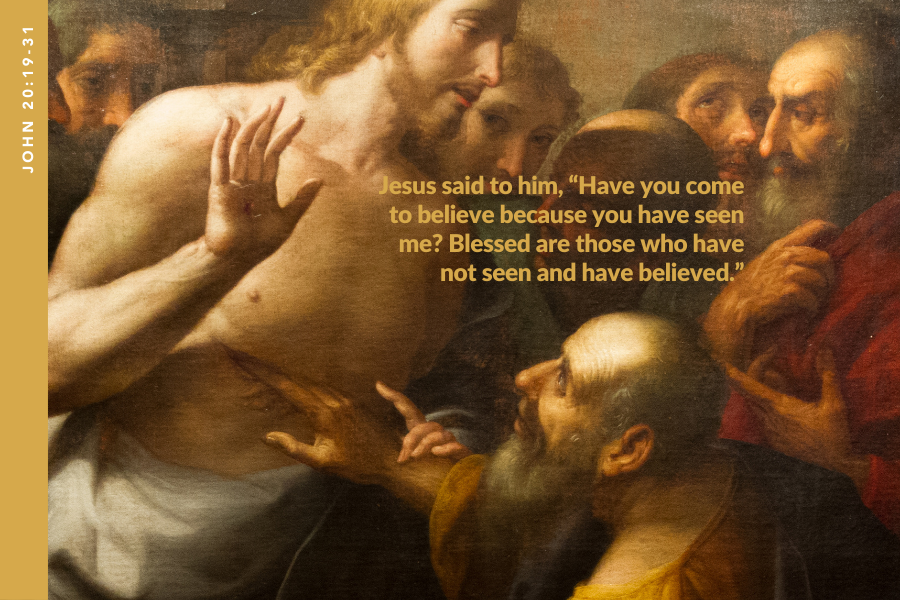
On the evening of that first day of the week, when the doors were locked, where the disciples were, for fear of the Jews, Jesus came and stood in their midst and said to them, “Peace be with you.” When he had said this, he showed them his hands and his side. The disciples rejoiced when they saw the Lord. Jesus said to them again, “Peace be with you. As the Father has sent me, so I send you.” And when he had said this, he breathed on them and said to them, “Receive the Holy Spirit. Whose sins you forgive are forgiven them, and whose sins you retain are retained.” Thomas, called Didymus, one of the Twelve, was not with them when Jesus came. So the other disciples said to him, “We have seen the Lord.” But he said to them, “Unless I see the mark of the nails in his hands and put my finger into the nailmarks and put my hand into his side, I will not believe.” Now a week later his disciples were again inside and Thomas was with them. Jesus came, although the doors were locked, and stood in their midst and said, “Peace be with you.” Then he said to Thomas, “Put your finger here and see my hands, and bring your hand and put it into my side, and do not be unbelieving, but believe.” Thomas answered and said to him, “My Lord and my God!” Jesus said to him, “Have you come to believe because you have seen me? Blessed are those who have not seen and have believed.” Now, Jesus did many other signs in the presence of his disciples that are not written in this book. But these are written that you may come to believe that Jesus is the Christ, the Son of God, and that through this belief you may have life in his name.

Opening Prayer: Lord God, I praise you for your Resurrection masterpiece. You died, destroying death; now you have risen, restoring life. Thank you for every Sunday Mass, in which we remember Christ’s victory. Alleluia!

Encountering Christ:

  1. “Peace Be With You”: Many elements in this Gospel passage can help us to reflect more deeply on the celebration of the Eucharist. For example, Christ said three times, “Peace be with you.” These can be likened to the triple invocations of the “Kyrie Eleison” or the “Lamb of God.” The number three is the number of completeness and perfection. God himself is three persons in one God, and each person is very present in this passage: Jesus mentioned the Father (“the Father has sent me”) and the Holy Spirit (“Receive the Holy Spirit”), while Thomas mentioned the Son (“My Lord…”) and his divine nature (“…and my God!”). And what do the Kyrie and the Lamb of God and Jesus and Thomas and the Mass all show us? That there is mercy, there is forgiveness of sin, there is peace.


  2. Faith and the Eucharist: Devotion to Mary, Undoer of Knots has been on the rise in recent years. Many Catholics are attracted to the Mother of God as an aid in untying the tangles of life. In an analogous way, today’s Gospel presents to us Jesus, Comer through Locked Doors (twice!). He came to the Apostles despite the obstacles they placed before him. His presence and his mercy pursue us—especially at Easter—until we allow him to come in and give us peace. And he made his Apostles protagonists in the giving of grace. We can therefore also ask for the intercession of the Apostles, Forgivers of Sin. But there is one more title to bestow in our list of devotions: We, the Blessed Unseers. Christ praised all those who have not seen and yet have believed—that is, all those who receive the Eucharist with faith. The bread we see is like a locked door that cannot prevent Jesus from coming at the consecration. And when he does, the priest echoes his words: “Peace I leave you, my peace I give you.”


  3. Bookwork: John tells us that Jesus did many other signs “not written in this book.” John probably could have written another book, even longer than his Gospel, describing Jesus in detail. He confesses, “There are also many other things that Jesus did, but if these were to be described individually, I do not think the whole world would contain the books that would be written” (Jn 21:25). Only in heaven, perhaps, will we learn more of John’s unwritten library. It would simply be too much for us here on earth. In fact, the library grows because Jesus works new wonders every day! Through the devout recitation of the liturgy of the hours by priests and lay people the world over, all of Jesus’ deeds recorded and unrecorded are praised continually to high heaven.

Conversing with Christ: Lord Jesus, thank you for searching me out when I lock myself in my own upper room. I want to take part in the liturgy with devotion, so that I can praise your glorious Resurrection and your Divine Mercy.

Resolution: Lord, today by your grace I will go to Mass with a joyful heart.

For Further Reflection: St. Therese of Lisieux’s Story of a Soul exemplifies the three points of our meditation today. She tried to live with great peace and trust in God; she showed great faith and devotion to the Eucharist; and she tried to write down in her book how Jesus had worked in her life, similar to St. John’s account of the Gospel.

Fr Erik Burckel, LC was ordained to the priesthood in 2022. He writes articles and short stories for diverse purposes and publications, and can be reached at eburckel@legionaries.org.

April 13, 2026 – Born of the Spirit

26-04-13-DM

Monday of the Second Week of Easter

John 3:1-8

There was a Pharisee named Nicodemus, a ruler of the Jews. He came to Jesus at night and said to him, “Rabbi, we know that you are a teacher who has come from God, for no one can do these signs that you are doing unless God is with him.” Jesus answered and said to him, “Amen, amen, I say to you, no one can see the kingdom of God without being born from above.” Nicodemus said to him, “How can a person once grown old be born again? Surely he cannot reenter his mother’s womb and be born again, can he?” Jesus answered, “Amen, amen, I say to you, no one can enter the kingdom of God without being born of water and Spirit. What is born of flesh is flesh and what is born of spirit is spirit. Do not be amazed that I told you, ‘You must be born from above.’ The wind blows where it wills, and you can hear the sound it makes, but you do not know where it comes from or where it goes; so it is with everyone who is born of the Spirit.”

Opening Prayer: Lord God, I come before you today with Easter joy in my heart. I thank you for your marvelous work, the Resurrection. Help me, with your grace, to “put on the new self, created in God’s way in righteousness and holiness of truth” (Eph 4:24).

Encountering Christ:

  1. The Pharisee Nicodemus: Who was Nicodemus? He was a Pharisee, a spiritual leader of the Jewish people. The Jewish leaders had so much authority that Nicodemus was called “a ruler of the Jews.” He was evidently an honest man, clear-sighted and sincere. We know this because he was able to recognize that “no one can do these signs that you are doing unless God is with him.” In addition, he came to Jesus genuinely searching for answers, and not just to win an argument. He was a man of faith, acknowledging God’s action in a mere carpenter’s son. And yet, Nicodemus had doubts, as we do. He did not understand the spirit; the Law seemed more trustworthy in its literalness. He came to Jesus at night, fearful of what others might think. Though his faith was growing, he was still flesh born of flesh.


  2. The Rabbi Jesus: In this passage, Jesus seems not to belong to this world of clay and dust. He worked signs in the name of God. He spoke of God’s invisible Kingdom as if he could see it. When asked about earthly birth, he responded with the signs of water and re When Nicodemus spoke of flesh, he spoke of Spirit. And yet Jesus’ feet were always planted firmly on the ground, aware of human limitations; he was quite aware that Nicodemus was “amazed that I told you, ‘You must be born from above.’” Today, he invites us to faith, to contemplate heavenly things, to lift up our hearts. As St. Paul says, “Whatever is true, whatever is honorable, whatever is just, whatever is pure, whatever is lovely, whatever is gracious, if there is any excellence and if there is anything worthy of praise, think about these things” (Phil 4:8).


  3. Born of the Spirit: “The term ‘Spirit’ is translated from the Hebrew word ruah, which, in its primary sense, means breath, air, wind. Jesus indeed uses the sensory image of the wind to suggest to Nicodemus the transcendent newness of him who is personally God’s breath, the divine Spirit” (CCC 691). “The symbolism of water signifies the Holy Spirit’s action in Baptism, since after the invocation of the Holy Spirit it becomes the efficacious sacramental sign of new birth: just as the gestation of our birth took place in water, so the water of Baptism truly signifies that our birth into the divine life is given to us in the Holy Spirit” (CCC 694).

Conversing with Christ: Lord Jesus, I recall the words of the Mass: “Lift up your hearts; we lift them up to the Lord!” With the grace of Baptism as my springboard, I ask you to increase my faith and lift my eyes and heart towards heaven.

Resolution: Lord, today by your grace I will renew my baptismal promises, trusting in the Holy Spirit to help me fulfill them.

Fr Erik Burckel, LC was ordained to the priesthood in 2022. He writes articles and short stories for diverse purposes and publications, and can be reached at eburckel@legionaries.org.

April 14, 2026 – The Son of Man Lifted Up

26-04-14-DM

Tuesday of the Second Week of Easter

John 3:7b-15

Jesus said to Nicodemus: “‘You must be born from above.’ The wind blows where it wills, and you can hear the sound it makes, but you do not know where it comes from or where it goes; so it is with everyone who is born of the Spirit.” Nicodemus answered and said to him, “How can this happen?” Jesus answered and said to him, “You are the teacher of Israel and you do not understand this? Amen, amen, I say to you, we speak of what we know and we testify to what we have seen, but you people do not accept our testimony. If I tell you about earthly things and you do not believe, how will you believe if I tell you about heavenly things? No one has gone up to heaven except the one who has come down from heaven, the Son of Man. And just as Moses lifted up the serpent in the desert, so must the Son of Man be lifted up, so that everyone who believes in him may have eternal life.”

Opening Prayer: Lord God, your words are difficult. How am I to understand this passage? I am made of flesh and my thoughts are fleshly, and I feel incapable of being spiritual. I beseech you, send forth your Holy Spirit! Things shall be created and you will renew the face of the earth!

Encountering Christ:

  1. “How Can This Happen?”: It’s all very well to speak of being born again, or born from above, or born of the Spirit. It sounds wonderful, in fact, this notion of transcending daily troubles and petty difficulties. But Nicodemus asked the same question I would have asked: But how can this happen? How? The wind blows where it wills, and the action of the Spirit is invisible; how can I perceive him? We are supposed to be teachers of Israel, and still we don’t understand your words, Jesus. How can this happen? We’ve tried to be holy, to follow your commands, and it doesn’t seem to work. We want to go up to heaven, but no one makes it up to heaven; only you have gone up to heaven because you came down from heaven. How can sanctity happen? How can we receive the Spirit? How?


  2. “He Came Down From Heaven”: The Son of Man “has come down from heaven.” We recite it every Sunday in the Creed, and it is the answer to all our yearnings for God. We are too weak to rise up and search God out in his heavens. Therefore, he has had mercy on us; he has come down from heaven. This is what sets Christianity apart from all other religions; God became man. “For us men and for our salvation, he came down from heaven.” Such is the absurdity of his love for us, that he would leave heaven to live with us. Such is the divine wisdom of the Incarnation. The Fathers saw this mystery prefigured in the Old Testament: “Thus she [wisdom] has appeared on earth, is at home with mortals” (Bar 3:38).


  3. The Serpent in the Desert: The reference to Moses lifting up the serpent in the desert comes from Numbers 21:4-9, which is read on Tuesday of the Fifth Week of Lent. The people complained against God and Moses because of the poor food and lack of water in the desert. As a result, they were plagued by fiery serpents who killed many of them. But God ordered Moses to craft a serpent and raise it up as a standard, and anyone who looked at it was healed. God always provides a way of repentance and salvation for his people. The Son of Man was also lifted up on the Cross, so that everyone who believes in Jesus crucified and risen has eternal life. This is why he came down from heaven. This is the “how” of our salvation.

Conversing with Christ: Lord Jesus, you have taught me that I need your Holy Spirit. It is your Holy Spirit—the Spirit of Jesus—who enables me to know and love and confess you. “No one can say ‘Jesus is Lord,’ except by the holy Spirit” (1 Cor 12:3).

Resolution: Lord, today by your grace I will invoke the Holy Spirit before any important activities.

For Further Reflection: Try reading the extended Christmas story (Lk 1-2), reflecting on Christ’s descent and ascent. In other words, in what ways are both Christ’s suffering and his exaltation prefigured in the account of his Incarnation?

Fr Erik Burckel, LC was ordained to the priesthood in 2022. He writes articles and short stories for diverse purposes and publications, and can be reached at eburckel@legionaries.org.

April 15, 2026 – Lumen Christi

26-04-15-DM

Wednesday of the Second Week of Easter

John 3:16-21

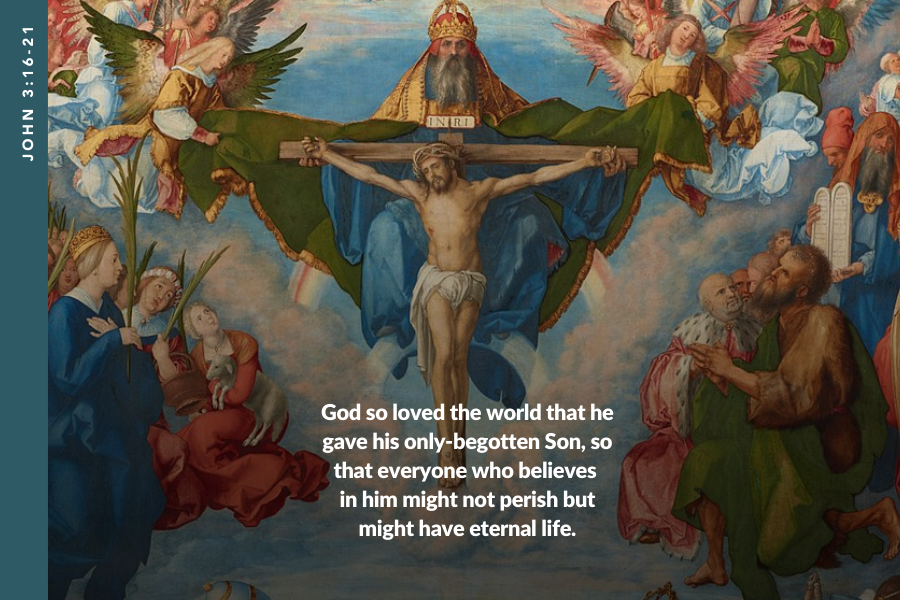
God so loved the world that he gave his only Son, so that everyone who believes in him might not perish but might have eternal life. For God did not send his Son into the world to condemn the world, but that the world might be saved through him. Whoever believes in him will not be condemned, but whoever does not believe has already been condemned, because he has not believed in the name of the only Son of God. And this is the verdict, that the light came into the world, but people preferred darkness to light, because their works were evil. For everyone who does wicked things hates the light and does not come toward the light, so that his works might not be exposed. But whoever lives the truth comes to the light, so that his works may be clearly seen as done in God. 

Opening Prayer: Lord God, you live in light inaccessible. You are the sun of righteousness that sheds your lovely light on us. Thank you for coming to save the world. Thank you for raising us up to light imperishable when our lives here below have run their earthly course.

Encountering Christ:

  1. Lumen Christi: This passage can be divided neatly into two parts. Verses 16-18 speak of the Son of God. God gave his only Son; God sent his only Son; those who do not believe in the Son of God are already condemned. Verses 19-21 speak of the light. The light came into the world; the wicked do not come toward the light; but whoever lives the truth comes to the light. The Son of God is the light. John 8:12 says, “I am the light of the world. Whoever follows me will not walk in darkness, but will have the light of life.” At the beginning of the Easter Vigil Mass, as the priest holds up the Paschal candle, he intones three times “Lumen Christi!” and the people respond, “Deo gratias!” This means, “Light of Christ!” and “Thanks be to God!” It is God who has sent light into the world, not “to condemn the world, but that the world might be saved through him.”


  2. Dispelling Unbelief: God sent his Son into the world to save the world, but from what does it need saving? From unbelief. The passage does not say that God condemns the wicked deeds of men (though of course he does); it does not say that he condemns at all. It simply affirms, “Whoever does not believe has already been condemned.” Unbelief bears its own punishment. The world needs saving from unbelief in Jesus Christ. Life apart from Jesus leads to wicked works done in darkness. I cannot reject Jesus and at the same time retain goodness, light, and truth—at least, not in their fullness. “I am the Way, and the Truth, and the Life (and the light!),” says Jesus.


  3. God Sent the Light: Another translation of John 3:16 reads, “For this is how God loved the world: he gave his only Son.” There is nothing better than Jesus. God the Father can give no greater gift than his only-begotten Son. What’s more, we can say that with the giving of Christ, God has already given us everything—light and life and blessings and happiness and holiness. And friendship and love and truth and courage, and much more besides. Jesus is God’s gift of salvation to us. The very name “Jesus” means “God saves.” He came for no other person, except that “everyone who believes in him might have eternal life.” And the proof that he can give us eternal life is his own Resurrection.

Conversing with Christ: Lord Jesus, be the light of my life! Shine in me so that I can shine out to others, calling them to live in the light. You are that light! Give me the grace to do all my works “in God.”

Resolution: Lord, today by your grace I will pray the rosary meditating with Mary on the luminous mysteries of Christ’s public life.

For Further Reflection: Read some selections from Pope Francis’ encyclical on faith, Lumen Fidei. (It’s good to know that this is the sequel, so to speak, of Pope Benedict’s encyclicals on hope and charity, Spe Salvi and Deus Caritas Est, respectively.)

Fr Erik Burckel, LC was ordained to the priesthood in 2022. He writes articles and short stories for diverse purposes and publications, and can be reached at eburckel@legionaries.org.

April 16, 2026 – The Testimony of the Scriptures

26-04-16-DM

Thursday of the Second Week of Easter

John 3:31-36

The one who comes from above is above all. The one who is of the earth is earthly and speaks of earthly things. But the one who comes from heaven is above all. He testifies to what he has seen and heard, but no one accepts his testimony. Whoever does accept his testimony certifies that God is trustworthy. For the one whom God sent speaks the words of God. He does not ration his gift of the Spirit. The Father loves the Son and has given everything over to him. Whoever believes in the Son has eternal life, but whoever disobeys the Son will not see life, but the wrath of God remains upon him.

Opening Prayer: Lord God, although it’s not clear whether these are the words of Jesus or of John the Baptist, I know your saving message is contained in them. Through this immersion in your word, let the Holy Spirit make his home in me. Let the Gospel become a living word, fount of Easter life and joy.

Encountering Christ:

  1. John the Baptist: In the very last chapter of the Old Testament, we find this: “Now I am sending my messenger—he will prepare the way before me; and the lord whom you seek will come suddenly to his temple; the messenger of the covenant whom you desire—see, he is coming! says the Lord of hosts” (Mal 3:1). These words of Malachi point to John the Baptist. He is the messenger, and also the new Elijah predicted in Malachi 3:23. This is very clear from the angel Gabriel’s words about John in Luke 1:17. “He will go before him in the spirit and power of Elijah to turn the hearts of fathers toward children and the disobedient to the understanding of the righteous, to prepare a people fit for the Lord.” John was thus the messenger full of spirit and power, who witnessed to Jesus Christ.


  2. Peter and the Apostles: “For the one whom God sent speaks the words of God. He does not ration his gift of the Spirit.” In today’s first reading from the Acts of the Apostles, the inimical Sanhedrin prohibited preaching, but Peter and the Apostles boldly replied, “We must obey God rather than men” (Acts 5:29). They did not ration their gift of the Holy Spirit, but fearlessly proclaimed the Death and Resurrection of the Christ. “The God of our ancestors raised Jesus, though you had him killed by hanging him on a tree… We are witnesses of these things, as is the Holy Spirit that God has given to those who obey him” (Acts 5:30-32). This is the power of the word of God; it makes us fearless witnesses—like the prophet Elijah, like St. John the Baptist, like St. Peter. If God sends us, we must speak the words of God.


  3. The Wrath of God: The passage concludes with a dreadful phrase: “Whoever disobeys the Son will not see life, but the wrath of God remains upon him.” What is this wrath? Wrath is the name sinners give to God’s justice, and even his mercy. Returning to the messenger in Malachi, we read, “But who can endure the day of his coming? Who can stand firm when he appears? For he will be like a refiner’s fire, like fullers’ lye […] I will draw near to you for judgment, and I will be swift to bear witness against sorcerers, adulterers, and perjurers…” (Mal 3:2,5). To the unrighteous, the refiner’s fire is wrathful, while silver remains untouched. The truth makes the honest man rejoice, but enrages the perjurer—so much so that “When they [the Sanhedrin] heard this, they became infuriated and wanted to put them [the apostles] to death” (Acts 5:33). Do not fear God’s wrath; the very Scriptures themselves bear testimony, “If we have died with him we shall also live with him” (2 Tim 2:11).

Conversing with Christ: Lord Jesus, your word is powerful! The more slowly I read it and the more I pray on it, the more it says to me. Your word is truly a lamp unto my feet and a light unto my path. Thanks be to God!

Resolution: Lord, today by your grace I will search the Scriptures for what God has to say about a particular problem weighing on my heart.

For Further Reflection: Read the very short Book of the Prophet Malachi. There we read of God’s exasperation (“wrath”) towards Israel’s misdeeds, as well as the remedy he provides.

Fr Erik Burckel, LC was ordained to the priesthood in 2022. He writes articles and short stories for diverse purposes and publications, and can be reached at eburckel@legionaries.org.

April 17, 2026 – Have the People Recline

26-04-17-DM

Friday of the Second Week of Easter

John 6:1-15

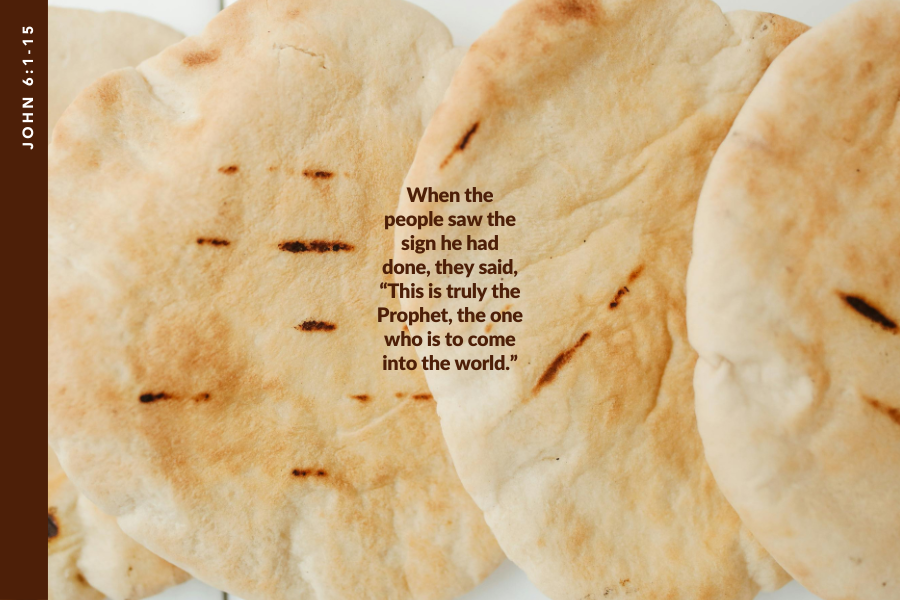
Jesus went across the Sea of Galilee. A large crowd followed him, because they saw the signs he was performing on the sick. Jesus went up on the mountain, and there he sat down with his disciples. The Jewish feast of Passover was near. When Jesus raised his eyes and saw that a large crowd was coming to him, he said to Philip, “Where can we buy enough food for them to eat?” He said this to test him, because he himself knew what he was going to do. Philip answered him, “Two hundred days’ wages worth of food would not be enough for each of them to have a little.” One of his disciples, Andrew, the brother of Simon Peter, said to him, “There is a boy here who has five barley loaves and two fish; but what good are these for so many?” Jesus said, “Have the people recline.” Now there was a great deal of grass in that place. So the men reclined, about five thousand in number. Then Jesus took the loaves, gave thanks, and distributed them to those who were reclining, and also as much of the fish as they wanted. When they had had their fill, he said to his disciples, “Gather the fragments left over, so that nothing will be wasted.” So they collected them, and filled twelve wicker baskets with fragments from the five barley loaves that had been more than they could eat. When the people saw the sign he had done, they said, “This is truly the Prophet, the one who is to come into the world.” Since Jesus knew that they were going to come and carry him off to make him king, he withdrew again to the mountain alone.

Opening Prayer: Lord God, though my needs are many, you care for them all. Though I am but one in a crowd, you treat me as your only child. I know this miracle prepares your disciples for the gift of the Eucharist; help me to reverence the Blessed Sacrament for the miraculous gift it is!

Encountering Christ:

  1. A Large Hungry Crowd: When our worries crowd in on us, we often feel alone. They are our worries, and no one else is going to worry about them if we don’t. But the Lord will. He was the first one to see the large crowd and ask, “Where can we buy enough food for them to eat?” He has the heart of a good shepherd, always thinking of his sheep and what they need. He wants his sheep to confide in him, to make known their worries. When we act alone, we realize our resources are so small. Our bodies get tired, our heads fail to understand, and our glance does not perceive. Our hearts do not feel as they should, and our mouths spout what we do not want to say! What good are these weak instruments for so many needs?


  2. “Have the People Recline”: Jesus’ response to the problem is counterintuitive: slow down, contemplate, and rest. “Have the people recline,” he said. Stop trying to fix the problem alone, and turn your eyes toward Jesus. Look about you, see the deep blue lake and the verdant hillside where Jesus sits, in command. The evangelist bothered to tell us, “Now there was a great deal of grass in that place.” Is this detail essential? No, but it is part of the harvest we reap when we bring our hunger to Jesus. We can ask question after question. Why does Jesus put Philip to the test? Why does he put us to the test? Christ simply wants us to recline along with five thousand others who also need him. We are each just one sheep in a flock. We cannot buy enough food for ourselves to eat, not without Jesus.


  3. Jesus Gives Thanks: When Jesus gives thanks, we are fed. This is the logic of the sacrifice of the Mass. “Then Jesus took the loaves, gave thanks, and distributed them to those who were reclining, and also as much of the fish as they wanted.” Before ten thousand eyes deep-set in five thousand hungry faces, Jesus gave thanks to his Father in heaven. We also come to him in the Mass seeking Eucharistic food, and he distributes it to all those who are reclining—all those who heed the shepherd’s voice. “All you who are thirsty, come to the water! You who have no money, come, buy grain and eat… Why spend your money for what is not bread; your wages for what does not satisfy?” (Isa 55:1-2).

Conversing with Christ: Lord Jesus, I follow you over the sea and up the hills because I know you are the living bread. I come empty-handed, ready to buy at no price the priceless Bread of Angels. I beg you to give me my fill.

Resolution: Lord, today by your grace I will make a visit to the tabernacle, if possible. If this is not feasible, I will make a spiritual communion in the Eucharist.

For Further Reflection: Try reading Book II of Thomas a Kempis’ Imitation of Christ. Book II is an invitation to a radical living of the interior life, which advocates prayer and reflection as the wellspring of holiness in action.

Fr Erik Burckel, LC was ordained to the priesthood in 2022. He writes articles and short stories for diverse purposes and publications, and can be reached at eburckel@legionaries.org.

April 18, 2026 – Faith Calms Storms

26-04-18-DM

Saturday of the Second Week of Easter

John 6:16-21

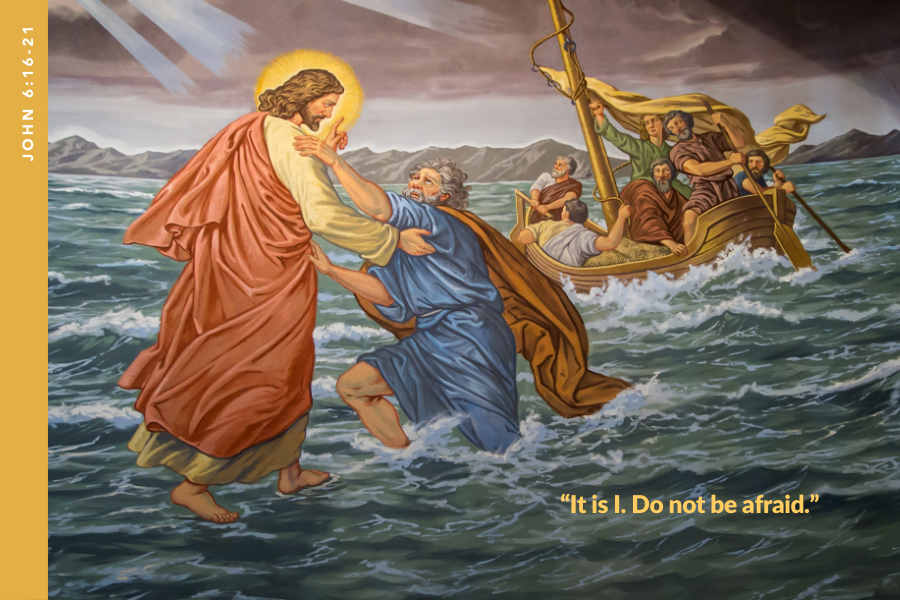
When it was evening, the disciples of Jesus went down to the sea, embarked in a boat, and went across the sea to Capernaum. It had already grown dark, and Jesus had not yet come to them. The sea was stirred up because a strong wind was blowing. When they had rowed about three or four miles, they saw Jesus walking on the sea and coming near the boat, and they began to be afraid. But he said to them, “It is I. Do not be afraid.” They wanted to take him into the boat, but the boat immediately arrived at the shore to which they were heading.

Opening Prayer: Lord come to me as I begin this time of prayer. Calm my stormy mind so that I can recognize your presence in these words.

Encountering Christ:

  1. In Context?: After feeding the five hundred, the Gospel of Matthew tells us Jesus “made the disciples get into the boat and precede him to the other side” (Mt 14:22). Jesus wanted to be alone to pray. Although John left this detail out, it makes sense that the disciples would have gotten into the boat only if Jesus insisted, telling them he intended to pray. They had seen this behavior before. Jesus often got up early, or stayed up late, to share some quiet time with his Father. What a witness Jesus was to them and to us. No matter how busy our ministry, no matter how needy the crowds, no matter what our collaborators say, we must make time for prayer. “Let the men eaten up with activity and who imagine they are able to shake the world with their preaching and other outward works, stop and reflect a moment… they would be much more useful to the Church and more pleasing to the Lord, not to mention the good example they would give to those around them, if they devoted more time to prayer and to the exercises of the interior life” (Dom Jean-Baptiste Chautard, The Soul of the Apostolate).


  2. It Was Dark: Jesus prayed well into the night, leaving the Apostles in the dark, in a boat tossed about by waves. Of course, he knew their plight. Why did he wait until the fourth watch of the night (cf. Mk 6:48) to make his presence known? When Jesus postponed his visit to Mary and Martha, it was to raise Lazarus from the dead—to work a miracle so resplendent that doubting souls might finally believe (cf. Jn 11). When the woman with the hemorrhage touched his cloak, Jesus told her, “Courage, daughter! Your faith has saved you” (Mt 9:22). The disciples in today’s Gospel “had not understood the incident of the loaves. On the contrary, their hearts were hardened” (Mk 6:52). Their faith needed a booster shot. Jesus was making it perfectly clear that he is master of the seas, and through his dramatically bringing them to safety their faith in him would be strengthened. In our own darkness, we can be assured that Jesus knows our plight, that his timing is perfect, and that he seeks only our good. No one relishes the darkness, but “this momentary light affliction is producing for us an eternal weight of glory beyond all comparison, as we look not to what is seen but to what is unseen; for what is seen is transitory, but what is unseen is eternal” (2 Cor 4:17-18).


  3. No Fear: The Bible contains more than 140 admonitions to fear not, forty of them in the New Testament. Jesus’s disciples were afraid. Jesus knows our hearts are also anxious, that storms crop up to disturb our peace, that we struggle with strong emotions like anger, jealousy, and loneliness. In this instance, he approached the boat with the words, “It is I. Do not be afraid,” and so “they wanted to take him into the boat.” We too want to cling to Jesus in the storm and lay our problems at his feet. When we do, Jesus calms our anxious hearts, reminding us that he is enough. Our peace is restored.

Conversing with Christ: Lord, you speak to me about faith in these lines of Scripture. I see that my faith is weak. I beg you to strengthen me. Many of the ordinary daily stressors I experience are opportunities to grow in faith. I know that I can do all that you ask of me with peace and joy, if I only have faith in you.

Resolution: Lord, today by your grace I will say, “Jesus I trust in you,” every time I feel the least bit stressed.

For Further Reflection: “The Lord is a stronghold for the oppressed, a stronghold in times of trouble. Those who know your name trust in you; you never forsake those who seek you, Lord” (Ps 9:10-11).

Maribeth Harper celebrated paying the last tuition bill for her kids’ college by writing a book for parents who have college-aged young adults: A Spiritual Toolbox: Tips for Parenting through the First Year of College. She is a wife of over thirty-five years, mother of four, and grandmother of twelve and counting.

April 19, 2026

26-04-19-DM

Third Sunday of Easter

Luke 24:13-35

That very day, the first day of the week, two of Jesus’ disciples were going to a village seven miles from Jerusalem called Emmaus, and they were conversing about all the things that had occurred. And it happened that while they were conversing and debating, Jesus himself drew near and walked with them, but their eyes were prevented from recognizing him. He asked them, “What are you discussing as you walk along?” They stopped, looking downcast. One of them, named Cleopas, said to him in reply, “Are you the only visitor to Jerusalem who does not know of the things that have taken place there in these days?” And he replied to them, “What sort of things?” They said to him, “The things that happened to Jesus the Nazarene, who was a prophet mighty in deed and word before God and all the people, how our chief priests and rulers both handed him over to a sentence of death and crucified him. But we were hoping that he would be the one to redeem Israel; and besides all this, it is now the third day since this took place. Some women from our group, however, have astounded us: they were at the tomb early in the morning and did not find his body; they came back and reported that they had indeed seen a vision of angels who announced that he was alive. Then some of those with us went to the tomb and found things just as the women had described, but him they did not see.” And he said to them, “Oh, how foolish you are! How slow of heart to believe all that the prophets spoke! Was it not necessary that the Christ should suffer these things and enter into his glory?” Then beginning with Moses and all the prophets, he interpreted to them what referred to him in all the Scriptures. As they approached the village to which they were going, he gave the impression that he was going on farther. But they urged him, “Stay with us, for it is nearly evening and the day is almost over.” So he went in to stay with them. And it happened that, while he was with them at table, he took bread, said the blessing, broke it, and gave it to them. With that their eyes were opened and they recognized him, but he vanished from their sight. Then they said to each other, “Were not our hearts burning within us while he spoke to us on the way and opened the Scriptures to us?” So they set out at once and returned to Jerusalem where they found gathered together the eleven and those with them who were saying, “The Lord has truly been raised and has appeared to Simon!” Then the two recounted what had taken place on the way and how he was made known to them in the breaking of bread.

Opening Prayer: Lord, I praise you and am so grateful for this prayer time. Thank you that despite my stumbling, you walk beside me and steady me. Open my eyes and ears now.

Encountering Christ:

  1. “Jesus… Drew Near And Walked With Them”: Jesus walked with the disciples on the way to Emmaus, and he is here now, and walking beside us. When we pause a moment to reflect on this powerful truth and let it penetrate our hearts, no matter what our state of mind is, or what emotions well up, or what situations are confronting us, we can draw strength from Jesus walking beside us. What a comfort this realization is! It is and should be our fountain of strength and our shield of protection on the battleground of life.


  2. “They Stopped, Looking Downcast”: Could the disciples have failed to recognize Our Lord because they were looking down? Looking down might indicate their minds were closed and their hearts were turned inward on themselves in sorrow over Jesus’ death, pondering why and how this all could have happened! When the unexpected happens, we can get stuck asking the wrong questions, too. It is understandable to ask “how” and “why,” but to grow and begin to move forward, it is more helpful instead to ask in prayer, “What do you want me to learn from this, Lord?” When we say this prayer humbly and diligently, Our Lord will begin to inspire our hearts with hope and new direction.


  3. “Oh, How Foolish You Are!”: Being called a fool can snap us right out of our navel—gazing, even causing us to momentarily forget our sorrow. It’s possible that the disciples didn’t recognize Jesus because they clung to their interpretation of how Jesus would “redeem” his people and the role they would play. When Jesus reoriented the disciples to understand God’s plan through the Scripture, their despairing hearts began to burn with new hope. When we hold on to our agenda with a prideful, “my way or the highway” attitude, we are being foolish. Going to prayer, even just momentarily acknowledging Jesus as Lord, who already knows the answer and who can overcome any difficulty, will help defeat the temptation for control. Recognizing his presence and ultimate control over every situation increases our humility and prevents rash decisions. We are the Lord’s good servants first. Our greatest desire is his will, and acknowledging that Jesus is walking beside us will help us maintain interior peace.

Conversing with Christ: Thank you, Lord, for encouraging me to focus outward towards you and others. I do desire your will above mine. By surrendering my own desire for control, I can be more open to your gentle leading.

Resolution: Lord, today by your grace I will avoid rash words or actions, pausing to remember I am your good servant first.

Janice Neyer works as a freelance writer/editor and a substitute teacher in Murfreesboro, Tennessee. She has two married adult children and five amazing grandchildren. She can be reached at janice.neyer@gmail.com.

Weekly Digest of the Regnum Christi Daily Meditations: Apr 12 – 19, 2026 Read More »

Regnum Christi Spirituality Center Uncle Eddy

St Stanislaus

Dear Stacy, My dearest of nieces, you have no reason to torture yourself so.  It’s not an “either/or” proposition – either you speak out against the sinful behavior of your peers or you keep silent – not at all; rather, you both remain silent AND you speak out.  First of all, you are right in perceiving the sinful and destructive nature of typical college behavior; drunkenness, drugs, and promiscuity are contrary to human dignity, enslave their perpetrators, and destroy lives.  That’s why God and the Church warn us against them. So you’re right on that score. And you’re right as well to want to do something to change it – if we who are followers of Christ don’t spread his truth, who will? Secondly, however, you don’t have to go into the middle of the student center, stand on a soapbox, and start preaching about it in the open air.  There are at least two other options. First, let your example speak for you. Believe me, if someone like you – normal, happy, popular, pretty, smart – doesn’t go to raucous parties and do the “normal” things, it will get noticed. And then people will ask you why, and then they are ready to hear the message. But don’t stop there – get creative! Organize some kind of activity to tweak the consciences of your poor, misguided fellow students.  Invite a nun to your dorm to give a talk on chastity; invite a recovering alcoholic to tell his testimony on open microphone night… Stir things up! The Holy Spirit will take over from there. You should also ask today’s Saint to give you a hand. He faced up to the notorious public sinner King Boleslaus II when all the other Polish bishops were afraid to. St Stanislaus warned him that if he didn’t desist from his cruelty to the people and his shameless, rapacious adultery he would be excommunicated.  Of course, you, like St Stanislaus, should be ready to face the opposition that will inevitably ensue. I hope and pray that your fate, however, will not be quite as violent as his (the King stormed into his chapel while the saint was celebrating Mass and slew him with a blow of his sword), but you never know. Hopes and prayers, Uncle Eddy.

St Stanislaus Read More »

26-04-11-DM

April 11, 2026 – Appearing and Disappearing

Saturday in the Octave of Easter


Mark 16:9-15

When Jesus had risen, early on the first day of the week, he appeared first to Mary Magdalene, out of whom he had driven seven demons. She went and told his companions who were mourning and weeping. When they heard that he was alive and had been seen by her, they did not believe. After this he appeared in another form to two of them walking along on their way to the country. They returned and told the others; but they did not believe them either. But later, as the Eleven were at table, he appeared to them and rebuked them for their unbelief and hardness of heart because they had not believed those who saw him after he had been raised. He said to them, “Go into the whole world and proclaim the Gospel to every creature.”

Opening Prayer: Lord Jesus, I believe that you are alive and close to me, especially through your sacramental presence. From here, you work tirelessly to extend your Kingdom. May I cling to your Church so that your love will continue to flow through me and sustain me in fulfilling the mission you have entrusted to me.

Encountering Christ:

  1. Unbelief: Three times in the Gospel summaries of the Resurrection appearances, we learn that Jesus’ witnesses were “not believed.” Jesus reproached the disciples for their lack of faith, but he sent them to proclaim the Good News anyway. Mary Magdalene may not have seemed a likely candidate to witness to those who would not believe. Jesus wants us to see that our worthiness to witness to the Gospel as an announcer of his truth is not judged according to our perceptions, but rather according to his personal, loving call. If we are believers in the Resurrection events, why is it so difficult to believe in this same love at work transforming our hearts and the world around us? Our disbelief does not discourage the risen Lord! With a sincere heart say, “Lord, I do believe, help my unbelief!”


  2. Alive and Seen: Faith in the risen Christ came slowly for the disciples, and Jesus had to convince them that he had indeed risen from death. Our faith journey has its fair share of ups and downs, but we cannot deny in times of darkness or desolation what we have seen in the light and experienced in a sure moment of grace. Even though our life of prayer goes through phases, at times filled with many words and at other moments in complete silence, Jesus wants us to learn to trust that he is always near even when it may not seem so. By loving Jesus in obscurity and darkness, our faith springs to life.


  3. Go Into the Whole World: Jesus knows that, at times, we will struggle in our efforts to carry out our mission, just as it was challenging for the disciples to believe in the Resurrection. We can be outwardly confident yet harboring doubts, and in other moments hesitant to proclaim what seems certain. Jesus sees and understands our resistance and reluctance; however, he continues to send us out to “the whole world.” He never despairs of us, his beloved followers. After all, it is his work taking effect through our faithfulness. “The Lord has taken the initiative, he has loved us first (1 Jn 4:19), and therefore we can move forward, boldly take the initiative, go out to others, seek those who have fallen away, stand at the crossroads and welcome the outcast” (Evangelii Gaudium, 24). Listen for where the Lord is inviting you to proclaim the Good News in the current circumstances of your life.

Conversing with Christ: I have experienced the presence of God in numerous ways, not the least of which is in the sacraments given to me through the Church. I have had so many moments of strength, consolation, and peace in prayer to the risen Lord who desires to draw near. May I grow deeper in my conviction and more courageous in my response to the commission to proclaim the Gospel in every aspect of my life.

Resolution: Lord, today by your grace I will lean on your grace in the sacraments, either by participating in daily Mass or regular confession, to ask for a renewed confidence in my mission to show God’s love in the precise circumstances of my everyday life.

For Further Reflection: “Sent,” a video by Fr. John Bartunek, LC, on Mary Magdalene’s vocation as the Apostle to the Apostles.

Lucy Honner is a Consecrated Woman of Regnum Christi and the Assistant Director of Campus Ministry at University Catholic, a community of students in the Nashville area who are serious about their faith. Since 1998, she has exercised her apostolate as a speaker, spiritual director, integrated health coach, and retreat director throughout North America.

April 11, 2026 – Appearing and Disappearing Read More »

Scroll to Top

Events

Looking for another country?

Contact Regnum Christi near you

News & Resources

News & Resources

The Regnum Christi Mission

The Regnum Christi Identity

Alex Kucera

Atlanta

Alex Kucera has lived in Atlanta, GA, for the last 46 years. He is one of 9 children, married to his wife Karmen, and has 3 girls, one grandson, and a granddaughter on the way. Alex joined Regnum Christi in 2007. Out of the gate, he joined the Helping Hands Medical Missions apostolate and is still participating today with the Ghana Friendship Mission.

In 2009, Alex was asked to be the Atlanta RC Renewal Coordinator for the Atlanta Locality to help the RC members with the RC renewal process. Alex became a Group Leader in 2012 for four of the Atlanta Men’s Section Teams and continues today. Running in parallel, in 2013, Alex became a Team Leader and shepherded a large team of good men.

Alex was honored to be the Atlanta Mission Coordinator between 2010 to 2022 (12 years), coordinating 5-8 Holy Week Mission teams across Georgia. He also created and coordinated missions at a parish in Athens, GA, for 9 years. Alex continues to coordinate Holy Week Missions, Advent Missions, and Monthly missions at Good Shepherd Catholic Church in Cumming, GA.

From 2016 to 2022, Alex also served as the Men’s Section Assistant in Atlanta. He loved working with the Men’s Section Director, the Legionaries, Consecrated, and Women’s Section leadership teams.

Alex is exceptionally grateful to the Legionaries, Consecrated, and many RC members who he’s journeyed shoulder to shoulder, growing his relationship with Christ and others along the way. He knows that there is only one way, that’s Christ’s Way, with others!