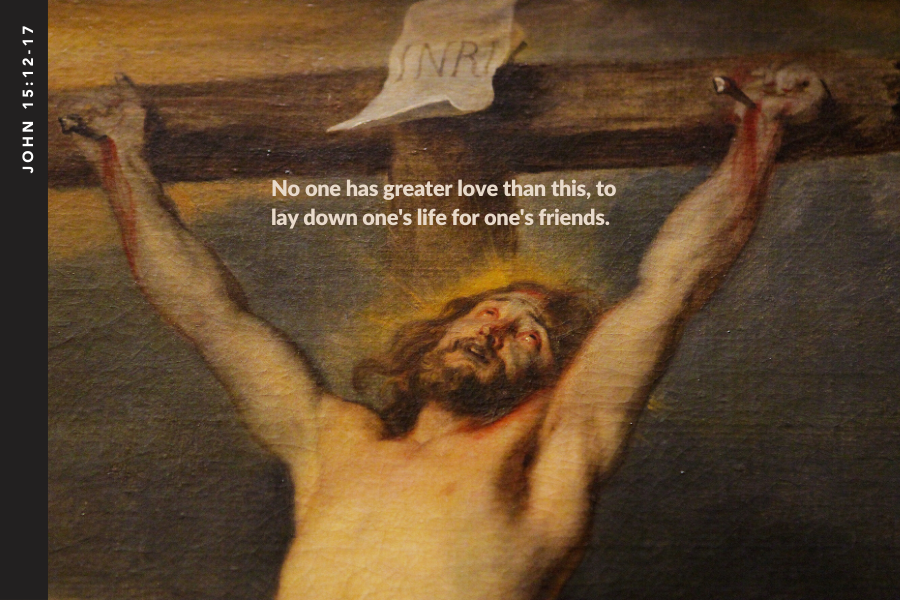
Jesus said to his disciples: “This is my commandment: love one another as I love you. No one has greater love than this, to lay down one’s life for one’s friends. You are my friends if you do what I command you. I no longer call you slaves, because a slave does not know what his master is doing. I have called you friends, because I have told you everything I have heard from my Father. It was not you who chose me, but I who chose you and appointed you to go and bear fruit that will remain, so that whatever you ask the Father in my name he may give you. This I command you: love one another.”
Opening Prayer: God my Father, I ask in your name for the grace to be able to pray. I do not know how to pray as I ought, but the Spirit in me inspires true prayer. I love you, Father mine, and I love your Son; let me remain in your love.
Encountering Christ:
To Lay Down One’s Life: “This is why the Father loves me, because I lay down my life in order to take it up again. No one takes it from me, but I lay it down on my own. I have power to lay it down, and power to take it up again. This command I have received from my Father” (Jn 10:17-18). He received this command from the Father, not as an order imposed from outside by steel-tipped boots, but as the inner exigency of his love for us. For Jesus, “God’s commands are not burdensome” (1 Jn 5:3). We know this because he went to the Cross with utmost freedom. Both the Father and the Son love us with the same free and gratuitous love. “For the Father himself loves you, because you have loved me and have come to believe that I came from God” (Jn 16:27). God’s commands should not be burdensome for us either. “Love can be ‘commanded’ because it has first been given” (Deus Caritas Est, 14).
Appointed to Bear Fruit: Christ has chosen us to go out and bear fruit, and this means laying down our lives—suffering. “Amen, amen, I say to you, unless a grain of wheat falls to the ground and dies, it remains just a grain of wheat; but if it dies, it produces much fruit” (Jn 12:24). The seed which forgets itself will bear the type of fruit that remains. “Those who sow in tears will reap with cries of joy” (Ps 126:5). Our suffering is not useless; it is the source of a mysterious fruitfulness. The other component of fruit-bearing is “going out.” When the Last Supper ended, the Apostles did not remain enclosed in the Upper Room. In fact, the book following John’s Gospel is the Acts of the Apostles. These men were chosen by Christ to bear witness to his Resurrection—amidst much suffering—and thereby bear fruit.
Love One Another: Christ does not monopolize us. His love for us and our love for him is not to be exclusive, but rather the fount of love for our brothers and sisters. Fr. Alban Goodier, SJ, in his book The Passion and Death of Our Lord Jesus Christ, makes explicit that just before Christ died, it weighed heavily on his heart that the Apostles should truly love one another. That’s why he commanded them to wash each other’s feet. His own sacrificial love for them would be the standard of their love for one other: “Love one another as I have loved you.” With every ounce of his capacity for expression, he sought to show them that night “all he would have them to be to one another” (Goodier).
Conversing with Christ: Lord Jesus, I do not want to skim over love, but to be inundated and saturated with it. Let my love be as practical and concrete as it is deep and spiritual. Grant me the gift of loving others as you love me.
Resolution: Lord, today by your grace I will begin a habit of daily spiritual reading, so that God can nourish the seed of love planted in me.
For Further Reflection: Watch Mother Teresa’s acceptance speech of the 1979 Nobel Peace Prize, in which she tells us what it means to love one another.
Fr Erik Burckel, LC was ordained to the priesthood in 2022. He writes articles and short stories for diverse purposes and publications, and can be reached at eburckel@legionaries.org.
Q: If an 80-something widower and a 70-something widow find their friendship developing to a higher level with commitment and more intimacy, how can any sex be considered sinful when there is no possibility of conception? To get married again at that age isn’t practical because of all the business aspects and family issues for adult children and grandchildren. Commitment, care, companionship and sexual intimacy seem natural, so why does the Church consider it sinful? — T.
Answered by Fr. Edward McIlmail, LC:
A: It’s good to remember that the Church didn’t create sex; God did, for a purpose and for use within certain parameters.
God created sex with a twofold purpose: procreation and the unity of spouses.
Procreation, while important, isn’t essential in the sense that spouses who are past childbearing years or who find out they are infertile can still engage in the one-flesh union willed by God.
But that union needs to be blessed by God. Marriage between Catholics (or any Christians) is a sacrament.
To have sex outside marriage undercuts the total commitment that spouses should have toward each other.
It can also scandalize people, especially young people, who already face a culture that denigrates marriage.
You mention that getting married again at your age “isn’t practical.” It’s not clear why you would say this. Couples do, in fact, marry at this age.
You might want to take some of this to prayer, since the sin of fornication puts souls at risk.
Christians who are really in love will want the grace of the sacrament of matrimony to help them reach heaven. And the time when Our Lord will call both of you from this world is approaching.
A new global network of Christian charities gathers for the first time to strengthen collaboration and expand mercy-driven service to the world’s most vulnerable.
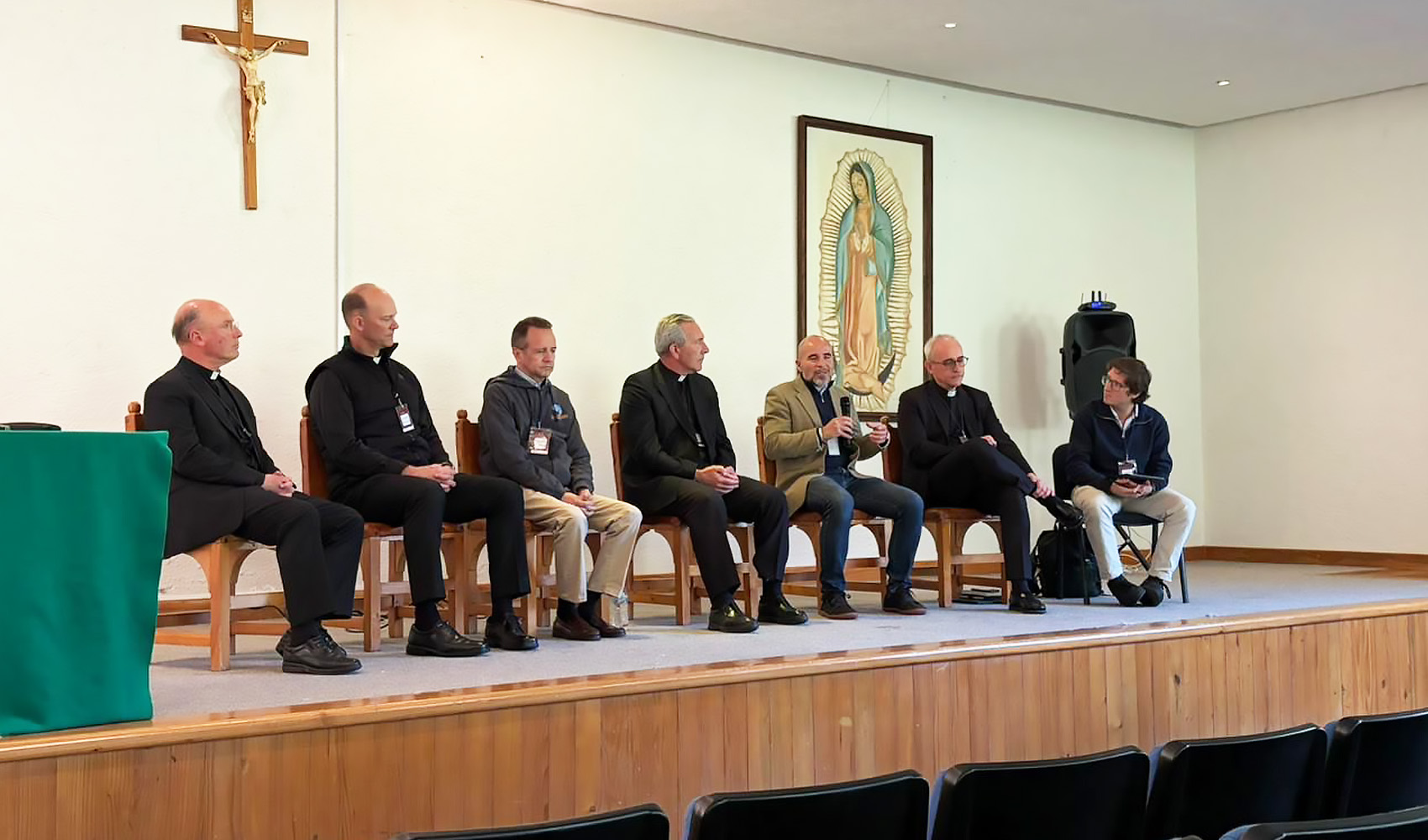
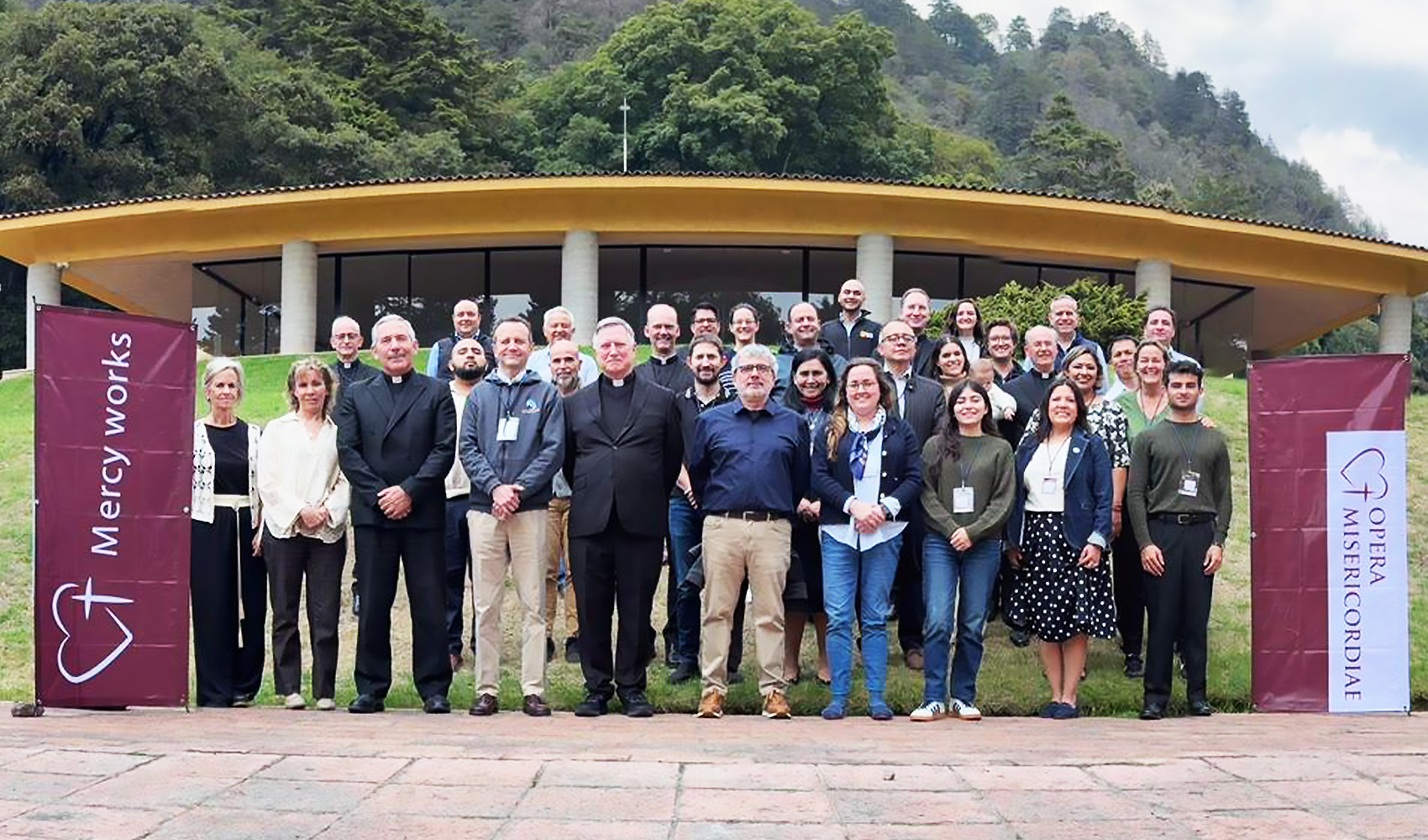
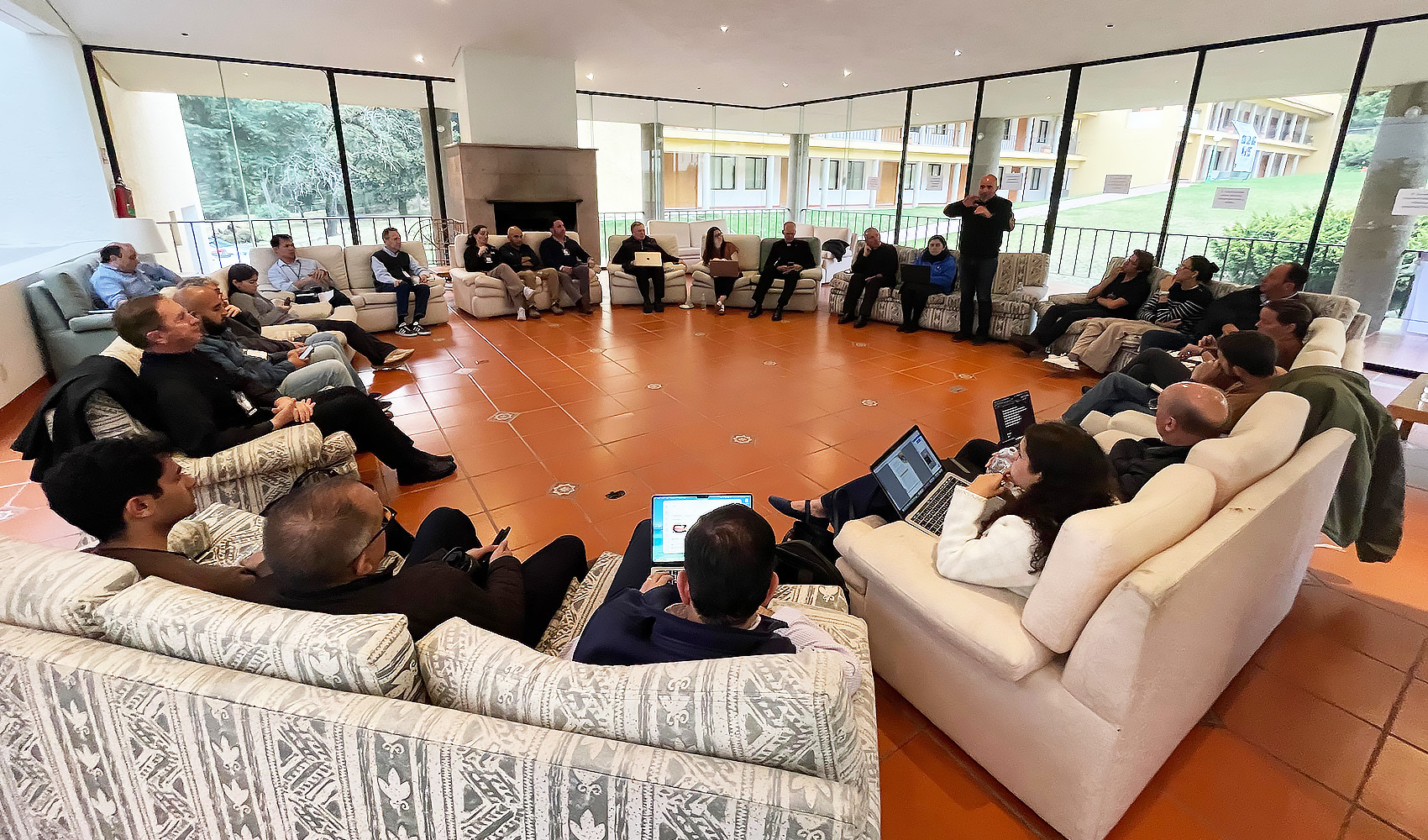
Last month, from April 13 to 17, 34 participants, including seven Legionary priests, gathered in Amecameca, Mexico, for the first International Congress of Opera Misericordiae. Newly created in December 2025, this collaborative network brings together Christian charitable works with a presence across five continents, focusing on accompanying the most needy, those at risk of social exclusion, and those without resources.
United in the Mission of Mercy
An international initiative of the Legionaries of Christ and Regnum Christi, Opera Misericordiae seeks to serve the most vulnerable and disadvantaged, strengthen collaboration between apostolates, and respond more effectively to the needs of today’s world. Inspired by the love of the heart of Jesus and the Social Doctrine of the Church, the network seeks to bring the works of mercy to life in today’s world.
During the four-day event, representatives from 16 charitable entities from the United States, Mexico, and Europe shared experiences, lessons learned, and best practices.
Additionally, several support institutions were present, including the Regional Services Office (ORSSER), the Territorial Office of Regnum Christi (Mexico and Central America), the general area of “Life and Mission” of the RC Federation, the General Directorate of the Legionaries of Christ, and the Regina Apostolorum Foundation.
Key Insights and Collaborative Fruits from the Congress
Established as a space for encounter, prayer, formation, and reflection, the congress was an opportunity to generate important synergies and alliances while respecting the unique identity and mission of each organization. The value of diversity in approaches and methodologies, which allows for complementary efforts and multiplied impact, was one of the key ideas shared during the congress.
The organizations involved in the congress work in diverse fields, such as education and training, basic needs and assistance, nutrition, medical care, and the promotion of rural workers and vulnerable communities. But they all share a common purpose: person-centered care that recognizes each individual’s inherent dignity. The congress reaffirmed this core meaning central to their work: Christ is present in every person served.
Among the main fruits of the meeting were the creation of a solid international network based on collaboration and mutual support, the exchange of knowledge and best practices between apostolates, the generation of new strategic alliances, the openness to joint projects and growth in new territories, and the strengthening of a shared identity and mission.
In addition, the congress defined concrete lines of action for the coming years, focused on expanding the global reach of initiatives, channeling aid in a more effective way, and identifying new opportunities for works of mercy where they are needed most.
A Shared Vision for Expanding Works of Mercy Worldwide
With these concrete goals for collaboration and defined work lines established, the first congress marks the beginning of Opera Misericordiae: a path, guided by the Holy Spirit and inspired by Our Lady of Guadalupe, toward responding to today’s challenges with greater depth, unity, and hope.
The congress concluded with an open invitation to other institutions and apostolates to join this initiative, which is already operating in various countries and aspires to grow in scope and depth in the coming years.
“Together We are Stronger”: Mercy That Multiplies
Fr. Daniel Brandenburg, LC, attended the congress as the board chair for Catholic World Mission (CWM).
“The first Congress of Opera Misericordiae surpassed all my hopes. I can see great things coming from this connection to the network of Opera Misericordiae, and there are already more than a dozen concrete synergies for CWM that have emerged so far.”
María Yactayo works in partner engagement and communication for the CWM team and participated in the congress as the practical secretary. For María, the congress was far more than a professional convention, but a return to her own missionary heart, which was set on fire over 30 years ago during a mission in Comayagua, Honduras. It was here that she first felt the call to serve the poor, the vulnerable, and those most in need, an encounter that shaped her life and eventually led her to her work at Catholic World Mission.
“In just five days, I tangibly experienced the fruits and benefits of being part of the Opera Misericordiae network. The shared wisdom, reflection, and prayer strengthened each work present—not in isolation, but in communion. In one week, we created synergies and began collaborations that would normally take years—and over a dozen emails—to form. In the breaking of bread, our eyes and hearts were open to the spirit of Christ in each alliance.”
“The network truly worked its magic—revealing how collective mission amplifies visibility, credibility, and influence, ultimately serving more people more effectively. Together we are stronger—rooted in Christ and united in mercy, we will accomplish far more than we ever could individually.”
For more information about Opera Misericordiae, visit their website at operamisericordiae.org or contact María directly at myactayo@catholicworldmission.org.
Learn More About Some of the Participating Organizations:
Catholic World Mission bridges the gap between donors and partners to uplift those in spiritual and material poverty, extending the missionary outreach of the Catholic Church by empowering local Church leaders, missionaries, and lay faithful to bring Christ’s light to communities around the world.
VIS Foundation is an international organization whose goal is to feed, care for, and educate children in the world’s poorest countries.
Mano Amiga México is a network of Catholic educational centers, where children and young people with fewer opportunities receive the comprehensive training tools they need to develop and become successful people.
Anáhuac Institute for Social Transformation is a university-based initiative that seeks to contribute to the integral formation of positive action leaders and promote the development of the human person and society, always inspired by the values of Christian humanism.
Misión MasAlto serves, cares for, and accompanies the rural families of the Pico de Orizaba region, recognizing their dignity as children of God and providing them with tools for a full life.
Medical Mission Network is a Christian charity that supports global healthcare initiatives, providing medical aid, supplies, and training to underserved communities while promoting holistic care and spiritual guidance.
Plan 2040 is a project to break the cycle of poverty and ensure a brighter future for every single member of the community of Cuatro Ciénegas, Mexico, through long-term, holistic solutions that focus on health, education, family, spirituality, and employment, improving the lives of every family and helping every child meet their full potential.
Albergue Sagrada Familia provides marginalized patients and families traveling to Mexico City to receive specialized medical treatments with safe and dignified accommodations, nutritious meals, and spiritual accompaniment.
Helping Hands Medical Missions delivers compassionate healthcare and the Gospel to the most needy in the developing world.
Fundación Altius España is a social foundation that aims to transform the lives of the most vulnerable populations, particularly through training and support to enter the workforce.
Dear Jake,Beware the enervating touch of activism! Yes indeed, my dear nephew, it is quite clear to me from your recent communiqués that you are falling prey to one of the devil’s preferred attacks on Americans: activism. I define activism as doing a lot of good things for the wrong reason. Now, you are clearly doing a lot of good things. Designing your own major and taking on the intellectual challenge of an honor’s thesis show responsible use of your considerable intellectual gifts; becoming a Resident Assistant is putting yourself at the service of your neighbor; running the Catholic Bible Club is a big help to your chaplain; you won’t regret keeping up your trumpet-playing by staying in that big band group… You are doing a lot of good things. But you say you are constantly frazzled, stressed, and way too busy, with not even enough time to pray every day. That’s the tip-off. If these other activities are crowding out your prayer commitments, I am willing to bet that you have lost sight of the big picture. Remember what our Lord said, “Seek first the kingdom of God and his righteousness, and all these things will be given you besides.” (Matthew 6:33) Keeping your relationship with God first ensures that all your other activities contribute to the good of your soul (and others’) and not to its demise. Do you remember St John of Beverly? He was the most venerated of the many early medieval saints who graced the blessed Kingdom of England. In the midst of a boon in the English church he was at the forefront of expansion, first as bishop of Hexham, then as bishop of York. He fulfilled his pastoral office with fearless zeal and stunning effectiveness, because he would periodically go off to the woods or to some other solitary place to refresh his soul in prayer and contemplation, exchanging intimate thoughts with his Lord. Often he would bring along a poor person and take care of him during the sojourn. Later, his many miracles were praised in Alcuin’s poetry, and his intercession was invoked to obtain English victories in key battles against the Scots and the French… Yes, my dear nephew, if we wish to do truly great things with our lives, we will never let anyone or anything eclipse that precious time we spend in prayer every single day. The more you have to do, the more you need to pray. Take it from me, who am, gladly, Your uncle, Eddy
Jesus said to his disciples: “As the Father loves me, so I also love you. Remain in my love. If you keep my commandments, you will remain in my love, just as I have kept my Father’s commandments and remain in his love. I have told you this so that my joy might be in you and your joy might be complete.”
Opening Prayer: Lord Jesus, may I remain in your love and keep your commandments always. Open my heart and pour your love into me. Help me find my true joy in the loving gaze of my Father and my obedient response to his love.
Encountering Christ:
Trinitarian Love: God’s love is Trinitarian. We receive and experience the Father’s love through Christ by the power of the Holy Spirit. Jesus told his disciples: “Whoever loves me will keep my word, and my Father will love him, and we will come to him and make our dwelling with him” (Jn 14:23). The indwelling that comes to live within us is the Holy Spirit. By receiving the love of God, we experience the life of the Holy Trinity within us. How amazing and empowering! Through the sacraments and our obedience to God’s commandments, we have the love of God within us, motivating us, allowing us to shower his love on everyone we encounter. Our relationship with the Holy Trinity is what enables us to keep his commandments and uphold the new and everlasting covenant that God the Father established through Christ his Son.
Obedience to Love: Jesus tells us clearly that we remain in this Trinitarian love when we keep his commandments. Christ gave his answer to the greatest commandments by unifying the Ten Commandments and perfecting them with love: “You shall love the Lord, your God, with all your heart, with all your soul, and with all your mind. This is the greatest and the first commandment. The second is like it: You shall love your neighbor as yourself. The whole law and the prophets depend on these two commandments” (Mt 22:37-40). When we strive to love God above all things and love our neighbor as ourselves, we keep the whole of the teachings of the Old Testament: the law and the prophets. The new law is the law of love, and we are called to be obedient to love. When our love is active, it bears the fruits of love. When we offer works of charity and mercy, we love “not in word or speech but in deed and truth” (1 Jn 3:18). When we go to the sacrament of reconciliation, we show our love for God because we repent from the things that separate us from Christ and affirm our desire to be obedient to God’s commandments and remain in his love.
Christ’s Joy: Earlier in the Last Supper Discourses, Jesus gave the disciples his peace (cf. Jn 14:27). In this reading, Jesus gifted them with his joy, so that their joy “might be complete.” The true gift of obedience is Christ’s joy. When we receive the love of God and remain in it by keeping God’s commandments to love him and others, we experience joy. Jesus completes our joy because he “is the goal of human history, the focal point of the longings of history and of civilization, the center of the human race, the joy of every heart, and the answer to all its yearnings” (Gaudium et Spes, 45). St. Paul VI wrote about the joyful exchange of the Father and the Son: “Here there is an uncommunicable relationship of love which is identified with his existence as the Son and which is the secret of the life of the Trinity: the Father is seen here as the one, who gives himself to the Son, without reserve and without ceasing, in a burst of joyful generosity, and the Son is seen as he who gives himself in the same way to the Father, in a burst of joyful gratitude, in the Holy Spirit” (Gaudete in Domino, part III). This joyful burst of generosity and gratitude overflows to us through the indwelling of the Holy Spirit. Mysteriously, we share and experience God’s joy in this way.
Conversing with Christ: My Jesus, the world sees joy so differently than you set out for us here in your word. Your joy wells up from a loving relationship with you and as a consequence of childlike obedience to your will. Help me to always seek my joy in you and not look for it in the temporal things of this world. May I always rejoice in your word and submit to your holy will. May I rejoice in you always (cf. Phil 4:4).
Resolution: Lord, today by your grace I will keep your commandments and imitate you by offering a work of mercy with a “burst of joyful generosity.”
For Further Reflection: Read St. Paul VI’s apostolic exhortation on Christian joy: Gaudete in Domino.
Carey Boyzuck is a wife, mother, freelance writer, and lay member of Regnum Christi. She blogs at https://word-life-light.com.
Fr. John Bartunek, LC, has been appointed as the next territorial director of the Legionaries of Christ in the North American Territory, effective July 1, 2026. Fr. John succeeds Fr. Shawn Aaron, LC, who has completed two consecutive three-year terms as territorial director. In his letter to members of the Congregation announcing Fr. John’s appointment, Fr. Carlos Gutiérrez, LC, general director of the Legionaries of Christ, also named the members of the Territorial Council:
Territorial Vicar and First Councilor: Fr. Timothy Walsh, LC
Councilor: Fr. Mark Haydu, LC
Councilor: Fr. Charles Sikorsky, LC
Councilor: Fr. Patrick O’Loughlin, LC
Fr. Carlos expressed deep gratitude to Fr. Shawn Aaron, LC, the current territorial director of the North American Territory.
“In a very special way, I wish to express my sincere gratitude to Fr. Shawn Aaron, who is now concluding six years of service as territorial director, having also previously served as vicar and territorial councilor, thus completing fifteen years of continuous dedication to the government of the territory. His generous self-giving has contributed significantly to the good of the territory.”
In announcing Fr. John’s appointment as territorial director, Fr. Carlos shared,
“Fr. John is well known throughout the territory and possesses extensive experience in the life and mission of the Congregation. His deep understanding of the territorial reality, his capacity for listening, his clarity of thought, and his communication skills will be invaluable qualities for this moment. He is a priest who values and promotes the life of the Federation, while at the same time knowing how to welcome and understand the diverse sensibilities present within the territory. It is also highly valuable that he participated in the most recent General Chapters and the General Convention of the Regnum Christi Federation. I am confident that, with the support of his council, he will be able to provide the apostolic direction, personal closeness, and decisiveness that are expected of the territorial government today—helping to strengthen communion, clarify our path, and drive forward with renewed vigor the mission that the Lord has entrusted to us.”
About Fr. John Bartunek, LC
Before becoming a Legionary priest, Fr. John received his BA in history from Stanford University in 1990, and worked as a high school history teacher, drama director, and baseball coach, and even spent a year as a professional actor in Chicago. In 1993, however, he heard and followed the call to the priesthood, joining the Legionaries of Christ and subsequently being ordained a priest ten years later in 2003. From 1998 to 2001, he worked in vocations and youth ministry in New England. From 2009 to 2012, he was a professor at the Thornwood Center for Advanced Studies. He earned his doctorate in Moral Theology in 2010, and from 2015 to 2017, he taught at the Pontifical Athenaeum Regina Apostolorum.
For the last six years he has served on the Territorial Council of the Legionaries of Christ, first as a councilor, then as vicar. As vicar, Fr. John also served as a member of the Territorial Directive College (TDC) of Regnum Christi, the body made up of Legionaries, Consecrated Women, and lay members that collectively governs Regnum Christi in North America.
Territorial Vicar and First Councilor: Fr. Timothy Walsh, LC
Fr. Timothy Walsh was born and raised in Cornwall, Ontario, Canada. After studying Physics at Laval University in Quebec, he entered the Legionaries of Christ’s Canadian novitiate. He did his philosophy and theology studies at the Pontifical Atheneum Regina Apostolorum in Rome and was ordained to the priesthood on December 23, 2006. He served in the Legionaries of Christ’s apostolic schools in Indiana and New Hampshire for eleven years and has also worked with Regnum Christi in Cincinnati and Houston. Since July 2020, he has been rector at the Legionaries of Christ Novitiate and College of Humanities in Cheshire, CT.
Councilor: Fr. Mark Haydu, LC
Fr. Mark Haydu started his journey in Akron, OH, being born the sixth child and fourth boy on July 15, 1972. As an active member of the charismatic renewal during high school, Fr Mark went to the Franciscan University of Steubenville, followed by a year of missionary work in Antigua, Guatemala, and Reynosa, Mexico. He entered the novitiate in Cheshire, CT, in 1993 and finished his Humanities degree there in 1996, where he first began to fall in love with Art and History.
After two years of philosophical studies in Rome, he completed four years of apostolic internships in Salamanca, Spain, Dublin, Ireland, and Cheshire, CT. Fr. Mark returned to Rome to get a licentiate degree in Philosophy with a thesis on moral legislation. He then began his Theology studies in 2004, until he was ordained a priest on December 22, 2007. That same year, in October, Fr. Mark became the Director of the Patrons of the Arts of the Vatican Museums, a position he held until June 15, 2015. During that time, Fr. Mark finished a License in Moral Theology focused on the effects of cohabitation on marital happiness and perseverance.
He also published two award-winning art books in the Meditations on Vatican Art series. Fr. Mark enjoyed being a spiritual director for the Legionary seminarians and Consecrated Women of Regnum Christi while in Rome. In 2016, he returned to the States, stationed at the Legionary community in Rye, NY, working as the National Chaplain of the Lumen Institute. He also served as Chief Development Officer for the Legionaries of Christ’s North American Territory. Fr. Mark is currently a local chaplain for Lumen and a territorial councilor for the Legionaries of Christ in the North American Territory. Aside from his prayer and religious life, he enjoys golf, playing guitar, reading, and writing.
Councilor: Fr. Charles Sikorsky, LC
Fr. Charles Sikorsky was born and raised in Baltimore, MD. His first love was sports and after a growth spurt as an adolescent he focused on basketball. He was a member of the 1982 national champion basketball team at his high school, Calvert Hall College of Towson, MD. Fr. Charles went on to obtain a B.A. in Political Economy from Johns Hopkins University where he also played basketball and then earned his law degree from The University of Maryland School of Law. While in law school he became active in the pro-life movement which led to a significant growth in his sacramental life and life of faith.
He entered the Legion of Christ Novitiate in Cheshire, CT in 1992. After professing vows and studying two years of philosophy in Rome, he did his apostolic internship in Santiago de Chile from 1996-2000 as Assistant to the Territorial Administrator for South America. He has degrees in philosophy and theology from the Regina Apostolorum Pontifical University and a Licentiate in Canon Law from the Pontifical Gregorian University in Rome. Fr. Charles was ordained to the priesthood in Rome on December 24, 2002.
After working for several years in the Legion’s General Administration in Rome, Fr. Charles was elected as the third president of the Institute for the Psychological Sciences, now Divine Mercy University, in 2007. Since then, he has devoted himself to growing the University’s place in academia, the Church, the United States, and the world. As president, Fr. Charles has been committed to expanding the reach of the university, with an emphasis on forming, educating, and training mental health professionals and those working in the helping professions.
Councilor: Fr. Patrick O’Loughlin, LC
Fr. Patrick O’Loughlin was born on January 15, 1989, in Syracuse, New York, the third of six children. He grew up in a Regnum Christi family and was an ECYD member before entering Immaculate Conception Apostolic School in 2001. He did his novitiate in Cheshire, Connecticut, and received an associate degree in the liberal arts and a bachelor’s degree in philosophy in Thornwood, New York. There, he was also assigned as secretary to the territorial director of the Legionaries of Christ in New York for three years. He continued on to serve in the Legionaries’ Ecclesial Relations Department in New York and San Jose, where he also assisted the ECYD sections.
Before transferring to Rome for his theology studies, he served as a dean of students for one year at Sacred Heart Apostolic School in Rolling Prairie, Indiana. He made his final vows in Rome on August 20, 2016, and was ordained to the diaconate together with his father in Syracuse on May 19, 2018. He was subsequently assigned as ECYD Boys Director in Atlanta that same summer, as he prepared for his priestly ordination in Rome on May 4, 2019. He currently serves as director of the ECYD Life Department of Regnum Christi in the Territory of North America, local director of RC Mission Corps, and as a member of the Board of Trustees for Pinecrest Academy in Georgia and for Sacred Heart Apostolic School in Indiana.
The Church is the “seed and beginning” of the Kingdom of God.
In this week’s Wednesday audience, Pope Leo XIV continues his catechesis on the Second Vatican Council and ‘Lumen gentium,’ reflecting on the eschatological dimension of the Church.
The Church journeys through this earthly history, always looking toward her final destination—the heavenly homeland. But we may often overlook or downplay this eschatological dimension of the Church, caught up in the more visible and concrete concerns of the Christian life.
We are called to keep our eyes on this final horizon, measuring and evaluating everything from this perspective, while acknowledging our need for continual conversion so that we can properly fulfill the mission of the Church.
“Therefore, the Church realizes her mission between the ‘already’ of the beginning of the kingdom of God in Jesus, and the ‘not yet’ of its promised and anticipated fulfillment.”
To read more of Pope Leo XIV’s General Audience reflection, click here.
Dear Ed,Stay away from people like that. When they start to enjoy criticizing bishops, they will soon go in for criticizing popes. When that happens, they almost inevitably get proud, and may even fall away from the true Church. OK, fine, so bishops aren’t perfect (and neither are popes). Even so, as faithful Catholics, we revere our bishops as God’s chosen instruments to administer his grace. They have received the ministry of the Apostles, and the Holy Spirit is at work in them. If an individual maverick bishop decides to go off and directly contradict the teaching or discipline of the Church, we should certainly not accept or obey him in those things, since by his rebellion he will have separated himself from the apostolic college (the pope and the bishops in communion with him) to which God has entrusted the care of the Church. Nevertheless, even in that case (especially in that case), we should pray earnestly for him and refrain from unnecessarily elaborating on and gloating over his deviations. Remember what our Lord said about taking out the plank in our own eye before we take out the speck in our brothers? Today’s saint reminds us of the dignity of the episcopal office and the religious reverence that each of us owes to it. If you remember rightly, St Peter himself founded the Church in Antioch, that important eastern Mediterranean city. When he moved on towards Rome, he appointed Evodius to be a bishop. The great martyr St Ignatius then succeeded him. From the beginning, then, God willed for his Church to be pastored by normal men who would take the place of the Apostles, and extend that particular ministry throughout all the earth. So, my dear nephew, when you kiss the ring of a bishop, you are showing reverence for much more than a fallible human being; you are making an act of faith in God’s Holy and Catholic Church, the only historical institution that has received the divine promise of indestructibility (Remember? “The gates of hell shall not prevail against it” Matthew 16:18). And when you badmouth a bishop, even a recalcitrant one, you are belittling the principle of Church authority itself. And, by the way, the golden rule “do unto others as you would have them do unto you” applies to bishops too. God bless, Uncle Eddy
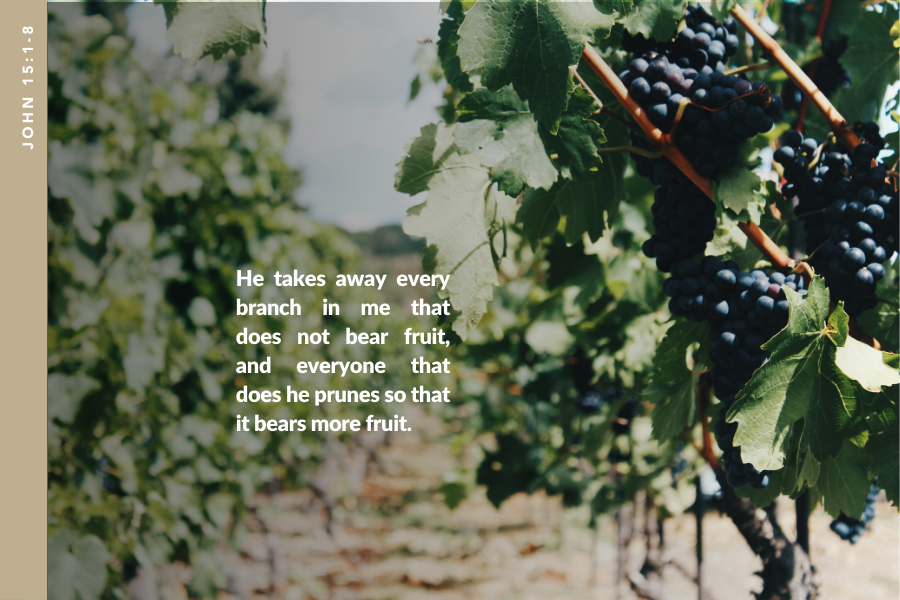
Jesus said to his disciples: “I am the true vine, and my Father is the vine grower. He takes away every branch in me that does not bear fruit, and everyone that does he prunes so that it bears more fruit. You are already pruned because of the word that I spoke to you. Remain in me, as I remain in you. Just as a branch cannot bear fruit on its own unless it remains on the vine, so neither can you unless you remain in me. I am the vine, you are the branches. Whoever remains in me and I in him will bear much fruit, because without me you can do nothing. Anyone who does not remain in me will be thrown out like a branch and wither; people will gather them and throw them into a fire and they will be burned. If you remain in me and my words remain in you, ask for whatever you want and it will be done for you. By this is my Father glorified, that you bear much fruit and become my disciples.”
Opening Prayer: God my Father, thank you for this parable of the vine and the branches. Let me never forget that you are the vine grower; you are my Father in heaven, you and your Son Jesus Christ are one. Enable me to bear much fruit, all to your greater glory!
Encountering Christ:
Baptism: “Holy Baptism is the basis of the whole Christian life, the gateway to life in the Spirit (vitae spiritualis ianua), and the door which gives access to the other sacraments” (CCC 1213). In other words, Baptism makes us branches of the true vine, Jesus Christ. Every sacrament gives grace, but Baptism also imprints a permanent mark, or character, on our soul, configuring us to Christ in a very special way. That’s why Baptism is not repeated. It seals us for all time as Christians, as members of the mystical Body of Christ, branches in the vine. This character signals a new and dynamic capacity given by the Holy Spirit to both receive his spiritual gifts and fully participate in the liturgy of the Church. The Lord asks us to be faithful to our Baptism by remaining in him.
Reconciliation: It’s true that Baptism forgives us all our sins, but it does not erase concupiscence. We sin again. But Jesus entrusted to his Apostles and their successors the power to bind and loose sins on earth, an ancient mandate that has eventually taken its present form in the Sacrament of Reconciliation. It is never easy to admit our sins; it feels like we are being pruned. But when the priest pronounces the words of absolution, we are set free. “You are already pruned because of the word that I spoke to you.” God has cut off the dead branches of our sins and cast them into the fire. Grace flows through us like sap, and we are united more closely to the vine. Christ insisted, “A branch cannot bear fruit on its own.” We must remember that any habits, ideas, actions, or objects we possess that separate us from him are useless. We can ask ourselves, “Do I try to keep something for myself, on the side, apart from Christ?” For this we have the Sacrament of Reconciliation.
Eucharist: The Eucharist is “the culmination both of God’s action sanctifying the world in Christ and of the worship men offer to Christ and through him to the Father in the Holy Spirit” (CCC 1325). The Eucharist is the Sacrament of Communion; not only are all the branches connected to the vine, but through the vine they are also all connected to each other. When we receive Christ in the Eucharist, we are united to our mystical Head as well as to all the members of his Body. The Eucharist sanctifies the world; the Eucharist gives glory to the Father and the Spirit; the Eucharist lets us bear fruit! It is clear from today’s Gospel that God wants us to bear fruit; if we fill ourselves with Christ, the fruit which grows naturally from us will be Christian.
Conversing with Christ: Lord Jesus, I am very glad we have the sacraments, outward signs you have instituted to give us grace. Inspire in me the desire to be faithful to my baptismal promises, knowing that the best way to achieve this is through frequent humble Confession and worthy reception of the Eucharist.
Resolution: Lord, today by your grace I will take some extra time to prepare myself well for the Sacrament of Reconciliation.
For Further Reflection: For a better appreciation of God’s saving work on earth through the “sacramental economy,” read the Catechism of the Catholic Church 1076-1134.
Fr Erik Burckel, LC was ordained to the priesthood in 2022. He writes articles and short stories for diverse purposes and publications, and can be reached at eburckel@legionaries.org.
Alex Kucera has lived in Atlanta, GA, for the last 46 years. He is one of 9 children, married to his wife Karmen, and has 3 girls, one grandson, and a granddaughter on the way. Alex joined Regnum Christi in 2007. Out of the gate, he joined the Helping Hands Medical Missions apostolate and is still participating today with the Ghana Friendship Mission.
In 2009, Alex was asked to be the Atlanta RC Renewal Coordinator for the Atlanta Locality to help the RC members with the RC renewal process. Alex became a Group Leader in 2012 for four of the Atlanta Men’s Section Teams and continues today. Running in parallel, in 2013, Alex became a Team Leader and shepherded a large team of good men.
Alex was honored to be the Atlanta Mission Coordinator between 2010 to 2022 (12 years), coordinating 5-8 Holy Week Mission teams across Georgia. He also created and coordinated missions at a parish in Athens, GA, for 9 years. Alex continues to coordinate Holy Week Missions, Advent Missions, and Monthly missions at Good Shepherd Catholic Church in Cumming, GA.
From 2016 to 2022, Alex also served as the Men’s Section Assistant in Atlanta. He loved working with the Men’s Section Director, the Legionaries, Consecrated, and Women’s Section leadership teams.
Alex is exceptionally grateful to the Legionaries, Consecrated, and many RC members who he’s journeyed shoulder to shoulder, growing his relationship with Christ and others along the way. He knows that there is only one way, that’s Christ’s Way, with others!






 Fr. Timothy Walsh was born and raised in Cornwall, Ontario, Canada. After studying Physics at Laval University in Quebec, he entered the Legionaries of Christ’s Canadian novitiate. He did his philosophy and theology studies at the Pontifical Atheneum Regina Apostolorum in Rome and was ordained to the priesthood on December 23, 2006. He served in the Legionaries of Christ’s apostolic schools in Indiana and New Hampshire for eleven years and has also worked with Regnum Christi in Cincinnati and Houston. Since July 2020, he has been rector at the
 Fr. Mark Haydu started his journey in Akron, OH, being born the sixth child and fourth boy on July 15, 1972. As an active member of the charismatic renewal during high school, Fr Mark went to the Franciscan University of Steubenville, followed by a year of missionary work in Antigua, Guatemala, and Reynosa, Mexico. He entered the novitiate in Cheshire, CT, in 1993 and finished his Humanities degree there in 1996, where he first began to fall in love with Art and History.
 Fr. Charles Sikorsky was born and raised in Baltimore, MD. His first love was sports and after a growth spurt as an adolescent he focused on basketball. He was a member of the 1982 national champion basketball team at his high school, Calvert Hall College of Towson, MD. Fr. Charles went on to obtain a B.A. in Political Economy from Johns Hopkins University where he also played basketball and then earned his law degree from The University of Maryland School of Law. While in law school he became active in the pro-life movement which led to a significant growth in his sacramental life and life of faith.
 Fr. Patrick O’Loughlin was born on January 15, 1989, in Syracuse, New York, the third of six children. He grew up in a Regnum Christi family and was an