12-10 Papal Audience

The Church is “a living organism which needs to grow, mature and adapt to circumstances.” (129): Pope Leo’s Words Today

The Church is “a living organism which needs to grow, mature and adapt to circumstances.” (129)

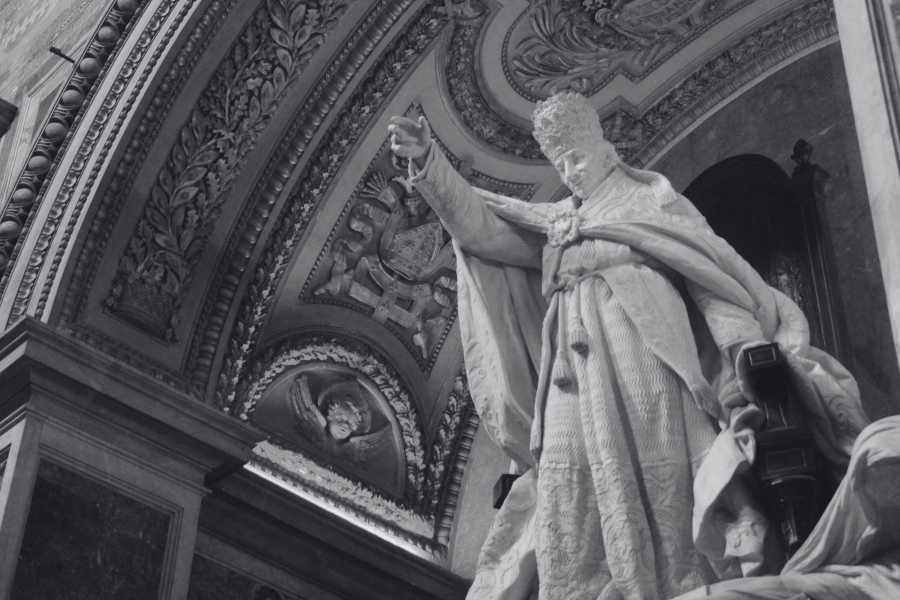
In this week’s Wednesday audience, Pope Leo XIV continues his catechesis on the Second Vatican Council, considering the sacred liturgy through the lens of both tradition and development.

The Church is a living organism that is meant to grow, mature, develop, and accommodate herself to today’s circumstances. The Second Vatican Council recognized the need to adjust certain adaptable elements of the liturgy in order to invigorate the faithful, foster unity, and evangelize the world.

Yet this progress in the liturgy must always be rooted in authentic Tradition, distinguishing and preserving those elements which are immutable and divinely instituted.

In this way, tradition and progress are not opposed to one another. “Tradition is a living reality, which therefore includes in itself the principle of development, of progress.” (Pope Benedict XVI).

To read more of Pope Leo XIV’s General Audience reflection, click here.

The Church is “a living organism which needs to grow, mature and adapt to circumstances.” (129): Pope Leo’s Words Today Read More »

Regnum Christi Spirituality Center Uncle Eddy

St Augustine of Canterbury

Dear Maggie, My dear temperamental niece, don’t make the proverbial mistake of throwing the baby out with the bath water.  I suspect that you are exaggerating a little bit when you say that sororities are “evil” and that you are going to abandon yours and start a campaign to eradicate them from your campus.  We must make some important distinctions before you go off and do something so rash. (As a budding philosopher, you ought to be learning how to make distinctions.) I will take your word for it that the normal behavior of your sorority sisters is scandalous; if gossip, backbiting, promiscuity, abortions, drinking, and drugs are the norm, you are right to be disgusted and repelled.  And if they are the norm not only for your sorority but for all the other ones as well, then you are indeed in the midst of an “epidemic of vice and sin,” as you so energetically put it. Now for the distinction: do your sorority’s statutes state that the institution exists to encourage and foster those activities?  I highly doubt it. Rather, they probably claim to further sound human values like friendship, loyalty, community service, solidarity, etc… So the problem, perhaps, is not the sorority itself, but the current state of the sorority. Therefore, destroying the sorority system may not be the best option.  You could use its current state of decay as a springboard for a movement of reform, or as an inspiration to start a new sorority (a Catholic one maybe?). And since sororities are still such a big influence on campus, you might end up doing more good for campus culture by trying to return to their original purpose rather than wasting your energy on the futile task of eliminating them altogether.  Anyway, keep me posted and I’ll be happy to keep sending ideas. By the way, your situation reminds me of today’s saint.  Augustine and some of his fellow Roman monks were sent by Pope St Gregory the Great to re-evangelize England after it had been conquered by the pagan Anglo-Saxons.  Queen Bertha (Christian, the noble daughter of the King of France) had wed King Ethelbert (later St Ethelbert) and brought her private chaplain with her across the English Channel, so the Pope saw a golden opportunity.  When Augustine and company arrived, they faced a people and a culture imbued with superstition, violence, and idolatry (sounds a lot like your college). They worked patiently and prayerfully, energetically but tactfully, and in the mere seven years of Augustine’s mission there (OK, he had seven years and you only have four years – but you have computers and telephones, and he didn’t) they converted the majority of the mini-kingdoms.  One of their brilliant strategies is particularly apropos for your current struggle. Instead of demolishing the old pagan temples, they would simply rearrange and re-consecrate them for Christian worship. Thus they eased the transition from false religion to Christ’s truth. Food for thought, isn’t it? Love, Uncle Eddy

St Augustine of Canterbury Read More »
26-05-27-DM

May 27, 2026 – Banishing Pride

Wednesday of the Eighth Week in Ordinary Time


Mark 10:32-45

The disciples were on the way, going up to Jerusalem, and Jesus went ahead of them. They were amazed, and those who followed were afraid. Taking the Twelve aside again, he began to tell them what was going to happen to him. “Behold, we are going up to Jerusalem, and the Son of Man will be handed over to the chief priests and the scribes, and they will condemn him to death and hand him over to the Gentiles who will mock him, spit upon him, scourge him, and put him to death, but after three days he will rise.” Then James and John, the sons of Zebedee, came to Jesus and said to him, “Teacher, we want you to do for us whatever we ask of you.” He replied, “What do you wish me to do for you?” They answered him, “Grant that in your glory we may sit one at your right and the other at your left.” Jesus said to them, “You do not know what you are asking. Can you drink the chalice that I drink or be baptized with the baptism with which I am baptized?” They said to him, “We can.” Jesus said to them, “The chalice that I drink, you will drink, and with the baptism with which I am baptized, you will be baptized; but to sit at my right or at my left is not mine to give but is for those for whom it has been prepared.” When the ten heard this, they became indignant at James and John. Jesus summoned them and said to them, “You know that those who are recognized as rulers over the Gentiles lord it over them, and their great ones make their authority over them felt. But it shall not be so among you. Rather, whoever wishes to be great among you will be your servant; whoever wishes to be first among you will be the slave of all. For the Son of Man did not come to be served but to serve and to give his life as a ransom for many.”

Opening Prayer: Dear Jesus, you are the king of my life. And though you are a king, your simplicity astounds me. You wish to come close to me, to guide and teach me. I offer to you the little that I have because I know you will be pleased with it. I only wish to serve you with much joy and freedom in my heart.

Encountering Christ:

  1. Selective Listening: In this Gospel, James and John chose an odd time to ask Jesus for an exceptional favor. Jesus had just explained to the Twelve that he would be tortured and killed, and then rise on the third day. James and John seemed to hear only Jesus’ last five words. Their personal ambition overrode any concern for their Master’s imminent suffering, and they blurted out their request. How often we, too, practice selective listening! Our Lord wants our full attention when we encounter him in prayer. He wants to shower us with grace, call us to action, heal, and restore us. To be sure we hear the whole message, listening in prayer requires that we silence our mind and open our hearts to everything God wants to say: “We ‘gather up’ the heart, recollect our whole being under the prompting of the Holy Spirit, abide in the dwelling place of the Lord which we are, awaken our faith in order to enter into the presence of him who awaits us. We let our masks fall and turn our hearts back to the Lord who loves us, so as to hand ourselves over to him as an offering to be purified and transformed” (CCC 2711).


  2. Drinking the Cup: Jesus responded to James’ and John’s request by asking if they could share in the sufferings he was about to experience. “We can,” they answered. Was their answer impulsive? Were they overestimating their capabilities, their courage, or their strength? Was their pride speaking? Pride is so much a part of human nature that we all struggle with it at some point, and often don’t recognize it at work in our decision-making. These men eventually overcame any pride or personal ambition they had because they suffered and died for Christ and his Church. By God’s grace, may we too put aside our pride to know, love, and serve Our Savior with undivided hearts until we meet him one day in eternity.


  3. Trouble Among the Twelve: The ten Apostles were grumbling against James and John, and Jesus put a stop to it. He summoned them, like twelve petulant children, to teach them (and us) an important lesson. Our greatness, Jesus told them, is measured by the quality of the service we give to another. We are not to lord our authority over others, but instead imitate Jesus by being willing to die for others, to give of ourselves without counting the cost. As St. Paul said later, “Humbly regard others as more important than yourselves, each looking out not for his own interests, but also everyone for those of others” (Phil 2:3-4).

Conversing with Christ: Jesus, you are very clear in this interaction with your Apostles about what you expect from us as your followers. I am to listen well to you, which means quieting my busy mind; act like a Christian, which means conquering my pride; and be at service to those you place in my path, which means putting aside my own agenda at times. Lord, these are things I have been trying to do for a while as your faithful follower. Please give me the grace to radically amend my life, put aside any personal ambition, and love you purely as did John the Beloved, so that I can truly serve others sacrificially.

Resolution: Lord, today by your grace I will pray the Litany of Humility and observe how it changes my heart and actions towards others.

For Further Reflection: Read the Catechism of the Catholic Church 786 and journal about which words or phrases you are drawn to and why.

Maribeth Harper celebrated paying the last tuition bill for her kids’ college by writing a book for parents who have college-aged young adults: A Spiritual Toolbox: Tips for Parenting through the First Year of College. She is a wife of over thirty-five years, mother of four, and grandmother of twelve and counting.

May 27, 2026 – Banishing Pride Read More »

WM_LeoXIV

Leo XIV’s Agenda

Dear Friends,


The recent first anniversary of Pope Leo XIV’s election to the papacy brought a spate of commentaries and analyses about the signals he was sending and the direction he seemed to be going as the Vicar of Christ.

While some of the commentaries were well-intended and insightful, one could get the sense that popes are now subject to the same kind of scrutiny once reserved for politicians, CEOs, and sports figures.

Is the Pope leaning toward this end of the spectrum or the other end? What do his bishop appointments say about his likes and dislikes? And will he draw the line on this or that group?

Some of these questions assume that there is a hidden agenda at work in this papacy. But what if there isn’t one?

On Pentecost 2025, Leo said, “The Church must always become anew what she already is. She must open the borders between peoples and break down the barriers between class and race. In her, there cannot be those who are neglected or disdained.”

Those words reflect a mind that is more focused on the Sacred Heart of Jesus than on an ideology.

In ages past, most Catholics thought of a pope as a father who gave sure guidance amid the problems and challenges of the world. 

That simple approach allowed people to focus their energy on the day-to-day tasks of life in their families and parishes. Talk of papal “agendas” would have brought blank stares from most people. 

This month of June, with its emphasis on the Sacred Heart, might be as good a time as ever to refocus on the mission of the Church: to bring Christ’s love and Gospel to the world.

To that end, our Retreat Guide, Fire and Thorns, might be worth praying with. 

It can help remind us that the best agendas are centered on Our Lord.

In Christ,

Father Edward McIlmail, LC

Ask a Priest contributor

Leo XIV’s Agenda Read More »

Regnum Christi Spirituality Center Uncle Eddy

St Philip Neri

Dear Phil, You are just a freshman; you’ve got so much time ahead of you – three more big, fat years at college, and then a whole lifetime!  But you are wise to pose the question you asked in your last note: how can you make the best use of your college years? I imagine that this question has arisen because you have experienced a few qualms of conscious about how you utilized your time during your first year.  If that’s the case, don’t hesitate to bring it up in confession – ask our Lord’s pardon for any wasted, irresponsibly used time; time is a gift from God just like all the other gifts he gives us, and we ought to use it well. There is an awful lot to say about time management, especially in today’s super fast-paced post-modernity.  As your loving uncle, however, I would like to give you one simple word to guide your use of time during these beautiful and critical college years: training.  Yep, you are in training. Only God knows what mission he has in store for you, what battles you will be called to fight for his Kingdom, what divine secrets he will want to communicate to the world through your words and example.  These years of your education are part of the plan; they are years in which he wants you to develop your talents and ready yourself to receive your marching orders. He is counting on you take advantage of every minute to build a solid character, form an agile and robust intellect, hone your interpersonal skills, learn to communicate, and learn the art of living.  The centerpiece of it all, however, has to be a deep, vibrant, dynamic, and heartfelt friendship with Christ. With that in place, the Holy Spirit will be able to take care of all the rest. Just like he did with today’s saint. Philip Neri abandoned a promising clerkship to move to Rome, where he spent two years almost entirely in prayer and sacrifice, forsaking the pleasures of the world in hopes to discover how he was to serve the Lord.  He became so close to God, so filled with zeal, that he almost single-handedly ignited a religious revival among the corrupt and worldly people and clergy of the Eternal City. He is still today known as the Apostle of Rome (even though he was born in Florence).  He started all kinds of ministries, spent entire days in the confessional (he would tell people their sins even before they confessed them), and acted as a spiritual adviser to a steady stream of repentant cardinals, clergy, laity, and even a Pope or two. He had put his relationship with God first and kept it there, and that’s all God needed in order to ensure that his eighty years of earthly life were filled with incomparable joy, immense love, and incredible apostolic fruit. So then, you would like a bit of advice on taking advantage of your time.  Well, if you can keep in mind that these are your training years (and they will never return) and that the core of all your training is your relationship with God… In that case, I’d be willing to bet that you finish with no regrets. Love, Uncle Eddy


St Philip Neri Read More »

Are Strapless Bridal Dresses OK?

Q: What do you think about the strapless and shoulderless bridal dresses for Catholic nuptial Masses? — Kathleen

Answered by Fr. Edward McIlmail, LC:

It’s not often that Ask a Priest is asked for an opinion about women’s clothing. What follows is a pastoral observation.

A wedding is an expression of a man and a woman’s love and lifelong commitment to each other. Their fidelity rules out any unbecoming behavior with other people.

One way they can reinforce their fidelity and guard their marital chastity is by helping others around them live chastely.

This in turn implies modest dress and behavior. And what better way to start a marriage than to live that kind of modesty from Day One?

For that reason, strapless and low-cut, shoulderless dresses wouldn’t be high on the list of recommended attire. (See this article for related reading.)

Such dresses can be a temptation for others, either in the area of chastity or of vanity, and thus a bit incongruous for what should be a sacred event in a sacred place.

Are Strapless Bridal Dresses OK? Read More »

26-05-26-DM

May 26, 2026 – Cost and Benefit

Memorial of Saint Philip Neri, Priest


Mark 10:28-31

Peter began to say to Jesus, “We have given up everything and followed you.” Jesus said, “Amen, I say to you, there is no one who has given up house or brothers or sisters or mother or father or children or lands for my sake and for the sake of the Gospel who will not receive a hundred times more now in this present age: houses and brothers and sisters and mothers and children and lands, with persecutions, and eternal life in the age to come. But many that are first will be last, and the last will be first.”

Opening Prayer: Lord Jesus, though I am not deserving, I am grateful for your love. Sometimes following you is not easy. I lose my way and fall into sin, but you always find me. You gently lead me to the road back to your heart. Help me to persevere in following you.

Encountering Christ:

  1. What About Us?: Peter had just heard Jesus tell everyone how hard it can be to enter the Kingdom of heaven. “It is easier for a camel to pass through the eye of a needle than for one who is rich to enter the kingdom of God!” (Mk 10:25). They were all amazed. In this context, Peter voiced the thought that was probably on everyone’s mind: “We have given up everything and followed you.” In other words, “What about us?” God blesses Peter for his frankness. Without his outburst, we would have missed the consolation Jesus offered next. We should never hesitate to tell the Lord what’s really on our minds. He knows already, and loves us anyway. The very act of praying from our heart unleashes graces from Jesus’ Sacred Heart.


  2. The First Will Be Last: The “firsts” in this world believe in themselves. They believe they are deserving of their elevated status. They believe they are stronger, smarter, more beautiful, etc., than others. They can be demanding, ungrateful, self-important, and sometimes downright angry. These are not the qualities of the “firsts” who belong to Our Lord’s Kingdom. These “firsts” believe not in themselves but in God who sustains them. They believe that if they are stronger, smarter, or more beautiful than others, the attribute is to be used to glorify God and to be of service to others. They are grateful, peaceful, joy-filled, and authentic. They may or may not be the “last” in a worldly sense, but, by their faith, they have secured a prime place with God for all eternity.


  3. The Reward: The cost-benefit analysis is a method used to analyze business decisions before actually committing to one, but let’s relate this concept to the decision of following Jesus. “Take up your cross and follow me,” Jesus said. Walking with Jesus can mean we suffer hardships, but the benefits outweigh the burden of carrying our crosses, because we don’t carry them alone. Jesus accompanies us through our pains and gives meaning to our sorrows. And there is also a promise, a reward: When we offer our lives to Jesus, we gain the joy of his friendship, which is a priceless treasure, and we receive an inheritance in heaven which lasts forever.

Conversing with Christ: Dear Jesus, thank you for calling me to the Catholic faith. I am reminded that no worldly good can truly fill my heart. The joy of knowing you is the greatest treasure of all. Fill my heart with faith and hope, and with the vision of heaven especially when circumstances around me get tough. May I always find peace and joy in your presence.

Resolution: Lord, today by your grace I will make a plan to go to confession.

For Further Reflection: Take your time in doing your examination of conscience tonight..

Beverly Dalton is a writer and lives in the city of Manila. She also works for a Catholic psychology center, helping out with research studies and programs for the poor. When she is not busy, she spends time with her mom and sister, and occasionally finds leisure and relaxation in soapmaking as seen in @twosistershome.ph.

May 26, 2026 – Cost and Benefit Read More »

Regnum Christi Spirituality Center Uncle Eddy

St Bede the Venerable

Dear Beth, If it is true that the pen is more powerful than the sword (which I am willing to admit) than I am quite relieved to have your pen on our side.  Another writing prize? I daresay that you will probably be able to pay your entire tuition with proceeds from essay contests if you continue along these lines.  As your loving uncle, however, I have to put in a little caveat: you put in a couple of cheap shots in that last paper – praising Napoleon to the detriment of the Pope (who was truly charitable to the ungrateful emperor) was clearly (to me anyway) a clever way to ingratiate yourself with those anti-Catholics on the panel of judges.  Tut tut, my darling little authoress, beware the prowling lion. If you begin now, while still an “amateur,” to make little compromises for the sake of worldly success, you may someday end up winning a Nobel Prize, but it could cost you a pretty eternal penny. Better to keep God first in everything, developing your talents to the full, but using them only to further truth, justice, and beauty – not your personal fame, power, and vanity. Take today’s saint, for example.  The Venerable Bede was sent off to a monastery school in northern England when he was seven years old, and he spent the rest of his influential and exemplary life within that convent’s walls (with the exception of a few trips to visit friends in other monasteries).  By his own description, he spent “my whole life in that monastery, devoting all my efforts to the study of the Scriptures, and amid the observance of monastic discipline and the daily charge of singing in the church it has ever been my delight to learn or teach or write.”  And boy did he write. Commentaries on the Bible, compilations of the works of the Fathers, the most famous Ecclesiastical History of the English People (the only source of English history before to the 8th century), countless sermons (many of which still form part of the Church’s Liturgy of the Hours), and much else besides.  But he always wrote what he wrote out of love for the truth and wisdom of God. He put it best himself in this little prayer: “And I pray thee, loving Jesus, that as thou hast graciously given me to drink in with delight the words of thy knowledge, so thou wouldst mercifully grant me to attain one day to thee, the fountain of all wisdom, and to appear forever before thy face.”  During the brief illness that led to his death, he spent his time (confined in bed) dictating a translation into English of the Gospel of John, dying only a few moments after finishing the last sentence, with the “Glory be” wafting heavenward on his final breath. So wield that pen well, my delightful little niece, so that when you bring it with you to our Lord at the end of your life (may it be a long and prolific one), he will give it a place of honor in his royal arsenal, and welcome you home with a glad smile.  Keep up the good work. Uncle Eddy

St Bede the Venerable Read More »

26-05-25-DM

May 25, 2026 – Behold, Your Mother

Memorial of the Blessed Virgin Mary, Mother of the Church


John 19:25-34

Standing by the cross of Jesus were his mother and his mother’s sister, Mary the wife of Clopas, and Mary of Magdala. When Jesus saw his mother and the disciple there whom he loved, he said to his mother, “Woman, behold, your son.” Then he said to the disciple, “Behold, your mother.” And from that hour the disciple took her into his home. After this, aware that everything was now finished, in order that the Scripture might be fulfilled, Jesus said, “I thirst.” There was a vessel filled with common wine. So they put a sponge soaked in wine on a sprig of hyssop and put it up to his mouth. When Jesus had taken the wine, he said, “It is finished.” And bowing his head, he handed over the spirit. Now since it was preparation day, in order that the bodies might not remain on the cross on the Sabbath, for the Sabbath day of that week was a solemn one, the Jews asked Pilate that their legs be broken and they be taken down. So the soldiers came and broke the legs of the first and then of the other one who was crucified with Jesus. But when they came to Jesus and saw that he was already dead, they did not break his legs, but one soldier thrust his lance into his side, and immediately Blood and water flowed out.

Opening Prayer: Mother Mary, in this special month of May, please bless me as I contemplate your suffering at the foot of the cross.

Encountering Christ:

  1. His Last Gift: With his dying breath, Jesus presented his mother to the Apostle John. With this gesture, he offers her to us as well. Afterward, John invited Mary into his home. Do we also invite Mary into our spiritual home? If we look to Mary when life gets tough, our relationship with her deepens. If we pray for her as an intercessor, situation after situation, our connection to her grows. If we are grateful for her, in life’s storms or on calm seas, our bond with her is solidified. If we pray the rosary, read about Mary, and talk about her, she becomes our constant companion. When we have faith in our Mother, we truly receive her presence as a gift—the gift Jesus intended for each one of us when he said, “Behold, your mother.


  2. His Thirst: In her well-known letter, “I thirst for you,” St. Teresa of Calcutta described the infinite love and thirsts of God. Jesus told her, “Even when you are not listening, even when you doubt it could be me, I am there: waiting for even the smallest suggestion of an invitation that will permit me to enter.” Jesus longs to strengthen, console, carry, transform, calm, and heal us. He knows everything about us—our troubles, rejections, humiliations, even the number of hairs on our head. “All I ask of you is that you entrust yourself to me completely. I will do the rest.” Do the words “I thirst” echo in our souls?


  3. It Is Finished: In his brief life, Jesus perfectly fulfilled the will of God. When he made the ultimate sacrifice for mankind, he proclaimed, “It is finished.” God’s plan had been perfectly executed. Those same words are true for us when we’ve run a race, completed a project, or endured a hardship. Jesus, however, accomplished his Father’s will in perfect union with him. We are called to do likewise. Our Lord wants nothing more than to be an integral part of our life—all of it. Next time we say, “Ahhh… it is finished,” may we also acknowledge that Jesus strengthened and accompanied us.

Conversing with Christ: I know I will never truly understand the sacrifice you made for me on the cross because I did not endure your life and suffering. Help me, Lord, to join every suffering in my life to yours, because I know that pleases you. By these offerings may I grow more appreciative of your sacrifice for me. Thank you for the gift of your Blessed Mother.

Resolution: Lord, today by your grace I will invite you into every suffering I experience, knowing that I am accompanied by my Blessed Mother and you.

For Further Reflection: 33 Days to Morning Glory, by Father Michael Gaitley.

Karen Meiman, a former newspaper writer, editor, and photographer, is a mom of four children and lives in a log cabin on fifty acres in Northern Kentucky. You can contact her at kyclone@aol.com.

May 25, 2026 – Behold, Your Mother Read More »

Scroll to Top

Events

Looking for another country?

Contact Regnum Christi near you

News & Resources

News & Resources

The Regnum Christi Mission

The Regnum Christi Identity

Alex Kucera

Atlanta

Alex Kucera has lived in Atlanta, GA, for the last 46 years. He is one of 9 children, married to his wife Karmen, and has 3 girls, one grandson, and a granddaughter on the way. Alex joined Regnum Christi in 2007. Out of the gate, he joined the Helping Hands Medical Missions apostolate and is still participating today with the Ghana Friendship Mission.

In 2009, Alex was asked to be the Atlanta RC Renewal Coordinator for the Atlanta Locality to help the RC members with the RC renewal process. Alex became a Group Leader in 2012 for four of the Atlanta Men’s Section Teams and continues today. Running in parallel, in 2013, Alex became a Team Leader and shepherded a large team of good men.

Alex was honored to be the Atlanta Mission Coordinator between 2010 to 2022 (12 years), coordinating 5-8 Holy Week Mission teams across Georgia. He also created and coordinated missions at a parish in Athens, GA, for 9 years. Alex continues to coordinate Holy Week Missions, Advent Missions, and Monthly missions at Good Shepherd Catholic Church in Cumming, GA.

From 2016 to 2022, Alex also served as the Men’s Section Assistant in Atlanta. He loved working with the Men’s Section Director, the Legionaries, Consecrated, and Women’s Section leadership teams.

Alex is exceptionally grateful to the Legionaries, Consecrated, and many RC members who he’s journeyed shoulder to shoulder, growing his relationship with Christ and others along the way. He knows that there is only one way, that’s Christ’s Way, with others!