Weekly Digest of the Regnum Christi Daily Meditations: June 14 – June 21, 2026
WEEKLY DIGEST OF rc
DAILY MEDITATIONS
Week June 14 - June 21, 2026
Sunday, June 14, 2026 – Time and Talents
Monday, June 15, 2026 – Turning the Other Cheek?
Tuesday, June 16, 2026 – Seeing as God Sees
Wednesday, June 17, 2026 – Why We Do What We Do
Thursday, June 18, 2026 – The Glorious Mystery of Christian Prayer
Friday, June 19, 2026 – Treasures in Heaven
June 14, 2026 – Time and Talents
Eleventh Sunday in Ordinary Time
Matthew 9:36 – 10:8
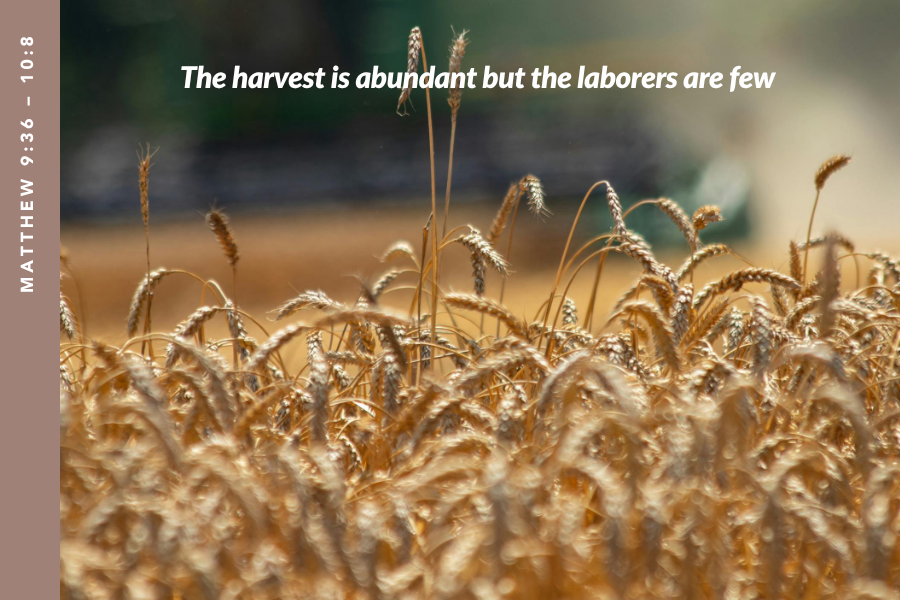
At the sight of the crowds, Jesus’ heart was moved with pity for them because they were troubled and abandoned, like sheep without a shepherd. Then he said to his disciples, “The harvest is abundant but the laborers are few; so ask the master of the harvest to send out laborers for his harvest.” Then he summoned his twelve disciples and gave them authority over unclean spirits to drive them out and to cure every disease and every illness. The names of the twelve apostles are these: first, Simon called Peter, and his brother Andrew; James, the son of Zebedee, and his brother John; Philip and Bartholomew, Thomas and Matthew the tax collector; James, the son of Alphaeus, and Thaddeus; Simon from Cana, and Judas Iscariot who betrayed him. Jesus sent out these twelve after instructing them thus, “Do not go into pagan territory or enter a Samaritan town. Go rather to the lost sheep of the house of Israel. As you go, make this proclamation: ‘The kingdom of heaven is at hand.’ Cure the sick, raise the dead, cleanse lepers, drive out demons. Without cost you have received; without cost you are to give.”
Opening Prayer: Lord, I believe in you. I believe that you love me, that you are close by my side and that you will be walking with me throughout this day. I trust in you, Lord. I trust you more than I trust myself, because you are infinitely good and all-powerful. I love you, Jesus. I love you because you died on the cross for me, to save me.
Petition: Lord, help me to maximize the use of the talents you have given me.
Encountering Christ:
- “Sheep Without a Shepherd”: Many people suffer because no one is there to assist them. They are abandoned and left to fend for themselves. Many times, perhaps, Jesus’ words are forgotten: “Whatever you did for one of these least brothers of mine, you did for me” (Mt 25:40). Our own lethargy or omission can become the cause of the suffering of others. It is easy to think that it is up to priests and consecrated persons to provide for the spiritual and material needs of everyone. However, our neighbor is not just the responsibility of an ecclesial institution; he is also our responsibility. If we truly want to be who we say we are—Catholics—then we have to practice charity. “Charity is the greatest social commandment. It respects others and their rights. It requires the practice of justice, and it alone makes us capable of it. Charity inspires a life of self-giving” (CCC 1889).
- “The Kingdom of Heaven Is at Hand”: It is easy to get caught up in our daily activities and lose sight of what matters in life. It is easy for us to think that the Kingdom of heaven will come at a later time, like the end of the world. However, the Kingdom of heaven has arrived with Christ’s arrival, and it is now. Christ came to proclaim that his Kingdom is already among us. As Christians, we are the presence of the Kingdom in this world, the leaven that has to transform it. Not only do we have to help ourselves get into the Kingdom, but we have a duty to remind our brother of it as well, and help him get there.
- “Without Cost You Have Received; Without Cost You Are to Give”: God has given each of us talents to be used not just for ourselves, but for others. When we finish our life on earth, he will ask us, “What did you do with the talents I gave you? Your faith, your baptism, the sacraments, your family, your intelligence, your talents, your time…?” We are merely stewards of God’s gifts; but it is up to us to make the most of them during the limited time we have on this earth—for our own good and the good of others.
Conversation with Christ: Lord, I want to use the talents you have given me as you want and for as long as you want. I know that they are not mine to use as I please. I know my time to use them is short, so help me to use them well.
Resolution: I will take action, in some specific way, to use my time and talents better, especially in order to help someone in need.
For Further Reflection: The Faithful Steward: A Lenten Retreat Guide on St. Joseph
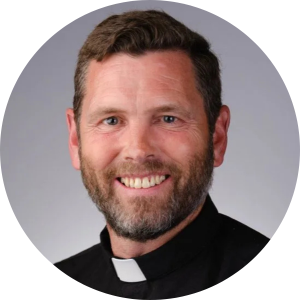
Fr Robert DeCesare, LC, was born and raised in Maryland with three brothers and two sisters in a faith-filled Catholic family. He entered the seminary in 1993 and was ordained in 2003. He is currently the Assistant to the Admissions Director for Sacred Heart Apostolic School in Rolling Prairie, IN.
June 15, 2026 – Turning the Other Cheek?

Monday of the Eleventh Week in Ordinary Time
Matthew 5:38-42
Jesus said to his disciples: “You have heard that it was said, ‘An eye for an eye and a tooth for a tooth.’ But I say to you, offer no resistance to one who is evil. When someone strikes you on your right cheek, turn the other one to him as well. If anyone wants to go to law with you over your tunic, hand him your cloak as well. Should anyone press you into service for one mile, go with him for two miles. Give to the one who asks of you, and do not turn your back on one who wants to borrow.”
Opening Prayer: You have given me the gift of another day, Lord. I want to live it to the full! I want to give you glory by living my life abundantly! Teach me to pour my faith and my love into everything I do. Teach me to find you and your love in all the duties, encounters, and experiences of this day. I know you are always with me, thinking of me, leading and guiding me. As I come before you in prayer today, I humbly ask you to teach me how to see your presence and walk with you always and everywhere…
Encountering Christ:
- Seeing Others as Christ Does: These words of Our Lord are so familiar to us. Maybe too familiar. “Turn the other cheek; go the extra mile; give to the one who asks…” These are behaviors that flow from a way of seeing other people. Our fallen human nature sees other people as competitors, threats, obstacles, tools. And so we are always ready to defend, to take advantage, to outsmart. Jesus is inviting us to adopt a different perspective. He wants us to drop our shields and take off our masks. He wants us to discover the dignity and the worth of other people, regardless of their flaws and sins. He wants us to learn to see others as he sees them—as children of God and saints in the making. When we see others in that way, we unleash new strength in our own hearts. We are able to choose how we respond to insults (being struck on the right cheek implied a back-handed slap, the sign of an insult in Israel at the time of Jesus) and injustices (Roman soldiers could legally conscript local citizens to carry their loads for a mile at a time in Roman-occupied Israel). We can look past the brokenness of this world and the ugliness of our fallen nature to see the face of a brother even in strangers and opponents. This is Christ’s invitation. He believes in us so much that he actually invites and equips us to follow his own example: “While we were still sinners Christ died for us” (Rom 5:8). As we learn to do this, to live our relations with other people on the level of the deeper truth of our common human nature and Christian vocation, we will also learn what it really means to be blessed: “Blessed are the merciful, for they will be shown mercy” (Mt 5:7).
- Being Freed from a Subtle Slavery: Some people have interpreted Christ’s injunction to “offer no resistance to evil” in a purely social way. This interpretation claims that we should never fight for what is true, good, and just. But that simply can’t be what Jesus really means. After all, Jesus also declared, “Blessed are they who hunger and thirst for righteousness, for they will be satisfied” (Mt 5:6). Righteousness includes justice. Righteousness includes defending the defenseless against unjust attacks and exploitation. Righteousness includes pursuing and defending the common good by working for just laws, development, and peace. When Jesus invites us to “offer no resistance to evil,” he is not inviting us to ignore the forces of evil and to enable injustice. Rather, he is inviting us to master our self-righteous tendency to lash out at those who insult us on a person-to-person level. He is inviting us to leave behind the prisons of resentment and anger that we can be trapped in when people treat us unfairly. It is so easy to become a slave to anger in our personal lives. Jesus doesn’t want us to be a slave to anything. He wants us to learn to experience the “glorious freedom of the children of God” (Rom 8:21). Have I experienced that? Would I like to experience it? Learning to curb our instinctual defensiveness and to understand and accept others even when they may not seem to deserve it—this can break the cycle of vengeance and build bridges of redemption. “Blessed are the peacemakers, for they will be called children of God” (Mt 5:9).
- Ahab and Jezebel: King Ahab and his queen, Jezebel, used lies and subterfuge to murder an innocent citizen, Naboth, and steal his family vineyard. That story from 1 Kings 21 vividly illustrates the destructive repercussions of selfishness. When we are self-centered, we tend to see other people as obstacles or tools in relation to whatever we want. Ahab was so self-centered that he became depressed when he couldn’t convince Naboth to sell him his family’s ancestral heritage. Though a grown man, his spirit was so self-absorbed that he behaved like a spoiled child when his whims weren’t heeded. Jezebel was even more self-absorbed. She not only coveted wealth and comfort, as Ahab did, but she reveled in the accumulation and exercise of power. For her, Naboth’s integrity and honor were a challenge. Was he strong enough to resist her machinations? She engaged the machinery of corruption and had him falsely accused and executed. She aggrandized herself and experienced a twisted pleasure by showing how powerful she was, regardless of the human and moral wreckage she left in her wake. We are all Ahab and Jezebel. We are all tempted to assert ourselves at the expense of others. Jesus is trying to convince us to follow a different path, a truer and more fulfilling path. When we treat other people—all other people—as the brothers and sisters that they truly are in God’s eyes, the world itself is transformed, and we become beacons of light and life in this world rather than agents of darkness and destruction.
Conversing with Christ: You call me to such a high standard, Lord. You invite me to give, to lend, to go the extra mile, to forgive, to return good for evil… This is how you lived. This is how you redeemed the world and gave us hope for reconciliation with God and for eternal life. This is how I am meant to live. I want to follow your call; I want to learn to see others—all others—as you see them. I want to learn to live with the strength and freedom that come from being anchored in this deeper truth. But it is not easy! I need your help, Lord. Grant me your grace, so that I may learn to be generous and good always and everywhere, not just when I feel like it. Make me your ambassador in this dark world, so that through me your light can conquer and illuminate many hearts.
Resolution: Lord, today by your grace I will become aware of myself whenever I feel anger or resentment and consciously choose to respond to those feelings and to deal with them as you would want me to, instead of being their slave.
Fr John Bartunek, LC, is an author, speaker, and Creative Director at RCSpirituality, an online spirituality center providing a variety of resources for spiritual growth.
June 16, 2026 – Seeing as God Sees

Tuesday of the Eleventh Week in Ordinary Time
Matthew 5:43-48
Jesus said to his disciples: “You have heard that it was said, You shall love your neighbor and hate your enemy. But I say to you, love your enemies and pray for those who persecute you, that you may be children of your heavenly Father, for he makes his sun rise on the bad and the good, and causes rain to fall on the just and the unjust. For if you love those who love you, what recompense will you have? Do not the tax collectors do the same? And if you greet your brothers only, what is unusual about that? Do not the pagans do the same? So be perfect, just as your heavenly Father is perfect.”
Opening Prayer: Lord, you cared enough about me to come to this world and reveal your plan of salvation. You cared about me enough to make me—through baptism—a temple where you dwell. You cared enough about me to pour the gift of your Holy Spirit into my heart, especially through the sacrament of confirmation. As I come before you today, I ask you for the grace to increase my faith in your love for me, to increase my hope in your hopes for me, to increase my trust and confidence in your wise and all-powerful providence as it guides me towards the fulfillment and fruitfulness for which I yearn.
Encountering Christ:
- What God Sees: When God looks at sinners, even stubborn sinners, he doesn’t see unredeemable devils. Rather, he sees his beloved children who have gone astray. He never condones or ignores the sin, but sees the deeper identity of the sinner, who was created in his image and has the potential to become a saint by being open to and cooperating with God’s grace. God never gives up on any of us. God never stops loving us. He never turns his back on us. That is what Jesus is getting at by likening God’s love to the sun and the rain, gifts necessary for life, gifts that God never holds back from anyone, even from seemingly irreformable sinners. When Jesus exhorts us to “be perfect, just as your heavenly Father is perfect,” he isn’t requiring us to somehow become immaculate. Rather, he is encouraging us to believe in this love God has for everyone, and to echo it and imitate it in our own lives. Loving our enemies doesn’t mean approving of their sins, it just means believing that God created them with a good purpose in mind, and that God’s redeeming grace is meant for them as well as for us.
- Making Excuses: One of the most concrete ways we can love others as God loves us is by making excuses for them. We do this for ourselves all the time. If I happen to be late to an appointment, I naturally forgive myself, because I know that my tardiness is due to factors outside my control, or at least due to factors that are reasonable and acceptable. On the other hand, when someone else is late to an appointment with me, I have a very different reaction. I get angry, self-righteous, judgmental, impatient. I start throwing the other person under the bus and thinking the worst about them. Why the double standard? Why do I so easily make excuses for myself but so rarely make excuses for others? This is part of our heritage of original sin. Our minds are darkened and our hearts are twisted. Jesus is pointing that out in this passage. He wants us to recognize that everyone around us is, in God’s eyes, our brother and sister. We are meant to connect with others and give them the benefit of the doubt. That’s how we create an environment in which we can all live peacefully and prosperously. And if Jesus is commanding us to adopt this attitude, this point of view, it must really be possible for us to do so. Indeed, with his help and guidance, we can do many things that remain out of reach when we just try harder and harder with our own strength. As St. Paul put it: “I have the strength for everything through him who empowers me” (Phil 4:13).
- God’s First Book of Revelation: So many times in the Sermon on the Mount, Jesus uses phenomena from the natural world to illustrate his lessons. In this case, he points out how the sunshine and the rain reflect God’s attitude towards us, his goodness and his love. If even the sun and the rain can teach us about God and reveal him to us, then everything in the natural world simply must be able to do the same. What is more mundane, more everyday-normal-undramatic than sunshine and rain? St. John Paul II used to say that the Bible was God’s second book of revelation; the natural world was his first How attentive am I to God’s fingerprints in creation? How sensitive am I to the beauties and the harmony built into this natural world that God has given to be our home and our arena of spiritual growth? Postmodern culture often talks about the importance of preserving the environment, but very rarely talks about the spiritual meaning of the world as God created it. As we transition into summer, what can I do to better receive the instruction and inspiration that God wants to give me through his magnificent creation?
Conversing with Christ: Lord, you know me better than I know myself. You know that so often my heart is like a porcupine, bristling at others and isolating myself from them. I have so little patience with people’s flaws and failings, even with their idiosyncrasies! I am so unlike you, who make the sun to shine and the rain to fall on the just and the unjust alike. But I can see and taste the interior freedom that would come from keeping my heart open to others, even to those who disrespect me or don’t like me. I want to learn to be perfect as you are perfect. I want to spread your grace wherever I go. I want to embody in my life the goodness that continually flows from your heart. Please teach me and guide me, Lord, and make my heart more like yours.
Resolution: Lord, today by your grace I will pay special attention to negative or accusatory thoughts and attitudes that come up in my relationship with other people. When I notice them, I will look up and think about the sunshine and rain that you pour out on the good and the bad alike, and I will ask you for the grace to “be perfect as my heavenly Father is perfect.”
For Further Reflection: Summer Meditations
Fr John Bartunek, LC, is an author, speaker, and Creative Director at RCSpirituality, an online spirituality center providing a variety of resources for spiritual growth.
June 17, 2026 – Why We Do What We Do

Wednesday of the Eleventh Week in Ordinary Time
Matthew 6:1-6, 16-18
Jesus said to his disciples: “Take care not to perform righteous deeds in order that people may see them; otherwise, you will have no recompense from your heavenly Father. When you give alms, do not blow a trumpet before you, as the hypocrites do in the synagogues and in the streets to win the praise of others. Amen, I say to you, they have received their reward. But when you give alms, do not let your left hand know what your right is doing, so that your almsgiving may be secret. And your Father who sees in secret will repay you. When you pray, do not be like the hypocrites, who love to stand and pray in the synagogues and on street corners so that others may see them. Amen, I say to you, they have received their reward. But when you pray, go to your inner room, close the door, and pray to your Father in secret. And your Father who sees in secret will repay you. When you fast, do not look gloomy like the hypocrites. They neglect their appearance, so that they may appear to others to be fasting. Amen, I say to you, they have received their reward. But when you fast, anoint your head and wash your face, so that you may not appear to others to be fasting, except to your Father who is hidden. And your Father who sees what is hidden will repay you.”
Opening Prayer: I come before you today, Lord, filled with a deep desire to know you better, to give you glory, to receive the grace I need to be your faithful follower and friend. I believe that you are here with me now, eagerly desiring to draw me closer to you, to heal my wounds, to enlighten my mind, to strengthen my spirit. All my hopes for happiness and meaning are in you, Lord. Without you, I can do nothing. Please open my mind to receive your light and my heart to receive your strength.
Encountering Christ:
- Three Fundamental Actions: Almsgiving, praying, and fasting are three fundamental religious actions. They are in themselves good things to do. Through almsgiving we help others who are in need. Through prayer we rebuild bridges between God and the human race. Through fasting we learn to curb our disordered desires and tendencies. These actions are not unique to Christianity. They are present, in some form or another, in most of the religions that have come and gone throughout human history. Jesus has no problem with the actions themselves. He actually assumes that they will somehow form part of our lives as Christians: “When you give alms… pray… fast,” he says. It’s as if he is saying, “Of course you will give alms, pray, and fast.” But Jesus does challenge us when it comes to the why behind the He emphasizes throughout these verses the importance of why we do “righteous deeds.” He wants us to carefully guard against doing these good deeds in order to win the approval and admiration of other people. How well Jesus knows the human heart! We are so easily swayed by what other people will think of us! We are so easily derailed by vanity, by a disordered concern for the approval and admiration of other people. In fact, we are so vulnerable to this fundamental flaw in our human nature that it can undermine even such simple and pure actions as almsgiving, praying, and fasting. How much am I influenced by fears about what other people may think of me? How often are my choices affected not only by what is right and good for me and for others, but by a thirst for recognition and approval? Jesus invites us to reflect honestly on the real motives at work in our lives, because those motives can either help or hinder our search for meaning and interior peace.
- God Is Our Father: We all have a tendency toward vanity. Jesus knows this, and while in this passage he warns us to defend ourselves against the dangers posed by that tendency, he also gives us a good offense to correct the tendency itself: purity of intention. He encourages us to live our lives in the sight of God, concerned about what God will think of our choices rather than what other people will think of them. Three times he exhorts us to do what is right and good simply because it is right and good, not trying to attract the attention of other people. And then three times he repeats, “And your Father who sees what is hidden will repay you.” Two things come out clearly in this phrase. First, that God is our He looks at us with the loving gaze of a good, good father. He is not watching over us like an Olympic judge, waiting for us to mess up. He is not ignoring us, abandoning us to invent our own meaning and happiness. God really cares. He wants us to make good choices because he knows that good choices lead us to grow and flourish as human beings. This may be hard for us to accept, especially if our human father was far from perfect—which is the case for most of us. As the Catechism puts it: “The language of faith thus draws on the human experience of parents, who are in a way the first representatives of God for man. But this experience also tells us that human parents are fallible and can disfigure the face of fatherhood and motherhood. We ought therefore to recall that God transcends the human distinction between the sexes. He is neither man nor woman: he is God. He also transcends human fatherhood and motherhood, although he is their origin and standard: no one is father as God is Father” (CCC 239). How do I relate to God my Father? How is Jesus inviting me to relate to him?
- Our Father Is Close: Second, when Jesus points out that our Father in heaven “sees what is hidden” and “will repay us,” he is pointing out that God not only gazes on us with love and goodness, but that he is close to us. We are never alone. God is always paying attention to us. This too is often hard for us to accept, because God’s presence isn’t like the presence of others. We know it and perceive it through faith. God doesn’t force himself upon us. He reveals these truths about himself and invites us to believe in them. He also gives us the grace we need to believe, and to exercise that faith. But he leaves it up to us to accept that grace or reject it, to exercise our faith or let it atrophy. St. Teresa of Avila, the sixteenth century foundress and Doctor of the Church, defined Christian meditation as “being alone with the one who we know loves us.” How easy is it for me to believe that God is always with me, loving me, accompanying me? How often do I pause to exercise my faith in God’s presence and interest in my life? The Catechism expresses this aspect of God, which Jesus reveals to us in today’s Gospel, beautifully: “At every time and in every place, God draws close to me… God never ceases to draw man to himself…” (CCC 1 and 27). The more our faith in God’s constant, fatherly, loving presence grows, the more interior freedom we will experience as we continue to give alms, pray, and fast, and the more we will feel the joy that comes from childlike hope in a God who sees what is hidden and rewards us.
Conversing with Christ: Dear Lord, I am sorry for giving too much importance to the opinion of other people. I want to have the strength and courage to do what is right and good in all circumstances without being afraid of others’ opinions. I want to live in deep, faith-filled communion with you. I know you love me. I know you care about me and are always with me. Please open my eyes to see your loving gaze always bent upon me. Please increase my faith so that I can find you quickly when I look for you. Please teach me to hope in you and the everlasting rewards you promise more than in the passing satisfactions that so easily distract here in this world.
Resolution: Lord, today by your grace I will do something that is right and good just because it is right and good, without looking for any payback except the knowledge that I am moving forward on the path of spiritual maturity and giving you the delight that comes from that.
For Further Reflection: Nine-minute video on how to do Christian meditation: The Four C’s of Christian Meditation
Fr John Bartunek, LC, is an author, speaker, and Creative Director at RCSpirituality, an online spirituality center providing a variety of resources for spiritual growth.
June 18, 2026 – The Glorious Mystery of Christian Prayer

Thursday of the Eleventh Week in Ordinary Time
Matthew 6:7-15
Jesus said to his disciples: “In praying, do not babble like the pagans, who think that they will be heard because of their many words. Do not be like them. Your Father knows what you need before you ask him. This is how you are to pray: ‘Our Father who art in heaven, hallowed be thy name, thy Kingdom come, thy will be done, on earth as it is in heaven. Give us this day our daily bread; and forgive us our trespasses, as we forgive those who trespass against us; and lead us not into temptation, but deliver us from evil.’ If you forgive others their transgressions, your heavenly Father will forgive you. But if you do not forgive others, neither will your Father forgive your transgressions.”
Opening Prayer: I come before you today, Lord, filled with worries, distractions, and concerns. So much noise surrounds me and disturbs me! I believe that you care about everything I care about and, most important, you care about me. And so I turn my attention to you, seeking to grow in wisdom and courage through hearing you speak to my heart. Blessed be your name, O Lord!
Encountering Christ:
- The Mistakes of the Pagans: Jesus cautions us to avoid the kind of babbling prayer used by pagans. He was referring to the impersonal ritualistic practices so common in pre-Christian religions. Prayer for those religions wasn’t about a relationship with God. Prayer was simply a transaction with a higher power. To get what you wanted from the deity you were addressing, you had to make a perfect performance in your ritual of prayer and worship. If you happened to sneeze or cough in the middle of your prayer, you had to start again and go through the whole ritual flawlessly. The meaning of the many words and elaborate rituals was secondary; the simple performance of them was primary. Jesus warns us about this approach to our life of piety because our human nature has a tendency to fall into this routine and ritualism. We all have a tendency to descend into a transactional approach to God and to others. How is my prayer life? Do I just go through the motions when I go to Mass and confession? Do I “say my prayers” without really thinking about the deeper meaning behind the words? What is Jesus saying to me today?
- The Essence of Christian Prayer: The “Our Father” is the model for all Christian prayer. In fact, the entire fourth part of the Catechism of the Catholic Church, which beautifully explains the mystery of Christian prayer, is centered around a lengthy exposition of the Lord’s Prayer. In giving us this outline of prayer Jesus reveals what is unique about Christian prayer: It unfolds in a true, interpersonal relationship between the believer and God. This comes across in the first words, “Our Father…” God is not a distant deity for Christians, but a caring, approachable, wise father. He is goodness itself—as comes across in the second line, “who art in heaven”—uncorrupted by evil or ignorance. With the gift of this prayer, Jesus wants to emphasize first and foremost that he came to extend the hand of friendship to us. Jesus is the revelation of God’s desire to be in relationship with us, and prayer is a privileged arena for developing that relationship. In fact, the Catechism actually definesChristian prayer as a relationship in explaining how the fourth part of the Catechism fits in with the first three parts: “‘Great is the mystery of the faith!’ The Church professes this mystery in the Apostles’ Creed (Part One) and celebrates it in the sacramental liturgy (Part Two), so that the life of the faithful may be conformed to Christ in the Holy Spirit to the glory of God the Father (Part Three). This mystery, then, requires that the faithful believe in it, that they celebrate it, and that they live from it in a vital and personal relationship with the living and true God. This relationship is prayer.” (CCC 2558)
- A Dangerous Obstacle: Because the essence of Christian prayer is relationship, any resentments or grudges wedged into our hearts will impede our prayer. We can’t approach God as our Father and expect to enjoy his friendship while at the same time harboring and feeding hostility to some of God’s children. This is why Jesus emphasizes forgiving others— doing our part to reconcile with them; we can’t control whether or not they do their part—as a condition for receiving forgiveness from the Lord. We are all in this together. When we became Christians, we became members of God’s family, and that family is meant to include every person. If we condemn anyone by closing our hearts to them and refusing to forgive them, we are closing our hearts to God as well. Nothing impedes spiritual progress and the healing, fortifying work of God’s grace as much as unforgiveness. Even when people have severely hurt us and strictly speaking don’t deserve to be forgiven, unless we forgive them we never escape the power they have over us. Only by forgiving can we release ourselves from the grip of our pain and make room for God’s grace to heal us. Jesus doesn’t ask us to forget everything that happened, or to ignore the damage done, or even to feel warm and affectionate towards those who have hurt us. True forgiveness—forgiveness from the heart—doesn’t always transform our feelings right away. It is a decision to desire for the other person what God desires for them—that his name be hallowed and his Kingdom come in their lives—even if we cannot find the strength to do anything to help that happen except pray for them.
Conversing with Christ: Lord, I want to become an expert in prayer. I want to explore the Church’s treasury of wisdom about prayer. I want to learn to hear your voice in my heart and respond to that voice honestly, lovingly, with faith. Please help me keep my own heart clean, unchained by resentments and unworthy attachments, so that I can walk joyfully with you through the grace-filled adventure of every day you give me of life here on earth.
Resolution: Lord, today by your grace I will learn something new about the great mystery of Christian prayer and sincerely forgive any person whom I have not yet forgiven.
For Further Reflection: The Better Part: A Christ-Centered Resource for Personal Prayer
Fr John Bartunek, LC, is an author, speaker, and Creative Director at RCSpirituality, an online spirituality center providing a variety of resources for spiritual growth.
June 19, 2026 – Treasures in Heaven
Friday of the Eleventh Week in Ordinary Time
Matthew 6:19-23
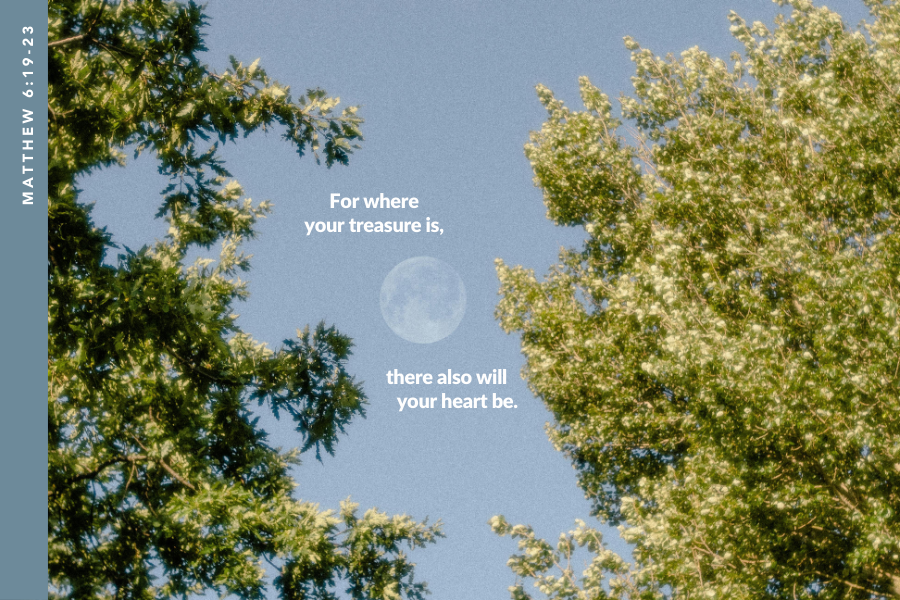
Jesus said to his disciples: “Do not store up for yourselves treasures on earth, where moth and decay destroy, and thieves break in and steal. But store up treasures in heaven, where neither moth nor decay destroys, nor thieves break in and steal. For where your treasure is, there also will your heart be. The lamp of the body is the eye. If your eye is sound, your whole body will be filled with light; but if your eye is bad, your whole body will be in darkness. And if the light in you is darkness, how great will the darkness be.”
Opening Prayer: Lord, you are my treasure. As I reflect on your words today, enlighten my mind to contemplate my eternal destiny. May this reflection deepen my desire to spend eternity with you.
Encountering Christ:
- Where Is Your Treasure?: Human beings were made to worship. Everyone worships either the true God or a “god.” As Our Lord pointed out, wherever our treasure is, wherever our heart is, that is our God—or our false god. Some people worship fame, honor, or wealth. They may go to church on Sunday, but their thoughts dwell on other things and, in their free time, they rush to do what they really love above all else. The concept of false gods is as old as human nature. False gods don’t just fail to save their followers; they destroy them. The Old Testament, especially the book of Judges, tells of the stories of many people who left God for some other idol and found themselves enslaved rather than saved. The idols of old required human sacrifice to be satisfied, but modern idols (addictions, materialism, etc.) just drain the idol-worshippers’ life slowly. So when God commanded, “You will have no other gods before me,” he wasn’t motivated by petty jealousy. He was proposing a life-saving intervention. By adoring God, we adore him who said, “I am the Life,” and he gives us life everlasting.
- Heavenly Treasures: Both thieves and stock markets can take our money. Both moths and ever-changing fashions can make our clothing obsolete and worthless. The more we invest in these kinds of things, the poorer we will ultimately become. When we turn our minds to heaven and strive to see our lives with an eternal perspective, we reap eternal dividends—a place one day in heaven with God. Sister Faustina offers us this encouragement about heaven: “Today I was in heaven, in spirit, and I saw its inconceivable beauties and the happiness that awaits us after death. I saw how all creatures give ceaseless praise and glory to God. I saw how great is happiness in God, which spreads to all creatures, making them happy; and then all the glory and praise which springs from this happiness returns to its source; and they enter into the depths of God, contemplating the inner life of God, the Father, the Son, and the Holy Spirit, whom they will never comprehend or fathom. This source of happiness is unchanging in its essence, but it is always new, gushing forth happiness for all creatures.”
- Smallest of Idols: We love Jesus and strive to do his will at all times, but we still fall prey to smaller idols periodically. These seemingly insignificant idols can grow in our hearts unchecked, like dust bunnies growing under a bed. Maybe we treasure watching too much TV; or we treasure some idealistic “perfect family” and want our family to conform to that ideal; or maybe we spend too much time at work, on our hobbies, or on sports. These “goods” can corrupt us if we’re not diligent. Jesus and his saints recommend briefly examining our conscience before we go to bed. St. Ignatiussuggests following these simple steps: 1. Become aware of God’s presence. 2. Review the day with gratitude. 3. Pay attention to your emotions. 4. Choose one feature of the day and pray from it. 5. Look toward tomorrow.
Conversing with Christ: Lord, my heart is full of gratitude for the spiritual and temporal gifts that you give me each day. By your grace, may I never make an idol of your gifts. Help me to remember that the Giver is so much more than the sum of all the gifts I have received!
Resolution: Lord, today by your grace I will institute the practice of a brief nightly reflection to root out idols that try to creep into my heart.
For Further Reflection: Check out these longer examinations of conscience from the USCCB.
Fr Simon Cleary, LC, is the chaplain at Mano Amiga Academy in the Philippines. The school provides underprivileged children programs that promote values formation, skills and health development, and other services tailored to the needs of the community. Visit www.manoamigaph.org to learn more.
June 20, 2026 – The Grace of Abandonment

Saturday of the Eleventh Week in Ordinary Time
Matthew 6:24-34
Jesus said to his disciples: “No one can serve two masters. He will either hate one and love the other, or be devoted to one and despise the other. You cannot serve God and mammon. Therefore I tell you, do not worry about your life, what you will eat or drink, or about your body, what you will wear. Is not life more than food and the body more than clothing? Look at the birds in the sky; they do not sow or reap, they gather nothing into barns, yet your heavenly Father feeds them. Are not you more important than they? Can any of you by worrying add a single moment to your life-span? Why are you anxious about clothes? Learn from the way the wild flowers grow. They do not work or spin. But I tell you that not even Solomon in all his splendor was clothed like one of them. If God so clothes the grass of the field, which grows today and is thrown into the oven tomorrow, will he not much more provide for you, O you of little faith? So do not worry and say, ‘What are we to eat?’ or ‘What are we to drink?’ or ‘What are we to wear?’ All these things the pagans seek. Your heavenly Father knows that you need them all. But seek first the Kingdom of God and his righteousness, and all these things will be given you besides. Do not worry about tomorrow; tomorrow will take care of itself. Sufficient for a day is its own evil.”
Opening Prayer: Lord, your teaching is clear in this passage, yet it can be very hard not to worry. Please help me to receive the peace you intend to give me as I contemplate your promises in Scripture today.
Encountering Christ:
- No Worries: “If I did not simply live from one moment to another, it would be impossible for me to be patient,” St. Thérèse of Lisieux said, “but I only look at the present, I forget the past, and I take good care not to second-guess the future.” Even in a quiet convent, this saint struggled not to worry about what was going to happen, so it’s understandable that you and I would battle the temptation to be anxious even more than she did. But maybe humans haven’t changed that much. People in Jesus’ time also worried about having enough food, clothing, or money to provide for the future. To those around him two thousand years ago and to us now, Jesus says, “Do not worry and say, ‘What are we to eat?’ or ‘What are we to drink?’ or ‘What are we to wear?’ […] Do not worry about tomorrow; tomorrow will take care of itself.” God wants us to be prudent, to plan, and to pay our bills. But Jesus never guaranteed that we would be well-fed, well-dressed, or well-provided for. In fact, he promised blessings to “those who hunger and thirst for righteousness.” His disciples preached wearing just one ragged tunic and were told by Jesus not to “bring a second tunic.” He said, “Blessed are the poor.” Many saints grew in holiness when they suffered hunger, disgrace, or poverty. Although he didn’t promise us all the material goods we could ask for, Jesus did promise that we would be fed with the Bread of Heaven. He promised that our robes would one day be washed white in his blood. He promised that we would never be tested beyond our strength, that we would be provided with enough grace to overcome whatever temptation came. What more do we need?
- Who Is Our Master?: Today’s Gospel challenges us to ask ourselves, “Who is our master: God or mammon?” If we worry too much about money, we will miss out on God’s action in our lives. If we concern ourselves with God, we may lack money, but we will never lack the graces we need. Wealth is not a measure of our spiritual standing. There are poor people who lived for money or popularity. And there are wealthy people for whom God was their one love, their joy, and their trust. Detachment from mammon is a matter of the heart.
- Putting God First: If you’re praying this meditation, it’s easy to assume that God comes first in your life, not a mammon of material worries. However, putting God first is not a “one and done” proposition, even for the holiest among us. Putting God first in our lives is the highest form of spiritual combat. But what do we do if we find we just can’t abandon ourselves to God? Jacques Phillippe, quoting Marthe Robbins, says, “Abandon yourself anyway!” He adds, “Abandonment is not natural. It’s a grace to be asked of God” (Searching for and Maintaining Peace, p. 40).
Conversing with Christ: Lord, it is a giant struggle within me to try to detach from material goods and put you first in all things. I can do this only with your grace. Please protect me from self-sufficiency and help me to rely only on you to provide what really matters in life.
Resolution: Lord, today by your grace I will trust in you with all my heart when anxiety threatens to disturb my peace.
For Further Reflection: Searching for and Maintaining Peace, by Jacques Phillippe.
Fr Simon Cleary, LC, is the chaplain at Mano Amiga Academy in the Philippines. The school provides underprivileged children programs that promote values formation, skills and health development, and other services tailored to the needs of the community. Visit www.manoamigaph.org to learn more.
June 21, 2026 – More Than Many Sparrows

Twelfth Sunday in Ordinary Time
Matthew 10:26-33
Jesus said to the Twelve: “Fear no one. Nothing is concealed that will not be revealed, nor secret that will not be known. What I say to you in the darkness, speak in the light; what you hear whispered, proclaim on the housetops. And do not be afraid of those who kill the body but cannot kill the soul; rather, be afraid of the one who can destroy both soul and body in Gehenna. Are not two sparrows sold for a small coin? Yet not one of them falls to the ground without your Father’s knowledge. Even all the hairs of your head are counted. So do not be afraid; you are worth more than many sparrows. Everyone who acknowledges me before others I will acknowledge before my heavenly Father. But whoever denies me before others, I will deny before my heavenly Father.”
Opening Prayer: Today is your day, Lord. I want to live it with you and in a way that will please you. Thank you for giving me the gift of faith, the gift of prayer, the gift of your sacred Scriptures. Thank you for not giving up on me. Thank you for always thinking of me and being with me. I offer you this time together as a sign of my love for you and my desire to give you glory through all that I do and say. Open my mind and heart, Lord, to receive the grace you wish to give me today.
Encountering Christ:
- Dealing With Fear: Jesus is preparing his twelve Apostles for their mission of building his Church and spreading his Gospel. In today’s portion of the Gospel, he is preparing them for the times they will feel inadequate or weak, and the times they will suffer misunderstanding, intimidation, and persecution. We have all experienced fear and uncertainty in situations like that. Jesus knows his twelve Apostles, and all of his disciples throughout history, will experience that same fear and uncertainty at times. And so he instructs us about how to deal with that. He tells us not to give in to that fear, never to give into the temptation of discouragement, for one very simple reason: We are cared for and watched over by our heavenly Father. Nothing in the world happens without his knowledge and permission, not even the apparently insignificant activities of little sparrows. And so, if we are engaged in doing his work, we can rest assured that he will guard and bless us. He wants us to trust in him unflinchingly, unhesitatingly. “Even all the hairs of your head are counted,” he reminds us, as if to say that absolutely nothing about our lives is unimportant to the Lord. How firmly do I believe this truth about God and his interest in my life? What impact does this truth have on how I respond to situations that stir up feelings of fear and uncertainty?
- Partners With Christ: Jesus didn’t have to make us partners in redeeming the world. He could have done it all himself. But he did make us partners. “What I say to you in darkness, speak in the light; what you hear whispered, proclaim on the housetops.” We receive the truth and wisdom of Christ; it penetrates our hearts; it works on our souls in mysterious ways—and what we receive from him we are called to boldly share with others. “Everyone who acknowledges me before others I will acknowledge before my heavenly Father.” Jesus is encouraging us to be his witnesses, not to be ashamed of being Christians, of believing in what he revealed to us, of building up his Kingdom rather than just the passing kingdoms of this world. We are his missionaries, his ambassadors. Every Christian, simply by virtue of being a Christian, is called and equipped to bring Christ to others. In spite of insults and intimidations, we are called to continue to proclaim the Gospel, not only in how we live our lives, but also in our words, by telling people about Jesus and inviting them to come and follow him. Whenever we feel inadequate for such a lofty mission, we have a golden opportunity to glorify God by courageously trusting in him regardless of our fears: “So do not be afraid; you are worth more than many sparrows.” How courageous a Christian am I? In what ways is Jesus inviting me to proclaim the Gospel from the housetops?
- An Eternal Perspective: Jesus never seems to get tired of reminding us to keep an eternal perspective on things. “Do not be afraid of those who kill the body but cannot kill the soul.” Earth is not our final destination. Life in this world is a preparation for eternal life. We have a mission and an adventure to live out for a few years here below, and then, when our mission is done and our souls are ready, Jesus calls us home to the Father’s house in heaven. This truth, repeated over and over again by Jesus in so many ways throughout the Gospels, can be a source of great strength, and joy, and peace for us, if we let it really sink in to our hearts and minds. John Chrysostom, Patriarch of Constantinople in the fourth century under very powerful and very corrupt emperors, was exiled multiple times because he refused to compromise his preaching of the Gospel. In a sermon given during times of trouble and persecution, he powerfully expressed this connection between keeping an eternal perspective and having peace and courage in the midst of trials: “The waters have risen and severe storms are upon us, but we do not fear drowning, for we stand firmly upon a rock. Let the sea rage, it cannot break the rock. Let the waves rise, they cannot sink the boat of Jesus. What are we to fear? Death? Life to me means Christ, and death is gain. Exile? The earth and its fullness belong to the Lord. The confiscation of goods? We brought nothing into this world, and we shall surely take nothing from it. I have only contempt for the world’s threats, I find its blessings laughable. I have no fear of poverty, no desire for wealth. I am not afraid of death nor do I long to live, except for your good. I concentrate therefore on the present situation, and I urge you, my friends, to have confidence.”
Conversing with Christ: Lord, when I am able to quiet my thoughts enough to see what is really in my heart, I have to admit that I don’t find as much confidence in you as I would like to have. It is hard for me to believe, fully and deeply, that you really care even about how many hairs are on my head. It is hard for me to accept what you have revealed about how constantly and lovingly you think of me. It is hard for me to hope in the power of your grace working through me when I am so familiar with my own weaknesses and failures. Lord Jesus, I want to be your ambassador, your witness, your soldier—but I need your grace to take even the smallest step forward! Please increase my faith. Please reveal your goodness and your love to my heart in a new and deeper way today.
Resolution: Lord, today by your grace I will visit a cemetery to pray for the dead and also to try and nourish in my own mind and heart the life-giving perspective of eternity that you presented to me in today’s Gospel.
For Further Reflection: A Cure for Discouragement: A Retreat Guide for Easter
Fr. John Bartunek, LC, is an author, speaker, and Creative Director at RCSpirituality.org, an online spirituality center providing a variety of resources for spiritual growth.
- LATEST ARTICLES

View this profile on InstagramRegnum Christi (@regnumchristi_english) • Instagram photos and videos
- RELATED POSTS
Weekly Digest of the Regnum Christi Daily Meditations: June 14 – June 21, 2026 Read More »


 About the Author
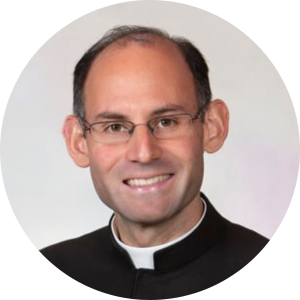 Fr. Jesús Salinas, LC was born and raised in Mexico City and was ordained in 2019. He has spent his first years as a priest in Cincinnati, serving as the chaplain of Royalmont Academy, and as for the ECYD sections. Fr. Jesús enjoys ministering to families, administering the sacraments, and mentoring youth. He also enjoys running, training for marathons, and eating Graeter’s ice cream. As the youngest of five siblings, he also cherishes his role as an uncle to eight nieces and nephews.
 Patricia Camarero, Ph.D. has been a member of the Consecrated Women of Regnum Christi since August 15, 1985. She dedicated 14 years to youth and family ministry in Europe. Her doctoral dissertation focused on the doctrine of human love according to St. Thomas Aquinas and St. Edith Stein, exploring the richness of human love. Since 2015, Patricia has been a member of the Consecrated Women’s community in Houston, where she has been actively involved in pastoral ministry with women and couples, missions, spiritual accompaniment, spiritual direction, retreats, and preaching. She currently serves as a member of the Regnum Christi Lay Member Support Team, accompanying lay members in their vocational growth, formation, communion, and apostolic mission.
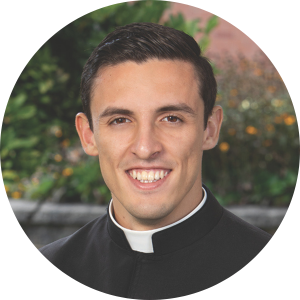
 Gabriela Ruiloba is from Aguascalientes, Mexico and was consecrated in 2009. After completing her years of formation in Rhode Island, she was assigned to Everest Collegiate High School & Academy in Clarkston, Michigan. There she served as Formation Instructor for the girls’ International Program, collaborated as Formation Instructor for the middle school, taught middle school theology, and led the ECYD section. She is currently a member of the consecrated community in Washington, DC, where she is completing her doctoral studies in clinical psychology at Divine Mercy University.