26-06-19-DM

June 19, 2026 – Treasures in Heaven

Friday of the Eleventh Week in Ordinary Time


Matthew 6:19-23

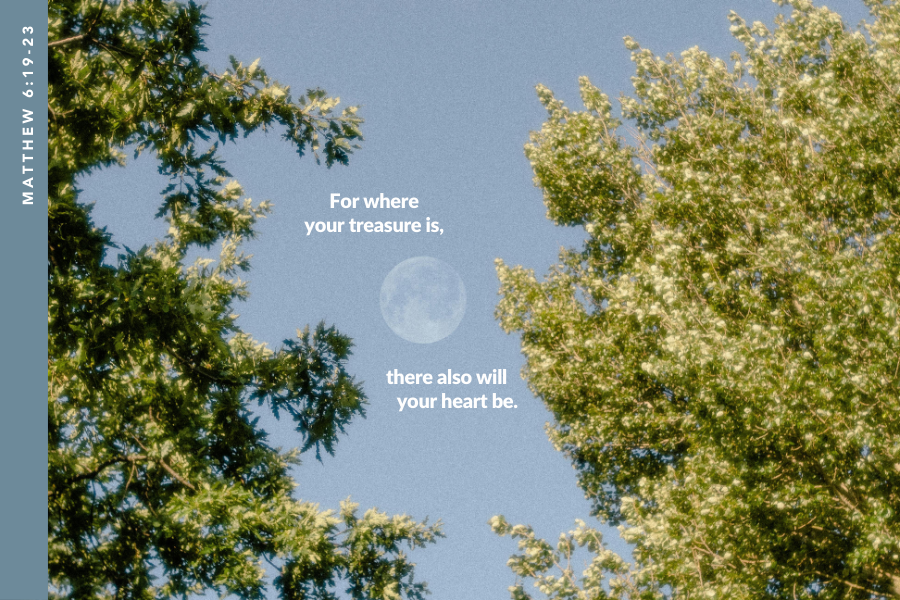
Jesus said to his disciples: “Do not store up for yourselves treasures on earth, where moth and decay destroy, and thieves break in and steal. But store up treasures in heaven, where neither moth nor decay destroys, nor thieves break in and steal. For where your treasure is, there also will your heart be. The lamp of the body is the eye. If your eye is sound, your whole body will be filled with light; but if your eye is bad, your whole body will be in darkness. And if the light in you is darkness, how great will the darkness be.”

Opening Prayer: Lord, you are my treasure. As I reflect on your words today, enlighten my mind to contemplate my eternal destiny. May this reflection deepen my desire to spend eternity with you.

Encountering Christ:

  1. Where Is Your Treasure?: Human beings were made to worship. Everyone worships either the true God or a “god.” As Our Lord pointed out, wherever our treasure is, wherever our heart is, that is our God—or our false god. Some people worship fame, honor, or wealth. They may go to church on Sunday, but their thoughts dwell on other things and, in their free time, they rush to do what they really love above all else. The concept of false gods is as old as human nature. False gods don’t just fail to save their followers; they destroy them. The Old Testament, especially the book of Judges, tells of the stories of many people who left God for some other idol and found themselves enslaved rather than saved. The idols of old required human sacrifice to be satisfied, but modern idols (addictions, materialism, etc.) just drain the idol-worshippers’ life slowly. So when God commanded, “You will have no other gods before me,” he wasn’t motivated by petty jealousy. He was proposing a life-saving intervention. By adoring God, we adore him who said, “I am the Life,” and he gives us life everlasting.


  2. Heavenly Treasures: Both thieves and stock markets can take our money. Both moths and ever-changing fashions can make our clothing obsolete and worthless. The more we invest in these kinds of things, the poorer we will ultimately become. When we turn our minds to heaven and strive to see our lives with an eternal perspective, we reap eternal dividends—a place one day in heaven with God. Sister Faustina offers us this encouragement about heaven: “Today I was in heaven, in spirit, and I saw its inconceivable beauties and the happiness that awaits us after death. I saw how all creatures give ceaseless praise and glory to God. I saw how great is happiness in God, which spreads to all creatures, making them happy; and then all the glory and praise which springs from this happiness returns to its source; and they enter into the depths of God, contemplating the inner life of God, the Father, the Son, and the Holy Spirit, whom they will never comprehend or fathom. This source of happiness is unchanging in its essence, but it is always new, gushing forth happiness for all creatures.”


  3. Smallest of Idols: We love Jesus and strive to do his will at all times, but we still fall prey to smaller idols periodically. These seemingly insignificant idols can grow in our hearts unchecked, like dust bunnies growing under a bed. Maybe we treasure watching too much TV; or we treasure some idealistic “perfect family” and want our family to conform to that ideal; or maybe we spend too much time at work, on our hobbies, or on sports. These “goods” can corrupt us if we’re not diligent. Jesus and his saints recommend briefly examining our conscience before we go to bed. St. Ignatius suggests following these simple steps: 1. Become aware of God’s presence. 2. Review the day with gratitude. 3. Pay attention to your emotions. 4. Choose one feature of the day and pray from it. 5. Look toward tomorrow.

Conversing with Christ: Lord, my heart is full of gratitude for the spiritual and temporal gifts that you give me each day. By your grace, may I never make an idol of your gifts. Help me to remember that the Giver is so much more than the sum of all the gifts I have received!

Resolution: Lord, today by your grace I will institute the practice of a brief nightly reflection to root out idols that try to creep into my heart.

For Further Reflection: Check out these longer examinations of conscience from the USCCB.

Fr Simon Cleary, LC, is the chaplain at Mano Amiga Academy in the Philippines. The school provides underprivileged children programs that promote values formation, skills and health development, and other services tailored to the needs of the community. Visit www.manoamigaph.org to learn more.

June 19, 2026 – Treasures in Heaven Read More »

What If My Grandchild’s Parents Don’t Take Her to Mass?

Q: One of my granddaughters is in first grade at the local Catholic school. She asks her parents to take her to Mass every week, but they don’t, for no good reason. What can I say to them that might help them understand that they are committing a sin? They are both baptized and confirmed Catholics. We have a good relationship. I live two and a half hours away but babysit my granddaughter once a week. — Christine

Answered by Fr. Edward McIlmail, LC:

Your concern for your granddaughter is admirable.

Her parents have a very serious obligation to raise her in the faith and to take her to Mass. They will answer to God someday for how they fulfilled this duty.

Since you know the parents well, you’ll need to decide how best to approach them.

A few suggestions are worth considering.

First, intensify your prayers for the family. If necessary, start to offer sacrifices for them, such as moderate fasting or praying an extra rosary daily or attending weekend Masses.

Second, read up on the topic of parents’ duties and then decide whether you should share any of the postings. Three suggestions: this one by Father John Hardon, SJ; this one by the U.S. bishops’ conference; and this one by Bishop Andrew Cozzens.

Third, do your best to instill the faith in your granddaughter. During your babysitting visits be sure to weave religious themes into your conversations and pray with her and use lots of visuals (such as crucifixes and images of the Blessed Virgin Mary).

I hope some of this helps. Count on my prayers.

What If My Grandchild’s Parents Don’t Take Her to Mass? Read More »

BeMyHeart

Be My Heart

“There is nothing as intimate, nothing as central, nothing as lovable, real, and powerful as the heart of God. We who seek love, we who need to be loved, we who long for this peace and happiness that lasts forever, we find it all in the heart of God.”

Fr. Jaime Lorenzo, LC, offers us a personal invitation to draw close to the heart of God. His new book, Be My Heart: Scriptural Meditations on the Heart of God, leads readers into an encounter with the tender love and mercy of God’s own heart—a heart that has loved us from the beginning, and continues to call us home.

When Fr. Jaime looks back on his own path to the priesthood, he might be able to summarize it in one simple truth: He was loved into it. Everything he has lived, everything he has been given, and everything he has been able to give began with an encounter with a God whose heart beats with a love so personal, so patient, and so persistent that it reshaped his own. Be My Heart was born from that encounter.

This book is the fruit of years spent praying, studying, serving, and—above all—learning to listen to the quiet invitation of Christ: “Be my heart.” Those are the words that have shaped Fr. Jaime’s vocation, reminding him that the love he is called to give comes not from his own limited heart, but flows from the very heart of the one who loved him first. 

In these pages, Fr. Jaime invites us to walk with him on a journey of hearts—the heart of the Lover alongside the heart of his beloved. Here, he traces the story of salvation—from the first breath of creation to the final breath on the cross—through the lens of the beating heart of God as it is revealed in love, mercy, fidelity, sacrifice, and hope. With rich biblical meditation, prayerful reflection, and a deeply personal voice, Fr. Jaime takes us on a journey through the story of the heart of the Creator, the heart of a loving Father, the heart made flesh in Jesus, and the heart that longs to give us rest.

This is not a theological treatise—it is a companion for prayer, a journey into the heart of God, and a space to slow down and let yourself be loved. Be My Heart invites you to discover the depth and tenderness of God’s love, and to let your own heart be shaped by his.

Walk slowly, pray deeply, and let the heart of God transform your own.

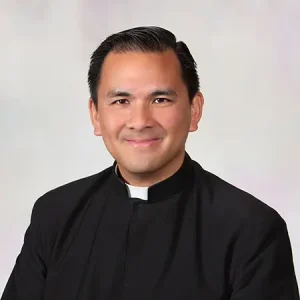
Lorenzo_headshotAbout the Author

Fr. Jaime Lorenzo, LC, is a Legionary of Christ priest originally from Manila, Philippines. He is one of four siblings, and one of his brothers is also a priest with the Legionaries of Christ.

Fr. Jaime completed his years of formation in the United States and Rome, and also spent several years on mission in Venezuela as a Legionary brother. For more than a decade, he has accompanied young people and families through ECYD and Regnum Christi ministries, bringing joy, creativity, and a missionary spirit to his pastoral work.

Ordained in 2020, he has served in southern Louisiana since 2019, dedicating himself to youth and family formation, school chaplaincies, and youth leadership development.

Deeply committed to his vocation and to serving the Regnum Christi family, Fr. Jaime is also known for his many interests—some might even call him a professional dabbler—ranging from sports and music to videography, all of which continue to shape his work and outreach.

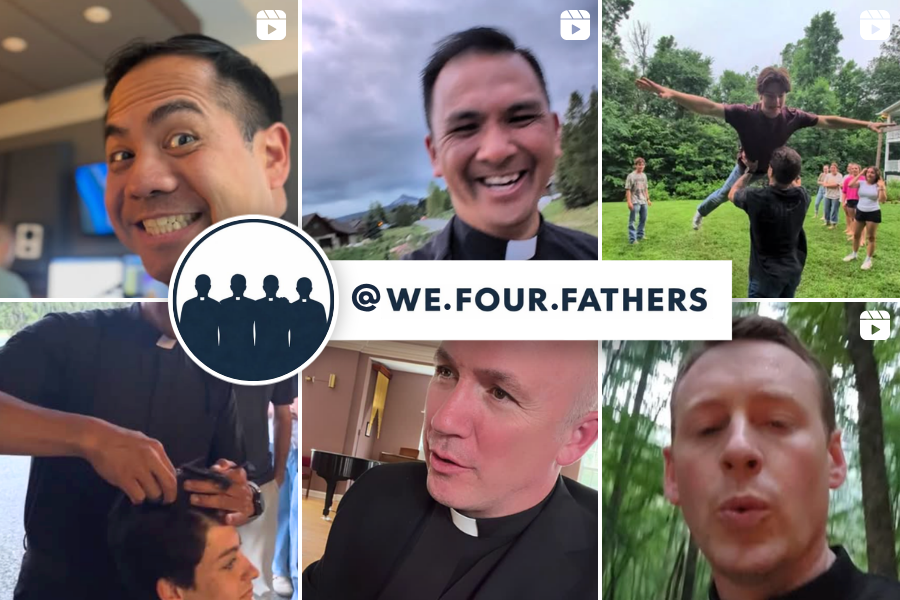
This year, you can also follow Fr. Jaime, along with Fr. Vinh Pham, Fr. Patrick O’Loughlin, and Fr. Jason Smith, as they share their daily lives as Legionaries of Christ, building and extending Christ’s Kingdom. One year. Four priests. One story. Join the adventure on Instagram @we.four.fathers.

Be My Heart Read More »

Regnum Christi Spirituality Center Uncle Eddy

St Elizabeth of Schonau

Dear Eleazar, I do so wish that I could tell you where I am.  I am certain that as you backpack across Europe this summer (a generous graduation present, if I might say so – my sister always was one for nice gifts) you will very nearly pass by my doorstep.  Alas! If I mention anything remotely indicating the nature of my imprisonment or the location of my captors, my last and greatest comfort (email) will be taken from me, and I doubt that as yet I am strong enough to endure such torture.  In any case, as you travel (or should I say wander?) around, count on the accompaniment of my prayers. Since one of the objectives in this vernal trek of yours is discerning your next step in life, I will take the opportunity to remind of an important factor: the devil.  Society tries to convince us not only that God is habitually irrelevant, but also that the devil is a mere concoction of the medieval imagination. Nothing could be further from the hard and bitter truth.  To disbelieve in the devil, you would have to disbelieve in Christ himself, since in the Gospels Jesus repeatedly speaks of about Satan, has run-ins with Satan, casts out demon after demon, and never once tries to explain to his benighted followers that the devil does not exist.  As St Paul puts it, “For our struggle is not with flesh and blood but with the principalities, with the powers, with the world rulers of this present darkness, with the evil spirits in the heavens.” (Ephesians 6:12) Therefore, keep in mind that just because an idea occurs to you, that doesn’t mean that it comes from God.  And just because you feel an attraction to something or someone, that doesn’t necessarily mean that you should act on it. And just because you find a good excuse to disobey the quiet urging of your conscience, that doesn’t mean you should accept it. No, my dear nephew, you are not the only one interested in God’s plan for your life; you want to discover and follow it, but the devil wants to lead you down any other path he can find (sometimes he even reluctantly points out paths that are good, as long as it will keep you off the path that is better). Today’s saint can help keep you on your guard.  Elizabeth entered one of the largest German convents of her times when she was just 12 and professed her vows when she was 18.  Her determination to make her life a pleasing offering to God never wavered; even in the face of continual ill health and spiritual torments, she wore a hair shirt (like a very rough undershirt that causes constant and sometimes maddening discomfort) and an iron chain.  During her twenties, God allowed the devil to tempt her in horrible ways. Demons would appear to her, in her cell and elsewhere, and mock, mimic, and threaten her. Satan himself would appear to her in different guises, once as a huge black bull, once as a raging black inferno, once as a herd of grotesque goats.  Perhaps some souls destined for great holiness have at various times been deterred by such attacks, but Elizabeth only increased her fervor, her faith, and her obedience, and God graced her with equally remarkable consolations (ecstasies during Mass and community prayers, visions of scenes from the life of Christ, etc.).   Although the devil may prefer to use different tactics these days, we can rest assured that he is still hard at work, “prowling around like a roaring lion looking for someone to devour.” (1 Peter 5:8)  After all, his hatred of God and those who love God knows no respite. Don’t be scared – our Lord has conquered death and evil and will be faithful – but do be prudent, making your trip more of a pilgrimage than a party.  And don’t forget to pray. Love, Uncle Eddy

St Elizabeth of Schonau Read More »

we-four-fathers

One Year. Four Priests. One Story. Join the adventure.

What happens when four Legionary priests open the window to their daily lives—the prayer, the people, the chaos, and the coffee—and let you come along for the ride?

Welcome to we.four.fathers, a new Instagram series following four Legionary priests from different parts of the country, involved in different apostolates and different types of work, but sharing one mission: to show that the priesthood is alive, human, joyful, all while serving Christ and his Kingdom

Meet the four Legionary priests who are sharing their lives, just as they are:

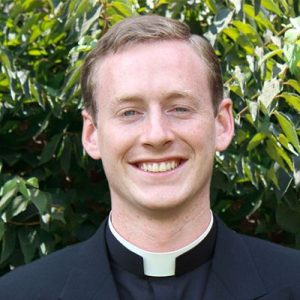
Fr.-Jason-Smith

Fr. Jason Smith packs for a week on the road. What does the suitcase of a priest who has taken a vow of poverty look like? (Spoiler: a lot of black socks, and a relic of St. Patrick!)


Pham-Vinh

Fr. Vinh Pham takes a 30-hour road trip from Columbus, Ohio to Big Sky, Montana as he prepares for FOCUS summer projects, solo-camping on glaciers along the way!


poloughlin

Fr. Patrick O’Loughlin sneaks away from the summer camp he’s running in Jasper, Georgia, to celebrate the wedding of his good friends.


Lorenzo_headshot

Fr. Jaime Lorenzo returns home from many energetic weeks at summer camps, slipping back into a much quieter routine with a heart full of gratitude.


Over the next twelve months, these four priests will invite us into their lives—we’ll meet the people they serve, the places they love, and the joys (and surprises) that come with saying yes to Christ every single day.

If you’ve ever wondered what priestly life really looks like, join the adventure—follow, share, and pray along with we.four.fathers.

One Year. Four Priests. One Story. Join the adventure. Read More »

26-06-18-DM

June 18, 2026 – The Glorious Mystery of Christian Prayer

Thursday of the Eleventh Week in Ordinary Time


Matthew 6:7-15

Jesus said to his disciples: “In praying, do not babble like the pagans, who think that they will be heard because of their many words. Do not be like them. Your Father knows what you need before you ask him. This is how you are to pray: ‘Our Father who art in heaven, hallowed be thy name, thy Kingdom come, thy will be done, on earth as it is in heaven. Give us this day our daily bread; and forgive us our trespasses, as we forgive those who trespass against us; and lead us not into temptation, but deliver us from evil.’ If you forgive others their transgressions, your heavenly Father will forgive you. But if you do not forgive others, neither will your Father forgive your transgressions.”

Opening Prayer: I come before you today, Lord, filled with worries, distractions, and concerns. So much noise surrounds me and disturbs me! I believe that you care about everything I care about and, most important, you care about me. And so I turn my attention to you, seeking to grow in wisdom and courage through hearing you speak to my heart. Blessed be your name, O Lord!

Encountering Christ:

  1. The Mistakes of the Pagans: Jesus cautions us to avoid the kind of babbling prayer used by pagans. He was referring to the impersonal ritualistic practices so common in pre-Christian religions. Prayer for those religions wasn’t about a relationship with God. Prayer was simply a transaction with a higher power. To get what you wanted from the deity you were addressing, you had to make a perfect performance in your ritual of prayer and worship. If you happened to sneeze or cough in the middle of your prayer, you had to start again and go through the whole ritual flawlessly. The meaning of the many words and elaborate rituals was secondary; the simple performance of them was primary. Jesus warns us about this approach to our life of piety because our human nature has a tendency to fall into this routine and ritualism. We all have a tendency to descend into a transactional approach to God and to others. How is my prayer life? Do I just go through the motions when I go to Mass and confession? Do I “say my prayers” without really thinking about the deeper meaning behind the words? What is Jesus saying to me today?


  2. The Essence of Christian Prayer: The “Our Father” is the model for all Christian prayer. In fact, the entire fourth part of the Catechism of the Catholic Church, which beautifully explains the mystery of Christian prayer, is centered around a lengthy exposition of the Lord’s Prayer. In giving us this outline of prayer Jesus reveals what is unique about Christian prayer: It unfolds in a true, interpersonal relationship between the believer and God. This comes across in the first words, “Our Father…” God is not a distant deity for Christians, but a caring, approachable, wise father. He is goodness itself—as comes across in the second line, “who art in heaven”—uncorrupted by evil or ignorance. With the gift of this prayer, Jesus wants to emphasize first and foremost that he came to extend the hand of friendship to us. Jesus is the revelation of God’s desire to be in relationship with us, and prayer is a privileged arena for developing that relationship. In fact, the Catechism actually definesChristian prayer as a relationship in explaining how the fourth part of the Catechism fits in with the first three parts: “‘Great is the mystery of the faith!’ The Church professes this mystery in the Apostles’ Creed (Part One) and celebrates it in the sacramental liturgy (Part Two), so that the life of the faithful may be conformed to Christ in the Holy Spirit to the glory of God the Father (Part Three). This mystery, then, requires that the faithful believe in it, that they celebrate it, and that they live from it in a vital and personal relationship with the living and true God. This relationship is prayer.” (CCC 2558)


  3. A Dangerous Obstacle: Because the essence of Christian prayer is relationship, any resentments or grudges wedged into our hearts will impede our prayer. We can’t approach God as our Father and expect to enjoy his friendship while at the same time harboring and feeding hostility to some of God’s children. This is why Jesus emphasizes forgiving others— doing our part to reconcile with them; we can’t control whether or not they do their part—as a condition for receiving forgiveness from the Lord. We are all in this together. When we became Christians, we became members of God’s family, and that family is meant to include every person. If we condemn anyone by closing our hearts to them and refusing to forgive them, we are closing our hearts to God as well. Nothing impedes spiritual progress and the healing, fortifying work of God’s grace as much as unforgiveness. Even when people have severely hurt us and strictly speaking don’t deserve to be forgiven, unless we forgive them we never escape the power they have over us. Only by forgiving can we release ourselves from the grip of our pain and make room for God’s grace to heal us. Jesus doesn’t ask us to forget everything that happened, or to ignore the damage done, or even to feel warm and affectionate towards those who have hurt us. True forgiveness—forgiveness from the heart—doesn’t always transform our feelings right away. It is a decision to desire for the other person what God desires for them—that his name be hallowed and his Kingdom come in their lives—even if we cannot find the strength to do anything to help that happen except pray for them.

Conversing with Christ: Lord, I want to become an expert in prayer. I want to explore the Church’s treasury of wisdom about prayer. I want to learn to hear your voice in my heart and respond to that voice honestly, lovingly, with faith. Please help me keep my own heart clean, unchained by resentments and unworthy attachments, so that I can walk joyfully with you through the grace-filled adventure of every day you give me of life here on earth.

Resolution: Lord, today by your grace I will learn something new about the great mystery of Christian prayer and sincerely forgive any person whom I have not yet forgiven.

For Further Reflection: The Better Part: A Christ-Centered Resource for Personal Prayer

Fr John Bartunek, LC, is an author, speaker, and Creative Director at RCSpirituality, an online spirituality center providing a variety of resources for spiritual growth.

June 18, 2026 – The Glorious Mystery of Christian Prayer Read More »

10-8

“Lift up your gaze!”: Pope Leo’s Words Today

“Lift up your gaze!”

Pope Leo’s trip to Spain revealed “a widespread need to find unity based on a true and deep foundation.”

In this week’s Wednesday audience, Pope Leo XIV shares some reflections on the Apostolic Journey he made last week to Spain, visiting Madrid, Barcelona, the Abbey of Montserrat, and the Canary Islands.

The Pope was welcomed in Spain with enthusiasm, joyful faith, and a readiness to listen. He encouraged the faithful to overcome division and conflict by promoting communion, dialogue, and unity, to “reread the Gospel in today’s world, exchanging the gifts of our respective cultures with each other.”

The motto of this Apostolic Journey was “Alzad la mirada”, “Lift up your gaze!” (cf. Jn 4:35)—we are called to see others as Christ does.

“Let us lift up our gaze! Let us learn from Jesus to look at our neighbor, at people and at the world, ‘through God’s eyes,’ that is, with love, respect and compassion.”

To read more of Pope Leo XIV’s General Audience reflection, click here.

“Lift up your gaze!”: Pope Leo’s Words Today Read More »

Regnum Christi Spirituality Center Uncle Eddy

St Bessarion

Dear Bess, How’s life on Madison Avenue?  I was glad to hear that you roped such a prestigious summer job/internship (your talents will be shrewdly and fully exploited by those ravenous professionals, but they will also be developed by the rigorous work), but I frowned when I heard how much money you’ll be making.  You need to be careful, my dear pecuniary-inclined niece; you have a tendency to like nice things more than they deserve to be liked. Of course, this gift of appreciating the finer things can be both a blessing and a curse. With it you can be an example of elegance and gentility in a world of vulgar immodesty; the way you dress, dine, and carry yourself can be a kind of billboard for the graciousness and loveliness of God and his Kingdom.  But you could also easily fall prey to vanity, avarice, and intemperance, spending too much money on all the “right” clothes and the “right” accessories, spending too much time with the “right” crowd, and spilling out your natural charm and intelligence on the dry sands of making the right “connections.” Clearly, Christ has an interest in evangelizing Madison Avenue just as much as Main Street, Small Town, USA – maybe even more so, since Madison Avenue has such a powerful influence over what happens on Main Street – and obviously he has put you there to take up the task (you can’t do it alone, though; your first step will need to be finding or “recruiting” some other men and women of the Kingdom), but be aware that he is sending you like a “sheep among wolves” (Matthew 10:16). You may want to keep the example of today’s saint in mind and ask him to be the “patron” of your summer.  At first, it might seem an odd choice. After all, St Bessarion retreated to the deserts of Egypt for an internship with St Anthony and St Macarius, two of the Church’s greatest recluses – so what could he have to do with the teeming throngs of Manhattan?  A lot, I think. He became a paragon of Christian charity and a powerful instrument of God’s love: for the good of poor people he constantly ran across, he performed a slew of miracles, turning salt water fresh, bringing rain in times of draught, walking across the Nile, expelling demons… Wherever he went, he brought lost and hardened souls closer to God.  And the secret to his holiness was detachment.  Instead of hoarding the good things of this world, he used them as springboards, as rungs of a ladder that led him closer and closer to the heart of the God who had created them.  Thus, he never had a fixed place of residence, but wandered barefoot, observing long periods of silence and excruciating fasts. Once he spent forty days standing in prayer amidst a hedge of brambles.  He was determined to use all earthly goods as opportunities to praise and serve God, and never let them capture his heart. So, as you find yourself hobnobbing with the wealthy and beautiful of the world, keeping up a spiritual correspondence with St Bessarion could serve as a kind of secret weapon, a way for you to keep first things first so that you don’t end up losing them altogether. Keep the faith, Uncle Eddy

St Bessarion Read More »

26-06-17-DM

June 17, 2026 – Why We Do What We Do

Wednesday of the Eleventh Week in Ordinary Time


Matthew 6:1-6, 16-18

Jesus said to his disciples: “Take care not to perform righteous deeds in order that people may see them; otherwise, you will have no recompense from your heavenly Father. When you give alms, do not blow a trumpet before you, as the hypocrites do in the synagogues and in the streets to win the praise of others. Amen, I say to you, they have received their reward. But when you give alms, do not let your left hand know what your right is doing, so that your almsgiving may be secret. And your Father who sees in secret will repay you. When you pray, do not be like the hypocrites, who love to stand and pray in the synagogues and on street corners so that others may see them. Amen, I say to you, they have received their reward. But when you pray, go to your inner room, close the door, and pray to your Father in secret. And your Father who sees in secret will repay you. When you fast, do not look gloomy like the hypocrites. They neglect their appearance, so that they may appear to others to be fasting. Amen, I say to you, they have received their reward. But when you fast, anoint your head and wash your face, so that you may not appear to others to be fasting, except to your Father who is hidden. And your Father who sees what is hidden will repay you.”

Opening Prayer: I come before you today, Lord, filled with a deep desire to know you better, to give you glory, to receive the grace I need to be your faithful follower and friend. I believe that you are here with me now, eagerly desiring to draw me closer to you, to heal my wounds, to enlighten my mind, to strengthen my spirit. All my hopes for happiness and meaning are in you, Lord. Without you, I can do nothing. Please open my mind to receive your light and my heart to receive your strength.

Encountering Christ:

  1. Three Fundamental Actions: Almsgiving, praying, and fasting are three fundamental religious actions. They are in themselves good things to do. Through almsgiving we help others who are in need. Through prayer we rebuild bridges between God and the human race. Through fasting we learn to curb our disordered desires and tendencies. These actions are not unique to Christianity. They are present, in some form or another, in most of the religions that have come and gone throughout human history. Jesus has no problem with the actions themselves. He actually assumes that they will somehow form part of our lives as Christians: “When you give alms… pray… fast,” he says. It’s as if he is saying, “Of course you will give alms, pray, and fast.” But Jesus does challenge us when it comes to the why behind the He emphasizes throughout these verses the importance of why we do “righteous deeds.” He wants us to carefully guard against doing these good deeds in order to win the approval and admiration of other people. How well Jesus knows the human heart! We are so easily swayed by what other people will think of us! We are so easily derailed by vanity, by a disordered concern for the approval and admiration of other people. In fact, we are so vulnerable to this fundamental flaw in our human nature that it can undermine even such simple and pure actions as almsgiving, praying, and fasting. How much am I influenced by fears about what other people may think of me? How often are my choices affected not only by what is right and good for me and for others, but by a thirst for recognition and approval? Jesus invites us to reflect honestly on the real motives at work in our lives, because those motives can either help or hinder our search for meaning and interior peace.


  2. God Is Our Father: We all have a tendency toward vanity. Jesus knows this, and while in this passage he warns us to defend ourselves against the dangers posed by that tendency, he also gives us a good offense to correct the tendency itself: purity of intention. He encourages us to live our lives in the sight of God, concerned about what God will think of our choices rather than what other people will think of them. Three times he exhorts us to do what is right and good simply because it is right and good, not trying to attract the attention of other people. And then three times he repeats, “And your Father who sees what is hidden will repay you.” Two things come out clearly in this phrase. First, that God is our He looks at us with the loving gaze of a good, good father. He is not watching over us like an Olympic judge, waiting for us to mess up. He is not ignoring us, abandoning us to invent our own meaning and happiness. God really cares. He wants us to make good choices because he knows that good choices lead us to grow and flourish as human beings. This may be hard for us to accept, especially if our human father was far from perfect—which is the case for most of us. As the Catechism puts it: “The language of faith thus draws on the human experience of parents, who are in a way the first representatives of God for man. But this experience also tells us that human parents are fallible and can disfigure the face of fatherhood and motherhood. We ought therefore to recall that God transcends the human distinction between the sexes. He is neither man nor woman: he is God. He also transcends human fatherhood and motherhood, although he is their origin and standard: no one is father as God is Father” (CCC 239). How do I relate to God my Father? How is Jesus inviting me to relate to him?


  3. Our Father Is Close: Second, when Jesus points out that our Father in heaven “sees what is hidden” and “will repay us,” he is pointing out that God not only gazes on us with love and goodness, but that he is close to us. We are never alone. God is always paying attention to us. This too is often hard for us to accept, because God’s presence isn’t like the presence of others. We know it and perceive it through faith. God doesn’t force himself upon us. He reveals these truths about himself and invites us to believe in them. He also gives us the grace we need to believe, and to exercise that faith. But he leaves it up to us to accept that grace or reject it, to exercise our faith or let it atrophy. St. Teresa of Avila, the sixteenth century foundress and Doctor of the Church, defined Christian meditation as “being alone with the one who we know loves us.” How easy is it for me to believe that God is always with me, loving me, accompanying me? How often do I pause to exercise my faith in God’s presence and interest in my life? The Catechism expresses this aspect of God, which Jesus reveals to us in today’s Gospel, beautifully: “At every time and in every place, God draws close to me… God never ceases to draw man to himself…” (CCC 1 and 27). The more our faith in God’s constant, fatherly, loving presence grows, the more interior freedom we will experience as we continue to give alms, pray, and fast, and the more we will feel the joy that comes from childlike hope in a God who sees what is hidden and rewards us.

Conversing with Christ: Dear Lord, I am sorry for giving too much importance to the opinion of other people. I want to have the strength and courage to do what is right and good in all circumstances without being afraid of others’ opinions. I want to live in deep, faith-filled communion with you. I know you love me. I know you care about me and are always with me. Please open my eyes to see your loving gaze always bent upon me. Please increase my faith so that I can find you quickly when I look for you. Please teach me to hope in you and the everlasting rewards you promise more than in the passing satisfactions that so easily distract here in this world.

Resolution: Lord, today by your grace I will do something that is right and good just because it is right and good, without looking for any payback except the knowledge that I am moving forward on the path of spiritual maturity and giving you the delight that comes from that.

For Further Reflection: Nine-minute video on how to do Christian meditation: The Four C’s of Christian Meditation

Fr John Bartunek, LC, is an author, speaker, and Creative Director at RCSpirituality, an online spirituality center providing a variety of resources for spiritual growth.

June 17, 2026 – Why We Do What We Do Read More »

Scroll to Top

Events

Looking for another country?

Contact Regnum Christi near you

News & Resources

News & Resources

The Regnum Christi Mission

The Regnum Christi Identity

Alex Kucera

Atlanta

Alex Kucera has lived in Atlanta, GA, for the last 46 years. He is one of 9 children, married to his wife Karmen, and has 3 girls, one grandson, and a granddaughter on the way. Alex joined Regnum Christi in 2007. Out of the gate, he joined the Helping Hands Medical Missions apostolate and is still participating today with the Ghana Friendship Mission.

In 2009, Alex was asked to be the Atlanta RC Renewal Coordinator for the Atlanta Locality to help the RC members with the RC renewal process. Alex became a Group Leader in 2012 for four of the Atlanta Men’s Section Teams and continues today. Running in parallel, in 2013, Alex became a Team Leader and shepherded a large team of good men.

Alex was honored to be the Atlanta Mission Coordinator between 2010 to 2022 (12 years), coordinating 5-8 Holy Week Mission teams across Georgia. He also created and coordinated missions at a parish in Athens, GA, for 9 years. Alex continues to coordinate Holy Week Missions, Advent Missions, and Monthly missions at Good Shepherd Catholic Church in Cumming, GA.

From 2016 to 2022, Alex also served as the Men’s Section Assistant in Atlanta. He loved working with the Men’s Section Director, the Legionaries, Consecrated, and Women’s Section leadership teams.

Alex is exceptionally grateful to the Legionaries, Consecrated, and many RC members who he’s journeyed shoulder to shoulder, growing his relationship with Christ and others along the way. He knows that there is only one way, that’s Christ’s Way, with others!