26-06-22-DM

June 22, 2026 – Am I Judging?

Monday of the Twelfth Week in Ordinary Time


Matthew 7:1-5

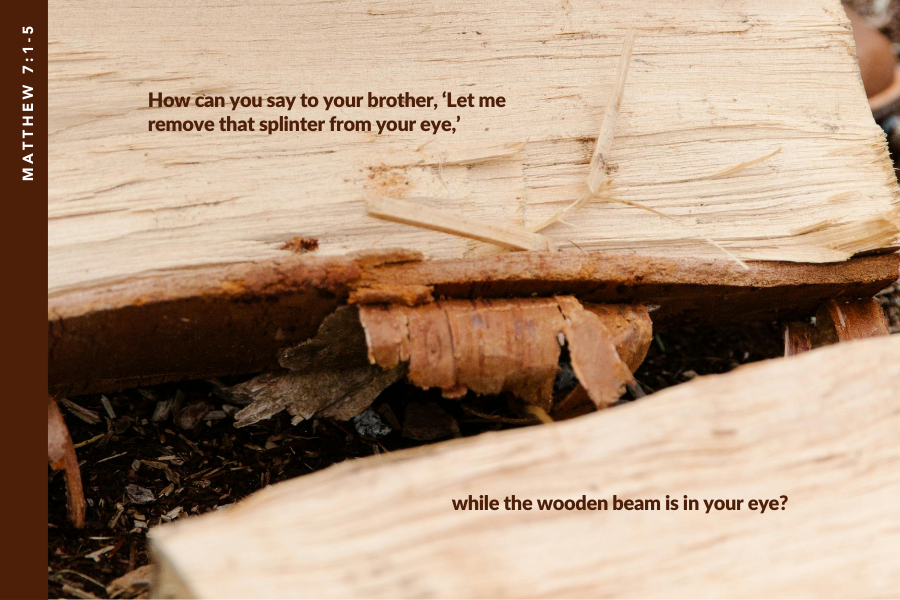
Jesus said to his disciples: “Stop judging, that you may not be judged. For as you judge, so will you be judged, and the measure with which you measure will be measured out to you. Why do you notice the splinter in your brother’s eye, but do not perceive the wooden beam in your own eye? How can you say to your brother, ‘Let me remove that splinter from your eye,’ while the wooden beam is in your eye? You hypocrite, remove the wooden beam from your eye first; then you will see clearly to remove the splinter from your brother’s eye.”

Opening Prayer: You are here with me right now, Lord. You are thinking of me. You have something you want to give me today, something you want to teach me, something you want me to do. I turn the attention of my heart to you. Please help me hear your voice. Help me discover the gift you want to give me today. Help me be your faithful companion and get to know you better. May your name be praised in my heart and my life, O Lord!

Encountering Christ:

  1. Seeing Versus Judging: It is very, very easy to misinterpret Jesus’ injunction in today’s Gospel to “Stop judging, that you may not be judged.” A superficial reading of this passage can make us think that we are supposed to be blind to the faults and failings of those around us. When we try to act like that, as if we simply don’t see the shortcomings or sins of other people, we set ourselves an impossible task. People sin. People make mistakes. People do stupid and bothersome things. To pretend that we don’t notice those things is to shut ourselves off from reality. And that is never a good idea. Jesus is not telling us, “Stop noticing things; don’t look at reality.” Not at all! Rather, Jesus is telling us to stop judging our neighbor for the things they do. We can certainly condemn sin and point out the destructive nature of certain behaviors. But we can never pretend to understand fully why someone sins. We can never know the full story of a human heart. We don’t know the wounds, the scars, the blindspots, and the countless other factors that go together to lead someone to make a particular choice. Only God can fathom the almost infinite depths and complexities of a human heart. And yet, ever since original sin, we have had a strong tendency to want to act as if we are God. We love pretending that we know the whole story behind someone’s sin. We love putting people in boxes, labeling them, and thus elevating ourselves above them (at least in our own minds). These are diabolical tendencies of our fallen nature. When we give in to them, we reject the call to build Christ’s Kingdom and to let him be King. And when we do that, we separate ourselves from him. That’s a bad idea. Because when we put ourselves on the judgment seat, we distance ourselves from God’s mercy.


  2. A Spiritual Shake-Up: The contrast between a splinter in our brother’s eye and a wooden beam in our own eyes is one of the most vivid comparisons in the Gospels. Jesus needed a vivid comparison in order to wake us up to this point. For us fallen human beings living in a fallen world, it is second nature to think and speak badly of other people. We do it so often and so easily that we don’t even know we are doing it most of the time. But to step back and reflect on our own lives and faults and failings—that is much harder for us to do. And yet, unless we do that, we simply cannot see the truth of other people. Our own wounds and blindspots make it impossible for us to see other people as God sees them. We must learn to know ourselves, to truly understand our unique personality, our prejudices, our talents, our weak points, our strengths, the hidden fears at work underneath our more obvious motivations. Even the pre-Christian Greek philosophers understood the importance of this deep, thorough self-knowledge for growth in wisdom—thus the ancient motto, know thyself. We will never have peace in our hearts if we don’t grow in self-knowledge and learn to manage our strong tendency to be judgmental towards others. We cannot live our lives in the light if a wooden beam is stuck in our eyes. Jesus uses striking language in this part of the Sermon on the Mount, because we need to be shaken up in order to shake off this ingrained habit of thinking and speaking judgmentally of other people. We must learn to be like Christ; we must learn to love every sinner, starting with ourselves, even while we hate every sin.


  3. Measuring Up: Jesus promises that “the measure with which you measure will be measured out to you.” This provides us with an unbelievable opportunity. If we decide (and we do have the freedom to make these kinds of decisions) to measure out to others an abundance of kindness, forgiveness, generosity, care, concern, sincere interest, appreciation, and patience, then Jesus promises we will receive the same. Jesus is fair. He invented fairness. He knows that fairness requires correcting those who treat others unfairly and ungenerously. And he also knows that fairness requires rewarding those who do what is right and good. He wants us to experience the rewards that come from living life as it is meant to be lived—the reward of “blessedness” as he pointed out at the very beginning of his Sermon on the Mount. All his teaching is designed to enlighten and strengthen us to live life well, so that we can experience the blessedness we long for, the blessedness we were created for. If I were to die today and go before the throne of Jesus, what “measure” would he have to use for me?

Conversing with Christ: You know my heart, Lord. You know how hard it is for me to see people as you see them. I am so quick to judge, to demean, to dismiss, to mock, to belittle, to reject, to resent. I thank you for not being that way with me. I thank you for your patience, your mercy, your goodness towards me. You always give me another chance. You always believe in me. You never give up on me. Teach me, Lord, to know just how broken I am, so that I be truly amazed at the depths of your goodness—so amazed that I fall into those depths and learn to be more like you.

Resolution: Lord, today by your grace I will make a conscious effort to understand someone who rubs me the wrong way or upsets me. I will consciously postpone judging that person, in order to create space for you to teach me how to see others as you see them.

For Further Reflection: Short Video: Christlike Love in Our Words (conference from Teacher and Lord do-it-yourself Retreat Guide)

Fr John Bartunek, LC, is an author, speaker, and Creative Director at RCSpirituality, an online spirituality center providing a variety of resources for spiritual growth.

June 22, 2026 – Am I Judging? Read More »

Regnum Christi Spirituality Center Uncle Eddy

St Aloysius Gonzaga

Dear Al, So the eagerly expected moment has finally come: high school is over and college is imminent.  I myself can almost feel the surge of excitement stirring inside you (and spilling into the words of your notes).  A cusp, a transition, a closing of one beautiful (though at times trying) chapter and, soon, the opening of another, which promises to be even more exhilarating… How will you endure this lengthy summer that stretches lazily in front of you?  I am sure you will find a way; you never were one to let yourself be bored. By the way, did your plans to run a parish day camp during July work out? I certainly hope so – we need to rescue our children from the new-agey, pseudo-martial-artsy summer cliques that frazzled post-modern parents so unwittingly utilize as glorified babysitters.  May God have mercy on them. In any case, I thought I would take advantage of this vernal lull to encourage you to reflect deeply on a seminal spiritual truth.  I firmly believe (actually, I know from ample experience) that it will make all the difference in your coming college career. I’ll start off with a question: what do you want out of college?  Can you put it into two or three bullet points? If not, take some time to do so – if you don’t set your college agenda, someone else will, and that someone may not have your best interests in mind.  Now then, a second question: did “God’s will” appear on your list in any form whatsoever? I hope so, because learning to live under the umbrella of “God’s will” is the only way to reach our full potential in life, the only way to become as happy as we wish to be; learning to seek and embrace God’s will is far and above the most valuable lesson we can learn in college.  Living under the umbrella of “God’s will” simply means letting God be your full-time personal trainer, living your life not as a solo, but as a duet, with God taking the lead. It is the most beautiful and powerful way to live. That reminds me of the career of today’s saint, the patron of Catholic young people.  St Aloysius died at the young age of 23. He was in formation to be a Jesuit priest at the time, but God was in a rush to get him home.  During his few years of preparation for the priesthood, Aloysius filled the seminary with a joy and energy that inspired his confreres to become the spiritual workhorses of 17th century Europe.  He achieved his intense and contagious love for God and for all of God’s creatures by following one simple rule: seek God’s will before all else.   His mother was the empress’s lady of honor, and his father was a northern Italian duke who had great ambitions for his oldest son (which did not include a vocation to the priesthood).  Consequently, he and his younger brother spent their youth bouncing from royal court to royal court, receiving a superlative education (in the age of the great “renaissance men”) and enjoying the innumerable pleasures of nobility.  But Aloysius had early on felt a deep desire to put his life fully at the service of God, and through all the fancies of high privilege, he faithfully upheld his rigorous prayer commitments and valiantly guarded his Christian virtue.  It served him well. When his father finally permitted him to enter the seminary (after exhausting an entire arsenal of crafty dissuasion attempts), not only was Aloysius already on the path to profound union with God, but his dad also reformed his vice-ridden life before dying two months later. Sorry if I’ve been rambling.  My point here is just that you need a compass to navigate your way through this next stage of your life, and if you decide to make God’s will your magnetic north, I can guarantee that you will emerge amply prepared for a glorious life of intense meaning and joy in the service of the Eternal Kingdom.  God’s will: nothing more, nothing less, nothing else. Think about it. Love, Uncle Eddy

St Aloysius Gonzaga Read More »

26-06-21-DM

June 21, 2026 – More Than Many Sparrows

Twelfth Sunday in Ordinary Time


Matthew 10:26-33

Jesus said to the Twelve: “Fear no one. Nothing is concealed that will not be revealed, nor secret that will not be known. What I say to you in the darkness, speak in the light; what you hear whispered, proclaim on the housetops. And do not be afraid of those who kill the body but cannot kill the soul; rather, be afraid of the one who can destroy both soul and body in Gehenna. Are not two sparrows sold for a small coin? Yet not one of them falls to the ground without your Father’s knowledge. Even all the hairs of your head are counted. So do not be afraid; you are worth more than many sparrows. Everyone who acknowledges me before others I will acknowledge before my heavenly Father. But whoever denies me before others, I will deny before my heavenly Father.”

Opening Prayer: Today is your day, Lord. I want to live it with you and in a way that will please you. Thank you for giving me the gift of faith, the gift of prayer, the gift of your sacred Scriptures. Thank you for not giving up on me. Thank you for always thinking of me and being with me. I offer you this time together as a sign of my love for you and my desire to give you glory through all that I do and say. Open my mind and heart, Lord, to receive the grace you wish to give me today.

Encountering Christ:

  1. Dealing With Fear: Jesus is preparing his twelve Apostles for their mission of building his Church and spreading his Gospel. In today’s portion of the Gospel, he is preparing them for the times they will feel inadequate or weak, and the times they will suffer misunderstanding, intimidation, and persecution. We have all experienced fear and uncertainty in situations like that. Jesus knows his twelve Apostles, and all of his disciples throughout history, will experience that same fear and uncertainty at times. And so he instructs us about how to deal with that. He tells us not to give in to that fear, never to give into the temptation of discouragement, for one very simple reason: We are cared for and watched over by our heavenly Father. Nothing in the world happens without his knowledge and permission, not even the apparently insignificant activities of little sparrows. And so, if we are engaged in doing his work, we can rest assured that he will guard and bless us. He wants us to trust in him unflinchingly, unhesitatingly. “Even all the hairs of your head are counted,” he reminds us, as if to say that absolutely nothing about our lives is unimportant to the Lord. How firmly do I believe this truth about God and his interest in my life? What impact does this truth have on how I respond to situations that stir up feelings of fear and uncertainty?


  2. Partners With Christ: Jesus didn’t have to make us partners in redeeming the world. He could have done it all himself. But he did make us partners. “What I say to you in darkness, speak in the light; what you hear whispered, proclaim on the housetops.” We receive the truth and wisdom of Christ; it penetrates our hearts; it works on our souls in mysterious ways—and what we receive from him we are called to boldly share with others. “Everyone who acknowledges me before others I will acknowledge before my heavenly Father.” Jesus is encouraging us to be his witnesses, not to be ashamed of being Christians, of believing in what he revealed to us, of building up his Kingdom rather than just the passing kingdoms of this world. We are his missionaries, his ambassadors. Every Christian, simply by virtue of being a Christian, is called and equipped to bring Christ to others. In spite of insults and intimidations, we are called to continue to proclaim the Gospel, not only in how we live our lives, but also in our words, by telling people about Jesus and inviting them to come and follow him. Whenever we feel inadequate for such a lofty mission, we have a golden opportunity to glorify God by courageously trusting in him regardless of our fears: “So do not be afraid; you are worth more than many sparrows.” How courageous a Christian am I? In what ways is Jesus inviting me to proclaim the Gospel from the housetops?


  3. An Eternal Perspective: Jesus never seems to get tired of reminding us to keep an eternal perspective on things. “Do not be afraid of those who kill the body but cannot kill the soul.” Earth is not our final destination. Life in this world is a preparation for eternal life. We have a mission and an adventure to live out for a few years here below, and then, when our mission is done and our souls are ready, Jesus calls us home to the Father’s house in heaven. This truth, repeated over and over again by Jesus in so many ways throughout the Gospels, can be a source of great strength, and joy, and peace for us, if we let it really sink in to our hearts and minds. John Chrysostom, Patriarch of Constantinople in the fourth century under very powerful and very corrupt emperors, was exiled multiple times because he refused to compromise his preaching of the Gospel. In a sermon given during times of trouble and persecution, he powerfully expressed this connection between keeping an eternal perspective and having peace and courage in the midst of trials: “The waters have risen and severe storms are upon us, but we do not fear drowning, for we stand firmly upon a rock. Let the sea rage, it cannot break the rock. Let the waves rise, they cannot sink the boat of Jesus. What are we to fear? Death? Life to me means Christ, and death is gain. Exile? The earth and its fullness belong to the Lord. The confiscation of goods? We brought nothing into this world, and we shall surely take nothing from it. I have only contempt for the world’s threats, I find its blessings laughable. I have no fear of poverty, no desire for wealth. I am not afraid of death nor do I long to live, except for your good. I concentrate therefore on the present situation, and I urge you, my friends, to have confidence.”

Conversing with Christ: Lord, when I am able to quiet my thoughts enough to see what is really in my heart, I have to admit that I don’t find as much confidence in you as I would like to have. It is hard for me to believe, fully and deeply, that you really care even about how many hairs are on my head. It is hard for me to accept what you have revealed about how constantly and lovingly you think of me. It is hard for me to hope in the power of your grace working through me when I am so familiar with my own weaknesses and failures. Lord Jesus, I want to be your ambassador, your witness, your soldier—but I need your grace to take even the smallest step forward! Please increase my faith. Please reveal your goodness and your love to my heart in a new and deeper way today.

Resolution: Lord, today by your grace I will visit a cemetery to pray for the dead and also to try and nourish in my own mind and heart the life-giving perspective of eternity that you presented to me in today’s Gospel.

For Further Reflection: A Cure for Discouragement: A Retreat Guide for Easter

Fr. John Bartunek, LC, is an author, speaker, and Creative Director at RCSpirituality.org, an online spirituality center providing a variety of resources for spiritual growth.

June 21, 2026 – More Than Many Sparrows Read More »

Weekly Digest of the Regnum Christi Daily Meditations: June 21 – June 28, 2026

WEEKLY DIGEST OF rc
DAILY MEDITATIONS

June 21, 2026 – More Than Many Sparrows

26-06-21-DM

Twelfth Sunday in Ordinary Time

Matthew 10:26-33

Jesus said to the Twelve: “Fear no one. Nothing is concealed that will not be revealed, nor secret that will not be known. What I say to you in the darkness, speak in the light; what you hear whispered, proclaim on the housetops. And do not be afraid of those who kill the body but cannot kill the soul; rather, be afraid of the one who can destroy both soul and body in Gehenna. Are not two sparrows sold for a small coin? Yet not one of them falls to the ground without your Father’s knowledge. Even all the hairs of your head are counted. So do not be afraid; you are worth more than many sparrows. Everyone who acknowledges me before others I will acknowledge before my heavenly Father. But whoever denies me before others, I will deny before my heavenly Father.”

Opening Prayer: Today is your day, Lord. I want to live it with you and in a way that will please you. Thank you for giving me the gift of faith, the gift of prayer, the gift of your sacred Scriptures. Thank you for not giving up on me. Thank you for always thinking of me and being with me. I offer you this time together as a sign of my love for you and my desire to give you glory through all that I do and say. Open my mind and heart, Lord, to receive the grace you wish to give me today.

Encountering Christ:

  1. Dealing With Fear: Jesus is preparing his twelve Apostles for their mission of building his Church and spreading his Gospel. In today’s portion of the Gospel, he is preparing them for the times they will feel inadequate or weak, and the times they will suffer misunderstanding, intimidation, and persecution. We have all experienced fear and uncertainty in situations like that. Jesus knows his twelve Apostles, and all of his disciples throughout history, will experience that same fear and uncertainty at times. And so he instructs us about how to deal with that. He tells us not to give in to that fear, never to give into the temptation of discouragement, for one very simple reason: We are cared for and watched over by our heavenly Father. Nothing in the world happens without his knowledge and permission, not even the apparently insignificant activities of little sparrows. And so, if we are engaged in doing his work, we can rest assured that he will guard and bless us. He wants us to trust in him unflinchingly, unhesitatingly. “Even all the hairs of your head are counted,” he reminds us, as if to say that absolutely nothing about our lives is unimportant to the Lord. How firmly do I believe this truth about God and his interest in my life? What impact does this truth have on how I respond to situations that stir up feelings of fear and uncertainty?


  2. Partners With Christ: Jesus didn’t have to make us partners in redeeming the world. He could have done it all himself. But he did make us partners. “What I say to you in darkness, speak in the light; what you hear whispered, proclaim on the housetops.” We receive the truth and wisdom of Christ; it penetrates our hearts; it works on our souls in mysterious ways—and what we receive from him we are called to boldly share with others. “Everyone who acknowledges me before others I will acknowledge before my heavenly Father.” Jesus is encouraging us to be his witnesses, not to be ashamed of being Christians, of believing in what he revealed to us, of building up his Kingdom rather than just the passing kingdoms of this world. We are his missionaries, his ambassadors. Every Christian, simply by virtue of being a Christian, is called and equipped to bring Christ to others. In spite of insults and intimidations, we are called to continue to proclaim the Gospel, not only in how we live our lives, but also in our words, by telling people about Jesus and inviting them to come and follow him. Whenever we feel inadequate for such a lofty mission, we have a golden opportunity to glorify God by courageously trusting in him regardless of our fears: “So do not be afraid; you are worth more than many sparrows.” How courageous a Christian am I? In what ways is Jesus inviting me to proclaim the Gospel from the housetops?


  3. An Eternal Perspective: Jesus never seems to get tired of reminding us to keep an eternal perspective on things. “Do not be afraid of those who kill the body but cannot kill the soul.” Earth is not our final destination. Life in this world is a preparation for eternal life. We have a mission and an adventure to live out for a few years here below, and then, when our mission is done and our souls are ready, Jesus calls us home to the Father’s house in heaven. This truth, repeated over and over again by Jesus in so many ways throughout the Gospels, can be a source of great strength, and joy, and peace for us, if we let it really sink in to our hearts and minds. John Chrysostom, Patriarch of Constantinople in the fourth century under very powerful and very corrupt emperors, was exiled multiple times because he refused to compromise his preaching of the Gospel. In a sermon given during times of trouble and persecution, he powerfully expressed this connection between keeping an eternal perspective and having peace and courage in the midst of trials: “The waters have risen and severe storms are upon us, but we do not fear drowning, for we stand firmly upon a rock. Let the sea rage, it cannot break the rock. Let the waves rise, they cannot sink the boat of Jesus. What are we to fear? Death? Life to me means Christ, and death is gain. Exile? The earth and its fullness belong to the Lord. The confiscation of goods? We brought nothing into this world, and we shall surely take nothing from it. I have only contempt for the world’s threats, I find its blessings laughable. I have no fear of poverty, no desire for wealth. I am not afraid of death nor do I long to live, except for your good. I concentrate therefore on the present situation, and I urge you, my friends, to have confidence.”

Conversing with Christ: Lord, when I am able to quiet my thoughts enough to see what is really in my heart, I have to admit that I don’t find as much confidence in you as I would like to have. It is hard for me to believe, fully and deeply, that you really care even about how many hairs are on my head. It is hard for me to accept what you have revealed about how constantly and lovingly you think of me. It is hard for me to hope in the power of your grace working through me when I am so familiar with my own weaknesses and failures. Lord Jesus, I want to be your ambassador, your witness, your soldier—but I need your grace to take even the smallest step forward! Please increase my faith. Please reveal your goodness and your love to my heart in a new and deeper way today.

Resolution: Lord, today by your grace I will visit a cemetery to pray for the dead and also to try and nourish in my own mind and heart the life-giving perspective of eternity that you presented to me in today’s Gospel.

For Further Reflection: A Cure for Discouragement: A Retreat Guide for Easter

Fr. John Bartunek, LC, is an author, speaker, and Creative Director at RCSpirituality.org, an online spirituality center providing a variety of resources for spiritual growth.

June 22, 2026 – Am I Judging?

26-06-22-DM

Monday of the Twelfth Week in Ordinary Time

Matthew 7:1-5

Jesus said to his disciples: “Stop judging, that you may not be judged. For as you judge, so will you be judged, and the measure with which you measure will be measured out to you. Why do you notice the splinter in your brother’s eye, but do not perceive the wooden beam in your own eye? How can you say to your brother, ‘Let me remove that splinter from your eye,’ while the wooden beam is in your eye? You hypocrite, remove the wooden beam from your eye first; then you will see clearly to remove the splinter from your brother’s eye.”

Opening Prayer: You are here with me right now, Lord. You are thinking of me. You have something you want to give me today, something you want to teach me, something you want me to do. I turn the attention of my heart to you. Please help me hear your voice. Help me discover the gift you want to give me today. Help me be your faithful companion and get to know you better. May your name be praised in my heart and my life, O Lord!

Encountering Christ:

  1. Seeing Versus Judging: It is very, very easy to misinterpret Jesus’ injunction in today’s Gospel to “Stop judging, that you may not be judged.” A superficial reading of this passage can make us think that we are supposed to be blind to the faults and failings of those around us. When we try to act like that, as if we simply don’t see the shortcomings or sins of other people, we set ourselves an impossible task. People sin. People make mistakes. People do stupid and bothersome things. To pretend that we don’t notice those things is to shut ourselves off from reality. And that is never a good idea. Jesus is not telling us, “Stop noticing things; don’t look at reality.” Not at all! Rather, Jesus is telling us to stop judging our neighbor for the things they do. We can certainly condemn sin and point out the destructive nature of certain behaviors. But we can never pretend to understand fully why someone sins. We can never know the full story of a human heart. We don’t know the wounds, the scars, the blindspots, and the countless other factors that go together to lead someone to make a particular choice. Only God can fathom the almost infinite depths and complexities of a human heart. And yet, ever since original sin, we have had a strong tendency to want to act as if we are God. We love pretending that we know the whole story behind someone’s sin. We love putting people in boxes, labeling them, and thus elevating ourselves above them (at least in our own minds). These are diabolical tendencies of our fallen nature. When we give in to them, we reject the call to build Christ’s Kingdom and to let him be King. And when we do that, we separate ourselves from him. That’s a bad idea. Because when we put ourselves on the judgment seat, we distance ourselves from God’s mercy.


  2. A Spiritual Shake-Up: The contrast between a splinter in our brother’s eye and a wooden beam in our own eyes is one of the most vivid comparisons in the Gospels. Jesus needed a vivid comparison in order to wake us up to this point. For us fallen human beings living in a fallen world, it is second nature to think and speak badly of other people. We do it so often and so easily that we don’t even know we are doing it most of the time. But to step back and reflect on our own lives and faults and failings—that is much harder for us to do. And yet, unless we do that, we simply cannot see the truth of other people. Our own wounds and blindspots make it impossible for us to see other people as God sees them. We must learn to know ourselves, to truly understand our unique personality, our prejudices, our talents, our weak points, our strengths, the hidden fears at work underneath our more obvious motivations. Even the pre-Christian Greek philosophers understood the importance of this deep, thorough self-knowledge for growth in wisdom—thus the ancient motto, know thyself. We will never have peace in our hearts if we don’t grow in self-knowledge and learn to manage our strong tendency to be judgmental towards others. We cannot live our lives in the light if a wooden beam is stuck in our eyes. Jesus uses striking language in this part of the Sermon on the Mount, because we need to be shaken up in order to shake off this ingrained habit of thinking and speaking judgmentally of other people. We must learn to be like Christ; we must learn to love every sinner, starting with ourselves, even while we hate every sin.


  3. Measuring Up: Jesus promises that “the measure with which you measure will be measured out to you.” This provides us with an unbelievable opportunity. If we decide (and we do have the freedom to make these kinds of decisions) to measure out to others an abundance of kindness, forgiveness, generosity, care, concern, sincere interest, appreciation, and patience, then Jesus promises we will receive the same. Jesus is fair. He invented fairness. He knows that fairness requires correcting those who treat others unfairly and ungenerously. And he also knows that fairness requires rewarding those who do what is right and good. He wants us to experience the rewards that come from living life as it is meant to be lived—the reward of “blessedness” as he pointed out at the very beginning of his Sermon on the Mount. All his teaching is designed to enlighten and strengthen us to live life well, so that we can experience the blessedness we long for, the blessedness we were created for. If I were to die today and go before the throne of Jesus, what “measure” would he have to use for me?

Conversing with Christ: You know my heart, Lord. You know how hard it is for me to see people as you see them. I am so quick to judge, to demean, to dismiss, to mock, to belittle, to reject, to resent. I thank you for not being that way with me. I thank you for your patience, your mercy, your goodness towards me. You always give me another chance. You always believe in me. You never give up on me. Teach me, Lord, to know just how broken I am, so that I be truly amazed at the depths of your goodness—so amazed that I fall into those depths and learn to be more like you.

Resolution: Lord, today by your grace I will make a conscious effort to understand someone who rubs me the wrong way or upsets me. I will consciously postpone judging that person, in order to create space for you to teach me how to see others as you see them.

For Further Reflection: Short Video: Christlike Love in Our Words (conference from Teacher and Lord do-it-yourself Retreat Guide)

Fr John Bartunek, LC, is an author, speaker, and Creative Director at RCSpirituality, an online spirituality center providing a variety of resources for spiritual growth.

June 23, 2026 – Tough Love

26-06-23-DM

Tuesday of the Twelfth Week in Ordinary Time

Matthew 7:6, 12-14

Jesus said to his disciples: “Do not give what is holy to dogs, or throw your pearls before swine, lest they trample them underfoot, and turn and tear you to pieces. Do to others whatever you would have them do to you. This is the Law and the Prophets. Enter through the narrow gate; for the gate is wide and the road broad that leads to destruction, and those who enter through it are many. How narrow the gate and constricted the road that leads to life. And those who find it are few.”

Opening Prayer: Dear Lord, I believe in you, in your goodness and your interest in me. I am coming into your presence right now full of a desire to know you better, to praise you, and to receive whatever grace you want to give me today.

Encountering Christ:

  1. Christian Creativity: When Jesus commands us to “do to others whatever you would have them do to you,” he is enhancing a commandment in use among other rabbis during his lifetime. The other version said, “Do not do to others what you would not like them to do to you.” The common version uses the negative—“do not do”—and Jesus uses the positive: “do.” The underlying sentiment in both versions is the same: Other people, every other person, is worthy of my respect and consideration. I cannot treat other people as if they were less important or less worthy than myself. I must see others as brothers and sisters, as fellow human beings and companions who share my same dignity. And the way I treat them must flow from that realization. This is the underlying sentiment in both versions of the Golden Rule. But Jesus’ positive version adds a dimension absent in the negative version. When we “do to others whatever you would have them do to you,” we keep our eyes open for opportunities to serve, encourage, and support. We actually seek opportunities to make a positive impact on the lives of others. The negative version is more limited, encouraging us to avoid causing others damage or putting obstacles in their path. The positive version actually includes the negative version, but not vice versa. Jesus is inviting us not only to avoid causing problems, but to be creative contributors to the world around us, to the people we encounter, live with, and work with. This is an essential element in our Christian identity. Wherever a true Christian can be found, the world and the lives of others will be better because of that Christian’s presence. Love is always looking for ways to build up, help, serve, improve, and beautify. If every Christian simply lived this one commandment to the full, imagine how different the world would be. How fully am I living it?


  2. Christ’s Challenge: Jesus tells us that the road that leads to life is constricted, the gate that leads to life is narrow, whereas the path leading to destruction is wide and popular. In this one comparison he gives us a sketch of life in a fallen world. The default position of our fallen human nature is contrary to our true good. In other words, it is easier for us to fall into self-centeredness, self-indulgence, self-pity, and self-absorption than it is for us to live with generosity, courage, kindness, charity, and creativity. This is the real core of what is often referred to as “spiritual warfare.” A battle rages within us. Our tendencies to sin pull us in one direction, while our faith invites us to travel in another direction. It is hard to accept faith’s invitation and curb our worldly desires. It would be easier to give in to those worldly desires—they seem so easy, they promise a quick satisfaction, and everyone else is doing it anyway. That’s the wide gate that leads us towards the frustration of our real calling. Choosing to follow the invitation of our faith—entering in by the narrow gate—means, at times, going against popular trends and fads, delaying the gratification of some of our desires, and just plain working hard to do what is right and good. Jesus knows that his way can be hard. But he encourages us to follow it anyway. He believes in us. He knows that he made our hearts to find their fulfillment—the fullness of life—in our relationship with him, in obeying the commandments that reveal the authentic requirements of our human nature. How willing am I to battle against the destructive tendencies of my human nature in order to nourish and release the full potential of the life within me? Jesus wants me to be willing, and he will help me. I just have to decide.


  3. Sagacious Disciples: When Jesus warns us about the danger of giving our pearls to swine, he is teaching to be Christian realists. Jesus understands better than any of us just how broken our world is, just how fallen our human nature is. He knows that it is not enough for us simply to want to do good, to be a positive influence in the world. No, we also have to learn how to do that. We have to learn to be sagacious about choosing the right time, place, and manner for sharing with others the pearls of truth and grace we have received from the Lord. When a space capsule reenters the earth’s atmosphere, it has to do so at just the right angle and speed. Otherwise, it may bounce off the atmosphere and drift irretrievably back into space. Or it may enter too sharply and incinerate completely, instead of navigating toward a safe landing. It is similar with our attempts to share with others the Good News and the wisdom of Jesus Christ through our words and deeds. The right word spoken at the wrong time can worsen situations rather than improving them. A good deed done with the right intention but in the wrong circumstances can actually cause damage instead of promoting healing. In a certain sense, this fallen world is like a battlefield strewn with landmines. Jesus wants us to learn to identify where those mines are hidden and develop the ability to avoid setting them off. This doesn’t need to make us timid—after all, he also instructed us to shout from the rooftops what the Lord whispers to our hearts—but Jesus wants it to help make us wise and discerning.

Conversing with Christ: Your teaching challenges me, Lord. I don’t always feel like doing to others what I would want them to do to me. I don’t always feel like following the narrow path through the narrow gate. I don’t always feel like taking time to reflect and discern about how I should behave. But here you are, teaching me that it is well worth it to do all those things, even if at times I don’t feel like it. I want to trust you, Lord, and to follow your teachings, these teachings. I want to be your faithful disciple, so that my life can bear fruit and bring me the fulfillment I yearn for. But I need your help, Lord. Grant me your grace, Lord: light to know what you want me to do, and strength to carry it out.

Resolution: Lord, today by your grace I will go out of my comfort zone in order to do something for someone else that can help them. Afterwards, I will spend some time in prayer, talking with you about what it felt like and what I learned from it.

For Further Reflection: The Complete Christian: A Retreat Guide on the Calling of the Twelve Apostles

Fr John Bartunek, LC, is an author, speaker, and Creative Director at RCSpirituality, an online spirituality center providing a variety of resources for spiritual growth.

June 24, 2026 – God Is Gracious

26-06-24-DM

Solemnity of the Nativity of Saint John the Baptist

Luke 1:57-66, 80

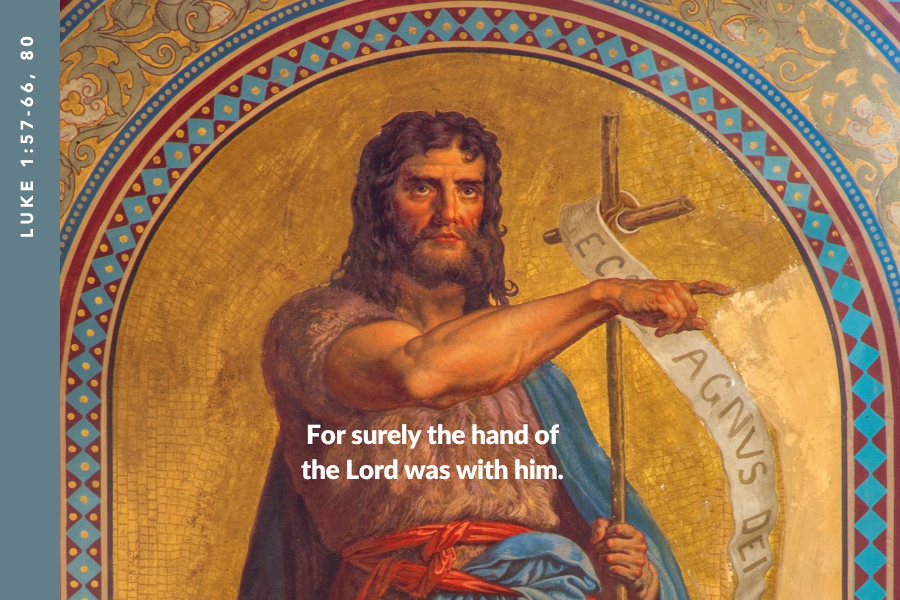
When the time arrived for Elizabeth to have her child she gave birth to a son. Her neighbors and relatives heard that the Lord had shown his great mercy toward her, and they rejoiced with her. When they came on the eighth day to circumcise the child, they were going to call him Zechariah after his father, but his mother said in reply, “No. He will be called John.” But they answered her, “There is no one among your relatives who has this name.” So they made signs, asking his father what he wished him to be called. He asked for a tablet and wrote, “John is his name,” and all were amazed. Immediately his mouth was opened, his tongue freed, and he spoke blessing God. Then fear came upon all their neighbors, and all these matters were discussed throughout the hill country of Judea. All who heard these things took them to heart, saying, “What, then, will this child be?” For surely the hand of the Lord was with him. The child grew and became strong in spirit, and he was in the desert until the day of his manifestation to Israel.

Opening Prayer: I come to you today wanting to hear your voice, but knowing that at times other voices seem to drown you out. I come to you wanting to follow where you lead me, but knowing that I am easily tempted to go down other paths. I come to you seeking true wisdom and courage, knowing full well that I often do foolish things and turn away from golden spiritual opportunities. I am a bundle of contradictions. I place myself in your presence and humbly ask you, Lord, to teach me and heal me. You promised that everyone who searches will find; I am searching, Lord, please help me to find in you all that I am looking for.

Encountering Christ:

  1. The Precursor: John the Baptist was the precursor to Jesus, the one sent to prepare the way for Jesus. He bridges the Old Testament and the New Testament. He is in a sense the fulfillment of the long tradition of patriarchs and prophets, and in another sense the first evangelist. His conception was announced miraculously to Zechariah in the Temple, and signs and wonders accompanied his birth in today’s Gospel. Zechariah was struck dumb when he doubted the angel’s message nine months earlier, but now he shows his repentance and renewed faith by freely choosing the prophesied name for his son—John—contrary to all custom and propriety. Why so much attention on the precursor, the one who would prepare the way for Jesus? It’s because God really wants us to recognize and accept Jesus Christ in our lives. At the time of the incarnation, he sent John the Baptist to open the hearts and minds of the Jewish people so that they would have a better chance of accepting Jesus. God still does this in our lives. He prepares us to receive the graces he wants us to experience. He is still the Lord of history, and that means he is the Lord of our own personal histories. Everything he does or permits in our lives has one goal: to bring us closer to Christ, and thus closer to the fullness of life that we yearn for. Who or what are the John the Baptists in my life? What are they saying to me? How am I responding?


  2. The Fruits of Courage: Elizabeth and Zechariah had to go against custom, risking the misunderstanding of their relatives and neighbors, in order to be faithful to what God was asking of them. The angel had told Zechariah that the promised child should be named John— which means “God is gracious.” But Jewish custom and tradition required parents to name their children according to names already present in the family tree (naming them after the father or mother, the grandfather or grandmother, or some other worthy relative). At the time of Christ, Jewish social customs and traditions were especially important, because their country was being occupied by a foreign invader, the Romans. Preserving their cultural identity depended upon preserving their customs. Contradicting this custom, therefore, meant taking a major social risk for Zechariah and Elizabeth; it meant exposing themselves to possible isolation, stigma, and rejection. But in this case they knew for certain what God was asking them. Together, they acted courageously and obeyed the Lord’s will. And the result was magnificent: healing for Zechariah and spiritual enlightenment for the people of Israel. We are often faced with the same predicament. God often invites us, through his commandments, through Church teaching, or simply through insistent inspirations given to us in the quiet of our hearts and prudently confirmed by good advice, to go against other people’s expectations. When we are faced with those challenges, we can ask St. Elizabeth and St. Zechariah to pray for us to find the courage they found, so as to enjoy in our lives the magnificent fruits of courageous obedience they experienced in theirs.


  3. John the Baptist and Me: The history of Christian spirituality sees in St. John the Baptist, whose birthday is commemorated in today’s liturgy, a model for each one of us. He announced Christ’s coming, pointed out Christ to those who didn’t know or recognize him, and explained the meaning of Christ’s identity and mission to those who didn’t understand. In art, he is most often depicted pointing away from himself toward Jesus. This is, in a sense, every Christian’s mission. Each one of us was, like John the Baptist, created directly by God and given a unique personality and genius. Then, when we were baptized, we were made partners with Christ in making his Kingdom present in this world, in spreading the Gospel to our little corner of the globe. We do this with our words, but also with the example of our lives and the deeds and works we perform. All that we are and all that we do can be, in a sense, a pointing toward Christ, a unique revelation of God’s goodness and love, an invitation to follow Jesus’ path to a more abundant life (cf. Jn 10:10). And the amazing thing is, the more we live our lives aware of and faithful to this calling, the more we ourselves will experience that very abundance of life.

Conversing with Christ: Thank you, Lord, for gently but surely guiding the history of humanity according to your plan of salvation. Thank you for sending John the Baptist and involving him in the work of redemption. Thank you for choosing me to carry the torch of the Christian faith and pass it on to others. You know my name—in fact, you gave me my deepest identity, just as you did with John the Baptist. Please help me to live each day keenly aware of who I am in your eyes, and eager to carry out my unique life-mission through you, with you, and in you.

Resolution: Lord, today by your grace I will reach out to someone who needs encouragement and somehow remind them that they are not alone and that you have a wonderful dream for their lives.

For Further Reflection: Uncle Eddy: The Birth of John the Baptist

Fr John Bartunek, LC, is an author, speaker, and Creative Director at RCSpirituality, an online spirituality center providing a variety of resources for spiritual growth.

June 25, 2026 – Built to Last

26-06-25-DM

Thursday of the Twelfth Week in Ordinary Time

Matthew 7:21-29

Jesus said to his disciples: “Not everyone who says to me, ‘Lord, Lord,’ will enter the Kingdom of heaven, but only the one who does the will of my Father in heaven. Many will say to me on that day, ‘Lord, Lord, did we not prophesy in your name? Did we not drive out demons in your name? Did we not do mighty deeds in your name?’ Then I will declare to them solemnly, ‘I never knew you. Depart from me, you evildoers.’ Everyone who listens to these words of mine and acts on them will be like a wise man who built his house on rock. The rain fell, the floods came, and the winds blew and buffeted the house. But it did not collapse; it had been set solidly on rock. And everyone who listens to these words of mine but does not act on them will be like a fool who built his house on sand. The rain fell, the floods came, and the winds blew and buffeted the house. And it collapsed and was completely ruined.” When Jesus finished these words, the crowds were astonished at his teaching, for he taught them as one having authority, and not as their scribes.

Opening Prayer: I lift up the eyes of my heart to seek your face, Lord. I open my mouth to speak out your praise. I believe in your goodness and your interest in my life, and so I come to you today full of hope. You will enlighten me. You will guide and strengthen me. You will never abandon me. I want my life to give you glory, to shine with your wisdom and love. As I turn to you, Lord, I humbly ask you to turn once again to me and fill me and heal me with your grace.

Encountering Christ:

  1. A Shocking Surprise: Jesus explains that on Judgment Day, when everyone’s eternal destiny is revealed, there may be some surprises. Some people who invoked him as Lord and even performed wondrous deeds in his name will hear him say: “I never knew you. Depart from me, you evildoers.” The key phrase is the first one: “I never knew you.” The very essence of salvation is a relationship with God. Jesus came to earth in order to reestablish the possibility of our living in friendship with God through him. God is interested in us as human beings. God wants us to live with him now and for all eternity in a dynamic communion of mutual knowledge and love. That’s what really matters. It matters even more than prophesying and driving out demons and performing miracles. Jesus seems to be telling us through this passage that we can so easily lose sight of what is essential and become thoroughly disoriented. We can become so enamored of our great deeds and achievements that we cut ourselves off from simple friendship with Christ, which is the greatest thing of all. Jesus doesn’t want that to happen. And so he gives us this warning: “I never knew you…” Let’s not get tangled up in understanding how someone could invoke the Lord’s name without actually living a real friendship with the Lord. Rather, let us pay close attention to our own life journey, so that no matter how much we accomplish, we never lose sight of who Jesus wants us to be: his friends and companions now and for all eternity.


  2. The Right Kind of Success: Success in Christ’s eyes is very different from success in the world’s eyes. In a certain sense, success in Christ’s eyes is measured precisely by how we respond to failures in the world’s eyes. Both the house built on sand and the one built on rock are bound to suffer storms. Something terrible—some kind of failure or disaster—is going to strike both of them. In the face of that storm, the house built on sand will collapse, and the house built on rock will endure. If we are putting our faith in Jesus and making our day-to-day decisions in accordance with his wisdom and grace, we are building our lives on rock. And so, even when persecution comes, or rejection, or any kind of suffering, we will be ready for it. And because we are anchored in Christ’s truth and love, we will stand strong in the face of it. That, in Christ’s eyes, is success. Not vast amounts of wealth, not immense popularity, not power and pleasure—those things are secondary at best. They are not bad in themselves, but they will never fill our hearts with the stuff of lasting happiness. If we organize our lives seeking fulfillment in anything besides our relationship with Christ, eventually the storm will come and we will be sorely disappointed, maybe even for all eternity, if we don’t repent in time. And that is the only real failure we need be afraid of: “The rain fell, the floods came, and the winds blew and buffeted the house. And it collapsed and was completely ruined.”


  3. The Ball Is in My Court: Jesus leaves it up to us to determine our eternal destiny. He tells us clearly, unambiguously, that each one of us has a choice about how we will live our lives. We can build on sand, or we can build on rock. We can decide to follow Jesus in the decisions we make on a daily basis, or we can decide not to. We should pause for a moment just to consider how awesome a gift our freedom really is. Even God himself will not force us to live life the way we are meant to live it. Instead, he gives us the capacity to choose the right path, and he does many things to try and convince us to make that choice, but he leaves us truly free to choose for ourselves. And we can’t just go through the motions. That’s what those who called Jesus “Lord, Lord” seemed to do. On the surface, they did everything to appear as if they were followers of Jesus. But they didn’t actually “do the will of [his] Father in heaven.” Wishful thinking doesn’t actually transform our lives. Making a good, though superficial, impression on others doesn’t actually transform our lives. Choosing to trust Jesus and so battling each day to think, speak, and act as he would have us is what gives God’s grace room to continue transforming our lives. Jesus wasn’t just pretending when he instructed us to pray by saying, “Thy kingdom come, thy will be done on earth as it is in heaven.” As one Baptist minister (G. W. Truett) once famously said: “Knowing God’s will is the greatest knowledge; finding God’s will is the greatest discovery; doing God’s will is the greatest achievement.”

Conversing with Christ: I want to build my life on rock, Lord. I want to know your will and embrace your will every single moment of my life. I want to be content with only your will—what you give me each moment and what you ask of me each moment. Your will is the place I encounter you, the place where your love reaches out to me, the place where I show you that I love you by trusting in you. Teach me, Lord, to follow where you lead. Teach me to recognize your voice. May you alone, O Lord, be the whole quest of my heart (cf. Ps 119:2).

Resolution: Lord, today by your grace I will take some time at the end of the day to speak with you about how you see the decisions and choices I made. I will listen to your voice in my heart to learn how I can be sure to build my life on the solid rock of God’s will each day.

For Further Reflection: 40 Days to Peace and Union with God – Aiming at God’s Will

Fr John Bartunek, LC, is an author, speaker, and Creative Director at RCSpirituality, an online spirituality center providing a variety of resources for spiritual growth.

June 26, 2026 – More Than a Crowd

26-06-26-DM

Friday of the Twelfth Week in Ordinary Time

Matthew 8:1-4

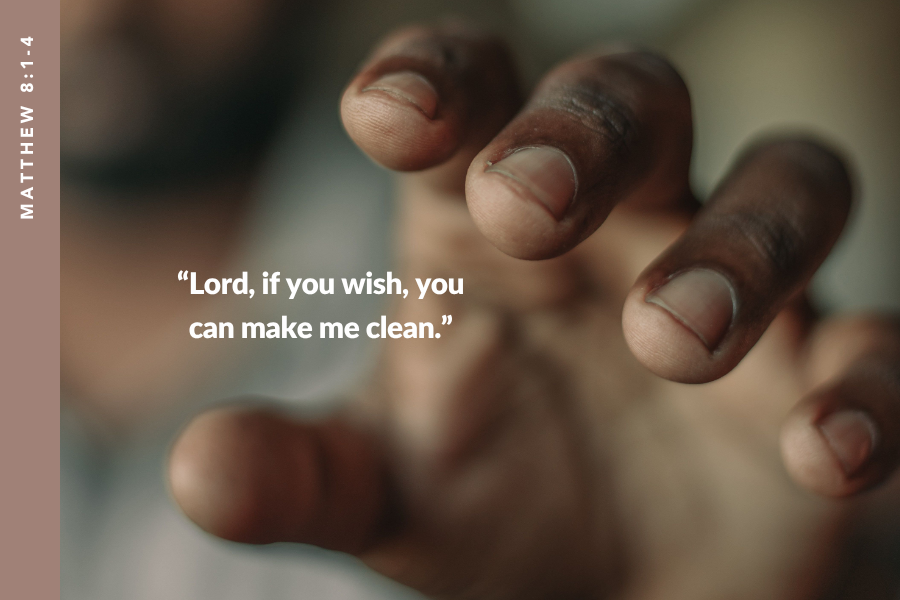
When Jesus came down from the mountain, great crowds followed him. And then a leper approached, did him homage, and said, “Lord, if you wish, you can make me clean.” He stretched out his hand, touched him, and said, “I will do it. Be made clean.” His leprosy was cleansed immediately. Then Jesus said to him, “See that you tell no one, but go show yourself to the priest, and offer the gift that Moses prescribed; that will be proof for them.”

Opening Prayer: I come before you today, Lord, just as I am. To be honest, I would like to come before you with keener attention, more fervent adoration, and more ardent determination. But I bring you what I have: my weakness, my blindness, my brokenness. I bring you my heart, small and fragile and confused, but sincerely open to you. I know you are with me and eager to share your grace with me. Thank you, Lord. Speak to my poor heart, because I am listening.

Encountering Christ:

  1. My Place in the Crowd: “Great crowds” followed Jesus as he came down from the mountain. Great crowds gathered around him wherever he went, except when he went to the Cross. When he was nailed to a cross, dying a humiliating death in excruciating pain, the crowds were nowhere to be found. Even his closest friends and followers, the Apostles, abandoned him. Some went into hiding. Some watched from a distance. Only one, John the Evangelist, stayed with Jesus on Calvary. Each person in the crowd had a reason for following Jesus during his popular days. But that reason was put to the test on Good Friday. The same thing continues to happen today. Great crowds follow Jesus. The Catholic Church has more than a billion members throughout the world. And yet, how many of us stay close to Jesus through thick and thin? Fewer than we would like to admit. We know that only a tiny percentage even go to Sunday Mass. We can guess, then, that even a smaller percentage stays faithful to Christ’s friendship when life’s inevitable crosses make their appearance. Where am I in that crowd? Why am I following Jesus? Today, while watching the crowds follow Jesus as he descends from the mountain, is a good time to reflect on why I am following the Lord and what I am hoping for from him.


  2. The Leper’s Advantage: The leper showed stunning courage by approaching Jesus. At the time of Christ, leprosy (a disease which gradually rots a person’s flesh from the skin down) was considered highly contagious, as well as a punishment from God for sins. As a result, lepers had to live separated from the community in pitiful colonies on the outskirts of inhabited areas. They had to carry a little warning bell they would ring in case an unwary traveler mistakenly approached them. They were physical and spiritual outcasts, unwelcome and without hope. But this leper saw something in Jesus that sparked enough courage to overcome all social norms and psychological fears. Maybe it was his own misery that opened his heart and mind to the light of Christ. His own utter helplessness and undeniable weakness opened him to the gift of faith. He had no arrogance left, no vanity, no attachment to the pleasures of this world—he was free from all the usual distractions that make us blind to God’s goodness. He saw something in Christ’s eyes. He heard something in Christ’s voice. Something gave him hope for a miracle. Something convinced him that Jesus would not reject him or be afraid of him, like everyone else. Something convinced him that Jesus would look upon him and see his true self, the identity that God had given him at the beginning and which still dwelt deep within. And he was right. What is holding me back from seeing the truth of Christ’s love for me more clearly? Am I ashamed of my own leprosies? Can I learn from this encounter to see them as a gift, a place given by God’s providence where I can encounter the infinite mercy and power of my Creator and Redeemer?


  3. Jesus Untamed: Jesus “stretched out his hand” to the leper and “touched him.” This is why Jesus decided to save us by becoming one of us. He wanted to touch us. He wanted to come down into our messy lives, into this fallen world, and meet us here. He wanted to prove to our stubborn and wounded hearts that God has not and will never abandon us, that we truly are worthy and lovable from God’s perspective. Jesus touched a leper. Imagine the reactions of the crowd as they fearfully backed away from the leper and then watched Jesus reach out and touch him. Imagine the surprise, the shock, the fear, the confusion. And then they saw that the touch of Christ actually healed the leper. Imagine the awe, the reverence, and again the confusion. Jesus was not just another wise teacher or eloquent rabbi. Something else entirely has come into their lives in Jesus. Does Jesus still impress me, challenge me, awe me? Have I perhaps tamed the real Jesus in my own mind and my life? What is Jesus saying to me today through this amazing, earth-shaking encounter with the leper?

Conversing with Christ: I believe in you, Lord, but you know that my faith is so weak! I so easily forget the infinity of your goodness and the immensity of your power. I so easily become distracted by the glitter of the good things of this world. I want to have the clear sight this leper had. I want to approach you in my brokenness and need with the hope and confidence this leper showed. I want to leave behind all vain fears and worldly thoughts so that I truly encounter you afresh every single day. I want to become more like you, so that your goodness and power can shine anew through me. Thy will be done, Lord, in my life; thy Kingdom come.

Resolution: Lord, today by your grace I will treat someone who is considered an outcast with Christ-like love.

For Further Reflection: Miracles of Mercy: A Do-It-Yourself Retreat on the Healing Touch of Jesus

 Fr John Bartunek, LC, is an author, speaker, and Creative Director at RCSpirituality, an online spirituality center providing a variety of resources for spiritual growth.

June 27, 2026 – What Amazes Jesus

26-06-27-DM

Saturday of the Twelfth Week in Ordinary Time

Matthew 8:5-17

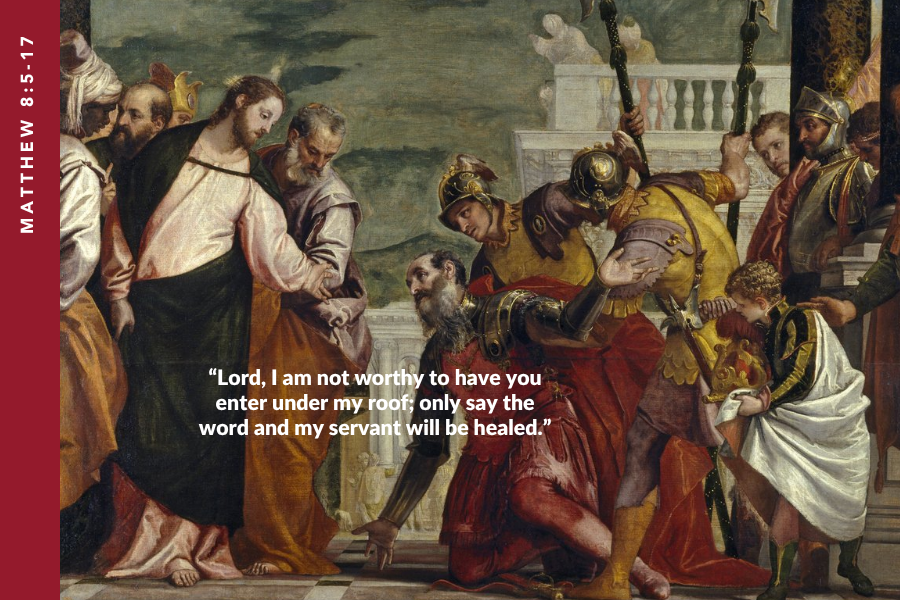
When Jesus entered Capernaum, a centurion approached him and appealed to him, saying, “Lord, my servant is lying at home paralyzed, suffering dreadfully.” He said to him, “I will come and cure him.” The centurion said in reply, “Lord, I am not worthy to have you enter under my roof; only say the word and my servant will be healed. For I too am a man subject to authority, with soldiers subject to me. And I say to one, ‘Go,’ and he goes; and to another, ‘Come here,’ and he comes; and to my slave, ‘Do this,’ and he does it.” When Jesus heard this, he was amazed and said to those following him, “Amen, I say to you, in no one in Israel have I found such faith. I say to you, many will come from the east and the west, and will recline with Abraham, Isaac, and Jacob at the banquet in the Kingdom of heaven, but the children of the Kingdom will be driven out into the outer darkness, where there will be wailing and grinding of teeth.” And Jesus said to the centurion, “You may go; as you have believed, let it be done for you.” And at that very hour his servant was healed. Jesus entered the house of Peter, and saw his mother-in-law lying in bed with a fever. He touched her hand, the fever left her, and she rose and waited on him. When it was evening, they brought him many who were possessed by demons, and he drove out the spirits by a word and cured all the sick, to fulfill what had been said by Isaiah the prophet: “He took away our infirmities and bore our diseases.”

Opening Prayer: You are thinking of me right now, Lord. I turn to you because I want to think of you right now. I want to hear what you have to say to me today. I want to tell you what is on my heart today. My faith is weak, Lord, and so often my prayer is broken up by distractions. Help me, today, to pray well. Help me to hear your voice in my heart and to believe firmly enough to speak honestly to your heart.

Encountering Christ:

  1. Am I Reading the Signs?: The series of miracles Jesus performs in this section of St. Matthew’s Gospel are signs of many things—God’s goodness, power, and care, for instance. But they also validate everything Jesus spoke in his Sermon on the Mount during the previous chapters of St. Matthew’s Gospel. By revealing his divine power and goodness through such dramatic, miraculous healings and exorcisms, Jesus is making himself a credible witness to his own teaching. He is backing up his words with his deeds. After witnessing these miracles, why would anyone doubt the truth of Christ’s teaching? After witnessing these amazing manifestations of God’s healing and faithful love, why would anyone refuse the invitation to follow the Christian path of living? We may not have witnessed these kinds of miracles firsthand ourselves—though miracles like this have been happening in different parts of the Church throughout her history and even today—but they were recorded in the Gospels for us. We see them, we witness them, through faith, by reading the sacred texts. Have they had the effect on our lives that Jesus wants them to have? If not, what effect have they had? How much have they convinced me that Christ is on my side and that following him closely is the only thing that really matters in life?


  2. Unleashing the Power of Grace: This centurion was not Jewish, not a member of Christ’s own people. And yet, he shows firm faith in Christ’s Messianic authority and power. So much so that his prayer to Jesus has been immortalized in the words of the Mass. Every time we go to Mass, before receiving Holy Communion, we repeat what this centurion said: “Lord, I am not worthy that you should enter under my roof, but only say the word and my soul shall be healed.” What do we mean when we say this? The centurion’s meaning was clear. He understood that whatever grace Jesus wanted to give him would be given solely out of Christ’s infinite generosity and unlimited power. The centurion knew that he didn’t really deserve Christ’s grace, but he also knew that he needed it and that Jesus was willing and able to give it. How deeply do I feel the need for God’s grace in my life? How firmly do I believe that when Jesus gives himself to me in the Eucharist he does so because he wants to bring the saving power of his grace to bear on the needs of my mind, heart, and soul? The more deeply I believe this, the more fully I realize my need for God’s saving grace to heal and nourish my life, the more that grace will be unleashed within me. Jesus pointed this out to the centurion, and he points it out to us: “… as you believed, let it be done for you.”


  3. Amazing Faith: Matthew tells us that Jesus “was amazed” by the faith and understanding of this non-Jewish centurion. Jesus, true God, is also true man. Our choices, then, really matter to him and can affect him. We have the power to give Jesus joy, to amaze him by our trust in him. And we also have the power to sadden him, to cause him pain by turning away from him. In a sense, God has limited his omnipotence in our regard. He refuses to force us into living life as we were created to live it. Instead, he allows us to choose either to walk with him or to go it alone. He wants us to choose, every day, to walk with him, to follow him and bear witness to him. He knows that is the path leading to the “more abundant life” (cf. Jn 10:10) we all yearn for. And he surrounds us with invitations and motivation to help us make the right decision in each circumstance of our lives. But he respects the space of freedom he built into our hearts. He won’t violate it. And so, that space of freedom becomes a place where we can touch the very heart of God—either with the joy-giving embrace of trust, or with the piercing thorn of rejection. Which will be my touch today?

Conversing with Christ: Why is it so hard for me to believe in you and trust you sometimes? Why do I fret and fear in the face of life’s challenges? Why do I doubt you? My faith is so weak, Lord! I want to believe in you with all my heart! I want to trust in you always and everywhere. I want to make choices in my life that allow the beauty of your grace to flood my soul and overflow into the lives of everyone around me. Teach me, Lord, to amaze you with the depth of my faith and trust.

Resolution: Lord, today by your grace I will either go to Mass or make a visit to a Eucharistic chapel, and I will pray the prayer of the centurion with all my heart, acknowledging my deep need for your saving grace, and trusting wildly in your generous desire to pour that grace upon me: “Lord, I am not worthy that you should enter under my roof, but only say the word and my soul shall be healed.”

For Further Reflection: Trouble with Trust: A Regnum Christi retreat guide

Fr John Bartunek, LC, is an author, speaker, and Creative Director at RCSpirituality, an online spirituality center providing a variety of resources for spiritual growth.

June 28, 2026 – The Right Reward

26-06-28-DM

Thirteenth Sunday in Ordinary Time

Matthew 10:37-42

Jesus said to his Apostles: “Whoever loves father or mother more than me is not worthy of me, and whoever loves son or daughter more than me is not worthy of me; and whoever does not take up his cross and follow after me is not worthy of me. Whoever finds his life will lose it, and whoever loses his life for my sake will find it. Whoever receives you receives me, and whoever receives me receives the one who sent me. Whoever receives a prophet because he is a prophet will receive a prophet’s reward, and whoever receives a righteous man because he is a righteous man will receive a righteous man’s reward. And whoever gives only a cup of cold water to one of these little ones to drink because the little one is a disciple—amen, I say to you, he will surely not lose his reward.”

Opening Prayer: Today is your day, Lord, the Lord’s Day. I want to give you the gift of my smile today. I want to spend time with you today. I want to glorify you by the way I live this day. Help me to put aside my worries and busyness. Help me to enjoy your goodness and to help others enjoy it. Enlighten me with your wisdom and strengthen me with your grace. Blessed by your name, O Lord!

Encountering Christ:

  1. Priorities: A commitment to Jesus changes everything. A commitment to Jesus rearranges priorities and relationships. When we decide to follow Jesus, and each time we renew that decision, we are laying everything on the line. Only his Kingdom will last forever. And there is no guarantee that the other people in our lives will agree with our decision to live for that Kingdom. If they don’t, we will inevitably have conflicts with them. Those can be painful trials. But in the end, Jesus is faithful and our relationship with him—our obedience to his teachings and faithfulness to his call—is what will give lasting meaning to our lives. Even if those close to us—father, mother, son, daughter—do share our faith in Jesus and approve of our commitment to make his Kingdom the true goal of our living, the world around us will surely not. This is a fallen world inundated with evil. Our own human nature is also fallen and at times experiences a twisted attraction to evil. Whenever what is fallen within us and around us clashes with the newness of life in Christ, we have a cross: “Whoever does not take up his cross and follow after me is not worthy of me.” Jesus was clear about the cost and difficulties of being his disciple. But he was also clear about where following him leads—with Christ, every crucifixion comes to and opens the door to a resurrection that will never end. When we commit to Christ, that is what we are looking forward to: the painful loss of all that is fallen and the joyful gain of all that is redeemed. That deal is well worth it.


  2. Jesus Is Closer Than We Think: Jesus is so faithful to his followers that he actually identifies himself with them. This is why he promises that the way we treat his followers—whether a prophet, a righteous man, a disciple, or even a “little one”—is the way we treat him. When we treat them lovingly and respectfully, we show our reverence for Christ himself, and so we “will surely not lose” our reward. This is a promise from the Lord himself. When was the last time I thought about this promise? How does this promise affect the way I treat Christ’s messengers? Spiritual writers tell us that one of the signs of the Holy Spirit’s gift of piety is a genuine respect and appreciation for Christ’s messengers—especially consecrated souls, priests, and others who give their lives to Christ and his Kingdom with particular intensity. God calls some people to serve him and his Church in these special ways, and our faith-filled respect for them is a manifestation of our respect and admiration for Christ himself. In today’s world, it is easy to lose sight of this. Respect and reverence are not favorite categories in the digital world. And yet, they are clearly categories Jesus values deeply. How does my heart reflect his heart in this regard? How would I like it to? How would he like it to?


  3. Are Rewards Selfish?: Jesus spoke often about rewards. In today’s Gospel passage he mentions the word three times. Is he appealing to our selfishness? After all, if we do what is right just to get a reward, isn’t that being kind of self-centered? Sometimes we can think so. But Jesus doesn’t seem to think so. If he did, he wouldn’t have talked about rewards so often. The truth is that we were created to experience the fulfillment and joy that come from living in communion with God. We are built with a strong desire for happiness, for true, lasting happiness. This desire is actually an essential part of the engine of our lives. It keeps us going. It motivates us and gives us energy. Whenever Jesus speaks about rewards he is appealing to a natural, healthy desire for fulfillment that he built into our human nature. It is not selfish to want to experience fulfillment. It is not selfish to do what is right because we know that it will lead us further along the path of a meaningful and fruitful life, and moving forward on that path will feel good. That is not selfishness; rather, it is hope. We are called by God to hope for all good things in him. Hope for fulfillment and joy in Christ is part of our Christian DNA—just as much a part of it as the cross. Jesus wants us to cultivate it and nourish it. He delights when we enjoy the good gifts of God and make choices that create more space for us and others to continue enjoying those gifts. Let us hope in Christ. Let us relish the thought of the rewards he has in store for those who trust and obey him.

Conversing with Christ: Your every word, Lord, seems to challenge and inspire me. I want to follow you, and I am willing to take up my cross. I want to follow you, and so I am willing to leave behind anyone who would obstruct me from doing so, as painful as it may be. I want to follow you, and so I want to treat all your messengers generously and respectfully. I want to give you the joy of giving me the reward you have in store for me, the reward you purchased with your own blood on the Cross. May your will, O Lord, be my food and my joy!

Resolution: Lord, today by your grace I will make an act of generosity—even if it is as small as giving someone a cup of cold water—toward one of your messengers out of love for you and your Kingdom. And I will try to do it with a smile.

For Further Reflection: Retreat Guide: Why Do Sundays Matter?

Fr John Bartunek, LC, is an author, speaker, and Creative Director at RCSpirituality, an online spirituality center providing a variety of resources for spiritual growth.

Weekly Digest of the Regnum Christi Daily Meditations: June 21 – June 28, 2026 Read More »

Regnum Christi Spirituality Center Uncle Eddy

St Silverius

Dear Cindy, Have you heard the old Latin phrase, “Ubi Petrus, ibi Ecclesia”?  You should have, but by your latest note, I would guess that you haven’t.  It is no light thing to accuse the Pope of leading the Church away from the true faith; if you set yourself (instead of the Pope and the bishops in communion with him) up as the guardian of Catholic orthodoxy, you are being quite presumptuous, since our Lord himself gave St Peter and the Apostles that charge, and it has been passed on through their successors ever since: “… you are Peter, and on this rock, I will build my Church, and the gates of the netherworld will not prevail against it.  I will give you the keys to the kingdom of heaven. Whatever you bind on earth shall be bound in heaven, and whatever you loose on earth shall be loosed in heaven.” (Matthew 16:18-19) And so, through the ages, “Ubi Petrus (where there is Peter), ibi Ecclesia (there is the Church).” Of course, the Pope is not God, and so he will have his failings, but he is God’s chosen instrument to captain the Ark of the New Covenant safely through the perils of history and onto the shores of heaven. Therefore, you are walking on very thin ice when you start to discuss the Pope’s teaching and pastoring the same way you discuss a politician’s.  The devil loves to get us started down that road because it so often leads to our trusting in ourselves more than in God. You may want to reflect on the case of today’s saint.  Poor Silverius didn’t want to be Pope (he was a puny Roman subdeacon with good connections), but a king in Western Europe thrust him into the Papacy when Pope St Hormiasdas died unexpectedly on a trip to Constantinople.  The Emperor (and most especially his wife, Empress Theodora) were eager to nominate their own monophysite candidate (monophysitism was one of those early heresies that caused such havoc in the first centuries of the Church; it claimed that Christ did not really have a fully human nature, only a divine nature) and King Theodehad acted quickly in order to avoid this.  Theodora responded by sending a letter to the new Pope, asking him to recognize a couple of monophysites as patriarchs (super-bishops) in Constantinople and Antioch (eastern Mediterranean area). Of course, no Pope ever propagated a heresy (Christ has guaranteed that they won’t – not because they are really smart, but because the Holy Spirit is guiding the Church), so Silverius kindly declined, knowing, of course, that the ruthless and ambitious empress would take revenge.  Which she did. Her agents kidnapped and exiled him, installing their own nominee to the Papacy in his stead. Some of the Emperor’s men (Theodora had done all this behind her husband’s back) tried to reinstate him but to no avail.  Silverius ended up dying either of hunger, mistreatment, or outright murder on the Island of Palmarola near Naples. The thing to note, however, is that Theodora’s monophysite Pope, Vigilius, changed his alignment after occupying the See of Peter (i.e. the papacy); he no longer supported her monophysical machinations and became a staunch defender of orthodoxy. It will behoove both of us to ask St Silverius to pray that God grants us a deeper faith, so that we see in every Pope not only a man (and some of them are truly exemplary men) but Christ’s chosen Vicar on earth; then we will be less likely to separate ourselves from the only guaranteed channel of grace we have, the Church.  Ubi Petrus, ibi Ecclesia. Love, Uncle Eddy

St Silverius Read More »

26-06-20-DM

June 20, 2026 – The Grace of Abandonment

Saturday of the Eleventh Week in Ordinary Time


Matthew 6:24-34

Jesus said to his disciples: “No one can serve two masters. He will either hate one and love the other, or be devoted to one and despise the other. You cannot serve God and mammon. Therefore I tell you, do not worry about your life, what you will eat or drink, or about your body, what you will wear. Is not life more than food and the body more than clothing? Look at the birds in the sky; they do not sow or reap, they gather nothing into barns, yet your heavenly Father feeds them. Are not you more important than they? Can any of you by worrying add a single moment to your life-span? Why are you anxious about clothes? Learn from the way the wild flowers grow. They do not work or spin. But I tell you that not even Solomon in all his splendor was clothed like one of them. If God so clothes the grass of the field, which grows today and is thrown into the oven tomorrow, will he not much more provide for you, O you of little faith? So do not worry and say, ‘What are we to eat?’ or ‘What are we to drink?’ or ‘What are we to wear?’ All these things the pagans seek. Your heavenly Father knows that you need them all. But seek first the Kingdom of God and his righteousness, and all these things will be given you besides. Do not worry about tomorrow; tomorrow will take care of itself. Sufficient for a day is its own evil.”

Opening Prayer: Lord, your teaching is clear in this passage, yet it can be very hard not to worry. Please help me to receive the peace you intend to give me as I contemplate your promises in Scripture today.

 Encountering Christ:

  1.  No Worries: “If I did not simply live from one moment to another, it would be impossible for me to be patient,” St. Thérèse of Lisieux said, “but I only look at the present, I forget the past, and I take good care not to second-guess the future.” Even in a quiet convent, this saint struggled not to worry about what was going to happen, so it’s understandable that you and I would battle the temptation to be anxious even more than she did. But maybe humans haven’t changed that much. People in Jesus’ time also worried about having enough food, clothing, or money to provide for the future. To those around him two thousand years ago and to us now, Jesus says, “Do not worry and say, ‘What are we to eat?’ or ‘What are we to drink?’ or ‘What are we to wear?’ […] Do not worry about tomorrow; tomorrow will take care of itself.” God wants us to be prudent, to plan, and to pay our bills. But Jesus never guaranteed that we would be well-fed, well-dressed, or well-provided for. In fact, he promised blessings to “those who hunger and thirst for righteousness.” His disciples preached wearing just one ragged tunic and were told by Jesus not to “bring a second tunic.” He said, “Blessed are the poor.” Many saints grew in holiness when they suffered hunger, disgrace, or poverty. Although he didn’t promise us all the material goods we could ask for, Jesus did promise that we would be fed with the Bread of Heaven. He promised that our robes would one day be washed white in his blood. He promised that we would never be tested beyond our strength, that we would be provided with enough grace to overcome whatever temptation came. What more do we need?


  2. Who Is Our Master?: Today’s Gospel challenges us to ask ourselves, “Who is our master: God or mammon?” If we worry too much about money, we will miss out on God’s action in our lives. If we concern ourselves with God, we may lack money, but we will never lack the graces we need. Wealth is not a measure of our spiritual standing. There are poor people who lived for money or popularity. And there are wealthy people for whom God was their one love, their joy, and their trust. Detachment from mammon is a matter of the heart.


  3. Putting God First: If you’re praying this meditation, it’s easy to assume that God comes first in your life, not a mammon of material worries. However, putting God first is not a “one and done” proposition, even for the holiest among us. Putting God first in our lives is the highest form of spiritual combat. But what do we do if we find we just can’t abandon ourselves to God? Jacques Phillippe, quoting Marthe Robbins, says, “Abandon yourself anyway!” He adds, “Abandonment is not natural. It’s a grace to be asked of God” (Searching for and Maintaining Peace, p. 40).

Conversing with Christ: Lord, it is a giant struggle within me to try to detach from material goods and put you first in all things. I can do this only with your grace. Please protect me from self-sufficiency and help me to rely only on you to provide what really matters in life.

Resolution: Lord, today by your grace I will trust in you with all my heart when anxiety threatens to disturb my peace.

For Further Reflection: Searching for and Maintaining Peace, by Jacques Phillippe.

Fr Simon Cleary, LC, is the chaplain at Mano Amiga Academy in the Philippines. The school provides underprivileged children programs that promote values formation, skills and health development, and other services tailored to the needs of the community. Visit www.manoamigaph.org to learn more.

June 20, 2026 – The Grace of Abandonment Read More »

Perpetual_vows_26

16 Legionary Brothers to make Perpetual Profession of Vows

On Saturday, June 20, at 12:00 p.m. Rome time (6:00am Eastern Time), 16 Legionaries of Christ will profess their perpetual vows during a ceremony at the Basilica of Our Lady of Guadalupe and Saint Philip the Martyr in Rome. The event will be broadcast live on the Legionaries of Christ’s YouTube channel.

The Mass and ceremony will be presided over by Father Carlos Gutiérrez, LC, the Congregation’s Director General.

The group includes brothers from the United States (5), South Korea (1), Venezuela (1), Chile (1), Vietnam (1), Mexico (6), and Germany (1). 

Br. Luke Michael Brezinsky, LC (USA)
Br. Felipe Chavez, LC (USA)
Br. Gianni Salvatore Colatruglio, LC (Venezuela)
Br. Daniel Alberto de Tezanos Pinto Concha, LC (Chile)
Br. John Robert Frain, LC (USA)
Br. Binh Thanh Hoang, LC (Vietnam)
Br. Luis Alejandro Huesca Cantú, LC (México)
Br. Anselm Soojeong Kim, LC (Corea del Sur)
Br. Aarón Fernán López Medina, LC (México)
Br. Edgar Ramón Maldonado de la Torre, LC (México)
Br. Gregory Thomas Metz, LC (USA)
Br. Alexis Ortiz Jiménez, LC (México)
Br. Nils Benedikt Schäfer, LC (Germany)
Br. José Vicente Toledo Flores, LC (México)
Br. Iker Trillas Díaz, LC (México)
Br. Hunter Campbell Winans, LC (USA)

Perpetual vows (also known as perpetual profession) constitute the definitive, lifelong commitment made by a religious within his congregation or institute in the Catholic Church. According to the Constitutions of the Legionaries of Christ, those approaching perpetual profession must live out a personal love for Christ, demonstrate fidelity to the Church and her doctrine, and fully embrace the spirit of the Congregation in both their personal lives and their apostolic activity.

Please join us in prayer for these brothers as they give their “yes” to the Lord.

16 Legionary Brothers to make Perpetual Profession of Vows Read More »

26-06-21-PCOTW

A Week of Prayer for All of Our Priests and Consecrated Members: June 21st – 27th

Regnum Christi invites our entire spiritual family and all our friends to join us in praying especially for our brothers and sisters living the consecrated vocations of Legionary priests, Consecrated Women, and Lay Consecrated Men in our territory.

Each week throughout the year, we will pray together for a different group of Legionaries and Consecrated, spanning all the communities across the territory, as our “Priests and Consecrated of the Week.”

Our Consecrated members are men and women who have said yes to Christ’s call to follow him, leaving everything behind to dedicate their entire lives to him and to join him in the mission of building his Kingdom. We come together to support them with our prayer, asking our Lord to strengthen them, hold them close to his Sacred Heart, and give them his deep joy as they live their mission each day.


This Week We Pray for

Reilly_headshotFr. Steven Reilly, LC was ordained in 1994. He has served in the Legionaries of Christ General Directorate and held positions such as vocation director and apostolate coordinator in the Legionaries of Christ North American Territorial Directorate. From 1996 to 2003, he was the superior of the Legionaries of Christ in Dallas, Texas, and director of formation at The Highlands School. In 2003, he was assigned to the Legionaries of Christ’s center in Potomac, Maryland, and served as vice-rector. Among the apostolic positions he held were chaplain of Woodmont Academy, the executive director of the Center for Family Development in Crownsville, Maryland, and director of Regnum Christi in Baltimore. From 2008 to 2019, Fr. Steven was the Legionaries of Christ safe environment coordinator, and after receiving a master’s degree in social work from Fordham University in 2013, he was named superior of the Legionaries of Christ community in New York, where he also served as the spiritual advisor to the Clergy Consultation and Treatment Service at St. Vincent’s Hospital in Harrison. On March 30, 2020, he was named to the North American Territorial Council for the Legionaries of Christ and re-appointed for a second term of three years on March 21, 2023. His second term began on July 1, 2023. He currently lives in Raleigh, North Carolina, where he serves as the community superior.
Martinez_headshotFr. Jorge Martínez, LC was born in Veracruz, Mexico, and was ordained in 2014. While in formation, he worked with young adults and the youth section in Monterrey and Leon, Mexico; then he became administrator of the seminary (CES) in Rome. In the summer of 2015, he was assigned to Los Angeles to work at Guadalupe Radio, and arrived in Houston in 2017. Since then, he has supported the adult sections, run a formation program for married couples, and served as the pastor of St. Patrick’s Parish. He has also worked apostolically in Germany, New York, Spain and the Netherlands.

Pantoja_headshotBr. Juan Manuel Pantoja is from Michoacán, Mexico, and when he was a child, he used to play “Mass” with his sister, using cookies and grape juice for the hosts and wine. At 12 years old, he became involved in the charismatic renewal, where he encountered Jesus in a more personal and intimate way. While Br. Juan was studying business administration and working in wealth banking, he felt God calling him, and at a leadership retreat, he heard God speak deeply to his heart. He joined the novitiate in Monterrey, Mexico, and today he is at the LC novitiate in Cheshire, Connecticut, where he is a first-year humanist.

Fernandez_headshotLuly Fernández is from Monterrey, Mexico and was consecrated in 1993. Since then, she has served in a large variety of apostolates in several different fields. Luly has obtained a master’s degree in guidance and counseling and a doctorate in education. She served many years as director of Mater Ecclesiae College, and then in 2011, Luly served as Territorial Director for New York for one year, before heading to Rome to serve as General Counselor until 2014. She then became vice director of Le Chatelard Academy, an international boarding school in Switzerland, until 2021. Currently, Luly is serving in Washington, DC, with women and married couples. Luly also serves as a board member at Divine Mercy University.

Ortega_headshotMariana Ortega is originally from Guadalajara, Mexico. She was consecrated in 1999 in Greenville, Rhode Island, following her missionary years at Overbrook Academy. In 2003, she began her ministry with young people, serving for six years at Woodlands Academy in Ireland, followed by ten years in RC Schools in Mexico City and three years at Le Châtelard Academy in Switzerland. Since 2022, Mariana has been serving in Detroit, where she accompanies and works closely with Hispanic women, supporting them in their personal and spiritual growth.

Vanderbeek_headshotFr. Michael Vanderbeek, LC was ordained in 2010. Throughout his ministry, Fr. Michael has had a heart for working with young people. His first six years as a priest were spent as the chaplain of Northwoods Catholic School in Spring, Texas, after which he dedicated six years to the national ECYD youth team, and then served as chaplain at Everest Academy in Lemont, Illinois.

Prayer for Priests and Consecrated Members in Regnum Christi

God our Father,
We thank you for our spiritual family of Regnum Christi, and for those within it that you have called to total consecration as Legionaries of Christ, Consecrated Women, and Lay Consecrated Men.

We ask you to renew their encounter with your Son Jesus Christ,
who goes out to meet them and reveals the love of his heart to them.
Deepen their personal love for Christ
and their trust in his love for them.
Gather them close to him,
form them,
and send them out accompanied by your Son,
in the mission of forming apostles and Christian leaders who make your Kingdom present in hearts, in families, and in society.

Send your Holy Spirit to sanctify and strengthen them,
And to help them respond generously and courageously to their mission each day.

Through Christ our Lord. Amen.

A Week of Prayer for All of Our Priests and Consecrated Members: June 21st – 27th Read More »

Regnum Christi Spirituality Center Uncle Eddy

St Romuald

Dear Ronnie, I am a little concerned that your work for the forestry service may preclude your attendance at Mass this summer.  Are there any chapels up there in the mountain fir woods? Hmm. Well, I will pray to St Romuald to take good care of you.  He liked the forests and the mountains too, you know. As a matter of fact, he spent most of his long life walking from forest to forest all over the Italian peninsula, founding and reforming monasteries and inspiring manifold souls to dedicate their lives more fully to the Eternal Kingdom.  His most famous foundation was in a Tuscan valley called Camaldoli, where he established a curious hermitage-monastery combination. The community of monks lived together, but at the same time each one had his own little hermitage (a cell, a garden, a chapel), and they dwelt in silence. Sounds a bit odd to our ears, but it is a vocation that God has been giving to a steady stream of holy, joyful, and radiant monks for a thousand years. When you’re numbering trees up there in the wilderness, do you sense the presence of God more easily?  I remember that I used to. Creation, the mysterious and sublime beauty of the natural world, is God’s first revelation.  How I wish I could enjoy it again, the ocean breeze warmed by the noonday sun, the silent and self-assured immensity of the Colorado Rockies, the soft coziness of a pine forest… Well, at least I can praise God by relishing the memories, even if this prison of a cubicle debars me from direct contact.   Just remember, my adventurous and thoughtful young nephew, nature is not God: nature is God’s gift and revelation to us, who are his children.  And as beautiful as the trees and mountains get, they are all doomed to pass away, but the sincere prayers of thanksgiving and praise that you offer from your heart every time you attend Mass will echo into eternity.  Keep first things first, my dear forester, and you will never need to fear the last things. Love, Uncle Eddy

St Romuald Read More »

Scroll to Top

Events

Looking for another country?

Contact Regnum Christi near you

News & Resources

News & Resources

The Regnum Christi Mission

The Regnum Christi Identity

Alex Kucera

Atlanta

Alex Kucera has lived in Atlanta, GA, for the last 46 years. He is one of 9 children, married to his wife Karmen, and has 3 girls, one grandson, and a granddaughter on the way. Alex joined Regnum Christi in 2007. Out of the gate, he joined the Helping Hands Medical Missions apostolate and is still participating today with the Ghana Friendship Mission.

In 2009, Alex was asked to be the Atlanta RC Renewal Coordinator for the Atlanta Locality to help the RC members with the RC renewal process. Alex became a Group Leader in 2012 for four of the Atlanta Men’s Section Teams and continues today. Running in parallel, in 2013, Alex became a Team Leader and shepherded a large team of good men.

Alex was honored to be the Atlanta Mission Coordinator between 2010 to 2022 (12 years), coordinating 5-8 Holy Week Mission teams across Georgia. He also created and coordinated missions at a parish in Athens, GA, for 9 years. Alex continues to coordinate Holy Week Missions, Advent Missions, and Monthly missions at Good Shepherd Catholic Church in Cumming, GA.

From 2016 to 2022, Alex also served as the Men’s Section Assistant in Atlanta. He loved working with the Men’s Section Director, the Legionaries, Consecrated, and Women’s Section leadership teams.

Alex is exceptionally grateful to the Legionaries, Consecrated, and many RC members who he’s journeyed shoulder to shoulder, growing his relationship with Christ and others along the way. He knows that there is only one way, that’s Christ’s Way, with others!