In the Eucharist, “we become what we receive.”: Pope Leo’s Words Today
In the Eucharist, “we become what we receive.”: Pope Leo’s Words Today Read More »



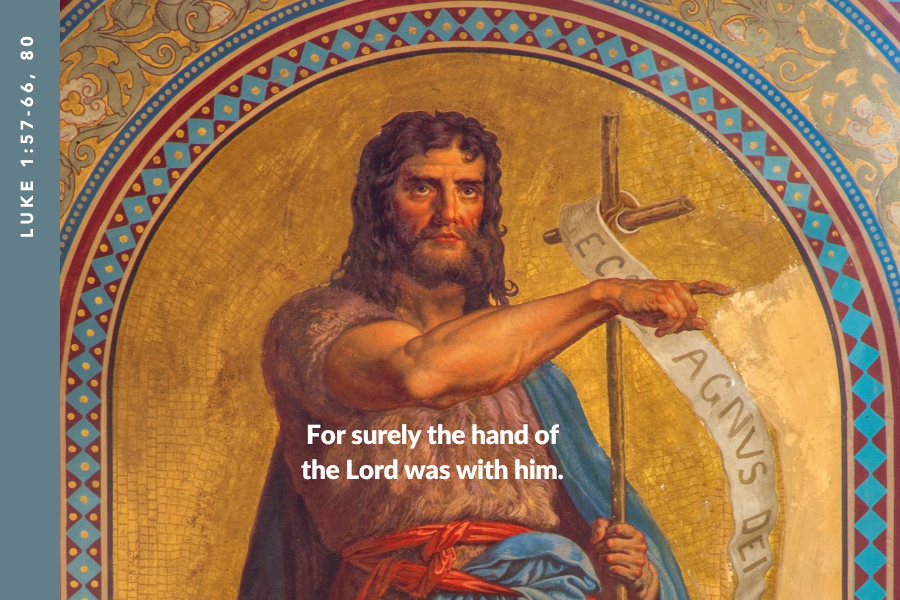
Dear Biff, How propitious that you are entering seminary on the Solemnity of the Birth of St John the Baptist! I detect the hand of Providence in the unanticipated delay. Why? Simple reason. You know how hard it is to be a faithful priest and religious in today’s world, so aggressively anti-Christian. Therefore, you will need something to keep you on track, not only during your years of formation and preparation, but also after you are ordained and serving the Church full time with all your heart, with all your mind, and with all your strength. In today’s feast, you can find that something, a motto, a theme, if you will, for your life of loving service to the glory of God and the salvation of souls. I refer to the haunting summary of the life of St John the Baptist, which he himself gives us in the Gospel of John. Maybe you remember the scene. John’s disciples (of whom there were many) come to him complaining about the growing number of followers of Jesus; it appears that they are a bit envious. John patiently explains to them that that is exactly what is supposed to happen. He was only the precursor, the messenger sent to get people ready to welcome Christ the Lord, to introduce everyone to the Messiah, so that the Messiah could then enter into their hearts and transform their lives. So he sums up his mission with the following phrase: “He [Jesus] must increase; I must decrease.” Does that not summarize the life-mission of every baptized Christian, and even more so the life of a priest? If you keep that phrase in your heart, meditate on it, mull it around over and over again, and try to live its inspired truth, I guarantee you will discover the “pearl of great price” that will fill your privileged vocation with radiant joy and fathomless meaning. You can be sure that I will be praying for you in a special way as you start up the narrow path to the priesthood, and I will ask St John the Baptist to take you under his spiritual care, since you are making that start on his day. Your devoted Uncle Eddy
The Birth of John the Baptist Read More »
Dear Audrey, How they ever derived “Audrey” from “Etheldreda” I’ll never grasp, but derive it they did. When I was younger (and still free), I had the opportunity (which I will savor forever) of visiting the English island of Ely, which this saint received as her wedding gift, and to which she retired when her first husband died after they had been married only three years. She would fain have stayed there in prayer and solitude for the rest of her life, but family troubles obliged her to marry again (for diplomatic reasons), even though she had made a private vow of virginity (she and her first husband had lived together as brother and sister, offering themselves body and soul to God). Her new husband was only a boy-king when they married, but when he had grown up to take full possession of his crown and his manhood, he demanded that she put aside her vow of virginity. They appealed to the local bishop, who upheld her cause and permitted her to separate from her husband and start a double monastery (men on one side of the property and women on the other), over which she ruled for the rest of her life, giving her monks and nuns a lasting example of spiritual rigor and intense love for God. Such a tale may have an odd ring to it for our ears (understandable, since it took place in a culture 1500 years older than our own), but wouldn’t you say there is a beautiful lesson hidden within it? What strikes me most is the respect with which St Etheldreda – as well as the others – viewed her sexuality. Even before all the modern theological speculation concerning the philosophical and anthropological significance of gender, she understood profoundly that her sexuality was a call to love, a call to total self-giving. She felt that God was asking her to give her whole self to him directly, and so she did not want to give herself to another man. I bet that if she had felt God calling her to give herself to a man in marriage, she would have been the best wife and mother one could imagine… In any case, she treated her own sexuality with reverence and with care. What a contrast to today’s sex-saturated culture, where sex is cheap, a mere pastime, an entertainment! How the devil must relish the carelessness and casualness with which we treat our own and one another’s sexuality! Intimacy is meant to be at the service of true love, not a selfish indulgence. May God grant you the grace to understood the secrets of love as deeply as Etheldreda did, and may he grant you the gift of purity, so that when the time comes for you to give yourself away (either to him directly, or to a husband whom he gives you) you will still have something to give. Love, Uncle Eddy
Dear Tom, I am sure you are making today a bit special – being sure to get to Mass, making an extra visit to the Blessed Sacrament, having an above-average quality lunch and dinner… As a legal intern for the summer and heading into your last year of pre-law studies, today’s saint (patron of lawyers) should be your bosom companion. I have sometimes heard the Church criticized for even having a patron saint of lawyers, but I always respond with the rhetorical question that if lawyers don’t need a patron saint, who does? I remember when we watched A Man for All Seasons Together a few years ago; it gives a stirring picture of this great statesman and martyr. Do you ever think about him nowadays? By the looks of things, you will be getting your pick of law schools, and you have all that it takes to go straight to the top of the field. I wonder if such a promising future has pushed into the background such important but less glamorous reflections like how to be a success in God’s eyes, or how to keep strengthening and purifying your character in the face of the many and subtle temptations of high society and the legal profession. What will happen to your prayer life and Mass attendance when they ask you to work 80-hour weeks and then wine and dine you with titillating entertainments into the wee hours of Sunday morning? St Thomas More faced those challenges and then some, because he combined a brilliant law career with the trappings of nobility and the preoccupations of politics. Kings, cardinals, dukes, and ladies vied continuously for his favors and his attention. A blind eye here, an innocuous bribe there, and he and his family could have spent their days in luxury and peace, in fame and comfort. As it was, he turned in his Chancellor’s chain of office (the King’s Chancellor was roughly equivalent to today’s prime minister), and forfeited his professional and economic security in order to keep his conscience clean and be loyal to his friendship with God. (You remember the story, don’t you? King Henry VIII wanted to divorce his wife and marry his lover, but the Pope couldn’t invalidate a valid marriage, so the King declared himself head of the church in England, thereby granting himself the authority to grant himself an “annulment.” St Thomas More and a few others would not acknowledge the King’s claim.) Because he refused to abandon his faith in the Papacy and the Church (notwithstanding offers of promotion, money, and other delicacies), he frittered away his last years in poverty, imprisonment, and torture, endangering his family as well as himself. God rewarded him with martyrdom (he was beheaded as a traitor to England). As you enjoy the fine clothes and sleek comforts of the white-collar world, are you keeping your soul in shape? As your devoted Uncle, I hope and pray that you are, and I will entrust your career to the intercession of St Thomas More. God bless, Uncle Eddy

Inspired by the charism of Regnum Christi to equip and send out apostles, the National Vocation Summit gathers Christian leaders with a heart for vocations and a desire to help the next generation become vocation apostles. Rooted in the holy Eucharist and working effectively in teams, the Summit communicates to the younger members of the Church this message: God has a plan for you, and we want to help you discover it!
The National Vocation Summit seeks to build a true vocation culture in any Christ-centered community in the Church, building leadership teams of committed vocation apostles. The summit aspires that all participants leave with a greater dependence on the Lord of the Harvest (Lk 10:2), a renewed love for the Church, zeal for their common mission, and an ever deeper hope in Christ and his grace for their lives.
From March 13 to 15, the Legionaries of Christ seminary in Cheshire, Connecticut, hosted the 5th annual National Vocation Summit. Over 50 religious, priests and consecrated were present from over 20 different communities, with a total of 140 participants. The sold-out event was marked by a deep spirit of collaboration and love for the Church, inspiring the participants to build a culture of vocation wherever God has placed them—home, school, or parish.
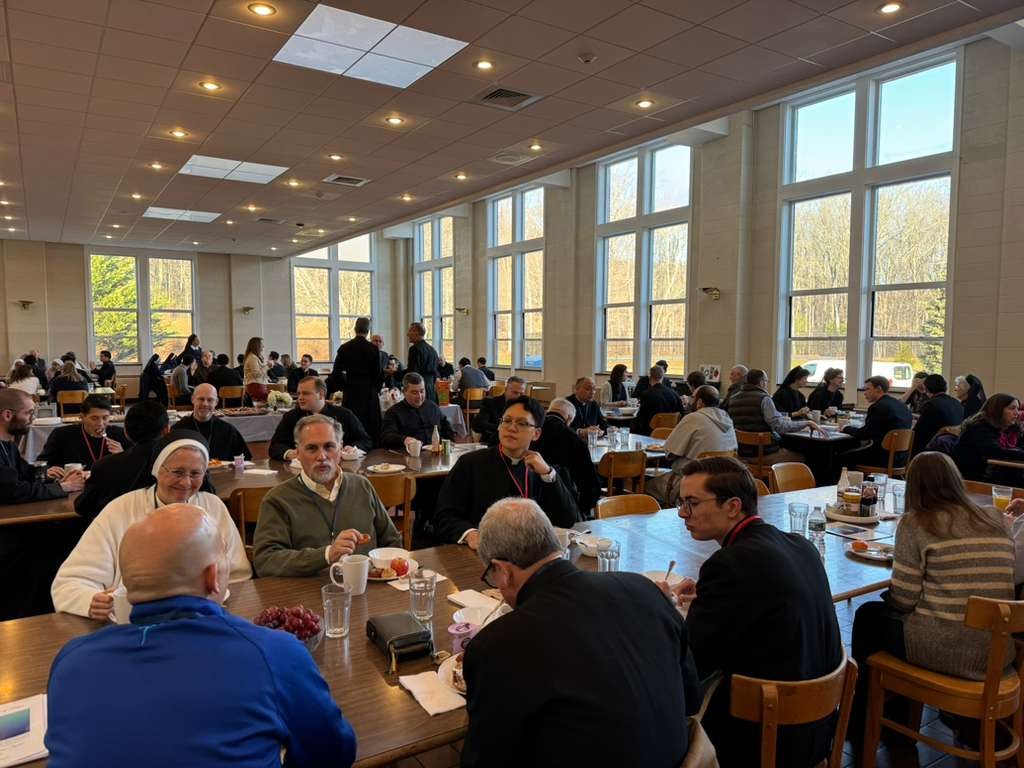
The event was sponsored by Vocation Action Network, a network of apostles who pray and take action to help build a vocation culture within the Church and society.
Apostles of Hope in an Apostolic Age
The theme of this year’s summit was “Awakening Apostles of Hope,” and Monsignor James Shea, president of the University of Mary in Bismarck, North Dakota, gave the opening keynote address, titled “Apostles of Hope in an Apostolic Age.” For Monsignor Shea, to make oneself wholeheartedly and generously available to God takes radical hope. Hope, then, is the central theme of vocational discernment.
That hope is in very short supply in this ambient culture, says Monsignor Shea, which has often been labeled “post-Christian.” However, this era offers unique signs of hope, and it is in times like these that the Church can flourish, and that the virtue of hope continues to be the foundation of vocations.
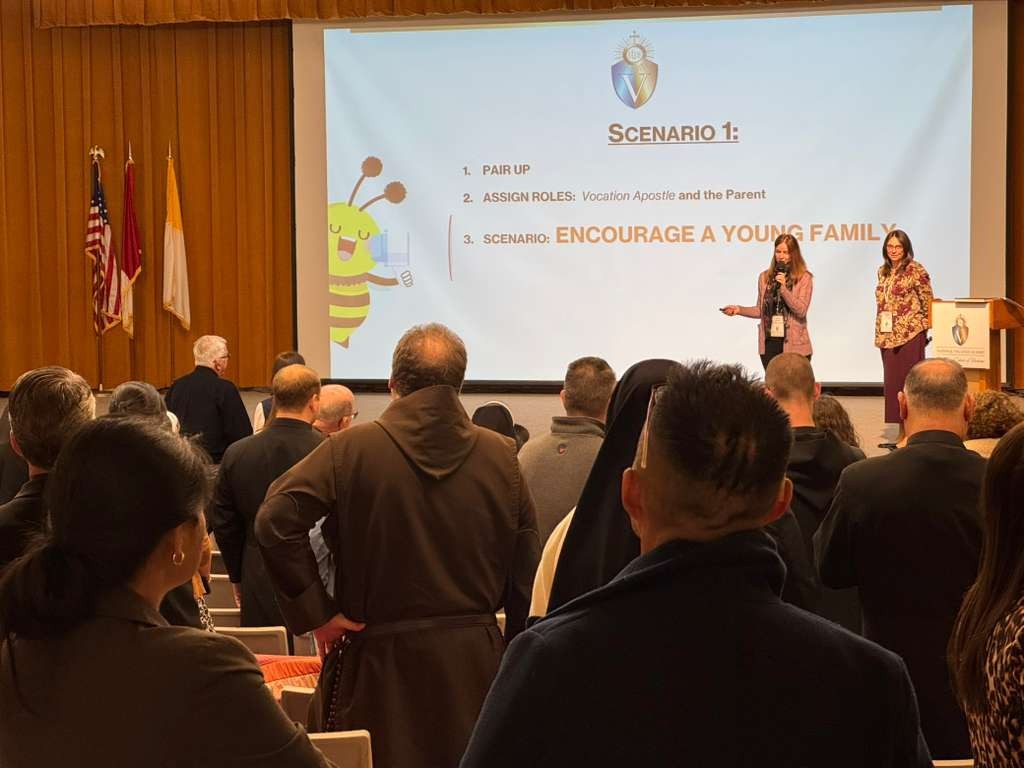
Other speakers and panelists at this year’s summit included Legionary priests Fr. Edward Hopkins and Fr. John VanDorpe; and Consecrated Women of Regnum Christi Tammy Grady, Laura Matthews, and Gaëtane Auger. Thomas Wurtz, who is finishing his 25th year in FOCUS, serves as senior director of Affinity Outreach and Digital Outreach and is the directing founder Varsity Catholic, FOCUS’ outreach to college athletes. He gave the closing keynote on finding hope in the universal call to holiness.
Building a Culture of Vocations, Together
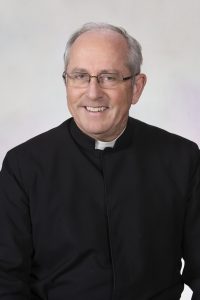
Besides learning from vocation action speakers, participants at the three-day event had the opportunity to connect to a network of vocation apostles across North America. They left inspired and equipped to build a dynamic vocation culture in their local parishes and dioceses.
Fr. Martin Connor, LC, is the national vocation director for the North American Territory, and he believes that initiatives like the National Vocation Summit are critical now more than ever.
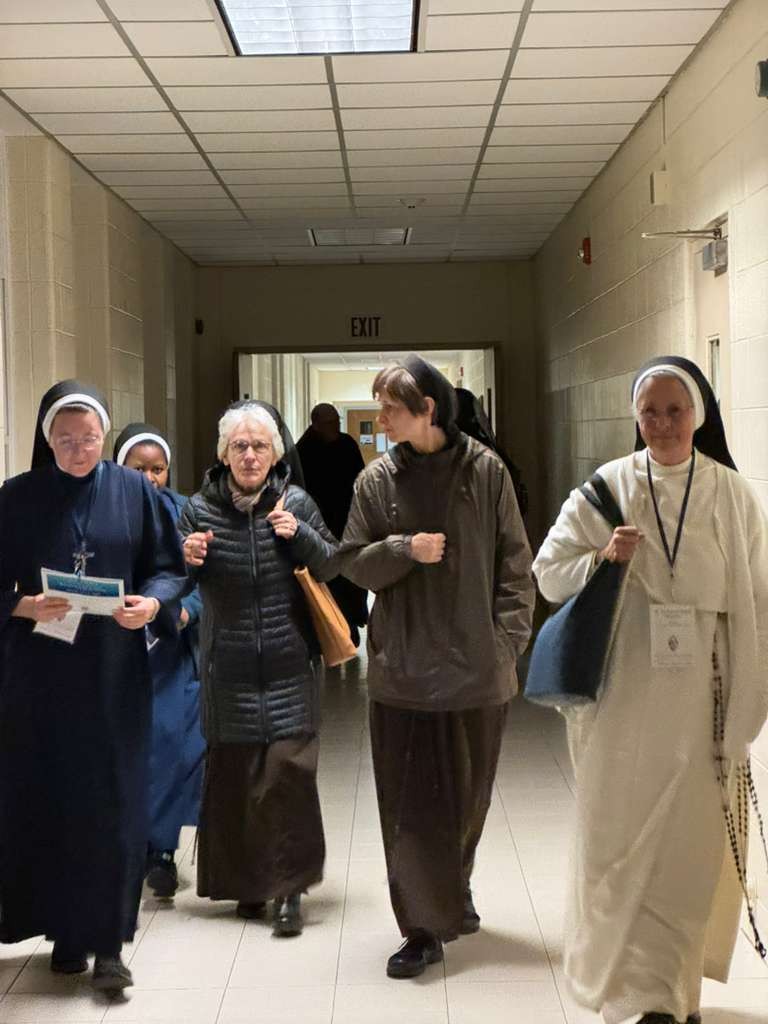
Indeed, in recent years, there has been a decline in the number of Catholic priests and seminarians, particularly in North America, leading to the amalgamation and even closing of parishes due to a lack of clergy. Fr. Joseph Brickner, LC, who serves as vocation director for the South and Southwest United States, keeps with him a unique reminder of the importance of his work to address this vocational crisis.
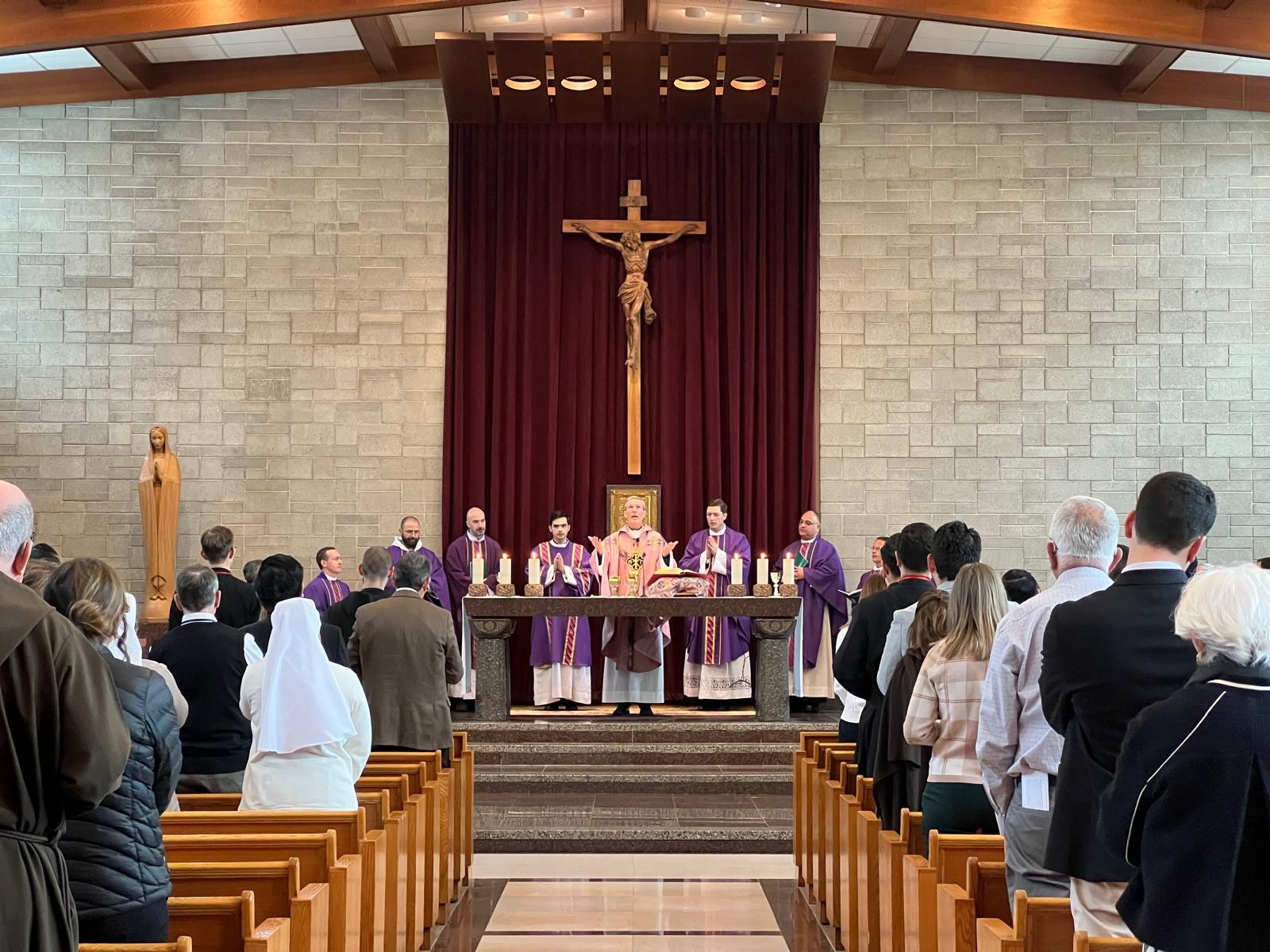
This year’s event was sold out, and over the upcoming years, the National Vocation Summit team envisions uniting, forming, and sending out hundreds of priests, consecrated, and lay vocation apostles to impact the culture in five specific areas:
The team hopes that the National Vocation Summit will grow in attendance with missionaries and youth leaders, inviting them to live their universal call to holiness.

Save the date for next year’s summit!
Next year’s summit will be hosted by Benedictine College in Atchison, Kansas, March 10–12, 2027.
To find out more, visit nationalvocationsummit.org.
Feeling a deeper call?
To learn more about discernment to the Legionary priesthood or consecrated life within Regnum Christi, visit Discernment – Legionaries of Christ or Discernment – Consecrated Women of Regnum Christi.
National Vocation Summit 2026: Awakening Apostles of Hope Read More »