

Regnum Christi Spirituality Center Ask a Priest

“Ask a Priest: How can a person grow in humility?”

Q: How does one become humble? -P.

Answered by Fr. Edward McIlmail, LC

A: Your question touches on one of the key virtues. Becoming humble — practicing humility — is an antidote to the mother of all sins, pride.

Let’s define a few terms first. A virtue is an operative habit, “a quality, difficult to remove, that disposes the subject to function with facility, promptness and delight” (from Jordan Aumann’s Spiritual Theology).

Humility, as defined by the glossary of the Catechism, is: “The virtue by which a Christian acknowledges that God is the author of all good. Humility avoids inordinate ambition or pride, and provides the foundation for turning to God in prayer. Voluntary humility can be described as ‘poverty of spirit.'” More succinctly, St. Teresa of Avila says, “Humility is truth.”

Humility could also be described as seeing ourselves as God sees us. He knows all our faults and weaknesses, yet he looks on us with love and patience. Whatever good we have comes from him. (For further reading, see The Spiritual Life by Adolph Tanquerey, especially nos. 1140-1153, and Humility of Heart, by Father Cajetan Mary da Bergamo.)

To grow in humility, you might consider the following suggestions.

First, pray for the gift of humility each day. God as the source of all good will be there to help you grow in this virtue.

Second, cultivate a spirit of gratitude to God for everything you have. Third, learn to accept your daily crosses with a spirit of patience. Those crosses include humiliations, which can help us so much to grow in humility when we accept them through, with, and in Christ. Unite your daily sufferings with the cross of Christ. We can forget that Jesus wants us to be holy, and that all those difficulties and challenges of daily life might really be God’s way of giving us the chance to grow in humility by embracing those problems with love and endurance.

Fourth, try to act as though everyone else in your life is more important than you. Each person is infinitely loved by God and is thus worthy of our love too. By putting ourselves last, by reserving our critical eye for ourselves and our own faults, we can grow in humility.

Fifth, read and meditate on the Gospels and notice how Jesus practiced humility. Born in a cave, rejected by many of his own people, and ultimately nailed to a cross, Jesus gives us the supreme example of humility. Follow his example and you can grow in this precious virtue. Count on my prayers!

“Ask a Priest: How can a person grow in humility?” Read More »
Regnum Christi Spirituality Center Ask a Priest

“Ask a Priest: Was Joseph Much Older Than Mary?”

Q: Some friends and I are having a discussion about this. It would appear that St. Joseph was much older than Mary when they married. Was he widowed with children? -J.M.

Answered by Fr. Edward McIlmail, LC

A: There is not much definitive teaching about the life of St. Joseph. The notions that he was much older than Mary and was married before seem to be rooted in the apocrypha, a body of literature that arose in the early centuries of the Church. Apocrypha, meaning hidden or concealed, dealt with esoteric things known to a chosen few.

The idea that Joseph was much older than Mary might have arisen in later centuries as a way to defend the belief in the perpetual virginity of Our Lady. The idea that Joseph had children from a previous marriage might have arisen to explain scriptural passages that spoke of Jesus’ “brothers” (see, for example, Mark 6:3).

There are arguments in favor of Joseph being young and virginal. For instance, he presumably had to be strong enough to support the Holy Family, and he was certainly perceived as being the natural father of Jesus. “Is he not the carpenter’s son?” (Matthew 13:55). That Joseph would have been virginal seems fitting, since Jesus from the cross entrusted his Mother to the disciple whom he loved. “Behold, your mother” (John 19:27). Tradition says that that disciple was the virginal John. (For further reading see Pope John Paul II’s letter on the person and mission of St. Joseph, Redemptoris Custos and an article).

The Gospels don’t say much about the life of St. Joseph. That he was “a righteous man” (Matthew 1:19) and the foster father of Jesus and the husband of the Blessed Virgin, says enough. I hope this helps. God bless!

“Ask a Priest: Was Joseph Much Older Than Mary?” Read More »

Regnum Christi Spirituality Center Ask a Priest

“Ask a Priest: Is it harmful to have a voodoo doll?”

Q: My mother recently came back from New Orleans and brought me a voodoo doll for success and happiness. I decided to make a little altar for it and write down my hopes and wishes on it, which were not at all harmful or vain — things like: I want my kids to have healthy, happy lives, and I want God to be proud of me. I kind of want to believe that the “spirits” people believe in in voodoo are a representation of the Holy Spirit, and I thought of this as a fun new way of praying. Do you think there is any harm in this? Even if I still believe everything was created by God and controlled by God? — Like this voodoo doll, for example? -M.C.

Answered by Fr. Edward McIlmail, LC

A: You would do yourself a very, very big favor if you got rid of the voodoo doll and the little altar as soon as possible. Voodoo can easily be seen as something innocent and playful. It is not.

The New Orleans Historic Voodoo Museum in its website says, “The Voodoo doll is a form of gris-gris, a ritualized form of invoking the spirits, or fate, to act in a defined way towards a targeted person.”

That “invoking of spirits” is not the same as invoking the Holy Spirit, who is God.

“Invoking of spirits” implies divination. The Catechism in No. 2116 says, “All forms of divination are to be rejected: recourse to Satan or demons, conjuring up the dead or other practices falsely supposed to ‘unveil’ the future. Consulting horoscopes, astrology, palm reading, interpretation of omens and lots, the phenomena of clairvoyance, and recourse to mediums all conceal a desire for power over time, history, and, in the last analysis, other human beings, as well as a wish to conciliate hidden powers. They contradict the honor, respect, and loving fear that we owe to God alone.”

Without realizing it, a person who fools around with voodoo dolls or astrology or palm reading can move onto dangerous ground. This is not fun and games. Voodoo has roots in African cultures, and in this country it has mixed with Christian elements. This mixture is not healthy.

If you want to pray for your future children, use the rich traditions that the Church offers. Pray the Rosary. Cultivate your devotion to the Blessed Virgin Mary. Make frequent use of the sacrament of confession, and stay close to the Eucharist. And please, get rid of that doll and altar. I will pray that you do so, right away. God bless you!

“Ask a Priest: Is it harmful to have a voodoo doll?” Read More »

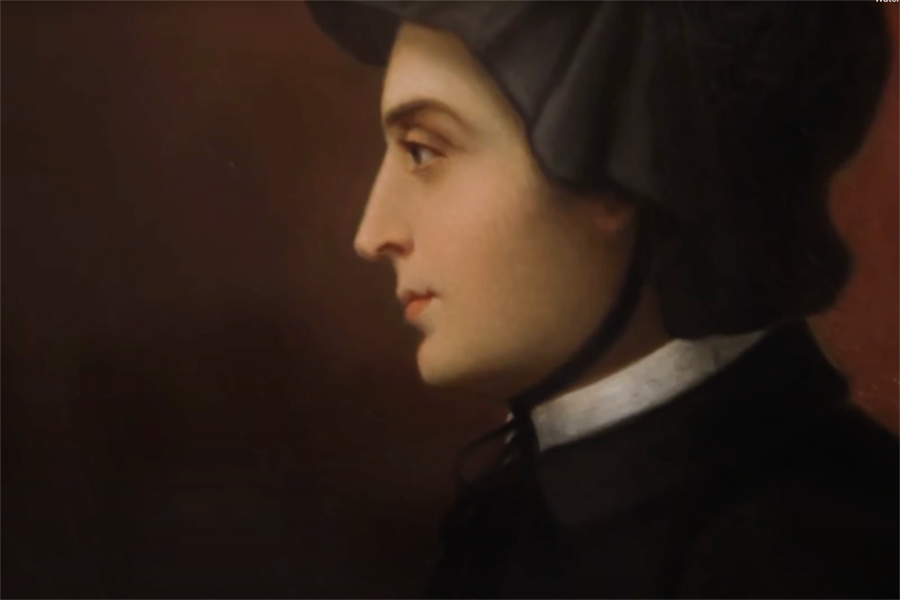
Sitting in the Side Pew | A Regnum Christi Retreat Guide on St. Elizabeth Ann Seton

Sitting in the Side Pew: A Retreat Guide on Saint Elizabeth Ann Seton

Why does the Church canonize saints? It doesn’t help them; after all, they are already in heaven. It’s meant to help us! The saints’ amazing spiritual maturity reminds us of where we are going, and the stories of their spiritual journeys remind us that God’s grace truly can get us there. The saints inspire us. They intercede for us. They accompany us. In this month’s Retreat Guide, Sitting in the Side Pew, we look at the shining example of North America’s first native-born canonized saint, Elizabeth Ann Bayley Seton.

  • In the decades following the Revolutionary War, Mother Seton grew up in New York’s high society as a member of the Episcopalian Church.
  • She was a wife, a mother, a widow, a convert, a teacher, and a foundress.
  • This Retreat Guide will draw some practical lessons from a few pivotal scenes of her life – four scenes so real and ordinary that they will resonate with every single one of us: Under the Chestnut Tree; Sitting in the Side Pew; Making Ends Meet; Under the Oak Tree.


Video

Audio

Sitting in the Side Pew: A Retreat Guide on Saint Elizabeth Ann Seton Read More »

Regnum Christi Spirituality Center Ask a Priest

“Ask a Priest: Can the Eucharist be “holier” if the priest is holier?”

Q: A while back a friend brought up a question that I have been wondering about for some time. He basically said that the Eucharist is always Christ, but that the Eucharist will be holier if the priest performing the consecration is holier. Is this true? -K.

Answered by Fr. Edward McIlmail, LC

A: The short answer to your question is no. The Eucharist cannot be “holier” if the minister is holier. The Eucharist is Christ. Christ is God and thus infinitely holy. A priest cannot make Christ holier.

What your friend might have in mind is that a Mass celebrated by a holy priest, with great reverence, might inspire the congregation to greater fervor. That, in turn, might bring more graces to those who receive Communion. But that would be because the communicants are better disposed to receiving the Eucharist. It wouldn’t be because the Eucharist was “holier” in that Mass.

All this touches on a notion known as ex opere operato. The Catechism in No. 1128 explains, “This is the meaning of the Church’s affirmation that the sacraments act ex opere operato (literally: ‘by the very fact of the action’s being performed’), i.e., by virtue of the saving work of Christ, accomplished once for all. It follows that ‘the sacrament is not wrought by the righteousness of either the celebrant or the recipient, but by the power of God.’ From the moment that a sacrament is celebrated in accordance with the intention of the Church, the power of Christ and his Spirit acts in and through it, independently of the personal holiness of the minister. Nevertheless, the fruits of the sacraments also depend on the disposition of the one who receives them.”

Notice that phrase “independently of the personal holiness of the minister.” Ex opere operato means that, so long as the minister performs the sacrament correctly, there will be a fruit – in this case, the bread and wine are transubstantiated into the body and blood of Christ.

Even if the priest is in mortal sin, the transubstantiation will still occur; Christ will be truly present in the Eucharist. Ex opere operato drives home the point that the sacraments ultimately depend on the power of God, not on the holiness of the human minister. (For further reading click here.)

Notice, too, the closing words of No. 1128: “the fruits of the sacraments also depend on the disposition of the one who receives them.” If someone receives the Eucharist fervently, respectfully, in a state of grace, that will affect the amount of grace conferred. If someone receives the Eucharist haphazardly, there is less grace conferred. If someone, knowing that he is in a state of mortal sin, receives the Eucharist, he won’t get any grace; in fact, he will have committed the sin of sacrilege. The Eucharist he receives is still holy (it is Christ, after all) but the communicant won’t benefit because of his own sinful state.

I hope this helps. And I pray that you have a rich Eucharistic life. God bless.

“Ask a Priest: Can the Eucharist be “holier” if the priest is holier?” Read More »

Regnum Christi Spirituality Center Ask a Priest

“Ask a Priest: If I live a great distance from a Catholic church, can I be released from attending Sunday Mass and Holy Days of Obligation?”

Q: If I move to a remote part of Arkansas and am 80 to 100 miles from the closest parish, would I be released from the “holy day of obligation” as far as having to go to Mass? To travel such a distance would practically ruin the aspect of being able to rest on this day. Wouldn’t having a Liturgy of the Word, or prayer and Bible study in the home not fulfill this obligation? My feelings on this are that these are man-made rules and that God would care less as long as we focus on worshipping him and be focused on Christ in the best way possible. My attitude is, if the Church wants to dispense with such things, then we could participate in the best way. But, if they don’t want to be understanding and focused on God, but only on their own rules, perhaps we should do away with participation in the Catholic Church altogether, as the bishops are not very understanding and want to extract millions of dollars from the people and lord it over us. This reminds me of those that tie up huge loads and put them on people’s backs, but will not help with one of their fingers, as we are told in Scripture. -S.B.

Answered by Fr. Edward McIlmail, LC

A: Yours is a complicated question, and I won’t be able to give a simple answer. But it is worth considering a few points.

First, the precept to attend Mass on Sundays and holy days of obligation is how we are asked to fulfill the First Commandment. This commandment calls us to give proper worship to God. The Mass is not only the highest form of prayer; it is also a source of grace and help for us. God speaks to us through the readings, the homily, the prayers. And Jesus gives us the very gift of himself in the Eucharist.

To dismiss attendance at Sunday Mass as a “man-made rule” doesn’t do justice to the precept. When Jesus designates Peter as the rock on which Our Lord will build his Church, he adds, “I will give you the keys to the kingdom of heaven. Whatever you bind on earth shall be bound in heaven; and whatever you loose on earth shall be loosed in heaven” (Matthew 16:19). Jesus in effect gives Peter (the first Pope) and the Church the authority to make certain rules which are binding on the faithful. In other words, attendance at Sunday Mass reflects God’s will, not just some mere opinion offered by the Church. Jesus drives home this point when says, “Whoever listens to you listens to me. Whoever rejects you rejects me. And whoever rejects me rejects the one who sent me” (Luke 10:16).

Second, I have a question: Why are you moving into that remote area? Is it for health reasons? Or dire financial reasons? Here, you would have to ask yourself if being so remote from Mass would justify your move.

Third, you say that “perhaps we should do away with participation in the Catholic Church altogether, as the bishops are not very understanding and want to extract millions of dollars from the people and lord it over us.” You seem to be angry at people in the Church for some reason. True, the Church has a human, and at times highly imperfect, dimension. Remember the parable of the wheat and the weeds (Matthew 13:24-30).

But the Church is also the mystical body of Christ, the bride for whom he gave up his life. “Christ loved the church and handed himself over for her” (Ephesians 5:25). In that sense the Church is holy and purified because of the blood that Jesus shed on Calvary. At Mass we re-present this perfect sacrifice of Christ, which won our salvation.

You might want to pray about this matter and, if possible, speak to a priest. It is true that, in cases where someone absolutely cannot get to Mass, the person should try to make some extended time for prayer and Scripture reading. Perhaps you could contact the diocese and ask about the availability of Mass or at least Communion services in your area.

But you would want to think long and hard before moving to a remote area. The Mass is there to help you, and it gives you a wonderful chance to say thanks to God for all he does for you. I will remember you at Mass. God bless.

“Ask a Priest: If I live a great distance from a Catholic church, can I be released from attending Sunday Mass and Holy Days of Obligation?” Read More »

Regnum Christi Spirituality Center Ask a Priest

“Ask a Priest: We were born imperfect… How can I help others understand this?”

Q: I am engaged in graduate-level biblical study, but for personal reasons, I still pursue courses that might fall into the personal growth, self-help or New Age categories. I like to keep in touch with that world since this is what many people my age turn to instead of religion, and I am working with those people at a coaching level and need to understand their psychology. Well, one topic that regularly comes up is that of “wholeness and perfection,” that we were born innocent, perfect children and anything that teaches sin or brokenness is a lie. The last thing anyone wants to hear is that we are born imperfect. So how might I confront this debate in a positive way? How might I make a compelling and enticing case that we are born sinners and fallen, and this is a good thing? -P.D.

Answered by Fr. Edward McIlmail, LC

A: We were born innocent but not perfect. We all contracted original sin because the fall of Adam. The Catechism in No. 402 states: “All men are implicated in Adam’s sin, as St. Paul affirms: ‘By one man’s disobedience many (that is, all men) were made sinners’: ‘sin came into the world through one man and death through sin, and so death spread to all men because all men sinned.’”

Original sin isn’t sin in the sense that we personally committed it. Rather, original sin is a defect that we inherit, “a deprivation of original holiness and justice” (Catechism, No. 405). That this defect seems odd is understandable. Even the Catechism acknowledges that “the transmission of original sin is a mystery that we cannot fully understand” (No. 404).

So how do we convince others about original sin? One way might be to point to the phenomenon of evil. A lingering effect of original sin, even after baptism, is concupiscence, “an inclination to evil” (Catechism, No. 405). We are still damaged goods, prone to violence, greed, cheating, jealousy, anger, impurity, lying and all the rest. If we are honest, we can say with St. Paul, “I do not do what I want, but I do what I hate” (Romans 7:15).

This whole dark scenario was not part of God’s original plan. Yet God didn’t give up on us. The Catechism in No. 389 says, “The doctrine of original sin is, so to speak, the ‘reverse side’ of the Good News that Jesus is the Savior of all men, that all need salvation and that salvation is offered to all through Christ. The Church, which has the mind of Christ, knows very well that we cannot tamper with the revelation of original sin without undermining the mystery of Christ.”

In that sense, it is a “good thing,” as you say, if we can help others understand our fallen nature and our tendency to do evil. That is describing the world as it is. Helping others to face that reality and to trust in Jesus the redeemer is a key part of evangelization.

Even if you meet with skepticism when you explain this, don’t be deterred. Keep talking about original sin and Christ’s redemption. Keep sowing seeds — they take time to sprout in the hearts of your listeners. In due time people will find that trusting in self-help guides and New Age spirituality leads to a dead end.

In the meantime, remember to pray for the people you are evangelizing. And count on my prayers. God bless.

“Ask a Priest: We were born imperfect… How can I help others understand this?” Read More »

Regnum Christi Spirituality Center Ask a Priest

“Ask a Priest: When does a person receive the anointing of the sick?”

Q: My dad is ill with cancer. My aunt wants his last rites done. I said it isn’t time yet since he doesn’t even know he has cancer. He is coherent, it hasn’t hit his brain, so we have time. Had she suggested anointing of the sick, I would have agreed. Last rites would make him lose hope. She told me all Catholics get it done every year?! We all are Catholics, and I have never heard such a thing. Is it a yearly ritual to have your last rites in some places? -T.F.

Answered by Fr. Edward McIlmail, LC

A: It is in a difficult moment such as this, when your dad has cancer, that the Church particularly wants to be there to support him and the family. A key part of this help is the sacraments, especially the anointing of the sick, which can bring spiritual healing and, God willing, physical healing as well.

The Catechism in No. 1514 states the anointing of the sick “is not a sacrament for those only who are at the point of death. Hence, as soon as anyone of the faithful begins to be in danger of death from sickness or old age, the fitting time for him to receive this sacrament has certainly already arrived.”

That is worth noting: The anointing can be given to anyone suffering from a serious illness or facing “a serious operation. The same holds for the elderly whose frailty becomes more pronounced” (Catechism, No. 1515).

Now, you mention that your aunt wants “his last rites done.” The term “last rites” has been and is commonly used to refer to the anointing of the sick, or what used to be called extreme unction. Last rites can also refer to the three sacraments (confession, anointing of the sick, and viaticum, or Communion) normally given to a person approaching death. These three sacraments can also be offered to anyone suffering a serious illness or in decline in old age.

At this point it might be good to touch on two considerations. (I don’t know all the details of your situation, so gauge these comments for yourself.) First, your dad in principle has a right to be told about his state of health. This can build a climate of trust and support within the family. It can be unsettling to a suffering person to sense that others are hiding something from him. Second, your dad has a right to have access to the anointing of the sick. As mentioned above, it is a sacrament given by Christ specifically to help people in their time of suffering.

Maybe it would help you to think of the sacrament as the anointing of the sick rather than as the last rites. Possibly you could explain to your dad that the sacrament is there to strengthen him, not to signal his imminent death.

It is simply not true that all Catholics receive the last rites (or the anointing of the sick, if you prefer that term) every year. Some parishes might schedule an annual Mass where the anointing of the sick is offered to the sick and elderly, but that is a different case.

In any case you will want to ensure that the sacrament is offered to your dad. Rest assured of my prayers for him and all the family. God bless.

“Ask a Priest: When does a person receive the anointing of the sick?” Read More »

Scroll to Top

Events

Looking for another country?

Contact Regnum Christi near you

News & Resources

News & Resources

The Regnum Christi Mission

The Regnum Christi Identity

Alex Kucera

Atlanta

Alex Kucera has lived in Atlanta, GA, for the last 46 years. He is one of 9 children, married to his wife Karmen, and has 3 girls, one grandson, and a granddaughter on the way. Alex joined Regnum Christi in 2007. Out of the gate, he joined the Helping Hands Medical Missions apostolate and is still participating today with the Ghana Friendship Mission.

In 2009, Alex was asked to be the Atlanta RC Renewal Coordinator for the Atlanta Locality to help the RC members with the RC renewal process. Alex became a Group Leader in 2012 for four of the Atlanta Men’s Section Teams and continues today. Running in parallel, in 2013, Alex became a Team Leader and shepherded a large team of good men.

Alex was honored to be the Atlanta Mission Coordinator between 2010 to 2022 (12 years), coordinating 5-8 Holy Week Mission teams across Georgia. He also created and coordinated missions at a parish in Athens, GA, for 9 years. Alex continues to coordinate Holy Week Missions, Advent Missions, and Monthly missions at Good Shepherd Catholic Church in Cumming, GA.

From 2016 to 2022, Alex also served as the Men’s Section Assistant in Atlanta. He loved working with the Men’s Section Director, the Legionaries, Consecrated, and Women’s Section leadership teams.

Alex is exceptionally grateful to the Legionaries, Consecrated, and many RC members who he’s journeyed shoulder to shoulder, growing his relationship with Christ and others along the way. He knows that there is only one way, that’s Christ’s Way, with others!
