
Regnum Christi Spirituality Center Ask a Priest

“Ask a Priest: What If I Still Disagree With the Church?”

Q: I left the Catholic Church 50 years ago because I did not agree with many of its teachings. I still have the same misgivings but would like to return to the faith and have confession and the sacraments, because I am getting old and I have a terrible fear of dying and going to hell. Is it possible for me to do this, even if I cannot accept some of the Church’s actions? Thank you. -R.C.

Answered by Fr. Edward McIlmail, LC

A: It is good to hear that you want to return to the sacraments. You have a sense that when life draws to a close, and we focus on the more important questions, we are drawn to the Church. That is a sign the Holy Spirit is working in you and gently trying to bring you along.

Jesus wants you to spend eternity with him. That is why he gave us the Church, which is his mystical body. He gives us grace through the sacraments, and he gives us the magisterium to teach us. The Pope and bishops teach in the name of Jesus, so we can be sure that the essence of their message is solid and guided by the Holy Spirit.

Now, there might be different and better ways that certain things can be taught. That is to be expected.

I’m not sure what areas you have difficulties in. Nor do I know the depth of your difficulties. It is one thing to have difficulties with Church teachings. This is normal. All of us have had a difficulty at one time or another. It is another thing, however, to actively doubt an article of faith.

Here, I would say, if you have a difficulty or doubt about a particular issue, try praying about it. Try reading up on the issue, to understand what and why the Church teaches it. The Church doesn’t arbitrarily make up doctrine; rather, doctrine simply describes, unpacks, what God has revealed to us.

Since I’m not sure what areas you have difficulties with, I can only offer general advice. There is a hierarchy of truths in the Church, meaning that some things are more essential than others. If you believe in the basics — such as the efficacy of the sacraments — I would encourage you to go to confession, do your best, and explain to the priest any difficulties you have with the faith. There are confession guides online that could help.

Meanwhile, try spending time in front of a crucifix. Look at Jesus on the cross. See the suffering that he underwent for love of you. Is this a Jesus you can trust? And if you can trust him, can you trust the Church he gave us? Try praying for the grace of faith too. Faith is a gift, and it is something we want to guard and cherish.

Let me know if there any particular issues I can help you with. But by all means try to get to confession. Our Lord is waiting to help you. You will be included in my Mass intentions. God bless.

“Ask a Priest: What If I Still Disagree With the Church?” Read More »
Regnum Christi Spirituality Center Ask a Priest

“Ask a Priest: In a Big Universe, What Makes Us So Special?”

Q: My faith in Christianity began to waver after my first year of college — I took an astronomy class which changed my way of thinking and made me insatiably curious as to the nature of the universe we live in. I was enthralled with the immense scope of the universe. The Milky Way Galaxy, on which our solar system revolves, contains over 200 billion to 400 billion stars (our sun being one of them). The Kepler space program has already proven the existence of 962 alien worlds orbiting our neighbor stars in the Milky Way. On another note, there are hundreds of billions of galaxies in the universe. The universe has existed for over 13 billion years, and life has existed on Earth for over 4.5 billion years. Now, why would God create all of creation for a single species “in his own form” (which has only inhabited Earth in our current form for 100,000 years)? What makes humanity so much more special than the rest of life that has inhabited Earth for 4.5 billion years and the life which likely inhabits the rest of the universe? I can’t help think that religion was created in prehistory to explain life (and death) on Earth, but with all of this evidence of our world and the universe at our fingertips, it almost seems arrogant think we are the “chosen ones.” I understand that a large part of Christianity relies on faith, and I guess my faith has wavered due to my scientific mind. I want to believe, but I have difficulty overcoming these issues. I’m not sure if the person reading this would be the best person to talk to, but if you could help me get in contact with a scientifically minded priest, I would greatly appreciate it. -J.B.

Answered by Fr. Edward McIlmail, LC

A: Yours is a big question which could easily take a book to answer. If you are looking for scientifically minded priests, I suggest checking out the website of Jesuit Father Robert J. Spitzer or the works of the late Benedictine Father Stanley Jaki.

For now, permit me a few observations that might help in the short term.

First, I agree, the immensity of the universe is mind-boggling. Yet it all seems to fit together remarkably well – a sign that there is an Intelligence behind it.

Why would God create such an immense universe for us? For the first part of this question, two things come to mind.

One, the sheer size and complexity of the universe reflect something of the infinite power and beauty of God himself.

Second, and this is related to the first point, this display of power and beauty is meant for our benefit, precisely so that we have some idea of who God is and how wonderful he is. “Ever since the creation of the world, his invisible attributes of eternal power and divinity have been able to be understood and perceived in what he has made” (Romans 1:20).

This dovetails with your point about our thinking of ourselves as “the chosen ones.” Here, we could recall that God’s creating us in his image and likeness (see Genesis 1:26) was his idea, not ours. God in his infinite goodness wanted to share his love with beings created in his image. That isn’t a reason for arrogance on our part but rather a cause for gratitude and awe.

On further reflection, we can detect a paradox in all this, one dealing with the difference between matter and spirit. Yes, the immensity of the material universe is awe-inspiring, and yet, it had a beginning and will have an end. A human person, on the other hand, has a soul that will exist forever. And we have intellects that can comprehend the physical universe. We can think about distant galaxies, but they can’t think about us. So God has given us something that he didn’t give to the rest of the physical realm.

Moreover, a sign that we are special in the universe — a greater sign than even the size of the universe itself — is the fact that God took on human nature and became one of us.

“[B]y His incarnation the Son of God has united Himself in some fashion with every man,” says the Second Vatican Council document Gaudium et Spes. “He worked with human hands, He thought with a human mind, acted by human choice and loved with a human heart. Born of the Virgin Mary, He has truly been made one of us, like us in all things except sin.”

While Christianity indeed rests a lot on faith, it also esteems reason. This is why the Church over the centuries has supported education and scientific research. One example of this is the Vatican Observatory. I hope this helps.

“Ask a Priest: In a Big Universe, What Makes Us So Special?” Read More »

Regnum Christi Spirituality Center Ask a Priest

“Ask a Priest: Should I Fear for Loved Ones Who Left the Church?”

Q: I have family members who have left the Catholic Church. They now belong to the Assemblies of God church. Should I be concerned about their souls? (One cousin states that all Catholics are going to hell!) Thank you for your time. -L.V.

Answered by Fr. Edward McIlmail, LC

A: It can be painful to see loved ones leave the Church. While they are cutting themselves off from a full sacramental life, we can’t judge the state of their souls. God alone knows that.

I can say with certainty, though, that your cousin’s assertion that all Catholics are doomed is way out of line. Yet, that assertion is telling: It might indicate some deep personal wounds triggered by something or someone within the Church. For that reason, the best thing you might be able to do for now is to pray for your relatives and let them know you love them. Be a good listener when they share something about their newfound denomination — perhaps that will give you clues as to why they left the Church.

Something that will help in hidden but powerful ways is increasing your own personal pursuit of holiness. Each one of us is called to be a saint. And the further we move along that path, the more sensitive we are to inspirations of and guidance by the Holy Spirit — who is even more interested than you are in bringing your family members home to the Church that Jesus started.

The most important element in your search for holiness is growing in your prayer life. As a concrete step, you might consider reading my friend and colleague’s book on Christian, Christ-centered meditation: The Better Part: A Christ-Centered Resource for Personal Prayer, by Father John Bartunek, L.C.

Meanwhile, look for opportunities to share something of your faith with your family members. The Catholic faith has deeper roots than these relatively new communities, and it has more answers. But for now, it might not be productive to try to argue doctrinal points. Rather, try to keep the dialogue open with your relatives. If they sense your ongoing love for them, that might be the preparation for a return to the faith in the future (even if that seems like a long shot).

You might want to research the Assemblies of God and learn about their views. This could equip you for dialogue. Let me know if you find a doctrinal point in this denomination that particularly strikes you and that you need help refuting. I hope this helps. You will be remembered at Mass.

“Ask a Priest: Should I Fear for Loved Ones Who Left the Church?” Read More »

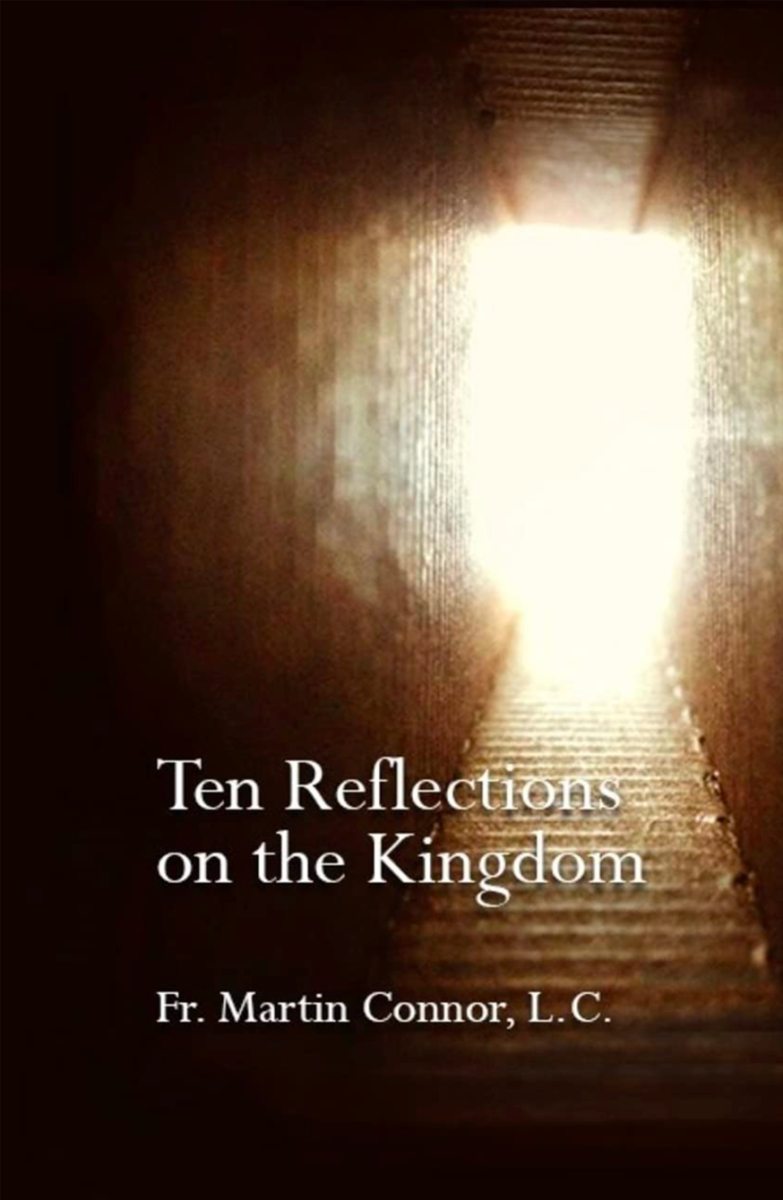
Ten Reflections on the Kingdom

Insights on the spirituality of Regnum Christi

What does Jesus mean when speaking of the “Kingdom” in the Gospel? The spirituality of the new ecclesial family called Regnum Christi in the Catholic Church speaks in new and unique ways to the Christian understanding of Kingdom. Ten Reflections unpacks these insights for the reader, helping any follower of Jesus Christ live an ever deeper commitment to him as a disciple.


Ten Reflections on the Kingdom Read More »

Regnum Christi Spirituality Center Ask a Priest

“Ask a Priest: Where Did Those People in Genesis 4 Come From?”

Q: I recently ran into a question and wanted to get the Catholic teaching and answer, please. The Bible says Adam and Eve were the first two humans and bore Cain and Abel, after which Cain slew Abel. It then says Cain went to live among the people in the land of Nod. Where did the people in the land of Nod come from? Thank you. –F.

Answered by Fr. Edward McIlmail, LC

A: The Church doesn’t always offer a nice, neat answer to interpreting every passage of Scripture. But a few observations could be proffered here.

Your reference focuses on Genesis 4:15-16. “The LORD said to him, If anyone kills Cain, Cain shall be avenged seven times. So the LORD put a mark on Cain, so that no one would kill him at sight. Cain then left the LORD’s presence and settled in the land of Nod, east of Eden.” From there, Cain goes on to start a family, the implication being that there were people in this “land of Nod.”

To understand these passages, it is good to recall that the writers and redactors (editors or compilers) of Genesis were not trying to produce the kind of historical account that we in the 21st century might expect. Rather, the writers and redactors were trying to teach important lessons with a particular audience in mind. In this case, the audience was probably the Jews who suffered exile in the fifth or sixth century B.C. and who were mostly living outside of Palestine (see Introduction to Genesis, New American Bible).

That Genesis is not strictly historical in the modern sense is evident by the anachronisms that appear. For instance, the animal sacrifice offered by Abel (Genesis 4:4) reflects a practice from a later era. Or take Genesis 2:24, which says, “That is why a man leaves his father and mother and clings to his wife, and the two of them become one body.” It mentions this right after Adam sees Eve for the first time. But why mention “father and mother,” since presumably, Adam had no human parents to leave?

This is a case where a writer is taking an old story and interjecting a value onto the text. This was not seen as something dishonest; rather, it was one way the ancients showed reverence for the religious stories that had been handed down from one generation to another. This is how writers could link present values with the past, and thus help keep the religious stories alive and relevant.

It is in this context that we could read the story of Cain and Abel and its aftermath. Cain goes off to Nod, which is itself a symbolic name, derived from the verb nud, “to wander.” The purpose of the genealogy that follows “is to explain the origin of culture and crafts among human beings” (see footnote of New American Bible on Genesis 4:17-24).

(For more reading on the Church’s understanding of the origins of the human race, see the International Theological Commission’s 2004 document Communion and Stewardship: Human Persons Created in the Image of God.)

So to sum up: Genesis aimed to convey deep truths and religious traditions. It wasn’t meant to be read as a history textbook, though it was, and is, the inspired word of God. I hope this helps.

“Ask a Priest: Where Did Those People in Genesis 4 Come From?” Read More »

Regnum Christi Spirituality Center Ask a Priest

“Ask a Priest: Should I Demand Repayment of a Loan?”

Q: I lent a friend $300 five months ago with the understanding that she would pay me back. Well, my friend hasn’t mentioned the money since she borrowed it, and I haven’t seen a dime. She either forgot, or she is deliberately not mentioning it, hoping I forgot. Either way it’s hurtful to me. If she’s deliberately not paying me back, then she’s not a good friend. And if she forgot, then she doesn’t really care about me and the fact that I was there when she needed help — which also makes her not a good friend. Now I feel awkward around her. Is it wrong for me to ask for my money back, or should I offer my loss to God for the souls in purgatory? I want to do what God would want me to do. I do not want to offend him. Please help. Thank you. -D.C.

Answered by Fr. Edward McIlmail, LC

A: It is admirable that you were there to help you friend when she needed assistance. Also admirable is that a big concern for you is to not offend God in the way you deal with this situation.

Maybe a first consideration would be to give your friend the benefit of the doubt. That is, don’t assume any bad faith on her part. She might have simply forgotten about the loan even though she really does care about you — in times of stress, we can all be forgetful, even toward people we care about.

In that case you could consider a number of options. Let’s start with a Gospel criterion presented by Jesus. “If you lend money to those from whom you expect repayment, what credit [is] that to you?” (Luke 6:34). And then in the next verse he says: “Lend expecting nothing back; then your reward will be great.”

These words point to a high standard, no doubt. But imagine the growth in your spiritual life that might come on the heels of following this exhortation of Jesus. It would be an act of humility and a show of mercy.

If it is still hard to accept, then it might help to reflect on the many times in your life that you have probably benefitted from the generosity of others: from parents, relatives, neighbors and, yes, friends. Countless people risk their lives every day for our benefit too: police, firefighters, military personnel. Those examples help put that $300 loan in perspective.

Now, let’s consider another angle in all this. Perhaps your friend had every intention of repaying you, and would do so if she was reminded. Maybe reminding her would help her to develop her spirit of responsibility. There are times when it is a form of charity to demand from others. It helps them to mature and become more sensitive to others. Your intention in this case would make a difference. To demand repayment out of a sense of frustration and ire is one thing; to gently remind your friend, out of a spirit of helping her organize her life, is another.

Another factor is financial need. If you are strapped and have financial obligations to others, and your friend doesn’t have such obligations, then it could be prudent to ask repayment — and in turn fulfill the demands of justice by paying your own bills.

So what should you do? I would suggest that you pray about all this, and see if the Holy Spirit is nudging you in one direction or another. See if this is a moment when the Spirit is inviting you to an act of detachment and mercy, or whether he is nudging you to pursue repayment for the sake of your friend’s long-term good. I pray that you are open to what the Spirit is asking. God bless.

“Ask a Priest: Should I Demand Repayment of a Loan?” Read More »

Regnum Christi Spirituality Center Ask a Priest

“Ask a Priest: What About the Divisions in Christianity?”

Q: I am trying to understand what happened at the time of the Reformation. I can see that there were excesses and corruption in the Catholic Church, and these had to be addressed. But there was so much violence on both sides. The differences of theology seem to have been used to excuse political actions for both the Protestant and Catholic churches. Now we are past that time, but there is still so much division. I know there are good Christian people in both camps generations later. My question is, how does Jesus view these divisions? Are all mercifully accepted because they come in Jesus’ name, or is Jesus a judge who wants only those who adhere to every doctrine to be forever blessed? He said that anyone who calls upon his name would be saved. Is that what the Catholic Church believes? I am coming to understand the place of the Eucharist in my faith more and more, but what of those who do not understand the Eucharist? -C.C.

Answered by Fr. Edward McIlmail, LC

A: You raise big questions that touch on the heart of what is known as ecumenism.

The Catechism defines ecumenism as: “Promotion of the restoration of unity among all Christians, the unity which is a gift of Christ and to which the Church is called by the Holy Spirit. For the Catholic Church, the Decree on Ecumenism of the Second Vatican Council provides a charter for ecumenical efforts.”

How does Jesus view the divisions within Christianity? These divisions were not part of his original plan. This is why he prayed for those who would follow him in some way, “so that they may all be one” (John 17:21). (For more reading, see Pope St. John Paul II’s encyclical Ut Unum Sint)

Certainly there are many fine non-Catholic Christians, many of whom are often better moral examples than some of us in the Catholic Church. The Church holds that non-Catholics (and non-Christians) can make it to heaven if they are sincerely faithful to God’s action in their lives. Thus, adherence to every point of Catholic doctrine is not necessary for everyone to attain to salvation.

Of non-Catholic Christians, the Second Vatican Council document Lumen Gentium said, “In some real way they are joined with us in the Holy Spirit, for to them too He gives His gifts and graces whereby He is operative among them with His sanctifying power” No. 15. Sanctifying grace is what a soul needs to make it to heaven.

One clarification is in order. More is required to reach heaven than to simply “come in Jesus’ name.” Our Lord himself warns, “Not everyone who says to me, ‘Lord, Lord,’ will enter the kingdom of heaven, but only the one who does the will of my Father in heaven” (Matthew 7:21).

So what can we make of all this? We could note that faith is a gift, and the Catholic faith is a very special gift. Not everyone has received this gift. And this means that not everyone will be held to the same standard at Judgment Day. There are many non-Catholics who, sincerely living the Gospel the best way they know how, can become holy with God’s grace. This goes for people who don’t understand or accept the Eucharist.

Yet, we as Catholics have an obligation to evangelize others as best we can, to share with them the fullness of the faith. This includes what we believe about the Eucharist.

The divisions within Christianity are a scandal to the world; they prevent many people from coming closer to Christ. This is lamentable. While non-Catholics can still reach heaven, Christ’s perfect plan was that his followers “may all be one.” This remains an ideal we should strive for. I hope this helps. God bless.

“Ask a Priest: What About the Divisions in Christianity?” Read More »

Scroll to Top

Events

Looking for another country?

Contact Regnum Christi near you

News & Resources

News & Resources

The Regnum Christi Mission

The Regnum Christi Identity

Alex Kucera

Atlanta

Alex Kucera has lived in Atlanta, GA, for the last 46 years. He is one of 9 children, married to his wife Karmen, and has 3 girls, one grandson, and a granddaughter on the way. Alex joined Regnum Christi in 2007. Out of the gate, he joined the Helping Hands Medical Missions apostolate and is still participating today with the Ghana Friendship Mission.

In 2009, Alex was asked to be the Atlanta RC Renewal Coordinator for the Atlanta Locality to help the RC members with the RC renewal process. Alex became a Group Leader in 2012 for four of the Atlanta Men’s Section Teams and continues today. Running in parallel, in 2013, Alex became a Team Leader and shepherded a large team of good men.

Alex was honored to be the Atlanta Mission Coordinator between 2010 to 2022 (12 years), coordinating 5-8 Holy Week Mission teams across Georgia. He also created and coordinated missions at a parish in Athens, GA, for 9 years. Alex continues to coordinate Holy Week Missions, Advent Missions, and Monthly missions at Good Shepherd Catholic Church in Cumming, GA.

From 2016 to 2022, Alex also served as the Men’s Section Assistant in Atlanta. He loved working with the Men’s Section Director, the Legionaries, Consecrated, and Women’s Section leadership teams.

Alex is exceptionally grateful to the Legionaries, Consecrated, and many RC members who he’s journeyed shoulder to shoulder, growing his relationship with Christ and others along the way. He knows that there is only one way, that’s Christ’s Way, with others!
