Regnum Christi Spirituality Center Ask a Priest

“Ask a Priest: Did I Err by Burying a St. Joseph Statue to Sell My House?”

Q: I’m selling my home and my cousin asked if I had a buried a St. Joseph statue. I didn’t. I went to a parish gift shop and they had a home-sellers kit, which is a small statue of St. Joseph, and instructions to bury him upside down, feet pointing in the direction you want to move, and a prayer and novena. After the house sells, you are to go get him and put him in your new home for all to see. I posted about it and was torn up by one woman. Did I do something horrible? Should I go get him? Can I leave him? I don’t know what to do. I bought him from a Catholic church gift shop. If it was wrong, why would they sell it? I’m so conflicted and confused. -D.T.

Answered by Fr. Edward McIlmail, LC

A: In principle it is OK to bury the statue and say the prayers if it is intended as a petition for the intercession of St. Joseph. The Church has long accepted the custom of the faithful having statues and images of the saints.

The danger with this particular practice is that it can border on superstition, or at least give others the impression that Catholics endorse quasi-superstitious practices.

The Catechism in No. 2111 says, “Superstition is the deviation of religious feeling and of the practices this feeling imposes. It can even affect the worship we offer the true God, e.g., when one attributes an importance in some way magical to certain practices otherwise lawful or necessary. To attribute the efficacy of prayers or of sacramental signs to their mere external performance, apart from the interior dispositions that they demand, is to fall into superstition.”

In other words, a Catholic shouldn’t bury the statue thinking that, with a few prayers added in, a house sale will be automatic.

Indeed, the instructions spelled out in the “kit” could be perceived as leaning toward the error of presumption. And one should never presume that a certain prayer or act is going to bring a desired result.

If you want to leave the statue buried, that is OK; that is an acceptable way of disposing of blessed items. If you want to retrieve it and display it later, that is OK too.

Whatever you do, do it with a genuine interior spirit of prayer and trust in God’s providence. His main interest is bringing us to an eternal home of rest.

“Ask a Priest: Did I Err by Burying a St. Joseph Statue to Sell My House?” Read More »

Father of Mercies | A Regnum Christi Lenten Retreat Guide with Fr. John Bartunek, LC

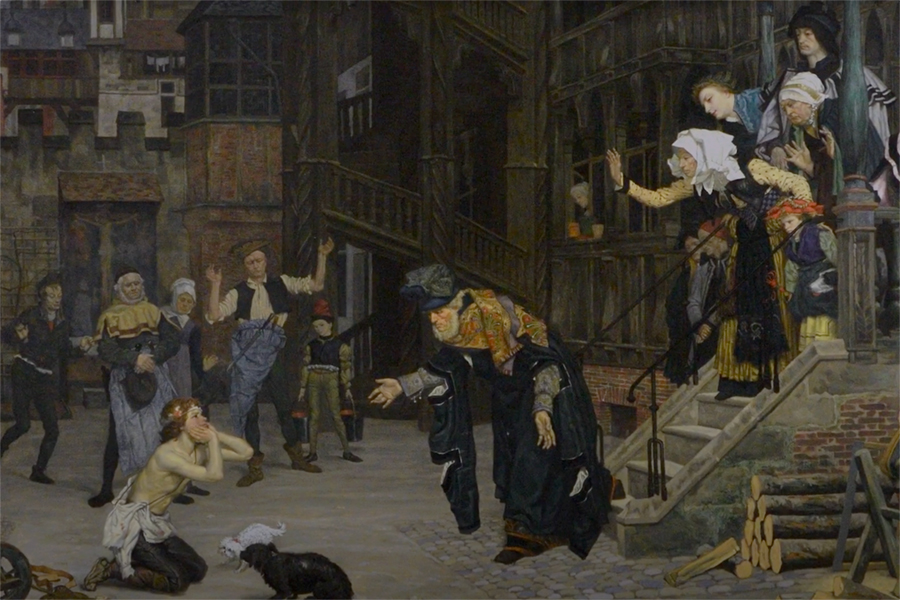
Father of Mercies: A Lenten Retreat Guide on the Parable of the Prodigal Son

We are all familiar with the Gospel parable of the Prodigal Son—at least, we are familiar with one part of it. We all remember how the younger brother in the parable demanded to receive his inheritance before his father died, and then went off and squandered that inheritance in sinful living. When he had nothing left, he humbly came back to his father’s house, and instead of being punished for his selfishness he was welcomed with a celebration. That’s what we remember about this parable. We all agree that it’s a good story. But is it really meant for all of us? Isn’t it just a parable for really big sinners who do terrible things? It can’t be a parable just for really big sinners who do terrible things, because Jesus told this parable to the Pharisees, who were the most faithful and religious people in Israel. The very word, Pharisee, means “separate”, in the sense of being superior to the others. The Pharisees were the good guys, the perfect Jews. So why would Jesus tell them the parable about the prodigal son, about someone who was so far from being perfect? There are a lot of reasons, and some of them have an important, refreshing, and inspiring message for us. This retreat guide, Father of Mercies: A Retreat Guide on the Parable of the Prodigal Son, will explore that message.
  • š  The first meditation will focus on the hidden hero of this parable, the father who shows mercy to both of his sons.
  • š  The second meditation will look at the relationship between God’s mercy and Christian Joy.
  • š  And the conference will look at some practical things we can all do to live that joy more deeply.Let’s begin by turning our attention to God, who is already paying attention to us, and asking him to bless this time we will spend together, for the glory of his name and for the good of our souls.

Video

Audio

Father of Mercies: A Lenten Retreat Guide on the Parable of the Prodigal Son Read More »

Regnum Christi Spirituality Center Ask a Priest

“Ask a Priest: Did God Make Us as Sinners?”

Q: I have been raised as Roman Catholic. I’ve tried my hardest to remain faithful. I make it my duty to teach my children the beautiful teachings of the Bible and Jesus Christ. However, recently I have run into a huge hurdle regarding my faith. I don’t understand why God made us sinners. Why is sin inevitable for every single one of us? If it is already pre-determined that we are all sinners, then why must we repent? God made us like this. Is it really our fault, or is it his? And if this is how he made us, doesn’t that mean we are not good? If it’s impossible for a person to live and die without ever sinning (with the exception of Mary, mother of Jesus, and babies, I suppose), then did he truly make us good? Please help me. It has been on my mind for a very long time, and I feel I am pulling away from God. -A.S.

Answered by Fr. Edward McIlmail, LC

A: It is good to hear that you are taking seriously your responsibility to educate your children in the faith. That is one of the greatest acts of love and service you can do for your children.

Now to your question. It is good to remember, first and foremost, that everything God creates is good. “God looked at everything he had made, and found it very good” (Genesis 1:31). That includes human beings, who are made in his image and likeness (see 1:26).

It is not pre-determined by God that we are sinners. In his original plan for the world, we were all meant to live in perfect harmony with his will.

The sin of Adam upset all of that. In a mysterious way the sin of Adam affected all of his descendants, including us. Just as we inherit certain features from our own parents, so we (including babies) inherit something from Adam: original sin.

Original sin can be thought of as a defect in our nature. It can be removed by baptism, yet it leaves an aftereffect – namely, concupiscence, the tendency to sin.

The Catechism in No. 405 says, “Although it is proper to each individual, original sin does not have the character of a personal fault in any of Adam’s descendants. It is a deprivation of original holiness and justice, but human nature has not been totally corrupted: it is wounded in the natural powers proper to it, subject to ignorance, suffering and the dominion of death, and inclined to sin — an inclination to evil that is called ‘concupiscence.’ Baptism, by imparting the life of Christ’s grace, erases original sin and turns a man back towards God, but the consequences for nature, weakened and inclined to evil, persist in man and summon him to spiritual battle.”

God in his mercy didn’t give up on the human race. He sent his Son as our redeemer. With the grace of God, especially through prayer and the sacraments, we can attain holiness.

It is good to be clear: God did not make us sinners. He never makes anything bad. He does, however, respect our freedom. He respected Adam’s freedom, just as he does ours. If we commit actual sin, it is our fault, not God’s. Still, he is always there ready to extend his mercy to those who repent.

So how should you move ahead? With great humility! Be humble and honest enough to recognize that your sins are your choice – and that you need God’s mercy and forgiveness as do the rest of us.

All this should give you a sense of hope. You are, after all, a beloved daughter of God. He only wants the best for you and your family. If you stay close to Jesus and the sacraments, and cultivate a devotion to Mary, you will sense God’s goodness and closeness.

“Ask a Priest: Did God Make Us as Sinners?” Read More »

Regnum Christi Spirituality Center Ask a Priest

“Ask a Priest: Are Jeans Proper Dress for Eucharistic Ministers?”

Q: Is wearing jeans appropriate for Eucharistic ministers? This occurs at my parish routinely, and more than one minister wears them. My sponsor taught me that reverence for Christ includes the clothes you wear to church. Do the Eucharistic ministers have the wrong garment? I try not to let it bug me, but I do have reverence for Christ. Our parish priest and several deacons do not seem to care and certainly do not correct them. Please help. -P.R.

Answered by Fr. Edward McIlmail, LC

A: I can sympathize with you. Jeans hardly seem appropriate for someone distributing Communion. Unfortunately, we live in an age that doesn’t have a strong sense of the sacred.

The U.S. bishops’ conference webpage on extraordinary ministers of Holy Communion at Mass says, “All ministers of Holy Communion should show the greatest reverence for the Most Holy Eucharist by their demeanor, their attire, and the manner in which they handle the consecrated bread or wine.”

This is a matter the pastor should best address with the ministers. And if he doesn’t object to the jeans, then I don’t know if it is worth causing tension in the parish.

What you can do is teach by example. Dress well at Mass. Receive Communion with reverence. And look for those opportunities when you can nudge folks in a better direction with a well-placed comment or two.

“Ask a Priest: Are Jeans Proper Dress for Eucharistic Ministers?” Read More »

Regnum Christi Spirituality Center Ask a Priest

“Ask a Priest: How Can a Priest Like Me If He Knows My Sins?”

Q: I go to confession regularly to the same priest. I find it very humiliating. I know it is prideful, but I want the priest to like me, and how on earth could he when he knows all the sinful things I do? I have heard/read that priests don’t think ill of people who come to them for confession. Can you give me any type of certainty that the same could be the case with the priest I see for confession? What is it like for you to hear all the things people do; and then see that person involved in parish ministry or, say, at Bible study? I am not looking to change priest confessors; he is very good and helpful. But I am wondering if there is ever a point when confession stops being humiliating, or if that is just part of the nature of the sacrament that I need to get used to? -M.W.

Answered by Fr. Edward McIlmail, LC

A: It might sound odd, but priests sometimes feel closer to penitents and care for them more deeply, precisely because they have had the chance to impart God’s mercy to those souls.

That someone approaches a priest for confession is indeed a humbling experience – for the priest! Priests are sinners too. They know what other people go through. To be a witness to the inner sorrow of a sinner who seeks God’s mercy can be a very uplifting experience for a priest.

So don’t worry about the priest to whom you confess. He is there to help you. He is a father who wants to help you on your path to eternity. If he is “very good and helpful,” count yourself blessed to have such a confessor.

As for your own humiliation: If it helps you realize your own weaknesses and how much you need God, then that is OK. That is a step toward holiness.

Whatever you do, keep taking advantage of the sacrament. It is one of the Church’s greatest treasures. And it can help you become a saint.

“Ask a Priest: How Can a Priest Like Me If He Knows My Sins?” Read More »

Scroll to Top

Events

Looking for another country?

Contact Regnum Christi near you

News & Resources

News & Resources

The Regnum Christi Mission

The Regnum Christi Identity

Alex Kucera

Atlanta

Alex Kucera has lived in Atlanta, GA, for the last 46 years. He is one of 9 children, married to his wife Karmen, and has 3 girls, one grandson, and a granddaughter on the way. Alex joined Regnum Christi in 2007. Out of the gate, he joined the Helping Hands Medical Missions apostolate and is still participating today with the Ghana Friendship Mission.

In 2009, Alex was asked to be the Atlanta RC Renewal Coordinator for the Atlanta Locality to help the RC members with the RC renewal process. Alex became a Group Leader in 2012 for four of the Atlanta Men’s Section Teams and continues today. Running in parallel, in 2013, Alex became a Team Leader and shepherded a large team of good men.

Alex was honored to be the Atlanta Mission Coordinator between 2010 to 2022 (12 years), coordinating 5-8 Holy Week Mission teams across Georgia. He also created and coordinated missions at a parish in Athens, GA, for 9 years. Alex continues to coordinate Holy Week Missions, Advent Missions, and Monthly missions at Good Shepherd Catholic Church in Cumming, GA.

From 2016 to 2022, Alex also served as the Men’s Section Assistant in Atlanta. He loved working with the Men’s Section Director, the Legionaries, Consecrated, and Women’s Section leadership teams.

Alex is exceptionally grateful to the Legionaries, Consecrated, and many RC members who he’s journeyed shoulder to shoulder, growing his relationship with Christ and others along the way. He knows that there is only one way, that’s Christ’s Way, with others!