Regnum Christi Spirituality Center Ask a Priest

“Ask a Priest: Can a Mass Get an Unrepentant Sinner Into Heaven?”

Q: In a recent conversation with a friend of mine who is a devout Catholic (I am not), he said a few things that I did not understand. I made the comment that a person who lives a life of habitual unrepentant sin will not go to heaven, whether he is a Catholic or not. My friend says that Catholics are able to have a Mass said for someone like that, so they can enter heaven if they are a Catholic. Is this true? When I told him that I did not think the Bible says that, he told me that I am “not authorized to interpret Scripture.” What does that mean that I am not authorized to interpret Scripture? My friend also told me that even though I think I am a Christian, if I refuse to be a part of the Roman Catholic Church, I cannot and will not go to heaven. Is this true? -R.T.

Answered by Fr. Edward McIlmail, LC
A: Your friend is seriously mistaken on a number of points.

Someone who lives and dies unrepentant in serious sin risks eternal loss — and all the Masses in the world wouldn’t get a soul out of hell.

We are all free to read Scripture, and many people can draw unique fruits and insights from it, which is good. We as Catholics do believe, however, that our personal interpretations shouldn’t contradict the way the Church interprets something. That is reasonable, since God doesn’t intend for Scripture to be interpreted one way by the Church and in a radically different way by someone else. That would render Scripture virtually meaningless.

This isn’t to say, however, that the Church interprets everything in Scripture in a rigid way. In fact, there are relatively few passages that the Church has made definitive judgments on. It doesn’t, for instance, try to interpret every symbol in the Book of Revelation.

In practice, the Church encourages us to read Scripture but with an eye toward Tradition, so that we don’t run off the rails, so to speak. For more reading, you might check out the Pontifical Biblical Commission’s “Interpretation of the Bible in the Church“.

As for needing to be Catholic in order to enter heaven, that is patently false. The Church recognizes that salvation is possible for people who are visibly outside its ranks.

The Second Vatican Council constitution on the Church, Lumen Gentium, deals with this topic. Section 16 of that document is worth quoting here at length:

“Finally, those who have not yet received the Gospel are related in various ways to the people of God. In the first place we must recall the people to whom the testament and the promises were given and from whom Christ was born according to the flesh. On account of their fathers this people remains most dear to God, for God does not repent of the gifts He makes nor of the calls He issues. But the plan of salvation also includes those who acknowledge the Creator. In the first place among these there are the Muslims, who, professing to hold the faith of Abraham, along with us adore the one and merciful God, who on the last day will judge mankind. Nor is God far distant from those who in shadows and images seek the unknown God, for it is He who gives to all men life and breath and all things, and as Savior wills that all men be saved. Those also can attain to salvation who through no fault of their own do not know the Gospel of Christ or His Church, yet sincerely seek God and moved by grace strive by their deeds to do His will as it is known to them through the dictates of conscience. Nor does Divine Providence deny the helps necessary for salvation to those who, without blame on their part, have not yet arrived at an explicit knowledge of God and with His grace strive to live a good life. Whatever good or truth is found among them is looked upon by the Church as a preparation for the Gospel.”

I hope this helps. You might even think about sharing this answer with your friend.

“Ask a Priest: Can a Mass Get an Unrepentant Sinner Into Heaven?” Read More »

Dawn of Mercy | A Regnum Christi Easter Retreat Guide on the Divine Mercy with Fr. John Bartunek, LC

The Dawn of Mercy: An Easter Retreat Guide on Divine Mercy

Violence, hatred, injustice—it takes heroic fortitude just to turn on the daily news. And this evil isn’t abstract. It has a name. Events in society mirror a reality we all face every day. It’s called sin; it’s ugly; and it’s horrifically destructive. Have you ever wondered if there’s a limit to this evil? Does it simply surge unchecked, leaving broken lives strewn in its wake? Does sin have the last word in my own life and in the life of the world? In his book Memory and Identity Saint John Paul II wrote, “The limit imposed upon evil, of which man is both perpetrator and victim, is ultimately the Divine Mercy.” What is this Divine Mercy and what does it mean? Even more importantly, does it make a difference in my life? How do I receive it? These questions have an answer; and that answer is a person. Evil, the fruit of sin, does not have the last word. There is a Word more powerful than sin, more powerful than evil. Jesus Christ is the Word of the Father, who came to bring us forgiveness, healing, and union with God. Divine Mercy is when God’s love, in Jesus, meets our brokenness. With that in mind, here’s a brief overview of The Dawn of Mercy: An Easter Retreat Guide on Divine Mercy.

  • In the First Meditation we’ll explore the dawn of the devotion to the Divine Mercy in the midst of the 20th century’s horrific evil.
  • In the Second Meditation we’ll reflect on how Divine Mercy meets each of us individually.
  • In the Conference we’ll look at Divine Mercy as an offer and a response, and examine some practical consequences.

Let’s quiet our hearts now. Let’s turn to Jesus, who came to call sinners, and ask him to show us the merciful face of the Father.

Social Share! Share this Retreat Guide on your favorite social media pages by clicking the icons below.

Video

Audio

The Dawn of Mercy: An Easter Retreat Guide on Divine Mercy Read More »

Regnum Christi Spirituality Center Ask a Priest

“Ask a Priest: What Is My Obligation in an Irregular Marriage?”

Q: I’m Catholic, 62 years old, widowed at 54 after 36 years of marriage. I got remarried two years later to a Lutheran who used to be Pentecostal. He was married in the Lutheran church, got a divorce, remarried a Baptist but was widowed in less than a year. When we talked to my priest about our marriage, he said that since my husband didn’t have his first marriage annulled for us to give him the paperwork, we should go ahead and get married in the Lutheran church and come back to him. After we married, things went bad fast, so many things I didn’t know and so many things that totally changed between us. I didn’t know his true self until we married. He refused to get a Catholic annulment because he said it’s not the Church’s business. We separated but went back, but things are worse. We live separate lives in the same house. He has no place to live if we divorce. My house was paid for before we married, and he says that I’m sinning by not living up to what he believes the Bible says about a wife’s responsibility to keep a marriage together. I’m confused. Can I go to Communion? What is my obligation to this relationship? I asked my priest, but he said all my questions are between me and God. If I’m in a state of sin, how do I get forgiveness? I refuse to leave my faith in the Catholic Church. I went to another priest for confession and he told me God forgives me but don’t let anyone in the parish know about my situation. That prevents me from participating in the parish. Thank you for reading this long diatribe, sorry about that. -M.T.

Answered by Fr. Edward McIlmail, LC

A: It is good that you desire to live your faith fully. Unfortunately you received bad advice when you were told to “marry” in the Lutheran denomination; such a marriage is invalid in the eyes of the Catholic Church. You might consider avoiding that priest in the future, at least for confession or spiritual advice.

The other priest gave advice that seems sounder. If you aren’t living as husband and wife, and if it is very difficult for your partner to find other lodging, and if your being under the same roof leads to no serious temptations against chastity, and if you have otherwise made a good confession, then you could receive Communion. But it has to be in a discreet way that doesn’t scandalize others; that is why the priest pointed you to another parish.

None of this means that the priest has allowed you to get around the normal annulment process. He hasn’t declared your marriage valid in the secrecy of the confessional. Such a declaration comes, publicly, from the Church, after an investigation by a tribunal.

If you wanted to marry someone else, it might not be too difficult to get an annulment, based on what is known as a lack of canonical form.

It doesn’t seem, however, as if you are interested in getting your current union convalidated (“blessed”) by the Church. That would be understandable. From what you describe, your partner wasn’t very honest before your civil wedding. This makes your obligation to him even less, notwithstanding his own interpretation of Scripture. Whatever support you owe him would be as a Christian, not as a spouse.

The ideal would be for the both of you to have separate living quarters. Perhaps you could look for ways to move toward that ideal.

In the meantime try to make time for prayer each day. And stay close to the Blessed Virgin Mary.

“Ask a Priest: What Is My Obligation in an Irregular Marriage?” Read More »

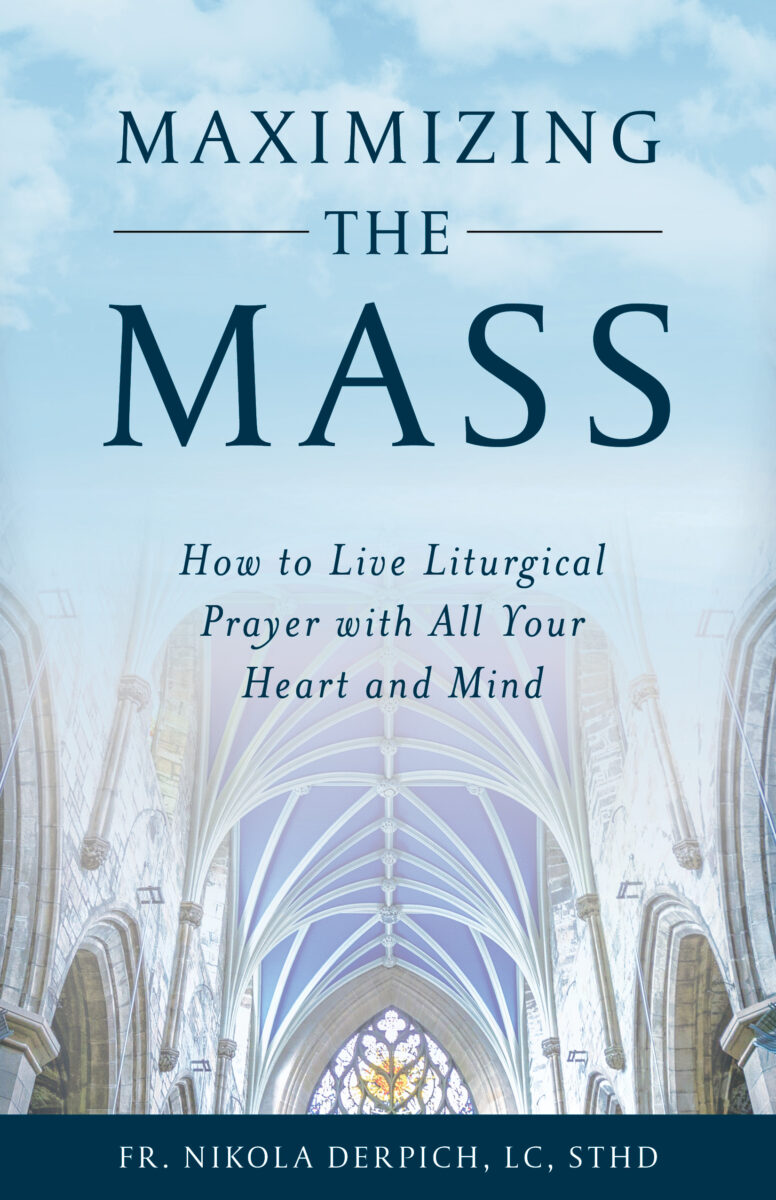
Maximizing the Mass Fr. Nikola Derpich LC

Maximizing the Mass: How to Live Liturgical Prayer with all Your Heart and Mind

The liturgy communicates on various levels with symbols, Scripture, prayers, gestures, and rites, and, most importantly, grace. Since the Second Vatican Council, the Church has endeavored to foster “active participation” in Mass so that “the faithful come to it with proper dispositions, that their minds should be attuned to their voices, and that they should cooperate with divine grace”  (Sacrosanctum Concilium, 11).


Pope Benedict XVI took a step further in his post-synodal exhortation Sacramentum Caritatis by saying that “active participation” was not just a matter of doing something during Mass, but of something more profound: achieving “a greater awareness of the mystery being celebrated in the Mass and its relationship to daily life” (cf. n. 52). Mass is not just something to be attended but lived, and the key to letting the spiritual wealth of the liturgy enrich your life is participating actively in the Mass. This book, through a meditative walkthrough of the Mass, from Entrance to Dismissal, as well as meditations on the Eucharistic Prayers and their Prefaces, will prepare you to participate more actively in the Mass by helping you delve deeper spiritually into the prayers you recite and hear every Sunday, every Mass. You will never pray or live the Mass the same way. 


Listen to a Q & A webinar with Fr. Nikola

Maximizing the Mass: How to Live Liturgical Prayer with all Your Heart and Mind Read More »

Regnum Christi Spirituality Center Ask a Priest

“Ask a Priest: What Does a Death-Heralding Dream Mean?”

Q: I had a dream that a piece of paper told me that I would die at age 23. I dreamt that my grandma was in the hospital and everyone else thought she was dead, but she talked to me and she wasn’t. (She’s not dead in real life.) So then my cousin appeared in a corner of the room and handed me a piece of paper showing me the days I could have died, and then at the bottom it said I’d die at 23 — what does it mean? I have been freaking out! -L.

Answered by Fr. Edward McIlmail, LC

A: In one sense, I wouldn’t put too much stock in the dream — dreams are notoriously hard to interpret and there is no need to drive yourself crazy trying to do so. Most likely, it doesn’t mean anything specific at all. Nonetheless, Jesus did tell us to be ready for death at any moment. “You also must be prepared, for at an hour you do not expect, the Son of Man will come” (Matthew 24:44).

The time Our Lord gives us in this world is the time we have to become saints, with God’s grace. Whether we are given 15 years of life or 115, the important thing is how we use our time in this world for the glory of God and for the good of others.

A healthy fear of death can help keep us humble. It helps us keep an eye on God and eternity. If we are living as God wants and doing our best, then that is all we can do. We are living as best we can in that case.

Maybe this is a good moment to pause and ask yourself what you are doing with your life. Are you on the right path? Do you give God first place? Do you help others? Have a good prayer life? Do you worthily receive the sacraments?

If you answer yes to these questions, you are on a good path. If not, it might be good to go to prayer and see where the Holy Spirit is leading you. It might be helpful to watch our Retreat Guide on “The Complete Christian” as a way of giving yourself a spiritual x-ray.

“Ask a Priest: What Does a Death-Heralding Dream Mean?” Read More »

Regnum Christi Spirituality Center Ask a Priest

“Ask a Priest: What Do Christians Think of the Torah?”

Q: Can you please provide me with an authentic doctrinal answer to the following: 1) What is the official Christian view regarding the Jewish Torah? 2) What is the difference between the Jewish God and the Christian God — I mean, is it the same Person? 3) Are the stories in the Torah acceptable to Christians as true and actually happened, and can we draw morals and laws from them? 4) Did Jesus believe that the Torah is true? 5) What is the definition of “idolatry” and polytheistic religions, and how different is this from the Trinitarian doctrine? Thanks a lot for sharing your time. -A.S.

Answered by Fr. Edward McIlmail, LC

A: Thanks for your questions. Let me try to answer each one briefly.

1. The Torah, or Pentateuch, comprising the first five books of the Bible, is part of God’s revelation, and Christians accept these five books as part of Scripture. That is why we include them in the Old Testament. (For related reading, see the Vatican document “The Jewish People and Their Sacred Scriptures in the Christian Bible“.

2. The God of the Jews is also the God of the Christians. The difference, if we can use that word, is that God revealed himself more fully with the coming of Christ. Through Jesus we learned that God is a Trinity of three divine Persons. This was unknown to the Israelites.

3. The writers of Scripture used different literary genres, or styles, to transmit their message. Sometimes they used allegories; other times they reinterpreted something from the past and tweaked it in order to a make a point with a contemporary audience. For instance, the writer of Genesis has Abel offering animal sacrifice to the Lord; animal sacrifices came later in history, so the story is something of a projection based on the past. As for the laws of the Torah, the Ten Commandments still have value for Christians, though the dietary laws are not binding. As one Gospel passage says of Jesus, “Thus he declared all foods clean” (Mark 7:19).

4. Jesus believed the Torah. Jesus is God, after all, and “God is the author of Sacred Scripture” (Catechism, No. 105). Jesus quoted from the Jewish Scriptures, which meant that he accepted them. The interesting thing, though, is not only that Jesus believed in the Torah. Rather, “Do not think that I have come to abolish the law or the prophets. I have come not to abolish but to fulfill” (Matthew 5:17). The Torah represented a stage of God’s revelation. Jesus himself was the fullness of that revelation.

5. Idolatry is worshipping something or someone other than God. Polytheistic religions, by definition, believe in many (“poly-“) gods. Jews and Christians and Muslims believe in one God. Christians believe that this God is Triune; that is, he is one God, one nature, but three Persons (or subsistent relations). It is the core mystery of Christianity, and our minds really cannot grasp it fully. Polytheism is pagan; it cannot be reconciled with our notion of one God. I hope this helps.

“Ask a Priest: What Do Christians Think of the Torah?” Read More »

Regnum Christi Spirituality Center Ask a Priest

“Ask a Priest: How Do I Know I Really Trust God?”

Q: I am currently following Father Bartunek’s daily meditation “The Better Part.” A lot of times, I share a portion of the day’s meditation online … sort of evangelize in my small way. This morning, it is I who needs evangelization. I asked myself, “Do I truly trust in God and know his mercy? Will I trust him, in the future, at the lowest point of my life?” When I am physically hurting, will my pain be minimal because I trust him? How do I know I trust him? Sometimes, our fear becomes bigger than the problem itself that our sufferings come from fear itself. Can you shed me some light about the mystery of suffering? My son is a soldier and has been in three deployments. And in the last one, I felt no fear except occasional loneliness because I missed him. Was that trust? Or was that grace to overcome the fear of my son’s possible death? I would like to give God some consolation and have a deep relationship with him. -J.H.

Answered by Fr. Edward McIlmail, LC

A: It is good that you are looking for ways to evangelize, by sharing the lines of meditation, etc.

Your note seems to touch on the virtue of hope. We can have faith, we can have charity, yet we can lack a bit of hope. The glossary of the Catechism defines hope as: “The theological virtue by which we desire and expect from God both eternal life and the grace we need to attain it.” You worry about facing future trials; here is where hope can help.

With good reason, Jesus exhorted, “Do not worry about tomorrow; tomorrow will take care of itself. Sufficient for a day is its own evil” (Matthew 6:34). In other words, focus on living the moment well. Don’t try to read into the future. That is a recipe for anxiety.

It is good to remember that God loves your son even more than you do. He even loves you more than you do. You are his beloved daughter. That is a truth you want to recall frequently. And following the words of the Our Father, learn to be satisfied with the “daily bread” that God gives.

By cultivating this trust in God, consciously and repeatedly, you will get the grace of confidence in his providence. Your trust will reinforce trust. Trust is a fruit of a mature relationship that weathers any storm. Your lack of fear about your son’s last deployment might be a sign that your trust is deeper than you realize.

Something that can also help is to look for ways to help others — such as shut-ins or single moms. Helping others in turn helps us put our own struggles and concerns in perspective. There are folks out there who suffer terribly, from abuse, despair, you name it. Coming in contact with them and helping them reminds us of all the blessings God has given us. That deeper sense of gratitude brings its own serenity. (Perhaps you could network with other military moms and give encouragement via the Internet.)

Trust is not something that we either have or don’t have, but rather something that we have and that can continue to grow. To go deeper on this point, you might find this post helpful.

For even deeper reading you might find Benedict XVI’s Spe Salvi helpful.

As for suffering in general, we believe it can have meaning because Jesus gave it meaning on the cross. By uniting our sufferings with his on Calvary, we can turn them into something redemptive. Part of God’s plan is to allow us to share in suffering along with Jesus.

For more reading, see Peter Kreeft’s Making Sense Out of Suffering.

I hope this helps. Count on being included in one of my Mass intentions.

“Ask a Priest: How Do I Know I Really Trust God?” Read More »

Regnum Christi Spirituality Center Ask a Priest

“Ask a Priest: Did the Devil Know Who Jesus Was?”

Q: Ever since I have started reading the Bible again there are plenty of questions that keep popping up. For example, did Satan know who Jesus was when he was tempting him? What exactly did Jesus mean in Matthew 7:6? John the Baptist came to prepare the way for Jesus and was involved in baptizing Jesus; and he didn’t want to do so, saying he was not worthy. Why then did John send out his disciples to find out if Jesus was who he thought he was? Was John confused? And until Jesus was told, did he not know that John the Baptist was beheaded? I know due to time constraints I can’t keep coming back to you with all my questions. So I was hoping you could point me in the right direction. -G.D.

Answered by Fr. Edward McIlmail, LC

A: It is great that you are reading the Bible again. As you quickly learned, it can be mysterious. Let me try a few brief answers:

First, it is possible the devil wasn’t 100% sure Jesus was God. Notice the devil’s use of the conditional: “If you are the Son of God …”

Second, Matthew 7:6 (“Do not give what is holy to dogs, or throw your pearls before swine …”) could mean that we shouldn’t keep presenting the faith or things of the faith to someone who is stubborn and resistant to the message. That might only antagonize and further alienate them. The Holy Spirit has a time and place for souls to be open to the Gospel, and it helps to try to detect when the right timing comes along.

Third, John the Baptist might have asked that question for the sake of his skeptical disciples. But perhaps John himself had difficulties. This shouldn’t shock us — faith is always being tested. It is understandable, after all, that John wondered how it was that he ended up in prison, after having the privilege of pointing out the Lamb of God to the world. Also, John said that the Christ would “clear his threshing floor and gather his wheat into the granary, but the chaff he will burn with unquenchable fire” (Matthew 3:12). John might have been expecting a Messiah who would have overcome evil through force, rather than through suffering and the cross.

Fourth, part of the mystery of the incarnation is that Jesus showed his divinity or his human nature in more pronounced ways at various times. He would ask, “Who touched me?” yet at other times he could read peoples’ hearts. So it is possible Jesus as true man didn’t know about John’s death. Of course, in his divine nature Jesus would have known it, but as he wished to fully become man, in his human nature he had to “inquire for himself about what one in the human condition can learn only from experience” (CCC 472).

These answers aren’t exhaustive, of course, and there can be other explanations. That is part of the richness of Scripture.

It might be helpful simply to get a good Catholic Bible and read the footnotes. There are numerous commentaries available on the Internet too. A particularly good companion to the Gospels is Father John Bartunek’s The Better Part.

The key thing is to keep reading — and living — the Gospel message.

“Ask a Priest: Did the Devil Know Who Jesus Was?” Read More »

Scroll to Top

Events

Looking for another country?

Contact Regnum Christi near you

News & Resources

News & Resources

The Regnum Christi Mission

The Regnum Christi Identity

Alex Kucera

Atlanta

Alex Kucera has lived in Atlanta, GA, for the last 46 years. He is one of 9 children, married to his wife Karmen, and has 3 girls, one grandson, and a granddaughter on the way. Alex joined Regnum Christi in 2007. Out of the gate, he joined the Helping Hands Medical Missions apostolate and is still participating today with the Ghana Friendship Mission.

In 2009, Alex was asked to be the Atlanta RC Renewal Coordinator for the Atlanta Locality to help the RC members with the RC renewal process. Alex became a Group Leader in 2012 for four of the Atlanta Men’s Section Teams and continues today. Running in parallel, in 2013, Alex became a Team Leader and shepherded a large team of good men.

Alex was honored to be the Atlanta Mission Coordinator between 2010 to 2022 (12 years), coordinating 5-8 Holy Week Mission teams across Georgia. He also created and coordinated missions at a parish in Athens, GA, for 9 years. Alex continues to coordinate Holy Week Missions, Advent Missions, and Monthly missions at Good Shepherd Catholic Church in Cumming, GA.

From 2016 to 2022, Alex also served as the Men’s Section Assistant in Atlanta. He loved working with the Men’s Section Director, the Legionaries, Consecrated, and Women’s Section leadership teams.

Alex is exceptionally grateful to the Legionaries, Consecrated, and many RC members who he’s journeyed shoulder to shoulder, growing his relationship with Christ and others along the way. He knows that there is only one way, that’s Christ’s Way, with others!