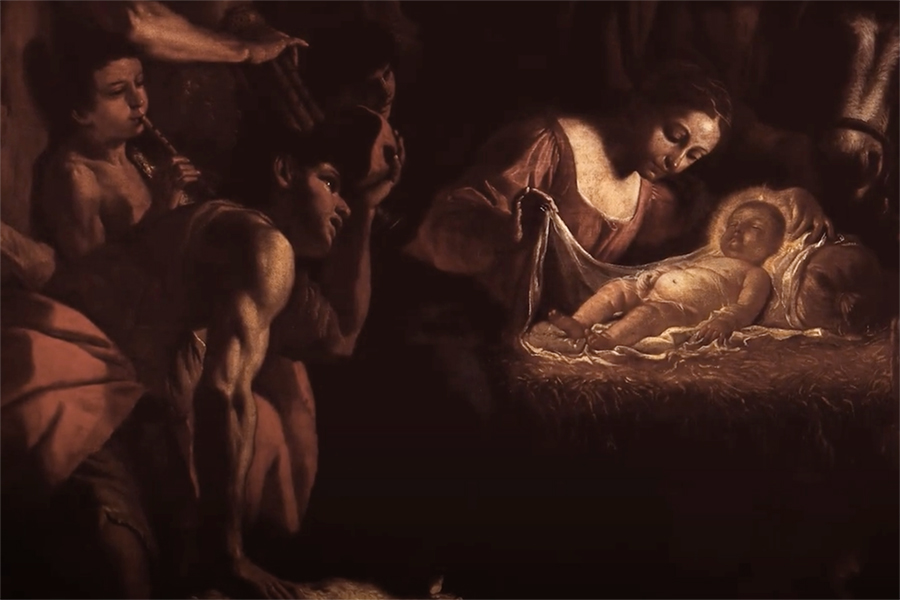
Do I Need a Savior?: An Advent Retreat Guide on the Prophet Isaiah
Do I Need a Savior?: An Advent Retreat Guide on the Prophet Isaiah Read More »




Q: I am 15 years old. I was raised in an evangelical Protestant family. However, last year I was exposed to Catholicism through a Catholic friend, and after thorough research and lots of prayer, I came to realize that the Catholic Church was the One True Church. After asking my parents if I could convert, I was given a firm no. My mother is extremely anti-Catholic, seeing as she was raised Baptist. She shoved in my face the commandment that said, “Respect your parents,” and for a while, I accepted this commandment and decided to wait until I was 18 to enter the Church. Later that year, though, I came upon Matthew 19:29, which calls those who forsake their parents, for the sake of the Lord, “blessed.” This really made me think, why should I place respect for my parents above respect for God? Should I truly listen to them over listening to God? And I concluded that the answer was no. I guess what I’m trying to ask is, should I enter the Church secretly? And if so, how would I do this, could I approach my local priest and ask him to bring me into the Church without going through RCIA? I really want to do what is best in this situation, I long for the sacraments, especially the Eucharist. Please help me. –N.
Answered by Fr. Edward McIlmail, LC
A: It is wonderful to hear that you feel so drawn to the Catholic Church and that you are willing to pursue it despite the opposition from loved ones.
There is no contradiction between honoring your parents and honoring God. It’s just that God must always come first. By following him, you will actually be in a better position to love your parents, since your prayers for them could have more power.
Honoring one’s parents doesn’t mean going along with their mistakes. In this case you are old enough to make your own decisions about religion. In this case your parents’ authority is limited. This is what Jesus implied when he said that his followers should be willing to forgo parents in order to follow him (see Luke 14:26).
Now, as for entering the Church secretly, that is a more delicate issue. In principle I wouldn’t recommend doing anything momentous like entering the Church without your parents’ knowledge. They do love you and should know what you are up to, especially in big matters. Besides, to enter the Church secretly would only reinforce their mistaken idea that Catholicism is something bad, that it is “stealing their daughter.”
Moreover, your public entry into the Church would be a powerful witness of your faith. It could help and inspire others. The process of joining the Catholic Church, if undergone patiently and courageously, could even be an instrument that God uses to move your parents’ hearts in the Church’s direction.
The best thing would be to speak with a local pastor and explain your situation. He could recommend ways to proceed.
This process, out in the open, would allow you to live in peace, in the sense that you won’t be trying to live a double life at home. True, you might face continued opposition, but at least you will be honest and forthright about where you stand.
Remember, too, that if God wants you in the Church (and I’m sure he does), he will give you the grace to do it. Feel free to attend Mass. Jesus knows that you want to receive the Eucharist, and your decision to wait and follow the right steps is pleasing to him. You might also seek out a Catholic youth group who could give you support at this time.
For your continued spiritual growth you might consider using resources such as The Better Part and the online retreats at RC Spirituality.
In the meantime keep praying for your parents. Ask the Spirit to enlighten their hearts. And stay close to the Blessed Virgin Mary. She will intercede for you, her beloved daughter.
“Ask a Priest: Should I Enter the Church Secretly?” Read More »
Q: I work as an anesthesia provider. Recently a woman and her husband had traveled overseas and she unknowingly contracted the Zika virus. A few months later she conceived a child. The child had severe anencephaly (no brain). They desired an abortion — after jumping through several hoops and waiting until neural development was complete — they received hospital approval as the ultrasound remained unchanged. I have never participated in any abortion procedure. I always believed that any life is sacred, but this child had no chance of life. This had been a very difficult decision for these two parents. What responsibility do I have in the death of this child? What moral right do I have to decide the fate of these parents by refusing to participate in this surgery? The pregnancy was at 17 weeks. –C.
Answered by Fr. Edward McIlmail, LC
A: As you say, “Any life is sacred.” You should have allowed that principle to guide you in this case. Even that little child had a right to life.
Abortion is wrong in any case, even in the case of anencephaly. That child was created in the image of God, and it should have been left in the Almighty’s hands when he would call the little one from this world.
Ideally you should have refused to participate in this procedure. Your participation amounted to proximate material cooperation in an abortion.
Notwithstanding the anguish of those parents, perhaps the better question to be asked is, “Who gives anyone the right to participate in the taking of an innocent human life?”
The baby should have been allowed to come to term. There would have been the chance for baptism, too. (For related reading see the National Catholic Bioethics Center post.)
It would be good for you to learn from this experience, and maybe even say a special prayer for that child and the parents. Also, let any regret that you feel turn into a prayerful spirit of repentance — God knows our weakness, and he knows how confusing and difficult situations like this can be. Even when we make wrong decisions, his mercy and his love continue to be there for us.
I hope this clarifies things. You will be in my prayers.
“Ask a Priest: Was It OK That I Assisted at an Abortion for a Zika Sufferer?” Read More »
Q: I am not sure how to have a relationship with God. How do I know it is God communicating to me? Why doesn’t God manifest himself to everyone in the world for all of us to see? –B.R.
Answered by Fr. Edward McIlmail, LC
A: You raise big questions. God manifests himself to us all the time. It’s just that we fail to notice his hand at work.
Let me explain. God the Father sent his Son into the world to reveal his perfect plan for us. Thus Jesus is the height of Revelation. And we find him in the Gospels and in the Eucharist.
God also manifests himself in the beauty of the created world. Everything around us that is good is created by God. The air we breathe, the food we eat, the people we love — all were created by God. All are signs of his providential care for us.
Then there is our conscience, that inner voice that tells us to do good and avoid evil. That can be God’s way of communicating with us. (Conscience has to be well informed, but that is another issue.) Suffice it to say that we can be sure it is God communicating with us when we feel inspired to do something objectively good.
Lastly, you can simply look in the mirror. Where were you 100 years ago? You didn’t exist. I didn’t exist. Now we are here. God created us. And with the eyes of faith we can see his gifts all around us: our faith itself, our family, our health, our intelligence
But your question remains. Why doesn’t God show himself more obviously? A proper answer would require a book-length answer. Suffice it to say that God leaves just enough room for mystery to allow us space to make an act of faith in him.
God doesn’t want us to be robots, programmed to follow him. Rather, he created us to enter into a relationship with him, a friendship. And since he wants us as his friends, he doesn’t force himself on us. Rather he invites us, gently and respectfully. To accept that invitation is to make an act of faith.
Besides, if we could “prove” God’s existence, then we wouldn’t need faith. On the other hand, though, he gives us enough evidence for us to have a reasonable basis for believing in him and in his providence.
The best things in life tend not to be scientifically provable. Think of a mother’s love, or the love between a husband and wife. Things like that can’t be measured, but we know they are real. And without them life would be barren.
Perhaps it would help to pray to the Holy Spirit so that he can enlighten you about how close God is to you.
Helpful too would be to make time for prayer and a bit of Scripture reading each day. Two companion books that might help are Father John Bartunek’s The Better Part and Father Thomas Green’s Opening to God.
Include acts of charity, and you will provide fertile ground for God to communicate amply in your soul.
“Ask a Priest: How Do I Connect With God?” Read More »
Q: I married a Southern Baptist. We went through Pre-Cana and were married at my home parish, and originally had a lot of conversations about faith. I went to Bible studies with him at his church, and he went to Mass with me. Over the years, though, he started to be less interested in conversations. When we moved and were looking for new churches, he said he didn’t care what denomination the Protestant church was, and eventually he didn’t even care if we participated in one at all. Earlier this year, he started to try to talk me out of going to church on Sundays. Recently he told me that he identifies as agnostic. I’m worried that I had a part in destroying his faith, when we would talk and I would disagree with him on things. I asked him if I killed his faith, and he answered, “No, but Catholicism did.” He told me that being exposed to a different denomination had made him question everything he’d grown up believing, and now he thinks that if there’s no universal agreement, then maybe none of it is true. We have three young boys, and my husband said he’s considering going to church just long enough to help me watch them while they’re young, but eventually he won’t want to go anymore. I’m not sure what to do. Any advice would be greatly appreciated. –A.
Answered by Fr. Edward McIlmail, LC
A: I am sorry to hear about your situation. You might appreciate better now why the Catholic Church doesn’t encourage mixed marriages. It is tough enough for Catholic marriages to work; mixed marriages often face greater problems.
Nevertheless, God is still present in your life and your marriage. He is interested in you and your husband continuing to grow closer and to discover a deeper happiness — a spiritual, emotional, and intellectual intimacy that maybe neither of you thought was possible. For that to happen, you need to continue loving your husband, and to continue growing in your love for God. Working through the difficulties of this season in your marriage will be the way God’s grace touches and transforms both of you.
You asked your husband whether you killed his faith. Ultimately it is up to each person to guard the gift of faith he has been given by God.
However, your note implies that you were mixing religious practices and crossing over church lines with frequency. You would go to Bible studies at the Baptist denomination, while still attending Mass.
Baptist interpretations of Scripture can differ greatly from Catholic interpretations, and for the sake of your own faith you might have done better to avoid such biblical blending.
The crossover – Bible studies here, Mass over there – probably didn’t help clarify religious matters for your husband. In fact, it might have made things worse, abetting the doubts or indifferentism that he has come to embrace.
It might be good to encourage your husband not just to doubt passively. Rather, if he is questioning whether anything is true, he should question actively.
You can help by walking with him along that path. For example, read together one of Patrick Madrid’s four books entitled “Surprised by Truth,” which tell the stories of real people who came from various backgrounds and ended up discovering the full truth of Christianity in the Catholic Church.
Reading books like that will help your husband process what he has experienced, and it will also help you to come to know and live your own faith better. You might also want to watch our Retreat Guide on marriage, “Three Hearts”.
In the meantime you could consider focusing on basics. Be a loving wife, be a loving mother, be a faithful Catholic.
The fact that your husband is willing to hang on to at least the semblance of religious practice for the sake of your sons is a sign that he has concern for their upbringing. Deep down he might even sense that religious practice is beneficial. That is something you want to cultivate as best you can.
Your own prayer life and sacramental life are crucial now. Live your Catholic faith as fully as you can. You won’t edify your husband by halfway measures. Your own perseverance in the faith will be a fact that he can’t ignore, even if he doesn’t understand it. That will keep the issue on his radar screen. And, of course, your practice of the Catholic faith will help your children. Their own prayers could help dad, too.
As for your marriage, prepare yourself for the long haul. Your fidelity is important, “For the unbelieving husband is made holy through his wife” (1 Corinthians 7:14). I hope some of this helps.
“Ask a Priest: Did I Ruin My Husband’s Faith?” Read More »
Q: I have a dilemma. I am the only person in my social group and workplace that still believes in God, and I struggle with the loneliness of this. In my country (Netherlands) fewer than a quarter of the people call themselves Christian anymore, and even of those most don’t believe that God is actively intervening in our world or that Jesus was sent by God. My pastor says that heaven is a just metaphor and does not actually exist after death. Only the Muslim community seems to have true, though misguided, faith in God. How should I profess my faith without the fear of being ridiculed by my family, friends and colleagues? I work in a hospital, and the only other colleagues I know of who are religious are Muslim. I do get quite some support of them and share many of their morals. But despite this I still feel lonely in my own religion. Do you think Christianity will ever return here? According to the imam in the new mosque here, Islam names the Lord Jesus a prophet of God. Is it better to join a community that has at least a true faith in God, though it differs in some ways from my own, than to be alone in my faith? –T.U.
Answered by Fr. Edward McIlmail, LC
A: It must be difficult to live in a country that was once so religious but has become so secular. It sounds as if secularism has affected your pastor, too.
The best thing you can do is to stay focused on Christ and what he is asking of you. He is the Son of God, our savior and redeemer. With all due respect to our Muslim brothers, we believe Jesus is not just a prophet: He is the messiah, God made man. He founded the Church and left us the sacraments.
A good first step is to focus on your prayer life and your sacramental life. It might help to look around for a good confessor. There have to be some good parishes in the Netherlands. You might consider using social media to find other faithful Catholics with whom you can build some sense of community, even if you can only keep in contact by e-mail and prayer. This is better than nothing.
At your work-place try to live the Gospel as much as possible, through your acts of charity, your witness of pausing for prayer and, if possible, by posting or wearing some sign of your Catholic faith.
Try to find common ground with your Muslim companions. You can do this by mutually encouraging one another to put God first in your lives. Beyond that, be realistic: It isn’t easy to find common ground on a lot of religious issues. Islam has a very different outlook on God and Christ, and there is no way to reconcile our beliefs with theirs.
Still, you and they probably have things in common. So try to build on those.
It might help to do the monthly retreats we offer at RC Spirituality.
Will Christianity return to the Netherlands? The faith has a way of rising from the ashes. Possibly the problems of recent years will give people a reason to look at Christianity again. God alone knows what the future will bring.
The important thing for you, though, is not to give up on the Catholic faith. It still teaches the fullness of God’s revelation in Christ. And Christ has promised heaven to those who are faithful to him.
In the short term, God doesn’t call us to be successful; he calls us to be faithful. Your fidelity means something to Christ. Your fidelity can help sow the seeds for a revival of the faith in Europe.
Since you interact a lot with Muslims, it might be helpful to understand more about Islam. A book that might help is 111 Questions on Islam. I hope some of this helps.
“Ask a Priest: Is It Better to Be Muslim Than Alone?” Read More »
Q: How do you know when a person is full of evil? How do you protect those around you from this evil, especially in your family? For example, I have a family member who is an atheist and is extremely materialistic. What do you do with someone who has that influence among the younger members of the family? There is another member of my family who is extremely narcissistic and who is trying to take control of an elderly person in my family, using religion as a basis for their evil doings. How do I deal with such evil? -C.M.
Answered by Fr. Edward McIlmail, LC
A: There are no easy solutions to the problems that you mention. Atheism and narcissism and materialism are rampant nowadays, and people who dabble in them can, unfortunately, influence others. Whether they are full of evil or just badly misguided, I leave to Our Lord’s judgment.
A short (though not easy) answer to your questions could be twofold.
One, it might take a lot of prayer and sacrifice on your part to help convert your relatives. So be prepared for the long haul. One thing that can help you is to try to see them as Jesus sees them. He suffered and died for each one of your relatives. In the eyes of Jesus they aren’t “the enemy.” They are beloved sons and daughters of his Father in heaven. If you can see those relatives with the same eyes of love, it will be easier for you to pray for and sacrifice for them.
Two, and this is linked to the first step, is your own example of holiness and zeal for the faith. You need to model the faith as best you can. Your prayer life, your life of charity — all this can make an impact on others.
Let’s face it: Atheism and materialism and narcissism are ultimately dead ends. When people reach them, they either despair or they look for an alternative. Your example of Christian living can be that example.
But be realistic and patient. People don’t change quickly. And some might not change much at all, at least it might seem that way to us. No matter. Keep up the prayer life, the sacramental life, the devotion to the Blessed Virgin Mary, the life of charity. “Be persistent whether it is convenient or inconvenient” (2 Timothy 4:2).
“Ask a Priest: What to Do About Wayward Relatives?” Read More »
Q: Can you help me understand the virtue of magnanimity? Is this a virtue we can actually work on? Kind regards. –C.S.
Answered by Fr. Edward McIlmail, LC
A: Magnanimity refers to a person’s ability to do great things without being concerned about praise or thanks. The key to this virtue is humility, to do great things (which could in practice be little acts of charity) without seeking yourself or your own aggrandizement.
In spiritual terms, it means to do everything simply for the love and glory of God and for others.
There are probably various ways to approach the practice of this. Here are a few quick suggestions.
First, treat everyone as you would Christ himself. This includes the neighbor who annoys you, the co-worker who tests your patience, the relative who seems like a thorn in the side. By treating everyone well, you purify your motives. You do it not for what it will bring you, but because it is the kind of charity that Christ invites us to practice.
Second, learn to give all your successes back to God. Thank him for the good things that happen to you. And when you get a compliment, treat it like a hot potato. Give God the glory (“It was the Holy Spirit who made that a success …”), or pass on the compliment to others (“Miss Smith was really the driving force behind the project”). Do all that, and little by little you live more in God’s presence and do things solely for him. (For more reading see Donald DeMarco’s article.)
Third, don’t shy away from a “great” idea that might come to mind, such as pursuing a priestly or consecrated vocation or starting a new apostolate. That great idea could be an inspiration from the Holy Spirit.
“Ask a Priest: How Can I Be Noble and Generous in Spirit?” Read More »
Q: I’ve recently been struggling with the idea of homosexuality being a sin, and I was wondering if you could enlighten me on the reasons behind the argument of whether or not homosexuality is indeed sinful. I know that the main biblical verses used in the argument are Leviticus 18:22 and 20:13. First, “Thou shalt not lie with a man, as with a woman: it is abomination.” Second, “If a man lie with a man, as he lieth with a woman, both of them have committed an abomination: they shall surely be put to death; their blood shall be upon them.” However, Leviticus being from the Old Testament, and if as Christians we are no longer obligated to abide by the Old Testament Law since Jesus died on the cross, does that not make the use of Leviticus an invalid argument? In Galatians, Paul says we are no longer under the Law, and Paul said Leviticus is the yoke of slavery in Galatians 5:1. And lastly, I have read that in the story of Sodom and Gomorrah, the Hebrew verb “yada” or “to know” was mistranslated into meaning “have sex with” when it is usually made very apparent with context clues if the verb actually means to know as in have sex. For example, “Adam knew Eve, his wife, and she conceived,” Genesis 4:1. So when the mob at Lot’s house demanded to “know” the angels, they really meant to know them, as the city had been under attack and strange visitors were of more concern instead of mass homosexual rape. I also believe it is correct that God had already decided to destroy the cities over inhospitality and prostitutes and false idols and such before the mob came, reiterating that it was not a homosexual mob that caused God to destroy the cities. Thanks for your time. –A.S.
Answered by Fr. Edward McIlmail, LC
A: It is good to hear that you trying to get an understanding about homosexuality and the moral ramifications connected to it. Let me try to address each of your points.
First, it is good to note that homosexuality is not a sin. It is homosexual acts that are problematic.
Homosexual acts are sinful because they go against God’s beautiful plan for human sexuality, which involves the complementarity of a man and a woman coming together in marriage with the hopes of founding a family. Like all sins, homosexual acts will not lead the people who do them closer to fulfillment and happiness, because they contradict God’s wise and beautiful plan for our lives.
Homosexuality itself is a disorder, and people who struggle with it need sympathy and support.
Three numbers from the Catechism of the Catholic Church might be worth quoting here. They appear under the header “Chastity and homosexuality”:
2357 Homosexuality refers to relations between men or between women who experience an exclusive or predominant sexual attraction toward persons of the same sex. It has taken a great variety of forms through the centuries and in different cultures. Its psychological genesis remains largely unexplained. Basing itself on Sacred Scripture, which presents homosexual acts as acts of grave depravity, tradition has always declared that “homosexual acts are intrinsically disordered.” They are contrary to the natural law. They close the sexual act to the gift of life. They do not proceed from a genuine affective and sexual complementarity. Under no circumstances can they be approved.
2358 The number of men and women who have deep-seated homosexual tendencies is not negligible. This inclination, which is objectively disordered, constitutes for most of them a trial. They must be accepted with respect, compassion, and sensitivity. Every sign of unjust discrimination in their regard should be avoided. These persons are called to fulfill God’s will in their lives and, if they are Christians, to unite to the sacrifice of the Lord’s Cross the difficulties they may encounter from their condition.
2359 Homosexual persons are called to chastity. By the virtues of self-mastery that teach them inner freedom, at times by the support of disinterested friendship, by prayer and sacramental grace, they can and should gradually and resolutely approach Christian perfection. [end quote material]
So the Church believes that folks with homosexual tendencies are called to live chastely and that they can become saints, with the grace of God and lots of prayer, etc.
Leviticus has to be read in the light of Tradition and within the whole of Scripture. Jesus did not wipe away all the rules found in the New Testament. “Do not think that I have come to abolish the law or the prophets. I have come not to abolish but to fulfill” (Matthew 5:17). True, Our Lord did away with the dietary rules (“Thus he declared all foods clean” – Mark 7:19). But he didn’t do away with Old Testament bans on adultery and murder.
St. Paul, who felt released from many Old Testament practices, was no defender of homosexual behavior. “The males likewise gave up natural relations with females and burned with lust for one another. Males did shameful things with males and thus received in their own persons the due penalty for their perversity” (Romans 1:27).
As for the Genesis text about Sodom and Gomorrah’s sin, yes, there is a bit of fuzziness. But there was a tradition that understood the sin as being linked to homosexuality, as reflected in the Letter to Jude: “Likewise, Sodom, Gomorrah, and the surrounding towns, which, in the same manner as they, indulged in sexual promiscuity and practiced unnatural vice, serve as an example by undergoing a punishment of eternal fire” (v. 7).
True, there seemed to have been other sins linked to Sodom and Gomorrah, such as neglect of the poor (see Ezekiel 16:49-50), though even there we see a reference to “abominations.” In any case, the lines from Leviticus carry no ambiguity.
(For more reading on this issue, see this blog.
By the way, the Catechism, which came out in 1992, mentions that the psychological genesis of homosexuality remains largely unexplained. Therapists such as Joseph Nicolosi more recently have done a lot of work in the field of helping people move away from homosexual tendencies.
One webpage gives a sample of his work. The whole book is worth a read.
Lastly, for a good overview of the Church’s approach to homosexuality, consider the video “The Third Way“. I hope some of this helps.
“Ask a Priest: Could the Old Testament Be Wrong About Homosexuality?” Read More »
