Regnum Christi Spirituality Center Ask a Priest

“Ask a Priest: Can My Son Receive the Sacraments If He Married in a Baptist Church?”

Q: I have a son who married a Baptist lady in a Baptist church but continues to call himself a Catholic. He accompanied me to confession one day and went himself. After confession we attended Mass, and when I went to receive the Eucharist, he was right behind me and also received. After Mass I told him he should not have gone to receive Communion because he was not practicing his Catholic faith. Was I wrong? He apologized and said he did not want to do anything wrong. Also, if he began attending weekly Mass and taking the sacraments, but still remain married to his Protestant wife, would this make any difference? My son is really interested in the Catholic faith. In fact, I have given him a catechism and he frequently asks questions. – B.

Answered by Fr. Edward McIlmail, LC

A: I gather that your son did not have permission for the wedding in the Baptist church, and that his marriage is not recognized by the Catholic Church.

The fact that your son went to confession (at least outwardly) and that he has interest in the Catholic faith, is a promising sign. He seems to show a lot of good will. You want to build on that.

If in the confession he agreed to live as brother and sister with his wife until they could get their marriage regularized, then he might be able to receive Communion. That could be the case, in theory at least. This is a delicate area, since you won’t have all the facts.

The fact that he didn’t have a ready answer for you when you confronted him would indicate that perhaps he didn’t fully explain his situation to the confessor, or else didn’t understand the advice given. It is impossible to say what happened in the confessional. Your questioning him about receiving Communion likely sprang from your motherly concern for his spiritual well-being. As such it might have been an inspiration of the Holy Spirit. Far be it from me to want to squelch the workings of the Spirit. (You may find our Retreat Guides Food for the Journey and From Sorrow to Joy helpful resources regarding these sacraments).

Perhaps your son didn’t learn the faith very well when he was growing up and simply doesn’t know the basic tenets of the faith.

What you might consider is encouraging him to speak to a priest about having his marriage convalidated (“blessed”). If his marital situation can be made regular, he would be able to receive the sacraments again. His partner would not be required to convert.

All this might take time and patience. But again, there seems to be lots of good will – a positive sign.

Perhaps your comment to him about receiving Communion was an inspiration that will prompt him to go deeper into understanding what the faith requires of those baptized into the Catholic Church.

In the meantime you might want to intensify your prayers and sacrifices for him. And remind him of your love for him at every opportunity.

Keep learning more with Ask a Priest

Got a question? Need an answer?

Today’s secular world throws curve balls at us all the time. AskACatholicPriest is a Q&A feature that anyone can use. Just type in your question or send an email to AskAPriest@rcspiritual.wpenginepowered.com and you will get a personal response back from one of our priests at RCSpirituality. You can ask about anything – liturgy, prayer, moral questions, current events… Our goal is simply to provide a trustworthy forum for dependable Catholic guidance and information. So go ahead and ask your question…

“Ask a Priest: Can My Son Receive the Sacraments If He Married in a Baptist Church?” Read More »

Regnum Christi Spirituality Center Ask a Priest

“Ask a Priest: Could the Magisterium Be Wrong on the Issue of Homosexuality?

Q: I am currently a catechumen and should be baptized and confirmed next year at the Easter Vigil Mass. I have two questions which are of great importance to my faith, though they are deeply interconnected. My first question is about homosexuality. For the sake of context, I am a homosexual man, and I do struggle with the Church’s teachings on homosexuality, but not because of emotional difficulty. I am a bit of an armchair philosopher. It was St. Thomas Aquinas’ Summa Theologiae which convinced me to become a Catholic, and I base my sense of morality in natural law theory because of him. However, the Thomistic arguments for the immorality of homosexual acts have not convinced me, and further, in an attempt to think the issue through from a Thomistic perspective, I am inclined to think that homosexual acts can be morally permissible as far as natural law theory is concerned, but I have heard it said that natural law cannot truly conflict with divine law and Church teaching, so this produces a dilemma for me. I know this is at odds with the magisterial teachings of the Church, and this bothers me. If I am factually in the wrong, I want to be corrected. But if I am right, it introduces a new problem, and that is how to view the infallibility of the magisterium. I do accept the infallibility of the magisterium in matters of faith and morality, in principle. I have been told that the magisterium is infallible because of a charism/grace granted by the Holy Spirit to the individuals who exercise the offices of magisterial authority. But I have also been told that grace can be resisted, due to free will. If this is so, there is the possibility of culture putting blinders on their eyes, so to speak, and this isn’t something they could be at fault for if they are ignorant of the fact that they have these implicit biases in the first place. So please, tell me where I’ve gone wrong, because I don’t want to be in conflict with the Church unnecessarily. – R.

Answered by Fr. Edward McIlmail, LC

A: It is good to hear that you are drawn to the Church, despite your difficulty with some of its teachings.

Church teaching is deep and broad, and it all fits together. It is the fruit of centuries of reflection, guided by the magisterium, which enjoys the gift of infallibility.

The answer to your first question (about homosexuality) lies partly in the answer to the second (about the magisterium). Here I have to sidestep the issue of natural law, since it involves a much longer kind of answer. But since you have a passion for philosophy and theology, I can recommend The Way of the Lord Jesus, by German Grisez, as worthwhile, post-Vatican II treatment of moral theology from a Thomistic point of view. The entire four-volume work is available ONLINE HERE. Now onto the issue.

First, the gift of infallibility functions like a guardrail on the side of a mountain road. It keeps cars from plunging over the cliff, no matter how bad the drivers are.

Fortunately, infallibility doesn’t even depend on people being open to grace. It is simply a gift whereby the Holy Spirit will prevent a pope or ecumenical council, for instance, from making an error in a matter of faith or morals to be held by the universal Church.

In practice this means a saintly pope as well as a corrupt pope (and there were a few of them in the early Middle Ages and the Renaissance) are both protected from teaching error in the area of faith and morals.

Without this guarantee we could never really be sure that Church teaching was on course.

Now, the issue of homosexuality — and here we mean homosexual behavior — is not an insignificant matter. If the Church were wrong on this point, then there is no reason to think it has gotten anything right.

What that means in practical terms is this: It isn’t unusual for someone to have difficulty with one point of Church teaching or another. I dare say that if a pop quiz on doctrine was distributed in any given parish church on any given Sunday, not every Catholic in the pews would get high marks.

Learning the faith, in fact, can be a lifelong task. The key point is that, when faced with a teaching we find hard to accept, the best thing is to give the Church the benefit of the doubt, and then try to research the point more.

Perhaps a better text to read on this issue is John Paul II’s theology of the body (the Waldstein translation is recommended you can find it HERE).

You are probably familiar with the Catechism on the matter of homosexuality. Two numbers worth quoting here are:

2358 The number of men and women who have deep-seated homosexual tendencies is not negligible. This inclination, which is objectively disordered, constitutes for most of them a trial. They must be accepted with respect, compassion, and sensitivity. Every sign of unjust discrimination in their regard should be avoided. These persons are called to fulfill God’s will in their lives and, if they are Christians, to unite to the sacrifice of the Lord’s Cross the difficulties they may encounter from their condition.

2359 Homosexual persons are called to chastity. By the virtues of self-mastery that teach them inner freedom, at times by the support of disinterested friendship, by prayer and sacramental grace, they can and should gradually and resolutely approach Christian perfection. [end of quoted material]

Significantly the Church believes that people with same-sex attraction can aspire to the heights of holiness, with the help of prayer and the sacraments.

That is a nutshell is what the Church and its teachings are here to help all of us become: holy.

Perhaps its high ideals are among the factors that draw you to the Catholic faith. That dynamic is something you want to pursue. Don’t give up your journey because of a difficulty you have with a teaching.

It might help you to find a priest or spiritual director who could guide you and give you encouragement at this moment. This journey of faith is one that you don’t need to make alone.

Keep learning more with Ask a Priest

Got a question? Need an answer?

Today’s secular world throws curve balls at us all the time. AskACatholicPriest is a Q&A feature that anyone can use. Just type in your question or send an email to AskAPriest@rcspiritual.wpenginepowered.com and you will get a personal response back from one of our priests at RCSpirituality. You can ask about anything – liturgy, prayer, moral questions, current events… Our goal is simply to provide a trustworthy forum for dependable Catholic guidance and information. So go ahead and ask your question…

“Ask a Priest: Could the Magisterium Be Wrong on the Issue of Homosexuality? Read More »

Regnum Christi Spirituality Center Ask a Priest

“Ask a Priest: If the Bible Supports Slavery, Shouldn’t We?”

Q: The Bible in both the New and Old testaments upholds slavery and indentured servitude. There must be good reason for this. Should I be advocating for slavery and the traditions upheld in the Bible and historical societies? – R.

Answered by Fr. Edward McIlmail, LC

A: Slavery is one of those issues in the New Testament that modern people find hard to accept.

Slavery was a staple of just about every culture in the ancient world, and Christians, being so few, weren’t in a position to overthrow such an institution. To try to do so would have invited the full wrath of the Roman Empire (and others). Part of the principle at work was this: A moral evil can be tolerated if the alternative is to invite an even greater evil.

A similar case closer to our time is Prohibition (1920-1933). It aimed to stamp out alcoholism, which was a good goal. But it helped lead to the rise of organized crime, which provided a black market for alcohol. After Prohibition ended, organized crime lived on, moving into drug trafficking and other illegal activities. Perhaps the better alternative would have been to try to eliminate alcoholism through social programs and better education and better working conditions.

The upshot is that this is why the Bible needs to be read in the light of Tradition. Jesus himself did not defy the Roman authorities; but that doesn’t mean he approved of oppressive regimes occupying foreign lands. He simply focused on something deeper: individual repentance, the need for prayer and good works, etc.

For the record, the Church is firmly against slavery. The Catechism teaches that slavery and all forms of racism and systematic oppression are sins.

No. 2414 says, “The seventh commandment forbids acts or enterprises that for any reason — selfish or ideological, commercial, or totalitarian — lead to the enslavement of human beings, to their being bought, sold and exchanged like merchandise, in disregard for their personal dignity. It is a sin against the dignity of persons and their fundamental rights to reduce them by violence to their productive value or to a source of profit. St. Paul directed a Christian master to treat his Christian slave ‘no longer as a slave but more than a slave, as a beloved brother, … both in the flesh and in the Lord.'”

An in-depth text that could help is the Compendium of the Social Doctrine of the Church

Keep learning more with Ask a Priest

Got a question? Need an answer?

Today’s secular world throws curve balls at us all the time. AskACatholicPriest is a Q&A feature that anyone can use. Just type in your question or send an email to AskAPriest@rcspiritual.wpenginepowered.com and you will get a personal response back from one of our priests at RCSpirituality. You can ask about anything – liturgy, prayer, moral questions, current events… Our goal is simply to provide a trustworthy forum for dependable Catholic guidance and information. So go ahead and ask your question…

“Ask a Priest: If the Bible Supports Slavery, Shouldn’t We?” Read More »

Regnum Christi Spirituality Center Ask a Priest

“Ask a Priest: Did John Paul II Really Change Young People?”

Q: I have recently read an article in which the Vatican’s chief exorcist, the late Father Gabriele Amorth, said to an interviewer that during one of his exorcisms he asked the devil to reveal to him whom he feared and despised most. In reply, the devil said: the Blessed Virgin Mary and Pope St. John Paul II. The reason that the devil gave for identifying the Pope was that he shattered his plans by being the catalyst in the collapse of Communism and by turning many young people back to the Church. However, I have a problem in grasping the second reason for the devil’s loathing of John Paul II: that he inspired many young people to turn back to the Church. I regularly surf American Catholic websites that usually present a very bleak picture of the state of the Catholic Church in the U.S.A.: surveys and researches that indicate a mass falling away of young people from the Church; of the relentless rise of “nones”; the ever-diminishing number of especially young Americans affiliated to any religion or denomination; and the relentless and seemingly unstoppable march of the sexual revolution and the culture of death. According to one article that I cannot now recall, it is reckoned that for every one American that converts to Catholicism, seven fall away. The situation in England, where I live, is no better: I see no sign of young people turning back to the Church. Am I overlooking something that might indicate that Father Amorth was right about John Paul II’s legacy in attracting young people to the Church? – P.S.

Answered by Fr. Edward McIlmail, LC

A. I agree that the statistics and other indicators for young people are not encouraging. Father Amorth’s comments need to be put in context.

By the late 1970s the Church in the West was weakening, its voice fading in the public arena. Pope John Paul II burst onto the scene and gave the Church a much stronger voice, and the World Youth Days he launched (among other things) did indeed generate a lot of interest in young people.

Perhaps many of those young people would have been lost had it not been for John Paul II’s reinvigoration of the papacy. His popularity with young people was noticeable throughout his papacy. This helped bolster numerous initiatives, including campus ministries and ecclesial movements as well as scholarly interest in fields such as theology of the body. A number of young congregations enjoyed a growth in vocations.

Now, around 2007 something appeared on the scene that was a game-changer: the smart phone. Without any desire to oversimplify things, I’d say that we have seen a revolution of sorts since 2007 — in the way people communicate, in the way they learn of the world, in the very way they view reality. Too often the devices have been used to put pornography in the palm. The fallout has been devastating for marriages and families.

Couple that with the rise of social media, and the result is that the faith of young people has been hard hit. They are surrounded by secular messages, indeed a pagan worldview, and these have had an enormous impact. A lot of this came after John Paul II’s time.

It is a new world, and thus a new approach to evangelization is needed. John Paul II did a lot in his time to change things for the better; even now his corpus of writing and his very example of life are benefiting countless numbers of people. In this sense Father Amorth’s comments remain valid.

Now the task is for us — you, me, the Pope, the clergy, all the laity — to do our part to evangelize the young people around us today.

None of this takes away from the great work of John Paul II. It is just that the work he undertook is ongoing.


Learn more about St. John Paul II in the Retreat Guide “Be Not Afraid: A Retreat Guide on St. John Paul II”

Current-Retreat

“Ask a Priest: Did John Paul II Really Change Young People?” Read More »

The Faithful Steward | A Regnum Christi Lenten Retreat Guide on St. Joseph with Fr. Bartunek, LC

The Faithful Steward: A Lenten Retreat Guide on St. Joseph

Why is St. Joseph such a popular patron, such an important figure for Catholics of all times and places? What do we really know about him? What does he have to teach us about what it means to follow Christ and experience the fulfillment that comes from spiritual maturity, the fulfillment we all long for? Those are some of the questions we will explore in The Faithful Steward: A Lenten Retreat Guide on St. Joseph.
  • In the First Meditation, we will reflect on how the Church’s liturgy presents St. Joseph and the lessons contained there.
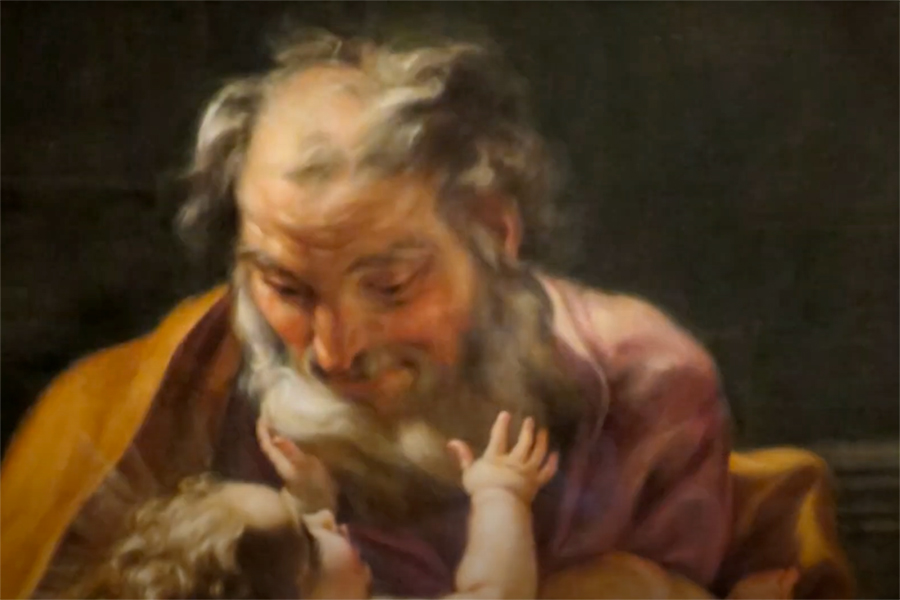
  • In the Second Meditation, we will look at the artistic tradition surrounding St. Joseph, reflecting on the wisdom of its beauty and symbolism.
  • And in the Conference, we will delve into the spiritual discipline of silence—something present in St. Joseph’s example and too often absent in our own pursuit of deeper friendship with Christ.

This may seem a strange topic for a Lenten Retreat Guide, but reflecting on St. Joseph will bring us back to the spiritual fundamentals – and getting back to spiritual basics is a great way to live Lent.  Let’s begin by quieting our hearts and turning our attention to God, who never stops paying attention to us. Let’s ask him for all the graces we need, and most especially, for the grace of interior renewal through the example and intercession of St. Joseph, the faithful and prudent steward.

We are excited to share with you an improved version of the PDF for this Retreat Guide. It is now available for purchase as a booklet on Amazon. It includes the meditations, conference, and reflection questions by Fr. Bartunek along with space for taking notes and journaling. We hope it helps to further open your heart to Christ this Lent.


Video

Audio

The Faithful Steward: A Lenten Retreat Guide on St. Joseph Read More »

Regnum Christi Spirituality Center Ask a Priest

“Ask a Priest: Should I Expect a Miracle and to Conceive Again?”

Q: I made a huge mistake and had a tubal ligation done the day after I gave birth to my son. That was 21 years ago. I have since met this wonderful man who I love dearly, and he has no children of his own. I tried having a tubal reversal, but my doctor said it was impossible because my tubes were cut too short. I never knew that having a surgery to prevent children was a sin against my faith. I deeply feel so much remorse and regret. I pray that God heals my infertility. Will God answer my request and prayers even though I had the surgery? I was young, I didn’t know that it was against the Lord’s teaching. – D.

Answered by Fr. Edward McIlmail, LC

A. I am sorry to hear about your tubal ligation. As you know now, it isn’t something good.

If you haven’t done so already, it would be good to mention it in confession and then leave things in God’s hands.

As for being able to conceive again (and here I am assuming that you are talking about entering a marriage that would be recognized by the Church), you can pray for a miracle. But you want to be careful about presuming God’s providence.

What I mean by that is this. Some of the decisions we make have consequences that normally cannot be reversed. If a farmer decides in the spring not to plant wheat, for instance, then he shouldn’t expect to change his mind in mid-August and have a harvest by Labor Day. Nature simply doesn’t work that way.

The same idea might apply in the case of the tubal ligation. If it cannot be reversed, then it might be better to accept that, as difficult as it is. Perhaps you could be a mom again — through adoption.

In all this you want to be careful not to put the onus on God to produce a miracle. You made a decision years ago, and that decision had a consequence. This realization might cause you great suffering, but it is suffering that you can offer back to Jesus. You can unite your cross with his.

Again, consider motherhood in a wider sense, one that includes opening your heart to an abandoned child.

Stay close to prayer and the sacraments and the Blessed Virgin Mary. You will find comfort.

“Ask a Priest: Should I Expect a Miracle and to Conceive Again?” Read More »

Regnum Christi Spirituality Center Ask a Priest

“Ask a Priest: Twice Divorced … Why the Need for Annulments?”

Q: I’m in my 50s and consider myself a Christian but yet not a Catholic. An old-school, conservative Catholic priest once told me that I cannot become a Catholic until the following matter is resolved: In my 20s, I married (in a Protestant church) a woman, but 12 years later she wanted and got a divorce. A few years later I married another woman (by a Protestant minister). Eight years later she also wanted and got a divorce. I’m now in a loving relationship with another woman, but we are not married yet. The Catholic priest told me that I need to get annulments for both my former marriages, and then marry the woman I’m currently with, but only after she has also got an annulment for her first marriage. Or else I will not be welcomed into the Catholic community. However, I fail to see how this mess can ever be resolved. None of the women have any interest whatsoever in going through an annulment process. Plus, I cannot see any solid, formal reasons for annulment (of the first marriage). I could of course go into celibacy, but that would mean abandoning my loved one and the life we’ve built, making her deeply unhappy and forever ruining any chances for her to become a Christian. And the same would most likely happen to my children. They would see a father who chooses to “save his own soul” at the cost of many others, just because a priest told him so. I would risk making many people bitter toward the Church. As you can see, this is a serious dilemma for me. Is there any other way? I want to become a Catholic, but not if it means pushing everyone I love away. – N.E.

Answered by Fr. Edward McIlmail, LC

A. My guess is that one reason why you are drawn to the Catholic Church is because you sense that it has something substantial to offer, something that Protestant denominations lack.

What the Church teaches is the fullness of what God has revealed through Jesus, and Our Lord was very clear about marriage. “Everyone who divorces his wife and marries another commits adultery, and the one who marries a woman divorced from her husband commits adultery” (Luke 16:18).

This teaching flows from the very nature of marriage. It reflects the inner life of the Trinity. When baptized Christians enter into a marriage with the right dispositions, it is for life. The Church considers such a bond a sacrament and doesn’t have the authority to dissolve a true marriage.

Now, to live in accord with that truth is part of what being Christian demands. So the dilemma you describe seems false. In effect you are saying that by living like a Christian you would drive someone away from Christianity. That implies that not living like a Christian will somehow draw others to Christianity. That rings hollow.

You yourself admit that you cannot see solid reasons for an annulment of your first marriage. That is a good place to start. A Christian interpretation of that fact would mean that you are still married to your first wife in the eyes of God.

That is the reality that you would need to start with. Certain demands flow from that fact. Among them: You couldn’t remarry while your first wife is still alive.

Perhaps that is what God is calling you to face. Perhaps by living a celibate life, you can grow in holiness.

If that seems beyond your capabilities, you are right. Holiness is beyond all of us – if we depend on our resources. God calls us to holiness with the implicit promise that he will give us the grace to become holy if we follow his path.

At the end of the day, the Catholic faith is about putting God first in our lives. All other relationships come second.

I would like to clarify one point. You mentioned that without the annulments you wouldn’t be welcomed in the Catholic community. That isn’t quite true. You could enter the Church, after proper instruction and a good confession, but you couldn’t marry in the Church, at least not now.

Now, perhaps there might be grounds for an annulment for the first marriage. You would need to speak with a priest about that. However, I don’t want to raise any false hopes here, since you in effect believe that the marriage was valid. Nevertheless, it is true that sometimes the presence of a “divorce mentality” in one or both of the potential spouses can make a marriage null. In other words, someone could enter into a supposed marriage with a kind of caveat in the back of their mind, “If it doesn’t work out, I’ll just get a divorce.” This can nullify a marriage, because it can empty the promise of entering into a lifelong union.

My point in mentioning this possible factor is simply to encourage you to take concrete steps by entering into a dialogue with a priest you can trust, or contacting someone at your Catholic diocese headquarters, to move forward. Don’t think that God can’t bring something wonderful out of your current situation, even if you don’t know what that will look like.

For now the choice comes down to this: Who is first in your life? Christ, or your woman friend?

Perhaps you want to take all this to prayer. I hope you choose well. Count on my prayers.

“Ask a Priest: Twice Divorced … Why the Need for Annulments?” Read More »

Regnum Christi Spirituality Center Ask a Priest

“Ask a Priest: So Many Lost Souls – Where Is Jesus’ Victory?”

Q: I often feel a sense of unease when I come across such phrases in the Gospel as “Not everyone who says to me, ‘Lord, Lord,’ will enter the kingdom of heaven” or “The gate is wide and the road broad that leads to destruction, and those who enter through it are many.” If Jesus through his death and resurrection has won a victory over sin, death and Satan, then how am I to understand this victory if, as the Gospel and the Church Fathers suggest, very many, probably the majority of humanity, will be damned? Surely, the high number of damned souls would be Satan’s victory and consolation. Although I am also against abortion because it is murder, I sometimes wonder whether giving birth to a child is just adding to the sum total of human wickedness and potential demon-fodder. Unless my thinking is mistaken, how am I to understand the Gospel as good news? – P.S.

Answered by Fr. Edward McIlmail, LC

A. First, the Church has never officially declared what percentage of humanity would be lost. It is a speculative question, and we won’t know the answer until the last judgment.

We should always have hope for the salvation of souls. There is no reason to abandon praying for souls of the living or dead. Prayers make a difference!

Second, it is good to remember bringing children into the world is a good thing. God’s first command to the first couple was to “be fruitful and multiply” (Genesis 1:28). The idea that somehow a new life is adding to the misery in the world is badly mistaken. I dare say that you might have been influenced a lot by the world’s viewpoint here. Many people who support abortion and contraception try to justify them on the grounds that limiting the number of people in the world is good. That isn’t a Christian viewpoint. God wanted the first couple to multiply and to “fill the earth” (also Genesis 1:28). Suffice it to say that each person’s very existence is a sign of God’s glory. It isn’t for us to judge that new lives shouldn’t be raised up in the world.

Third, God gives everyone enough grace to reach heaven — if the person does his part. No one ends up lost but for his choice.

Fourth, as for the world being a nasty place: It has been a mess since the sin of the first humans. That sin brought original sin into the equation. The result is that we inherit a damaged human nature which is prone to doing bad things. The devil is strong — but Jesus is much stronger. Our faith teaches us that. The world is good; sin brings evil. But that isn’t God’s fault.

What is needed here is a spirit of faith and confidence in God’s providence. This is the moment when the world needs Christian witnesses. This is when the world needs to see the Gospel come alive in the lives of Christians.

This is the moment when we need to bring the light of Christ into a darkened realm. Mother Teresa did that, and she helped change the lives of millions. Such is the grace of God that can transform hearts.

So it might be good to forget the world thinks. Look to the example of Mother Teresa and other saints. They didn’t buy into the pessimism of the world. Rather, they built their lives on Christ. One way to imitate the saints is to stay close to prayer and the sacraments, and do what you can to help those around you.

Be bold about your Christianity. The world needs to see such boldness in you. (Perhaps the online retreat about discouragement might be helpful, A Cure for Discouragement.

I will pray for you!

“Ask a Priest: So Many Lost Souls – Where Is Jesus’ Victory?” Read More »

Regnum Christi Spirituality Center Ask a Priest

“Ask a Priest: Being in a Same-Sex Union, Can I Return to the Church?”

Q: I have been away from the Church for 15 years. I would like to return to the Church and take Communion, but I know I must confess my mortal sins first. How do I approach confession after so long? Also, I am in a same-sex marriage. Is there a way for me to return to the Church in the first place? – R.

Answered by Fr. Edward McIlmail, LC

It is good that you feel a desire to return to the practice of your Catholic faith, and to be able to partake of Communion again. Even when we are away from the sacraments for a while, the Church still considers us her sons. And Jesus himself says that there is more rejoicing in heaven over one lost sheep who returns than over 99 who have no need of repentance (Luke 15:7).

Receiving Communion, as you mentioned, means being in a state of grace (no mortal sins). So after 15 years of being away, a good confession would be one of the key first steps.

One of the ingredients for making a good confession is to have contrition for one’s sins. No. 1451 of the Catechism says, “Contrition is ‘sorrow of the soul and detestation for the sin committed, together with the resolution not to sin again.'”

The “resolution not to sin again” means that we have to make an effort to break with sin. In the case of someone in a same-sex union, that would require ending the relationship and separating from the other person.

This would be required for your own spiritual benefit, which is what the Church is concerned about here.

The Catechism in No. 2358 says, “The number of men and women who have deep-seated homosexual tendencies is not negligible. This inclination, which is objectively disordered, constitutes for most of them a trial. They must be accepted with respect, compassion, and sensitivity. Every sign of unjust discrimination in their regard should be avoided. These persons are called to fulfill God’s will in their lives and, if they are Christians, to unite to the sacrifice of the Lord’s Cross the difficulties they may encounter from their condition.”

Out of a sense of love and duty, the Church teaches that homosexual acts “‘are intrinsically disordered.’ They are contrary to the natural law. They close the sexual act to the gift of life. They do not proceed from a genuine affective and sexual complementarity” (Catechism, 2357).

The Church understands that there is a lot of confusion today about the right use of sexuality. It also knows that God has a plan for sexuality, and that it is meant to unite a man and woman within the bond of marriage.

So the first question would be: Are you willing to break with this relationship? That would be a prerequisite for making a good confession and receiving Communion.

This will require a radical change in your life. Perhaps you are ready for this change, perhaps not.

At least for now it would be helpful to make time for prayer each day. Pray to the Blessed Virgin Mary for help. Feel free to attend Mass, even if you can’t receive Communion. Just hearing the readings and the prayers and the homilies might help you on your spiritual journey.

Perhaps you might seek out a local pastor and, if you aren’t ready for that radical break, at least speak with him about your situation.

The Church is here to help you each step of the way. Sometimes the road back home seems difficult. But with the grace of God anything is possible.

For an idea on the Church’s concern for people with same-sex attractions, you might check out “The Third Way“. Here is also a good guide to confession, that could help.

I hope some of this helps. Count on my prayers.

“Ask a Priest: Being in a Same-Sex Union, Can I Return to the Church?” Read More »

Scroll to Top

Events

Looking for another country?

Contact Regnum Christi near you

News & Resources

News & Resources

The Regnum Christi Mission

The Regnum Christi Identity

Alex Kucera

Atlanta

Alex Kucera has lived in Atlanta, GA, for the last 46 years. He is one of 9 children, married to his wife Karmen, and has 3 girls, one grandson, and a granddaughter on the way. Alex joined Regnum Christi in 2007. Out of the gate, he joined the Helping Hands Medical Missions apostolate and is still participating today with the Ghana Friendship Mission.

In 2009, Alex was asked to be the Atlanta RC Renewal Coordinator for the Atlanta Locality to help the RC members with the RC renewal process. Alex became a Group Leader in 2012 for four of the Atlanta Men’s Section Teams and continues today. Running in parallel, in 2013, Alex became a Team Leader and shepherded a large team of good men.

Alex was honored to be the Atlanta Mission Coordinator between 2010 to 2022 (12 years), coordinating 5-8 Holy Week Mission teams across Georgia. He also created and coordinated missions at a parish in Athens, GA, for 9 years. Alex continues to coordinate Holy Week Missions, Advent Missions, and Monthly missions at Good Shepherd Catholic Church in Cumming, GA.

From 2016 to 2022, Alex also served as the Men’s Section Assistant in Atlanta. He loved working with the Men’s Section Director, the Legionaries, Consecrated, and Women’s Section leadership teams.

Alex is exceptionally grateful to the Legionaries, Consecrated, and many RC members who he’s journeyed shoulder to shoulder, growing his relationship with Christ and others along the way. He knows that there is only one way, that’s Christ’s Way, with others!