Q: It’s been said that love is a choice. Can a person’s choosing to love despite not having those warm, fuzzy, and infatuated feelings be a good thing? In my case there is a man whom I’ve known for four months who is hinting at marriage. However, he is a serious Catholic, and this is where we deeply connect. I’m just not very attracted to him physically. Thanks for reading this. – J.
Answered by Fr. Edward McIlmail, LC
A: Love — real love — is an act of the will, and thus a choice.
Love isn’t the same as having warm, fuzzy feelings. Those feelings might exist, but they aren’t crucial.
Among newlyweds it has been noted that the romantic feelings rarely last more than two years. When those feelings fade, that doesn’t the marriage is over. Rather, it is simply the moment when spouses need to recommit to each other based on something more than feelings.
So, what might this mean in your case?
If you have found a man with whom you deeply connect in terms of the faith, then you are fortunate. This isn’t someone you want to write off too quickly.
As you probably know, it’s not easy to find an eligible man with character and faith nowadays. Externals are superficial, and more than a few marriages involving “attractive” spouses have failed because of underlying incompatibility or selfishness or immaturity or whatever.
You mention that you have known this man only four months. You might want to give the relationship time to mature. No need to rush to judgment. As you get to know him, you might come to appreciate his inner qualities deeply. Which could make him attractive to you in the best sense of the term.
In any case, don’t think that you have to force yourself to feel something you don’t. Take things one day at a time. Real love takes time.
To answer your question precisely, I’d say it is a far better thing not to choose to love based on warm, fuzzy and infatuated feelings. “Love” based on that kind of shaky ground usually collapses quickly if not tragically.
In the meantime, it would be good to intensify your prayer life. Try to keep Christ at the center of this relationship. And stay close to the Blessed Virgin Mary.
Today’s secular world throws curve balls at us all the time. AskACatholicPriest is a Q&A feature that anyone can use. Just type in your question or send an email to AskAPriest@rcspiritual.wpenginepowered.com and you will get a personal response back from one of our priests at RCSpirituality. You can ask about anything – liturgy, prayer, moral questions, current events… Our goal is simply to provide a trustworthy forum for dependable Catholic guidance and information. So go ahead and ask your question…
Q: I’ve been a longtime Catholic. My family wasn’t very religious, but in going to a Catholic high school and university, I came to the faith on my own. The idea that no one is here by accident and that God has a purpose for us all has had a profound effect on my life. However, while I believe in God, I feel like I have no connection to him or the Church. I go to Mass, participated in Cornerstone [Scripture study], raise my children Catholic, and genuinely believe, but I just don’t feel it. This lack of connection becomes particularly difficult when life gets difficult. I’m at a loss as to how to fix this … so far, my prayers haven’t worked. I’d appreciate any advice you could give. – K.
Answered by Fr. Edward McIlmail, LC
A: It sounds as though you have had a great grace, finding the faith despite your family background.
My knowledge of your situation is very limited, of course, but I’ll venture to throw out a few ideas for your consideration.
What you are going through isn’t uncommon. Whole books could be written on the subject.
Catholics, even faithful Catholics, might feel a disconnect with the Church because their local parish community is shaky.
There might be lots of goodhearted people in the parish, but they don’t connect as a group. When Mass is over, they rush for the parking lot. Or they are stressed with all the demands of life, be it work, the household, the long commutes, the 24/7 of media bombardment. There is little time left for forging a real sense of community and solidarity among fellow Catholics.
The wider culture doesn’t help. It is increasingly secularized, as is the thinking of many Catholics. The result is the fabric of religiosity has grown thin. We don’t live and breathe Catholicism the same way faithful people might have done a few generations ago.
So what can you do?
First, it might help to know that you aren’t alone and that there are reasons you feel the way you do. One book you might find helpful is Forming Intentional Disciples.
Second, you might consciously look to network with other faithful and apostolically oriented Catholics, that is, Catholics who try to get involved in projects to build the Church and evangelize. Evangelizing others, in fact, is one of great ways to strengthen our own faith.
Here, you might want to look into an ecclesial movement or a third order. You might consider Regnum Christi, for instance (the force behind the RC Spirituality website). There are other entities, too.
The important thing is to integrate action into your Catholic faith. It’s a good thing to pray and go to Mass. It’s a very different thing to, say, go on a Holy Week mission where you are knocking on doors and sharing the faith and inviting people to the sacrament of confession at the parish. Or getting neighbors to go on a weekend retreat with time for intense prayer and spiritual direction.
I hope some of these ideas help you. Count on my prayers.
Today’s secular world throws curve balls at us all the time. AskACatholicPriest is a Q&A feature that anyone can use. Just type in your question or send an email to AskAPriest@rcspiritual.wpenginepowered.com and you will get a personal response back from one of our priests at RCSpirituality. You can ask about anything – liturgy, prayer, moral questions, current events… Our goal is simply to provide a trustworthy forum for dependable Catholic guidance and information. So go ahead and ask your question…
Q: From my limited knowledge of Christianity, it appears to me that the Bible is heavily misogynistic and patriarchal throughout history. It seeks to enslave woman to be servants of males in countless cases. Is my understanding true? That the Bible might be written with ill intentions of males? – J.Z.
Answered by Fr. Edward McIlmail, LC
A: Before addressing the point about the misogyny, or hatred of women, it might be good to mention a few points.
First, the Bible is not one book. It’s a collection of books, written over many centuries and in various contexts. It has very different styles, and all the books of Scripture cannot be read as simple moral textbooks.
There is, in fact, a lot of objectionable behavior recorded in the Old Testament, everything from fratricide and adultery to the use of mediums. But just because something is mentioned in Scripture doesn’t mean it is OK to do. Scripture sometimes recorded the prejudices of the culture within which it took shape, without necessarily approving of such prejudices.
Second, Christianity is not synonymous with the Bible. The Catholic Church relies on Sacred Tradition along with Scripture for its teachings. Sacred Tradition is the oral teaching passed down from Christ and the apostles. It helps us understand the Bible correctly.
In practice, this means that the Church interprets the Old Testament in the light of Christ and what Our Lord taught and did.
And how did Jesus treat women? He treated them with respect. He was merciful to the woman caught in adultery. He cured women who were ill. He praised the widow who gave two small coins to the temple treasury. And he entrusted his immaculate Mother to intercede for us.
In a word, Jesus treated women with a dignity equal to that of men. He treated them as daughters of God. He certainly was no misogynist – on the contrary, he loved women deeply.
That is the stance that the Catholic Church embraces.
So, even though there might have been ill-treatment of women recorded in the Old Testament, that wasn’t God’s perfect plan for the world. Jesus showed us what God really intended.
Today’s secular world throws curve balls at us all the time. AskACatholicPriest is a Q&A feature that anyone can use. Just type in your question or send an email to AskAPriest@rcspiritual.wpenginepowered.com and you will get a personal response back from one of our priests at RCSpirituality. You can ask about anything – liturgy, prayer, moral questions, current events… Our goal is simply to provide a trustworthy forum for dependable Catholic guidance and information. So go ahead and ask your question…
Q: I am Catholic. I love my faith. I truly believe the core teachings of the Church, and I don’t feel like any other sect of Christianity comes close to the same truths that the Catholic Church has. However, my boyfriend has brought about a lot of difficult issues that he finds with Catholic teachings. Recently, I’ve only been totally stumped on the topic of Catholic morals on sex within marriage. His argument is that there is no reason for sex to be reproductive every single time, but that it is also important in the aspect of pleasure because it makes the relationship stronger. He claims that the Church should not support natural family planning because it is the same as actively trying to not have a child by using some sort of birth control. If the Church supports NFP, then why does it matter if a condom is used or not? An argument he heard from a natural-law student was that anything other than reproductive sex is frustrating the natural end of sex, and he argues that it doesn’t frustrate anything. There are also several arguments where couples who are sterile are still allowed to have sex, and that he can’t understand how they’d allow that, because that would specifically be frustrating the natural end. I am finding that the Church’s teaching can be rather wishy-washy in the teaching structure of things like this. I’m not sure what to do. I found a page that says that any sexual intercourse inside of marriage that is not ordered toward procreation is unlawful and sinful. In light of the above arguments I just really don’t know if I can believe that. A follow-up question: Can I still be a good Catholic and receive Communion if I don’t believe this one teaching? I’m really troubled emotionally and spiritually right now. Any help is appreciated. – C.
Answered by Fr. Edward McIlmail, LC
A: It is understandable that you might find the Church’s teaching in this area puzzling. It is subtle.
But it is well-grounded and deeply profound and aims to protect the integrity of the marital act as God intends it. There is nothing wishy-washy about Church teaching in this area.
First, it is good to point out that not every act of intercourse must lead to pregnancy. Nature builds in bodily cycles in women so that conception is possible only at certain times.
By charting those cycles natural family planning helps couples to achieve or avoid pregnancy. But NFP respects the structure that God built into nature, and thus maintains the integrity of the marital act. There is nothing wrong with a couple abstaining at certain times to avoid pregnancy. (This is assuming that they have serious reasons for doing so.)
NFP is not the same as contraception. Contraception is when the marital act is foiled in such a way as to deliberately close the door to the possibility of life. This can frustrate God’s plans for raising up new life, and it violates the very meaning of the marital act. Let me explain.
The marital act has a twofold dimension: unitive and procreative. The unitive expresses the one-flesh union between spouses. This is something God blesses. This unity is an icon of the inner life of the Trinity. It is an icon of the love within the Trinity, where the divine Persons hold nothing back from each other, that led to the creation of the world.
Any use of a condom or similar type of contraception essentially blocks the one-flesh union. The spouses hold back something of themselves from each other. In effect they don’t give and accept that potentially procreative dimension of each other. Their surrender to each other isn’t total. It’s as though one tells the other, “I want you but not your fertility.”
Now, the procreative side doesn’t mean that only fertile spouses can be intimate. It does mean that when they are intimate, they need to be open to the possibility of pregnancy. They need to be open to allowing God a chance to raise up new life. Thus, even older couples can rightly engage in intercourse after menopause. Their act expresses the one-flesh union, even if the wife is no longer capable of conceiving. That is simply something beyond her control.
Again, couples who are intimate during infertile periods are not contracepting, since the integrity of the marital act is respected; in this case, the spouses simply refrain from it. They are only taking advantage of the infertile periods that God has written into the human body.
People who have written a lot on theology of the body and NFP and contraception include Janet E. Smith and Christopher West. You might find it helpful for you and your friend to read or listen to some of their materials.
No doubt, NFP takes discipline and sacrifice at times. A key ingredient is the cooperation of the husband. He must be sensitive to his wife’s cycles and be considerate of the changes that she goes through during the month. Many NFP wives find that their husbands are more attentive to and respectful of them.
A common danger with contraception is that it leaves a husband thinking he is entitled to have sex with his wife whenever he wants. One can imagine how a wife might react to the idea that she is expected to be “on call” at any time. Rightly has contraception been called the silent killer of marriages.
The great prophet who warned against contraception is Pope Paul VI. His encyclical Humanae Vitae is worth reading, especially given his predictions about what a contraceptive culture would bring about.
As for receiving Communion: To be Catholic means, in part, to accept Church teaching. If the Church is wrong about contraception, then it is wrong about a major moral issue. And if that were the case, then the only “good Catholics” would be the ones who opposed the Church, since presumably, they are embracing a higher truth. Does that seem logical?
Perhaps the better way to state your question is this: What should you do if you have a difficulty about a Church teaching?
To have a difficulty means to know the belief is true but to be unsure just what it means or why it is true. This is OK. Here, the ideal is that a person would give the Church the benefit of the doubt, and then continue to pray about and research the issue.
One can still receive Communion in this state. What a Catholic shouldn’t do is cross over the line and doubt the teaching – that is where a person questions the very truth of the teaching. To do that would put the whole veracity of the Church in question. Which in turn would endanger the whole edifice of faith.
If ever you want a happy marriage, it might be worth considering some of these points. It would be good to take all this to prayer, too, since faith is ultimately a gift. A gift you mostly want to pass on someday.
Today’s secular world throws curve balls at us all the time. AskACatholicPriest is a Q&A feature that anyone can use. Just type in your question or send an email to AskAPriest@rcspiritual.wpenginepowered.com and you will get a personal response back from one of our priests at RCSpirituality. You can ask about anything – liturgy, prayer, moral questions, current events… Our goal is simply to provide a trustworthy forum for dependable Catholic guidance and information. So go ahead and ask your question…
Q: My friend who is not Catholic does not understand why we pray for the poor souls. I explained about atonement and why we go to purgatory. What else can I say to him? – D.W.
Answered by Fr. Edward McIlmail, LC
A: We pray and sacrifice for the poor souls because our efforts can help get them into heaven faster. Our efforts can merit a reduction in the temporal punishment still due to the venial sins they committed while on earth.
A way to explain temporal punishment might be this: Image that, by your negligence, you put a soccer ball through your neighbor’s front window. You then go to your neighbor and beg her forgiveness, which she extends. She forgives your destructive act of negligence.
But then there is the matter of the broken window. Out of justice you need to replace it somehow. This is like temporal punishment. It isn’t out of vengeance that your neighbor asks you to pay for the glass; it is a simple demand of justice. There is a balance to be restored.
When a soul dies with unforgiven venial sins or with temporal punishment still to be paid off, it has to make up for these debts. That is partly what purgatory is about. For every soul that enters heaven must be purified first.
Now, the souls in purgatory “pay off” what they owe through a pain of purification. The souls in purgatory can also get help from us on earth. Hence, we pray for the dead.
We pray for the dead out of a sense of hope and humility — hope because we desire that they are saved, humility because we usually can’t be sure that they are in heaven yet.
A few numbers are worth quoting from the Catechism:
“III. THE FINAL PURIFICATION, OR PURGATORY
“1030 All who die in God’s grace and friendship, but still imperfectly purified, are indeed assured of their eternal salvation; but after death they undergo purification, so as to achieve the holiness necessary to enter the joy of heaven.
“1031 The Church gives the name Purgatory to this final purification of the elect, which is entirely different from the punishment of the damned. The Church formulated her doctrine of faith on Purgatory especially at the Councils of Florence and Trent. The tradition of the Church, by reference to certain texts of Scripture, speaks of a cleansing fire:
“As for certain lesser faults, we must believe that, before the Final Judgment, there is a purifying fire. He who is truth says that whoever utters blasphemy against the Holy Spirit will be pardoned neither in this age nor in the age to come. From this sentence we understand that certain offenses can be forgiven in this age, but certain others in the age to come.
“1032 This teaching is also based on the practice of prayer for the dead, already mentioned in Sacred Scripture: ‘Therefore [Judas Maccabeus] made atonement for the dead, that they might be delivered from their sin.’ From the beginning the Church has honored the memory of the dead and offered prayers in suffrage for them, above all the Eucharistic sacrifice, so that, thus purified, they may attain the beatific vision of God. The Church also commends almsgiving, indulgences, and works of penance undertaken on behalf of the dead: ‘Let us help and commemorate them. If Job’s sons were purified by their father’s sacrifice, why would we doubt that our offerings for the dead bring them some consolation? Let us not hesitate to help those who have died and to offer our prayers for them.'” [end quoted material]
Not everyone has to go purgatory, by the way. People who die in a perfect state of grace will go to heaven immediately after death.
You and your friend might watch our Retreat Guide on the Four Last Things, “Fire of Mercy.”
Today’s secular world throws curve balls at us all the time. AskACatholicPriest is a Q&A feature that anyone can use. Just type in your question or send an email to AskAPriest@rcspiritual.wpenginepowered.com and you will get a personal response back from one of our priests at RCSpirituality. You can ask about anything – liturgy, prayer, moral questions, current events… Our goal is simply to provide a trustworthy forum for dependable Catholic guidance and information. So go ahead and ask your question…
Imagine you are a married couple who plans to raise a family. Maybe you would like enough children to field your own basketball team.
If you are Catholic, you are more likely to have a larger family. And in this imaginary case the family is Catholic and simply can’t conceive.
The hope for a large family becomes a desperate hope for a child, maybe two. And the fear grows of being a childless couple in a Catholic world of couples with kids.
Bottom line: millions of couples have a difficult time conceiving a child. And more than one in 10 women will use “infertility services” in an effort to have a child.
For Catholics and practitioners of some other religions, some of the infertility services cross the moral line. Ironically, moral issues arise in the area of creating fertility much as in preventing conception via artificial birth control.
That’s where the Pope Paul VI Institute for the Study of Human Reproduction enters the picture.
The Pope Paul VI Institute in Omaha, NE, founded in 1985 by Thomas W. Hilgers, MD, is internationally recognized for its outstanding achievements in the field of natural fertility regulation and reproductive medicine — 33 years of scientific research and educational program development; allied health professional education programs for couples and professionals; professional, caring, and morally acceptable patient services. The Institute is building a culture of life in women’s health care through its major developments — Creighton Model Fertility Care System and NaProTechnology.
And as its name suggests, the Institute works strictly in conformity with the teachings of the Catholic Church. Its mission is “Building a Culture of Life in Women’s Care.”
There is a good deal of medical science and technology. But helping couples who can’t conceive also requires a high level of loving bedside manner. Couple who come for consultation and treatment may have to spend days or even weeks, often needing a place to stay.
That where Carolyn Moriarty steps in as part Bed & Breakfast operator, part mom, part grandmother and a sometimes shoulder to cry on.
Carolyn joined Regnum Christi in Kansas City in 1997. She is a cradle Catholic, second oldest of eight children, who raised her own son and daughter – and her brother’s son and daughter after he died when they were very young.
Carolyn went to the PPVI in 1980 to learn about natural family planning. After her kids were grown, she went back to work as a medical secretary in the maternity unit of a hospital in Omaha.
She became close friends with a female doctor at the hospital who worked with the Institute. Her new friend asked if she would be willing to have a visiting medical resident stay at her home.
Carolyn figured it wouldn’t be much trouble, so she welcomed her first house guest. And even though she was working and had a host of family obligations, she embarked on what grew into an informal Bed and Breakfast for travelers to the Institute.
“I really enjoy having the people around,” Carolyn said. “Each visitor is unique and a total blessing to me.
“I get emotionally involved with everyone who stays here and when they get pregnant later and have a baby, they send pictures…I feel like I’m a grandma again!”
In addition to being a “grandma by association,” Carolyn is a real Nonni to her daughter Emily’s three children and, appropriately enough, those three kids were the result of Emily’s treatment at the Institute. This is one reason Carolyn wants to help other young women who are hoping for a family.
“The people who stay here are always so appreciative and tell me I’m doing a great service, but I feel like I’m the one who really benefits. When couple goes through treatment and then has a baby they are so thrilled – and I get to share in that joy. That’s the best part of this.
“A couple who stayed here recently decided to adopt and are looking forward to that, while they continue receiving infertility care.”
Occasionally, the story doesn’t have as happy an ending. Carolyn recalls a women who went through treatment but the doctors were unable to help.
“She and her husband came back to the house and we just sat and cried together. But we stay in touch and they have recently adopted a baby girl. This couple has a special place in my heart because we grieved together.”
Carolyn’s usual guests are couples getting counseling and treatment at the Institute. But she also has had doctors, nurses and people learning to teach the NFP charting methods used at the Institute.
For Carolyn, her “simple apostolate” is all about providing a homey atmosphere for visiting couples who are going through a difficult time in their lives. After all, by the time they have decided to visit The Pope Paul VI Institute, they likely have experienced years of frustration and visited their personal doctors, received advice from well-meaning friends and family, and are experiencing a combination of hope and fear. The Institute isn’t the first step in the path to parenthood, but probably the last chance.
A simple internet search on “infertility” will generate myriad articles on everything from medical advice to superstitious solutions to well-meaning paths to acceptance. There are even columns about how to have a sense of humor about not being able to have a baby.
Carolyn Moriarty’s apostolate is a simpler, more loving, totally Catholic solution. She offers patience, understanding, hospitality, and love. Her home is a place of hope.
Q: I am striving to become vegan, and all my friends aren’t as supportive, since this society has portrayed meat as being the only food we have to live off. Did God want us to eat animals and abuse them? Would God be happy with this? It says in the Ten Commandments, “Thou shall not kill.” Then why are we killing animals? Doesn’t it include animals as well? They’re living creatures. I don’t find any justification to kill animals that God created. – S.H.
Answered by Fr. Edward McIlmail, LC
A: The short answer is that it is morally OK to use animals for food. They are part of the creation that God gives us to sustain us. Many of the rituals of the Old Testament, in fact, centered on the sacrificing (killing) of animals, which God certainly condoned.
The killing of animals for food doesn’t violate the Fifth Commandment. That commandment applies to human life. Nevertheless, people shouldn’t abuse animals.
A few numbers dealing the Seventh Commandment, which put things in perspective, are worth quoting from the Catechism:
Respect for the integrity of creation
2415. The seventh commandment enjoins respect for the integrity of creation. Animals, like plants and inanimate beings, are by nature destined for the common good of past, present, and future humanity. Use of the mineral, vegetable, and animal resources of the universe cannot be divorced from respect for moral imperatives. Man’s dominion over inanimate and other living beings granted by the Creator is not absolute; it is limited by concern for the quality of life of his neighbor, including generations to come; it requires a religious respect for the integrity of creation.
2416. Animals are God’s creatures. He surrounds them with his providential care. By their mere existence they bless him and give him glory. Thus men owe them kindness. We should recall the gentleness with which saints like St. Francis of Assisi or St. Philip Neri treated animals.
2417. God entrusted animals to the stewardship of those whom he created in his own image. Hence it is legitimate to use animals for food and clothing. They may be domesticated to help man in his work and leisure. Medical and scientific experimentation on animals is a morally acceptable practice if it remains within reasonable limits and contributes to caring for or saving human lives.
2418. It is contrary to human dignity to cause animals to suffer or die needlessly. … [end quoted material]
It is fine if you want to refrain from eating meat (though I hope it doesn’t compromise your health). But it is certainly morally acceptable to eat the meat of animals.
Today’s secular world throws curve balls at us all the time. AskACatholicPriest is a Q&A feature that anyone can use. Just type in your question or send an email to AskAPriest@rcspiritual.wpenginepowered.com and you will get a personal response back from one of our priests at RCSpirituality. You can ask about anything – liturgy, prayer, moral questions, current events… Our goal is simply to provide a trustworthy forum for dependable Catholic guidance and information. So go ahead and ask your question…
Regnum Christi organized missions in many countries around the world during Holy Week. There are so many stories we can’t cover all of them, so here is a highlight reel of what happened in different countries. Since starting in 1993 in Mexico, Mission Youth and Family Missions have reached 7,800,000 households, with 191,900 young people and 16,000 families volunteering.
Ricardo Vallejo of Medellín, Colombia, spoke about his family mission experience: “The most beautiful thing about family missions is that it is an experience in which everyone can participate. Children become friends with local children, those who know how to speak, preach and those who do not dare to speak help organize the activities, those who are more intrepid go to the last house … but everyone can do something and, most importantly, all bear witness to Christ, even if only by their presence.”
Venezuela
Yuliana Ortiz spoke of her experience with Mission Youth from Barquisimeto, Venezuela: “The missions were … the most beautiful opportunity that God gave me for Him to enter my heart. It has been wonderful to answer His call with a ‘YES,’ because through these experiences we recharge the necessary fuel for our hearts: we increase our faith and fill ourselves with love. … Once the missions are over, we can be a ray of light in the midst of a society living darkness. Without a doubt, nothing is more rewarding than leaving your comfort zone to give yourself to others.”
Spain
Across Spain, 960 missionaries helped in 28 parishes over Holy Week.
Gabriel López spoke of the missions as a sign of contradiction: “Humanly, [missions] are not possible to understand: we slept on the floor, the showers were freezing … everything was rather uncomfortable. And, nevertheless, what a gift! The simplicity shared with the other young people, eating with the families who opened their houses, giving the best of ourselves in whatever conditions, filled us all and brought out the best in each one.”
Samantha Rivera from Venezuela now lives in Madrid and had a special experience of Holy Week missions in a parish right on the Camino de Santiago (Path of St. James) pilgrimage route. “It was a different [kind of] Holy Week, where the grace of God became evident. I can reaffirm that theCamino de Santiago is a special place to experience God’s presence. Most pilgrims who decide to walk do so as an ‘escape’ or ‘response’ to some situation they are experiencing in their lives; others do it for sport or tourism. Whatever the reason, they all get an experience that goes beyond what they could imagine. … I am very grateful for the grace of being part of this plan of God, and I am convinced that God is evident, because He needs us to shout to the world that all can be happy, but that we can only be happy with Him in our heart.”
Chile
During his recent visit to Chile, Pope Francis called for people to be missionaries. In that country, 1,500 people responded to this call through Holy Week missions.
Fr. Gastón Vicuña, LC, was chaplain for young men and teens in ECYD who were missionaries, and shared their joint experience: “We had wonderful experiences, because the guys who participate really become missionaries. The Holy Week missions were short but intense! All the celebrations of the Passion of the Lord were lived well. … The teens who went to the missions had strong experiences, either because of a closer encounter with God or from the reality of the poor in the countryside, which helped them a lot when they returned to their daily lives. It was a positive experience that many will repeat and invite their friends to participate in. It was an experience that helped them grow in their faith, where they had opportunities to talk about their faith, sometimes with people of other faiths who helped them to consider issues they never would have thought about in their day-to-day life.”
Pilar Alemparte, a young woman with Mission Youth, shared her experience in Marchigüe: “Holy Week was approaching, and I thought about what I would do. I thought about everything Jesus did for me, everything He gave me, and I did not know how to thank Him. After a while, I realized that the best way to thank Him was to share everything I have with others. Because of that, and because of the extraordinary experience of last year’s missions, I realized that I cannot sit idly by when so many people need help, and that I could not let this opportunity pass. … Going to missions is an unforgettable experience, where every day I learned something new—a new teaching, a new experience, but especially each day I saw more of God in my neighbor.”
Mexico
Holy Week missions began in Mexico, where they bring out the largest contingent. Mexico had 9,312 missionaries in 2018.
In Cancun, Mission Youth prepared the Stations of the Cross along the beach, with more than 250 actors participating. This was the highlight of missions in the Prelature of Cancun-Chetumal overseen by the Legionaries, where both urban and rural missions took place.
Seventy-seven young men from Toluca went up into 26 rural villages near Chiconcuautla, Puebla, where there is alarming poverty, violence, vice, and syncretic religious practice. They have been visiting the same towns for three years, and now a change can be seen from this work. Along with the young men, 40 young women in ECYD also went on mission from Toluca-Metepec to other towns.
A strong contingent came from Guadalajara. At the closing Mass there, Fr. Luis Rodrigo Núñez, LC, reflected, “I would like to be a mystic to understand the heart of Christ and be able to tell them how He feels when He sees that His sacrifice on the cross was not lost but continues to come through us to more and more souls. I would like to share with Him how it feels to see that the doors of hearts were opened.”
If you want more images, every single link in the article has photos of these missions. You can find out about upcoming missions, in the USA and internationally, at www.missionyouth.com.
Q: I’m a college student and have recently decided to take my Catholic faith more seriously. I’ve always thought that the most important things were believing in Jesus, praying, and doing our best to serve others. Lately I’ve been reading a lot of Catholic websites and have seen some things that have made me question my faith and sometimes go against my conscience. Some websites look for sin and the devil everywhere, instead of giving people the benefit of the doubt. For example, I’ve always enjoyed reading the Harry Potter books with my family, and my priest has given homilies about them, but I’ve read things saying the books are absolutely from Satan. I’m also seeing a lot of Catholic websites get defensive about the Church’s response to the pedophilia scandals with priests and blaming it on secular society. I don’t understand why they can’t just admit that it was handled poorly and innocent children (including some of my friends) got hurt. I try to look for good in the world, but seeing things like this has made me question everything and feel afraid to live my life because it seems like everything is a sin. I don’t understand why we have to make the world out to be so terrible and romanticize the past. Yes, people were more religious 50 years ago, but do they forget about the evils of segregation, the fact that women could hardly get an education or hold jobs, or the fact that part of the reason the youth revolted was because they were sent to kill innocents in an unjust war? I want to live my life to serve God and help others, but being exposed to this fundamentalism has really shaken me. How should I take all this? – K.H.
Answered by Fr. Edward McIlmail, LC
A: You have discovered what a lot of people have discovered: the Internet is full of websites that can get you questioning everything under the sun. Unfortunately, many of the sites are wrong or misleading.
You would do well to take some of these websites with a grain of salt. Harry Potter isn’t spiritual reading, and yes, the books probably have some non-Christian ideas. On the other hand, a lot of faithful Catholics have read them without losing their faith. I’m not here to make any definitive judgment on the Potter series. Suffice it to say that the Church hasn’t condemned the books. So, people should use prudence to decide whether to read them or not.
Skepticism is also healthy toward the sites that seem to be in denial about the scandals within the Church. There were a lot of horrific things done, and it was unconscionable that certain people were left in ministry for so long. Far too many victims will carry the wounds of abuse all their lives. They need our prayers. Fortunately, many people in the Church have recognized the absolute need for reform and vigilance at all levels.
So, what should you do amid all the polemics and pain you see in the Church and in the world?
The short answer is: Keep your eyes on Jesus. He is the reason why the Church exists. The Church is his mystical body. As such, it is pure and holy and can help you become a saint, through its sacraments and teachings and other treasures.
You are right about not being nostalgic about the past. Last century saw its world wars and economic depressions and the spread of communism. We have our own trials today.
To put things in perspective, recall that the world has been a mess ever since the Fall. The good news is that the Church is here to help us deal with the world.
One way to deal with it is simple: Age quod agis. Do what you are doing. Or rather, do what you should be doing.
And what should you be doing? Praying. Frequenting the sacraments. Cultivating a devotion to the Blessed Virgin Mary. Sharing your faith with people. Developing and using your talents for the glory of God and for the service of others.
One practical suggestion: Be careful about what you read and watch. Instead of the fundamentalist sites, try reading the works of Cardinal Ratzinger/Pope Benedict XVI, C.S. Lewis (an Anglican who is solid), Peter Kreeft, Fulton Sheen, and John Paul II. Or any of the great works of the past: The Imitation of Christ,Introduction to the Devout Life, etc. And, of course, Scripture.
To help you go deeper in the spiritual life, consider some of the RC Spirituality resources, such as the retreat guides and the RC Daily Meditations. Other helpful resources could include The Better Part.
If you focus your attention and energies on positive things, you won’t have time to get depressed about the world. You’ll be too busy striving for holiness and helping to renew the Church.
Today’s secular world throws curve balls at us all the time. AskACatholicPriest is a Q&A feature that anyone can use. Just type in your question or send an email to AskAPriest@rcspiritual.wpenginepowered.com and you will get a personal response back from one of our priests at RCSpirituality. You can ask about anything – liturgy, prayer, moral questions, current events… Our goal is simply to provide a trustworthy forum for dependable Catholic guidance and information. So go ahead and ask your question…
Alex Kucera has lived in Atlanta, GA, for the last 46 years. He is one of 9 children, married to his wife Karmen, and has 3 girls, one grandson, and a granddaughter on the way. Alex joined Regnum Christi in 2007. Out of the gate, he joined the Helping Hands Medical Missions apostolate and is still participating today with the Ghana Friendship Mission.
In 2009, Alex was asked to be the Atlanta RC Renewal Coordinator for the Atlanta Locality to help the RC members with the RC renewal process. Alex became a Group Leader in 2012 for four of the Atlanta Men’s Section Teams and continues today. Running in parallel, in 2013, Alex became a Team Leader and shepherded a large team of good men.
Alex was honored to be the Atlanta Mission Coordinator between 2010 to 2022 (12 years), coordinating 5-8 Holy Week Mission teams across Georgia. He also created and coordinated missions at a parish in Athens, GA, for 9 years. Alex continues to coordinate Holy Week Missions, Advent Missions, and Monthly missions at Good Shepherd Catholic Church in Cumming, GA.
From 2016 to 2022, Alex also served as the Men’s Section Assistant in Atlanta. He loved working with the Men’s Section Director, the Legionaries, Consecrated, and Women’s Section leadership teams.
Alex is exceptionally grateful to the Legionaries, Consecrated, and many RC members who he’s journeyed shoulder to shoulder, growing his relationship with Christ and others along the way. He knows that there is only one way, that’s Christ’s Way, with others!



 That’s where the Pope Paul VI Institute for the Study of Human Reproduction enters the picture.
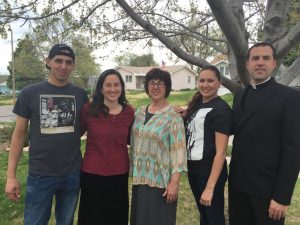 Carolyn joined Regnum Christi in Kansas City in 1997. She is a cradle Catholic, second oldest of eight children, who raised her own son and daughter – and her brother’s son and daughter after he died when they were very young.
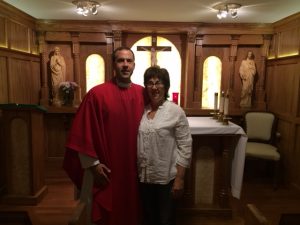 “The people who stay here are always so appreciative and tell me I’m doing a great service, but I feel like I’m the one who really benefits. When couple goes through treatment and then has a baby they are so thrilled – and I get to share in that joy. That’s the best part of this.

 In
 Samantha Rivera
 Fr. Gastón Vicuña, LC, was chaplain for young men and teens in ECYD who were missionaries, and shared their joint experience: “We had wonderful experiences, because the guys who participate really become missionaries. The Holy Week missions were short but intense! All the celebrations of the Passion of the Lord were lived well. … The teens who went to the missions had strong experiences, either because of a closer encounter with God or from the reality of the poor in the countryside, which helped them a lot when they returned to their daily lives. It was a positive experience that many will repeat and invite their friends to participate in. It was an experience that helped them grow in their faith, where they had opportunities to talk about their faith, sometimes with people of other faiths who helped them to consider issues they never would have thought about in their day-to-day life.”
 Seventy-seven young men from
