Regnum Christi Spirituality Center Uncle Eddy

St Winnoc

Dear Wilma, I think you will find much more peace if you stop complaining about having to work to help pay for your school.  Let’s be realistic, first of all, then super-realistic.  Being realistic, you have to admit that most of your friends who don’t have to work to help pay for their school actually end up wasting a lot of time.  They take things for granted (most of them), and use their time and their resources irresponsibly, carelessly.  It’s human nature, so we need not be surprised (although you should do you best to help them take better advantage of their situation – for their own good and the good of the Kingdom).  And if you were in their position, you would probably end up wasting time too (although I would be here to prod you if you did).  Being super-realistic, however, I would like to remind you that our Lord and his Mother had to work as well.  They worked hard.  When Jesus was your age he worked full time.  So there must be some supernatural value in it.  If you are willing to prayerfully delve into the example of Christ, I am sure the Holy Spirit will give your soul plenty of light and strength in this regard.  Besides, hard work, physical labor done well, has been one of the saints’ favorite ways of winning hearts to God, so you have a wonderful chance to follow in their footsteps.  Take today’s saint for example. Winnoc was a British fellow.  As a young man he and a few friends took a trip to a newly founded monastery.  They went out of youthful curiosity, but the diligence and joy of the monks fired them with a desire to take the habit as well.  Soon Winnoc “shone like a morning star among the 150 monks who inhabited that sanctuary” as one biographer has put it.  When the monastery outgrew itself, St Winnoc was given charge of his original companions and sent to set up camp at a location farther out, in an area that was largely unevangelized.  They arrived, rolled up their sleeves, and when they weren’t praying, eating, or sleeping, they were working hard – physical labor, mind you, building up their church and their cells, plus a hospital for the sick and abandoned of the countryside.  Soon the monastery became a missionary headquarters, spreading Christ’s Kingdom throughout the region.  Besides his miracles, Winnoc’s most effective tactic for winning over the locals was serving them by his work.  Even when he was an old man he worked hard; the young neophytes used to sneak around the barns to catch a glimpse of the gray-haired saint plugging away at the hand-mill or repairing things. So you see, my dear niece, realistically, having to work is a blessing, and supernaturally speaking you are in excellent company as you toil away among the pots and pans.  Don’t let the devil try and convince you otherwise. God bless, Uncle Eddy

St Winnoc Read More »

What If a Homily Doesn’t Touch on the Gospel?

Q: Why read the Gospel at Mass and not speak about its content in the homily? I truly believe that we are in great need of relearning our Catechism, and the Sunday homily is the only proper place to reach many. Exposing and correcting the wrongs of our time will go a long way to thwarting the insidious tactics of the Evil One. — Lucille

Answered by Fr. Edward McIlmail, LC:

Ideally, a homily at Sunday Mass should help to explain the Gospel and the other readings.

Whether every priest does this, is another question.

The Homiletic Directory, published by the Congregation for Divine Worship in 2015, says, “[T]he Mass is not an occasion for the preacher to address some issue completely unrelated to the liturgical celebration and its readings, or to do violence to the texts provided by the Church by twisting them to fit some preconceived idea” (No. 6).

If you feel that the priests at your parish should speak more about Scripture, you might look for ways to nudge them in that direction.

After Mass you could tell the celebrant who is greeting people, “Father, I like how you explained X in your homily about the first reading and the Gospel. It helps me a lot to hear explanations of the readings …” (hint, hint).

This might take a bit of nudging since some priests might not change their style too quickly. Be willing, however, to give them a bit of leeway since they might perceive that a particular issue needs to be explained to the faithful.

In the meantime, to battle the insidious tactics of the devil, pray for priests and priestly vocations.

What If a Homily Doesn’t Touch on the Gospel? Read More »

26-11-06-DM

November 6, 2026 – Proactive for Christ

Friday of the Thirty-First Week in Ordinary Time


Luke 16:1-8

Jesus said to his disciples, “A rich man had a steward who was reported to him for squandering his property. He summoned him and said, ‘What is this I hear about you? Prepare a full account of your stewardship, because you can no longer be my steward.’ The steward said to himself, ‘What shall I do, now that my master is taking the position of steward away from me? I am not strong enough to dig and I am ashamed to beg. I know what I shall do so that, when I am removed from the stewardship, they may welcome me into their homes.’ He called in his master’s debtors one by one. To the first he said, ‘How much do you owe my master?’ He replied, ‘One hundred measures of olive oil.’ He said to him, ‘Here is your promissory note. Sit down and quickly write one for fifty.’ Then to another he said, ‘And you, how much do you owe?’ He replied, ‘One hundred measures of wheat.’ He said to him, ‘Here is your promissory note;write one for eighty.’ And the master commended that dishonest steward for acting prudently. For the children of this world are more prudent in dealing with their own generation than the children of light.”

Opening Prayer: Dear Lord, I come before you asking to grow in faith, hope, and love. Grant me the grace to know and love you just a little more today. May I listen to your words attentively so that I can respond with deliberate obedience. Lord, I trust that you will give me what I need to fulfill your holy will.

Encountering Christ:

  1. “The Children of This World Are More Prudent”: We note a tinge of sadness in Our Lord’s comment, “For the children of this world are more prudent in dealing with their own generation than the children of light.” In other words, people strive more intensely for the things of this world than his followers do in pursuit of the Kingdom of God. The children of the world engage their intellect, will, and imagination to gain wealth, popularity, power, and comfort. They know what they want, and they pursue it. While the object they pursue is ephemeral, the intensity with which they pursue it is admirable. Our Lord wants to see his followers live with that same intensity. In the Book of Revelation he says, “I wish you were either cold or hot. So, because you are lukewarm, neither hot nor cold, I will spit you out of my mouth” (Rev 3:15-16).


  2. Want the Kingdom of God: As Christians, we believe in the primacy of grace; therefore, we must principally rely on prayer and the sacraments to help establish God’s Kingdom in our hearts and in the world. However, it is a frequent temptation to equate confidence in grace with indolence. St. James writes, “What good is it, my brothers, if someone says he has faith but does not have works? […] Demonstrate your faith to me without works, and I will demonstrate my faith to you from my works” (Jas 2:14,18). Activism is relying too much on our work without grace. Our faith should spur us to action. To be obedient to God is to do what he asks, to take action. This does not preclude that at times we must wait; however, eventually we must act. Docility to God’s will and passivity are not the same thing; even when running at full speed, a racehorse can be docile to the jockey.


  3. Creativity Born of Desire: The Church and the world need Christians proactively seeking to serve where the need is greatest. The saints have been eloquent models of such initiative. St. John Bosco saw the displaced boys in the streets due to the Industrial Revolution, so he started an orphanage and trade schools. St. Giuseppe Moscati served his community as a medical doctor and researcher. St. Katharine Drexel saw the struggles of African-Americans and Native Americans, so she founded schools for them. St. Teresa of Calcutta saw the homeless dying unloved in the streets, so she created homes for the dying. The Holy Spirit speaks to us through prayer and Scripture, but also through our talents and the needs around us. We must prayerfully discern to see where and how God is asking us to serve.

Conversing with Christ: Dear Lord Jesus, you have created me to know, love, and serve you. You have given me the skills, experiences, and opportunities to serve. Open my eyes and heart to discover those souls whom you choose to touch through me, whether it be through corporal or spiritual works of mercy—or both. May I one day, after a lifetime of service, hear you tell me, “Well done, my good and faithful servant… Come, share your master’s joy” (Mt 25:21).

Resolution: Lord, today by your grace I will take some time today to reflect prayerfully on my mission to serve. Am I serving where I ought? Should I keep the course or make some changes? What are some of the unmet needs I see around me where I might be useful?

For Further Reflection: You might read this article on the life of St. John Bosco as an example of someone seeking to serve where needed.

Fr. John Bullock, LC, was ordained in 2002 and works with Regnum Christi in Houston, Texas, his hometown. He has worked in youth work, college campus ministry, and as a chaplain to the Regnum Christi movement. He loves his faith, enjoys working with people, and loves riding his bike.

November 6, 2026 – Proactive for Christ Read More »

Regnum Christi Spirituality Center Uncle Eddy

St Bertilla

Dear Bert, Well, don’t get too worried about how things will work themselves out down the road; it’s good to plan ahead, but you should keep in mind that God may want things to turn out a bit differently than you think.  If that’s the case, stick with God’s suggestions and scrap your own plans – he’s got a much better track record.  Don’t get me wrong, I am not saying that you shouldn’t apply to graduate schools and interview for jobs and all that good stuff, I’m just saying that every time you send off an application or finish an interview, you should conclude with a sincere and heartfelt “Thy will be done – not mine” in the depths of your soul.  He, after all, is the artist; we are just the paintbrushes.  Which reminds me a bit of today’s saint. Bertilla grew up in northern France, and as she came to know the ways of the world, she felt God calling her to leave it behind and dedicate herself exclusively to him and his Kingdom.  With the encouragement of her bishop, St Ouen, she entered the convent at a relatively young age (about your sister’s age, actually), and made rapid progress in the mysterious joys surrounding humility, purity, and a life of prayer.  When St Bathildis, Queen of the Franks, reestablished an abbey of nuns near the royal court, she asked Bertilla’s prioress to send a small group of fervent religious to give it a jumpstart, and St Bertilla was assigned to head up the team.  She ruled the abbey firmly, with strict discipline, but with such sweetness and charity that it swelled its ranks even more quickly than the convent she had left behind.  It attracted vocations from throughout Europe, in fact, including Queen Hereswitha, the widow of King Ethelhere of the East Angles, and even Queen Bathildis herself (once her husband had died and her son was old enough to govern), who learned the art of holiness under St Bertilla’s prudent hand. And that’s my point.  This little peasant girl ended her days as the Mother Superior of a large number of nuns, including two Queens.  I am certain that none of the three had planned for that!  So keep up your prayer life and get ready for whatever roller coaster ride our Lord sees fit to send you on, even as you responsibly and carefully fulfill your normal duties. Sincerely your uncle, Eddy

St Bertilla Read More »

26-11-05-DM

November 5, 2026 – Hound of Heaven

Thursday of the Thirty-First Week in Ordinary Time


Luke 15:1-10

The tax collectors and sinners were all drawing near to listen to Jesus, but the Pharisees and scribes began to complain, saying, “This man welcomes sinners and eats with them.” So Jesus addressed this parable to them. “What man among you having a hundred sheep and losing one of them would not leave the ninety-nine in the desert and go after the lost one until he finds it? And when he does find it, he sets it on his shoulders with great joy and, upon his arrival home, he calls together his friends and neighbors and says to them, ‘Rejoice with me because I have found my lost sheep.’ I tell you, in just the same way there will be more joy in heaven over one sinner who repents than over ninety-nine righteous people who have no need of repentance. Or what woman having ten coins and losing one would not light a lamp and sweep the house, searching carefully until she finds it? And when she does find it, she calls together her friends and neighbors and says to them, ‘Rejoice with me because I have found the coin that I lost.’ In just the same way, I tell you, there will be rejoicing among the angels of God over one sinner who repents.”

Opening Prayer: Dear Lord, I thank you for the grace to be able to spend time with you. Strengthen my faith and inflame my love. Help me to listen attentively to your word, and to be open in both mind and heart. May I continue to seek you out more each day, and may I allow myself to be found by you, the Good Shepherd.

Encountering Christ:

  1. Lost Sheep: It is easy to imagine a single sheep becoming distracted, disoriented, and lost. Once separated from the flock, it is in danger of not finding its way back, or worse, being attacked by wolves. While such a situation is troublesome, a shepherd really couldn’t be angry at an irrational animal for its actions. However, when man strays from God, he does so by his own free choice. He is responsible; he does not accidentally stray from God due to innocent ignorance. That makes the patience of Christ all the greater than that of a shepherd; he is not pursuing an ignorant animal, but rather a willful and errant soul. That is why St. Paul marveled, “God proves his love for us in that while we were still sinners Christ died for us” (Rom 5:8). Francis Thompson’s “The Hound of Heaven” expresses the errant soul’s perspective well: “I fled Him, down the nights and down the days; I fled Him, down the arches of the years; I fled Him, down the labyrinthine ways… But with unhurrying chase, And unperturbed pace… They beat—and a Voice beat… ‘All things betray thee, who betrayest Me.’


  2. “No Need of Repentance”: The shepherd left the ninety-nine sheep to seek the lost one. These are those who “have no need of repentance.” Here, Our Lord is speaking with a sense of irony, since we are all in need of conversion. While we may be “in the fold” of the Church and practicing our faith, our conversion remains an ongoing process. However, it is a real danger to begin to think of oneself as “fully” converted, or as having arrived at moral “perfection.” This seems to be Christ’s point in another passage, where the Pharisee prayed, “‘O God, I thank you that I am not like the rest of humanity—greedy, dishonest, adulterous—or even like this tax collector. I fast twice a week, and I pay tithes on my whole income.’ But the tax collector stood off at a distance and would not even raise his eyes to heaven but beat his breast and prayed, ‘O God, be merciful to me a sinner’” (Lk 18:11-13). It was the tax collector who went home justified (cf. Lk 18:14).


  3. “Rejoice with Me”: “Rejoice with me because I have found my lost sheep.” It is wonderful to hear from Jesus about the joy found in heaven with the recovery of the lost sheep. The Church also celebrates such good news. However, the once lost and now recovered sheep may be tempted not to rejoice. They will be grateful for Our Lord’s help, but often that individual struggles with letting go of the guilt associated with their past. In extreme cases, the person may even question if they were truly forgiven. “But I was so bad—how could I be forgiven?” This is why Our Lord affirms that his mercy is precisely for sinners—like Peter who denied him, like the woman caught in adultery, and like the good thief on the cross. The greater the sins, the greater the conversion, and, therefore, the greater the gratitude. “Rejoice with me!”

Conversing with Christ: Dear Lord Jesus, I know that I am a sinner. As such, I am so grateful to you for patiently and continuously offering your mercy to me. May I neither despair of, nor presume of, your mercy. Increase my reliance upon your grace to strengthen me in the face of temptation and difficulties. Help me also to be your instrument to communicate your goodness to souls in need of your mercy.

Resolution: Lord, today by your grace I will offer one small prayer and one small sacrifice for someone struggling with returning to confession and the Church.

For Further Reflection: Read Francis Thompson’s poem “The Hound of Heaven”.

Fr. John Bullock, LC, was ordained in 2002 and works with Regnum Christi in Houston, Texas, his hometown. He has worked in youth work, college campus ministry, and as a chaplain to the Regnum Christi movement. He loves his faith, enjoys working with people, and loves riding his bike.

November 5, 2026 – Hound of Heaven Read More »

Papal-Audience 1-14

“Politics that tends to the wounds of people offers grounds for hope.”: Pope Leo’s Words Today

“Politics that tends to the wounds of people offers grounds for hope.”

In this week’s Wednesday audience, Pope Leo XIV continues his reflection on Gaudium et Spes, and the relationship of faith with social, political, and economic life.

The social dimension of humanity, including economic and political life, is integral not only to our human nature, but also to our faith in Christ.

At the heart of the economy is work. Through it, we develop as a person, provide for our families, express our own talents, participate in social life, and build a better world by collaborating in God’s creative work.

But technical progress is not enough: Economic development and the exercise of political authority must always be at the service of humankind, with the good of the entire human family at heart.

Engaging in economic and political life is a way of building peace. “Politics that tends to the wounds of peoples and of those who suffer injustice offers grounds for hope for the future of humanity.”

To read more of Pope Leo XIV’s General Audience reflection, click here.

“Politics that tends to the wounds of people offers grounds for hope.”: Pope Leo’s Words Today Read More »

Regnum Christi Spirituality Center Uncle Eddy

St Charles Borromeo

Dear Chuck, The distress in your last note caught my attention.  You say you are tempted to simply “give up” your non-academic commitments in order to be able to study sufficiently, not having enough time for both.  Hogwash.  You are feeling the pressure of midterms and suffering from the misuse of time.  If you examine how you organize your week you will see that you study inefficiently and give in to whims instead of following a self-disciplined schedule.  Be humble; don’t panic.  Go over exactly what you have to do in each class and in each one of your other commitments in order to achieve your goals in each (and if you have no goals, the first step is to make some).  Then plug all those things into your calendar for the coming month.  Then stick to it – and you and I both know that’s the hardest point.  Maybe today’s saint can be an inspiration for you. St Charles is one of those giants of the Church.  Born and raised in the area around Milan, he came from a wealthy and noble family, in an age when nobility and wealth made their presence known.  He spent his early years getting the best Renaissance education a man could get, and when his uncle became Pope Paul IV, he moved to Rome and became a member of the Papal court, being named a “Cardinal-Deacon.”  That meant that the Pope heaped responsibilities upon him, but he was not yet ordained to the priesthood.  And so, by the time he was 23 years old, his to-do list contained duties related to the following “non-academic commitments,” to use your term: Papal Legate of Bologna, Romagna, and the March of Ancona, and Papal Protector of Portugal, the Netherlands, the Catholic cantons of Switzerland, and the orders of St Francis, the Carmelites, the Knights of Malta, and others.  Additionally, he was given charge over the archdiocese of Milan (though the Pope forbade him from leaving Rome to tend to it personally), he had to govern his family affairs (no small task for Italian nobility), he patronized learning and the arts in Rome, and he kept up a healthy schedule of recreational and social activities (which was expected of every worthy Cardinal-Deacon).  That’s how he spent his early twenties.  Have you cause to complain, my dear nephew, in light of such an example?  Rather, I would say you ought to learn from him how to do more in less time, and do it better.  His “secret” was hardly secret.  It consisted of planning ahead, never rushing, practicing willful concentration on the task at hand (“do what you’re doing” as the old Latin saying goes: “age quod agis”), and just plain working hard.  Through it all, he kept his prayer life first: going to confession and celebrating Mass early every morning before taking on the tasks of the day. These simple habits served him well for the rest of his life, enabling him to infuse new vigor into the entire Catholic Church through his tireless efforts to conclude the Council of Trent and subsequently reform (in accordance with the Council’s indications) the Archdiocese of Milan (and the surrounding areas) from the clergy on down – a reform which has served as a model for conscientious pastors ever since.  It was never easy (he survived at least two attempted assassinations), but it filled him with energy, and filled the world with the light of Christ in an especially dark moment of Christendom’s trek. So, my young nephew, don’t be lazy, and don’t complain; rather, be disciplined, and keep first things first, remember the purpose of it all: seek first the Kingdom of God, and all these other things will be given you as well (cf. Matthew 6:33). Promptly yours, Uncle Eddy

St Charles Borromeo Read More »

26-11-04-DM

November 4, 2026 – Fidelity to Discipleship

Memorial of St. Charles Borromeo, Bishop


Luke 14:25-33

Great crowds were traveling with Jesus, and he turned and addressed them, “If anyone comes to me without hating his father and mother, wife and children, brothers and sisters, and even his own life, he cannot be my disciple. Whoever does not carry his own cross and come after me cannot be my disciple. Which of you wishing to construct a tower does not first sit down and calculate the cost to see if there is enough for its completion? Otherwise, after laying the foundation and finding himself unable to finish the work the onlookers should laugh at him and say, ‘This one began to build but did not have the resources to finish.’ Or what king marching into battle would not first sit down and decide whether with ten thousand troops he can successfully oppose another king advancing upon him with twenty thousand troops? But if not, while he is still far away, he will send a delegation to ask for peace terms. In the same way, everyone of you who does not renounce all his possessions cannot be my disciple.”

Opening Prayer: Dear Lord, I thank you for the opportunity to spend time in prayer with you. I need your grace to sustain and strengthen my love for you and for my neighbor. Help me to appreciate more deeply the gift of being your disciple.

Encountering Christ:

  1. Great Crowds Were Traveling with Jesus: It is easy to draw a crowd of curious onlookers. People like to be entertained, catch the latest news, and follow the latest trend. The crowd itself attracts more onlookers: “What’s going on that’s so exciting?” Jesus could clearly draw a crowd. He spoke as no one else had ever spoken. His miracles were fascinating with dramatic cures, exorcisms, and the multiplication of loaves, to name only a few. It was enough to be in his presence to feel close to God. While the people’s interest was for the most part sincere, the excitement of it all ran the risk of people superficially following Jesus as long as the fun remained. We can all be tempted to seek the consolation of God more than the God of consolation. Curiosity is a natural start, but it must develop and grow into a relationship, discipleship, and love.


  2. “Whoever Does Not Carry His Own Cross”: Jesus has a simple formula for maturing his followers; it is the cross. “Whoever does not carry his own cross and come after me cannot be my disciple.” However, the question may legitimately arise, “Why is the cross a condition of following Jesus?” Jesus provides an answer in this passage. When he speaks of “hating father and mother” and even one’s “own life,” Jesus is indicating that the price of discipleship is to love him above all other things—even good and holy things like mother and father. Only God may have the first place in our lives: “Seek his kingdom, and these other things will be given you besides” (Lk 12:31). Whenever we choose something, we necessarily leave other options behind, and that entails sacrifice. For example, when you pick a job, you leave the other jobs aside. Christ is saying that all of our decisions must be subordinate to love of him and his will. “Will this decision transgress one of the Ten Commandments?” “Is this decision in accord with my vocation or state in life?” “Is this decision God’s will for me at this moment?” That is where we must prayerfully discern what God wants for us. This is not meant to create a scrupulous fear of “making the wrong decision,” but rather seeking to please God in all we do in the light of faith.


  3. Able to Finish: Now, it is easy to be enthusiastic and even sacrificial for a day. Love proves itself and matures over time. Perseverance is essential to love. Wedding vows beautifully reflect this determination to love for a lifetime: “to have and to hold, from this day forward, for better, for worse, for richer, for poorer, in sickness and in health, until death do us part.” Following Jesus requires calculating the cost of enduring to the end. There is something deeply inspiring about the soul that perseveres in love. We admire the aged couple that still holds hands. We respect the elderly priest or nun who still prays with fervor. Their example gives us the hope of seeing our own journey to the end. God’s grace and the sacrifices that fidelity entail are the means by which we persevere in love.

Conversing with Christ: Dear Lord Jesus, I cannot know what the future holds. To say “yes” to you for a lifetime can be frightening. Do I have what it takes? Help me to understand that your love and grace will sustain me when I am weak. Help me to renew frequently my love for you in the smallest of tasks. Let me keep my eyes focused on you and not on the sacrifices. You have been so good to me. I desire to follow you until you call me to be with you in heaven.

Resolution: Lord, today by your grace I will prayerfully reflect before making any significant decision today: “Lord, what would you have me do?”

For Further Reflection: You can read this article on “What is discernment?” in Aleteia.

Fr. John Bullock, LC, was ordained in 2002 and works with Regnum Christi in Houston, Texas, his hometown. He has worked in youth work, college campus ministry, and as a chaplain to the Regnum Christi movement. He loves his faith, enjoys working with people, and loves riding his bike.

November 4, 2026 – Fidelity to Discipleship Read More »

100-mile-1

Running and the Virtue of Hope: Five Life Lessons from a 100-Mile Race, Fr. Abraham Eo, LC

“I have fought the good fight, I have finished the race, I have kept the faith.”

“Father, I want to do an iron man!” said a student on my first day back after I completed a 100-mile race. His face radiated excitement and the joy of sharing his aspirations. We can never underestimate what Christ can accomplish for others through us. I encountered many different reactions as I walked through campus. Some people were proud of my achievement, some asked how I ran for 31 hours without sleeping, and some asked me with inquisitive faces, “Why did you run a 100-mile race?”

100-mile-2

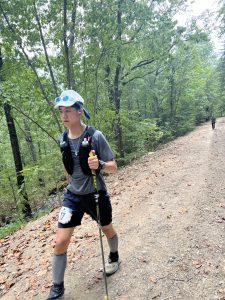
Why did I decide to do the Georgia Jewel 100 race? It was partly due to my runner friend Andy, who introduced me to trail running. I had run in the past, and I even completed a marathon during my last year in the seminary in Rome. And since I moved to Atlanta to work as a chaplain at Holy Spirit Preparatory School, I started to do more trail running, which I found soothing and beautiful. But signing up for such a long race gave me a sense of goal and challenge. It stretched the way I see myself and others through my priestly vocation.

Here are five life lessons I learned from that journey:

1. Seeking Adventure and Magnanimity

I think we live in a world tyrannized by safety. Adventures are dangerous, uncertain, wild, and often painful, but I believe men and women are born with a need to be wild—to seek harsh environments and to grow from the challenge. For me, a 100-mile race was a challenge both physical and mental. It was an experience of walking into unknown territory.

100-mile-3One of the virtues that my school instills in our students is magnanimity, which means the greatness of soul. St. Thomas Aquinas teaches us that a magnanimous person rightly recognizes and pursues great goods and honorable achievements according to their actual worth and capacity. It means that we seek great things, unlocking the limits that we can set on ourselves. It was so daunting when I first conceived the thought of running 100 miles. The furthest I had run prior to my 100-mile race was a 40-mile race two years ago. And yet, it was an opportunity for me to dream big, to walk out of my comfort zone, to be adventurous, and to embrace a challenge in life which helps me to grow. That’s why I decided to give it a try. Having this challenge has been very positive in my personal life. It helped me to have more discipline. I had to be on top of myself to balance my training as well as to be responsible with my duties of being a priest and fulfilling my role as chaplain of Holy Spirit Preparatory School. I found that preparing for the race helped me to live simply. I did fewer things: I prayed, worked, exercised, and encountered people. It helped me to be more intentional with what I do. It also helped me to develop healthier habits of eating and sleeping, which were an important part of the training.
Dream big, live dangerously! I think we all need to embark on our own journey of exodus, of going out of our comfort zones, and ultimately out of our prison of selfishness. It’s in adventure that we encounter God and others, and it’s in challenge that we grow.

2. Finding the Light in the Darkness

I learned that long-distance running is not an individual sport. I could never have finished the race if I had done it all by myself. I had a whole team who supported me, which I will mention shortly. Since a 100-mile race is expected to last over 24 hours, runners are expected to bring headlamps. I didn’t want to carry the headlamp from the start, so as to carry only what I needed at each section. But I forgot to pick up the headlamp at one of the stops. The next time I would catch up to the crew, it would be already too late.

I realized I didn’t pick up the headlamp half an hour after leaving the station. It was already too far back, and I decided to rely on my phone’s flashlight, which was very dim. In the woods, it gets dark even earlier than the sunset hour. As expected, I got into trouble trying to run when it was getting dark. When I was thinking about different solutions, I met another runner, Phil, with whom I shared my concern. He was so kind to have me run together with him. So, I ran right behind him. The terrain was quite technical; it was very rocky and hilly. I had to see in advance what the terrain was like since I would be stepping in the dark. It took a lot from me. It was quite stressful, and I could have easily twisted my ankle for not seeing well. I think it was thanks to so many prayers of people that I didn’t get a single injury throughout the race: I never twisted my ankle, I didn’t have any stomach problems, I didn’t lose any toenails, and I didn’t even get a single blister.

100-mile-4

At one point, Phil and I got lost. He was concerned about me, so he was shedding the light close to his feet, which forced him to look downward. He missed the sign, and we probably lost at least 30 minutes. It was frustrating, but when I finally met up with my crew and got my headlamp, it was a game-changer. I now had the light! I could see clearly!

It was a reminder of why Jesus called himself “the light of the world”: “He who follows me will not walk in darkness!”As a priest, I can experience the importance of light, especially in the confessional. When I hear some people, I sense the lack of light—losing the sense of direction and meaning. Christ is the light; with him, we have clear vision, and we can be relieved from the anguish and anxiety that comes from not knowing where we are going in life. As long as I had the light, I was not afraid, and I had so much confidence. The Lord is my shepherd; I have nothing to fear!

3. Being a Man of Communion

I remember vividly the homily given by Cardinal Luis Antonio Tagle at my Priestly Ordination Mass on April 27, 2024. He said that as priests we are called to be men of communion—that we are called to bring people together, uniting them to God. I really like that image of being a man of communion. One thing I became more aware of during this experience is the fact that I am involved in the lives of many people.

100-mile-5

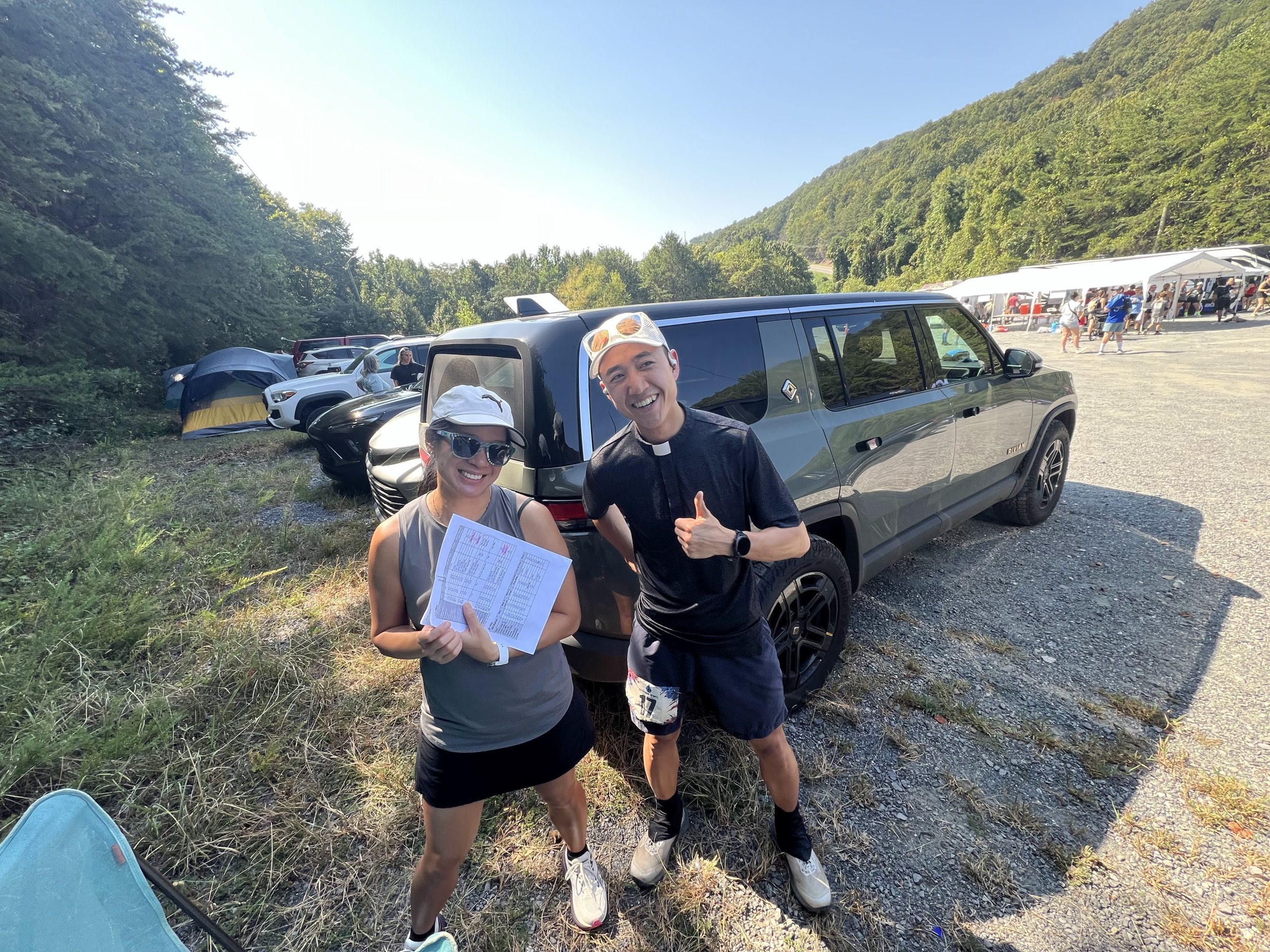
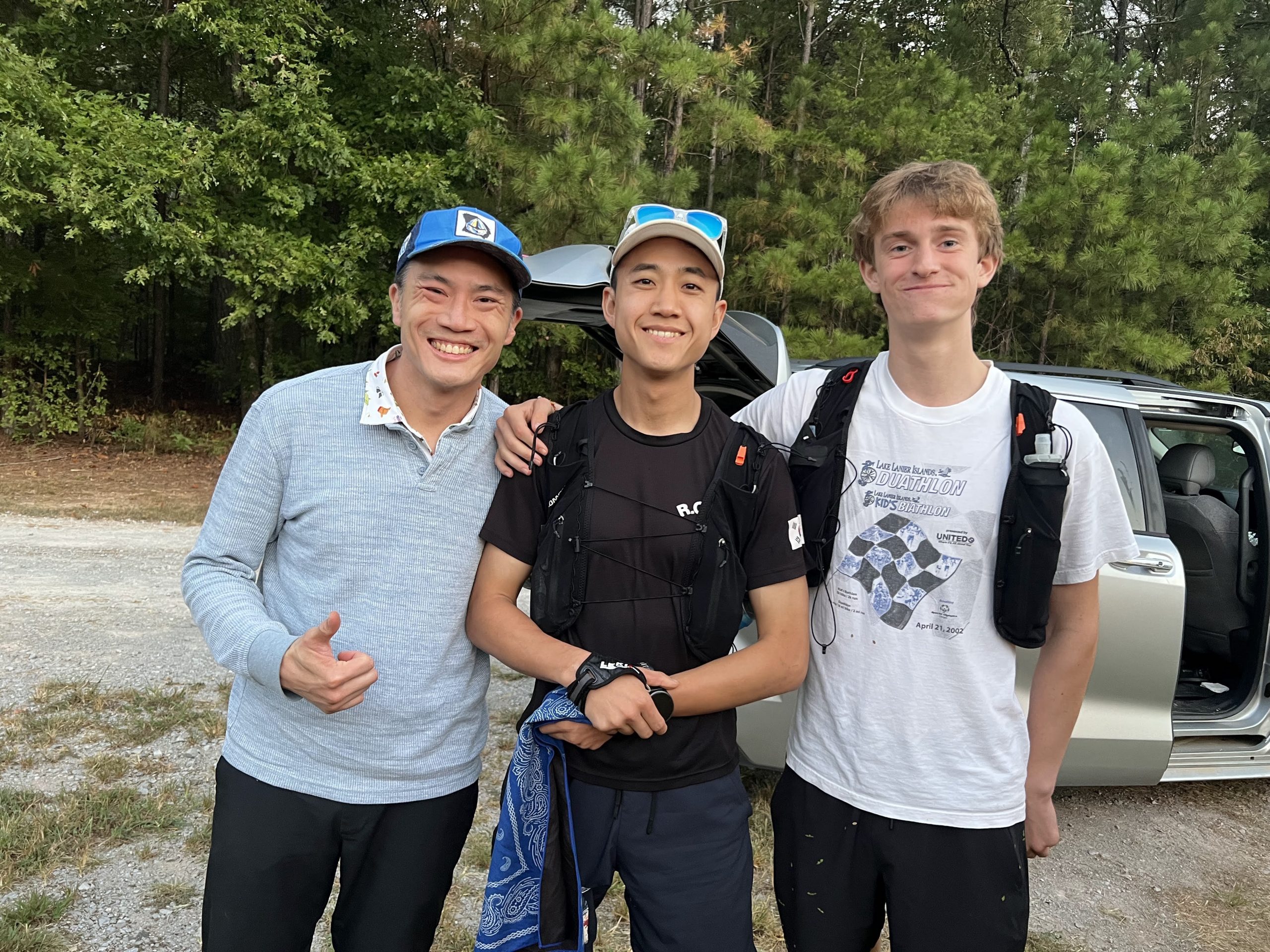
Some of my friends organized a seven-minute-long video of people from my school and others sending me messages of encouragement. My friend, who drove me to the race, passed me his iPad, and there I watched the video. It was moving, and I was grateful for the love and care that I received, which I do not deserve. I had a community praying for me throughout the race. I was deeply supported by three of my generous friends:

  • A mother of four kids who stayed up all night and waited for me at different aid stations. She helped me to fill my bottles, and prepared some fresh chicken congee which was delicious and sat well in my stomach.
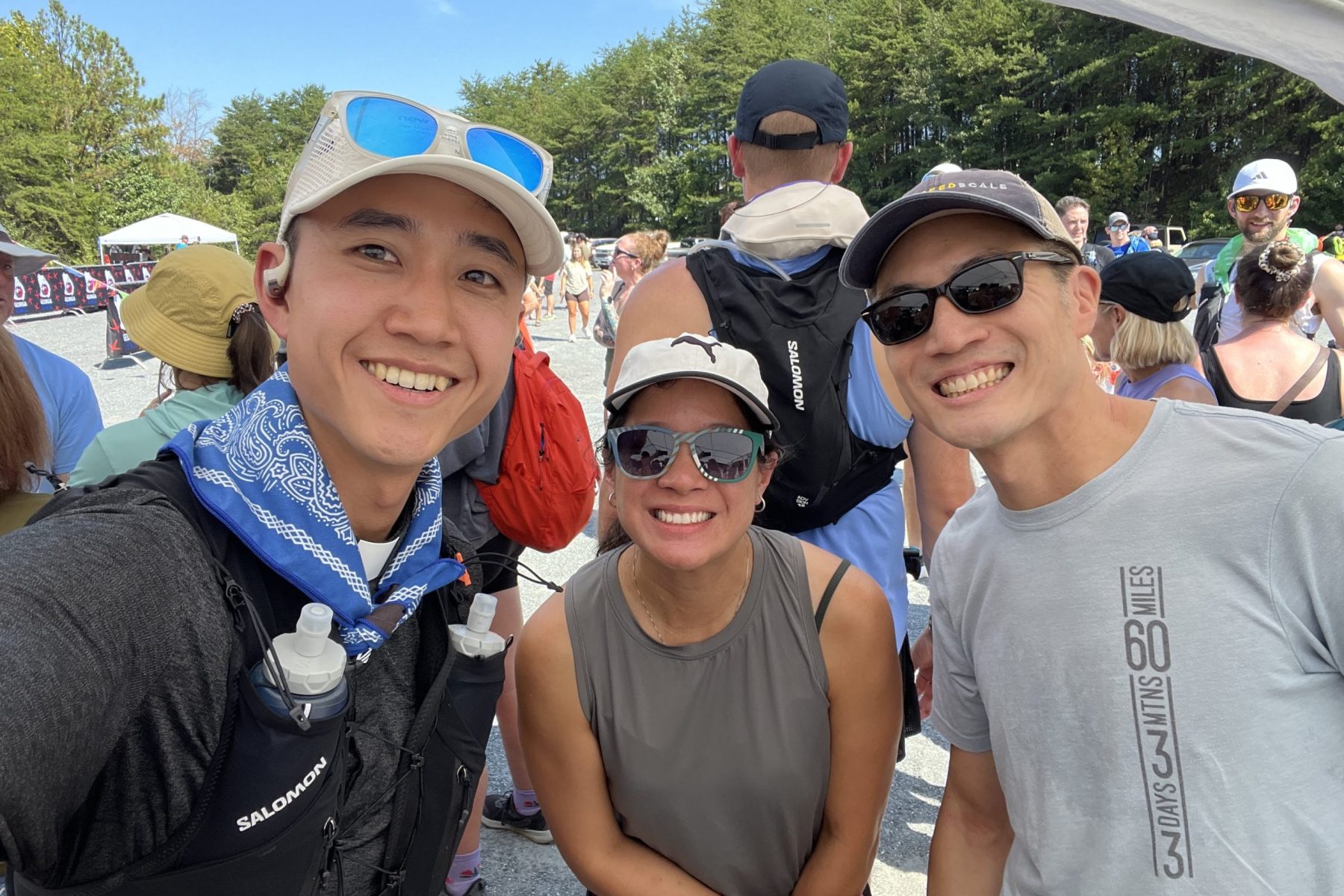
  • A father, who is my good runner friend, and drove me to the race and ran the last 18 miles of the race with me. He encouraged me and gave me good advice on eating and drinking, and I felt supported by the presence of an expert runner.
  • A son, a senior student at a neighboring Catholic school. I had met him in other races in the past, and I helped him by being a pacer in his first 100-mile race a few months ago. He came to support me to return the favor, running with me from 3:00 a.m. till 11:00 a.m. and helping me to get through the most difficult part of the race.

When I finished the race, I had some friends and family who waited for me by the finish line. I learned that the race wasn’t really about me. It was an event that brought all of us together. I am eternally grateful to all those who showed me their love and care. Pope Benedict XVI wrote in his encyclical Spe salvi the following:

“We should recall that no man is an island, entire of itself. Our lives are involved with one another, through innumerable interactions they are linked together. No one lives alone. No one sins alone. No one is saved alone. The lives of others continually spill over into mine: in what I think, say, do and achieve. And conversely, my life spills over into that of others: for better and for worse.”

100-mile-6

4. Hypomene, the Spirit of Perseverance

In Spe salvi, Pope Benedict XVI points out that we need the virtue of hypomene, which in English can be translated into patience, perseverance, and constancy. It’s the capacity to wait and endure, taken from the Letter to the Hebrews:

“For you have need of endurance [hypomene], so that when you have done the will of God you may receive what is promised.”

The Christian virtue of hope requires the necessity of having this hypomene spirit—endurance, the capacity of waiting, persevering, and the capacity to suffer. I thought a lot about hypomene during the race. Giving up for me was not an option. I was determined to run unless I got injured, and I was ready to embrace the pain.

But I did hit a wall a few times during the race. At around 5:00 a.m., I remember not being able to run any longer. I had already been running for 15 hours and hadn’t slept. Running in the dark for a long time had been tiresome, and as much as I would have liked, my legs simply wouldn’t run. It was frustrating. It was the ideal time to run: The trail didn’t have much elevation, and the temperature was manageable. Earlier in the day, the temperature reached 96°F. It was very hot and humid, and some runners dropped out due to dehydration. I couldn’t run as much as I wanted due to such hot weather, so the night was supposed to be the ideal time to run, but my legs just wouldn’t listen.

100-mile-7

Thank God, I had a list of prayer intentions. I read those intentions, especially when I had to endure. It gave me great motivation, and I was almost glad that I could actually offer up something small—some of my physical exhaustion—uniting it to the cross of Christ. I tried to walk fast, and when the sun came up, I had breakfast and started to run again. There was something special about the sun. It gave me strength. It was again a new day, and I was halfway through the race. In spiritual life, we have moments of night and day, of light and darkness, moments when everything seems clear and when we feel lost. The light of the morning sun was a reminder for me that the light is always right around the corner, especially when I am going through a hard time.

How do we look at the different crosses in our life? I naturally tend to avoid the cross, and it’s natural that I see it as something negative. But I am starting to understand the value of the cross and sacrifice in my life. Especially as a priest, I am learning that sacrifice is part of my life. Pope Benedict XVI reminds us, “The capacity to suffer for the sake of the truth is the measure of humanity.” We all need to grow in our capacity to suffer, to embrace the cross out of love. And for me, long-distance running is a constant reminder of this.

5. The Lesson of Gratitude

I think we should always thank God and others more often than we complain. When I was running, there were plenty of moments to complain: Why did I forget to grab the headlamp? Why are my legs giving up now? Why is there an uphill again? And why did I sign up for this in the first place?

But I knew that all these complaints could not reflect the truth of my reality. The reality was that I could also say: I am grateful for the gift of health. I am grateful to have the headlamp once again—it’s a game-changer now! I am grateful that I can offer up some of my sacrifices. I am grateful seeing the beauty of nature. I am grateful to so many people who are praying for me. I am so grateful to many people who love me. I am grateful to God.

I love the part of The Lord of the Rings when Sam and Frodo are in the final stretch in their quest of destroying the ring: “The night sky was still dim and pale. There, peeping among the cloud-wrack above a dark tor high up in the mountains, Sam saw a white star twinkle for a while. The beauty of it smote his heart, as he looked out of the forsaken land, and hope returned to him. For like a shaft, clear and cold, the thought pierced him that in the end the Shadow was only a small and passing thing: there was light and high beauty forever beyond its reach.”

100-mile-8

Just like Sam, I also saw some beautiful stars in the middle of the night. I was grateful to God, and it almost made me forget about how tired I was. There are many things we need to be grateful for in life. Each day, no matter the challenge or cross we may bear, Christ offers us glimpse of his light. Gratitude awaits us at every turn.

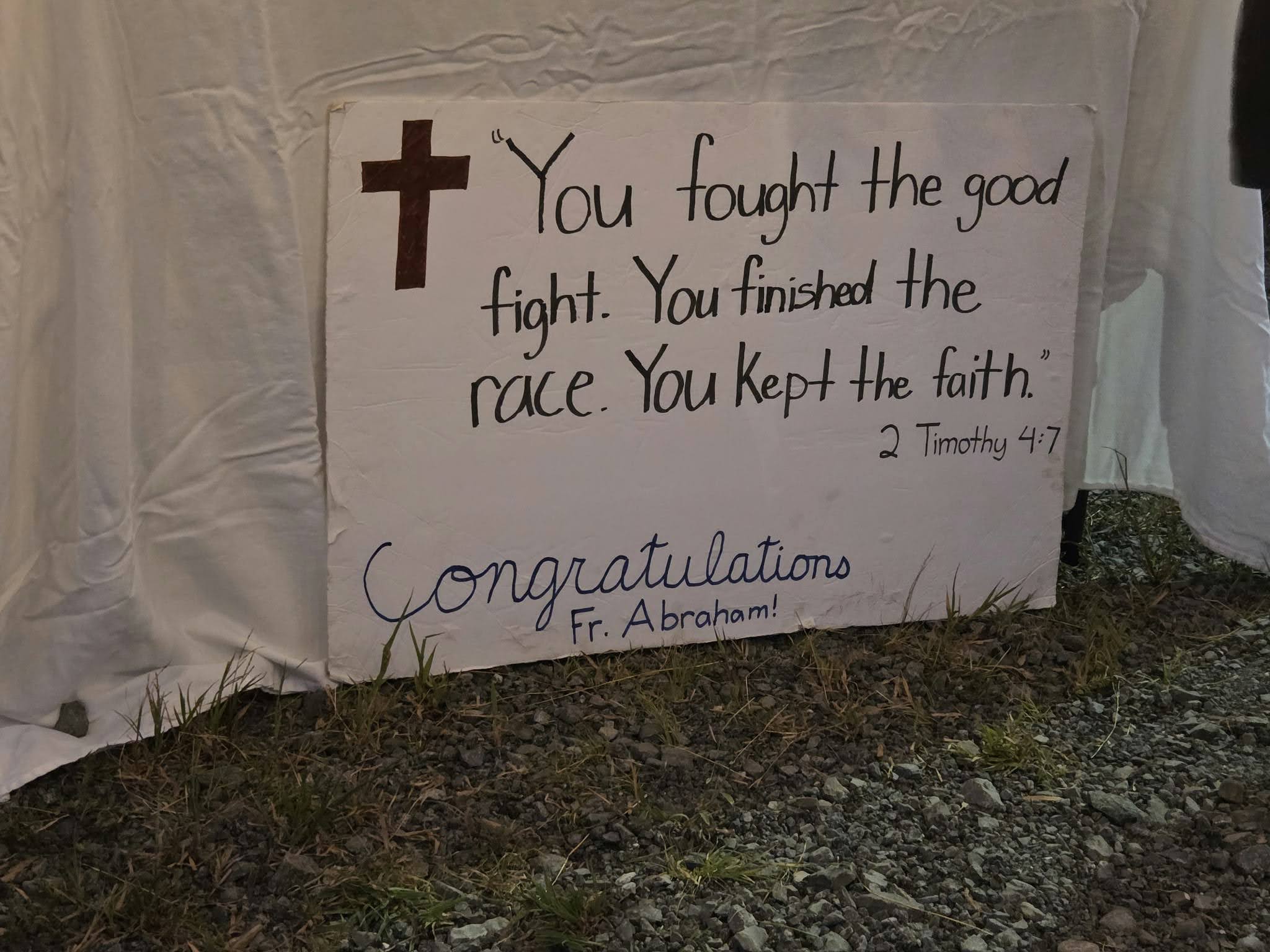
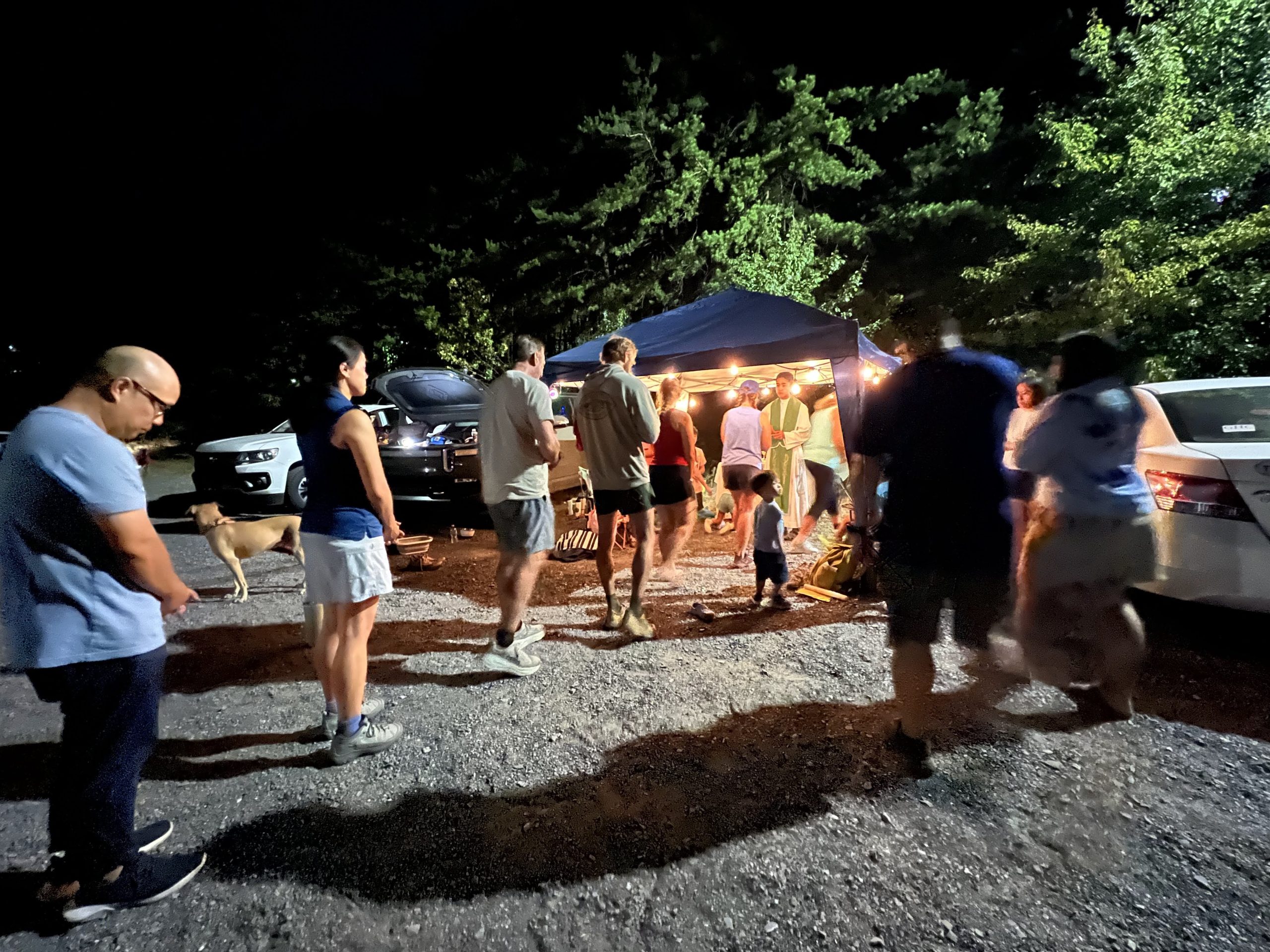
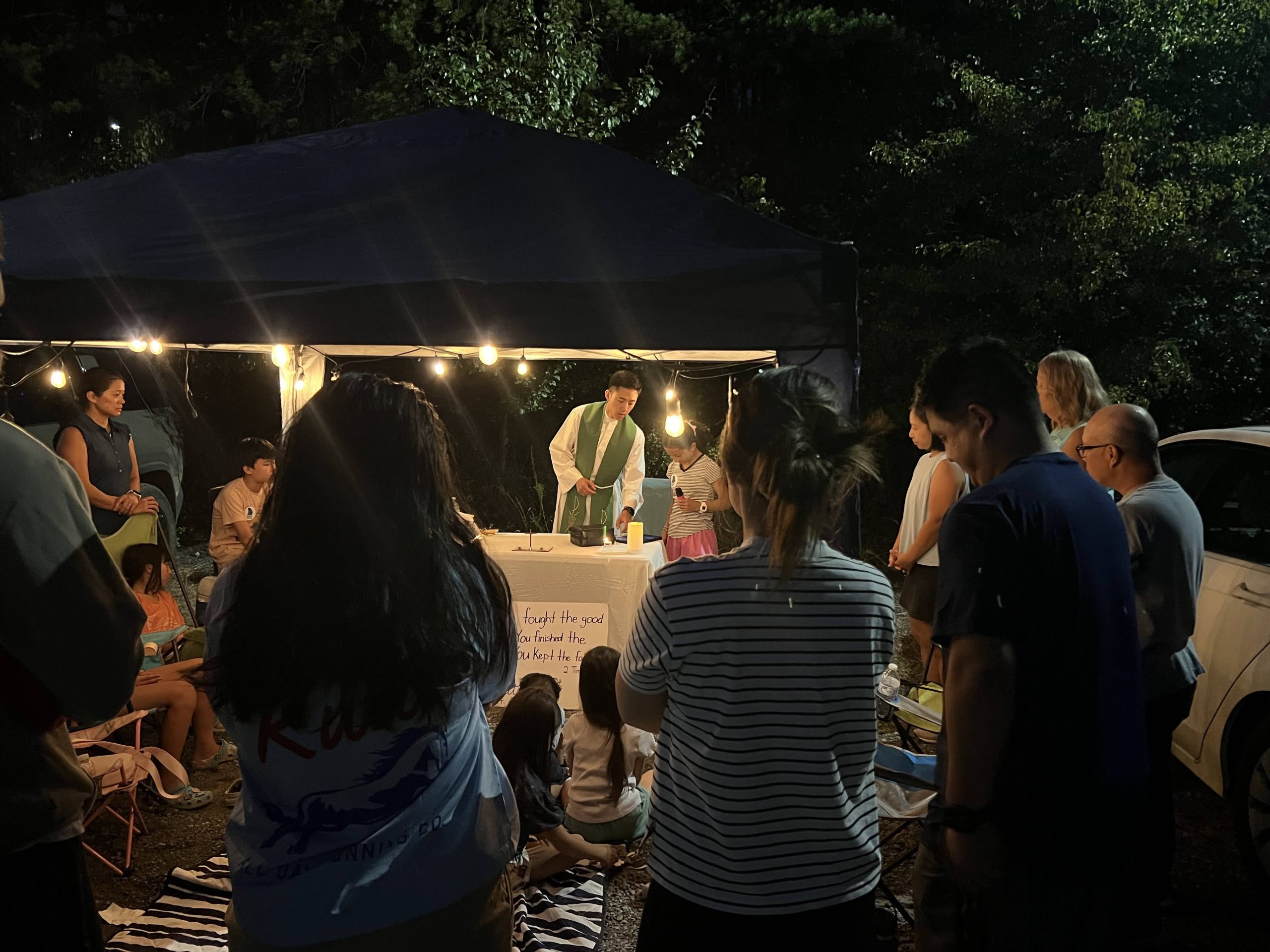
After finishing the race, I celebrated Mass—first, because I didn’t want to skip a day without celebrating the Holy Mass, but also because I wanted to give thanks to God. The Eucharist means “giving thanks!” It was a Mass of thanksgiving. I also wanted to thank the people who drove almost two hours just to congratulate me. And since it was Saturday night, I could celebrate the Sunday Vigil Mass, which was nice because it meant that my friends could sleep in the following day. My friends set up a tent right by the finish line and illumined it with lamps. It was beautiful. There, in the glow of Christ, we prayed together as the joyful cheers of spectators greeted runners at the finish line. Many of these runners and crew members joined us for Mass, at our humble outdoor altar. Cultivating a grateful heart is a key to happiness. It frees our heart from the prison of selfishness and it allows us to see the true reality of our life as a gift from God.

100-mile-9

Running teaches me so much about life. St. Paul talks about running:

“Do you not know that in a race all the runners run, but only one receives the prize? So run that you may obtain it. Every athlete exercises self-control in all things. They do it to receive a perishable wreath, but we an imperishable. So I do not run aimlessly; I do not box as one beating the air. But I discipline my body and keep it under control, lest after preaching to others I myself should be disqualified.”

Our hope teaches us what we need to fight for. At the end of our life’s journey may we proclaim, like St. Paul:

“I have fought the good fight, I have kept my faith, I have finished the race.”

Amen.

Running and the Virtue of Hope: Five Life Lessons from a 100-Mile Race, Fr. Abraham Eo, LC Read More »

Scroll to Top

Events

Looking for another country?

Contact Regnum Christi near you

News & Resources

News & Resources

The Regnum Christi Mission

The Regnum Christi Identity

Alex Kucera

Atlanta

Alex Kucera has lived in Atlanta, GA, for the last 46 years. He is one of 9 children, married to his wife Karmen, and has 3 girls, one grandson, and a granddaughter on the way. Alex joined Regnum Christi in 2007. Out of the gate, he joined the Helping Hands Medical Missions apostolate and is still participating today with the Ghana Friendship Mission.

In 2009, Alex was asked to be the Atlanta RC Renewal Coordinator for the Atlanta Locality to help the RC members with the RC renewal process. Alex became a Group Leader in 2012 for four of the Atlanta Men’s Section Teams and continues today. Running in parallel, in 2013, Alex became a Team Leader and shepherded a large team of good men.

Alex was honored to be the Atlanta Mission Coordinator between 2010 to 2022 (12 years), coordinating 5-8 Holy Week Mission teams across Georgia. He also created and coordinated missions at a parish in Athens, GA, for 9 years. Alex continues to coordinate Holy Week Missions, Advent Missions, and Monthly missions at Good Shepherd Catholic Church in Cumming, GA.

From 2016 to 2022, Alex also served as the Men’s Section Assistant in Atlanta. He loved working with the Men’s Section Director, the Legionaries, Consecrated, and Women’s Section leadership teams.

Alex is exceptionally grateful to the Legionaries, Consecrated, and many RC members who he’s journeyed shoulder to shoulder, growing his relationship with Christ and others along the way. He knows that there is only one way, that’s Christ’s Way, with others!