Q: I am considering priesthood strongly. In light of recent events, how can I become a priest and deal with the assumption given by people that all priests are predators? Also, where should I start with this desire for the priesthood? My parish priest? – H.
Answered by Fr. Edward McIlmail, LC
A: It’s admirable that you are willing to consider priesthood, even amid all the scandals that recently have come to light.
It’s good to remember that a vocation comes from Christ. Which means that he will give a man the grace necessary to carry out the vocation.
What that means specifically is that Christ would give you the grace to live in a society that is much more skeptical of the clergy.
To be honest, not everyone assumes that all priests are predators. There are a lot of people — Catholics and non-Catholics alike — who don’t blame every priest for the faults of others in the clergy.
This isn’t to downplay the enormous task ahead of us to rebuild trust in priests. For now, it is understandable if a priest has to earn trust rather than simply presume it.
Ultimately, the priesthood is a work of Christ. And he won’t abandon his priests any more than he would abandon his Bride, the Church, for whom he gave his life.
If you want to pursue priesthood, yes, your parish priest might be a person with whom to start. From there you might contact the vocation director for the diocese if you feel drawn to the secular clergy. If you feel drawn to religious life, you might consider contacting the respective order’s vocation director.
One notion is worth keeping in mind: Whatever you do, do it for love of Christ. This is a secret for perseverance. If anyone pursues or enters the priesthood for any lesser motive, he runs the risk of ruin.
For now, keep up a solid prayer life and sacramental life. And cultivate a devotion to the Blessed Virgin Mary. She whose only command in the Gospels was “Do whatever he tells you” (John 2:5), will certainly be interceding for you if her Son calls you to holy orders.
Today’s secular world throws curve balls at us all the time. AskACatholicPriest is a Q&A feature that anyone can use. Just type in your question or send an email to AskAPriest@rcspiritual.wpenginepowered.com and you will get a personal response back from one of our priests at RCSpirituality. You can ask about anything – liturgy, prayer, moral questions, current events… Our goal is simply to provide a trustworthy forum for dependable Catholic guidance and information. So go ahead and ask your question…
In the Regnum Christi Movement, we have always emphasized the importance of charity in words. Not that we invented the concept—on the contrary, the power of words to work good or ill is an unmistakable biblical motif. Yet in Regnum Christi we have always given special attention to this arena of Christian virtues. The goal of this essay is to present a calm, systematic reflection on what charity in words truly consists of. We will start by reviewing the different types of sin the Church has always warned us against regarding our use of words. Then we will explore the vast horizon of virtue in this field, trying to see what spiritual maturity looks like there, and how to grow in that maturity.
Q: Most of the secular world believes that the Church favors men over women, most often citing the inability of the Church to ordain female priests, or the famous passage from Ephesians 5:22, “Wives submit to your husband ….” I have the opposite problem and wonder if the Church favors women over men. For one thing, there is confusion about the role that men play in the world. The role of woman is so frequently esteemed — they are the earthly representation of God’s beauty, they are uniquely able to bear new life, they are strong in ways that men are not, they were created as a helper for man. It seems that it isn’t possible for a man to be who he is supposed to be without the aid and support of woman, but the same cannot be said in reverse. What do we offer the world that women don’t, and is our contribution actually as valuable? We men are always told that we must become worthy of women. In fact, that’s pretty much what I take away from every men’s conference I’ve ever been to: “Women are amazing, beautiful, powerful, fragile treasures, and we must undertake the impossible task of becoming worthy of them.” I don’t even bother going to men’s conferences anymore, because all we ever hear is how amazing women are, how bad we are, and how we’re supposed to try to be better. So I wonder: What do we offer women? They have a special power to inspire to be the best that we can be, to be our helper, our aid, our support. What do we bring to the table? – P.
Answered by Fr. Edward McIlmail, LC
A: You touch on a big issue that resonates with a lot of people. A full answer to your questions could fill a book. But I’ll go out on a limb and offer a few general points that might help.
First, men and women are equal in dignity but different. Both are children of God. When God made human beings, he made them male and female (Genesis 1:27). God wanted to reveal something of himself in both men and women. Hence the complementarity.
The coming of sin into the world has triggered perennial problems between the sexes. This is suggested in Genesis 3:16 when God tells the woman: “Your urge shall be for your husband, and he shall rule over you.”
Why do some circles now emphasize the greatness of women so much? One reason is that it is a backlash against certain trends.
Let’s call the first the male chauvinistic trend. For centuries women haven’t always received the respect they deserve, often being treated as second class.
Some of this was a result of men’s tendency to shield the women under their care from the outside world. While this system (actually a whole range of systems) had its shortcoming, it probably contributed to social stability in many places.
On the downside it could feed a notion of male superiority; on the upside it instilled in men a sense of obligation toward women and helped to protect them.
For various reasons the pendulum began to swing in the opposite direction. This is a complex topic, but for the sake of simplicity let’s say that a result of this change was the coming of feminism, in various forms.
Understandably, many women have reacted by becoming more independent (they don’t count on men as earlier generations of women might have) and more prone to voice their anger at mistreatment by men. The result is that male-bashing has become something of a cottage industry. This is what you might be sensing at those men’s conferences.
Perhaps those conferences are just trying to motivate men to be more sensitive to the women in their lives. There is, however, no theological basis for thinking men inferior to women.
In day-to-day matters the contributions of both sexes are indispensable.
While women have a gift for intuition and for unifying people and being sensitive to others (part of the “feminine genius”), men have a special capacity for problem solving and for building.
And while women have the indispensable gift of being able to nurture life, they need the contribution of men, along with the protection and leadership that males should provide.
Historically there was a tendency to limit women and to downplay their talents and rights. This situation has been improving, and this is something all of us can contribute to overcome.
We need to respond to the feminization of culture with a renewed look at what masculinity really is. It is a topic that needs a lot of attention.
What we need now a new balance: to give women the respect they deserve but without resorting to male-bashing.
Men for their part need to understand the mission they have, to protect and cherish women, and to be moral leaders in their families and communities.
One ingredient in all this will be a rediscovery of the wisdom outlined in Humanae Vitae. That 1968 encyclical has been amply complemented by Pope St. John Paul II’s theology of the body. (For more reading see “The Prophetic Power of Humanae Vitae,” in the April 2018 edition of First Things.) I hope some of this helps.
Today’s secular world throws curve balls at us all the time. AskACatholicPriest is a Q&A feature that anyone can use. Just type in your question or send an email to AskAPriest@rcspiritual.wpenginepowered.com and you will get a personal response back from one of our priests at RCSpirituality. You can ask about anything – liturgy, prayer, moral questions, current events… Our goal is simply to provide a trustworthy forum for dependable Catholic guidance and information. So go ahead and ask your question…
Imagine you are a highly educated professional in a job that helps people in need. Maybe they are people in a personal crisis. Perhaps they are just teenagers going through the traumas that beset most teens.
Your work isn’t exactly academic, but it relies on your training and experience. And dealing with people in need, you sometimes wish you had the knowledge of psychology that would help you unlock the keys to meet those needs. You have a Christian outlook on the world and want to change the culture by helping one soul at a time.
You don’t want to pack your bags and go off to college, contemplating theory behind ivy-covered walls. You don’t have time to leave you job to study – in fact, you want your studies to make you better at your job.
The university is sponsored by the Legionaries of Christ and many members of its affiliated lay movement, Regnum Christi, have played a key role in the founding and growth of this institution dedicated to forming what Pope Francis calls “missionary disciples.” That doesn’t mean all the graduates, faculty, staff and students are Regnum Christi members. In fact, those involved come from a wide range of religious traditions. But all are dedicated to presenting a better way, a Catholic way, to the world.
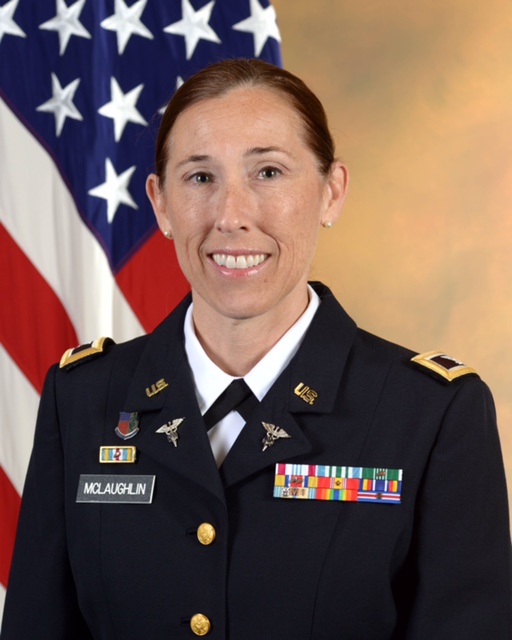
Participants of the program apply what they learn in a remarkable variety of roles. Several recent graduates of the program share how the program makes them better equipped to make a difference in the lives of individuals and the world. They are just a sample of the DMU grads having an impact in a culture that needs change. Three of the four participated in the online program that grants a MS in psychology. One – Michelle McLaughlin – attended the “in-person” program at DMU that grants a MS in clinical psychology.
MARY WILLIAMS
Accompanying Teen Girls Through the Challenging Years
I was born and raised in Clarkston, Michigan, spent some time discerning a vocation to consecrated life in Regnum Christi, then got a BA in Mathematics and Secondary Education at University of Detroit Mercy. I’ve worked at Everest Collegiate High School & Academy, Clarkston, since the beginning of January 2010.
After years of working with adolescents and traveling my own personal journey and seeing the importance of the field of psychology as a complement to spiritual formation, my spiritual director asked me, “When you go back to school what would you like to study?” I thought it was a bit presumptuous that she thought I would be pursuing another degree, but as usual, she was right. I told her I was interested in studying psychology but I just didn’t know how or where. My dream had always been to study at DMU but I was in Detroit and for the moment it didn’t seem that I was meant to relocate to the DC area. She told me that they had just opened an online program and I think I applied within the month.
I didn’t pursue a degree from DMU in order to change careers but rather to complement my current career. I have the opportunity to work with many middle school and high school students, and I wanted more resources to be able to help them navigate these critical years of their lives.
Michelle C. McLaughlin
Guiding Victims Through Traumatic Times
I come from a Catholic family with two older brothers and two younger sisters. I was born in Tulsa, Oklahoma, but Dad worked for the government so I grew up all over the world, moving every few years for a new position. My early years were spent in Karlsruhe Germany where I attended kindergarten. My elementary school years were spend in Texas and Pennsylvania. My first job was picking strawberries on a farm near our house in PA. I graduated High School in Texas and went to College in South Carolina, but graduated from the University of North Carolina (Wilmington) with a BA in Communications. My work history includes Hospital Administration, being a US Army Medical Service Corps Officer, and working as an Emergency Medical Technician.
Upon moving to Virginia with my husband and two sons after his retirement from the Marine Corps, I wanted to find a job but was not sure where I wanted to work. I started volunteering with my church (St. Agnes in Arlington) and also with their homebound ministry taking communion to the shut-ins nursing homes, and hospitals. I really enjoyed working with the elderly and the joy of bringing them communion was very special.
A few years prior to our move to Arlington I had a “reversion” of faith and was deeply motivated to learn as much as I could about my faith and how to live accordingly. So when IPS (former name of DMU) kept coming up, I went to adoration to pray about it. I also picked up a book on St. Ignatius and followed the structured path of discernment. I felt God was calling me to go to IPS and to become a therapist who could have faith as part of the healing.
My interest in psychology came late in life (I was 50 when I started IPS) and it’s really a second career after I retired from the Army. A year before I started thinking about IPS, I was asked by a close military friend to help her write a paper on the effects of deployment on reserve military members. She had deployed multiple times and came back different, she was feeling many effects of PTSD and did not feel like she was getting adequate care. Since I was a part of the Army Medical Department I had access to the research and literature on current treatment of PTSD. We co-authored the paper and presented it to the Armed Forces Reserve Board, where many of our recommendations were accepted.
Currently I am working full-time for the Federal Government in emergency management, medical policy and synchronization. I am part of a working group addressing prevention of workplace violence, suicide/ domestic violence and other threats to personnel safety. I work with other Psychologist and Mental Health providers in the context of National Security professionals.
I am currently pursuing my certification in Traumatology through DMU’s Trauma Program. DMU showed me what the integration of faith into work should be. It’s more than just being able to mention God in a therapy session but also the unspoken words and respect for the dignity of another. To see what God has created in our human-ness and our purposes to serve him through caring for others. My faith can’t be separated from my work. I start each day in prayer and reading, trying to bring God close before I start the work day.
Sr. Okechi Njoku
Healing Hearts in the Wake of Ebola
I grew up in Lagos, Nigeria, and attended grammar and secondary schools in that city. My college education was at Nnamdi Azikiwe University, Awka, Anambra – and I did my post-graduate work at Montessori College. London.
I’ve been a head teacher at two schools and supervisor of the CARITAS schools in Sierra Leone. Today, I’m director of the Holy Rosary Counseling and Peace Centre in Sierra Leone. Our order has been in the country since 1948, helping people through every sort of crisis from civil war to the Ebola epidemic.
I enrolled in the DMU program because I felt I needed something more to add to my understanding of a human person in order to help humans to flourish. I like the DMU understand of the Catholic-Christian vision of a human person.
I am engaged in teaching psychology in my center and offering professional help to clients. From the DMU work I have learned to be more understanding, empathetic, and compassionate. My faith helps me to instill hope and encourage my clients no matter what their problem. I identify with their innate dignity, and respect them accordingly.
After my DMU studies, I treat my workers, those around me and myself with more respect. I am more patient with myself and others. I work as a transformational leader nowadays.
Mary Monette
Unsticking Souls so They can Flourish
Even though I’m a consecrated woman of Regnum Christi, I didn’t choose DMU because of its affiliation with our Movement. It was because the program was what I needed.
When I starting thinking about graduate school, I was working at a school in Guadalajara, Mexica. In fact, I’m been working in schools for 20 years. I thought I would go to a campus to study, perhaps Anahuac University in Mexico City, or the University of Dallas.
Then I was transferred to Pinecrest Academy in Atlanta, and the idea of going away to grad school was on hold. Still, I knew there were online programs, so I started doing research and discovered DMU had just what I was looking for.
Another new assignment sent me to the Holy Land, first to Jerusalem, then to Magdala. But with the online program, I could continue my education which doing my job. And throughout my life as a consecrated, a big part of my job has been providing spiritual counseling to people – something I knew the DMU degree would help me do even better.
The key at DMU is the faculty. They are nice people, qualified in the science of psychology, and have the faith fully integrated into the program.
My idea is to know more to help more – I have a responsibility to give to people what they need.
I want people to flourish. Often people have one “stopper “that keeps them from being what they could be. They just need a little help to bring out their best.
The Program
The Master’s in Psychology is a 36- credit hour, 100 percent online graduate program that is designed to be completed in two years of enrolled study. The online masters in psychology program provides professional competency in psychology while developing an integrative understanding of the human person in application to service delivery. This online masters in psychology program seeks to exhibit advanced professional skills such as communication, interpersonal, leadership skills, budgeting, program evaluation, and cultural awareness in order to enable growth as a transformational leader in a service-delivery setting.
Through DMU’s unique curriculum, students become a transformational leader, strengthened by Catholic-Christian teachings on human dignity and informed by foundations in modern psychology. DMU specializes in a psychology curriculum that roots every course in a Catholic-Christian understanding of the human person. How will this online masters in psychology program impact your career or vocation.
By understanding the whole person and not just their behaviors, participants are prepared to:
Help people to flourish in their personal vocations and daily life.
Build and maintain relationships with clients, manage cases, and facilitate groups.
Act effectively in situations where de-escalation, negotiation, and crisis intervention are needed.
Examine in-depth theory and research associated with the diagnosis and treatment of common psychological problems.
Recognize the integrity and dignity of each person you encounter.
Recruit and lead a volunteer team.
Integrate research and program evaluation data to improve your practice and the delivery of services.
Q: I have a brother who lost his wife due to cancer. She was young and a very strong Christian. She did not want to be put on drugs to save her, for she was in the last stages. She prayed very hard for God to “take the devil out of her.” I believe he did just that when he took her to heaven. My brother, though, does not believe in Jesus Christ any longer. His wife was such a devout Christian, and he thinks Jesus did not hear her pleas. How can I make my brother believe that Christ is truly here with us and hearing our prayers? He believes now that once you’re gone, that’s it. Thanks for any help you can give me. – K.
Answered by Fr. Edward McIlmail, LC
A: Please accept my condolences on the passing of your sister-in-law. The presence of death and evil is one of the great mysteries of this world. How do we reconcile this with the existence of an all-powerful, all-loving God?
There is no simple answer. This question has puzzled mankind for millennia. The Book of Job confronted this question, though its answers still leave many people guessing.
Perhaps the best answer is Christ himself. No one was more innocent than he, yet he suffered and died a terrible death for our redemption. Moreover, it was God the Father who sent his Son to die for us. That is a remarkable sign of his love for all of us.
As for pain and evil in the world, it seems that God allows them in order to bring about something good.
Why did the family see your sister-in-law as a devout Christian? Probably because of her faith and charity and humility. And why did she stand out for these virtues? Probably because they are relatively hard to find nowadays.
In other words, her goodness stood out, and was appreciated by those around her, precisely because she was a contrast to the widespread evil in the world. This is one paradoxical way that God brings good out of bad — we can see the beauty of a devout Christian more clearly against a dark background.
Perhaps, too, your sister-in-law offered up her suffering for the salvation of souls. Maybe her example inspired others and led others to a deeper conversion. We won’t be sure about this until the last judgment. But we can have faith that God was able to bring something good out of her suffering.
For now, it is understandable that your brother is grieving. And if his faith is a bit weak, it is understandable that he is seeing things in the worst light.
At an opportune moment it might be good to remind your brother that he can have the hope of being reunited with his wife someday. But he will have to try to stay close to Jesus as she did. How else could her holiness be explained, but by her closeness to Our Lord?
Also, when the time is right, you might want to help your brother remember all the good that he received through the gift of his wife in his life. We are all going to die. Death is a guarantee for each of us.
That his wife died sooner than he would have preferred doesn’t negate the beauty and the goodness of his relationship with her during the years that she was still here. It’s all a matter of what we choose to focus our attention on.
And who is to say that God, instead of giving her a cure for cancer, didn’t give her something better: entrance to paradise?
From what you describe, it sounds as though your sister-in-law was deeply touched by her relationship with Jesus, and that bond strengthened her till the end of her life. We can easily imagine that she now prays that the husband she left behind will discover the value of that same kind of relationship.
Today’s secular world throws curve balls at us all the time. AskACatholicPriest is a Q&A feature that anyone can use. Just type in your question or send an email to AskAPriest@rcspiritual.wpenginepowered.com and you will get a personal response back from one of our priests at RCSpirituality. You can ask about anything – liturgy, prayer, moral questions, current events… Our goal is simply to provide a trustworthy forum for dependable Catholic guidance and information. So go ahead and ask your question…
Regnum Christi members in Puente Alto, a suburb of Santiago, Chile, went out to the streets to talk to others about the Holy Spirit just before Pentecost.
During Holy Week, several missionaries formed a bond with the community of the parish of the Nativity of the Lord. Afterwards, the idea of “Urban Missions” was born. So on May 19, Regnum Christi members went out into the neighborhood of Ciudad del Este in Puente Alto. Their goal was to listen, converse, evangelize and stoke the fire of the Holy Spirit in the people of the area with a view to the celebration of Pentecost the day after.
The main group of missionaries came from the section of Las Condes (a richer suburb). With a Consecrated Woman, they visited houses in the neighborhood of Ciudad del Este to give continuity in with the Holy Week missions.
In these so-called, “Urban Missions,” the missionaries worked together with the parish priest, Fr. Gonzalo Guzmán. They conveyed the hope that the fire of the celebration of Pentecost burns, purifies and enlivens the faith in people and helps them reach the gifts of the Holy Spirit.
Rosario Miranda, a Consecrated Woman, said, “The fruit of these missions was sharing a moment where we accompanied a community of parishioners who see a Catholicism that feels ashamed, hurt and with a great weight. We went with the parish priest, Fr. Gonzalo Guzmán, to ask their forgiveness on behalf of the Catholic Church because we are also part of it. In our meetings we proposed in turn that we unite, show our faces and work together to renew our faith in God and our love for Christ. “
Rosario Icaza from the Las Condes section, explained, “After the Holy Week missions in Puente Alto we were fascinated by the experience. That is why we offered Father Gonzalo to come back once a month to help him visit families from house to house. We chose the dates thinking about the liturgical celebrations and the first one was Pentecost. We had to go the previous Saturday and so take advantage of inviting people to Sunday Masses. For all that has happened lately in the Church, I thought it was not the most appropriate day, but we had committed ourselves to the priest and we weren’t going to let down the Lord. We were quite scared with what we were going to find there, but after a meeting with the priest, we were a little calmer. I have no words to describe the love with which they welcomed us, they made us go home and, although they spoke with the father about the latest Catholic Church issues that came out in the news, they did it with great respect and without judging or attacking anyone. Others received us suspiciously, but when they saw who we were and where we came from, they changed their attitude. I think that today there is a lot of loneliness in people and every day we are more locked in ourselves, there is distrust and insecurity but there is something that unites us that is stronger: speaking of God makes us change our attitude. This has made me reflect on the mission that we have as lay Catholics especially in the difficult moments that our church is living. We must leave our comfort and bring the simple word of God to our brothers. There is no need to know much or be a scholar only to feel that God loves them and that we go on his behalf to visit them. The change of life of many people depends on us and the truth is that you receive much more than you give in instances like these.”
Come to the edge.
We might fall.
Come to the edge.
It’s too high!
COME TO THE EDGE!
And they came
And he pushed
And they flew.
-Christopher Logue
Suzy Grybas, a Regnum Christi member from the Chicago area, shares her experience of a friendship brought to the edge of life in the new RC Essay, Away Flew Mary. Using this poem as a metaphor for the deep spiritual friendship she had with her friend and fellow RC member Mary Alwan in the weeks before she passed away from pancreatic cancer, Suzy shows us the beauty of a courageous friendship that learns to follow God’s will in spite of the human cost.
Away Flew Mary is not a typical RC essay addressing a specific virtue or offering instruction to members. Suzy’s story is simply a personal testimony of walking through daily life to death with her Regnum Christi sister, Mary Alwan. It is a reflection of a faith-based friendship, started in the RC Movement, that was deepened and strengthened through the carrying of the cross.
Suzy Grybas shares, “We each know that God works in our lives daily, but in His way and in His time. It is our responsibility to enter the silence, be in His presence, and listen to Him as he speaks. The Holy Spirit gave me the graces to write this story for my own spiritual and emotional healing. It has been shared only with Mary’s daughters and a few others. It has laid undisturbed, on my bookshelf, for six years now, until now.”
Reading Suzy’s essay, one feels as if you are sitting across from a close friend over a cup of coffee as she shares this treasured experience with you. Her writing exposes her inherent faith, and her ability to share her experiences with vulnerability and an underlying joy make her story relatable to all who have experienced the loss of a loved one.
In life Christians are called to die to ourselves many times before we leave this world:
“Knowing this, that our old self was crucified with Him, in order that our body of sin might be done away with, so that we would no longer be slaves to sin; for he who has died is freed from sin. Now if we have died with Christ, we believe that we shall also live with Him.” Romans 6:6-8
“I have been crucified with Christ; and it is no longer I who live, but Christ lives in me; and the life which I now live in the flesh I live by faith in the Son of God, who loved me and gave Himself up for me.” Gal 2:20
Away Flew Mary is about more than the passing of an extraordinary woman. It shares the lessons Suzy and Mary learned about dying to themselves, giving up control and following the will of God. This is wisdom that is applicable in everyone’s life, as God calls us all to the “edge” in countless different ways before the day he will ask us to finally fly away.
Available here in paperback and kindle editions, the essay also contains a group study guide, making it a powerful way for friends to explore the themes of spiritual friendship, following the will of God, and accompanying each other on our journeys to heaven.
Q: I hear God telling me I need to give and forgive … and I know whom he’s referencing with the forgiveness part, but I don’t know how to do it. A former co-worker of mine advised me to abort my son when I told her I was pregnant again. Now that my son is here, and I can stare in the face of my sweet baby, her words sting even more. I have been growing in anger toward those comments that were made almost a year ago. It sounds silly to ask how to forgive, but I’m at a loss. Please help. Thank you. – N.T.
Answered by Fr. Edward McIlmail, LC
A: It is good to hear that you have been blessed with a baby. The little guy is one of God’s great gifts in your life.
In regard to that co-worker, it might be helpful to meditate on Jesus’ words from the cross: “Father, forgive them, they know not what they do” (Luke 23:34).
We live amid a culture of death, and many people have soaked up its diabolical thinking. That co-worker seems to be one of them.
That means that she is missing out on something very important. The devil has wormed his way into her thinking. She is someone more to be pitied than despised. And who knows – maybe she has something in her own past that haunts her.
In any case, it is good to remember that Jesus died on the cross for her, too. And if Our Lord wants you to forgive her, he will give you the grace to do so.
Even at a practical, psychological level there is a good reason for forgiveness. Holding on to anger can eat away at your spirit. That is the devil up to his tricks: He wants you to burn your energy, not on raising your family, but on resenting this co-worker. You probably don’t want to give the devil that satisfaction.
For now, try not to worry about your feelings toward this woman. Forgiveness is an act of the will, not the emotions. You can say, “I forgive her, Lord,” and mean it — even if the ill feelings linger.
If you can keep on making that act of forgiveness, those ill feelings will fade. Don’t worry about those ill feelings. They will take a while to fade. Feelings are like that — they lag behind our wills.)
See an act of forgiveness as something that will benefit you tremendously. It will free up your heart for the little ones God has entrusted to your care.
Today’s secular world throws curve balls at us all the time. AskACatholicPriest is a Q&A feature that anyone can use. Just type in your question or send an email to AskAPriest@rcspiritual.wpenginepowered.com and you will get a personal response back from one of our priests at RCSpirituality. You can ask about anything – liturgy, prayer, moral questions, current events… Our goal is simply to provide a trustworthy forum for dependable Catholic guidance and information. So go ahead and ask your question…
Julia Marie Hogan, MS, LCPC, a mental health therapist in Chicago, recently published a book on self-care called It’s OK to Start with You. An alumna of Everest Academy in Lemont, IL, and Divine Mercy University, Julia has been active in ECYD and Regnum Christi. We asked her about her new book.
What led you to write a book about self-care? It isn’t the first topic many people would think about. What excited you about the topic?
Julia: I think that’s a good point: this topic isn’t talked about a lot, especially in Catholic and Christian circles. Also, popular media uses a different definition than I would. At the same time, as a therapist, I saw the impact that not taking care of yourself could have. This combination led me to this topic.
You need to take care of your physical, emotional and mental health, your relationships, and your spiritual health. I’ve seen how not taking care of all those areas can really impact your quality of life: you’re at an increased risk of stress, and your self-confidence takes a hit. And I think it can lead you away from what you’re called to do.
It isn’t a topic that jumps to mind for a book, but I think it’s a topic that should be talked about more. I saw writing this book as a way to get the message out there.
What kind of things would count as self-care? Generally and also, for Catholics, specifically?
Self-care is the external expression of how we feel and think about ourselves internally. As Catholics and Christians, we believe we are loved by God, and He loves us as we are right now. That means He loves us even when we’re making mistakes. He’s not withholding His love for us. It’s not conditional.
When we recognize that God loves us how we are right now and that He wants the best for us, then we express that in how we act externally, with other people and with ourselves. If we don’t like ourselves very much and we see ourselves as unlikeable and unlovable, then we treat ourselves in a way that matches that. That means not getting enough sleep, not eating healthily, not getting enough exercise, being in unhealthy relationships, ignoring our spiritual life or being immersed in anxiety and worry.
On the other hand, if we see ourselves as lovable because of God’s love for us, then that means – especially as Catholics and Christians – immersing ourselves in a strong prayer life, that means taking care of ourselves physically, mentally, emotionally and in our relationships. A concrete example of that is practicing gratitude: it brings together emotional health and spiritual health, too. Other examples would be getting enough sleep, eating properly, exercising, and setting boundaries in relationships so that they’re heathy.
Can you give me a picture of what the reader would expect picking up your book?
My book has two parts, which I’ll summarize.
For the first half of the book, I explore why self-care matters. I talk a lot about how it’s the external expression of how we think about ourselves internally and how it is a response to God’s love for us. I think everything should be a response to God’s love for us. If we really recognize that and we see self-care as a way of living that out, then it makes sense to focus on self-care.
I talk about the misconceptions about self-care, such as that self-care is selfish. It actually isn’t – if you take care of yourself first, then you can be the best version of yourself in serving other people. A small example of that is my work with my clients. If I didn’t get enough sleep the night before, then I’m feeling tired and I’m not focusing on my clients, I’m not being the best therapist for them. If I make sure I get enough sleep, I am a better version [of myself] for my clients. Since this is what I’m called to do, it is a way of fully living out my vocation.
The second half of the book begins with a self-care self-assessment. The reader can go through and see the different areas of self-care, with different questions, so they can get an idea of what they’re already doing well and what they can focus on. Then I walk through each one of those areas, and I talk about why it’s important, pull in some research, and give examples of what it might look like. I conclude with making your own self-care plan.
What do you think a Regnum Christi member or an active Catholic could get out of your book?
I know that, for someone who is in Regnum Christi or someone who’s an active Catholic, the spiritual life will be the driving force and an important factor of what they do. It fits naturally into self-care. When you take care of yourself, you’re better able to live out your vocation in every area and nurture the talents that God gave you. My book shows you in a concrete way to take care of yourself without going on a weeklong vacation to the beach. My suggestions are crafted in a way that someone can fit them into their busy schedule and see the benefits. We can’t all run off and be hermits.
How has your formation at Everest Lemont and at Divine Mercy University helped you prepare for this book and for your life as a psychologist now?
My education was foundational. It allowed faith to be part of my life from a young age, when it was integrated into school, where we’d have religion class and we went to Mass. It seemed like a natural fit.
For undergrad, I went to the University of Dallas. I knew that I wanted to be a therapist, but I [also] knew that I wanted to continue to incorporate the faith, so Divine Mercy was an excellent fit when it came time to choose my graduate school.
What makes DMU unique – and what makes Alpha Omega Clinic, where I did my internship, unique – is that they seamlessly incorporate the faith into psychology. I can’t edit the faith out of someone’s life when they’re my client, when it’s the foundation of the way that they live. DMU trained me to incorporate the faith with psychological theories, strategies and resources. DMU is really the only place that does that.
One important thing that Divine Mercy taught me was the concept of human flourishing. In therapy, our goal is to eliminate negative symptoms but also to help the human person flourish. Human flourishing is achieving your highest potential through your vocation, your spiritual life or in relationships. I really loved that added layer, because it means we don’t stop at making you less depressed or anxious, but we also want to help you live a full life. What does that look like for you? How can I help you get there?
You’re currently a therapist in the Chicago area. Where are you located and what are your specialties?
I work in Park Ridge, just outside Chicago and right down the street from Relevant Radio.
I specialize in faith-based counseling: a lot of my clients specifically want to incorporate their spiritual life into therapy. My other focus is working with people struggling with anxiety – it’s so common. I really enjoy being able to provide people tools to be able to manage their worry and anxiety. Once you learn those, it’s very freeing and it’s exciting to see those changes in my clients.
People ask me how I can sit and listen to people talk about their problems all day. I think it’s something that you’re called to do; to me, it’s so meaningful.
…
If Divine Mercy University sounds interesting to you, they offer a 25–50% tuition reduction for Regnum Christi members. Find details here.
Alex Kucera has lived in Atlanta, GA, for the last 46 years. He is one of 9 children, married to his wife Karmen, and has 3 girls, one grandson, and a granddaughter on the way. Alex joined Regnum Christi in 2007. Out of the gate, he joined the Helping Hands Medical Missions apostolate and is still participating today with the Ghana Friendship Mission.
In 2009, Alex was asked to be the Atlanta RC Renewal Coordinator for the Atlanta Locality to help the RC members with the RC renewal process. Alex became a Group Leader in 2012 for four of the Atlanta Men’s Section Teams and continues today. Running in parallel, in 2013, Alex became a Team Leader and shepherded a large team of good men.
Alex was honored to be the Atlanta Mission Coordinator between 2010 to 2022 (12 years), coordinating 5-8 Holy Week Mission teams across Georgia. He also created and coordinated missions at a parish in Athens, GA, for 9 years. Alex continues to coordinate Holy Week Missions, Advent Missions, and Monthly missions at Good Shepherd Catholic Church in Cumming, GA.
From 2016 to 2022, Alex also served as the Men’s Section Assistant in Atlanta. He loved working with the Men’s Section Director, the Legionaries, Consecrated, and Women’s Section leadership teams.
Alex is exceptionally grateful to the Legionaries, Consecrated, and many RC members who he’s journeyed shoulder to shoulder, growing his relationship with Christ and others along the way. He knows that there is only one way, that’s Christ’s Way, with others!




 Sr. Okechi Njoku


 Away Flew Mary is not a typical RC essay addressing a specific virtue or offering instruction to members. Suzy’s story is simply a personal testimony of walking through daily life to death with her Regnum Christi sister, Mary Alwan. It is a reflection of a faith-based friendship, started in the RC Movement, that was deepened and strengthened through the carrying of the cross.

 What led you to write a book about self-care? It isn’t the first topic many people would think about. What excited you about the topic?
 Can you give me a picture of what the reader would expect picking up your book?
