
Living Out the Ideals of Youth: Fr. David Daly, LC

Fr. David Daly serves on the Legionary Territorial Council and the Regnum Christi Territorial Committee. He spoke to us about his path to the priesthood.

Fr. David, could you give us a little background about your family before you encountered the Legion?

I grew up in St. Louis, Missouri, in a Catholic family. We always went to Mass on Sundays – I guess we were a pretty normal Catholic family. I went to a Catholic grade school, a Catholic Jesuit high school and then a Catholic college. I have a lot of Catholic background in my family. My mom was a nurse and my dad was in public education.

How and at what point did you discover your vocation? In college or after college?
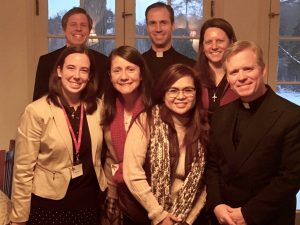
I discovered my vocation in college; I thought about it even in grade school, but when I got into high school, I didn’t follow up, and then, when I got into college, I started studying at the University of Dallas. Taking some philosophy and theology classes, I met some great people who taught there. That made me think about getting back into my faith more ardently.

Eventually, I met the Legion in college in my semester in Rome, Italy. During that semester, I joined Regnum Christi and then, after a year of being in Regnum Christi, I went to the candidacy.

What moved you to the candidacy during that year in Regnum Christi?

Well, it was just the invitation of a Legionary who was giving me spiritual direction. I had made some changes in my life and gotten more involved. It was actually at the end of that semester. I told him, “I want to do more. I feel a call to do more for Christ in my life, but I don’t know what it is.” Thus, he suggested I go to the candidacy, just for a couple of weeks, to get exposure to the Legionary lifestyle. I wasn’t planning on staying but, after two weeks, I decided to go back and join.

What in those two weeks got you excited and moved you to join?

I’d already been in Regnum Christi for a year or so when I got up there. It kind of resonated: the lifestyle, the prayers. I liked the fraternity, the brotherhood, the discipline, the intensity and seriousness of the Legionaries I saw and the other young men in the candidacy. I was really attracted by that clear mission and the great ideals of changing the world for Christ.

You began with those great ideals. Do you feel that you’ve fulfilled those ideals in your years in the Legion?

Yes. From when I first visited and joined, I feel like my life as a Legionary has been an effort to live out those ideals. I haven’t always been perfect, but I feel like the reason I joined and how I’m living now coincide pretty well.

What have been your ministries in the Legion over the past 20 years or so?

I joined in 1990, so 28 years. I’ve spent a lot of time working in a house of formation as assistant of humanists, assistant of philosophers, vice rector, and rector of Cheshire most recently. I worked with college students up in the Northeast for a bit. I was the local superior and local director of Regnum Christi down in Atlanta for some years. Now, I’m helping Fr. John Connor on the council of the territory.

What would you say to a young man thinking about the Legionary vocation?

The recommendation that probably helped me the most was what a Legionary told me when I was deciding: “God can’t be outdone in generosity.” I would tell that young man not to be afraid, to take steps forward to let God lead you. I think that I’ve found it true that, the more generous we are with God, the more generous he is with us.

You can find out about abut the vocation to the Legionaries of Christ on LegionVocations.org.

Living Out the Ideals of Youth: Fr. David Daly, LC Read More »

Regnum Christi Spirituality Center Ask a Priest

“Ask a Priest: What If My 14-Year-Old Wants to Skip Mass?”

Q: My 14-year-old son was confirmed two years ago, but over the last year he has become very resistant to the faith and protests mightily every Sunday about our requirement that he attend Mass with the family. He says that because he is confirmed he can make his own decision about whether to go to Mass. The weekly argument is causing a lot of strife and conflict in our family. What is our responsibility as parents versus his free will in this matter? His father and I want to do the right thing. – P.

Answered by Fr. Edward McIlmail, LC

A: I am sorry to hear about your son’s resistance to Mass attendance. Unfortunately it is becoming more common to hear of teens strongly rebelling against this very basic precept of the Church.

It is interesting that he mentions his confirmation. In fact, confirmation lays a heavier responsibility on him to practice and defend the faith, not a lighter one.

It might be good to dialogue with him about this sacrament. You could find online what the Catechism says about confirmation. You could also watch together the videos from our retreat guide about confirmation: “Strength of Thousands.”

The idea here is to let him know that Our Lord expects more of him, not less. You might mention that this is what manhood is about: living up to one’s commitments, especially to God.

It might be good to ask yourself what your son’s preparation for confirmation was like. Did he understand what he was doing? Or was he just going through the motions?

Moreover, it’s good to avoid thinking that your son’s “free will” somehow releases him from his obligations to God and from his duty to obey you, his parents. Free will properly understood means that we have the freedom to choose from among the various ways to do good.

If you think you and your husband have tried to do your best to instill the faith in your offspring, then there might be something else involved. This could include your son’s exposure to bad Internet sites or deleterious social media.

It also might be a simple case of an adolescent trying to learn to exercise his own self-determination.

If this is involved, it’s important that you all discuss the real issues together, attentively listening to what he says and trying to help him understand what’s really going on.

And he needs to know that you are attentively listening to him and hearing him. If his objections are not truly substantial, then perhaps simply listening to him and pointing that out will be enough.

Maybe you could allow him to contribute to the family decision about which Mass to attend; this would give him room to exercise his own self-determination.

Explain to him why it is still your responsibility to make sure everyone who lives in the home worships God in accordance with his own commandments. Help your son take responsibility for doing that — out of conviction, like an adult — instead of having him go to Mass without much thought, as if he were “still a kid.” I have a feeling that what is at play here is more adolescence (learning to become an adult) than theology.

For now, a good way to pursue the course of dialogue in the long term could be agreeing to read and discuss the YouCat together bit by bit.

Since your son is so young, I wouldn’t recommend letting him skip Mass. Giving in to his demand’s might embolden him to make other demands.

In the meantime, it might also help to get him involved in volunteer work with the Church. He needs to live his faith in a practical way, which means helping other people.

All of this is, of course, ultimately your decision. You will want to intensify your prayer for your son. This is a crucial moment when the devil would love to tear him from the Church. But prayers of a mom and dad can be a powerful counterforce.

Keep learning more with Ask a Priest

Got a question? Need an answer?

Today’s secular world throws curve balls at us all the time. AskACatholicPriest is a Q&A feature that anyone can use. Just type in your question or send an email to AskAPriest@rcspiritual.wpenginepowered.com and you will get a personal response back from one of our priests at RCSpirituality. You can ask about anything – liturgy, prayer, moral questions, current events… Our goal is simply to provide a trustworthy forum for dependable Catholic guidance and information. So go ahead and ask your question…

“Ask a Priest: What If My 14-Year-Old Wants to Skip Mass?” Read More »

 Encountering Jesus through Novenas 

novena

NOUN (in the Roman Catholic Church) a form of worship consisting of special prayers or services on nine successive days. Origin: Mid 19th century: from medieval Latin, from Latin novem ‘nine’. Pronunciation: novena /nə(ʊ)ˈviːnə/

– Oxford English Dictionary


“What I want is simply to help people to pray. We will only have the strength to cooperate with Jesus in building his Kingdom if we are people of prayer. Prayer, in all its many forms, is the central ‘activity’ of our lives because it puts us in direct contact with Jesus who is the central figure of our lives. If we pray, we will experience Jesus’ love, and if we experience his love, we will work with passion and zeal to spread his love. I see my novenas simply as one small way of helping those who feel called to pray them, to encounter Jesus in their hearts.” 

– Fr. Andre LaBudde, LC


In 2012, Fr. Andrew LaBudde LC, was a brother in Rome, preparing himself for the priesthood.  He noticed that a number of his fellow brothers were seeking deeper sources of spirituality in the wake of the problems with the founder.   Many of the Legionaries of Christ superiors and Cardinal Velasio de Paolis, who was leading the order through a renewal at the time,  had spoken about the need for Legionaries to write spirituality to share with their brothers. The idea came to him write his own novena for the Feast of the Sacred Heart. He composed a prayer and wrote a reflection for each of the nine days leading up to the solemnity. Knowing a few of his friends, fellow Legionary brothers, would benefit from the novena, he would simply print the prayers out and slip the novena reflection under their door each day, without saying anything. By the end of the nine days, they figured out that Fr. Andrew was the author.  Realizing that not only did he enjoy writing the prayers, but also that the other brothers wanted him to continue, he kept writing and sharing new reflections each day for the rest of that June, the month of the Sacred Heart.

Later that Summer, someone shared with Fr. Andrew that over the past month or so, prayer had been very difficult for him, and he had felt very much alone, but what helped him to get through that difficult time and find spiritual nourishment were Fr. Andrew’s daily reflections.  That testimony made Fr. Andrew decide to continue to write more prayers. He wrote more novenas for major feast days, as well as short reflections for different saints, and reflections for the Via Crucis (way of the cross).  He would give them to whoever wanted to receive them. Soon brothers were continuously approaching him, asking if they could be put on his list.

A novena can help with spiritual growth in many ways: it can be a way to pray for a grace one needs or wants; to go deeper into a specific theme, or to help prepare for the celebration of a particular feast day. Fr. Andrew tries to share the richness of a feast day through the novenas he writes because in his experience, “Often we celebrate a feast and the only idea we get from it is what the homilist preaches about that day, while normally there is still much more to learn and benefit from spiritually in that feast. If we are praying and reflecting over the feast for nine days, we will benefit more from the actual celebration of the feast day.”

After ordination in 2014, Fr. Andrew arrived at his first priestly mission as the assistant to the novice instructor at the Legionaries of Christ’s seminary in Cheshire, CT, and asked the novice instructor if he could offer the novenas and reflections to those novices who wanted them.   At this time he was also beginning to send the novenas to other people through email. Fr. Simon Devereux, LC, had the idea of offering them on the novitiate’s website so more people could subscribe to receive them.

“I try to get a novena out for all the major feast days,” shared Fr. Andrew, “and some popular saint days. Normally there is one and sometimes two novenas a month. I try as well, to make the novena in some way Christ-centered. Not every novena is centered on Jesus explicitly, but I try to do so.” Fr. Andrew’s novenas often incorporate Sacred Scripture, and quotes from saints and Church magisterium.

While sharing the inspiration and welcome reception for his novenas, Fr. Andrew also acknowledges that “Not everyone likes novenas, which is okay. There are a lot of ‘words’ in a novena, which can be tedious for some to pray. What’s important is that those who pray these novenas do so slowly, with pauses, refection, and personal examination. The novena isn’t a magical formula to get some grace if it is prayed perfectly for nine days. It is a tool to help us pray. If you start late or miss a day or two, you can continue to pray it!”

Fr. Andrew recently moved to a new mission at the Legionaries of Christ’s apostolic school in Germany, but he continues to write and share novenas.  He currently has XX subscribers to his novenas, which are published for the Feast of Christ the King, The Immaculate Conception, Our Lady of Guadalupe, Christmas, The Conversion of St. Paul, St. Thomas Aquinas, The Annunciation, St. Joseph, Easter, Pentecost, Sacred Heart, Sts. Peter and Paul, St. Ignatius Loyola, St. John Vianney, Exultation of the Holy Cross, Our Lady of Sorrows, St. John Paul II, St. Maximilian Kolbe, The Holy Angels, All Saints Day, All Souls Day and more. He is currently working on a few more feast days, like the Transfiguration and the Chair of St. Peter.

You can sign up here, on the website of the Cheshire seminary, by selecting “Fr. Andrew’s novenas” at the bottom of the page.


unknown.jpg

Fr. Andrew LaBudde was born in Atlanta, Georgia in 1982. He joined the Legionaries of Christ in 2001, and has studied and carried out pastoral work in Germany, Spain, Italy and the United States. Fr. LaBudde received his licentiate degree in Philosophy with a specialization in metaphysics from the Pontifical Regina Apostolorum College, in Rome, Italy. From that same college he received a bachelor’s degree in Sacred Theology. He was ordained in Rome in December of 2014 and currently serves at the Legionaries of Christ’s apostolic school in Germany.

 Encountering Jesus through Novenas  Read More »

“God Speaks English”: A Vocation Testimony by Emily Roman 

Emily Roman, from North Carolina, has been a consecrated woman since 2007. She spoke about her vocation to the consecrated life as part of National Vocation Awareness Week.

Can you tell us a little bit about your family background and how you met Regnum Christi?

Well, my family is the reason that I met the movement. My dad, the family’s spiritual pillar, got involved in Regnum Christi first. When I was very young, we moved from Maryland down to North Carolina and, soon after, he met Regnum Christi.

We were all a little bit uncomfortable at first when my dad would say, “Let’s pray the rosary together” after dinner, and we’d each have an excuse to do something else. But I’m a total daddy’s girl and I felt bad that everyone else ditched what seemed important to him, so I would be the one – out of pity – to pray the rosary with him or go to adoration. I think that’s where those seeds of a vocation first started.

The consecrated women first visited North Carolina when I was in middle school. My dad sent my sister and me on one of the first ECYD retreats in North Carolina. We didn’t have a choice but, after I went, I was super grateful. The way the consecrated women would speak about Christ, the way they led these different activities set my heart on fire and made me realize that they had something that I wanted. I was ready to change the world. I wanted to give my life for Christ from the first retreat.

What was your path from that moment till you were at the point of thinking of becoming consecrated?

It’s interesting because, when I look back even at that first retreat, seeing the consecrated women, there was something in me that was measuring myself against them and saying, “Maybe I could do that.” From the first moment, there was some internal matching in my heart of what they had.

I incorporated into ECYD at that first retreat. We started a Challenge club with my sister and me as team leaders, which kept us in touch with the consecrated women.

The summer before entering high school, I was an ECYD missionary. I went to Mérida, Mexico, without [being able to speak] Spanish. I was the only American. It was tough and we don’t usually do this now because of those challenges. I was lost, alone and homesick, but that brought me to my knees. I’d always led in Challenge, but there was nothing I knew how to give in Mexico.

I was wandering around while all the girls were sitting in circles talking Spanish. I wanted to have a conversation in English, and at that moment it dawned on me, “God speaks English.” As silly as that sounds, that was probably the moment when Christ became real and it was like talking to a friend.

That summer, I met a pre-candidate [young woman in high school discerning consecrated life] who was from Mérida but who studied in Rhode Island. She invited all of us to go visit her on a retreat. I immediately said, “Yeah, sure!” but none of the other girls even said a polite yes. I turned her down a few times but, over Holy Week, she got me up to a retreat at Immaculate Conception in Rhode Island.

At that retreat, I felt God’s call clearly to consecrate my life in Regnum Christi. I experienced the call praying at the altar of repose. I’d signed up for the middle of the night and nobody took the shifts after me. We’d just watched The Passion. I wanted to be there with Jesus in his suffering, and I really prayed to be with him. In that moment, I felt he was asking me to belong totally to him.

Did you join the pre-candidacy that summer or did you wait? What was your path?

Right away, I wanted to go, but my parents said no.

In junior year of high school, a car ran over my leg in the school parking lot, which slowed me down a lot. As I slowed down, my dad rekindled my restlessness. I was trying to forget the experience in Rhode Island, but I mentioned it to him. Later, I was sitting there with my big cast and my dad said, “I hope you’re doing what God wants from you.” In that moment, I was so upset with my dad – I knew what God was asking and I knew it would make me happy, but I didn’t want to face it. After that year, I joined the pre-candidacy.

The first week of the summer program to join pre-candidacy was hard, struggling back and forth. Then I read from Pope Benedict’s inaugural Mass, “Do not be afraid of Christ! He takes nothing away, and he gives you everything.” That really was me, and it stayed with me. I just had to step out in faith and say, “Pope Benedict, you better be right!” I can attest to the truth of his words in my consecrated life: I’m happy every day.

What was your experience of the formation path in the consecrated life?

I’m one of the last generation of consecrated who went through what we now call “old school.” After the pre-candidacy, I made what we now call first vows on August 18, 2007 and continued with four years of formation in Rhode Island. I made my solemn renewal, which we now call final vows, after two years of formation, right after the scandal of the founder broke. I knew Jesus had called me to be consecrated to him in Regnum Christi. The scandal of the founder didn’t change a whole lot for me: it was hard and heavy, but it was still clear that he wanted me to continue in consecrated life. That’s been a huge blessing.

Click here to find out more about the consecrated woman.

“God Speaks English”: A Vocation Testimony by Emily Roman  Read More »

Helping Others Build the Kingdom – Antonio Maza

Antonio Maza is a Regnum Christi Lay Consecrated Man working at Divine Mercy University. He spoke to us about his life and the vocation of the Lay Consecrated Man. This is the first in a series on the vocations of the four branches of Regnum Christi in honor of national vocation awareness week. 

Antonio, you’ve been a Consecrated Man for a while. Can you give us a little about your family background? 

I grew up in Mexico City and attended an all-boys Regnum Christi School on the south side of the city, starting in first grade and all the way through high school. My parents are both devout Catholics who participated in various lay apostolates, both as young adults and as a married couple. They both encountered Regnum Christi during my years in high school. 

My siblings and I were encouraged to participate in youth-groups at our parish and to practice corporal works of mercy through our middle school and high school years. This experience of the apostolate prepared me to encounter Christ in later years and to see God’s providential hand in my life. 

What led you to enter consecrated life in Regnum Christi?  

God placed in my heart a strong inclination to help others at an early age. I remember working some Sundays as a volunteer at a local orphanage. Later on, this inclination was transformed, through the tragic death of a friend, into a desire to become a physician. But, during my last year of high school, God changed my plans and helped me see that people need Christ more than they need a physician. An encounter with a holy woman during a mission trip and the testimony of joyful fidelity of lay RC members, Lay Consecrated Men and Consecrated Women, helped me hear the call of God to the consecrated life in Regnum Christi. 

A visit to the house of the Lay Consecrated Men in Mexico City was the beginning of a 23-year journey of discernment and discovery of the presence of God in my life. On that day, a conversation with a Legionary of Christ helped me to see the Church’s need for consecrated lay apostles who can work side by side with other lay people, helping them to transform our world into a place of encounter with God. 

What were the stages of formation in the consecrated life for you? 

After an initial year of formation with the Consecrated Men in Mexico City, I spent four years of university studies at the University of Dallas. Years after, I had the opportunity to do another year of philosophy and theology studies with the Lay Consecrated Men, and a Master’s in Business Administration.  

As part of this gradual process of human and spiritual formation, I took my Final Vows at the end of the summer of 1997.  

What is your current ministry? What ministries have you done? 

I currently work as Vice President for Finance and Operations of Divine Mercy University in Arlington, Virginia. My mission is to support the growth of the university from an administrative and operational perspective, working side by side with other lay members of Regnum Christi, Consecrated Women and Legionaries who are also part of this institution. 

During these years, I’ve had the opportunity to serve in the Territorial Administration for the territories of Italy and Central Europe from 2000 to 2002 and the territory of North America from 2006 to 2008. 

Another very deep and gratifying experience of these years as a Consecrated Man was swork with Mayan Communities in the RC Mission’s Territory in the Yucatan Peninsula.  

Click here to find out more about the Regnum Christi Lay Consecrated Men. 

Helping Others Build the Kingdom – Antonio Maza Read More »

Regnum Christi Spirituality Center Ask a Priest

“Ask a Priest: How Do the Particular and Last Judgments Differ?”

Q: I am a little confused on what is the difference between the particular and the general judgment. Can you help me to understand more fully what both of these are? – S.P.

Answered by Fr. Edward McIlmail, LC

A: The particular judgment is what each of us individually will face at the moment of our death. We will learn immediately our fate: either heaven right away, purgatory for a while and then heaven, or hell for eternity.

Our fate will depend on the state of our soul at death. If we die in mortal sin, our destiny is hell. If we die with any unforgiven venial sins or if we still owe a debt of temporal punishment for past sins, we will go to purgatory for a period of purification before entrance into heaven.

The general, or last, or final judgment will be at the end of time. It will include all those who have died and all those still on earth.

At the last judgment everything comes to light: all the hidden motives and actions of all of us, all the consequences of our decisions, all the ways God worked in our lives. It’s kind of a wrap-up event, the last in history.

The distinction between these two judgments is one of the topics covered in our Retreat Guide for All Saints’ and All Souls’ Day: Fire of Mercy. You might want to watch or listen to it to dig a little deeper.

There won’t be any changes in the fate of individuals who already died. Someone already in heaven doesn’t have to worry about losing paradise. A soul in hell won’t get a second chance at heaven.

A fuller treatment about the final judgment can be found in the Catechism, which is quoted extensively here:

THE LAST JUDGMENT

1038 The resurrection of all the dead, “of both the just and the unjust,” will precede the Last Judgment. This will be “the hour when all who are in the tombs will hear [the Son of man’s] voice and come forth, those who have done good, to the resurrection of life, and those who have done evil, to the resurrection of judgment.” Then Christ will come “in his glory, and all the angels with him. … Before him will be gathered all the nations, and he will separate them one from another as a shepherd separates the sheep from the goats, and he will place the sheep at his right hand, but the goats at the left. … And they will go away into eternal punishment, but the righteous into eternal life.”

1039 In the presence of Christ, who is Truth itself, the truth of each man’s relationship with God will be laid bare. The Last Judgment will reveal even to its furthest consequences the good each person has done or failed to do during his earthly life. […]

1040 The Last Judgment will come when Christ returns in glory. Only the Father knows the day and the hour; only he determines the moment of its coming. Then through his Son Jesus Christ he will pronounce the final word on all history. We shall know the ultimate meaning of the whole work of creation and of the entire economy of salvation and understand the marvelous ways by which his Providence led everything towards its final end. The Last Judgment will reveal that God’s justice triumphs over all the injustices committed by his creatures and that God’s love is stronger than death.

1041 The message of the Last Judgment calls men to conversion while God is still giving them “the acceptable time, … the day of salvation.” It inspires a holy fear of God and commits them to the justice of the Kingdom of God. It proclaims the “blessed hope” of the Lord’s return, when he will come “to be glorified in his saints, and to be marveled at in all who have believed.” [end quoted material]

Note that phrase about “the acceptable time”: Now is the time to prepare for our particular judgment. For it awaits us all.

Keep learning more with Ask a Priest

Got a question? Need an answer?

Today’s secular world throws curve balls at us all the time. AskACatholicPriest is a Q&A feature that anyone can use. Just type in your question or send an email to AskAPriest@rcspiritual.wpenginepowered.com and you will get a personal response back from one of our priests at RCSpirituality. You can ask about anything – liturgy, prayer, moral questions, current events… Our goal is simply to provide a trustworthy forum for dependable Catholic guidance and information. So go ahead and ask your question…

“Ask a Priest: How Do the Particular and Last Judgments Differ?” Read More »

Eustace Mita and Reflections on the Gospel 

Did you ever meet someone who wanted to be Job?

You remember Job. He was that prosperous man in the Old Testament known for his unshakable faith in God. Satan bet God that given enough hardship, the faithful Job would lose his faith.

So God let Satan visit upon Job all manner of suffering, from poverty to illness to loss of family. Job ended up with just his faith. And because he kept his faith, everything he lost was restored and more. God won the bet. (You knew he would.)

Eustace Mita has lived a modern version of Job’s experience.  Though he wasn’t the subject of a wager between Heaven and Hell, God did hear his prayer. And Eustace may be a prime example of the power of prayer – and why you should never ask for something in prayer you aren’t prepared to accept.

Like Job, Eustace experienced success and prosperity, accompanied by a strong faith. He grew up in a Philadelphia suburb and attended St. Mathias Grade School, Archbishop John Carroll High School, and Drexel University.

After college, he ran a small business in Dallas for a couple years, then returned to Philadelphia to work for Chilton, the big automotive publisher.

But, he always wanted to be an auto dealer, so his next career stop was working for the dealer he admired most: Roger Penske. After three years learning the ropes, he struck out on his own and started Mita Leasing. He joined forces with his uncle (who had pioneered personal auto leasing) and built a highly successful business, Half a Car.

In 2000 he and his uncle sold the automotive training and management company, Half a Car, to Reynolds & Reynolds, a Fortune 500 company. Then his interests shifted more to real estate and hotels.  Life was good.

Eustace was the middle child in a family of five children.  He and his wife had five children who over time have produced 14 grandchildren.

In 2000 at a family gathering, he met Br. John Connor, LC, who would later be ordained to the priesthood and today is the North American Territorial Director for the Legion of Christ and Regnum Christ. That meeting would pave the way for Eustace to handle his experience wearing Job’s shoes.

“I was a serious practicing Catholic, a daily communicant,” Eustace recalled. “But a couple questions from Fr. John showed me I had many more things to learn.”

Fr. John asked Eustace if he had a spiritual director. Eustace replied that not only didn’t he have one, but he had no idea what one was. Fr. John volunteered for the job and Eustace invited him in.

Fr. John’s next question was about what apostolate Eustace was working on.  Of course, Eustace again admitted he didn’t know what an apostolate is. (As anyone who knows Fr. John – or most any Legionary, for that matter – knows where such an answer can lead your path.)

“I think you should start a gospel reflection group for businessmen like you,” Fr. John advised. And so he did, with suggestions from Fr. John about how to organize it, the format, and how to go about inviting others to participate.

Eustace had been involved in a Bible study group before and had found it a bit frustrating. This was different.  It wasn’t about interpreting the Bible, but reflecting on God’s word and sharing how it related to our individual lives. It started as an occasional meeting, then became weekly, then grew – a lot.

From one small group it has expanded to more than 100 groups with 1,000 men participating across Pennsylvania, New Jersey, and Maryland.  The little group in his office now has 50 members who gather weekly in person – and many more who join by phone from as far away as California and Europe.

Eustace was successful in business. But as his role as Job unfolded, it was the experience of the gospel reflection group, the strength in his faith, that sustained him.

His Job moment because, surprisingly, during an hour of adoration in 2007.  Eustace is a firm believer in making annual goals in four areas of his life: financial, relational, health, spiritual. He had decided to focus on humility as his spiritual goal for the next year and in adoration asked God to guide him.

He sensed God’s response clearly and directly: “Are you sure, Eustace? I will do this, but it will be painful.”

Eustace prayed in response that he was sure and only asked God to guide him through whatever happened. And a lot happened.

For many businesses and investors, 2008 was a disaster.  It was, in human terms, a year of disasters for Eustace.  A son was diagnosed with brain cancer. A daughter was diagnosed with thyroid cancer. His business interests tanked and he lost two-thirds of his net worth. He really did feel like Job.

But like Job, he kept his faith. He never asked “why me, God?” He simply prayed to God for His guidance. And business got better and incurable illnesses were survived.

Today, the gospel reflection groups continue to grow.  Eustace has a guidebook and materials – Gospel Reflection in a Box – for men starting a group.  He says he has made all the organizational mistakes so others don’t have to.

“We live in a wounded world,” Eustace says. “Men are coming to the groups because they are hurting.  Then they are filled by the faith, and the healing begins.”

He recalls one man who was devastated after losing his son.  Eustace invited him to the group, but he wasn’t interested. So Eustace gave the man a book he thought would be comforting. Eventually, he read the book, starting coming to a group and now is a group leader. And a living example of faith in our Lord.

“Guys have worked through and been healed from all sorts of addictions,” according to Eustace. “Every week something great happens – the Holy Spirit is really in this room and working.”

Eustace says there are difficult times in life, but the struggle has made him a better husband, father, and grandfather. He maintains his own “spiritual armor” signified by the acronym “ARM” – Adoration, Rosary, Mass.

And while the gospel reflection groups play a key role in the lives of many men, they also formed the basis for a much larger event launched first in 2002 by Eustace and friends: Man Up Philly.

Man Up Philly is a once-per-year conference focused on men to energize and enable men to be better sons, fathers, and husbands, by living their faith and leading their families by example. It is a day filled with inspirational speakers that over the years has included athletes like Mike Piazza, Rich Gannon, Phil Martelli, Fran Dunphy and other notables like Philadelphia Police Commissioner Charles Ramsey and Camden police chief J. Scott Thomson, who are constantly working to bring their faith into their everyday lives.

Man Up Philly has become a major annual event. And it appears to be contagious (yes, Eustace and friends have created May Up in a Box) and is being planned for New Jersey and New York.

For Eustace Mita, the gospel reflection group, combined with his regular practice of the faith, an annual retreat (led by a Legionary), and the grace of God have brought a good life, gratitude, and (like Job) humility.

Maybe more men should be asking to be like Job.

Eustace Mita and Reflections on the Gospel  Read More »

Youth and Family Encounter in Mexico Draws over 4000 People 

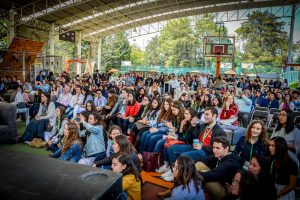
From October 5-7, the Youth and Family Encounter 2018 took place, with the participation of more than 4000 people from Mexico and Central America.

Conference Details 

With the presence of sports personalities, journalists, artists, influencers, testimonies, moments of prayer and liturgical celebrations, this Encounter was full of harmony, reflection and fun among members, family and friends of Regnum Christi.

The Encounter was held at the Anahuac University. Members from all four branches – lay members, Consecrated Women, Lay Consecrated Men and Legionaries – along with friends of Regnum Christi participated.

One of the most moving moments was the diaconal ordination of six Legionaries, their testimony of dedication and service is a message of hope, for a society hit by materialism and insecurity.

Speakers 

Among the keynote addresses, the Bishop of Aleppo, Syria, Bishop Denys Antoine Chahda, expressed the value of peace, reconciliation and service to the most vulnerable.

The international journalist Valentina Alazraki shared her testimony as a correspondent in Rome since October 1974, a time she lived with Saint John Paul II, historical moments that marked her life, and that filled millions of people with faith and hope.

Burl Cain, a visionary who initiated the installation of chapels in prisons in Louisiana and offered training workshops for prisoners, also shared his experience. He explained his program of global seminars for “moral rehabilitation” of the offenders, offering them a second chance in life.

Fr. Joseph Burtka, LC, a Legionary since 1986, gave a workshop on the value of cultivating the spirituality of the family. He was ordained in 1997, served territorial director of New York and was a General Counselor of the Legion of Christ from 2005-2014.

To promote healthy competition, perseverance and effort to be better every day, Paralympic medalist Jorge Font shared challenges he overcame, which led him to achieve nine international titles in waterskiing tricks, five world records in the same category, and seven world titles in slalom waterskiing, as detailed in his book, Enlarge Life: The Strength of Fragility.

Marcelo Michel Leaño, who is the youngest head coach in the first division of Mexican soccer, gave a conference as well. He graduated from the Semper Altius School Network sponsored by Regnum Christi. Marcelo shared the value of perseverance and hard work, accompanied by a solid faith and a good spiritual formation.

Activities 

On Friday and Saturday night in the courtyard of the Anahuac University, and before hundreds of young people, Pray and The Vázquez Sounds sang. The latter shared a testimony of values and enormous talent, which has led them to surpass 200 million online video views.


To foster sportsmanship and family life, on Sunday there was a race to commemorate the 25th anniversary of Youth and Missionary Family, with a family walk of 2 km and a 5 km race. That same day, a panel was held with the presence of the various branches of the Movement: Consecrated Women, Lay Consecrated Men, Legionary priests and lay people. Fr. Paul Lara, LC, the territorial director of Monterrey, joined the panel and shared that his vocation was thanks to the testimony of Regnum Christi members.

Subsequently, Fr. Guillermo Serra, LC, moderated a panel composed of the communicator Mariano Osorio and the host and journalist Susana Sáenz. They explained the importance of being able to listen to the audience, the value of being objective in the information and the importance of recognizing and accepting errors.

Finally, Miguel Pérez, rector of the Anáhuac Mérida University, expressed the value of training and putting talents at the service of others, with an attitude of leadership and social commitment.

The closing Mass was held in the university courtyard and presided by Fr. Ricardo Sada, LC, territorial director of Regnum Christi of Mexico and Central America. Fr. Ricardo exhorted the members of the Movement to give testimony of joy and service in all environments in which they develop.

The Youth and Family Encounter brought together various generations identified by the values of union, learning, coexistence and integration, driven to fight every day from their homes to be young and families formed to contribute and be part of a positive and harmonious society .

Read the original with videos of the speakers and a photo album of 432 photos on SomosRC, the Mexican Regnum Christi site.

Youth and Family Encounter in Mexico Draws over 4000 People  Read More »

Legionaries Help with Youth Synod

The recent Synod of Bishops met in Rome, October 3–28, to discuss “Youth, the Faith and Vocational Discernment.” Some Legionaries had the opportunity to assist at this meeting of bishops from all over the world.

The Synod

In preparation for the gathering, in March 2018 there was a pre-Synodal meeting with 300 young people from five continents who came together at the Pontifical International College Maria Mater Ecclesiae, a seminary in Rome directed by the Legionaries of Christ, for diocesan seminarians from around the world. Then, in October, there followed the formal meeting of bishops from around the world in Rome, called a synod. Each bishops’ conference sent representative bishops and Pope Francis appointed a few more.

The synod began and ended with large Masses. In the opening Mass homily, Pope Francis said, “Jesus offers his disciples the assurance that will accompany all the missionary work to be entrusted to them: the Holy Spirit will be the first to preserve, to keep alive and relevant, the memory of the Lord in the heart of his disciples. It is the Spirit who ensures that the richness and beauty of the Gospel will be a source of constant joy and freshness.”

On Sunday, October 28, Pope Francis closed the synod. In his homily at the final Mass, he outlined the “three fundamental steps on the journey of faith,” which he summed up as “To listen, to be a neighbour, to bear witness. The journey of faith in today’s Gospel ends in a beautiful and surprising way when Jesus says ‘Go; your faith has made you well’ (v. 52). Yet Bartimaeus had made no profession of faith or done any good work; he had only begged for mercy. To feel oneself in need of salvation is the beginning of faith. It is the direct path to encountering Jesus.”

Legionaries’ Involvement in the Synod

Three Legionaries were helping out with the Synod as assistants to the Synod’s general secretary: Br. Alejandro de la Garza Gossler, LC,  and Fr. Luis Ramírez, LC, from Mexico, and Br.Russell Dean Ward, LC, from the US. These men were responsible for writing summaries and official acts of what different bishops said.

We asked Br. Russell how this participation corresponds to the Charism of Regnum Christi. He said, “The grace of being able to participate in the Youth Synod has been an experience of the Universal Church.” When we asked him about media coverage of the Synod, he said, “I have been able to witness that behind all the chaos present in the media, the vast majority of cardinals, bishops and priests here have a passionate love for the Church and long to spread the faith to the next generation.”

Br. Russell found the small group discussions especially inspiring. “Here I have seen how the Synod Fathers are really seeking the good of the whole Church,”he told us, “especially by an attentive listening to the voices of the young people present.” He though the way they worked through opinions was wonderful. “There may be diverse opinions on how to attain the end,” he said, “but the end is the same for all – to lead the youth to a real experience of Jesus Christ.”

When asked what he learned for the Church from the Youth Synod, Br. Russell mentioned accompaniment, such as mentoring and spiritual direction. He sees the need to form both priests and lay people to be mentors and spiritual guides.

Br. Russell summarized the Synod by comparing it to the disciples who met the risen Christ on the road to Emmaus: “Jesus offers us the key to touching the hearts of the youth today. Jesus meets the two disciples as they walk away from Jerusalem—that is, the wrong way. Jesus actually walks the wrong way with them! He first listens to them, their doubts and disappointments. He then reprimands them and gives them the key to interpret all their experience from his perspective. Then he leads them to the Eucharist, where they recognize that he is alive and in their midst. After this, they go back to Jerusalem on fire with the love of Christ and as apostles of his resurrection.”

For more information on the Youth Synod, you can check out the Synod’s website.

Legionaries Help with Youth Synod Read More »

Scroll to Top

Events

Looking for another country?

Contact Regnum Christi near you

News & Resources

News & Resources

The Regnum Christi Mission

The Regnum Christi Identity

Alex Kucera

Atlanta

Alex Kucera has lived in Atlanta, GA, for the last 46 years. He is one of 9 children, married to his wife Karmen, and has 3 girls, one grandson, and a granddaughter on the way. Alex joined Regnum Christi in 2007. Out of the gate, he joined the Helping Hands Medical Missions apostolate and is still participating today with the Ghana Friendship Mission.

In 2009, Alex was asked to be the Atlanta RC Renewal Coordinator for the Atlanta Locality to help the RC members with the RC renewal process. Alex became a Group Leader in 2012 for four of the Atlanta Men’s Section Teams and continues today. Running in parallel, in 2013, Alex became a Team Leader and shepherded a large team of good men.

Alex was honored to be the Atlanta Mission Coordinator between 2010 to 2022 (12 years), coordinating 5-8 Holy Week Mission teams across Georgia. He also created and coordinated missions at a parish in Athens, GA, for 9 years. Alex continues to coordinate Holy Week Missions, Advent Missions, and Monthly missions at Good Shepherd Catholic Church in Cumming, GA.

From 2016 to 2022, Alex also served as the Men’s Section Assistant in Atlanta. He loved working with the Men’s Section Director, the Legionaries, Consecrated, and Women’s Section leadership teams.

Alex is exceptionally grateful to the Legionaries, Consecrated, and many RC members who he’s journeyed shoulder to shoulder, growing his relationship with Christ and others along the way. He knows that there is only one way, that’s Christ’s Way, with others!