Three Legionary Deacons Ordained in Indiana

On Saturday, July 27, 2019, three Legionaries of Christ were ordained to the diaconate in Michigan City, Indiana.

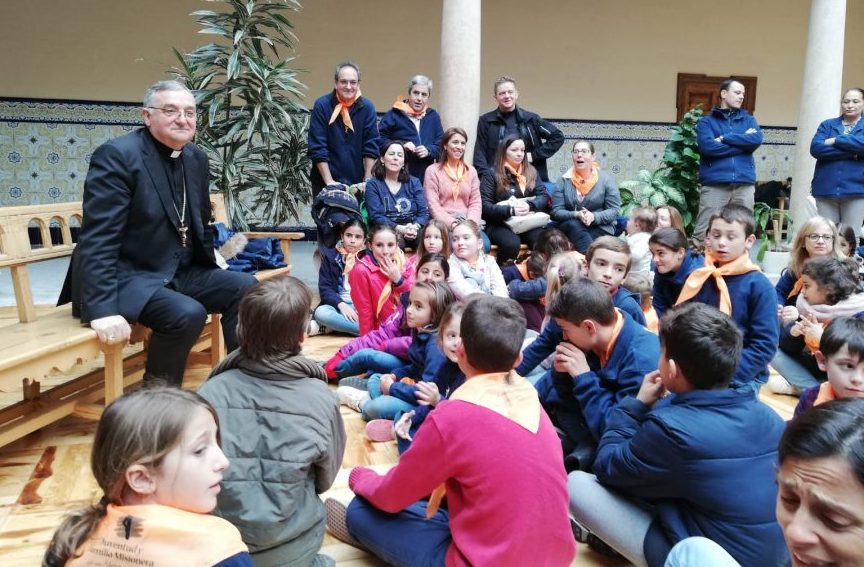
Bishop Donald Joseph Hying ordained Deacons Kramer Cameron, Kevin Gills, and Christopher Gronotte, LC, in Notre Dame Parish during an 11am Mass. 47 Legionaries of Christ priests concelebrated the Mass of ordination. Along with the young men from Bishop Hying was the bishop of Gary, the diocese in which the ordination happened and which SHAS is part of, but he was recently transferred to Madison, WI.

These deacons are among the 30 Legionary Deacons being ordained in 2019. Here are the stories of how the three deacons got to this point.

Deacon Kramer Cameron, LC

Deacon Kramer Cameron was born in the small town of Mabou, Nova Scotia, Canada and his family now lives in Calgary, Alberta, Canada. He has four living sisters and a brother who died a few months after he was born. Deacon Kramer spoke of his family, “My family is a real gift and though we are all over the world, we are really close. When God gives us the opportunity to be together, it’s always a little taste of Heaven on earth.”

Deacon Kramer entered the apostolic school at 13. He described his personal experience, “When I prayed about it, read the Scriptures, talked to Jesus in the Eucharist, went to the summer program in New Hampshire… God made it clear to me that he actually was inviting me to live my short life… to help everyone get to Heaven, as a priest.”

He realized that his life was short compared to eternity, and he felt that God was calling him to live it helping others realize that God loves them and get them to heaven.

Deacon Kramer mentioned how the unexpected death of Br. Anthony Freeman, LC, last year touched him, “It’s a reminder that we’re not just preparing to love Jesus or be apostles – we already are and it’s awesome. God can take us to Heaven whenever he wants, because we are already all his.”

Speaking about what the priesthood meant to him, Deacon Kramer said, “For me, my calling to the priesthood is simple: I’m just following Jesus. I’m primarily a disciple, I try to trust God and allow God to love me. I feel called to love him and all people with his heart and mercy, bringing others the greatest gift, his love.”

Regarding the diaconate itself, Deacon Kramer spoke about how he is working in Florence at the English-speaking parish in Florence, Italy called Santi Apostoli (Holy Apostles). As he is the sole native English speaker in the Legionary community there, he foresees a lot of opportunities to help with the sacraments and form apostles.

Deacon Kevin Gillis, LC

Deacon Kevin Gillis was really influenced by a book about Padre Pio that his mom gave him at 13. He was struck that Jesus did it all for him. He saw the need of souls to have real friendship with Christ like he had found. At 16, he visited the apostolic school and was impressed by the others there. He joined the apostolic school for a year and left for two years before returning for the novitiate at 19. He working in the San Jose area as a brother: working behind the scenes and offering Catholic formation at Canyon Heights Academy.

When asked about his ordination, Deacon Kevin said “[Diaconate ordination] means talking a step closer to the altar, taking on a greater call to holiness, and a greater opportunity to serve God’s people.”

Deacon Christopher Gronotte, LC

Deacon Christopher was born and raised near Cincinnati in Fort Mitchel, Kentucky. He grew up in Regnum Christi with an older brother (Fr. Andrew Gronotte, LC) and a younger sister. His dad passed away unexpectedly in 2017. Deacon Christopher describes how he started out in the apostolic school in seventh grade: “When I first went to the apostolic school, I wasn’t thinking of being a priest, I just wanted to attend that school for boys up in New Hampshire and to be with my older brother.” He continued speaking about how his call was gradual, “Little by little, through spiritual direction and lots of time in prayer, I realized that I was really happy here in the Legion and that this is where God wants me.”

Deacon Christopher also described the contemplative and evangelizing spirit he lived in the seminary, “We wake up early to pray and fill the spiritual tank that will keep us running, to fill our candles with oil so our lamps don’t burn out. We have classes in the morning and study in the afternoon, a very regular lifestyle that allows for a certain healthy rhythm. There are many opportunities for time together with the other brothers and time with the Lord in adoration throughout the day.”

Please keep these deacons in your prayers as they prepare for priestly ordination which will take place in Rome on May 2, 2020.


Link to Photo Album

Three Legionary Deacons Ordained in Indiana Read More »

Regnum Christi Spirituality Center Ask a Priest

“Ask a Priest: What If My Friend Is Thinking of IVF?”

Q: I have a friend who’s been trying to get pregnant, but maybe due to her age – she’s 47 years old – it is difficult for her to conceive naturally. My question is, would it be sinful for the couple to consider an IVF treatment? – A.

Answered by Fr. Edward McIlmail, LC

A: To attempt in vitro fertilization or undergo it is objectively gravely sinful, for several reasons (pardon the bluntness here).

First, it usually involves the husband’s masturbating in order to obtain the seed.

Second, it separates the act of conception from the marital act of natural intercourse. Children have a right to be conceived through an act of love between their parents, not by the flick of a wrist of a lab technician uniting seed and ovum.

Third — and this is the most serious moral problem — IVF almost always involves the production of “spare” embryos, some of which might be discarded later (for “not being good enough”) or left frozen in a lab. It basically amounts to the destruction of innocent human lives, or leaves tiny human beings suspended in a frozen state, an absurd fate.

Your friend needs to understand that children are a gift of God. No one has a right to a child. A child isn’t a product to be obtained at will.

Pope St. John Paul II warned of the extremes that can affect attitudes about children. In his 1995 encyclical Evangelium Vitae (The Gospel of Life), No. 23, he writes:

Thus the original import of human sexuality is distorted and falsified, and the two meanings, unitive and procreative, inherent in the very nature of the conjugal act, are artificially separated: in this way the marriage union is betrayed and its fruitfulness is subjected to the caprice of the couple. Procreation then becomes the “enemy” to be avoided in sexual activity: if it is welcomed, this is only because it expresses a desire, or indeed the intention, to have a child “at all costs,” and not because it signifies the complete acceptance of the other and therefore an openness to the richness of life which the child represents. [end quoted material]

For further reading, these Vatican documents might help:

— Instruction on Respect for Human Life in Its Origin and on the Dignity of Procreation: Replies to Certain Questions of the Day

— Dignitas Personae: On Certain Bioethical Questions

A past Ask a Priest question is worth noting, too: https://rcspiritual.wpenginepowered.com/ask_a_priest/ask-a-priest-will-i-ever-get-to-be-with-siblings-who-died-during-ivf/

The couple might want to contact a NaProTechnology specialist to get an ethically sound perspective on fertility treatment.

The spouses need to be encouraged to intensify their prayer life and to accept their situation if they cannot conceive. They might also be encouraged to think about adoption.

Please pray for this couple. Life and death issues are at stake.

Keep learning more with Ask a Priest

Got a question? Need an answer?

Today’s secular world throws curve balls at us all the time. AskACatholicPriest is a Q&A feature that anyone can use. Just type in your question or send an email to AskAPriest@rcspiritual.wpenginepowered.com and you will get a personal response back from one of our priests at RCSpirituality. You can ask about anything – liturgy, prayer, moral questions, current events… Our goal is simply to provide a trustworthy forum for dependable Catholic guidance and information. So go ahead and ask your question…

“Ask a Priest: What If My Friend Is Thinking of IVF?” Read More »

Regnum Christi Spirituality Center Ask a Priest

“Ask a Priest: Weren’t Adam and Eve the Result of Alchemy, Not Creation?”

Q: So I was just wondering if God the Father created everything from nothing, how it is that he created Adam from dust and Eve from Adam’s rib? I’m sorry, that’s not creation, that’s alchemy. Also, Christ said call no one on earth “father.” Pretty sure he wasn’t joking around about that. – M.S.

Answered by Fr. Edward McIlmail, LC

A: Even if God formed Adam and Eve with the use of pre-existing material (dust or a rib), God is still the ultimate creator of that dust and rib. In any case humans are comprised of body and souls, and their souls have to be created “in the moment,” so to speak. So in a real sense a person (a unity of body and soul) isn’t created until “in the moment” — by God, of course.

As for Jesus’ comment about not calling people father, his intention was to drive home the idea that God the Father is a Father in a singular way for each of us. God is Father in a far more perfect way than anyone on earth could be.

Jesus certainly didn’t mean that we should ban the use of the title altogether. If we never called anyone on earth father, the very title, when applied to God, would have no meaning for us.

Besides, Scripture itself often applies the title “father” to humans. Just look at the first chapter of Luke’s Gospel:

— “He will go before him in the spirit and power of Elijah to turn the hearts of fathers toward children” (verse 17).

— “The Lord God will give him the throne of David his father” (v. 32).

— “… according to his promise to our fathers, to Abraham and to his descendants forever” (v. 55).

— “When they came on the eighth day to circumcise the child, they were going to call him Zechariah after his father” (v. 59).

— “So they made signs, asking his father what he wished him to be called” (v. 62).

— “Then Zechariah his father, filled with the holy Spirit, prophesied …” (v. 67).

— “… to show mercy to our fathers and to be mindful of his holy covenant and of the oath he swore to Abraham our father” (vv. 72-73).

All of these verses, of course, are inspired text, with God as its primary author.

Besides, God commands that we show respect to our parents. What would we call the man who helped bring us into the world? “This guy who’s married to my mom”? That would hardly be a way to honor the Fourth Commandment.

Keep learning more with Ask a Priest

Got a question? Need an answer?

Today’s secular world throws curve balls at us all the time. AskACatholicPriest is a Q&A feature that anyone can use. Just type in your question or send an email to AskAPriest@rcspiritual.wpenginepowered.com and you will get a personal response back from one of our priests at RCSpirituality. You can ask about anything – liturgy, prayer, moral questions, current events… Our goal is simply to provide a trustworthy forum for dependable Catholic guidance and information. So go ahead and ask your question…

“Ask a Priest: Weren’t Adam and Eve the Result of Alchemy, Not Creation?” Read More »

In Family Missions, Kids Teach their Parents to Live their Faith with Courage, Ingenuity, and Commitment 

Concep and Dani, a married couple from Barcelona, have three children: twin 11-year-old girls and an 8-year-old boy. This year they did Holy week missions together for the first time. They shared, “What we found exceeded any expectations: we found God.” The family was in the diocese of Teruel and Albarracín, with the Family Missions group from Barcelona. In this testimony, they share their missionary experience. 

Testimony of Concep and Dani 

It was our first year doing family missions, and the truth is, we did not really know what we were going to find or how our children would accept it: two 11-year-old preteens and an 8-year-old boy about to make his First Communion. 

We wanted to live Holy Week as a family, close to Christ, and at the same time, be able to help and collaborate with the Church. 

What we found exceeded any expectations: we found God. 

In the other missionaries who became family-friends, we found role models and true gifts. On the mission we had many great experiences: praying, sharing experiences, meeting wonderful people who live so far away from us, but who are so close to our heart, and, why not just say it—laughter all around. 

The excitement of remembering our 8-year-old son, inviting an elderly man from one of those towns to come to the liturgy of the hours while giving him a rosary and explaining how to pray it was an authentic lesson in learning to be like children, to look at the faith as they do, with courage, ingenuity, and commitment. 

We met holy priests who live in very difficult conditions in their parishes, and I try to pray for them every day. 

We saw the harsh reality of the Church in a lot of rural areas: few people live close to God, they live in small dispersed population centers, and most of them are very old. 

In a way, it verifies the general reality of the Church of today and the times that we have to live in. God asks each one of us to pray for these circumstances, to be an example and testimony, and to act as apostles in our environment. Undoubtedly, having been part of the Family Missions this Holy Week has been a gift from the Lord that we hope to repeat next year. 

You can read the original on the Regnum Christi site of Spain. 

In Family Missions, Kids Teach their Parents to Live their Faith with Courage, Ingenuity, and Commitment  Read More »

The Family that Evangelizes Together…

Take a deep breath and brace yourself before reading the following sentence: 

The average married couple spends four minutes a day alone together, according to Christian counselor Juliet West. 

This terrifying statistic doesn’t prove that couples are intentionally avoiding each other. But it does suggest they are torn apart by many distractions: children, work, friends, extended family, hobbies, and, yes, church and faith commitments. 

A quick internet search will generate literally thousands of articles suggesting ways couples can be together more of the time… 

  • Share a hobby. 
  • Have dinner together every night. 
  • Set a regular time for a “date”.
  • Plan a weekend getaway. 
  • Exercise together.
  • Go to bed at the same time. 
  • Take a walk together.
  • Go to Church together. 

This last suggestion–going to Church together–appears to have a special power. According to a Harvard study, couples who go to Church together live longer, are happier and are less likely to get divorced. 

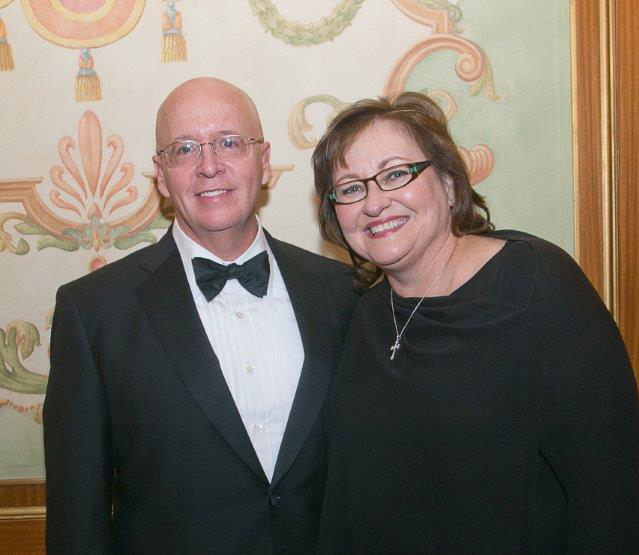
Regnum Christi members Jeff and Val Sprague may not have read the Harvard study but they have strong feelings about the time commitment to each other as a couple. It even includes the time they spend evangelizing. 

Residents of Greenwich, Connecticut, Jeff, and Val have been married 30 years. They are the parents of two daughters and are active parishioners of the Church of St. Patrick’s in Armonk, New York. 

They incorporated into Regnum Christi–together–in November 2013. Val admits that she felt the call to Regnum Christi several years earlier, but wanted to wait to commit until Jeff was ready. 

“We do everything as possible as we can as a couple,” Val explains. “For me to join Regnum Christi and work on all these wonderful apostolates while he sits at home … well … I knew that wasn’t what God was asking of me. I have been able to be the woman of Christ I have been called to be because of how Jeff has loved me. Without his love, I couldn’t be what I can be for Christ.” 

“I went through a longer period of discernment,” Jeff admits. “But we have to be sure we are on the same page when we accept something that is going to be such a big part of our lifestyle. 

“If we’re going to get involved in something outside of work we want it to be as a couple. That’s why I don’t go off and play golf all day Saturday–and why I wouldn’t want Val to spend her weekend off on an apostolate while I’m home alone.” 

Val and Jeff work on the apostolate of fundraising (among other things) and believe they are most effective when they do their apostolic work as a couple. Both insist they are better servants of Christ as a team rather than as individuals. 

That isn’t to say they don’t serve in individual apostolic roles when there is a special need–and they are comfortable it won’t conflict with the family. 

Jeff is Founder and Managing Partner of Vertical Research Partners, an independent equity research and consulting firm headquartered in Stamford, Connecticut. He has served a three-year term as Regnum Christi Local Director for the NY Tri-State area. Jeff’s personal apostolic work focuses on evangelizing men in the workplace through apostolates such as Holy Happy Hour (H3). 

Val has served as a Regnum Christi Section Assistant. She is a Spiritual Guide and co-founded The Children’s Hope Chest, a non-profit, which supports youth become actively involved in helping children who suffer from poverty, neglect, abuse, and hunger. She has served in various ministries in her parish. And she co-chairs the territorial development committee with Fr. Mark Haydu, LC. 

In 2016, Jeff and Val received the Graymoor Award from the Franciscan Friars of the Atonement for their devotion to serving the Lord and promulgating Catholic values in both their personal and work lives. 

As a team, Jeff and Val are involved in the Regnum Christi couples apostolate (C4), which endeavors to help build strong Catholic marriages and to bring married couples closer to Christ. This work includes personal and group accompaniment, as well as facilitating retreats with the Legionaries of Christ. 

It is this couples apostolate that has become the “sweet spot” for Jeff and Val. And they believe encouraging couples to work together in Regnum Christi could be a key to its future growth and success. 

“Once we were in Regnum Christi we saw people involved in so many apostolates and activities, but in very few cases were couples active together,” Val recalls. “Everything seemed to be geared toward the individual. 

“I had this inspiration; why not approach couples. Why don’t we do things specifically for couples?” 

Traditional Sprague Christmas party. C4 leaders, C4 couples, RC family and friends from church, LC Community. Lindsay next to Val. Shannon next to Jeff.

From that inspiration came C4: Catholic Couples Cocktails and Christ. Picture an encounter but rather than involving individual men or women, it involves married couples and has a bit of socializing along with the spiritual. 

As anyone who has been around Regnum Christi for more than a cup of coffee would attest, this format is far removed from the traditional way of doing things.  Wives typically are drawn to Regnum Christi before their husbands, who usually join later (if they join) and often are a bit resistant. Everyone knew that spouses wouldn’t open up and share their spiritual thoughts in a mixed group with their spouses present. 

But as sometimes happens, things everyone knows turn out not to be true. Ten couples attended the first C4 gathering. The allegedly fearful husbands were assured that if they felt uncomfortable neither their wives nor other members would pester them to return. 

However, no pestering was needed; all came back for more. In fact, there was a moment in that first meeting that Val and Jeff believe affirmed their conviction that a couples “encounter” would work.  When it was time to begin the spiritual discussion they broke the men and women into two groups, thinking that the men might be a bit uneasy sharing in earshot of the women. But just a few minutes after the men had retired to a separate room they returned and said they wanted everyone to be together for the discussion. 

“When we brought everyone together it was a really lively discussion,” Jeff recalls. “People wanted to grow spiritually and were open to sharing their thoughts and prayers. 

“In the end, the couple doing things together is going to do better than the couple divided.” 

The second C4 group started soon. And later a group was added for young couples with small children: C4 New Beginnings. Groups typically meet every six weeks or so. 

Val says the formula for participation is simple: bring couples together who love each other and have a strong faith they want to deepen. The goal is to grow in spiritual intimacy–under the guidance of a Legionary priest. 

Of course, what would encounter be without an occasional weekend retreat, so that has become part of the C4 process. It is organized every other year, based on the Ignatian Spiritual Exercises, but done by married couples. (And the venue is typically a resort rather than a retreat center. Picture a Saturday night reflection by a Legionary priest with 25 couples gathered around a bonfire.) 

“It is such a joy to see couple respond and grow spiritually–together,” Val says. “I believe the Lord is calling us to do this.” 

The Family that Evangelizes Together… Read More »

Regnum Christi Spirituality Center Ask a Priest

“Ask a Priest: Am I Wrong to Attend Mass If I’m Not Receiving Communion?”

Q: I attend Mass weekly and on holy days. There are multiple reasons why I do not receive Communion that I have not been able to come to terms with yet. Last week the priest told us during his sermon that it made no sense for people to come to Mass if they were not going to receive Communion. He said it was like attending a banquet and then not eating. Am I wrong to continue attending church when I am not ready to deal with reasons I do not receive the Host? This is the second time this priest has made me feel unwelcome in my church. – M.R.

Answered by Fr. Edward McIlmail, LC

A: While the priest is probably well-intentioned, his views (as you describe them) aren’t quite accurate.

First, even a Catholic who cannot receive Communion for whatever reason is still obligated to attend Mass on Sundays and holy days. This precept of the Church is meant in part to help Catholics live their faith fully and to strengthen those who need to return to a fuller practice of it.

There can be great benefits in attending Mass. The Holy Spirit speaks to us through the readings, the homilies (usually), and the prayers. For that priest to say that it makes no sense for non-communicants to attend Mass is simply wrong.

Second, while it is ideal that a person attending Mass receive Communion, there is no obligation to do so every time.

Moreover, it is up to each person to examine her conscience about receiving. If you know that you aren’t ready to receive, then you shouldn’t feel pressured to do so.

You certainly should not be made to feel unwelcome in your church. If this priest’s homilies bother you, you might consider attending a nearby parish, at least for now.

It is interesting that you attend Mass regularly but don’t receive Communion. If you have issues you need to work out, you might consider speaking with a priest or spiritual director. You could even approach a priest within the sacrament of confession, though you might want to be mindful of his time restraints, especially if others are waiting in line.

If it’s something from the past that holds you back, you might want to take advantage of the sacrament of confession. If it’s something involving Church teaching or something else, then discussing it with a knowledgeable person might help.

On a side note, it is admirable that you have refrained from receiving Communion if you think yourself not ready. Too often the opposite problem occurs: People receive the Eucharist in a state of mortal sin.

Try to make time for prayer each day. And call on the help of the Blessed Virgin Mary.

I hope some of this helps. Count on my prayers.

Keep learning more with Ask a Priest

Got a question? Need an answer?

Today’s secular world throws curve balls at us all the time. AskACatholicPriest is a Q&A feature that anyone can use. Just type in your question or send an email to AskAPriest@rcspiritual.wpenginepowered.com and you will get a personal response back from one of our priests at RCSpirituality. You can ask about anything – liturgy, prayer, moral questions, current events… Our goal is simply to provide a trustworthy forum for dependable Catholic guidance and information. So go ahead and ask your question…

“Ask a Priest: Am I Wrong to Attend Mass If I’m Not Receiving Communion?” Read More »

Regnum Christi Spirituality Center Ask a Priest

“Ask a Priest: What If Heaven and Hell Seem Far-Fetched?”

Q: I’ve been baptized for quite a while, and before that, my family and I were atheists. I know that there is a God and that Jesus died for us. I do pray and reach out to God when I’m happy or depressed or whatever emotion I’m feeling, to get help. Always on YouTube I would come across videos about how someone died, then saw God and came back to life or someone went to hell and came back, etc. Heaven is the place where I’m aiming to go, but it just all kind of seems like a fantasy. Just like the flames in hell — I can’t even imagine them to be realistic. Maybe it’s all the memes I see on social media or something, but since my mind is so small it can’t really imagine that kind of greatness that Jesus actually came down on this earth to save us. It’s just so materialistic and such a long time ago that I just can’t actually picture him coming down here and doing all that. And there’s this this man who went to hell and shared it on YouTube and claimed that he saw prison bars and flames and reptile-like creatures. But if hell and heaven is something beyond what humans can feel and imagine, how are those even existent in places like that? I’m seriously not doubting God’s power or love in any way — I’m just wanting to clear this fogginess. Thank you for helping me understand more. – K.S.

Answered by Fr. Edward McIlmail, LC

A: It is good to learn that you believe in God and in Jesus and that you make prayer a part of your life.

You find it hard to imagine that Jesus would come down to earth for our sake. That is precisely why the love of God is so amazing. Each one of us is made in his image and likeness. Each of us is a son or daughter of a loving Father in heaven.

That God is so great is evident by the beauty of the world around us — the mountains, the sun, the moon, the stars, the oceans, and, not least, each of us. We are remarkable creatures with intelligence and will and the capacity to love. All this came from God.

God made us for a reason: to give glory to him and to be happy with him, ideally, forever in heaven.

Now, those who reject God and who die unrepentant simply experience the consequences of their decision: eternal separation from God. This is what we call hell.

God didn’t create hell to punish people, per se. Rather, hell is what people choose for themselves.

Jesus himself describes what hell is like: “Better for you to enter into the kingdom of God with one eye than with two eyes to be thrown into Gehenna, where ‘their worm does not die, and the fire is not quenched’” (Mark 9:47-48). Even the image of fire and worms doesn’t quite capture the horrors of hell; Jesus is simply using language to transmit some idea of what awaits a lost soul.

The important thing is that Jesus himself warned of hell. So it is something to be taken seriously and not wished away.

As for Jesus walking among us so long ago: it’s not impossible to imagine the events of the Gospel happening 2,000 years ago. Think of the Great Pyramid of Giza, in Egypt, which predates the Gospels by 2,500 years. Or go to Rome and see the ruins of structures that were standing before the coming of Christ. Things of the past are closer to us than we think.

We Christians look forward to seeing Jesus again, in his glory, which is why we have hopes of reaching heaven someday. The eternal happiness is what we were made for, after all.

All of us are attracted to truth, beauty, goodness, love. If we seek the highest forms of these things, then it makes sense that they are “out there.” This is a way of thinking of heaven. It’s everything we could dream about.

If all that seems too good to be true, then that gives you an idea of how good God is. (For more reading about heaven, see Peter Kreeft’s webpage at http://www.peterkreeft.com/topics-more/35-faqs_eternity.htm.)

And a word of caution: Don’t take those YouTube videos too seriously.

For some more trustworthy videos, you might want to take a “Spiritual Smoothie” a couple of times a week. One in particular might help: Is God Trustworthy?. You also might like our do-it-yourself Retreat Guides (with online videos). Here is one, for example, in which the second meditation is all about heaven and hell: Fire of Mercy: A Retreat Guide on All Saints’ and All Souls’ Day.

It would be good to continue to make time for prayer each day. Try to read a bit of the Gospel daily, in order to know more about Jesus. By staying close to him, you will discover your own identity.

Keep learning more with Ask a Priest

Got a question? Need an answer?

Today’s secular world throws curve balls at us all the time. AskACatholicPriest is a Q&A feature that anyone can use. Just type in your question or send an email to AskAPriest@rcspiritual.wpenginepowered.com and you will get a personal response back from one of our priests at RCSpirituality. You can ask about anything – liturgy, prayer, moral questions, current events… Our goal is simply to provide a trustworthy forum for dependable Catholic guidance and information. So go ahead and ask your question…

“Ask a Priest: What If Heaven and Hell Seem Far-Fetched?” Read More »

Christopher West Gives TOB Course at Regnum Christi University

“If we are not able to speak of sex in a sacred way, society will speak of it in a way that isn’t.”

On July 1st – 2nd, 2019, Christopher West presented a Theology of the Body course called The Joy of Beauty at Francisco de Vitoria University, run by Regnum Christi in Madrid.

Using reflections, music, and videos in The Joy of Beauty, West showed how “God speaks through your body” and how the love of Christ for humanity and the Church is manifested, following the doctrine of St. John Paul II. The message and approach were revealing and impressive.

The event was organized by the program Aprendamos a Amar (Let’s Learn to Love), part of the Institute of Development and the Person at Francisco de Vitoria University. Along with Regnum Christi and the University, several religious and media organizations were also present: New Life, Religion in Freedom, Mission Magazine, ZENIT, Catholic.net and the network of the Centenary of the Consecration to the Heart of Jesus.

After the course, Christopher West gave the following interview with Paula Carrasco Cerritos.

Paula: Why is the title of your course The Joy of Beauty?

Christopher West: We love the beautiful; the beautiful awakens our hearts and beauty brings us happiness. But it is essential that truth and beauty go hand in hand. When truth is taught without beauty we come to reject it, and when beauty is taught without truth, we turn it into pornography. The goal is to unite the true and the beautiful. The nature of Truth, Goodness, and Beauty is that everything is united, and thus our hearts awaken to drive our deepest desires. John Paul II says that Eros is what drives our hearts towards the true, the good, and the beautiful.

What is the beauty of the Human Being? Are there levels within beauty?

I’m going to start from something Jesus said to get to the truth of human beauty. He said: “They look but they do not see” (Matthew 13:13). Then I will ask you: what is the difference between when a man looks at you and when a man sees you?

The difference is that you “look” at an “object” and you “see” when you recognize the meaning and importance of something or someone.

Exactly! When we just “look” at someone, we evaluate that person on a superficial level, but when we “see” the person there is a new depth in the beauty that we are able to see. When we only look, we evaluate people by their physical appearance, and if we stay there, we can tend to treat them as an object. But, when we see, we recognize that there is an inner mystery, a connection between the body and the soul. The body reveals a deeper mystery. When we only look, we stop at the body and fail to recognize that the body is a sign of a greater mystery.

Here is an example: if you only “look” at Mother Teresa, you would only see an old and wrinkled woman. She would not be very attractive, and you wouldn’t think that her wrinkled skin is beautiful. But if you “see” Mother Teresa, you see beauty shining in her wrinkled face and her thin fingers, because you see her body, her age, and her wrinkles as a sign of how she has loved. Once one of the visionaries who has seen the Virgin Mary asked her why she is so beautiful – all the seers who have seen her appear describe her as the most beautiful woman imaginable – and she replied: “I am beautiful because I love.” That is a deeper level of beauty.

We have to learn to see and not just look. The problem is that we look but we do not see. We are all blind. Jesus invites us: “Come and become someone who sees.” We want to be seen, but many times we settle for being looked at. We want to be seen in the depths of our being, but we are afraid that no one can truly see me. So, we settle for being looked at. That is why we strive to take care of ourselves on the outside and accept the impersonal looking of others. We even accept them treating us like an object. What the human being truly wants is what St. Augustine said: the deepest desire of the human heart is to see another and be seen with a look of love. If we only look, we treat them as an object; if we see, we personalize and understand the other person’s full dignity.

Could we say that the body is a map of happiness? In what sense?

Yes. If we read the map correctly, we will arrive at the ultimate mystery of the universe, and it will make us happy if we say yes to Him. But we can also read the map badly and end up in a very different place. John Paul II teaches us how to read the body correctly so that it guides us to where we want to go. We can ask ourselves what it means to “read the body.” The body has a language, speaks a divine word, tells a divine story, and we can ask how it does it. The body tells a story in which sexuality takes us to sacred communion. A man’s body does not make sense by itself, and a woman’s body does not make sense by itself. If we look at them together, we see a call to Holy Communion. And that call is a sign of the sacred communion that God wants to have with us.

The image that the Bible uses, from the beginning to the end, to help us understand love, is marriage. God wants to marry his people, that is the commitment he establishes with his people, and that commitment is fulfilled in the marriage of Christ with the Church. Saint Paul says that this leads to an eternal union. The problem is that if we look but do not see, we will stagnate in the pleasure that our body can give us and we will not see that the union between man and woman is the sign of something bigger. When we stop at the sign and fail to see that it points to something greater, that’s when we separate beauty from truth and make it pornography. We make it only one thing for our selfish pleasure. Saint Paul calls it idolatry because we end up worshiping the body itself and the pleasure it can give us. We become selfish and treat others selfishly as objects for our enjoyment. Back to your point… yes, the body is a map that is made to take us to Heaven, which is our true happiness. If we fail to read it correctly, we condemn ourselves to a living hell. Being looked at but not being seen hurts us deeply.

What does it mean to be truly happy?

Jesus said: “I have told you this so that my joy may be in you, and your joy may be complete. This is my commandment: love one another as I love you.” (John 15:11-12). Thus, happiness is learning to love and let yourself be loved as God loves. Our world talks a lot about love, but often we do not know what this means. We confuse love with desire. The way we understand sexuality leads us to different lives. If we understand it as something to give us pleasure, then we sacrifice the dignity of others for ourselves. But if we look at sexuality as a call to love divinely, we will learn to sacrifice ourselves for the dignity of others. If we sacrifice others, we will be miserable, but if we sacrifice ourselves for others, we will be truly happy.

Is it possible to be truly happy on Earth?

What we can have now are omens, little tastes of true happiness. But if we think we can find true happiness here, we are wrong. I like Saint Augustine’s definition of happiness. He says: “Happiness is having everything I want and wanting nothing bad.” When I want something that is not good for me, I am being deceived into thinking that it will bring me happiness. Then my desires have to be transformed. I see my own life, and I know that I do not want everything correctly and that I do not have everything that I truly want. In this life, we will not find that happiness, but the promise and hope of true happiness keep us alive.

Being different in the way we live, is the issue of sexuality treated the same or differently for young people, married couples, and religious?

We begin with the essential truth, which is for all of us regardless of our state of life—the call to “be a gift, to be given.” John Paul II used to quote a phrase from the Gaudium et Spes, paragraph 24, which says, “Man can only find himself through a sincere gift of self.” It is the same as saying “love how Christ loves” because Christ surrendered his body for us. That is the call for people who are married, for those who are consecrated, and for single people. It is the call for all of us. We are all called to learn to be a gift, but each one in a different and specific way.

The Church says that marriage and celibacy are the only two complete ways in which you can make a gift of yourself. In other words, you are making a promise of how to live your life as a gift. Single people have not yet made the commitment, but they are still called to learn to be a gift. Right now, you are being a gift to others as a reporter. You are writing this interview, and you are going to give your ability as a writer for others to read it. While you give to others for their sake, you are learning to be a gift. That’s why I say there are many ways to live this; marriage is one, celibacy another, and living as a single person too. That is the message of sexuality, to learn to be a gift in order to give life to others. That is the message that God puts in our bodies: Learn to be a gift to give life to others!

Is there any change in the Church’s message about sexuality before and after the Theology of the Body?

The Theology of the Body has not been implemented yet. 99% of the Church does not know that it exists. Most Catholics have never heard of it. John Paul II proclaimed it, but very few know about this, so there is a lot of work to do to inject it into our bloodstream. We have the cure for this modern crisis, but for the cure to work, it must be injected into the bloodstream, and much remains to be done to inject it into the bloodstream of the Church. To do this, we have to bring it deep in our hearts and learn to share it and proclaim it to others. You cannot give what you do not have.

On the other hand, how can we stop making sexuality a taboo?

We need to heal internally. We need a transformation of our mind and heart. We have so many sick images and ideas about the human body and sexuality that are given by our cultural education.

In front of an audience, I would ask who has grown up in a Christian family, and almost everyone would raise their hands. If I ask, how many of you have had an open, honest, normal, and healthy conversation about how beautiful and amazing erotic desire is…? Surely, almost no one would raise their hand. We are scared; we do not know how to talk about this. But as the saying goes, nature abhors a vacuum, which means that an empty space that is not being filled with the truth, beauty, and goodness of God’s plan will be filled with lies, pornographic images and sick thoughts about the understanding of our body and our sexuality. Not wanting to talk about this just creates a bigger problem. There is a lot of shame and pain connected to this.

To find the right language and be able to speak in a healthy and sacred way, we must understand it in a healthy and sacred way. We have to heal the wounds and these sick images that we have. Christ came precisely to bring that healing. Where did the first miracle of Jesus take place? At a wedding! Jesus came to heal us at a wedding so that we can understand the beauty and sanctity of the sexual relationship and the union between man and woman. It is essential for life. None of us would exist if it were not for the unions of our parents and of their parents.

When we understand sexuality badly, this affects the whole meaning of life. It is essential— not optional—to understand it well. As John Paul II said: “It is an illusion to believe that we can build a culture of life if we do not accept and experience sexuality and love with respect to its true meaning.” The reason that we live in a culture of death is that we do not understand the meaning of our sexuality. Disorderly sexuality leads to death. Sexuality itself is an instinct for life, but when we pervert it, it becomes an instinct of death, and we devour each other. This has a domino effect on all of society.

Please think about this! Why are there so many abortions? Because people are having sex and do not know what they are doing with their bodies. They do not understand the beauty and dignity of their union. We will never end the problem of abortion until they understand that it is a problem concerning sexuality. Also, think about the confusion of gender in culture today. All this is due to a misinterpretation of sexuality and what it means to be an image of God. A lot of this can be caused by people in the Church who do not know how to talk about this or are afraid to do so. If we are not able to talk about sex in a sacred way, society will talk about it in a way that is not.

The “yes” of a woman changed the world. This woman who decided to open her sexuality to God changed the universe. You have to learn to open your sexuality to God; this is what changes the universe.

How can chastity be liberating?

Chastity is liberating because love is liberating, and chastity is the virtue that allows us to love. Chastity is not a repressive “no,” it is a “no” to sexual disorder in order to say “yes” to the experience of a well-founded sexuality. Saint Paul says that we are made to be free, free to love. Culture only talks about sexual freedom, which means satisfying your impulses whenever you want, and that’s not it. The real freedom is to control your impulses to satisfy and learn to be a gift. Chastity is the virtue that makes us free. It involves discipline and sacrifice, but it is like a pianist who learns to master the muscles of his hands to learn to create beautiful music.

You can read the original on the Regnum Christi site of Spain.

Christopher West Gives TOB Course at Regnum Christi University Read More »

Regnum Christi Spirituality Center Ask a Priest

“Ask a Priest: Any Advice About Raising Kids in a Mixed Marriage?”

Q: I have a question about mixed-faith marriages. My fiancé is non-denominational and I am Catholic. We are both strong in our faith and have similar core values. Regarding future kids, he agreed they could be raised Catholic as long as they also learned about his views and always were given free will to choose what they believed when they were old enough. Do you have any advice regarding child rearing in this situation? We are trying to cover every difficult topic before getting married, and any advice is welcomed. – B.

Answered by Fr. Edward McIlmail, LC

A: It is good that you and your fiancé are talking about the difficult issues that you would face as a married couple. Better to confront things sooner than later.

Among the conditions that canon law (Church law) requires before a bishop grants permission for a mixed marriage are these two found in Canon 1125:

“1/ the Catholic party is to declare that he or she is prepared to remove dangers of defecting from the faith and is to make a sincere promise to do all in his or her power so that all offspring are baptized and brought up in the Catholic Church;

“2/ the other party is to be informed at an appropriate time about the promises which the Catholic party is to make, in such a way that it is certain that he or she is truly aware of the promise and obligation of the Catholic party.”

Note that phrase, “prepared to remove dangers of defecting from the faith.”

You mention that your fiancé would want the children to “learn about his views.” This implies that he doesn’t intend to stand idly on the sidelines as you try to raise the children in the Catholic faith. He wants to be sure the kids hear his side of the story, too.

Here you would want to pause and consider how that would play out in day-to-day life.

My guess is that his non-denominational group espouses a number of beliefs that simply cannot be reconciled with Catholic teaching. How would a young child process that? It’s hard enough for adults to talk about religious differences. It’s unlikely that a child will be able to do it.

With good reason the Catechism in No. 1634 cautions: “[T]he difficulties of mixed marriages must not be underestimated. … The spouses risk experiencing the tragedy of Christian disunity even in the heart of their own home.”

It goes on, “Differences about faith and the very notion of marriage, but also different religious mentalities, can become sources of tension in marriage, especially as regards the education of children. The temptation to religious indifference can then arise.”

This raises the key question, then, of how your kids would learn about dad’s “views” without risk to their own Catholic faith.

Catholic children of strong faith have been known to come out of mixed marriages. It isn’t impossible. Nevertheless, one shouldn’t underestimate the risk of children falling into the error of relativism, believing that one religion is as good as another. “Mom has her faith, dad has his. They love each other, and they love me. Maybe all faiths are really the same.”

As for your fiancé’s insistence that the children be “given free will to choose what they believed when they were old enough”: This might be a point for the both of you to discuss further. One wonders how your fiancé views the Church. Does he fear that the Church is heavy-handed and will be policing your kids and not letting them think for themselves?

To help think through issue, ask yourself a simple question: What would you expect of your kids in terms of the faith?

Presumably you would expect them to learn about the sacraments, the saints, the Blessed Virgin Mary, the Pope, the teaching authority of the Church. You would expect them to receive the sacraments – confession, confirmation, Communion – at the right moments. You would expect them to attend Mass on Sundays and holy days.

Is your fiancé willing to accept all this? And how does he understand your obligation to the kids to “to remove dangers of defecting from the faith”?

It might be good to discuss these points frankly with your fiancé. You owe it to your future children to ensure as best as possible that you will able to pass on the faith you love.

You might even want to suggest that your fiancé learn more about the Catholic faith. Perhaps you two could read and discuss together some stories of people who converted from non-denominational Christianity to the Catholic faith (you can find a bunch of those stories in the multiple volumes of Surprised by Truth, edited by Patrick Madrid). It could be an eye-opening exercise.

Keep learning more with Ask a Priest

Got a question? Need an answer?

Today’s secular world throws curve balls at us all the time. AskACatholicPriest is a Q&A feature that anyone can use. Just type in your question or send an email to AskAPriest@rcspiritual.wpenginepowered.com and you will get a personal response back from one of our priests at RCSpirituality. You can ask about anything – liturgy, prayer, moral questions, current events… Our goal is simply to provide a trustworthy forum for dependable Catholic guidance and information. So go ahead and ask your question…

“Ask a Priest: Any Advice About Raising Kids in a Mixed Marriage?” Read More »

Scroll to Top

Events

Looking for another country?

Contact Regnum Christi near you

News & Resources

News & Resources

The Regnum Christi Mission

The Regnum Christi Identity

Alex Kucera

Atlanta

Alex Kucera has lived in Atlanta, GA, for the last 46 years. He is one of 9 children, married to his wife Karmen, and has 3 girls, one grandson, and a granddaughter on the way. Alex joined Regnum Christi in 2007. Out of the gate, he joined the Helping Hands Medical Missions apostolate and is still participating today with the Ghana Friendship Mission.

In 2009, Alex was asked to be the Atlanta RC Renewal Coordinator for the Atlanta Locality to help the RC members with the RC renewal process. Alex became a Group Leader in 2012 for four of the Atlanta Men’s Section Teams and continues today. Running in parallel, in 2013, Alex became a Team Leader and shepherded a large team of good men.

Alex was honored to be the Atlanta Mission Coordinator between 2010 to 2022 (12 years), coordinating 5-8 Holy Week Mission teams across Georgia. He also created and coordinated missions at a parish in Athens, GA, for 9 years. Alex continues to coordinate Holy Week Missions, Advent Missions, and Monthly missions at Good Shepherd Catholic Church in Cumming, GA.

From 2016 to 2022, Alex also served as the Men’s Section Assistant in Atlanta. He loved working with the Men’s Section Director, the Legionaries, Consecrated, and Women’s Section leadership teams.

Alex is exceptionally grateful to the Legionaries, Consecrated, and many RC members who he’s journeyed shoulder to shoulder, growing his relationship with Christ and others along the way. He knows that there is only one way, that’s Christ’s Way, with others!