Regnum Christi Spirituality Center Uncle Eddy

The Dedication of the Archbasilica of the Most Holy Savior

Dear Jake, Please, I beg of you, take a few moments out of your busy schedule today and go say a prayer for your poor, persecuted uncle in the Mother Church of the whole world.  If God has been so good as to allow you to spend this semester in Rome, the least you can do for an imprisoned uncle is afford me this small consolation.  It was there, in that ancient and magnificent building, in that prayer captured in stone, the cathedral of Rome, the first of the public basilicas erected after the first three centuries of the Church’s existence – it was there that I first began to fall in love with Catholicism, and there that I spent my afternoons during that fateful year when God called me to the mission I am still engaged in now.  I know, of course, that we do not need beautiful buildings in order to worship God – but they certainly can help!  And just thinking of the millions of pilgrims that have passed through the doors of that basilica – those front doors, those huge bronze doors that the Christians removed from the Roman Senate at Constantine’s behest, as if to mark the end of the ancient world and the beginning of the Christian age – just the thought of all those pilgrims makes my eyes water.  We have been given such a great gift, my dear nephew, to have inherited the one true faith.  I do hope you are taking time enough to soak your soul in the many monuments to that faith that decorate the Eternal City.  Don’t waste all your free time gamboling around the bars, as so many American college students do on their semester overseas.  Open the eyes of your heart to the beauties of this Church, which God supplies to carry us into his heavenly embrace.  Fall in love with the Church, and let that love fill you with enthusiasm for the eternal Kingdom… Well, I am getting a bit carried away.  Do forgive me – a passing spasm of self-pity and egoism.  Ugh.  Count on my prayers. God bless, Uncle Eddy

The Dedication of the Archbasilica of the Most Holy Savior Read More »

26-11-09-DM

November 9, 2026 – God’s Presence in Your Life

God’s Presence in Your Life


John 2:13-22

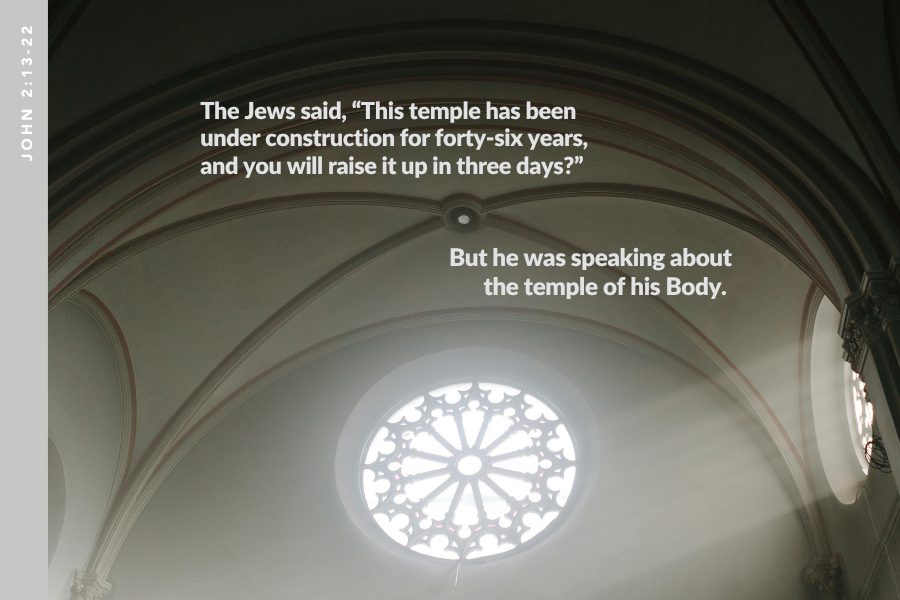
Since the Passover of the Jews was near, Jesus went up to Jerusalem. He found in the temple area those who sold oxen, sheep, and doves, as well as the money-changers seated there. He made a whip out of cords and drove them all out of the temple area, with the sheep and oxen, and spilled the coins of the money-changers and overturned their tables, and to those who sold doves he said, “Take these out of here, and stop making my Father’s house a marketplace.” His disciples recalled the words of Scripture, Zeal for your house will consume me. At this the Jews answered and said to him, “What sign can you show us for doing this?” Jesus answered and said to them, “Destroy this temple and in three days I will raise it up.” The Jews said, “This temple has been under construction for forty-six years, and you will raise it up in three days?” But he was speaking about the temple of his Body. Therefore, when he was raised from the dead, his disciples remembered that he had said this, and they came to believe the Scripture and the word Jesus had spoken.

Opening Prayer: Holy Spirit, fill my body which is your temple; cleanse it from what is insulting to you; take possession of every corner of my life.

Encountering Christ:

  1. The Splendor of the Temple: Walking through the impressive structures of the Temple of Jerusalem must have had an overwhelming effect on everyone—the several courts with their respective classes of people admitted there; the endless corridors and galleries of marble columns stretched out through the space flowing into a wide, but at the same time, enclosed sacred room; the massive walls towering over a stream of countless pilgrims filing through the building to perform the prescribed rituals. What a display of cult and service! Experiencing it must have made the religious fibers of every visitor gleam.


  2. And Jesus?: The passage tells us of Jesus’ rage at the sight of the commercial abuse of the sacred space. Questioned about his authority on the matter, he drew the definitive relation between the Temple and his own body. But evidently, he did not simply consider himself to be the New Temple to replace the old; if so, the old one could have been dismissed and its abuse disregarded. Rather, Jesus’ Incarnation fulfilled what was already symbolized and savored in that ancient building: God lives among his people. Whoever has known Jesus to be true God and true man senses what that means. He himself, first and foremost, felt how the abuse of the sacredness of the Temple went directly against who he was himself: the presence of God, no longer in stone, but in flesh. The insult against the “concept” of the Temple was an insult against Jesus’ message about God’s presence on earth.


  3. Nothing as Sacred as the Body of Christ: Nowhere else is Jesus as present as in the Holy Eucharist. And precisely through the mystery of the Incarnation and of the Eucharist, he teaches us that he does not shun the material and human ways of being present and making himself available to us. Thus, we ought never to transform any corner of our lives into a profane marketplace where he would not feel comfortable. Every courtyard in the temple of our lives has the dignity and potential for him to dwell there. We do not want to restrict his presence to Sundays, nor to times of prayer and Mass, nor to the moments when we are among like-minded people: All corners of our lives must be open to him.

Conversing with Christ: My Lord, take my body and my life. Dwell in every chamber of my heart. Make me into a sign of your presence in this world. Amen.

Resolution: Lord, today by your grace I will look for corners of my daily life in which I have not welcomed your presence.

For Further Reflection: “Jesus’ attitude, recounted in today’s evangelical page, exhorts us to live our lives seeking not our own advantage and interests, but for the glory of God who is love. We are called to always keep present those strong words of Jesus: ‘You shall not make my Father’s house a house of trade!’ (v. 16). It’s awful when the church slips on this attitude of making God’s house a market. These words help us to reject the danger of making our soul, which is God’s abode, a marketplace, living in constant search for our benefit instead of in generous and solidary love. This teaching of Jesus is always timely, not only for the ecclesial communities but also for individuals, for civil communities, and for society. In fact, the temptation to take advantage of good activities, sometimes dutiful, is common, to cultivate private if not outright unlawful interests. It’s a grave danger, especially when it instrumentalizes God himself and the worship due to him, or the service to man, his image. That’s why Jesus used ‘strong ways’ that time, to shake us from this mortal danger” (Pope Francis, Angelus address on March 4, 2018).

Father Gabriel von Wendt, LC, is a priest who works as a professor at the Pontifical Athenaeum Regina Apostolorum. He has a passion for philosophy and the role of Catholic faith in contemporary culture. He is a co-founding member of the Catholic Worldview Fellowship, a study-abroad program for talented college students who want to evangelize culture.

November 9, 2026 – God’s Presence in Your Life Read More »

Regnum Christi Spirituality Center Uncle Eddy

The Four Crowned Martyrs

Dear Claude, Lovely reviews of your latest play – thanks for forwarding them to me.  Clearly, you have a real talent in things theatrical, seeing as you are able to please such divergent reviewers.  Keep up the good work – heaven knows how desperately we need a renaissance of Christian inspiration in the world of arts and entertainment.  Watch your back, though – few fields of endeavor are so ferociously beset by temptations.  I personally know of a dozen talented artists who involved themselves in dubious productions as a way to build up their contacts, and have ended up as moral and religious basket cases.  You may want to take today’s saints as personal patrons. There are conflicting legends about these four martyrs, but it seems that they were stone workers and sculptors involved in the grand building projects undertaken by the maniacal Emperor Diocletian.  He commissioned them a few jobs, which they completed so expertly that he granted them an exemption from having to carve statures of pagan gods, which they had refused to do.  It was a big exemption (which shows you how pleased the emperor was with their artistry), seeing as Christians throughout the empire were being cruelly tortured and executed for similar refusals.  The emperor even commended Christianity as the cause of their particularly inspired sculpting.  But it seems that some others working on the projects fell into the grips of envy or jealousy, and stirred up opposition to the Christian artists.  Claudius, Nicostratus, Symphorius, and Castratus were therefore jailed.  Diocletian continued to treat them leniently, until an official’s untimely death was superstitiously traced back to the Christians’ refusal to sacrifice to the Roman gods.  At that point, public outcry demanded “justice,” and after refusing to abandon their faith, the workmen were sealed inside lead boxes and thrown into the river to drown. Consider well their example, my dear nephew.  You may find yourself in an analogous situation some day, where success, fame, and wealth will be yours if you are willing to use your talents to please men at the expense of displeasing God.  Make up your mind now to stay faithful even if it’s tough, and you will save yourself moral agonies later. Affectionately yours, Uncle Eddy

The Four Crowned Martyrs Read More »

26-11-08-DM

November 8, 2026 – Cardinal Virtue

Thirty-Second Sunday in Ordinary Time


Matthew 25:1-13

Jesus told his disciples this parable: “The kingdom of heaven will be like ten virgins who took their lamps and went out to meet the bridegroom. Five of them were foolish and five were wise. The foolish ones, when taking their lamps, brought no oil with them, but the wise brought flasks of oil with their lamps. Since the bridegroom was long delayed, they all became drowsy and fell asleep. At midnight, there was a cry, ‘Behold, the bridegroom! Come out to meet him!’ Then all those virgins got up and trimmed their lamps. The foolish ones said to the wise, ‘Give us some of your oil, for our lamps are going out.’ But the wise ones replied, ‘No, for there may not be enough for us and you. Go instead to the merchants and buy some for yourselves.’ While they went off to buy it, the bridegroom came and those who were ready went into the wedding feast with him. Then the door was locked. Afterwards the other virgins came and said, ‘Lord, Lord, open the door for us!’ But he said in reply, ‘Amen, I say to you, I do not know you.’ Therefore, stay awake, for you know neither the day nor the hour.”

Opening Prayer: Holy Spirit, fill my heart and my mind in this moment of prayer so that I can appraise my situation in life in your light, and approach each decision with clear-sighted prudence.

Encountering Christ: 

  1. Prudence: “The first of the four cardinal virtues, and the rule for the other three, is prudence. Now it goes against the grain of present-day thinking to see in prudence a virtue, let alone the first of the four cardinal virtues. The reason for this is that we often have an entirely wrong idea of the virtue of prudence. Prudence as virtue has nothing to do with […] the timorous attitude of undue caution […]. Prudence is the quality of clearsightedness. The prudent man approaches each decision with his eyes open, in the full light of knowledge and faith. He discerns reality objectively, sizes up a factual situation for what it is, and weighs the real value of things. Only after careful consideration does the prudent man make his decision” (Josef Pieper, What Catholics Believe, 73).


  2. Foolishness: Today’s Gospel passage weighs prudence against foolishness. At first glance, the mishap that befell the five foolish virgins might seem coincidental. However, in the light of the explanation of prudence above, we can appreciate that the situation around the virgins’ shortage of oil was preceded by two sets of behavior, by two decision-making processes, and two ways of approaching reality: “Whoever follows the impulse of his will before appraising the facts and the circumstances of a situation accurately and objectively is imprudent and unwise” (idem).


  3. “Behold, the Bridegroom!”: “Virtue is the utmost of what a man can be; it is the realization of the human capacity for being” (Josef Pieper, A Brief Reader on the Virtues of the Human Heart, 9). If the clear-sighted virtue of prudence is imperative in daily life in order to “realize the human capacity,” in today’s Gospel, Jesus teaches us that it is even more imperative for the spiritual life. Much like the maids-in-waiting, we know that the Lord will come. To be prudent in our spiritual life means that today we “size up this situation for what it is, and weigh the real value of things” in its light.

Conversing with Christ: My Lord, today you invite me to grow in prudence. Help me to approach each situation with my “eyes open, in the full light of knowledge and faith.” Give me the grace to discern proper actions and then follow through for your glory.

Resolution: Lord, today by your grace I will practice the cardinal virtue of prudence by taking a minute before making a decision to consciously discern its implications in the light of faith and reason.

For Further Reflection: “The fire that rekindles the gift is the Holy Spirit, the giver of gifts. So St. Paul goes on to say: ‘Guard the truth that has been entrusted to you by the Holy Spirit’ (2 Tim 1:14). And again: ‘God did not give us a spirit of timidity, but a spirit of power and love and prudence’ (v. 7). Not a spirit of timidity, but of prudence. Someone may think that prudence is a virtue of the ‘customs house,’ that checks everything to ensure that there is no mistake. No, prudence is a Christian virtue; it is a virtue of life, and indeed the virtue of governance. And God has given us this spirit of prudence. Paul places prudence in opposition to timidity. What is this prudence of the Spirit? As the Catechismteaches, prudence ‘is not to be confused with timidity or fear’; rather, it is ‘the virtue that disposes practical reason to discern our true good in every circumstance and to choose the right means of achieving it’ (1806). Prudence is not indecision; it is not a defensive attitude. It is the virtue of the pastor who, in order to serve with wisdom, is able to discern, to be receptive to the newness of the Spirit. Rekindling our gift in the fire of the Spirit is the opposite of letting things take their course without doing anything. Fidelity to the newness of the Spirit is a grace that we must ask for in prayer” (Pope Francis, Homily on October 6, 2019, during the Holy Mass for the opening of the Synod of Bishops for the Pan-Amazon Region).

Father Gabriel von Wendt, LC, is a priest who works as a professor at the Pontifical Athenaeum Regina Apostolorum. He has a passion for philosophy and the role of Catholic faith in contemporary culture. He is a co-founding member of the Catholic Worldview Fellowship, a study-abroad program for talented college students who want to evangelize culture.

November 8, 2026 – Cardinal Virtue Read More »

Weekly Digest of the Regnum Christi Daily Meditations: November 8th – 15th, 2026

WEEKLY DIGEST OF rc
DAILY MEDITATIONS

November 8, 2026 – Cardinal Virtue

26-11-08-DM

Thirty-Second Sunday in Ordinary Time

Matthew 25:1-13

Jesus told his disciples this parable: “The kingdom of heaven will be like ten virgins who took their lamps and went out to meet the bridegroom. Five of them were foolish and five were wise. The foolish ones, when taking their lamps, brought no oil with them, but the wise brought flasks of oil with their lamps. Since the bridegroom was long delayed, they all became drowsy and fell asleep. At midnight, there was a cry, ‘Behold, the bridegroom! Come out to meet him!’ Then all those virgins got up and trimmed their lamps. The foolish ones said to the wise, ‘Give us some of your oil, for our lamps are going out.’ But the wise ones replied, ‘No, for there may not be enough for us and you. Go instead to the merchants and buy some for yourselves.’ While they went off to buy it, the bridegroom came and those who were ready went into the wedding feast with him. Then the door was locked. Afterwards the other virgins came and said, ‘Lord, Lord, open the door for us!’ But he said in reply, ‘Amen, I say to you, I do not know you.’ Therefore, stay awake, for you know neither the day nor the hour.”

Opening Prayer: Holy Spirit, fill my heart and my mind in this moment of prayer so that I can appraise my situation in life in your light, and approach each decision with clear-sighted prudence.

Encountering Christ: 

  1. Prudence: “The first of the four cardinal virtues, and the rule for the other three, is prudence. Now it goes against the grain of present-day thinking to see in prudence a virtue, let alone the first of the four cardinal virtues. The reason for this is that we often have an entirely wrong idea of the virtue of prudence. Prudence as virtue has nothing to do with […] the timorous attitude of undue caution […]. Prudence is the quality of clearsightedness. The prudent man approaches each decision with his eyes open, in the full light of knowledge and faith. He discerns reality objectively, sizes up a factual situation for what it is, and weighs the real value of things. Only after careful consideration does the prudent man make his decision” (Josef Pieper, What Catholics Believe, 73).


  2. Foolishness: Today’s Gospel passage weighs prudence against foolishness. At first glance, the mishap that befell the five foolish virgins might seem coincidental. However, in the light of the explanation of prudence above, we can appreciate that the situation around the virgins’ shortage of oil was preceded by two sets of behavior, by two decision-making processes, and two ways of approaching reality: “Whoever follows the impulse of his will before appraising the facts and the circumstances of a situation accurately and objectively is imprudent and unwise” (idem).


  3. “Behold, the Bridegroom!”: “Virtue is the utmost of what a man can be; it is the realization of the human capacity for being” (Josef Pieper, A Brief Reader on the Virtues of the Human Heart, 9). If the clear-sighted virtue of prudence is imperative in daily life in order to “realize the human capacity,” in today’s Gospel, Jesus teaches us that it is even more imperative for the spiritual life. Much like the maids-in-waiting, we know that the Lord will come. To be prudent in our spiritual life means that today we “size up this situation for what it is, and weigh the real value of things” in its light.

Conversing with Christ: My Lord, today you invite me to grow in prudence. Help me to approach each situation with my “eyes open, in the full light of knowledge and faith.” Give me the grace to discern proper actions and then follow through for your glory.

Resolution: Lord, today by your grace I will practice the cardinal virtue of prudence by taking a minute before making a decision to consciously discern its implications in the light of faith and reason.

For Further Reflection: “The fire that rekindles the gift is the Holy Spirit, the giver of gifts. So St. Paul goes on to say: ‘Guard the truth that has been entrusted to you by the Holy Spirit’ (2 Tim 1:14). And again: ‘God did not give us a spirit of timidity, but a spirit of power and love and prudence’ (v. 7). Not a spirit of timidity, but of prudence. Someone may think that prudence is a virtue of the ‘customs house,’ that checks everything to ensure that there is no mistake. No, prudence is a Christian virtue; it is a virtue of life, and indeed the virtue of governance. And God has given us this spirit of prudence. Paul places prudence in opposition to timidity. What is this prudence of the Spirit? As the Catechismteaches, prudence ‘is not to be confused with timidity or fear’; rather, it is ‘the virtue that disposes practical reason to discern our true good in every circumstance and to choose the right means of achieving it’ (1806). Prudence is not indecision; it is not a defensive attitude. It is the virtue of the pastor who, in order to serve with wisdom, is able to discern, to be receptive to the newness of the Spirit. Rekindling our gift in the fire of the Spirit is the opposite of letting things take their course without doing anything. Fidelity to the newness of the Spirit is a grace that we must ask for in prayer” (Pope Francis, Homily on October 6, 2019, during the Holy Mass for the opening of the Synod of Bishops for the Pan-Amazon Region).

Father Gabriel von Wendt, LC, is a priest who works as a professor at the Pontifical Athenaeum Regina Apostolorum. He has a passion for philosophy and the role of Catholic faith in contemporary culture. He is a co-founding member of the Catholic Worldview Fellowship, a study-abroad program for talented college students who want to evangelize culture.

November 9, 2026 – God’s Presence in Your Life

26-11-09-DM

God’s Presence in Your Life

John 2:13-22

Since the Passover of the Jews was near, Jesus went up to Jerusalem. He found in the temple area those who sold oxen, sheep, and doves, as well as the money-changers seated there. He made a whip out of cords and drove them all out of the temple area, with the sheep and oxen, and spilled the coins of the money-changers and overturned their tables, and to those who sold doves he said, “Take these out of here, and stop making my Father’s house a marketplace.” His disciples recalled the words of Scripture, Zeal for your house will consume me. At this the Jews answered and said to him, “What sign can you show us for doing this?” Jesus answered and said to them, “Destroy this temple and in three days I will raise it up.” The Jews said, “This temple has been under construction for forty-six years, and you will raise it up in three days?” But he was speaking about the temple of his Body. Therefore, when he was raised from the dead, his disciples remembered that he had said this, and they came to believe the Scripture and the word Jesus had spoken.

Opening Prayer: Holy Spirit, fill my body which is your temple; cleanse it from what is insulting to you; take possession of every corner of my life.

Encountering Christ:

  1. The Splendor of the Temple: Walking through the impressive structures of the Temple of Jerusalem must have had an overwhelming effect on everyone—the several courts with their respective classes of people admitted there; the endless corridors and galleries of marble columns stretched out through the space flowing into a wide, but at the same time, enclosed sacred room; the massive walls towering over a stream of countless pilgrims filing through the building to perform the prescribed rituals. What a display of cult and service! Experiencing it must have made the religious fibers of every visitor gleam.


  2. And Jesus?: The passage tells us of Jesus’ rage at the sight of the commercial abuse of the sacred space. Questioned about his authority on the matter, he drew the definitive relation between the Temple and his own body. But evidently, he did not simply consider himself to be the New Temple to replace the old; if so, the old one could have been dismissed and its abuse disregarded. Rather, Jesus’ Incarnation fulfilled what was already symbolized and savored in that ancient building: God lives among his people. Whoever has known Jesus to be true God and true man senses what that means. He himself, first and foremost, felt how the abuse of the sacredness of the Temple went directly against who he was himself: the presence of God, no longer in stone, but in flesh. The insult against the “concept” of the Temple was an insult against Jesus’ message about God’s presence on earth.


  3. Nothing as Sacred as the Body of Christ: Nowhere else is Jesus as present as in the Holy Eucharist. And precisely through the mystery of the Incarnation and of the Eucharist, he teaches us that he does not shun the material and human ways of being present and making himself available to us. Thus, we ought never to transform any corner of our lives into a profane marketplace where he would not feel comfortable. Every courtyard in the temple of our lives has the dignity and potential for him to dwell there. We do not want to restrict his presence to Sundays, nor to times of prayer and Mass, nor to the moments when we are among like-minded people: All corners of our lives must be open to him.

Conversing with Christ: My Lord, take my body and my life. Dwell in every chamber of my heart. Make me into a sign of your presence in this world. Amen.

Resolution: Lord, today by your grace I will look for corners of my daily life in which I have not welcomed your presence.

For Further Reflection: “Jesus’ attitude, recounted in today’s evangelical page, exhorts us to live our lives seeking not our own advantage and interests, but for the glory of God who is love. We are called to always keep present those strong words of Jesus: ‘You shall not make my Father’s house a house of trade!’ (v. 16). It’s awful when the church slips on this attitude of making God’s house a market. These words help us to reject the danger of making our soul, which is God’s abode, a marketplace, living in constant search for our benefit instead of in generous and solidary love. This teaching of Jesus is always timely, not only for the ecclesial communities but also for individuals, for civil communities, and for society. In fact, the temptation to take advantage of good activities, sometimes dutiful, is common, to cultivate private if not outright unlawful interests. It’s a grave danger, especially when it instrumentalizes God himself and the worship due to him, or the service to man, his image. That’s why Jesus used ‘strong ways’ that time, to shake us from this mortal danger” (Pope Francis, Angelus address on March 4, 2018).

Father Gabriel von Wendt, LC, is a priest who works as a professor at the Pontifical Athenaeum Regina Apostolorum. He has a passion for philosophy and the role of Catholic faith in contemporary culture. He is a co-founding member of the Catholic Worldview Fellowship, a study-abroad program for talented college students who want to evangelize culture.
November 10, 2026 – The Servant

26-11-10-DM

Memorial of Saint Leo the Great, Pope and Doctor of the Church

Luke 17:7-10

Jesus said to the Apostles: “Who among you would say to your servant who has just come in from plowing or tending sheep in the field, ‘Come here immediately and take your place at table’? Would he not rather say to him, ‘Prepare something for me to eat. Put on your apron and wait on me while I eat and drink. You may eat and drink when I am finished’? Is he grateful to that servant because he did what was commanded? So should it be with you. When you have done all you have been commanded, say, ‘We are unprofitable servants; we have done what we were obliged to do.’”

Opening Prayer: Holy Spirit, help me to hear your voice and inspire in me the right words and attitudes during this prayer.

Encountering Christ:

  1. The Strange Concept of Servitude: In modern times, perhaps we have become overly sensitive to the concept of hierarchy in response to our strong belief that all citizens are equal. However, we still experience a basic need for authority and, hence, for a hierarchical structure. In this Gospel, Jesus refers to a social hierarchy which, to our mind, seems oppressive, but he clearly focuses on the sober realization of our own status as persons under authority. We have no difficulty in understanding ourselves as servants before the Almighty, but how do we acknowledge and support the need for authority in our modern society?


  2. Taking Pride in One’s Identity: In our day, being driven to seek a career promotion is considered healthy ambition. The mentality of Jesus’ time was different. Rising in social ranks was not common. Goodness meant, for the most part, to be content with your station in life and perform your job well. These days, healthy ambition is properly encouraged, but the desire to do the job at hand to the best of our ability should be encouraged as well. “Our greatest happiness does not depend on the condition of life in which chance has placed us, but is always the result of a good conscience, good health, occupation, and freedom in all just pursuits” (Thomas Jefferson).


  3. An Unprofitable Servant: The devil says seek to “become like gods.” Instead, let’s embrace the wonders of our humble status as human persons. We are weak, but called to be strong in Christ; small, but called to contemplate his greatness; insignificant, but sent to proclaim to the world the one thing that truly matters—that we are children of the eternal, loving God. As such, our “low status” is what makes us great.

Conversing with Christ: “My soul proclaims the greatness of the Lord; my spirit rejoices in God my savior. For he has looked upon his handmaid’s lowliness; behold, from now on will all ages call me blessed. The Mighty One has done great things for me, and holy is his name” (Lk 1:46-49).

Resolution: Lord, today by your grace I will adopt the humble attitude of the “unprofitable servant” from the parable, or the “lowly servant” in Mary’s Magnificat during a charitable task or chore at work or at home.

For Further Reflection: “Jesus presents himself as a servant, the one who came to serve and not to be served: He says so clearly. And so, the Lord shows the Apostles the path of those who have received the faith, that faith which works miracles. Yes, this faith will do wonders on the path of service” (Pope Francis, Homily on November 11, 2014).

Father Gabriel von Wendt, LC, is a priest who works as a professor at the Pontifical Athenaeum Regina Apostolorum. He has a passion for philosophy and the role of Catholic faith in contemporary culture. He is a co-founding member of the Catholic Worldview Fellowship, a study-abroad program for talented college students who want to evangelize culture.

November 11, 2026 – Faith and Memory

26-11-11-DM

Memorial of Saint Martin of Tours, Bishop

Luke 17:11-19

As Jesus continued his journey to Jerusalem, he traveled through Samaria and Galilee. As he was entering a village, ten lepers met him. They stood at a distance from him and raised their voice, saying, “Jesus, Master! Have pity on us!” And when he saw them, he said, “Go show yourselves to the priests.” As they were going they were cleansed. And one of them, realizing he had been healed, returned, glorifying God in a loud voice; and he fell at the feet of Jesus and thanked him. He was a Samaritan. Jesus said in reply, “Ten were cleansed, were they not? Where are the other nine? Has none but this foreigner returned to give thanks to God?” Then he said to him, “Stand up and go; your faith has saved you.”

Opening Prayer: Holy Spirit, enlighten my memory so that I can recall all the wonderful things which you have worked throughout my life.

Encountering Christ: 

  1. The Nature of a Miracle: Imagine transforming today’s Gospel into a screenplay. How does the moment of healing happen? As a flashing moment of cleansing energy? Or a smooth, breezy touch, blowing away the infection like a layer of dust? Writers and filmmakers can portray the effects of miracles on screen, but how they happen always remains a mystery. Even if we are blessed with the faith to affirm God’s action in a miraculous situation in our own lives, we will still be quite incapable of describing in human terms how he accomplishes his works. “Just as you do not know how the life breath enters the human frame in the mother’s womb, so you do not know the work of God, who is working in everything” (Eccl 11:5).


  2. Nine Out of Ten: Nine out of ten did not return to thank Jesus. Do we ourselves not engage God quite insistently and confidently when in need of a miracle? When we notice that what we asked for was actually granted, we react exultantly. But, after a while, looking back, we sometimes struggle to recall why we thought it was “God’s work.” In retrospect, it suddenly seems quite possible to explain the “miracle” naturally. We doubt our recollection. We rationalize that “it didn’t happen that way.” It’s possible that this experience, still common today, leads nine out of ten not to return to Jesus and thank him.


  3. Pocketing a Moment of Grace?: Like the screenwriter, we can try to capture mystery and attempt to pocket grace. We can write down our insights, record answered prayers, and commit to memory the little miracles we experience daily. As noble as that is, and as mature and wise as it is to do the kinds of spiritual practices that keep us on track, we will never change the ethereal and somewhat volatile character of mystery. On the contrary, each day will be a new occasion to embrace the mysterious, intangible qualities of Jesus and renew and refresh our fundamental decision to believe in and love him.

Conversing with Christ: My Lord Jesus, I believe in you. There are thousands of “proofs” in my pocket: “proofs” for your presence, for your love, for your words to me. And yet, no number of such “proofs” will ever be enough; none of them will take away the need to renew my faith now by living it here. Lord, help me to treasure your graces and to remember our story gratefully; let that treasury be my personal “depositum fidei,” the sum of things I believe because you have presented them to me. For I know that it is not memory which enables my faith, but rather, it is the faith you grant me today which enables that memory.

Resolution: Lord, today by your grace I will pray fervently for a renewal of my faith.

For Further Reflection: “There is a voice in the depths of mankind that prays which is stronger than any argument to the contrary. […] A voice that flows forth spontaneously without anyone commanding it; a voice that questions the meaning of our journey here below, above all when we find ourselves in darkness” (Pope Francis, General Audience on May 6, 2020).

Father Gabriel von Wendt, LC, is a priest who works as a professor at the Pontifical Athenaeum Regina Apostolorum. He has a passion for philosophy and the role of Catholic faith in contemporary culture. He is a co-founding member of the Catholic Worldview Fellowship, a study-abroad program for talented college students who want to evangelize culture.

November 12, 2026 – Thy Kingdom Come!

26-11-12-DM

Memorial of Saint Josaphat, Bishop and Martyr

Luke 17:20-25

Asked by the Pharisees when the Kingdom of God would come, Jesus said in reply, “The coming of the Kingdom of God cannot be observed, and no one will announce, ‘Look, here it is,’ or, ‘There it is.’ For behold, the Kingdom of God is among you.” Then he said to his disciples, “The days will come when you will long to see one of the days of the Son of Man, but you will not see it. There will be those who will say to you, ‘Look, there he is,’ or ‘Look, here he is.’ Do not go off, do not run in pursuit. For just as lightning flashes and lights up the sky from one side to the other, so will the Son of Man be in his day. But first he must suffer greatly and be rejected by this generation.”

Opening Prayer: Holy Spirit, prepare my heart so that the Kingdom of God can grow in me.

Encountering Christ:

  1. A Cornerstone for Evangelization: The volatile character of divine mystery—the coming of the Kingdom of God—cannot be observed. The Kingdom of God is not merely an ideal version of the kingdom of man. As Jesus warned, “There will be those who will say to you, ‘Look, there he is,’” but the Kingdom of God cannot be measured or quantified. The Kingdom of God is the manifestation of God in the world and, therefore, very mysterious.


  2. Kingdom among Us: Jesus has come to proclaim his Kingdom, and he has invited us to enter it. By looking at the “gates” that lead into it, we can fathom how different it is from a kingdom of man: The “main gate” is baptism, which means to die with Christ in order to be resurrected with him. The “small doors” in our everyday life are seemingly insignificant deeds such as feeding the hungry, visiting the sick, or bearing patiently those who wrong us—to name just three out of many works of mercy. The “backdoor” through which we can re-enter the Kingdom after getting ourselves lost is the sacrament of reconciliation.


  3. Changed Hearts: If you want to marvel at the beauty of Christ’s Kingdom, contemplate the hearts of his faithful servants. The saints—and really each person in the state of grace—are the amazing citizens of his glorious Kingdom. And saints aren’t just those for whom statutes have been made. Some saints live “among us.” They make society better, but they are not the products of society. They are the fruit of God’s grace; they are the inhabitants of his Kingdom here on earth.

Conversing with Christ: My Lord, I want to belong to your Kingdom. Please guide me through its sacramental gates of grace. The Kingdom is my true fatherland, in which I will thrive and become the best version of myself. Jesus, you are the true king who will lead me to the deepest happiness. “Thy Kingdom Come!”

Resolution: Lord, today by your grace I will pray the quick prayer “Thy Kingdom Come!” consciously as an invitation for Christ to rule my heart.

For Further Reflection: “It is always God who makes his Kingdom grow. That is why we fervently pray ‘Thy Kingdom Come.’ It is he who makes it grow. Man is his humble collaborator, who contemplates and rejoices in divine creative action and waits patiently for its fruits” (Pope Francis, Angelus address on June 14, 2015).

Father Gabriel von Wendt, LC, is a priest who works as a professor at the Pontifical Athenaeum Regina Apostolorum. He has a passion for philosophy and the role of Catholic faith in contemporary culture. He is a co-founding member of the Catholic Worldview Fellowship, a study-abroad program for talented college students who want to evangelize culture.
November 13, 2026 – Do Not Be Afraid!

26-11-13-DM

Memorial of Saint Frances Xavier Cabrini, Virgin

Luke 17:26-37

Jesus said to his disciples: “As it was in the days of Noah, so it will be in the days of the Son of Man; they were eating and drinking, marrying and giving in marriage up to the day that Noah entered the ark, and the flood came and destroyed them all. Similarly, as it was in the days of Lot: they were eating, drinking, buying, selling, planting, building; on the day when Lot left Sodom, fire and brimstone rained from the sky to destroy them all. So it will be on the day the Son of Man is revealed. On that day, someone who is on the housetop and whose belongings are in the house must not go down to get them, and likewise one in the field must not return to what was left behind. Remember the wife of Lot. Whoever seeks to preserve his life will lose it, but whoever loses it will save it. I tell you, on that night there will be two people in one bed; one will be taken, the other left. And there will be two women grinding meal together; one will be taken, the other left.” They said to him in reply, “Where, Lord?” He said to them, “Where the body is, there also the vultures will gather.”

Opening Prayer: Holy Spirit, come and prepare my heart for the coming of Christ.

Encountering Christ:

  1. The End: We have been reflecting in these past days on the invisible, mysterious character of supernatural things, namely of the Kingdom of God. This Gospel develops this theme further by describing the unpredictable way supernatural things occur. Jesus made reference to the sudden nature of the flood in Noah’s days, which came upon the world as an overpowering wave—unpredictable, overwhelming, definite. Jesus also referred to the end-times, which will occur in an equally unexpected but definite fashion. And we can acknowledge the mystery and inevitability of our own death one day, which we cannot foresee. Most supernatural things have that unpredictable quality, do they not?


  2. Unpredictability: “As it was in the days of Noah, so it will be in the days of the Son of Man… the flood came and destroyed them all.” The most common reaction when hearing that it could happen at any time is anguish. We tend to get nervous, but let’s take another look at the Gospel. The flood Jesus announces is the “day of the Son of Man.” So it is not a question of when it will come, but when he will come. The overpowering flood at the end of time will be the coming of Christ in an unpredictable, overwhelming, and definite way. People will no longer be able to avoid Christ. The flood of his coming will destroy the many shields with which mankind tries to keep God out of their lives. Living in a state of grace is the best way to peacefully prepare for his coming.


  3. His Day: Jesus calls himself the Son of Man in order to express how closely bonded he is to us. We do not have to be afraid! He refers to our last days as his days. We do not have to be afraid! He is our friend, our love, our happiness. So, we do not have to be afraid! Let’s renew our resolve to give him first place in our lives today. If we do, his day at the end of times will be a day of familiar friendship, of strong love, and of happiness, which has its root in our life now. It will be a day to look forward to—a day we prepare for by praying, “Thy Kingdom Come!”

Conversing with Christ: Jesus, I want to be prepared for your coming, either at the end of time or at my death. Please reassure me through the sacraments that your grace is sufficient. Help me to live today so that everything I do brings glory to you. May “Thy Kingdom Come” in my life today.

Resolution: Lord, today by your grace I will try to live in such a way that your coming will not be a cause for anguish, but for joy.

For Further Reflection: “And what is the attitude of the Christian? It is the attitude of hope in God, which allows us not to be overwhelmed by tragic events. Indeed, they are an ‘opportunity to bear witness.’ Christ’s disciples cannot remain slaves to fears and anxieties; instead they are called to live history, to stem the destructive force of evil, with the certainty that the Lord’s action of goodness is always accompanied by his providential and reassuring tenderness. This is the eloquent sign that the kingdom of God is coming to us, that is, that the realization of the world as God wants it is approaching. It is he, the Lord, who guides our existence and knows the ultimate purpose of things and events” (Pope Francis, Angelus address on November 17, 2019).

Father Gabriel von Wendt, LC, is a priest who works as a professor at the Pontifical Athenaeum Regina Apostolorum. He has a passion for philosophy and the role of Catholic faith in contemporary culture. He is a co-founding member of the Catholic Worldview Fellowship, a study-abroad program for talented college students who want to evangelize culture.
November 14, 2026 – Jesus Wants to Give Us What We Need

26-11-14-DM

Saturday of the Thirty-Second Week in Ordinary Time

Luke 18:1-8

Jesus told his disciples a parable about the necessity for them to pray always without becoming weary. He said, “There was a judge in a certain town who neither feared God nor respected any human being. And a widow in that town used to come to him and say, ‘Render a just decision for me against my adversary.’ For a long time the judge was unwilling, but eventually he thought, ‘While it is true that I neither fear God nor respect any human being, because this widow keeps bothering me I shall deliver a just decision for her lest she finally come and strike me.’” The Lord said, “Pay attention to what the dishonest judge says. Will not God then secure the rights of his chosen ones who call out to him day and night? Will he be slow to answer them? I tell you, he will see to it that justice is done for them speedily. But when the Son of Man comes, will he find faith on earth?”

Opening Prayer: Holy Spirit, teach me how to pray today. Inspire in me those desires which you want to fulfill. Make my desires holy ones. 

Encountering Christ: 

  1. Colorful Storytelling: The images and words Jesus chose in this parable communicate to us not only the message that if we beseech God in prayer, he will listen, but they tell us something about the love of Jesus’ Sacred Heart. Jesus told the story in this colorful way because he was expressing a passionate desire to reach everyone—not only the well-educated, but also the childlike. Storytelling can be very effective, and Jesus used parables to help us learn what is most important for our salvation. In this case, he asks us to persevere in prayer.


  2. Persevering in Prayer: Jesus clearly wanted us to know that God hears our prayers. Yet, we sometimes wait… and wait… for our prayers to be answered, and our humanity doubts—we struggle, we get bored, we tire of praying. Let’s remember that we are not just praying to a corrupt human judge. We are praying to God, and we need to respect his timetable. We won’t see the answers to all of our prayers until we meet him face-to-face—but our faith tells us that our prayers are answered! To encourage us, it can help to remember that when we pray, God has the power to reveal what is to come, heal our pain, enlist us to tear down demonic strongholds, overwhelm us with his presence, help those we love, counsel us on confusing issues, tell us what he thinks of us, forgive us, shower us with grace, and love us (Made to Pray by Chris Heinz).


  3. Primacy of Faith: Jesus’ great desire is for us to have faith in his Father. In his farewell discourse (cf. Jn 14:1-14), Jesus chose those moments just before his death to urge us to know and love his Father—to believe in him. Throughout the Gospels, the presence of faith enabled Jesus to heal and restore people, and when they had little faith, Jesus did not work mighty deeds there (cf. Mt 13:58). To have faith in God unleashes his power in us. “The disciple of Christ must not only keep the faith and live on it, but also profess it, confidently bear witness to it, and spread it…” (CCC 1816). Let us pray daily for an increase in faith.

Conversing with Christ: Since faith is a theological virtue that must be infused in my soul by you, I beg you, Lord, please increase my faith. Grant me a greater gift of faith so that I may “move mountains” (cf. Mt 17:20) for your glory. Also allow me, Lord, to have faith to know that you hear all of my prayers and answer them—especially those prayers I have been praying for years.

Resolution: Lord, today by your grace I will review my prayers of petition and thank you for those I know you have answered.

For Further Reflection: Reread John 14:1-14, Jesus’ farewell discourse, and thank him for the gift of faith in his Father.

Maribeth Harper celebrated paying the last tuition bill for her kids’ college by writing a book for parents who have college-aged young adults: A Spiritual Toolbox: Tips for Parenting through the First Year of College. She is a wife of over thirty-five years, mother of four, and grandmother of twelve and counting.

November 15, 2026 – Sharing the Master’s Joy

26-11-15-DM

Thirty-Third Sunday in Ordinary Time

Matthew 25:14-30

Jesus told his disciples this parable: “A man going on a journey called in his servants and entrusted his possessions to them. To one he gave five talents; to another, two; to a third, one—to each according to his ability. Then he went away. Immediately the one who received five talents went and traded with them, and made another five. Likewise, the one who received two made another two. But the man who received one went off and dug a hole in the ground and buried his master’s money. After a long time the master of those servants came back and settled accounts with them. The one who had received five talents came forward bringing the additional five. He said, ‘Master, you gave me five talents. See, I have made five more.’ His master said to him, ‘Well done, my good and faithful servant. Since you were faithful in small matters, I will give you great responsibilities. Come, share your master’s joy.’ Then the one who had received two talents also came forward and said, ‘Master, you gave me two talents. See, I have made two more.’ His master said to him, ‘Well done, my good and faithful servant. Since you were faithful in small matters, I will give you great responsibilities. Come, share your master’s joy.’ Then the one who had received the one talent came forward and said, ‘Master, I knew you were a demanding person, harvesting where you did not plant and gathering where you did not scatter; so out of fear I went off and buried your talent in the ground. Here it is back.’ His master said to him in reply, ‘You wicked, lazy servant! So you knew that I harvest where I did not plant and gather where I did not scatter? Should you not then have put my money in the bank so that I could have got it back with interest on my return? Now then! Take the talent from him and give it to the one with ten. For to everyone who has, more will be given and he will grow rich; but from the one who has not, even what he has will be taken away. And throw this useless servant into the darkness outside, where there will be wailing and grinding of teeth.’”

Opening Prayer: Lord, thank you for being with me. Teach me to listen to your word in the Gospel, in my heart, and in the events of life. I know that you are always speaking, and that you are always drawing me closer to your heart.

Encountering Christ:

  1. Share Your Master’s Joy: We could easily read this parable as a story about the servant who buried his talents and was punished. We might mistake this as a warning—as if God were saying, “This is what happens when we don’t live up to expectations.” But what a poor human conception we would have of God! The first two servants did what they could with their talents and so shared their master’s joy. Let’s not forget that we can actually make God happy! God is not like a judge who decides that someone is guilty, but like a father or a friend who is genuinely pleased when we succeed! God says, “You are my servant; I chose you, I have not rejected you—Do not fear: I am with you; do not be anxious: I am your God. I will strengthen you, I will help you, I will uphold you with my victorious right hand” (Isa 41:9-10).


  2. The Fearful Servant: The servant who hid his talents was afraid—afraid of investing them, afraid of failure, and ultimately afraid of God himself. In his fear, he neglected to look for help in the one place he could have found it: by praying to God. How often we find ourselves worrying! What is your antidote to worry? Distraction? Shopping? A glass of wine? Or do you spend some time reading and praying with the Scriptures? As the Psalmist said, “O Most High, when I am afraid, in you I place my trust” (Ps 56:3-4).


  3. Using Our Talents: The servant who received ten talents was also given the talent that had been hidden. When we “have, more will be given” and we can grow rich. Jesus is revealing not a temporal truth, but a spiritual one. Almighty God never tires of showering graces on those who receive them gratefully and share the fruits with others. We can truly grow ever richer in grace, because God is so very generous. Everything we experience is a chance to grow in grace and in holiness. Every moment is a “talent.” Let’s not waste our opportunity to love God more and more, and so enter into his joy.

Conversing with Christ: Lord, show me your loving face. I often see you as a taskmaster; someone I need to satisfy rather than a Father I long to please. I love you, and I want to love you more. Help me to follow you more closely today

Resolution: Lord, today by your grace I will take time in prayer to make a list of the talents you’ve given me and pray about how you are asking me to put them into practice.

For Further Reflection: This video from Bishop Barron gives a different twist to the parable of the talents.

Riley Connors was born in Dayton, Ohio. He studied classical humanities and philosophy with the Legionaries of Christ. He enjoys running, thinking, praying, and, on occasion, all three.

Weekly Digest of the Regnum Christi Daily Meditations: November 8th – 15th, 2026 Read More »

Regnum Christi Spirituality Center Uncle Eddy

St Willibrord

Dear Willy, Courage, my timorous young nephew, you must drum up your courage!  No use sitting in the coffee house with likeminded Catholics and lamenting the horrid state of campus life over a steaming café latte.  Sit there and slurp as many cappuccinos as you like, but do so while making plans to attack the neo-paganism and reclaim your campus for Christ!  Jesus and his angels are chomping at the bit (so to speak), waiting for you to give them a chance to flood that little bastion of secularism with grace; all you need to do is step out.  Start with a letter to the editor of the newspaper every Thursday.  Keep it short, make it direct, insure that it’s counter cultural (i.e. controversial), and they’ll love to publish it.  Send a copy to the local city papers too, and to the bigger papers – make some waves!  Then invite a speaker, then organize a debate… Don’t be satisfied until everyone has heard and accepted the good news of Christ.  Work together, as a team, and God will guide you.  Take today’s saint as your patron. Willibrord was entrusted to some English monks when he was seven.  He learned the spiritual life well and headed to Ireland to deepen his knowledge and piety under the tutelage of the great Irish monks, together with his countrymen St Egbert and St Wigbert.  Various missionaries went from the Emerald Isle into the Netherlands in order to preach to the heathens there, but few returned, and those who did brought stories of dismal failure.  The challenge kindled a fire in Willibrord’s heart, and soon he and his buddy St Swithbert obtained permission to try their hand among the ferocious Frisians and their staunchly pagan leader, King Radbod.  They enlisted the support of the Frankish kings (Willibrord actually baptized Pepin the Short, Charlemagne’s father), and Willibrord went to Rome to request the Apostolic blessing for their work (he went again to Rome a few years later to be ordained bishop of the Frisians).  They spent the rest of their long lives (St Willibrord lived to the age of 82) spreading the Kingdom of Christ to and fro along the northwestern coast of Europe, complementing their gentle and cheerful charity with indomitable courage. Once when he was marooned on a “sacred” island where it was forbidden to kill any living creature, eat any plant, or draw any water out of the “sacred” well except in silence, Willibrord showed his stuff.  He trapped and roasted some rabbits for himself and his companions and baptized three of the inhabitants with water from the well, pronouncing the sacramental words in a booming voice.  When he and his accomplices neither went mad nor dropped down dead the inhabitants were shocked, and began inquiries into the Christian God.  Of course, not everyone was favorably impressed with this and similar antics, and King Radbod’s sword claimed the life of more than one martyr in those days.  But Willibrord lived longer, long enough indeed to see Friesland transformed into an ordered, almost civilized, and partly Christian country. That’s the kind of zeal and courage an apostle needs to have.  It’s exactly what the devil wants you not to have – he would much prefer a self-righteous passivity, a “fortress mentality” that kept you holed up and out of the fray, so he can continuing sapping life from the souls of your peers.  Please don’t give him the pleasure. Affectionately yours, Uncle Eddy

St Willibrord Read More »

26-11-07-DM

November 7, 2026 – Jesus Knows Our Hearts

Saturday of the Thirty-First Week in Ordinary Time


Luke 16:9-15

Jesus said to his disciples: “I tell you, make friends for yourselves with dishonest wealth, so that when it fails, you will be welcomed into eternal dwellings. The person who is trustworthy in very small matters is also trustworthy in great ones; and the person who is dishonest in very small matters is also dishonest in great ones. If, therefore, you are not trustworthy with dishonest wealth, who will trust you with true wealth? If you are not trustworthy with what belongs to another, who will give you what is yours? No servant can serve two masters. He will either hate one and love the other, or be devoted to one and despise the other. You cannot serve God and mammon.” The Pharisees, who loved money, heard all these things and sneered at him. And he said to them, “You justify yourselves in the sight of others, but God knows your hearts; for what is of human esteem is an abomination in the sight of God.”

Opening Prayer: Dear Lord, thank you for the gift of another day, thank you for the grace of coming before you in prayer. Please increase my faith, hope, and love so that I may love you above all else. Help me to be receptive to your word. I entrust my needs and the needs of my family to your care.

Encountering Christ:

  1. Make Friends with Dishonest Wealth: In yesterday’s reading, Our Lord praised the dishonest steward for his ingenuity, and in today’s reading, he is encouraging people to “invest” their dishonest gain in heavenly goods. Even when honestly acquired, we do well to invest in eternal life by putting our wealth and gifts at the service of others. God gives us all we have precisely to fulfill our mission and to build up his Kingdom. Eternal life is the only truly secure investment we can make. Eventually, all material wealth will fail, since we cannot bring it with us beyond the grave. However, the good we do for others can increase the love in their hearts and ours, and such a growth in grace and love is what prepares us for heaven.


  2. In Small Matters: “The person who is trustworthy in very small matters is also trustworthy in great ones; and the person who is dishonest in very small matters is also dishonest in great ones.” Jesus knows the human heart well. Great vice or great virtue usually begins with very small actions. The corrupt politician or businessperson starts by just bending a few rules. The conscience grows dull, and the transgressions become larger and larger. If these transgressions continue unchecked, the person can become quite corrupt. Thankfully, the inverse is also true. Small acts of honesty and kindness sufficiently repeated can gradually make a corrupt person a virtuous one. Naturally, we must rely upon grace for true conversion. However, grace elevates nature, not replaces it. Therefore, we must persistently work on doing the right thing in small matters. Then, when the larger challenges come, we will be ready.


  3. You Cannot Serve Two Masters: “No servant can serve two masters.” Only one thing or person can have the first place in your heart. “He will either hate one and love the other, or be devoted to one and despise the other.” Loving God above all things means a willingness to let go of things or relationships if they prove to be obstacles to my relationship with God. In another passage, Our Lord said, “If your right eye causes you to sin, tear it out and throw it away. It is better for you to lose one of your members than to have your whole body thrown into Gehenna” (Mt 5:29). At times, we may have to break off certain relationships that lead us to sin. However, it is more likely that we simply have to change how we live a particular relationship by placing God at the center. For example, perhaps a husband and wife have been relying too much on each other for their ultimate happiness. Once they realize that only God can fulfill their deepest desires, then they can adjust their expectations of each other. They are free to be imperfect companions in life’s journey. God becomes the foundation upon which they can both stand, and yes, hold each other up, too.

Conversing with Christ: Dear Jesus, I want you to be the center and foundation of my life. Please help me to love you above all things, and to love all things in you. Let my money, talents, experiences, and relationships draw me always closer to you. Help me to love you in the smallest of tasks, and in so doing to prepare myself to love you in the greater ones, too.

Resolution: Lord, today by your grace I will offer up three small tasks that I must do with great love for you.

For Further Reflection: Read ‘Be Faithful to God in Little Things’ by Father Jean Nicolas Grou in Catholic Exchange.

Fr. John Bullock, LC, was ordained in 2002 and works with Regnum Christi in Houston, Texas, his hometown. He has worked in youth work, college campus ministry, and as a chaplain to the Regnum Christi movement. He loves his faith, enjoys working with people, and loves riding his bike.

November 7, 2026 – Jesus Knows Our Hearts Read More »

RC This Week: the most recent stories about Regnum Christi spirituality, communion, and mission – Nov 6

Spirituality


RCTW-Nov-6-1Charity for All

Technology can be a great servant but a lousy master. Fears that AI could replace human beings and leave them without meaningful work are real. The Church reminds us that economies should put humans ahead of “efficiency.” This is where St. Martin’s example comes in.

___


RCTW-Nov-6-2Running and the Virtue of Hope: Five Life Lessons from a 100-Mile Race, Fr. Abraham Eo, LC

Why do a 100-mile race? Signing up for such a long race gave Fr. Abraham a sense of goal and challenge. It stretched the way he saw myself and others through his priestly vocation.

___

Communion


RCTW-Nov-6-3“Politics that tends to the wounds of people offers grounds for hope.”

In this week’s Wednesday audience, Pope Leo XIV continues his reflection on Gaudium et Spes, and the relationship of faith with social, political, and economic life.

___


RCTW-Nov-6-9Friend – Regnum Christi Music Collective

The RC Music Collective released “Friend” today, a song of ours that portrays the beautiful spirituality we have in Regnum Christi, and especially ECYD – that in Jesus Christ we find both our best Friend and our King!

___

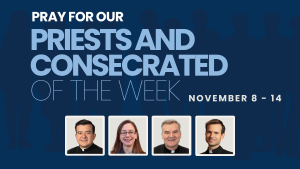
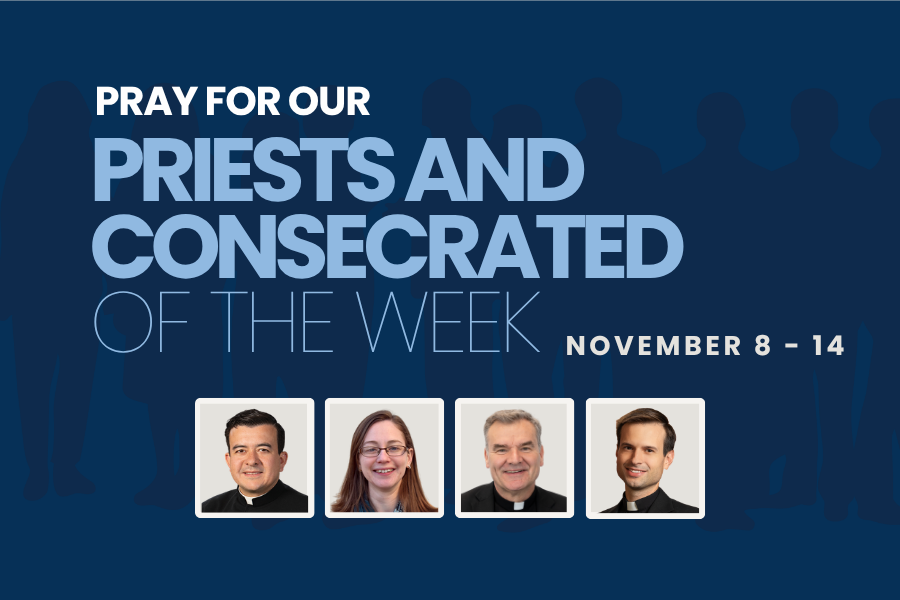
RCTW-Nov-6-4A Week of Prayer for All of Our Priests and Consecrated Members: November 8 – 14

Regnum Christi invites you to join us in praying especially for our brothers and sisters living the consecrated vocations of Legionary priests, Consecrated Women, and Lay Consecrated Men in our territory.

___

Mission


RCTW-Nov-6-5Six Years of Accountability: The Legionaries of Christ Present the 2025 Report on “Truth, Justice, and Healing”

Throughout 2025, the Congregation remained steadfast in fulfilling its commitments in accountability, personalized attention to victims, the comprehensive plan of reparation, monitoring of ongoing canonical proceedings, and safe environment formation in all the territories.

___


RCTW-Nov-6-6Royalmont Academy in Mason Announces Leadership Program and Skilled Trades Expansion for 2027

Royalmont Academy is preparing to introduce a new approach to high school education that combines traditional academics with Christian leadership development, skilled trades training and entrepreneurship opportunities

___

Vocation

RCTW-Nov-6-7Advent Spiritual Exercises

Live Advent to the full with a 3-day silent retreat: preparing for Christmas like the Blessed Virgin Mary! The retreat follows the methodology of the Spiritual Exercises of St. Ignatius Loyola. Embrace the beauty of scenic surroundings as you reflect, pray, and grow spiritually.

___

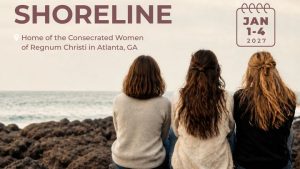
RCTW-Nov-6-8January Shoreline

The Shoreline Retreat is a weekend for college-aged young women who love Jesus and want to go deeper in their relationship with Him while discerning their future. Hosted by the Consecrated Women of Regnum Christi in Atlanta, the retreat offers meaningful formation.

___

RC This Week: the most recent stories about Regnum Christi spirituality, communion, and mission – Nov 6 Read More »

26-11-08-PCOTW

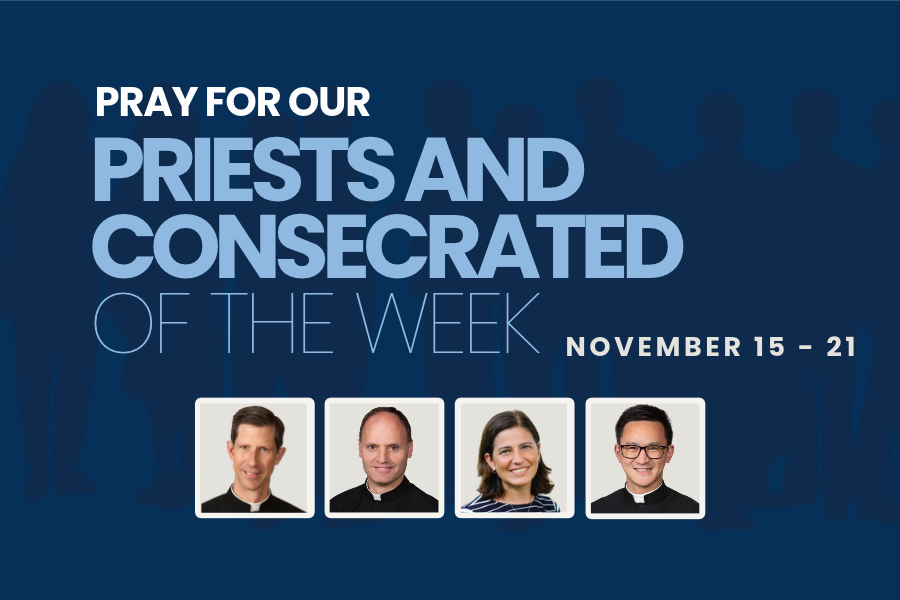
A Week of Prayer for All of Our Priests and Consecrated Members: November 8th – 14th

Regnum Christi invites our entire spiritual family and all our friends to join us in praying especially for our brothers and sisters living the consecrated vocations of Legionary priests, Consecrated Women, and Lay Consecrated Men in our territory.

Each week throughout the year, we will pray together for a different group of Legionaries and Consecrated, spanning all the communities across the territory, as our “Priests and Consecrated of the Week.”

Our Consecrated members are men and women who have said yes to Christ’s call to follow him, leaving everything behind to dedicate their entire lives to him and to join him in the mission of building his Kingdom. We come together to support them with our prayer, asking our Lord to strengthen them, hold them close to his Sacred Heart, and give them his deep joy as they live their mission each day.


This Week We Pray for

H-Jimenez-headshotFr. Víctor Hugo Jiménez, LC, is from Medellín, Colombia, and was ordained in 2019. He is currently the Rector of the program of Humanities at the Legionaries of Christ Novitiate and College of Humanities in Cheshire, Connecticut.

RCunningham-headshotRose Cunningham was born in San Diego, California, and consecrated in 2014. Her apostolic work has mainly been in schools, including ministry in the CECVAC in Monterrey, Mexico, and Everest Monteclaro in Madrid, Spain. She is currently serving in Everest International Academy in Manila, Philippines.

CSikorsky-headshotFr. Charles Sikorsky, LC, was born and raised in Baltimore, Maryland, and was ordained in 2002. Before entering the novitiate, he obtained a B.A. in political economy from Johns Hopkins University and then earned his law degree from The University of Maryland School of Law. He also has degrees in philosophy and theology from the Regina Apostolorum Pontifical University and a licentiate in canon law from the Pontifical Gregorian University in Rome. After working for several years in the Legionary of Christ’s general administration in Rome, Fr. Charles was elected as the third president of the Institute for the Psychological Sciences, now Divine Mercy University, in 2007. Since then, he has devoted himself to growing the university’s place in academia, the Church, the United States, and the world. He also serves on the territorial council for the Legionaries of Christ. Fr. Charles is a member of the LC community in Ashburn, Virginia.

C-Ivandic-headshotFr. Christian Ivandic, LC, is from Southwest Germany and was ordained in 2023. He is currently pursuing a doctorate in systematic theology at the University of Notre Dame.

Prayer for Priests and Consecrated Members in Regnum Christi

God our Father,
We thank you for our spiritual family of Regnum Christi, and for those within it that you have called to total consecration as Legionaries of Christ, Consecrated Women, and Lay Consecrated Men.

We ask you to renew their encounter with your Son Jesus Christ,
who goes out to meet them and reveals the love of his heart to them.
Deepen their personal love for Christ
and their trust in his love for them.
Gather them close to him,
form them,
and send them out accompanied by your Son,
in the mission of forming apostles and Christian leaders who make your Kingdom present in hearts, in families, and in society.

Send your Holy Spirit to sanctify and strengthen them,
And to help them respond generously and courageously to their mission each day.

Through Christ our Lord. Amen.

A Week of Prayer for All of Our Priests and Consecrated Members: November 8th – 14th Read More »

Scroll to Top

Events

Looking for another country?

Contact Regnum Christi near you

News & Resources

News & Resources

The Regnum Christi Mission

The Regnum Christi Identity

Alex Kucera

Atlanta

Alex Kucera has lived in Atlanta, GA, for the last 46 years. He is one of 9 children, married to his wife Karmen, and has 3 girls, one grandson, and a granddaughter on the way. Alex joined Regnum Christi in 2007. Out of the gate, he joined the Helping Hands Medical Missions apostolate and is still participating today with the Ghana Friendship Mission.

In 2009, Alex was asked to be the Atlanta RC Renewal Coordinator for the Atlanta Locality to help the RC members with the RC renewal process. Alex became a Group Leader in 2012 for four of the Atlanta Men’s Section Teams and continues today. Running in parallel, in 2013, Alex became a Team Leader and shepherded a large team of good men.

Alex was honored to be the Atlanta Mission Coordinator between 2010 to 2022 (12 years), coordinating 5-8 Holy Week Mission teams across Georgia. He also created and coordinated missions at a parish in Athens, GA, for 9 years. Alex continues to coordinate Holy Week Missions, Advent Missions, and Monthly missions at Good Shepherd Catholic Church in Cumming, GA.

From 2016 to 2022, Alex also served as the Men’s Section Assistant in Atlanta. He loved working with the Men’s Section Director, the Legionaries, Consecrated, and Women’s Section leadership teams.

Alex is exceptionally grateful to the Legionaries, Consecrated, and many RC members who he’s journeyed shoulder to shoulder, growing his relationship with Christ and others along the way. He knows that there is only one way, that’s Christ’s Way, with others!