Regnum Christi Spirituality Center Uncle Eddy

St Josaphat

Dear Josie, You know, of course, how much I admire you.  Of all my nieces I believe that you have received a special vocation.  And now that I see you falling prey to the seductions of Californian culture, it makes my stomach turn.  Certainly it is only to be expected, since you opted to go west for your studies, but that doesn’t make it less worrisome.  Don’t get me wrong, I am not berating your moral or religious practices, which seem to be holding strong, thanks be to God (and to your mother’s prayers, I am sure).  Rather, I am concerned about your worldview, your Weltanschauung, as they call it in philosophical circles.  Though California may seem to be the pinnacle and epicenter of civilization (especially when you experience it from the Edenic precincts of a coastal college campus), it really isn’t.  To inure yourself against succumbing to the narrow minded and comfortable mindset that is slowly numbing your universal sensibilities, I recommend keeping abreast of the wide spectrum of Church affairs – which includes academia and California, but doesn’t exclude the rest of the world.  Take, for instance, the issue of Christian unity, which was the heartfelt concern of today’s saint. You see, Josaphat was the son of a Catholic father, but he lived in an Orthodox region.  (You remember, I presume, that the Orthodox Christians, most of whom live in the eastern Mediterranean or in Slavic countries, have rejected the primacy of the Roman Pontiff ever since the unfortunate falling out of 1054.)   Early on he felt a call to serve the cause of unity by dedicating himself to the priestly ministry, which he did with great success in the Ukraine, Poland, and finally in Belarus, where he was made bishop of the Eparchy (diocese) of Polatsk.  Upon his arrival the entire eparchy was in a deplorable state of relaxed morals and ecclesiastical disarray.  His prudent pastoring and passionate preaching initiated a vibrant reform in every aspect of the community.  In Polatsk as elsewhere, his great cause was reestablishing union with the Successor of St Peter, the Bishop of Rome, and because of his exemplary virtue and tireless charity, he won the whole Eparchy to this all-important cause.  Soon, however, Orthodox dissidents established a parallel hierarchy in the aftermath of the Union of Brest (politics often seems to get in the way, doesn’t it?) and sent their own archbishop to Polatsk, one Moletius Smotritsky.  Smotritsky energetically set about undoing the good work accomplished by Josaphat, and soon had raised a vociferous anti-Catholic party with members throughout the diocese.  Such was their ire at the saintly archbishop who insisted on returning to union with the ancient Church that they eventually stormed his quarters and murdered him, throwing his mutilated body into the river. And that, my dear niece, is the kind of thing that still goes on throughout this embattled world.  Do keep abreast of such events, and expand the geography of your prayer to include them.  This, I believe, will help immunize you against the lotuses of the Californian, collegiate Weltanschauung. Yours always, Uncle Eddy
St Josaphat Read More »

26-11-12-DM

November 12, 2026 – Thy Kingdom Come!

Memorial of Saint Josaphat, Bishop and Martyr


Luke 17:20-25

Asked by the Pharisees when the Kingdom of God would come, Jesus said in reply, “The coming of the Kingdom of God cannot be observed, and no one will announce, ‘Look, here it is,’ or, ‘There it is.’ For behold, the Kingdom of God is among you.” Then he said to his disciples, “The days will come when you will long to see one of the days of the Son of Man, but you will not see it. There will be those who will say to you, ‘Look, there he is,’ or ‘Look, here he is.’ Do not go off, do not run in pursuit. For just as lightning flashes and lights up the sky from one side to the other, so will the Son of Man be in his day. But first he must suffer greatly and be rejected by this generation.”

Opening Prayer: Holy Spirit, prepare my heart so that the Kingdom of God can grow in me.

Encountering Christ:

  1. A Cornerstone for Evangelization: The volatile character of divine mystery—the coming of the Kingdom of God—cannot be observed. The Kingdom of God is not merely an ideal version of the kingdom of man. As Jesus warned, “There will be those who will say to you, ‘Look, there he is,’” but the Kingdom of God cannot be measured or quantified. The Kingdom of God is the manifestation of God in the world and, therefore, very mysterious.


  2. Kingdom among Us: Jesus has come to proclaim his Kingdom, and he has invited us to enter it. By looking at the “gates” that lead into it, we can fathom how different it is from a kingdom of man: The “main gate” is baptism, which means to die with Christ in order to be resurrected with him. The “small doors” in our everyday life are seemingly insignificant deeds such as feeding the hungry, visiting the sick, or bearing patiently those who wrong us—to name just three out of many works of mercy. The “backdoor” through which we can re-enter the Kingdom after getting ourselves lost is the sacrament of reconciliation.


  3. Changed Hearts: If you want to marvel at the beauty of Christ’s Kingdom, contemplate the hearts of his faithful servants. The saints—and really each person in the state of grace—are the amazing citizens of his glorious Kingdom. And saints aren’t just those for whom statutes have been made. Some saints live “among us.” They make society better, but they are not the products of society. They are the fruit of God’s grace; they are the inhabitants of his Kingdom here on earth.

Conversing with Christ: My Lord, I want to belong to your Kingdom. Please guide me through its sacramental gates of grace. The Kingdom is my true fatherland, in which I will thrive and become the best version of myself. Jesus, you are the true king who will lead me to the deepest happiness. “Thy Kingdom Come!”

Resolution: Lord, today by your grace I will pray the quick prayer “Thy Kingdom Come!” consciously as an invitation for Christ to rule my heart.

For Further Reflection: “It is always God who makes his Kingdom grow. That is why we fervently pray ‘Thy Kingdom Come.’ It is he who makes it grow. Man is his humble collaborator, who contemplates and rejoices in divine creative action and waits patiently for its fruits” (Pope Francis, Angelus address on June 14, 2015).

Father Gabriel von Wendt, LC, is a priest who works as a professor at the Pontifical Athenaeum Regina Apostolorum. He has a passion for philosophy and the role of Catholic faith in contemporary culture. He is a co-founding member of the Catholic Worldview Fellowship, a study-abroad program for talented college students who want to evangelize culture.

November 12, 2026 – Thy Kingdom Come! Read More »

Regnum Christi Spirituality Center Uncle Eddy

St Martin of Tours

Dear Terry, It took me a long while to get through your last note.  Not only was it quite long (which is fine – I’ve plenty of free time on my hands), but also your thoughts were muddled and complicated and densely tangled – it would have been helpful if I had had a machete!  I daresay that you are unnecessarily tying yourself in knots, and those knots, unfortunately, are holding you back from the joys of true Christian discipleship.  If you want my humble, avuncular opinion (and I’m going to give it even if you don’t want it), I would say you need to get back to spiritual basics.  For the next week, simply meditate on and act out the unpretentious formula for holiness and peace of mind given to us by our Lord himself: love God with all your heart by loving your neighbor (e.g. dorm mates, classmates, roommates…) as yourself.  It will help clarify things if you contemplate the example of today’s saint. Few (if any) of the great Church leaders from the fourth century had an impact as far-reaching and long-lasting as St Martin of Tours.  Not only was he elected to the bishopric of Tours, which became the center of his mind-bogglingly robust evangelizing activity, not only did he found the first (and second) monasteries in France, which thrived uninterruptedly until the Protest Reformation 1200 years later, not only did he topple innumerable pagan shrines and win the hearts of simple people through an unceasing flow of miraculous healings, but he also came to the defense of the true faith whenever it was threatened and put his own life in jeopardy again and again in order to further the cause of Christ.  How did he come to such greatness?  He practiced the Christian basics, my dear nephew, the basics. Martin was the son of a Roman military officer from modern day Turkey.  They moved to Italy when his dad got promoted, and, in accordance with Roman law at the time, Martin, as a son of a military veteran, was forced to join the army when he was 15.  Even then, however, he had leanings towards a more religious lifestyle.  He was sent to Gaul (modern day France), where he began to receive instructions in the Christian faith, and sneaked off to spend time alone in prayer whenever he could.  It was during this period, before he was yet twenty (about your age, if I’m not mistaken), when he reached a turning point.  He was coming back into the city after hard day’s patrol near Amiens.  It was winter and bitter cold.  As he approached the city gate he saw a starved, half-naked man shivering with cold as he begged alms from the passers by.  Some of the people laughed at the poor man; some derided him; no one gave him anything.  Martin’s heart was moved, and he wanted to do something, but all he had was his great military cloak and his armor.  He stopped his warhorse and dismounted.  He removed his heavy cloak and, taking his sword, cut it in half.  He wrapped one half around the poor beggar and dangled the other half from his shoulders.  The passers by now laughed at him.  That night, in a dream, he saw our Lord wrapped in that half cloak he had given away, and heard him say, “Martin, yet a catechumen, has covered me with this garment.”  Soon thereafter he abandoned the Emperor’s service in order to serve a higher King, and history changed its course. The basics, dear Terry; I implore you to get back to basics.  And I remain, gladly, your Uncle Eddy

St Martin of Tours Read More »

26-11-11-DM

November 11, 2026 – Faith and Memory

Memorial of Saint Martin of Tours, Bishop


Luke 17:11-19

As Jesus continued his journey to Jerusalem, he traveled through Samaria and Galilee. As he was entering a village, ten lepers met him. They stood at a distance from him and raised their voice, saying, “Jesus, Master! Have pity on us!” And when he saw them, he said, “Go show yourselves to the priests.” As they were going they were cleansed. And one of them, realizing he had been healed, returned, glorifying God in a loud voice; and he fell at the feet of Jesus and thanked him. He was a Samaritan. Jesus said in reply, “Ten were cleansed, were they not? Where are the other nine? Has none but this foreigner returned to give thanks to God?” Then he said to him, “Stand up and go; your faith has saved you.”

Opening Prayer: Holy Spirit, enlighten my memory so that I can recall all the wonderful things which you have worked throughout my life.

Encountering Christ: 

  1. The Nature of a Miracle: Imagine transforming today’s Gospel into a screenplay. How does the moment of healing happen? As a flashing moment of cleansing energy? Or a smooth, breezy touch, blowing away the infection like a layer of dust? Writers and filmmakers can portray the effects of miracles on screen, but how they happen always remains a mystery. Even if we are blessed with the faith to affirm God’s action in a miraculous situation in our own lives, we will still be quite incapable of describing in human terms how he accomplishes his works. “Just as you do not know how the life breath enters the human frame in the mother’s womb, so you do not know the work of God, who is working in everything” (Eccl 11:5).


  2. Nine Out of Ten: Nine out of ten did not return to thank Jesus. Do we ourselves not engage God quite insistently and confidently when in need of a miracle? When we notice that what we asked for was actually granted, we react exultantly. But, after a while, looking back, we sometimes struggle to recall why we thought it was “God’s work.” In retrospect, it suddenly seems quite possible to explain the “miracle” naturally. We doubt our recollection. We rationalize that “it didn’t happen that way.” It’s possible that this experience, still common today, leads nine out of ten not to return to Jesus and thank him.


  3. Pocketing a Moment of Grace?: Like the screenwriter, we can try to capture mystery and attempt to pocket grace. We can write down our insights, record answered prayers, and commit to memory the little miracles we experience daily. As noble as that is, and as mature and wise as it is to do the kinds of spiritual practices that keep us on track, we will never change the ethereal and somewhat volatile character of mystery. On the contrary, each day will be a new occasion to embrace the mysterious, intangible qualities of Jesus and renew and refresh our fundamental decision to believe in and love him.

Conversing with Christ: My Lord Jesus, I believe in you. There are thousands of “proofs” in my pocket: “proofs” for your presence, for your love, for your words to me. And yet, no number of such “proofs” will ever be enough; none of them will take away the need to renew my faith now by living it here. Lord, help me to treasure your graces and to remember our story gratefully; let that treasury be my personal “depositum fidei,” the sum of things I believe because you have presented them to me. For I know that it is not memory which enables my faith, but rather, it is the faith you grant me today which enables that memory.

Resolution: Lord, today by your grace I will pray fervently for a renewal of my faith.

For Further Reflection: “There is a voice in the depths of mankind that prays which is stronger than any argument to the contrary. […] A voice that flows forth spontaneously without anyone commanding it; a voice that questions the meaning of our journey here below, above all when we find ourselves in darkness” (Pope Francis, General Audience on May 6, 2020).

Father Gabriel von Wendt, LC, is a priest who works as a professor at the Pontifical Athenaeum Regina Apostolorum. He has a passion for philosophy and the role of Catholic faith in contemporary culture. He is a co-founding member of the Catholic Worldview Fellowship, a study-abroad program for talented college students who want to evangelize culture.

November 11, 2026 – Faith and Memory Read More »

WM_need-most

What We Most Need

Dear Friends,


In his Tales of the Hasidim, Martin Buber recounts the following story.

Rabbi Yehiel Mikhal lived in great poverty, but not for an hour did happiness desert him. Someone once asked him, “Rabbi, how can you pray day after day, Blessed be Thou…who has supplied my every need? For surely you lack everything a man has need of!” Rabbi Mikhal replied: “What I need is, most likely, poverty – and that is what I have been supplied with.”

This is trust in the highest degree. Of course the Lord wants us to bring him our desire for good things. Consider how often he asks some variation of “What are you looking for?” And yet he also asks us to trust that, in the final analysis, he alone knows what we most need, and that he will supply it.

As Rabbi Mikhal learned, God’s providence may take unexpected forms: He may not offer what we would like. But it will be what our hearts need to grow in faith, in hope, and in love. It will be what we need in order to surrender still more to the Lord who loves us, and who is always working for our good (Romans 8:28).

And no matter what shape God’s providence takes, he wants to give us the grace to pray with Psalm 52: “I will trust in your goodness, O Lord, forever and ever.”

God bless you,

Fr. John Pietropaoli

What We Most Need Read More »

Regnum Christi Spirituality Center Uncle Eddy

St Leo the Great

Dear Lee, I was truly sorry to hear of the difficulties your COMPASS chapter is encountering this fall – sorry, but not surprised.  The ancient enemy never tires of sowing weeds among the wheat, as our Lord pointed out. The important thing, of course, is to avoid discouragement, to stir up that precious virtue of hope and trust in God.  And the way to do that is simply to remind yourself (preferably during a visit to the Chapel) that you are not the boss – God is.  If you were the boss, you would have to be able to control everything in order to guarantee the success of your endeavors.  But you aren’t, so you don’t.  You are merely a rank and file soldier in the army of Christ, and he is the commanding officer.  He can see the whole picture, and he will ensure that your efforts (if they are sincere and directed towards extending his Kingdom and not the kingdom of your ego) are not in vain.  Take a lesson from today’s saint in this regard. Leo the Great faced more and greater obstacles in his 21 years as Pope than most people face in a whole lifetime.  It all began even before he was elected to the Chair of Peter – they had to send a delegation from Rome to Gaul (modern day France) to inform him of his Papal dignities; the previous Pope had dispatched Leo to resolve the violent quarrels between two imperial generals (Aetius and Albinus) that were threatening to leave all of Gaul at the mercy of invading Gothic barbarians.  That kind of set the tone for the next two decades.  In the Eastern half of the waning Roman Empire heresies were running rampant under the indecorous encouragement of haughty emperors.  Leo had to reclaim the true faith from the energetic upstart Eutyches, who collaborated with Emperor Theodosius in calling an illegitimate Council (the infamous “Robber Synod” of Ephesus in 448) in order to propagate his errors. Meanwhile, back at the ranch, Attila the Hun had invaded Italy, sending shock waves of terror and destruction throughout the peninsula.  The Emperor (who had relocated to far away Constantinople) was helpless in the face of Attila’s frightful savagery, and as the barbarians approached Rome, the Romans, quaking in their sandals, huddled behind their dilapidated defenses and sent Leo out to negotiate.  Miraculously, the negotiations were successful, and Leo saved Rome from destruction by agreeing to pay an annual tax to Mr Attila. Such cataclysmic crises were on Leo’s daily agenda for 21 years.  In the face of them, his unshakable trust in God not only kept discouragement at bay, but actually enabled him to thrive, to take every challenge as an opportunity to show his love for Christ by spreading and defending the Church.  In this difficult moment of your foundation of Compass, why not take Pope St Leo as a special patron?  I’m sure he’s just itching to get back into the fray. Love, Uncle Eddy

St Leo the Great Read More »

Great-Little-promo

Great & Little: A New Resource for Discerning God’s Call

“What are you looking for?”

This is the question that Christ asks the first disciples, followers of John the Baptist who were searching for something more than what the world had to offer. And it is the question at the heart of Great & Little: The Legionary Journey, a new discernment resource by Fr. Joseph Brickner, LC.

Written especially for young men beginning to explore God’s will for their lives, Great & Little offers personal reflections, practical guidance, and an authentic introduction to Legionary life.

Looking for Something More

Brickner-Joseph-headshotIn the book’s opening pages, Fr. Joseph reflects on his own vocation story. As a college student, he found himself increasingly dissatisfied with the lack of purpose in the lives of those around him. Time and again, the question arose in his heart: What are you looking for?
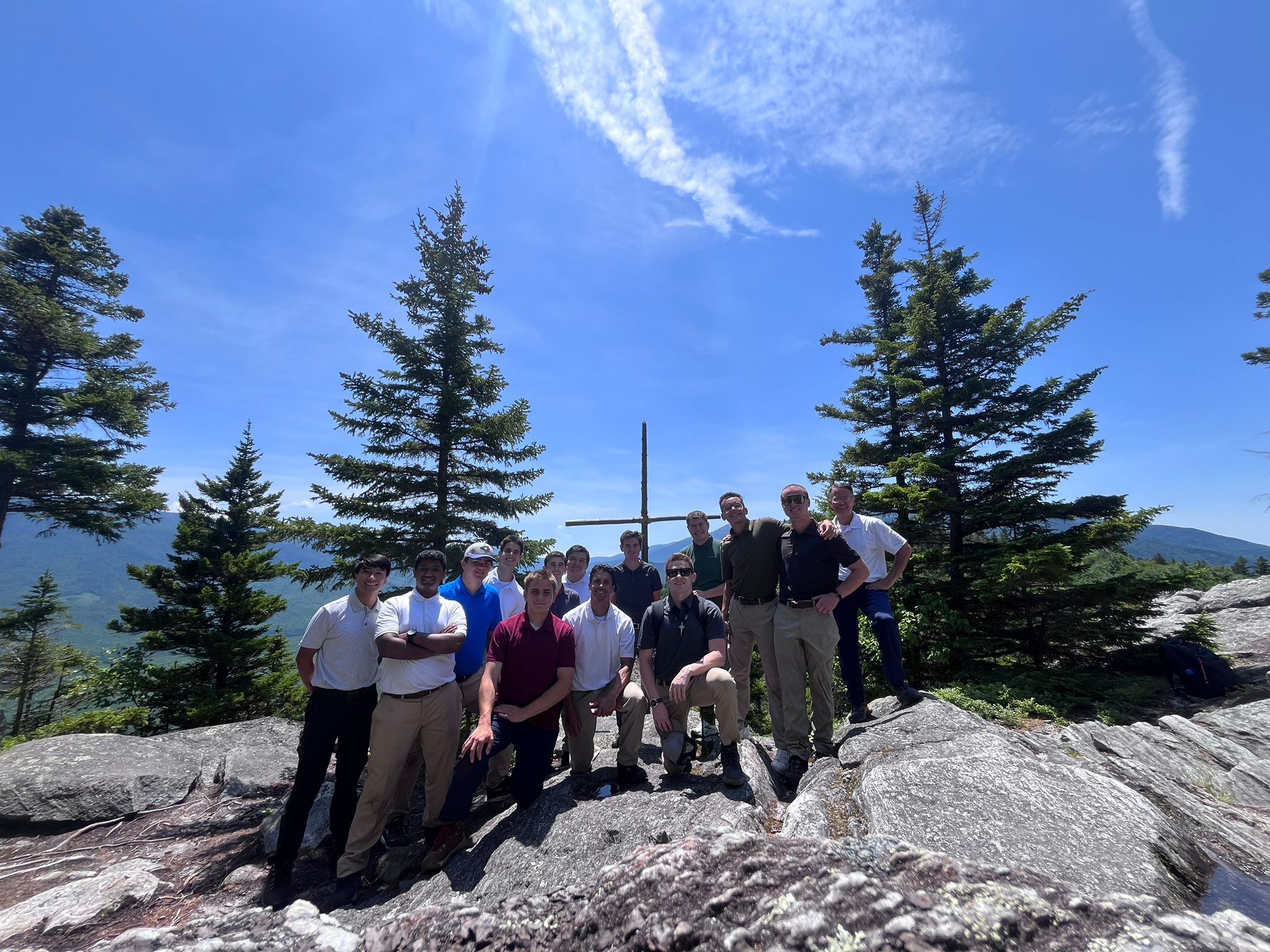
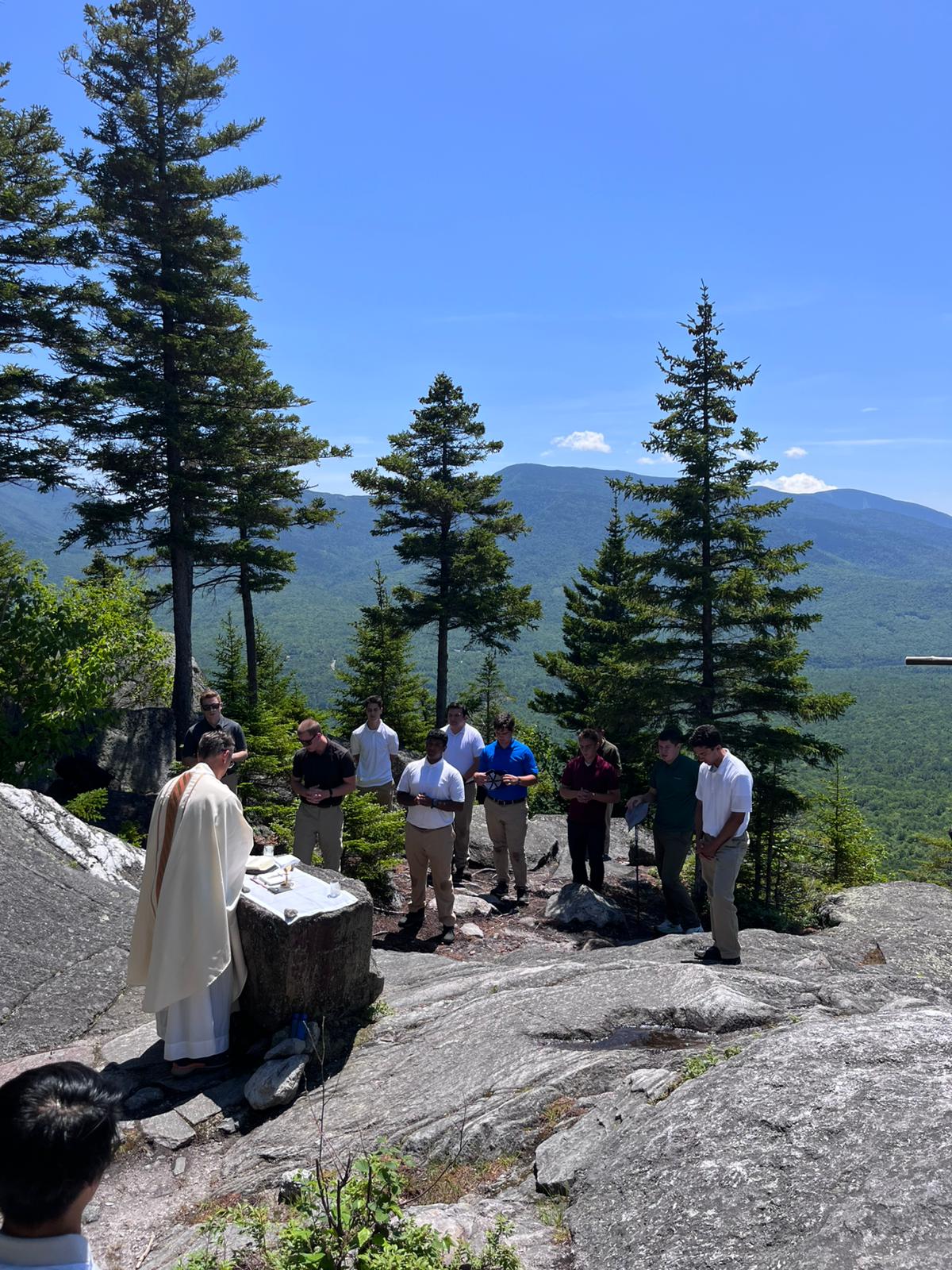
Through prayer, devotion to Mary, the Eucharist, and encounters with friends and family who challenged him to take God’s call seriously, Fr. Joseph gradually recognized that what he was ultimately looking for was Christ himself. Now, as a Legionary priest and one of the vocation directors for the Legionaries of Christ in North America, Fr. Joseph regularly accompanies young men at various stages throughout the discernment journey.

And while there are many resources available for Legionaries already in formation, Fr. Joseph saw the need for something specifically designed for those taking their first steps in discernment. The result is Great & Little, a concise and approachable guide that invites readers to discover the heart of Legionary life, deepen their friendship with Christ, and explore God’s call.

“A lot of young men are interested in our way of life and want to know us better."

 says Fr. Joseph. 

"They want to know how we walk with God and what kind of mission Christ has asked of us.”

Great-Little-promo1

Great and Little

For Fr. Joseph, the title of the book sums up the vocation to the Legionary life; the call to be a missionary priest is an invitation to an exciting adventure, but one that requires humility, self-giving, and trust.

“God has such an amazing plan for us; truly a great plan! Yet we need to recognize that God is God, and we are called to give him his rightful place. After all, he is the one who loved us into existence.”

In his role as vocation director, Fr. Joseph has accompanied many young men through the discernment process, and has witnessed both the beauty and the challenges of responding to God’s call in today’s culture. And although discernment may have changed over the years, the essence of the journey remains the same.

“It wasn’t easy to leave plans, boat, and nets 2000 years ago, and it isn’t easy today. But it is Christ who calls, grace is real, and God is all-powerful. People continue to hear the call and respond.”

Sharing the Invitation

Reflecting on the many unexpected ways he has seen God reach people, like through a simple flier, a social media post, or a providential encounter, Fr. Joseph hopes that Great & Little will find its way into the hands of those who are searching for an answer to that great question: What are you looking for?

Great-Little-promo2

“The harvest is plentiful, but the workers are few. Ask the Lord of the harvest, therefore, to send out workers into his harvest field.”

Find Out More

We each have a vocation. We are all called to change the world in some way by living our God-given identity and purpose. To learn more about the process of discovering God’s will, visit legionariesofchrist.org/discernment.

Great & Little: A New Resource for Discerning God’s Call Read More »

26-11-10-DM

November 10, 2026 – The Servant

Memorial of Saint Leo the Great, Pope and Doctor of the Church


Luke 17:7-10

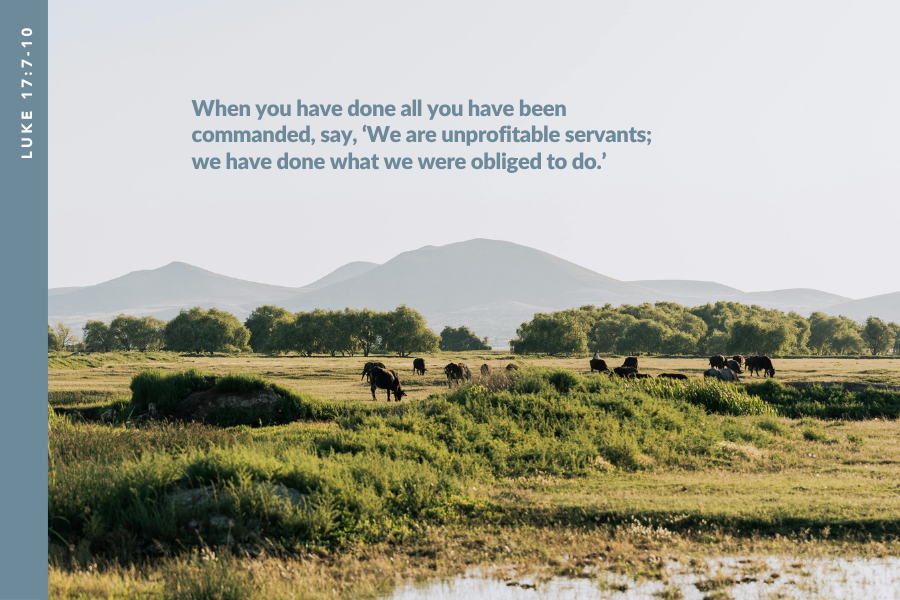
Jesus said to the Apostles: “Who among you would say to your servant who has just come in from plowing or tending sheep in the field, ‘Come here immediately and take your place at table’? Would he not rather say to him, ‘Prepare something for me to eat. Put on your apron and wait on me while I eat and drink. You may eat and drink when I am finished’? Is he grateful to that servant because he did what was commanded? So should it be with you. When you have done all you have been commanded, say, ‘We are unprofitable servants; we have done what we were obliged to do.’”

Opening Prayer: Holy Spirit, help me to hear your voice and inspire in me the right words and attitudes during this prayer.

Encountering Christ:

  1. The Strange Concept of Servitude: In modern times, perhaps we have become overly sensitive to the concept of hierarchy in response to our strong belief that all citizens are equal. However, we still experience a basic need for authority and, hence, for a hierarchical structure. In this Gospel, Jesus refers to a social hierarchy which, to our mind, seems oppressive, but he clearly focuses on the sober realization of our own status as persons under authority. We have no difficulty in understanding ourselves as servants before the Almighty, but how do we acknowledge and support the need for authority in our modern society?


  2. Taking Pride in One’s Identity: In our day, being driven to seek a career promotion is considered healthy ambition. The mentality of Jesus’ time was different. Rising in social ranks was not common. Goodness meant, for the most part, to be content with your station in life and perform your job well. These days, healthy ambition is properly encouraged, but the desire to do the job at hand to the best of our ability should be encouraged as well. “Our greatest happiness does not depend on the condition of life in which chance has placed us, but is always the result of a good conscience, good health, occupation, and freedom in all just pursuits” (Thomas Jefferson).


  3. An Unprofitable Servant: The devil says seek to “become like gods.” Instead, let’s embrace the wonders of our humble status as human persons. We are weak, but called to be strong in Christ; small, but called to contemplate his greatness; insignificant, but sent to proclaim to the world the one thing that truly matters—that we are children of the eternal, loving God. As such, our “low status” is what makes us great.

Conversing with Christ: “My soul proclaims the greatness of the Lord; my spirit rejoices in God my savior. For he has looked upon his handmaid’s lowliness; behold, from now on will all ages call me blessed. The Mighty One has done great things for me, and holy is his name” (Lk 1:46-49).

Resolution: Lord, today by your grace I will adopt the humble attitude of the “unprofitable servant” from the parable, or the “lowly servant” in Mary’s Magnificat during a charitable task or chore at work or at home.

For Further Reflection: “Jesus presents himself as a servant, the one who came to serve and not to be served: He says so clearly. And so, the Lord shows the Apostles the path of those who have received the faith, that faith which works miracles. Yes, this faith will do wonders on the path of service” (Pope Francis, Homily on November 11, 2014).

Father Gabriel von Wendt, LC, is a priest who works as a professor at the Pontifical Athenaeum Regina Apostolorum. He has a passion for philosophy and the role of Catholic faith in contemporary culture. He is a co-founding member of the Catholic Worldview Fellowship, a study-abroad program for talented college students who want to evangelize culture.

November 10, 2026 – The Servant Read More »

God Seems So Silent. What Am I Missing?

Q: I am struggling hard with my faith and with Christianity in general. A lot of the time, it does not feel like freedom to me. It feels like I’m being asked to live by standards I don’t even fully understand, and I hate feeling like my whole life is being measured by whether I can become some different person overnight. I keep hearing that God changes people, but I have tried, and I have tried a lot. I pray, I try to be honest, and it still feels like nothing comes back. God feels silent. That part is what hurts the most. If God is there, why does it feel as though he ignores me? How am I supposed to love or trust someone I can’t even seem to hear from? I also struggle with the idea that because of my past, I’m already disqualified. It feels like I’m being told I’m not good enough no matter what I do. I don’t know how to fix that. I’m not writing this to be disrespectful. I need someone to tell me plainly what I’m missing. If there is hope for someone who feels this stuck and this angry, I want to hear it. Thank you for reading this. — H.

Answered by Fr. Edward McIlmail, LC:

God certainly hears your prayers and is already working in your heart — your e-mail shows that!

The fact that you are trying to pray and have a desire to connect with God shows the Holy Spirit is guiding you.

That sounds strange, I know. God is mysterious and sometimes keeps a low profile because he wants us to make a deeper act of faith about his presence and goodness.

But let’s back up for a moment.

You mention feeling disqualified because of your past. Perhaps sins from the past weigh heavily in your memory.

Now, we are all sinners. We all need God’s mercy and grace.

If you have done things wrong in the past and taken them to confession, then leave them in God’s hands. He has already extended his mercy to you, and he doesn’t want you burning your energy by lamenting the past.

Rather, he wants you to be at peace. You are his beloved daughter, and he wants your happiness and holiness. He wants to use your energy for good things.

You mention about having to live up to standards you don’t understand. Here it might be good to dedicate time to studying your Catholic faith in depth. It might help to get a copy of the Youth Catechism or the U.S. Catholic Catechism for Adults.

Our Lord gives us the Commandments to help us. They are a bit like traffic laws, designed to keep us safe on the road of life. They aren’t arbitrary.

You further mention that you “have tried a lot” to change. In one sense, it’s good that you are trying.

But — and this is an important distinction — our changing for the better isn’t something we do on our own. Rather, it is the Holy Spirit who will change us and lift up our hearts and minds.

What we need to do is to open ourselves to the working of the Spirit. That means we need to be humble and patient. We need to avoid discouragement (which is a subtle form of pride).

We need to have confidence that God is a loving Father who knows our needs and who will give us what we need at the right moments.

So, it would be good to continue to pray. And don’t be afraid to tell God of your fears and problems. He is a great listener.

It might also help to find a solid, regular confessor and/or spiritual director to guide you. A director could be a mature Catholic laywoman, for instance.

If ever you get frustrated, just look at the crucifix to remind yourself what Jesus was willing to do for love of you. And he didn’t wait for you to be perfect.

Count on my prayers.

God Seems So Silent. What Am I Missing? Read More »

Scroll to Top

Events

Looking for another country?

Contact Regnum Christi near you

News & Resources

News & Resources

The Regnum Christi Mission

The Regnum Christi Identity

Alex Kucera

Atlanta

Alex Kucera has lived in Atlanta, GA, for the last 46 years. He is one of 9 children, married to his wife Karmen, and has 3 girls, one grandson, and a granddaughter on the way. Alex joined Regnum Christi in 2007. Out of the gate, he joined the Helping Hands Medical Missions apostolate and is still participating today with the Ghana Friendship Mission.

In 2009, Alex was asked to be the Atlanta RC Renewal Coordinator for the Atlanta Locality to help the RC members with the RC renewal process. Alex became a Group Leader in 2012 for four of the Atlanta Men’s Section Teams and continues today. Running in parallel, in 2013, Alex became a Team Leader and shepherded a large team of good men.

Alex was honored to be the Atlanta Mission Coordinator between 2010 to 2022 (12 years), coordinating 5-8 Holy Week Mission teams across Georgia. He also created and coordinated missions at a parish in Athens, GA, for 9 years. Alex continues to coordinate Holy Week Missions, Advent Missions, and Monthly missions at Good Shepherd Catholic Church in Cumming, GA.

From 2016 to 2022, Alex also served as the Men’s Section Assistant in Atlanta. He loved working with the Men’s Section Director, the Legionaries, Consecrated, and Women’s Section leadership teams.

Alex is exceptionally grateful to the Legionaries, Consecrated, and many RC members who he’s journeyed shoulder to shoulder, growing his relationship with Christ and others along the way. He knows that there is only one way, that’s Christ’s Way, with others!