THE WEEKLY DIGEST
OF REGNUM CHRISTI
DAILY MEDITATIONS

December 14, 2025 – Our Struggle of Faith

25-12-14-DM

Third Sunday of Advent

Matthew 11:2-11

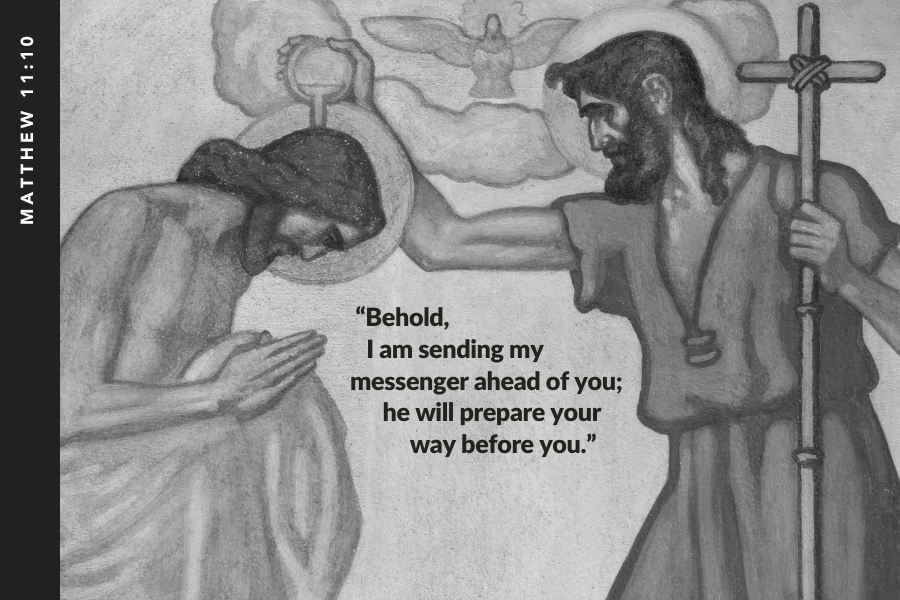
When John the Baptist heard in prison of the works of the Christ, he sent his disciples to Jesus with this question, “Are you the one who is to come, or should we look for another?” Jesus said to them in reply, “Go and tell John what you hear and see: the blind regain their sight, the lame walk, lepers are cleansed, the deaf hear, the dead are raised, and the poor have the good news proclaimed to them. And blessed is the one who takes no offense at me.” As they were going off, Jesus began to speak to the crowds about John, “What did you go out to the desert to see? A reed swayed by the wind? Then what did you go out to see? Someone dressed in fine clothing? Those who wear fine clothing are in royal palaces. Then why did you go out? To see a prophet? Yes, I tell you, and more than a prophet. This is the one about whom it is written: Behold, I am sending my messenger ahead of you; he will prepare your way before you. Amen, I say to you, among those born of women there has been none greater than John the Baptist; yet the least in the kingdom of heaven is greater than he.”

Opening Prayer: Lord Jesus, as I begin this prayer, I ask for the grace of an increased faith. You know that I believe, but help my unbelief. You know that I love you. Help me to grow in my love for you and for my neighbor. Open my heart to receive the graces you wish to give me during this meditation.

Encountering Christ:

  1. “Are You the One Who Is to Come?”: The perennial question directed towards Jesus is one of identity: “Who are you?” The Pharisees asked the question at various times and in various ways. Pilate asked during Jesus’s trial. The Apostles asked each other after he calmed the storm on the sea. Jesus himself posed the question to his Apostles: “Who do you say that I am?” Now John the Baptist is encouraging his disciples to ask the same question. As Bishop Fulton Sheen wrote in his Life of Christ, “Our Blessed Lord left the world without leaving any written message. His doctrine was Himself.” Christianity is not so much about doctrine as about knowing the person of Jesus Christ, the Son of God.


  2. Why Is John Asking the Question?: John the Baptist was the precursor. He had prepared the people for the coming of the Messiah. He had seen the Holy Spirit descend upon Jesus as a dove, and he declared Jesus to be the “Lamb of God.” So why does John now send his disciples to ask if Jesus is the one to come? Does he not know? Is it a pedagogical tool to get his disciples to discover firsthand what he already knows? Alternatively, could it be that John is struggling and questioning his faith while imprisoned? While we may not know the answer regarding John, it is important to realize that to question and to struggle can be a common human experience.


  3. Challenges Are Opportunities to Grow in Faith: At some point, everyone will wrestle with their faith. As Cardinal Ratzinger said, “One never achieves complete faith. It must be lived again and again in life and suffering.” Why is this so? Faith, like love, is lived concretely, not merely professed, and in our fallen world, we will have struggles and temptations to disbelief. If God, however, permits circumstances to try our faith, it is because he wishes to draw a greater good from them. Our faith grows to the degree to which we exercise it amidst the challenges of daily life. Fortunately, our gracious God will never allow us to be tempted beyond our ability to resist. When sorely tried, we must rely upon his grace and remember that he is giving us an opportunity to mature in our faith. It was precisely through his struggles that John the Baptist’s testimony became all the more resplendent.

Conversing with Christ: Dear Jesus, I recognize you as my Lord, God, and Savior. Give me the grace to acknowledge you in word and in action before men. Let me not be afraid of the challenges that arise on this day; rather, let me take them as opportunities to grow in faith, hope, and love.

Resolution: Lord, today by your grace I will embrace the small difficulties and inconveniences as an opportunity to grow in faith.

For Further Reflection: “Is It a Sin to Doubt God’s Existence?” by Matt Nelson, Catholic Answers, 9/13/17, https://www.catholic.com/magazine/online-edition/is-it-a-sin-to-doubt-gods-existence.

Fr John Bullock, LC, was ordained in 2002 and works with Regnum Christi in Houston, Texas, his hometown. He has worked in youthwork, college campus ministry, and as a chaplain to the Regnum Christi movement. He loves his faith, enjoys working with people, and loves riding his bike.

December 15, 2025 – Grace and Nature

25-12-15-DM
Monday of the Third Week of Advent

Matthew 21:23-27

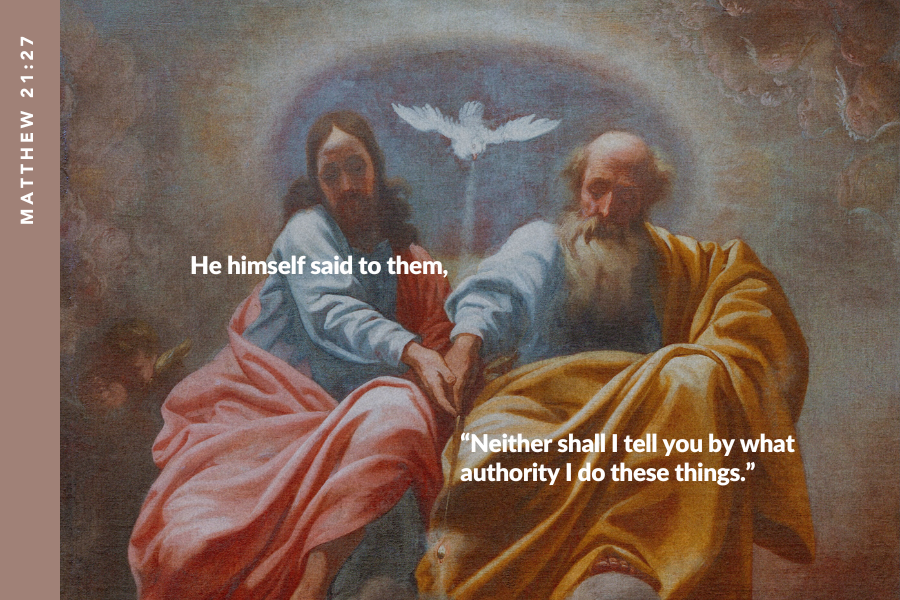
When Jesus had come into the temple area, the chief priests and the elders of the people approached him as he was teaching and said, “By what authority are you doing these things?  And who gave you this authority?” Jesus said to them in reply, “I shall ask you one question, and if you answer it for me, then I shall tell you by what authority I do these things. Where was John’s baptism from? Was it of heavenly or of human origin?” They discussed this among themselves and said, “If we say ‘Of heavenly origin,’ he will say to us, ‘Then why did you not believe him?’ But if we say, ‘Of human origin,’ we fear the crowd, for they all regard John as a prophet.” So they said to Jesus in reply, “We do not know.” He himself said to them, “Neither shall I tell you by what authority I do these things.”

Opening Prayer: Lord Jesus, open my heart and mind to your Word in Scripture, and in hearing you, let me follow you more closely.

Encountering Christ:

  1. We Often Look at Things From a Merely Human Perspective: Was John’s Baptism of heavenly or human origin? The chief priests and the elders were unwilling to acknowledge John’s mission as heavenly inspired. We too are often tempted to overlook heaven’s impact in our daily life. We frequently see both the causes and our solutions to situations in our lives from a practical standpoint. For example, we might blame a job loss on the economy or the company’s policies and begin immediately browsing the internet for new job opportunities. None of this is bad, per se, but what should be the first reaction of a Christian? Should we, rather, first ask Our Lord, “What are you doing here? What do you want to show me?”


  2. Grace Builds Upon Nature: Christianity does not juxtapose nature and grace. God is the source of both our natural and supernatural gifts. Therefore, in principle, God’s gifts should not be in competition with each other. If they are, it is a consequence of our misunderstanding or simply our fallen nature at play. Nature and grace are meant to go hand in hand. The more human virtues we possess, such as sincerity and perseverance, the more fruit grace can bear in our lives. This connection between grace and nature is similar to the relationship between faith and works; one builds upon the other. We respond with our works to the gift of faith. Let’s pray for the grace to live greater virtue and thus give even more glory to God by our works.


  3. We Must Be Open to Receive Grace: The chief priest were more concerned with entrapping Jesus than with learning the truth. Their lack of openness is why Jesus did not directly answer their question. He basically asked them, “Are you willing to acknowledge the hand of God in John’s and my ministries?” When they were evasive, he responded in kind. God wants to give us his grace, but he will not force it upon us. To receive grace, we first have to be open to it.

Conversing with Christ: Lord Jesus Christ, thank you for all the gifts you have given me, both natural and supernatural. Help me grow in human virtues and let those same virtues prepare me to receive your grace and do your will. Let me grow ever more into the person I am called to be, and so better reflect your image to those around me.

Resolution: Lord, today by your grace I will respond to any new situation by first asking, “What are you showing me? What would you have me do?”

For Further Reflection: “Grace: What It Is and What It Does,” Catholic Answers, https://www.catholic.com/tract/grace-what-it-is-and-what-it-does.

Fr. John Bullock, LC, works with Regnum Christi in Cincinnati, Ohio. You can read his blog at: https://headandheartcatholic.tumblr.com/.
December 16, 2025 – The Will of the Father

25-12-16-DM
Tuesday of the Third Week of Advent

Matthew 21:28-32

Jesus said to the chief priests and the elders of the people: “What is your opinion? A man had two sons. He came to the first and said, ‘Son, go out and work in the vineyard today.’ The son said in reply, ‘I will not,’ but afterwards he changed his mind and went. The man came to the other son and gave the same order. He said in reply, ‘Yes, sir,’ but did not go. Which of the two did his father’s will?” They answered, “The first.”  Jesus said to them, “Amen, I say to you, tax collectors and prostitutes are entering the Kingdom of God before you. When John came to you in the way of righteousness, you did not believe him; but tax collectors and prostitutes did. Yet even when you saw that, you did not later change your minds and believe him.”

Opening Prayer: Lord, adjust my thinking about the work you ask of me. As I sit before you in these moments of prayer, work in my heart. When you ask me to go out and “work in the vineyard,” help my response to be a heartfelt yes! Teach me to lean on you and seek your direction as I go about my day.

Encountering Christ:

  1. Not Me!: The first son refused his father’s request. When asked to go out and work in the vineyard, he answered, “I will not.” Although his initial answer was probably displeasing to his father, he ended up doing what his father wanted. We can take great comfort in Jesus’ meaning here: God will always give us a second chance. The reality is that we are all sinners. Despite our best intentions, we will sometimes tell God “no.” We do this not only by our actions, but sometimes by our failure to act. His mercy is infinite; he will always give us another chance to turn back to him and to do his will.


  2. Sure, Dad!: The second son had the answer every parent wants to hear. When his father requested that he go out and work in the vineyard, he gave a quick “Yes, sir” as his reply. However, after thinking about it or maybe just becoming distracted with a more pleasurable activity, he did not follow through. His “yes” was meaningless because it was not backed up by his actions. We can be sure that Jesus was thinking of the times we are quick to pay lip service to living a holy life but do not want to do the hard work of discerning and following God’s will.


  3. Acts of Faith: When we were little children, we followed our parents’ orders because, on some level, we had faith that they had our best interests at heart. When we rebelled as older children or teenagers, we thought we knew better than our parents. We had lost faith in their “omnipotence.” In relationship to our heavenly Father, obedience is the ultimate act of trust. What gets us to Mass on those Sundays when we are busy or tired? What drives us to choose the right thing when we would rather not act or possibly do the wrong thing? It is faith that our heavenly Father knows what is best. Doing his will is an act of faith; it is trust in his perfect plan and goodness.

Conversing with Christ: Still my heart at this moment. Turn my gaze towards you, my heavenly Father. Fill my soul with the knowledge that you are the perfect Father. Let me come to you like a child, seeking your will. Through the Holy Spirit, strengthen me to do your will today.

Resolution: Lord, today by your grace I will spend time in prayer today meditating on Jeremiah 29:11: “For I know well the plans I have in mind for you—oracle of the Lord—plans for your welfare and not for woe, so as to give you a future of hope.”

For Further Reflection: Watch a short video about St. John of the Cross, Doctor of the Church.

Cathy Stamper lives in Maryland with her husband, Mike. They have been partners in marriage and business for thirty-one years. Together they have been blessed with five young adult children. She is a lay member of Regnum Christi.

December 17, 2025 – A Name and a Family

25-12-17-DM
Wednesday of the Third Week of Advent

Matthew 1:1-17

The book of the genealogy of Jesus Christ, the son of David, the son of Abraham. Abraham became the father of Isaac, Isaac the father of Jacob, Jacob the father of Judah and his brothers.  Judah became the father of Perez and Zerah, whose mother was Tamar. Perez became the father of Hezron, Hezron the father of Ram, Ram the father of Amminadab. Amminadab became the father of Nahshon, Nahshon the father of Salmon, Salmon the father of Boaz, whose mother was Rahab. Boaz became the father of Obed, whose mother was Ruth. Obed became the father of Jesse, Jesse the father of David the king. David became the father of Solomon, whose mother had been the wife of Uriah. Solomon became the father of Rehoboam, Rehoboam the father of Abijah, Abijah the father of Asaph. Asaph became the father of Jehoshaphat, Jehoshaphat the father of Joram, Joram the father of Uzziah. Uzziah became the father of Jotham, Jotham the father of Ahaz, Ahaz the father of Hezekiah. Hezekiah became the father of Manasseh, Manasseh the father of Amos, Amos the father of Josiah. Josiah became the father of Jechoniah and his brothers at the time of the Babylonian exile. After the Babylonian exile, Jechoniah became the father of Shealtiel, Shealtiel the father of Zerubbabel, Zerubbabel the father of Abiud. Abiud became the father of Eliakim, Eliakim the father of Azor, Azor the father of Zadok. Zadok became the father of Achim, Achim the father of Eliud, Eliud the father of Eleazar. Eleazar became the father of Matthan, Matthan the father of Jacob, Jacob the father of Joseph, the husband of Mary. Of her was born Jesus who is called the Christ. Thus the total number of generations from Abraham to David is fourteen generations; from David to the Babylonian exile, fourteen generations; from the Babylonian exile to the Christ, fourteen generations.

Opening Prayer: Lord Jesus, I thank you for the gift of faith. In this time of Advent, help me to increase my faith, my hope, and my love in a deeper and more personal relationship with you.

Encountering Christ:

  1. A Name Means Something: To the contemporary reader a genealogy in Scripture may seem both pointless and boring. To identify a person today, it is usually sufficient to give both your first and last names. If more precision is needed, a birthdate or a social security number may be added. While a functioning administrative system to identify people is helpful, an assigned number tells me nothing about the person. A name does. In the Old Testament, someone’s name revealed something of the person. To know a person’s name gave you a certain power over that person. We still sense the importance of names even today. Who doesn’t like it when others remember his or her name? When we use someone’s name, the interaction becomes personal. God calls us by name.


  2. The Person Is Rooted in a Family: Family ushers the individual into relationship. Man, made in the image and likeness of God, primarily reflects the Trinity through familial relationships. I am the son of my parents. For us to be isolated individualists, independent from other people, was never part of God’s plan. When we are isolated from community, we are the most susceptible to Satan’s attacks. Genealogy, then, is that connection with one’s identity in a very profound way: it is your relationship with named persons from your past. You share their genetics, their familial culture, and, often, their values. Naturally, changes occur through the generations, but your past is a vitally important part of who you are. It is indicative that the Church considers the family, and not merely the individual, the primary unit of society. This is not contrary to an individual’s dignity; the family is the context in which that dignity is best expressed and protected.


  3. Jesus Joined Our Human Family: It is a tremendous truth to realize that God wanted to become a part of our flawed human family. As Cardinal Van Thuan wrote in Testimony of Hope, many listed in Jesus’s genealogy were “idolaters, assassins, and people without morals.” He wanted to become one of us so that he could convert us from within (cf. 2 Cor 5:21). An ancient homily from Holy Saturday depicts Christ addressing Adam in the netherworld: “I am your God, who for your sake became your son, who for you and your descendants now speak and command with authority those in prison: Come forth… Rise.”

Conversing with Christ: Jesus, welcome to my imperfect human family. Enter into the life of my immediate, extended, and ecclesial families and sanctify us. Help us to place you at the center of our daily lives. Convert our hearts so that we may better prepare for the celebration of your birth.

Resolution: Lord, today by your grace, I will tell my children or younger family members one family story.

For Further Reflection:

Family remains ‘fundamental unit of human society,’ says archbishop, by Beth Griffin, Catholic News Service, 2/19/13, https://www.catholicnews.com/services/englishnews/2013/family-remains-fundamental-unit-of-human-society-says-archbishop.cfm.

Fr. John Bullock, LC, works with Regnum Christi in Cincinnati, Ohio. You can read his blog at: https://headandheartcatholic.tumblr.com/.
December 18, 2025 – God’s Fidelity Enables Joseph to Do the Same

25-12-18-DM
Thursday of the Third Week of Advent

Matthew 1:18-25

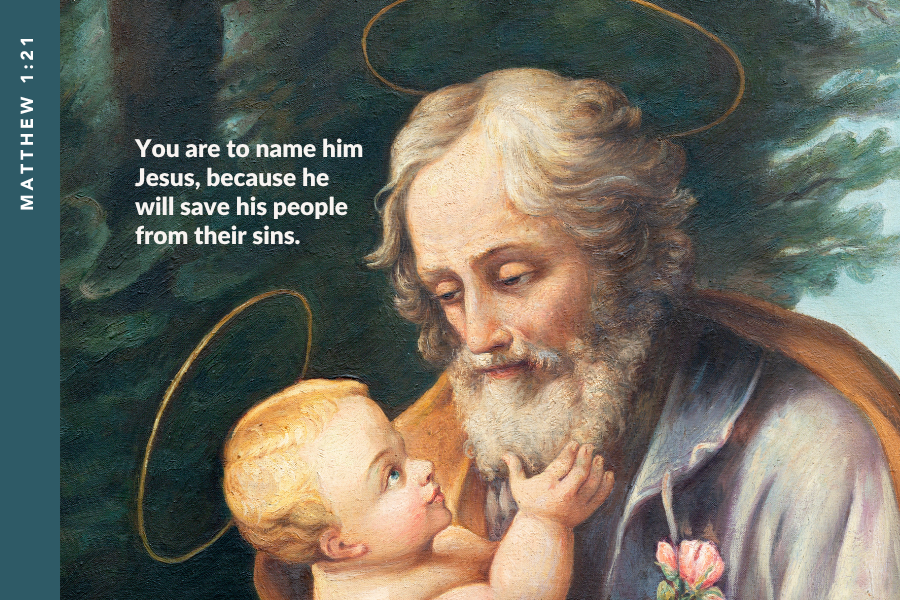
This is how the birth of Jesus Christ came about. When his mother Mary was betrothed to Joseph, but before they lived together, she was found with child through the Holy Spirit. Joseph her husband, since he was a righteous man, yet unwilling to expose her to shame, decided to divorce her quietly. Such was his intention when, behold, the angel of the Lord appeared to him in a dream and said, “Joseph, son of David, do not be afraid to take Mary your wife into your home. For it is through the Holy Spirit that this child has been conceived in her. She will bear a son and you are to name him Jesus, because he will save his people from their sins.” All this took place to fulfill what the Lord had said through the prophet: Behold, the virgin shall be with child and bear a son, and they shall name him Emmanuel,which means “God is with us.” When Joseph awoke, he did as the angel of the Lord had commanded him and took his wife into his home. He had no relations with her until she bore a son, and he named him Jesus.

Opening Prayer: Lord increase my faith in your presence in Scripture and in my daily life. Give me eyes to discover you in all things. May my awareness of your goodness increase my love for you, and may my love strengthen my hope in your promise. May I, and all my loved ones, one day be with you in heaven.

Encountering Christ:

  1. God Comes to Joseph’s Aid: Faced with a difficult situation, Joseph was unsure how to proceed with his betrothal to Mary. Yet his love for God’s law and his love for Mary made him think that the best course of action was a quiet divorce. Seeking to do the Lord’s will in such singular circumstances, Joseph needed guidance. Therefore, the Lord sent his angel to Joseph in a dream. God showed Joseph the big picture, “… the virgin shall be with child… and they shall name him Emmanuel,” and he gave Joseph the next practical step, “Do not be afraid to take Mary your wife into your home.” God will always give us the grace to discern his will if we sincerely seek it, whether by using our reason aided by grace, or by more supernatural means. 


  2. The Mystery Remains: As husband to Mary and foster father to Jesus, Joseph was immersed in a profound mystery. While God assists us in knowing his will, he does not always fill in all the blanks. Rather, God seems to inform us on an “as needed” basis. This approach reminds us that we are not in control. We make decisions using our freedom, but we control neither the outcome of those decisions nor the response of others. God remains Lord of history and asks us to place our trust in him. He invites us to be his disciples, and let God be God. When we allow ourselves to be led into the mystery, we are free to marvel at the grandeur of God and his providential will in our lives, often seen only in retrospect.


  3. Joseph Is Obedient to the Lord: Scripture does not record a single word of Joseph’s, but it does enumerate several actions, each in obedience to the Lord: taking Mary into his home, naming the child “Jesus,” and bringing Mary and Jesus to Egypt and then back again. His docility to God’s inspirations is what enables him to fulfill his mission as head of the Holy Family. He expresses his faith and love through his actions. The ready obedience of both Joseph and Mary are models for Christ in his obedience to the Father.   Additionally, Joseph showed his foster son that a man’s strength is ultimately rooted in reliance upon God’s grace.

Conversing with Christ: Lord Jesus, thank you for sharing your foster father, Saint Joseph, with us in the Church. Encouraged by his example and confident in his intercession, may we, like him, abandon ourselves to God’s providential will in our lives. Help us to fulfill our duties with prompt and joyful obedience.

Resolution: Lord, today by your grace I will complete one of my responsibilities at work or at home with a spirit of joy and self-offering to the Lord.

For Further Reflection: “The Christmas Mysteries through Jewish Eyes,” by Joe Heschmeyer, Catholic Answers, 1/1/19, https://www.catholic.com/magazine/online-edition/the-christmas-mysteries-through-jewish-eyes.

Fr. John Bullock, LC, works with Regnum Christi in Cincinnati, Ohio. You can read his blog at: https://headandheartcatholic.tumblr.com/.

December 19, 2025 – Miracles—Seen and Unseen

25-12-19-DM
Friday of the Third Week of Advent

Luke 1:5-25

In the days of Herod, King of Judea, there was a priest named Zechariah of the priestly division of Abijah; his wife was from the daughters of Aaron, and her name was Elizabeth. Both were righteous in the eyes of God, observing all the commandments and ordinances of the Lord blamelessly. But they had no child, because Elizabeth was barren and both were advanced in years. Once when he was serving as priest in his division’s turn before God, according to the practice of the priestly service, he was chosen by lot to enter the sanctuary of the Lord to burn incense. Then, when the whole assembly of the people was praying outside at the hour of the incense offering, the angel of the Lord appeared to him, standing at the right of the altar of incense. Zechariah was troubled by what he saw, and fear came upon him. But the angel said to him, “Do not be afraid, Zechariah, because your prayer has been heard. Your wife Elizabeth will bear you a son, and you shall name him John. And you will have joy and gladness, and many will rejoice at his birth, for he will be great in the sight of the Lord. He will drink neither wine nor strong drink. He will be filled with the Holy Spirit even from his mother’s womb, and he will turn many of the children of Israel to the Lord their God. He will go before him in the spirit and power of Elijah to turn the hearts of fathers toward children and the disobedient to the understanding of the righteous, to prepare a people fit for the Lord.” Then Zechariah said to the angel, “How shall I know this? For I am an old man, and my wife is advanced in years.” And the angel said to him in reply, “I am Gabriel, who stand before God. I was sent to speak to you and to announce to you this good news. But now you will be speechless and unable to talk until the day these things take place, because you did not believe my words, which will be fulfilled at their proper time.” Meanwhile the people were waiting for Zechariah and were amazed that he stayed so long in the sanctuary. But when he came out, he was unable to speak to them, and they realized that he had seen a vision in the sanctuary. He was gesturing to them but remained mute.  Then, when his days of ministry were completed, he went home. After this time his wife Elizabeth conceived, and she went into seclusion for five months, saying, “So has the Lord done for me at a time when he has seen fit to take away my disgrace before others.”

Opening Prayer: Lord Jesus, I ask for the grace to grow in faith, hope, and love. Let this prayer open my heart and mind to be receptive to what you want to tell me today. Ask me what you want, and give me the grace to do it.

Encountering Christ:

  1. An Enduring Suffering: Zechariah and Elizabeth were Godly people who served the Lord faithfully. However, they bore the profound sorrow of not having children. Saint Augustine wrote that many people live quiet lives of despair. In our fallen world, it is reasonable to conclude that everyone is carrying some burden. Many feel overwhelmed and seek an escape such as substance abuse or worse. Others feel numb, as if their daily routine is simply going through the motions. “I keep going, but to what end?” they say. There is a reason why from the Cross our Savior, united to all human suffering, cried out, “My God, my God, why have you forsaken me?” (Mt 27:46). Just like Zechariah and Elizabeth, believers are not spared this struggle.


  2. Doubting the Miracle: While Zechariah was fulfilling his priestly duty in the temple, the angel Gabriel appeared to him, saying “your wife will bear you a son.” Zechariah’s response was incredulity. How could his wife conceive at such an old age? At times, our lack of belief denies God the space to do something wonderful in us. We are tempted to project onto God our discouragement and limitations: “It won’t work. We have already tried.” Now that God offered Zechariah a miracle, he almost lets it slip away. Jesus teaches, “If you have faith the size of a mustard seed, you will say to this mountain, ‘Move from here to there,’ and it will move. Nothing will be impossible for you” (Mt 17:20).


  3. When the Miracle Does Not Come: What do we do when, after a faith-filled prayer, or numerous ones, God does not grant the desired miracle? We may wonder, “Is it simply my lack of faith?” While our faith can always grow, there is often something greater at work. First, faith does not eradicate the cross from our lives; it enables us to carry it. Second, when a miracle we requested does not come to pass, we need to ask the Lord to reveal, in his time, the greater miracle he is working in our lives. Our faith reminds us that God’s ways are always greater than our ways, and even our greatest cross is meant to lead to a resurrection.   When we abandon ourselves to his providence and try to live fully each moment in which we find ourselves, our faith grows. We become convinced that God has us there for a reason, and that reason is motivated by his love. 

Conversing with Christ: Lord Jesus, help me to grow in faith. Allow me to understand that your love and your grace is ever-present in my life. I have only to entrust myself to it. You have created me to reveal your goodness and your glory to the world. As such, there are many miracles of grace that you want to work through me. In my moments of struggle, remind me that your providence is always gently guiding me.

Resolution: Lord, today by your grace I will say a prayer entrusting a particular difficulty to your care.

For Further Reflection: “What Is the Answer to Suffering?” by Matt Nelson, Catholic Answers, 2/14/18, https://www.catholic.com/magazine/online-edition/what-is-the-answer-to-suffering.

Fr. John Bullock, LC, works with Regnum Christi in Cincinnati, Ohio. You can read his blog at: https://headandheartcatholic.tumblr.com/.
December 20, 2025 – God’s Quiet Revolution

25-12-20-DM
Saturday of the Third Week of Advent

Luke 1:26-38

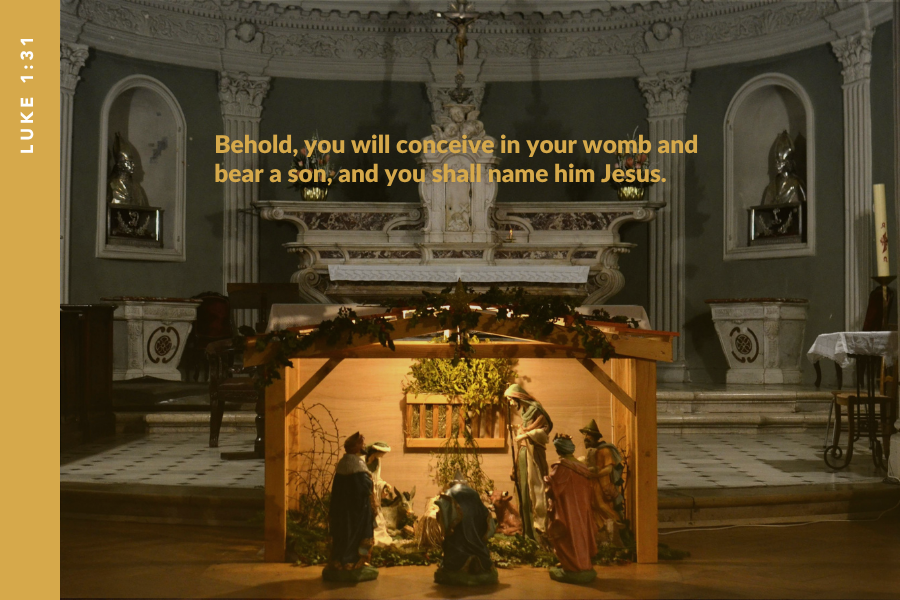
In the sixth month, the angel Gabriel was sent from God to a town of Galilee called Nazareth, to a virgin betrothed to a man named Joseph, of the house of David, and the virgin’s name was Mary. And coming to her, he said, “Hail, full of grace! The Lord is with you.” But she was greatly troubled at what was said and pondered what sort of greeting this might be. Then the angel said to her, “Do not be afraid, Mary, for you have found favor with God. Behold, you will conceive in your womb and bear a son, and you shall name him Jesus. He will be great and will be called Son of the Most High, and the Lord God will give him the throne of David his father, and he will rule over the house of Jacob forever, and of his kingdom there will be no end.” But Mary said to the angel, “How can this be, since I have no relations with a man?” And the angel said to her in reply, “The Holy Spirit will come upon you, and the power of the Most High will overshadow you. Therefore the child to be born will be called holy, the Son of God. And behold, Elizabeth, your relative, has also conceived a son in her old age, and this is the sixth month for her who was called barren; for nothing will be impossible for God.” Mary said, “Behold, I am the handmaid of the Lord. May it be done to me according to your word.” Then the angel departed from her.

Opening Prayer: Lord, I believe that you are here with me now. May this prayer increase my faith and my love. Through the intercession of the Blessed Mother, let me draw ever closer to you, my God.

Encountering Christ:

  1. A Quiet Revolution: God often starts his greatest works in secret and in small ways. To establish the People of Israel, he simply called Abram to leave his home, yet his descendants would be as numerous as the stars in the sky (cf. Genesis 15:5). To bring Israel out of Egypt, he spoke to Moses from the burning bush (cf. Exodus 3:5). The miraculous wonders in Egypt followed. Now, what was perhaps the greatest moment in all of human history, God becoming man, was initially communicated to only one person, Mary. If we could somehow visualize the spiritual impact of the Incarnation, it would be like a burst of light emanating from the Blessed Mother and enveloping the whole earth. Later, angels would praise the Emmanuel, demons would fear him, and men would both vilify and follow him. For now, however, at the Annunciation, all remained quiet, unnoticed.


  2. God’s Humility: We can take God’s respect of human liberty for granted and, at times, even complain about it: “Why does he let people do such things?” It is an act of humility of staggering proportion for the Creator to care about, much less respect, the free choices of his creatures. As he reminded an impertinent Job, “Where were you when I founded the earth?  Tell me, if you have understanding” (Job 38:4). What does God owe us? Nevertheless, he listens attentively to us, and solicits a free response to his invitations. Now he approaches a young girl to ask her to be the mother of his Son. The humility of God the Son becoming man was preceded by the humility of God the Father requesting a favor from his creature, Mary.


  3. Mary’s Humble Response: In response to God’s invitation, man may either harden his heart, as did many of the Pharisees, or humbly obey, as Mary did. However, indifference to a clear call from God is not possible. A person must choose. That choice sets us on a path either with or against God (cf. Mt 12:30). As the example of the rich young man shows us, an enthusiastic inquiry and a respectful demeanor does not change the essence of a refusal to do God’s will (cf. Mk 10:22). Thankfully, in this life God gives us more than one chance. However, what is a conversion if not changing your “no” to a “yes”? Here, Mary in all simplicity and humility responds with a “yes.” Her “yes” remains constant throughout her life. How pleasing to God her unconditional surrender must have been.

Conversing with Christ: Lord Jesus, grant me the grace to be both perceptive and docile, like Mary, so that I may respond like her with loving obedience to your will. May your grace work the revolution in and through me that you have planned. I thank you for the honor of being able to collaborate with such an awesome God and Savior.

Resolution: Lord, today by your grace I will try to notice, appreciate, and collaborate with your grace in a small way.

For Further Reflection: “Annunciation of the Blessed Virgin Mary,” Catholic Answers, https://www.catholic.com/encyclopedia/annunciation-of-the-blessed-virgin-mary.

Fr. John Bullock, LC, works with Regnum Christi in Cincinnati, Ohio. You can read his blog at: https://headandheartcatholic.tumblr.com/.
December 21, 2025 - Choosing Righteousness

25-12-21-DM
Fourth Sunday of Advent

Matthew 1:18-24

This is how the birth of Jesus Christ came about. When his mother Mary was betrothed to Joseph, but before they lived together, she was found with child through the Holy Spirit. Joseph her husband, since he was a righteous man, yet unwilling to expose her to shame, decided to divorce her quietly. Such was his intention when, behold, the angel of the Lord appeared to him in a dream and said, “Joseph, son of David, do not be afraid to take Mary your wife into your home. For it is through the Holy Spirit that this child has been conceived in her. She will bear a son and you are to name him Jesus, because he will save his people from their sins.” All this took place to fulfill what the Lord had said through the prophet: Behold, the virgin shall conceive and bear a son, and they shall name him Emmanuel, which means “God is with us.” When Joseph awoke, he did as the angel of the Lord had commanded him and took his wife into his home.

Opening Prayer: Lord Jesus, I want to be humble, righteous, and merciful like Joseph. I see that you chose him in advance to do your will in order to fulfill your plan of salvation. Help me to see that I have a part to play as well, and may my “yes” bring you much glory.

Encountering Christ:

  1. God Is in the Details: We read: “This is how the birth of Jesus Christ came about.” Then unfolds the story of Joseph’s role in the birth of Christ. He is called “Joseph, son of David” by the angel in the dream because it is through his lineage that Jesus will be the rightful heir to David’s throne. It was no coincidence that Joseph was of the house of Judah. Although this small detail may seem insignificant, it was of utmost importance in order to fulfill the Old Testament prophecies. Even today, God uses the smallest details of our lives to continue to bring about salvation. Who I am, the timing of my birth, my family of origin, my unique giftedness are all part of God’s plan to bring Christ into the world today. Only we can fulfil the role he has ordained for us, now, at this very moment in time.


  2. We Must Choose to Be Righteous Even If…: “Joseph her husband, since he was a righteous man, yet unwilling to expose her to shame, decided to divorce her quietly. Such was his intention…” Did Joseph felt betrayed and hurt by what everyone perceived as Mary’s infidelity? How commendable it was of him to do the right thing (divorce Mary quietly) instead of having her stoned, which was permitted by law at that time. What a role model for Jesus he must have been! We, too, must choose to be “righteous” even when we are wronged (or so we think) and leave the restitution up to God.


  3. God Rewards Good Intentions: What the angel told Joseph must have brought him great relief: “For it is through the Holy Spirit that this child has been conceived in her…” And then Joseph did something that may have seemed very odd to anyone who knew of Mary’s pregnancy: “He took his wife into his home.” Our good intentions cannot stop at good intentions! We must follow through—all the way to the end. Like Joseph, God says to us, “Do not be afraid…” We can count on God’s help to finish whatever God calls us to do.

Conversing with Christ: O Jesus, help me to be open to your plans, even if they look completely different from my own. Give me the grace to choose to be righteous, to act on my good intentions, and to be merciful because Lord, on my own, I will surely fail. Help me to look and act more and more like you, who I now see learned righteousness not only from God the Father, but from your earthly father, Joseph, as well.

Resolution: Lord, today by your grace I will choose to do “the right thing” in big and small ways, even when it hurts, even if it means my plans are interrupted to fulfill your plan.

For Further Reflection: Check out An Invitation to Faith: An A to Z Primer on the Thought of Pope Benedict XVI, Ignatius Press, Page 40-42 (J is for Joseph—The way of humility).

Melissa Overmyer is a convert to Catholicism; founder of the Georgetown Women’s Bible Study and Something Greater Ministries; and vlogger and author of four books. She has a master’s degree in Theology from the Augustine Institute.

Scroll to Top

Events

Looking for another country?

Contact Regnum Christi near you

News & Resources

News & Resources

The Regnum Christi Mission

The Regnum Christi Identity

Alex Kucera

Atlanta

Alex Kucera has lived in Atlanta, GA, for the last 46 years. He is one of 9 children, married to his wife Karmen, and has 3 girls, one grandson, and a granddaughter on the way. Alex joined Regnum Christi in 2007. Out of the gate, he joined the Helping Hands Medical Missions apostolate and is still participating today with the Ghana Friendship Mission.

In 2009, Alex was asked to be the Atlanta RC Renewal Coordinator for the Atlanta Locality to help the RC members with the RC renewal process. Alex became a Group Leader in 2012 for four of the Atlanta Men’s Section Teams and continues today. Running in parallel, in 2013, Alex became a Team Leader and shepherded a large team of good men.

Alex was honored to be the Atlanta Mission Coordinator between 2010 to 2022 (12 years), coordinating 5-8 Holy Week Mission teams across Georgia. He also created and coordinated missions at a parish in Athens, GA, for 9 years. Alex continues to coordinate Holy Week Missions, Advent Missions, and Monthly missions at Good Shepherd Catholic Church in Cumming, GA.

From 2016 to 2022, Alex also served as the Men’s Section Assistant in Atlanta. He loved working with the Men’s Section Director, the Legionaries, Consecrated, and Women’s Section leadership teams.

Alex is exceptionally grateful to the Legionaries, Consecrated, and many RC members who he’s journeyed shoulder to shoulder, growing his relationship with Christ and others along the way. He knows that there is only one way, that’s Christ’s Way, with others!