THE WEEKLY DIGEST
OF REGNUM CHRISTI
DAILY MEDITATIONS

October 26, 2025 – Pride Goes Before a Fall

25-10-26 DM

Thirtieth Sunday in Ordinary Time​

Luke 18:9-14

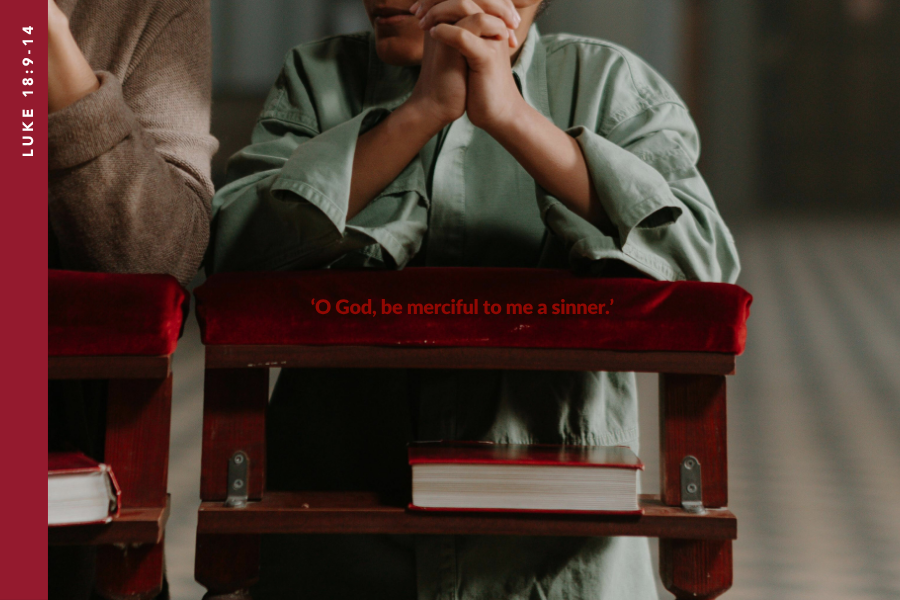
Jesus addressed this parable to those who were convinced of their own righteousness and despised everyone else. “Two people went up to the temple area to pray; one was a Pharisee and the other was a tax collector. The Pharisee took up his position and spoke this prayer to himself, ‘O God, I thank you that I am not like the rest of humanity—greedy, dishonest, adulterous—or even like this tax collector. I fast twice a week, and I pay tithes on my whole income.’ But the tax collector stood off at a distance and would not even raise his eyes to Heaven but beat his breast and prayed, ‘O God, be merciful to me a sinner.’ I tell you, the latter went home justified, not the former; for whoever exalts himself will be humbled, and the one who humbles himself will be exalted.”

Opening Prayer: Lord, open my mind as I settle down to pray. Help me to enter your holy presence and remain with you throughout my time of prayer so that my soul may be nourished.

Encountering Christ:

  1. Despising Others?: There were people in the crowd that day to whom Jesus was speaking directly. They believed in their own superiority over others. Despite our best intentions, all of us, at times, are guilty of this sin of pride. Manifestations of pride might include stubbornness, impatience, self-reliance, fear of failure, distrust of others, critical speech or thoughts, or self-pity. In every instance, we place our will above the Lord’s, taking credit for our good deeds instead of offering them to God for his glory, as did the Pharisee who said, “I fast twice a week, and I pay tithes on my whole income.” Thomas à Kempis advised, “Do not think yourself better than others lest, perhaps, you be accounted worse before God who knows what is in man. Do not take pride in your good deeds, for God’s judgments differ from those of men and what pleases them often displeases him.” The Catechism teaches, “Man’s merit…itself is due to God, for his good actions proceed in Christ, from the predispositions and assistance given by the Holy Spirit” (CCC 2008).


  2. Both Needed Justification: Pharisees were leaders with political and religious clout among the Jews. Tax collectors were hated by the Jews because they extorted their own people on behalf of the Romans. Observers at the time might have expected the Pharisees to pray humbly and the tax collector to beg for mercy. The tax collector was the greater sinner in the eyes of the Jews. In fact, however, both needed justification. We all need justification! How blessed we are that “Justification has been merited for us by the Passion of Christ who offered himself on the cross as a living victim, holy and pleasing to God, and whose blood has become the instrument of atonement for the sins of all men” (CCC 1992). Our justification is an ongoing process that requires obedience to the Commandments and church teachings as we “work out [our] salvation with fear and trembling” (Phil 2:12). Church Father St. Ignatius of Antioch advises, “Let your baptism be your armament, your faith your helmet, your love your spear, your endurance your full suit of armor. Let your works be as your deposited withholdings, so that you may receive the back pay which has accrued to you.”


  3. The Power of Humility: Humility has been called the mother of all virtues and the gateway to Christ. St. Augustine said, “The way to Christ is first through humility, second through humility, third through humility” (Letters 118:22). But how does one grow in humility? We strive to understand the virtue and to pray for the grace to live it well. According to St. Thomas Aquinas, “Humility means seeing ourselves as God sees us: knowing every good we have comes from him as pure gift” (Summa Q161). This “divine insight” can be acquired by praying fervently for the grace to see as God sees us. As a self-examination and a powerful prayer resource, the Litany of Humilitycan be recited as a novena, or as part of a regular daily prayer routine. Humble hearts are drawn ever closer to Jesus as we cooperate with his grace, and he promised that the humble will be exalted, “lifted up,” taken one day to Heaven to be united forever with the Holy Trinity.

Conversing with Christ: Lord, these lines of Scripture challenge me to recognize my need for repentance and ongoing conversion. I know that by growing in humility I grow closer to you. Please infuse me with grace as I strive to see myself the way you see me and remember that every good thing comes from you as a freely given gift.

Resolution: Lord, today by your grace I will say the Litany of Humility as an examination of conscience and pray for the grace to overcome my faults.

For Further Reflection: Reflect on two verses of Open the Eyes of My Heart, by Michael W. Smith

Open the eyes of my heart, Lord

Open the eyes of my heart

I want to see you

I want to see you

To see you high and lifted up

Shinin’ in the light of your glory

Pour out your power and love

As we sing holy, holy, holy

Maribeth Harper celebrated paying the last tuition bill for her kids’ college by writing a book for moms who have college-aged young adults, And So We Pray, Guidance for Moms with College-Aged Young Adults. She is a wife of thirty-five years, mother of four, and grandmother of twelve and counting.

October 27, 2025 – Always in Your Presence

25-10-27 DM

Monday of the Thirtieth Week in Ordinary Time

Luke 13:10-17

Jesus was teaching in a synagogue on the sabbath. And a woman was there who for eighteen years had been crippled by a spirit; she was bent over, completely incapable of standing erect.

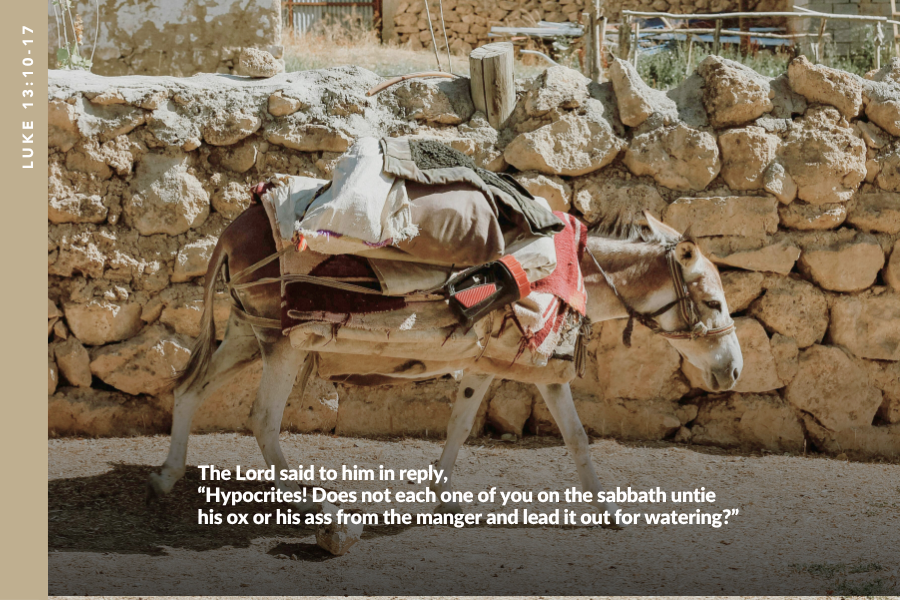
When Jesus saw her, he called to her and said, “Woman, you are set free of your infirmity.” He laid his hands on her, and she at once stood up straight and glorified God. But the leader of the synagogue, indignant that Jesus had cured on the Sabbath, said to the crowd in reply, “There are six days when work should be done. Come on those days to be cured, not on the sabbath day.” The Lord said to him in reply, “Hypocrites! Does not each one of you on the sabbath untie his ox or his ass from the manger and lead it out for watering? This daughter of Abraham, whom Satan has bound for eighteen years now, ought she not to have been set free on the sabbath day from this bondage?” When he said this, all his adversaries were humiliated; and the whole crowd rejoiced at all the splendid deeds done by him.

Opening Prayer: Jesus, be with me in this time of prayer. Help me to receive from these words the message you have for me today. I believe that you love me and want the best for me in every moment.

Encountering Christ:

  1. Bent Over for Eighteen Years: A crippled woman, unable to lift her head, aching in her bent frame, was at the synagogue on the Sabbath. There she met Jesus. This long-suffering woman could have made any number of excuses to stay home. She might have given in to self-pity or bitterness and decided it was better to be alone. She might have chosen to avoid crowds because she could always feel them staring. There is no mention of a husband or family so she was probably poor. Why pray to a God who had seemingly left her crippled and in poverty? Instead of indulging those thoughts, she went to the synagogue on the day Jesus was preaching. Because she was bent over, she couldn’t see Jesus. She didn’t address Jesus. She didn’t draw near. But Jesus saw her. He had always seen her. He knew her suffering and he chose to end it: “Woman, you are set free of your infirmity.”


  2. She Glorified God: Jesus laid hands on the crippled woman and “at once she glorified God.” Note that she didn’t ask any questions. She didn’t turn to the crowd for affirmation. She didn’t even seem to have anticipated receiving the cure Jesus gave her. Her beautiful, spontaneous, heartfelt response to this miraculous moment was to glorify God. What a lesson she teaches us. “A good person out of the store of goodness in his heart produces good, but an evil person out of a store of evil produces evil; for from the fullness of the heart the mouth speaks” (Lk 6:45).


  3. Adversaries Were Humiliated: The leader of the synagogue chose to criticize Jesus in front of the congregation for his healing on the Sabbath. This was a man charged with pastoring his flock—tending to the spiritual needs of his congregation. Yet, he failed to recognize the long-awaited Messiah in their midst—even after Jesus performed a spectacular miracle. It is no wonder Jesus called Pharisees blind guides (cf. Mt 15:14). In this passage, Jesus publicly denounced the synagogue leader for his hypocrisy. The resulting humiliation was not caused by Jesus, but was the consequence of the leader’s bold, misguided, hatred-filled criticism of Jesus. Every time we turn away from Jesus, even if no one sees, there are consequences, called by the church temporal punishment due to sin (CCC 1472, 1473).

Conversing with Christ: Lord, I want to see you and appreciate your actions in my life day-to-day, and moment-to-moment. Please cure me of any blindness so that I can love you more and glorify you by my words and actions.

Resolution: Lord, today by your grace I will make an effort to live every moment in your presence.

For Further Reflection: The Practice of the Presence of God by Brother Lawrence.

Maribeth Harper celebrated paying the last tuition bill for her kids’ college by writing a book for moms who have college-aged young adults, And So We Pray, Guidance for Moms with College-Aged Young Adults. She is a wife of thirty-five years, mother of four, and grandmother of twelve and counting.
October 28, 2025 – Called, Chosen, and Free

25-10-28 DM
Feast of Saints Simon and Jude, Apostles

Luke 6:12-16

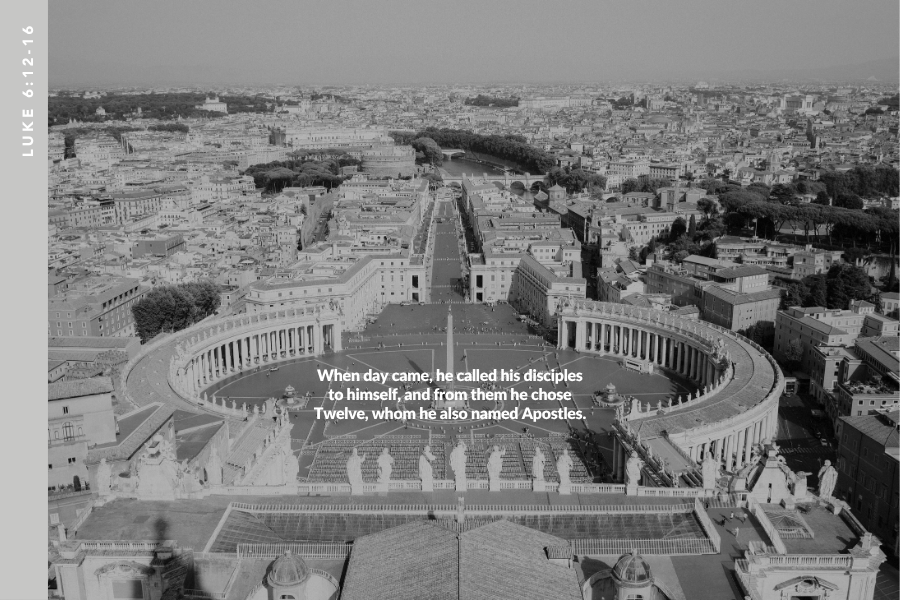
Jesus went up to the mountain to pray, and he spent the night in prayer to God. When day came, he called his disciples to himself, and from them he chose Twelve, whom he also named Apostles: Simon, whom he named Peter, and his brother Andrew, James, John, Philip, Bartholomew, Matthew, Thomas, James the son of Alphaeus, Simon who was called a Zealot, and Judas the son of James, and Judas Iscariot, who became a traitor.

Opening Prayer: Lord, here I am, I come to do your will. Send me to spread your Good News!

Encountering Christ:

  1. Promise Kept: The preface to this Gospel states that Luke was “continuing the biblical history of God’s dealings with humanity found in the Old Testament, showing how God’s promises to Israel have been fulfilled in Jesus.” The Old Testament covenants which God, on his end, faithfully kept through Adam, Noah, Abraham, Moses, and David were broken by the people over and over. In Jesus, God became man, creating a New Covenant with man that cannot be broken. “God has revealed himself fully by sending his own Son, in whom he has established his covenant forever. The Son is his Father’s definitive Word; so there will be no further Revelation after him” (CCC 73).


  2. To Himself: We read, “When day came, he called his disciples to himself ….” Jesus had spent the night in prayer to God and there discerned which men would become the chosen Twelve. He called them out of the crowd “to himself” for a mission that would include founding his Church and dying one day for the faith. He drew them close to befriend them, to teach them and to train them for their mission. Each of us has a mission uniquely given to us by Christ. The only way to accomplish it is to allow Jesus to draw us “to himself.” A disciple who remains close to Jesus will be sure to accomplish his will.


  3. A Traitor: Judas Iscariot will be forever known as the betrayer of Jesus Christ, but he did not begin his discipleship that way. Judas serves as a reminder to all of us that physical proximity to Our Lord is no guarantee of sanctity and salvation if our heart is divided. We may participate at Holy Mass every Sunday and holy day. We may frequent the sacraments and even spend time in Adoration of Our Lord, but where is our heart? “As long as freedom has not bound itself definitively to its ultimate good which is God, there is the possibility of choosing between good and evil, and thus growing in perfection or of failing and sinning. This freedom characterizes properly human acts. It is the basis of praise or blame, merit or reproach” (CCC 1732). “The more one does what is good, the freer one becomes” (CCC 1733).

Conversing with Christ: Lord Jesus, choosing good and being your disciple is my desire, but I find it difficult at times. St. Paul tells us in the first reading, “Through you, Lord, the whole structure is held together and grows into a temple sacred in the Lord; in him you also are being built together into a dwelling place of God in the Spirit.” Lord, call me, choose me, and keep me close. I want to do your will.

Resolution: Lord, today by your grace I will do as St. Augustine advised, “Pray as though everything depended on God. Work as though everything depended on you.”

For Further Reflection: “Covenants Chart” by Dr. Scott Hahn.

Nan Balfour is a wife, mother, and grandmother. She volunteers as a writer and speaker for Pilgrim Center of Hope, a Catholic evangelization ministry that answers Christ’s call by guiding people to encounter him so as to live in hope as pilgrims in daily life.

October 29, 2025 – The Narrow Gate

25-10-29 DM

Wednesday of the Thirtieth Week in Ordinary Time

Luke 13:22-30

Jesus passed through towns and villages, teaching as he went and making his way to Jerusalem.

Someone asked him, “Lord, will only a few people be saved?” He answered them, “Strive to enter through the narrow gate, for many, I tell you, will attempt to enter but will not be strong enough. After the master of the house has arisen and locked the door, then will you stand outside knocking and saying, ‘Lord, open the door for us.’ He will say to you in reply, ‘I do not know where you are from.’ And you will say, ‘We ate and drank in your company and you taught in our streets.’ Then he will say to you, ‘I do not know where you are from. Depart from me, all you evildoers!’ And there will be wailing and grinding of teeth when you see Abraham, Isaac, and Jacob and all the prophets in the Kingdom of God and you yourselves cast out. And people will come from the east and the west and from the north and the south and will recline at table in the Kingdom of God. For behold, some are last who will be first, and some are first who will be last.”

Opening Prayer: “The Lord is faithful in all his words and holy in all his works. The Lord lifts up all who are falling and raises up all who are bowed down.” Lord, I want to be faithful so as to grow in holiness. Please lift me up when I fall. Please raise me up when I am bowed down.

Encountering Christ:

  1. Jesus Passed Through: In the life of every disciple, there was a moment when Jesus “passed through.” Perhaps it was a retreat, a birth, an illness, or a natural disaster that caused this person to take special notice of Our Lord. As their faith was nurtured, they walked more steadily with Christ by deepening their prayer, following the teachings of the Church, growing in virtue, and receiving and giving mercy. This path is the “narrow gate” for which many lack the strength. Do we think by simply calling ourselves Christians we are saved? Walking with Christ takes fortitude, perseverance, and total dependence on grace.


  2. Acquaintances or Friends?: The narrow gate is not a where or a what, it is a who. Jesus is the narrow gate. To enter through the gate means to embrace Jesus with our whole heart, mind, and body. Those in the parable who thought they knew Jesus proclaimed, “We ate and drank in your company and you taught in our streets.” They condemned themselves by their words, unwittingly confessing that they had no intimacy with Jesus. Any acquaintance could have made their claims. God wants our whole heart! More than one hundred verses in the Bible speak of God’s love for us. According to the Catechism of the Catholic Church (221), “God’s very being is love. By sending his only Son and the Spirit of Love in the fullness of time, God has revealed his innermost secret: God himself is an eternal exchange of love, Father, Son and Holy Spirit, and he has destined us to share in that exchange.” To enter through the narrow gate is to love Jesus and live according to his word.


  3. Last Will Be First: Are historical figures like Hitler, Stalin, and Judas damned? What about politicians or celebrities who call themselves Catholic but publicly sin? Do we dare speculate about the judgment these souls will one day receive? In these Gospel verses, Jesus reminds us that “some are last who will be first, and some are first who will be last.” We are not to judge the souls of others because our human discernment is never perfectly clear. We can be swayed by appearances, influenced by subtle prejudices, blinded by our own sinfulness, etc. St. James reminds us, “There is one lawgiver and judge who is able to save or to destroy. Who then are you to judge your neighbor?” (Jas 4:12).

Conversing with Christ: Lord Jesus, our faith tells us that God predestines no one to go to Hell. (CCC 1037). The daily prayers of the Church and of so many faithful souls give me great hope for my own salvation and for those I love. I want to be worthy of entering the narrow gate one day. Come, Holy Spirit! Pray for us, Virgin Mary, so we may all be saved.

Resolution: Lord, today by your grace I will do my best to do your will in every moment so that I may one day enter through the narrow gate.

For Further Reflection: Homily on Attaining the Virtue and Gift of Fortitude so as to persevere until the end, by Fr. John Mary Foster of the Mission of Divine Mercy. 

Nan Balfour is a wife, mother, and grandmother. She volunteers as a writer and speaker for Pilgrim Center of Hope, a Catholic evangelization ministry that answers Christ’s call by guiding people to encounter him so as to live in hope as pilgrims in daily life.

October 30, 2025 – Divine Purpose

25-10-30 DM

Thursday of the Thirtieth Week in Ordinary Time

Luke 13:31-35

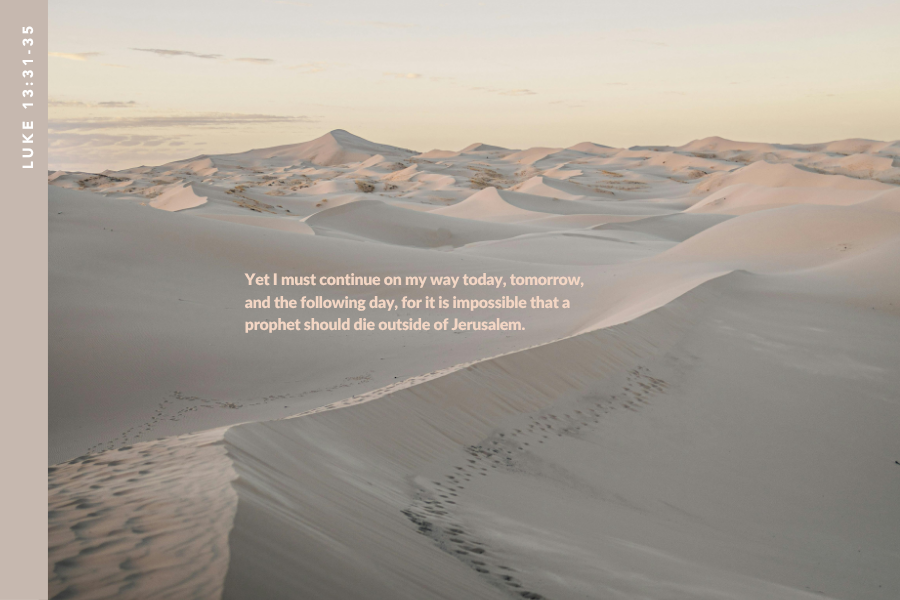
Some Pharisees came to Jesus and said, “Go away, leave this area because Herod wants to kill you.” He replied, “Go and tell that fox, ‘Behold, I cast out demons and I perform healings today and tomorrow, and on the third day I accomplish my purpose. Yet I must continue on my way today, tomorrow, and the following day, for it is impossible that a prophet should die outside of Jerusalem.’ Jerusalem, Jerusalem, you who kill the prophets and stone those sent to you, how many times I yearned to gather your children together as a hen gathers her brood under her wings, but you were unwilling! Behold, your house will be abandoned. But I tell you, you will not see me until the time comes when you say, Blessed is he who comes in the name of the Lord.”

Opening Prayer: “Blessed be the Lord, my rock! Blessed be the Lord, my rock, who trains my hands for battle, my fingers for war.” Here I am, Lord, I come to do your will. I believe, help my unbelief!

Encountering Christ:

  1. Behold: This exchange between Jesus and some Pharisees highlights why it was necessary for the Son of God to leave his throne at the right side of the Father and come himself to save us. The Pharisees were Jewish scholars and, like the Sadducees, experts in the law (Scripture) and in how to interpret it. They were the ones anointed to teach and guide God’s people. We see in this conversation that these so-called experts of Scripture did not recognize Jesus as the Word. If they had, they would have known that no human power, even the kingly power of Herod, was a match for the power of Jesus. Our Lord took this opportunity to remind them that God has authority over evil: “Go and tell that fox, ‘Behold, I cast out demons and I perform healings today and tomorrow, and on the third day I accomplish my purpose.’” The power of Jesus is the same power that is given to every baptized person by the Holy Spirit. We have access to God’s power over evil because he dwells in us.


  2. Yearn: The architect Antonio Barluzzi built churches in the Holy Land that speak in stone and mortar the Gospel story of a particular holy site. The church built where Jesus wept over Jerusalem (cf. Lk 19:41) is in the shape of a large teardrop. It is called Dominus Flevit (The Master Wept). The mosaic on the altar that has been placed in front of a large window overlooking the ancient Jewish Temple Mount (now a mosque) is the image of a hen gathering her brood under her wings. Barluzzi’s “stones cry out” (cf. Lk 19:40) to the profound reality that God yearns for our love. This yearning is more intense than what a mother or father feels when a child goes astray, because God’s love for us is perfect. God loved us so much that he sent his Son to redeem us. This is what Jesus spoke of when he said, “And on the third day I accomplish my purpose.”


  3. Unwilling: “Jerusalem… how many times I yearned to gather your children together as a hen gathers her brood under her wings, but you were unwilling!” These Pharisees are just a few of a much larger group of people who, throughout the ages, have chosen not to believe in Jesus. All of them were “unwilling” to be gathered into the arms of Mother Church. To the Pharisees, Jesus prophesied, “Behold, your house will be abandoned.” Indeed, that came to be when, in 70 AD, the Romans quelled a Jewish revolt, burning the Temple down and leaving all of Jerusalem and much of ancient Palestine in ruins. In our day, many people ignore the Ten Commandments and suffer physical, psychological, and spiritual consequences here on earth, as well as the pains of Purgatory or hell after death. And there are also people who reject Jesus yet seem to thrive by worldly standards, like weeds with the wheat (cf. Mt 13:24-30), but they miss out on the profound peace that comes from having faith. We who are “willing” to be gathered under the protective wings of Mother Church are in the safest place—the center of God’s will.

Conversing with Christ: Lord, I find it difficult to understand how these Pharisees didn’t recognize you as the Messiah they had long waited for. Yet, so often I, too, struggle to believe you are who you say you are. So often, I fall back on my own strength. Forgive me, Lord. I want to believe. Jesus, I trust in you.

Resolution: Lord, today by your grace I will look for a way to proclaim you in word and deed.

For Further Reflection: Reflect on the song “Here, I Am, Lord” (“I, The Lord of Sea and Sky”) by Dan Schutte.

 Nan Balfour is a wife, mother, and grandmother. She volunteers as a writer and speaker for Pilgrim Center of Hope, a Catholic evangelization ministry that answers Christ’s call by guiding people to encounter him so as to live in hope as pilgrims in daily life.

October 31, 2025 – Sabbath Blues

25-10-31 DM

Friday of the Thirtieth Week in Ordinary Time

Luke 14:1-6

On a sabbath Jesus went to dine at the home of one of the leading Pharisees, and the people there were observing him carefully. In front of him there was a man suffering from dropsy. Jesus spoke to the scholars of the law and Pharisees in reply, asking, “Is it lawful to cure on the sabbath or not?” But they kept silent; so he took the man and, after he had healed him, dismissed him. Then he said to them “Who among you, if your son or ox falls into a cistern, would not immediately pull him out on the sabbath day?” But they were unable to answer his question.

Opening Prayer: I know you are here, Lord. You are always at my side, and you are always on my side. You never stop thinking of me. You delight in me—this is why you created me, why you went to the cross for my sins, why you have gone to prepare a place for me in your Father’s house. I come to you today full of gratitude, wanting to praise you, to bless you, and to hear and heed whatever word you wish to speak to me.

Encountering Christ:

  1. Stuck on the Sabbath: The question of the Sabbath comes up repeatedly in the Gospels. In fact, a very similar encounter occurred just a few verses earlier in Chapter 13 of St. Luke’s Gospel. The Pharisees had the wrong idea about God’s commandments. They considered them a kind of obstacle course. Successfully navigating through them was a way of proving oneself, of showing oneself worthy of praise. But the commandments of God are never merely random rules of a game. They are linked to our very nature. Their purpose is to remind us of our purpose—to love God with all our heart, soul, mind, and strength, and to love our neighbor as ourselves. Anytime the commandments of God or the teachings of the Church are separated from this root, they are easily misinterpreted. Jesus continues to challenge the Pharisees’ conception of the Sabbath, because the Pharisees had created so many stipulations regarding keeping the Sabbath that they had entirely lost sight of its true purpose. And they had done similar things with the other commandments as well. His question about rescuing a son or an ox who falls into a cistern, even on the Sabbath day, is meant to awaken them to a new avenue of reflection, an avenue that can help them get back on track. With what spirit do I see and understand the commandments and the teaching of the Church? Do I need to get back on track, in some way or another?


  2. A Surprising “Existential Periphery”: St. Luke points out that Jesus went to dine at the home of one of the leading Pharisees. This is worth noting for at least two reasons. First, by this time the Pharisees were already marshaling their power and influence against Jesus. They had set themselves up as his enemies. But Jesus continues to interact with them, to spend time with them, to try and reconcile with them. This is the spirit of Christ, who never gives up on anyone, no matter how hopeless they may seem to be. Is that my approach as well? Second, this encounter, which isn’t the only one of its kind in the Gospels, breaks down a common misunderstanding about Jesus. Very often, Jesus is depicted as a champion of the poor, the downtrodden, and the marginalized, to the exclusion of the popular, the wealthy, and the well-educated. This is a false opposition. It doesn’t come from the Gospels, but from modern sociopolitical agendas. Jesus was and is the champion of every human being. He came to bring his grace to every single person. He didn’t exclude or condemn the wealthy and successful. Rather, he simply pointed out that the poor and downtrodden often seem to be more open to the Gospel message than those who tend to be self-sufficient. But he reached out to all of them. In today’s world, the Church is called to do the same. We must find Christ in the poor, the sick, the materially underprivileged. But we must also find him in the rich and influential, the successful leaders in every sector of society. They deserve to receive the grace and truth of the Gospel as much as everyone else, and the societies they influence will only benefit if they do receive them. They must not be spiritually overlooked or written off. They must be evangelized.


  3. Our Sunday Observance: In today’s secularized world, we tend to err in a different way as regards our observance of the Lord’s Day. Instead of overemphasizing its difference, we can easily underemphasize it. Sunday doesn’t look too different, in many Catholics’ lives, than Saturday or even a weekday. Instead of being a true break in the demanding rhythms of the workaday world, and a time to renew and refresh our souls with joyful worship, restful contemplation, and relaxing family fellowship, it becomes a crowded and noisy catch-all and catch-up day. Much of the freneticism of today’s world could be better managed by all of us if we would make a firm decision to live the Lord’s Day as God commands us to live it—remember, his commandments are anchored in fundamental needs of human nature, fundamental dimensions of human life that help us flourish if we respect them and disrupt our flourishing if we don’t. Here is some of the Catechism’s description of the proper living of the Lord’s Day (2184-2185): Just as God “rested on the seventh day from all his work which he had done,” human life has a rhythm of work and rest. The institution of the Lord’s Day helps everyone enjoy adequate rest and leisure to cultivate their familial, cultural, social, and religious lives. On Sundays and other holy days of obligation, the faithful are to refrain from engaging in work or activities that hinder the worship owed to God, the joy proper to the Lord’s Day, the performance of the works of mercy, and the appropriate relaxation of mind and body. How well does my normal Lord’s Day reflect those principles behind the Third Commandment? How eager am I to receive the blessings God wants to give me through my obedience to him in this area?

Conversing with Christ: At the deepest level, your will is for me to live life to the full, here on earth and with you forever in heaven after I die. Your commandments, the teachings of your Church, the duties of my state in life, the providential circumstances in which I live—these are all expressions of that fundamental will that I fulfill the dream you have for me. Please help me to always remember this. When the demands of your will feel burdensome to my fallen human nature, help me to see the bigger picture, to trust in you, and to joyfully embrace my cross, knowing that on the other side of every Good Friday, when I live it in union with you, there is always an Easter Sunday.

Resolution: Lord, today by your grace I will talk with my family about how we live the Lord’s Day, and about how we might be able to live it better.

For Further Reflection: Read the section of the Catechism on the Third Commandment.

Father John Bartunek, LC, is an author, speaker, and contributor at RCSpirituality.org, an online spirituality center providing a variety of resources for spiritual growth.

November 1, 2025 – True Beatitude

25-11-01 DM

Solemnity of All Saints

Matthew 5:1-12a

When he saw the crowds, he went up the mountain, and after he had sat down, his disciples came to him. He began to teach them, saying: “Blessed are the poor in spirit, for theirs is the Kingdom of Heaven. Blessed are they who mourn, for they will be comforted. Blessed are the meek, for they will inherit the land. Blessed are they who hunger and thirst for righteousness, for they will be satisfied. Blessed are the merciful, for they will be shown mercy. Blessed are the clean of heart, for they will see God. Blessed are the peacemakers, for they will be called children of God. Blessed are they who are persecuted for the sake of righteousness, for theirs is the Kingdom of Heaven. Blessed are you when they insult you and persecute you and utter every kind of evil against you falsely because of me. Rejoice and be glad, for your reward will be great in Heaven.”

Opening Prayer: Lord God, today’s Gospel passage crescendos from values such as purity and poverty to the intensity of persecution and trial to the pure joy of eternal reward. Teach my heart to beat in symphony with this message from your heart.

Encountering Christ:

  1. Blessed Are the Merciful: Each of the beatitudes is a pearl of Gospel wisdom with enough richness to occupy a contemplative heart for quite some time. Let us examine one beatitude at random: “Blessed are the merciful, for they will be shown mercy.” God is our merciful Father, who has given us the gifts of creation and redemption, along with special graces such as a family or a good workplace. He shows his mercy by giving us the grace to resist temptation, and holding out the offer of forgiveness when we fall. A life of mercy is a life of blessedness—in other words, happiness. This is the promise of all eight beatitudes.


  2. The Church Chooses All!: The Church’s liturgy today does not restrict us to the contemplation of one beatitude, but floods us with all of them at once. This Gospel bonanza is in accordance with today’s feast day, the Solemnity of All Saints. It is truly a wonder to think of the variety and diversity of the saints. They were poor in spirit and thirsty for righteousness. They were meek and merciful, poor and peaceful. They were persecuted, insulted, and mocked. And what did they receive in exchange? Happiness in Heaven. One thing all the saints have in common is their reward of Heaven, eternal life with Jesus. And that is where all our sufferings and crosses in Christ are leading us too. So rejoice and be glad!


  3. True Blessedness: The repetition of the word “Blessed” is the most characteristic element in this Gospel passage. The repetition of it rings in our ears: blessed, blessed, blessed. “Blessed” is a synonym for “happy” but with a deeper connotation. Jesus is not suggesting that we will feel great when we mourn or are insulted. But he is suggesting that there is a deeper kind of happiness–beatitude–which suffuses even suffering and all kinds of unpleasantness, transforming it through faith. This joy of the saints ran soul-deep, and no amount of adversity could take it away.

Conversing with Christ: Lord Jesus, I can only accept these challenging beatitudes and aspire to them because they come from you. You lived them yourself first, and then you invited me to live them, giving me the grace I need to follow you. O Lord, continue to rain down your grace on me so I can be blessed!

Resolution: Lord, today by your grace I will consider purchasing one of the many Lives of the Saints in order to provide myself with solid companions for the rocky road of faith.

For Further Reflection: Read Pope Benedict XVI’s homily from November 1, 2006: “In truth, the blessed par excellence is only Jesus…”

Fr Erik Burckel, LC, was ordained to the priesthood in 2022. He writes articles and short stories for diverse purposes and publications, and can be reached at eburckel@legionaries.org.

November 2, 2025 The Father’s Vision for Our Future

25-11-02 DM

The Commemoration of All the Faithful Departed (All Souls)

John 6:37-40

Jesus said to the crowds: “Everything that the Father gives me will come to me, and I will not reject anyone who comes to me, because I came down from heaven not to do my own will but the will of the one who sent me. And this is the will of the one who sent me, that I should not lose anything of what he gave me, but that I should raise it on the last day. For this is the will of my Father, that everyone who sees the Son and believes in him may have eternal life, and I shall raise him on the last day.”

Opening Prayer: Lord Jesus, you invite me to discover my identity as beloved, protected, and called to eternal life by the Father. Help me to live according to that call.

Encountering Christ:

  1. Given by the Father: Today we pray for those who still await eternal glory in perfect unity with the Holy Trinity. In this Gospel, Jesus shares with his listeners the Father’s ultimate desire for each and every one of us. Jesus speaks these words in the synagogue at Capernaum to a multitude of people. He had performed a great miracle of the multiplication of the loaves the day before, attracting more attention. He set off for Capernaum by boat and the people followed in search of him. There Jesus offered the famous Bread of Life discourse, challenging his listeners to believe that he is the Bread of Life given by the Father. But Jesus also told them that they too were given to him by the Father. Thus, those whom the Father has given to Jesus also receive Jesus so that he may give them life through the Eucharist.


  2. The Will of the Father: Jesus revealed the heart of the Father. He desires that not one of those given by the Father be lost. The heart of the Father is magnanimous. His love is bountiful. He not only sends his Son to gather together a people to call his own, but also provides them with manna from Heaven. Thirteen hundred years before Jesus was incarnate, the Father called and sent Moses to his people caught in literal slavery and in danger of eternal slavery because of idol worship in their culture. He led them out of slavery into the desert, providing them with their daily bread, the manna that came down from Heaven. Today, Jesus, who is one with the Father, offers his own Body and Blood to become the manna from Heaven for those the Father wills to gather together in Christ’s mystical body, the Church. He gave his life so that not one of us would be lost. And he continues to give us his life through his Body and Blood so that we might not be lost as sojourners towards our heavenly home.


  3. Look to the Son: During the long trek through the desert, the chosen people were faced with many trials. The greatest trial was trust in God’s providence. Numbers 21 recounts the story of their complaint. They had no bread or water and they complained that they would die. According to the account, the Lord sent venomous snakes, and many were bitten and died. The people cried out to God in repentance and Moses interceded for them. The Lord commanded a bronze snake to be placed on a pole for the people to look at and be cured. They looked to the very thing that bit them to find their cure. So it is with Jesus, raised upon the cross. The Father will raise up to eternal life all those who look upon the Son, the Son who took upon himself the sins of the world. He “becomes sin” so we may receive the everlasting cure in salvation. Let us not take our eyes off of Jesus, for this is the gift and the will of the Father.

Conversing with Christ: Lord Jesus, grant me trust and faith in the goodness of the Father. I praise and thank you for taking on the sins of the world so that we might have eternal life. Grant that I may be a messenger of this Good News so that others will fix their gaze on you.

Resolution: Lord, today I will examine the underlying motives of my actions to see if I am motivated by fear of eternal damnation or gratitude for the gift of salvation, and to see if I operate from a paradigm of secular values or from a Christian worldview. By your grace I will trust in providence to provide for the one most important goal in life—union with you in eternity.

For Further Reflection: Audio Interview with Fr. McTeigue.

Jennifer Ristine is a consecrated woman of Regnum Christi dedicated to spiritual and faith formation through teaching, conferences, writing, and spiritual direction. While serving in Ancient Magdala she wrote Mary Magdalene: Insights from Ancient Magdala and “Nine Days with Mary Magdalene.”

Scroll to Top

Events

Looking for another country?

Contact Regnum Christi near you

News & Resources

News & Resources

The Regnum Christi Mission

The Regnum Christi Identity

Alex Kucera

Atlanta

Alex Kucera has lived in Atlanta, GA, for the last 46 years. He is one of 9 children, married to his wife Karmen, and has 3 girls, one grandson, and a granddaughter on the way. Alex joined Regnum Christi in 2007. Out of the gate, he joined the Helping Hands Medical Missions apostolate and is still participating today with the Ghana Friendship Mission.

In 2009, Alex was asked to be the Atlanta RC Renewal Coordinator for the Atlanta Locality to help the RC members with the RC renewal process. Alex became a Group Leader in 2012 for four of the Atlanta Men’s Section Teams and continues today. Running in parallel, in 2013, Alex became a Team Leader and shepherded a large team of good men.

Alex was honored to be the Atlanta Mission Coordinator between 2010 to 2022 (12 years), coordinating 5-8 Holy Week Mission teams across Georgia. He also created and coordinated missions at a parish in Athens, GA, for 9 years. Alex continues to coordinate Holy Week Missions, Advent Missions, and Monthly missions at Good Shepherd Catholic Church in Cumming, GA.

From 2016 to 2022, Alex also served as the Men’s Section Assistant in Atlanta. He loved working with the Men’s Section Director, the Legionaries, Consecrated, and Women’s Section leadership teams.

Alex is exceptionally grateful to the Legionaries, Consecrated, and many RC members who he’s journeyed shoulder to shoulder, growing his relationship with Christ and others along the way. He knows that there is only one way, that’s Christ’s Way, with others!