THE WEEKLY DIGEST
OF REGNUM CHRISTI
DAILY MEDITATIONS

June 22, 2025 – Bring What You Have

The Solemnity of the Most Holy Body and Blood of Christ (Corpus Christi)

Luke 9:11b-17

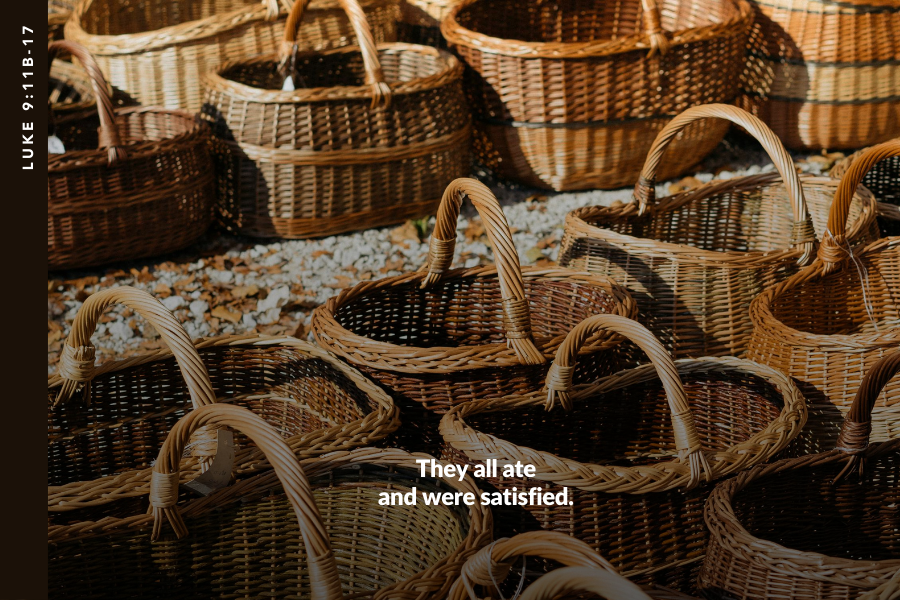
Jesus spoke to the crowds about the kingdom of God, and he healed those who needed to be cured. As the day was drawing to a close, the Twelve approached him and said, “Dismiss the crowd so that they can go to the surrounding villages and farms and find lodging and provisions; for we are in a deserted place here.” He said to them, “Give them some food yourselves.” They replied, “Five loaves and two fish are all we have, unless we ourselves go and buy food for all these people.” Now the men there numbered about five thousand. Then he said to his disciples, “Have them sit down in groups of about fifty.” They did so and made them all sit down. Then taking the five loaves and the two fish, and looking up to heaven, he said the blessing over them, broke them, and gave them to the disciples to set before the crowd. They all ate and were satisfied. And when the leftover fragments were picked up, they filled twelve wicker baskets.

Opening Prayer: Lord Jesus, I come before you in praise and adoration as I think of your total gift of yourself in your Body and Blood. I thank you that through the Eucharist you unite your people in your visible body on earth, the Church. In faith, I know you are really and truly present in the Eucharist and I thank you that I can encounter you tangibly in Holy Communion and in Eucharistic Adoration. In hope, I know the Eucharist is a hint of the heavenly banquet that you are guiding me to, and I know that your life in me through Communion increases my love for you and others. Lord, in this time of prayer, I ask you to strengthen my faith and hope in and my love for your Real Presence in the Eucharist.

Encountering Christ:

  1. Corpus Christi: At the Last Supper, Jesus said, “This is my Body.” He didn’t say “This represents my body.” In fact, in the Bread of Life discourse in John 6:55, Jesus said, “For my flesh is true food, and my blood is true drink.” Many of his disciples responded, “This saying is hard; who can accept it?” (Jn 6:60) and then “As a result of this, many [of] his disciples returned to their former way of life and no longer accompanied him” (Jn 6:66). Jesus did not call them back and try to mitigate the impact of his words. Instead, he asked those still with him, “Do you also want to leave?” (Jn 6:67). He couldn’t have spoken more clearly about the true nature of the Eucharist. But Catholics today still struggle with this truth. A widely reported Pew Research Center study showed that sixty-nine percent of all self-identified U.S. Catholics believe that the bread and wine remain as “symbols of the body and blood of Jesus Christ,” with only thirty-one percent saying they believe in the Real Presence of Jesus in the Eucharist. The U.S. Bishops, like Jesus, are continuing to insist on the truth about the Eucharist. You may have heard of their efforts in the “My Flesh for the Life of the World” campaign for a national Eucharistic revival, which is meant to renew the Church by enkindling a living relationship with the Lord Jesus Christ in the Holy Eucharist. How deep is my belief in and my devotion to Christ’s Real Presence in the Eucharist?

  2. Bringing Together Past, Present, and Future: This miracle gave witness to the reality of who Jesus was. He provided for the people abundantly out of almost nothing. In doing so, he brought to mind God providing manna for his people when they hungered in the desert. The miracle also foreshadowed the Eucharist and the heavenly banquet we hope to share in eternity. In all of these, we see that for which Jesus taught us to pray: “Give us this day our daily bread…” Christ himself is the Bread of Life and receiving this Bread “increases the communicant’s union with the Lord, forgives his venial sins, and preserves him from grave sins. Since receiving this sacrament strengthens the bonds of charity between the communicant and Christ, it also reinforces the unity of the Church as the Mystical Body” (CCC 1416). Do we see the Eucharist as our daily bread? Do we try to attend daily Mass?

  3. Bring What You Have: Dallas Jenkins, founder of the popular television series The Chosen recounted that this Gospel marked a turning point in his life. His Hollywood movie failed at the box office and effectively ended his career. As he and his wife prayed (and cried), this Scripture came to his wife, and they talked about what it could mean. Later that night, he was on the computer, and he received a message from a friend, “Remember, your job is not to feed the five thousand; it’s only to provide the loaves and fish.” When Dallas asked why he sent that message, the friend said that God told him to. The Chosen grew out of that experience of failure and that message. God wants us to bring the gifts and talents we have, no matter how little and inadequate they seem to us, for him to multiply and distribute as he desires. As St. Teresa of Calcutta said, “God has called us not to be successful, but to be faithful.” Our fear of failure or overemphasis on success can limit our willingness to give ourselves to God and thus limit his ability to work in us, multiplying our gifts, and through us, to touch and enrich the lives of others. Do we have talents or gifts that we have been unwilling to offer to the Lord? Do we have gifts or abilities that we consider insignificant and so we fail to offer them to the Lord?

Conversing with Christ: Lord, how blessed I am that you make yourself available to me in the gift of the Eucharist. It is the source and summit of Christian life, yet sometimes I can take it—you, your great gift—for granted. As the Eucharist Revival kicks off, stir in my heart a revival of love for you in the Eucharist. Open my mind and heart with awe and gratitude. Strengthen me by this gift to be able to give myself more fully to you, offering the loaves and fish of my life for you to use to build your Kingdom.

Resolution: Lord, today by your grace I will make an effort to go to an additional daily Mass or an additional hour of Adoration this week and offer it for all those who doubt the Real Presence.

For Further Reflection: See “Welcome to the National Eucharistic Revival”  and consider how you can participate in this revival. 

Janet McLaughlin and her husband, Chris, live on a mountain in rural northeastern Oregon. She puts her Master of Arts in Pastoral Studies to work as she shares the beauty and importance of the lay vocation in her writing, speaking, and teaching on spiritual topics.

June 23, 2025 – When and How to Speak

Monday of the Twelfth Week in Ordinary Time

Matthew 7:1-5

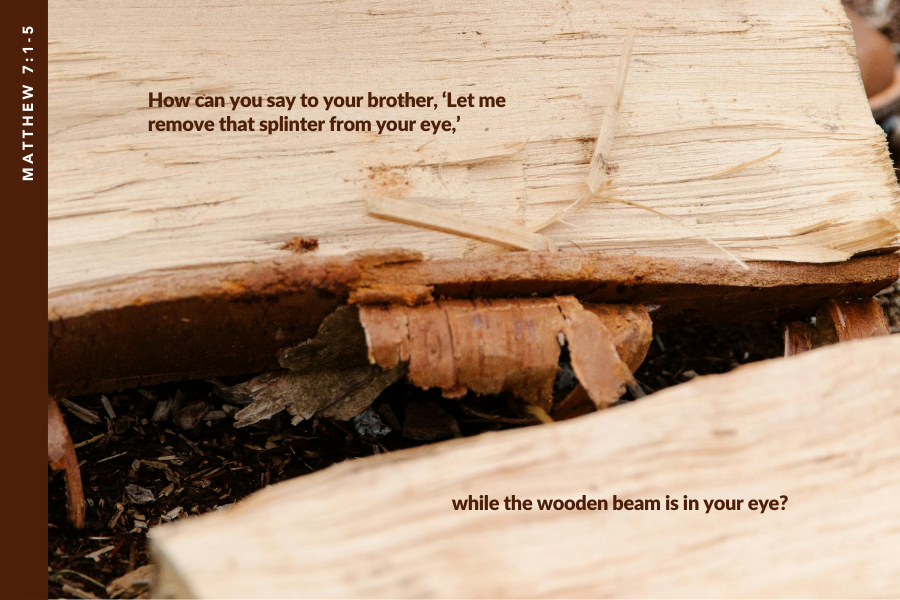
Jesus said to his disciples: “Stop judging, that you may not be judged. For as you judge, so will you be judged, and the measure with which you measure will be measured out to you. Why do you notice the splinter in your brother’s eye, but do not perceive the wooden beam in your own eye? How can you say to your brother, ‘Let me remove that splinter from your eye,’ while the wooden beam is in your eye? You hypocrite, remove the wooden beam from your eye first; then you will see clearly to remove the splinter from your brother’s eye.”

Opening Prayer: Father, I am weak and fall often, but you never leave me. You love me and desire trust in your forgiveness and mercy. Help me see myself and others through your eyes of love. Father, in this time of prayer, help me notice when I judge and condemn others while excusing my own faults. Because I know you love me, Lord, I trust you to show me. In faith, I embrace Christ’s example of trust in you and love for all humanity. Grant me the grace to live in humility, charity, and patience with those in whom I see faults.

Encountering Christ:

  1. Judging?: In this passage, we receive a very clear message about judging our neighbor: don’t do it! Yet, a few versus later (cf. Mt 7:15-19), we are encouraged to exercise critical thinking: “Beware of false prophets” and “By their fruits you will know them.” What can we take from this? While we are not to condemn others, we do need to discern what is true and good from what is false. Discernment is essential to following the Lord faithfully. In discernment, we seek God’s will so that we can unite ourselves to it and do what he is calling us to do. Part of discernment is awareness of the impact external influences have on us, and that requires evaluation or critical thinking. We ask ourselves if that influence draws us closer or leads away from God, even incrementally. As we consider the influences in our life, we ask, “Does it conform to the truth as taught by Holy Mother Church? Does it encourage individualism and self-sufficiency or does it encourage dependence on and obedience to Christ?”

  2. Humility and Charity: Why does it often seem that we more easily see what others do wrong than what they do right? Humility and charity go hand in hand. Humility lets us see our own weaknesses and faults and sympathize with others. Humility lets us recognize our own need for God’s mercy and so understand and forgive the faults of others. God alone knows the whole story behind someone’s behavior. We should try to focus on the other’s good points, one’s virtues, and to excuse one’s faults as much as possible, and when we can’t excuse them, to follow the advice of St. Francis de Sales: “… let us at least make it worthy of compassion by attributing the most favorable cause we can to it, such as ignorance or weakness” (Introduction to the Devout Life, III, 28). We are called to love as Christ loved, and his love was not dependent upon behavior. In charity, we pray for others, and we sacrifice in reparation for their actions.

  3. Speaking in Charity: A key element of the Christian life is charity in speech. Some of us may remember being told that when we speak of others, we should ask, “Is it true? Is it kind or good? Is it necessary or useful?” If what we want to say doesn’t pass all three tests, we don’t say it. However, at times, we may be called to gentle, fraternal correction (cf. Mt 18:15-17). Charity, and particularly charity in speech, does not mean avoiding all possible conflict. Sometimes we have to speak up about an injustice or damaging behavior. In fact, the Catechism identifies fraternal correction as a demand of charity (cf. CCC 1829), and that charity must be evident in what is said. This requires self-examination of one’s motives and humility about one’s own faults. One must pray for strength and patience to respond to any anger with humility and charity. Further, one must always be prepared to receive fraternal correction with charity and humility, difficult though it may be.

Conversing with Christ: Lord, when I look at your life, I see your love for those who opposed you, those who tortured you, and those who put you to death. No one was outside the reach of your love. Even when your disciples squabbled among themselves about who was the greatest or wanted to call down fire down on those who wouldn’t welcome them, you loved them and had patience with them. Help me have that same kind of patience with those who are different from me, with those in whom I find fault. Help me to love them as you loved them. Open my heart to see my own weakness and so grow in understanding and mercy for others.

Resolution: Lord, today by your grace I will be particularly attentive to my thoughts and speech today and strive to speak encouraging, uplifting words to others. When I find myself dwelling on negative thoughts, I will pray the Jesus Prayer, “Lord Jesus Christ, Son of God, have mercy on me, a sinner.”

Janet McLaughlin and her husband, Chris, live on a mountain in rural northeastern Oregon. She puts her Master of Arts in Pastoral Studies to work as she shares the beauty and importance of the lay vocation in her writing, speaking, and teaching on spiritual topics.

June 24, 2025 – The Blessing of Mission

Solemnity of the Nativity of St. John the Baptist

Luke 1:57-66, 80

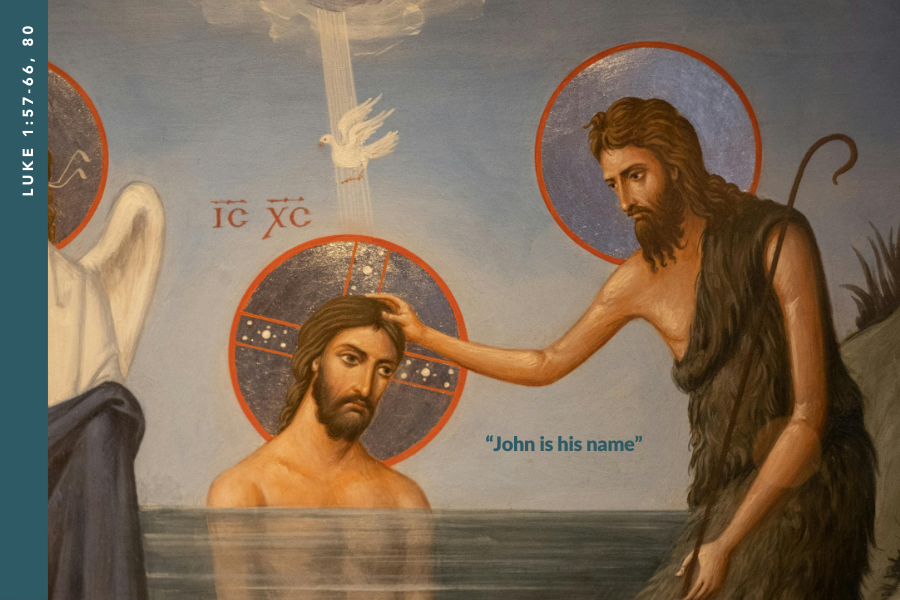
When the time arrived for Elizabeth to have her child she gave birth to a son. Her neighbors and relatives heard that the Lord had shown his great mercy toward her, and they rejoiced with her. When they came on the eighth day to circumcise the child, they were going to call him Zechariah after his father, but his mother said in reply, “No. He will be called John.” But they answered her, “There is no one among your relatives who has this name.” So they made signs, asking his father what he wished him to be called. He asked for a tablet and wrote, “John is his name,” and all were amazed. Immediately his mouth was opened, his tongue freed, and he spoke blessing God. Then fear came upon all their neighbors, and all these matters were discussed throughout the hill country of Judea. All who heard these things took them to heart, saying, “What, then, will this child be?” For surely the hand of the Lord was with him. The child grew and became strong in spirit, and he was in the desert until the day of his manifestation to Israel.

Opening Prayer:  Lord, I offer you this moment of prayer as an act of love for you. I lift up my heart with praise and thanksgiving for all the gifts you have given me, especially for the gift of faith and the hope of eternity with you. Lord, I believe that you provide me with all I need to grow closer to you and to live a life that honors you. I ask for the grace to be able to recall all that you have done in my life to draw me closer to you so that I can thank you and grow in my trust of your faithful presence in my life.

Encountering Christ:

  1. What, Then, Will This Child Be?:  Other than the birthdays of Jesus and Mary, the only birthday celebrated during the liturgical year is John the Baptist’s, and it is not only celebrated, it is a solemnity. Jesus himself said, “I tell you, among those born of women no one is greater than John” (Lk 7:28). Yet, at this moment of his circumcision, the question was “What, then, will this child be? For surely the hand of the Lord was with him.” In this case, the angel had told Zechariah that John had a particular mission (cf. Lk 1:15-17). Zechariah and Elizabeth then had the task of helping John prepare for this God-given mission. In a sense, all parents and relatives wonder as they look at a new baby what the child will become. We have hopes and dreams for them. As parents or godparents, and grandparents, we are called to help them realize their personal vocation, their God-given mission (John Paul II, Christifideles Laici, 58) so that every child can one day become a saint.

  2. Blessing God: Zechariah had been mute all the months of Elizabeth’s pregnancy as a consequence of his disbelief in the angel’s message foretelling the pregnancy and John’s mission (cf. Lk 1:20). Here when he affirmed that the child’s name was to be John, he could speak and he blessed God. These words of his blessing form a canticle called the Benedictus, which is prayed daily as part of Morning Prayer in the Liturgy of the Hours (Lk 1:67-79). Zechariah’s words celebrate not only the birth of John but the hope of Israel. They celebrate God’s redemption and mercy, the fact that God fulfills his promises; he forgives us and saves us, and that “we can be holy and righteous in his sight.”

  3. He Grew and Became Strong in Spirit…: Just as Jesus had to “advance in wisdom and age and favor” (Lk 2:52), so too John had to grow and become strong in spirit. It should be no surprise then that our faith journey requires growth. One of the greatest aids to growth in our Christian life can be spiritual direction. The Lord loves each person individually and personally. In spiritual direction, the director helps an individual recognize and be attentive to God’s communication so that the directee can grow in intimacy with him and follow him more closely. The director accompanies and encourages the directee in their Christian walk.

Conversing with Christ: Lord, there are so many ways to be complacent. I can forget that every good thing comes from your hand. I can forget that your love for me is personal. I can doubt that you will provide what I need. I can focus on my will and not yours. I can forget to spend time in praise, thanksgiving, and adoration. Lord, thank you for your love and forgiveness in the face of my weakness and self-centeredness. Help me grow in my generosity and desire to love with my whole heart, to love you in a way that orders my life.

Resolution: Lord, today by your grace I will pray the words of Zechariah’s canticle in Luke 1:67-79 and share with someone one way that the Lord has acted in my life.

Janet McLaughlin and her husband, Chris, live on a mountain in rural northeastern Oregon. She puts her Master of Arts in Pastoral Studies to work as she shares the beauty and importance of the lay vocation in her writing, speaking, and teaching on spiritual topics.

June 25, 2025 – Bear Good Fruit

Wednesday of the Twelfth Week in Ordinary Time

Matthew 7:15-20

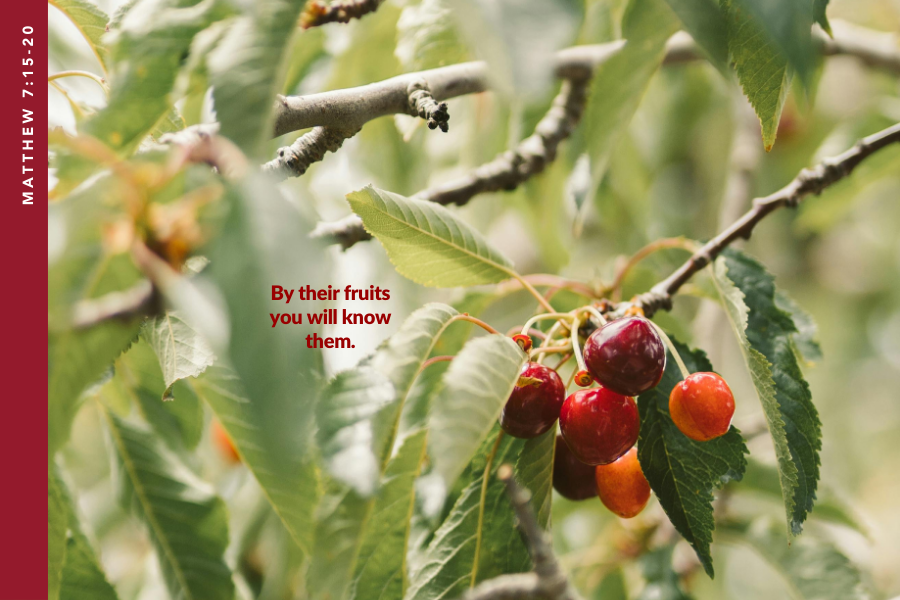
Jesus said to his disciples: “Beware of false prophets, who come to you in sheep’s clothing, but underneath are ravenous wolves. By their fruits you will know them. Do people pick grapes from thorn bushes, or figs from thistles? Just so, every good tree bears good fruit, and a rotten tree bears bad fruit. A good tree cannot bear bad fruit, nor can a rotten tree bear good fruit. Every tree that does not bear good fruit will be cut down and thrown into the fire. So by their fruits you will know them.”

Opening Prayer: Lord help me to deeply embrace your teaching in these lines of Scripture so that, by your grace, I produce only good fruit.

Encountering Christ:

  1. Beware: False prophets have always plagued believers. These days, many succumb to  false prophets such as politicians, Hollywood stars, or Instagram influencers. The fruits of these prophets are divisiveness, confusion, loneliness, and disorientation. People look for God on apps like HeadSpace, in meditation closets, or exercise classes, completely missing that God revealed himself in the person of Jesus Christ. Our Lord counseled us to “beware” of these “rotten trees.” Like all false prophets, these lead us away from truth and happiness. If we partake of their fruit, we will not experience the peace and joy Our Lord wants to give us.

  2. Bearing Good Fruit: Jesus said good trees bear good fruit and cannot bear rotten fruit. Spiritually speaking, why is this so? Because good trees are rooted in Christ and fed by the Spirit. They know they owe their existence to God and give glory to him in their goodness. The fruit they bear is the spiritual consequence of a life aligned with God’s will for them. Their fruit is God’s doing, not theirs.

  3. You Will Know Them:  If it’s possible to know false prophets by their bad fruit, why are so many people taken in by them? One possibility is that people choose the “low-hanging bad fruit” over the less accessible good fruit. To discern good fruit from bad fruit, we must know Jesus Christ. We have to put some effort into reading, studying, asking questions—in other words, seeking—and praying. As we draw closer to Christ he gives us ways to discern good fruit from bad fruit, and good trees from bad ones. As we grow in holiness, not only do we more easily recognize good fruit, but by his work within us, we bear good fruit of our own, such as forgiveness, humility, chastity, love, mercy, and self-control.

Conversing with Christ:  Lord, false prophets abound, and their fruit seems attractive and satisfying. Protect me and those I love from consuming bad fruit. May your presence be so powerful within me that I cannot help but bear good fruit for your glory.

Resolution: Lord, today by your grace I will ardently pray for the leaders in our world who are drawing people away from the Gospel.

For Further Reflection: CCC 1832: The fruits of the Spirit are perfections that the Holy Spirit forms in us as the first fruits of eternal glory. The tradition of the Church lists twelve of them: charity, joy, peace, patience, kindness, goodness, generosity, gentleness, faithfulness, modesty, self-control, and chastity.

Maribeth Harper celebrated paying the last tuition bill for her kids’ college by writing a book for parents who have college-aged young adults; A Spiritual Toolbox: Tips for Parenting through the First Year of College. She is a wife of thirty-five years, mother of four, and grandmother of twelve and counting.
 

June 26, 2025 – Built to Last

Thursday of the Twelfth Week in Ordinary Time

Matthew 7:21-29

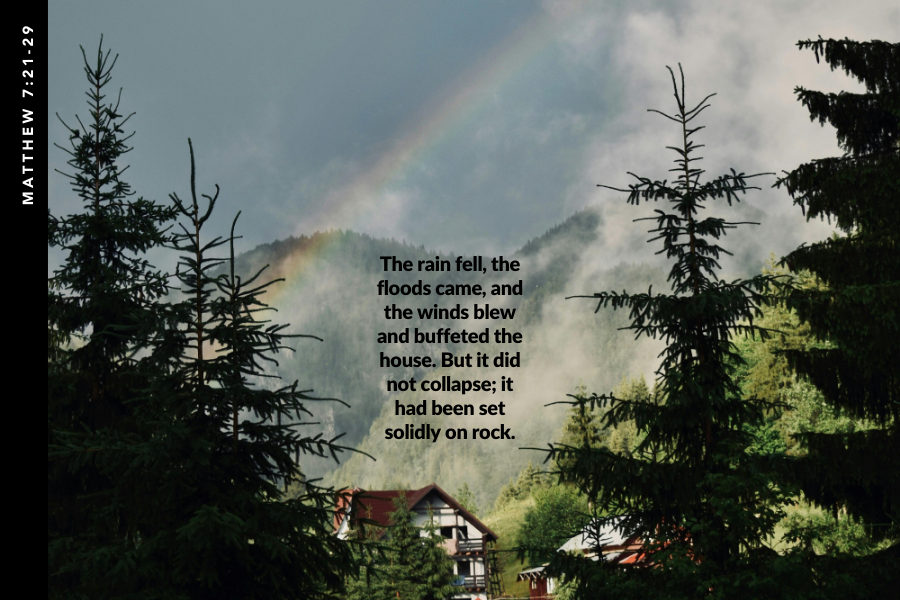
Jesus said to his disciples: “Not everyone who says to me, ‘Lord, Lord,’ will enter the Kingdom of heaven, but only the one who does the will of my Father in heaven. Many will say to me on that day, ‘Lord, Lord, did we not prophesy in your name? Did we not drive out demons in your name? Did we not do mighty deeds in your name?’ Then I will declare to them solemnly, ‘I never knew you. Depart from me, you evildoers.’ Everyone who listens to these words of mine and acts on them will be like a wise man who built his house on rock. The rain fell, the floods came, and the winds blew and buffeted the house. But it did not collapse; it had been set solidly on rock. And everyone who listens to these words of mine but does not act on them will be like a fool who built his house on sand. The rain fell, the floods came, and the winds blew and buffeted the house. And it collapsed and was completely ruined.” When Jesus finished these words, the crowds were astonished at his teaching, for he taught them as one having authority, and not as their scribes.

Opening Prayer: I lift up the eyes of my heart to seek your face, Lord. I open my mouth to speak out your praise. I believe in your goodness and your interest in my life, and so I come to you today full of hope. You will enlighten me. You will guide and strengthen me. You will never abandon me. I want my life to give you glory, to shine with your wisdom and love. As I turn to you, Lord, I humbly ask you to turn once again to me and fill me and heal me with your grace.

Encountering Christ:

  1. A Shocking Surprise: Jesus explains that on Judgment Day, when everyone’s eternal destiny is revealed, there may be some surprises. Some people who invoked him as Lord and even performed wondrous deeds in his name will hear him say: “I never knew you. Depart from me, you evildoers.” The key phrase is the first one: “I never knew you.” The very essence of salvation is a relationship with God. Jesus came to earth in order to reestablish the possibility of our living in friendship with God through him. God is interested in us as human beings. God wants us to live with him now and for all eternity in a dynamic communion of mutual knowledge and love. That’s what really matters. It matters even more than prophesying and driving out demons and performing miracles. We can, so Jesus seems to be telling us through this passage, so easily lose sight of what is essential and become thoroughly disoriented. We can become so enamored of our great deeds and achievements, that we cut ourselves off from simple friendship with Christ, which is the greatest thing of all. Jesus doesn’t want that to happen. And so he gives us this warning: “I never knew you…” Let us not get tangled up in understanding how someone could invoke the Lord’s name without actually living a real friendship with the Lord. Rather, let us pay close attention to our own life journey, so that no matter how much we accomplish, we never lose sight of who Jesus wants us to be: his friends and companions now and for all eternity.

  2. The Right Kind of Success: Success in Christ’s eyes is very different from success in the world’s eyes. In a certain sense, success in Christ’s eyes is measured precisely by how we respond to failures in the world’s eyes. Both the house built on sand and the one built on rock are bound to suffer storms. Something terrible—some kind of failure or disaster—is going to strike both of them. In the face of that storm, the house built on sand will collapse, and the house built on rock will endure. If we are putting our faith in Jesus and making our day-to-day decisions in accordance with his wisdom and grace, we are building our lives on rock. And so, even when persecution comes, or rejection, or any kind of suffering, we will be ready for it. And because we are anchored in Christ’s truth and love, we will stand strong in the face of it. That, in Christ’s eyes, is success. Not vast amounts of wealth, not immense popularity, not power and pleasure—those things are secondary at best. They are not bad in themselves, but they will never fill our hearts with the stuff of lasting happiness. If we organize our lives seeking fulfillment in anything besides our relationship with Christ, eventually the storm will come and we will be sorely disappointed, maybe even for all eternity, if we don’t repent in time. And that is the only real failure we need be afraid of: “The rain fell, the floods came, and the winds blew and buffeted the house. And it collapsed and was completely ruined.”

  3. The Ball Is in My Court: Jesus leaves it up to us to determine our eternal destiny. He tells us clearly, unambiguously, that each one of us has a choice about how we will live our lives. We can build on sand or we can build on rock. We can decide to follow Jesus in the decisions we make on a daily basis, or we can decide not to. We should pause for a moment just to consider how awesome a gift our freedom really is. Even God himself will not force us to live life the way we are meant to live it. Instead, he gives us the capacity to choose the right path, and he does many things to try and convince us to make that choice, but he leaves us truly free to choose for ourselves. And we can’t just go through the motions. That’s what those who called Jesus “Lord, Lord” seemed to do. On the surface, they did everything to appear as if they were followers of Jesus. But they didn’t actually “do the will of [his] Father in heaven.” Wishful thinking doesn’t actually transform our lives. Making a good, though superficial, impression on others doesn’t actually transform our lives. Choosing to trust Jesus and so battling each day to think, speak, and act as he would have us is what gives God’s grace room to continue transforming our lives. Jesus wasn’t just pretending when he instructed us to pray by saying, “Thy kingdom come, thy will be done on earth as it is in heaven.” As one Baptist minister (G. W. Truett) once famously said: “Knowing God’s will is the greatest knowledge; finding God’s will is the greatest discovery; doing God’s will is the greatest achievement.”

Conversing with Christ: I want to build my life on rock, Lord. I want to know your will and embrace your will every single moment of my life. I want to be content with only your will—what you give me each moment and what you ask of me each moment. Your will is the place I encounter you, the place where your love reaches out to me, the place where I show you that I love you by trusting in you. Teach me, Lord, to follow where you lead. Teach me to recognize your voice. May you alone, O Lord, be the whole quest of my heart (cf. Psalm 119:2).

Resolution: Lord, today by your grace I will take some time at the end of the day to speak with Jesus about how he sees the decisions and choices I made. I will listen to his voice in my heart to learn how I can be sure to build my life on the solid rock of God’s will each day.

For Further Reflection: Spiritual Smoothie: What Is God’s Will? 

Fr. John Bartunek, LC, is an author, speaker, and Creative Director at RCSpirituality.org, an online spirituality center providing a variety of resources for spiritual growth.

June 27, 2025 – Furnace of Love

Solemnity of the Most Sacred Heart of Jesus

Luke 15:3-7

Jesus addressed this parable to the Pharisees and scribes: “What man among you having a hundred sheep and losing one of them would not leave the ninety-nine in the desert and go after the lost one until he finds it? And when he does find it, he sets it on his shoulders with great joy and, upon his arrival home, he calls together his friends and neighbors and says to them, ‘Rejoice with me because I have found my lost sheep.’ I tell you, in just the same way there will be more joy in Heaven over one sinner who repents than over ninety-nine righteous people who have no need of repentance.”

Opening Prayer: Lord Jesus, on this Solemnity of your Most Sacred Heart, I come before you with the desire to love you more deeply and passionately. Lord, I believe that your heart is on fire with love for me—not just for me as part of the whole of creation, but me. I trust in your love that always reaches out to me and echoes in my heart, calling me to return to you when I stray. I ask you for the grace to experience your love and return your love more faithfully.

Encountering Christ:

  1. Just One: To someone whose livelihood was based upon his flock, the loss of even one of his sheep would be significant. Therefore, the shepherd didn’t wait and hope the lost sheep wandered back to the flock; the shepherd left the flock and searched until he found the one that was lost. In the same way, Our Lord seeks out each one of us. The Catechism points to the Sacred Heart as “the chief sign and symbol” of God’s love because “Jesus knew and loved us each and all…and gave himself up for each one of us” (CCC 478). Conversion is an ongoing process, for “Christ’s call to conversion continues to resound in the lives of Christians” (CCC 1428). Thus, Christ is seeking each of us so that we might grow in our union with him through repentance and love. When our loved ones have strayed, we know that Jesus diligently seeks them out. With gratitude and confidence, we pray in intercession for everyone who has strayed from the fold.

  2. Reparation: St. Margaret Mary Alacoque, who is recognized as the “Apostle of Devotion to the Sacred Heart,” advised that we not only repent and make reparation for our own sins, but that we respond to a request Jesus made in a vision. He asked that we make reparation for the ingratitude, irreverence, sacrileges, coldness, disdain, and sins of others, particularly on the First Friday of each month. St. John Paul II referred to reparation as “apostolic cooperation in the salvation of the world” (On the 100th Anniversary of the Consecration of the Human Race to the Divine Heart of Jesus).

  3. Burning Hearts:
     The image of the Sacred Heart shows Christ’s burning love for mankind. Often holy cards of the Sacred Heart will include the phrase, “Here is the heart that loved men so much” or “Sacred Heart of Jesus, burning with love of us, inflame our hearts with love of Thee.” We heard the disciples experiencing this when they encountered the risen Christ on the road to Emmaus: “Were not our hearts burning [within us] while he spoke to us…” (Lk 24:32). St. John Paul II wrote, “… From the Heart of Christ, man’s heart learns to know the genuine and unique meaning of his life and of his destiny, to understand the value of an authentically Christian life, to keep himself from certain perversions of the human heart, and to unite the filial love of God with love of neighbor” (On the 100
    th Anniversary). Do I encounter Christ in such a way that I feel my heart burning within me? Does my heart burn with zeal to share the love of Christ with others?

Conversing with Christ: Lord, I know you love me, and when I stray, you seek me out. There is so much for which I need to offer reparation: my lack of charity in dealing with others, my complacency about venial sins, my sloth, my wastefulness. Teach me to offer the challenges and sacrifices of the day in reparation for my sins and for the lack of love for you that is so prevalent in society today. Enflame my heart so that I desire to reach out to my neighbor with your love.

Resolution: Lord, today by your grace I will offer any sacrifices I experience in reparation for all those baptized Catholics who no longer receive the sacraments.

For Further Reflection: Learn more about the Sacred Heart devotion.

Janet McLaughlin and her husband, Chris, live on a mountain in rural northeastern Oregon. She puts her Master of Arts in Pastoral Studies to work as she shares the beauty and importance of the lay vocation in her writing, speaking, and teaching on spiritual topics.

June 28, 2025 – Family Life: School of Holiness

Memorial of the Immaculate Heart of the Blessed Virgin Mary

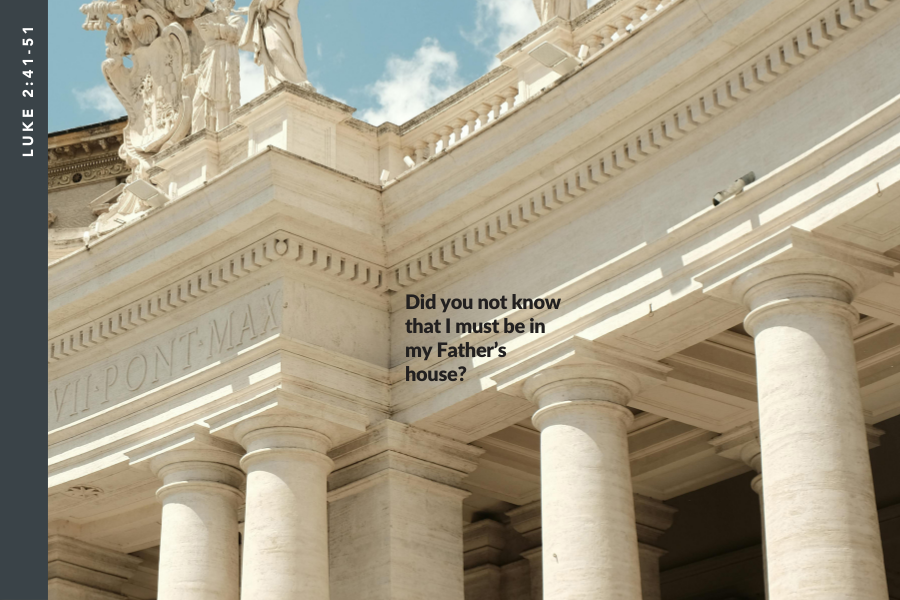
Luke 2:41-51

Each year Jesus’ parents went to Jerusalem for the feast of Passover, and when he was twelve years old, they went up according to festival custom. After they had completed its days, as they were returning, the boy Jesus remained behind in Jerusalem, but his parents did not know it. Thinking that he was in the caravan, they journeyed for a day and looked for him among their relatives and acquaintances, but not finding him, they returned to Jerusalem to look for him. After three days they found him in the temple, sitting in the midst of the teachers, listening to them and asking them questions, and all who heard him were astounded at his understanding and his answers. When his parents saw him, they were astonished, and his mother said to him, “Son, why have you done this to us? Your father and I have been looking for you with great anxiety.” And he said to them, “Why were you looking for me? Did you not know that I must be in my Father’s house?” But they did not understand what he said to them. He went down with them and came to Nazareth, and was obedient to them; and his mother kept all these things in her heart.

Opening Prayer: Mother, I come before you as your beloved child. You guided your son, Jesus, and you desire to guide me as well. In your freedom from original sin, you are what we were all meant to be. Let me see in your example what it means to live a fully human life and then help me grow in those virtues I most need to follow your Son so that I may live as the person he created me to be and grow in union with his holy will for my life.

Encountering Christ:

      1. The Anxiety of a Mother: It is easy to imagine the fear that Mary and Joseph felt when they could not find Jesus among those with whom they traveled and how that fear increased as they searched Jerusalem for three days before finding Jesus. Mary asked him, “Son, why have you done this to us? Your father and I have been looking for you with great anxiety.” They embodied this definition of parenthood: “Parenthood is when a piece of your heart lives outside your body.” On today’s feast of the Immaculate Heart we can consider that, in the image of the Immaculate Heart, Mary’s heart is shown outside her body. Her whole heart lives outside her body because of her fire of love for God and the fire of her love for each of us. She is our Mother. We were given to her and her to us by Jesus as one of his last acts from the cross (cf. Jn 19:26-27); Mary’s “spiritual motherhood extends to all men whom indeed (Jesus) came to save…” (CCC 501), and she intercedes for us before God in order to obtain the necessary graces for our salvation (Lumen Gentium, 62). We are pieces of Mary’s maternal heart living in the world. She loves us and watches over us. We can ask her to form us as she formed Jesus.

      2. In Her Heart: The last words of any member of the Holy Family until Jesus began his public ministry were Jesus’ words to his parents: “Did you not know I must be in my Father’s house?” Some translations say, “…that I must be about my Father’s business?” After this, they lived the hidden years, during which Mary “kept or pondered these things in her heart.” During this time, Jesus was obedient and he “advanced [in] wisdom and age and favor before God and man” (Lk 2:52). The Catechism quotes St. Paul VI in describing the home of Nazareth as “the school of the Gospel.” The first lesson of that school, he said, is silence. He continued, “May esteem for silence, that admirable and indispensable condition of mind, revive us…” (CCC 533). How do we teach the value of silence to our children and what priority do we give to silence ourselves?

      3. The Hidden Years: In these hidden years—the longest part of Jesus’ life—he “shared the condition of the vast majority of human beings, a daily life spent without evident greatness, a life of manual labor (CCC 531). His life was simple, encompassing the things that make up life for most of us: family meals, chores, religious services together, family fun. In fact, the Church teaches that “The hidden life at Nazareth allows everyone to enter into fellowship with Jesus by the most ordinary events of daily life (CCC 533). Our ordinary daily life matters. According to St. John Eudes, it was Jesus’ plan “to make us and the whole Church partake in his mysteries and to extend them to and continue them in us…This is his plan for fulfilling his mysteries in us” (CCC 521). When we live our family life well, we make Christ present, and we extend his mysteries to today’s world.

Conversing with Christ: Jesus, thank you for the gift of your Mother. Thank you for entrusting me to her maternal care. Thank you for the beautiful image of the Holy Family and for sanctifying marriage and family life. Help me remember that the day-in and day-out of family life matters and that it is an essential part of living my Christian vocation to witness to the Gospel. Life is so busy that it is hard to think of family life and silence as belonging together; Lord, today I feel challenged to see how silence might become a part of our family life—even if it just starts with a minute or two before we begin grace or bedtime prayers.

Resolution: Lord, today by your grace I will pray a decade of the rosary with my family (or invite my roommates to pray a decade with me), starting first with a minute or two of silence and closing with this adaptation of the Prayer for the Synod on the Family (2013):

Jesus, Mary and Joseph, in you we contemplate the splendor of true love, to you we turn with trust.

Holy Family of Nazareth, grant that our families too may be places of communion and prayer, authentic schools of the Gospel and small domestic Churches.

Holy Family of Nazareth, may families never again experience violence, rejection, and division: may all who have been hurt or scandalized find ready comfort and healing.

Holy Family of Nazareth, make us more mindful of the sacredness and inviolability of the family, and its beauty in God’s plan.

Jesus, Mary, and Joseph, graciously hear our prayer.

Janet McLaughlin and her husband, Chris, live on a mountain in rural northeastern Oregon. She puts her Master of Arts in Pastoral Studies to work as she shares the beauty and importance of the lay vocation in her writing, speaking, and teaching on spiritual topics.

June 29, 2025 – Love for the Church

Solemnity of Saints Peter and Paul, Apostles

Matthew 16:13-19

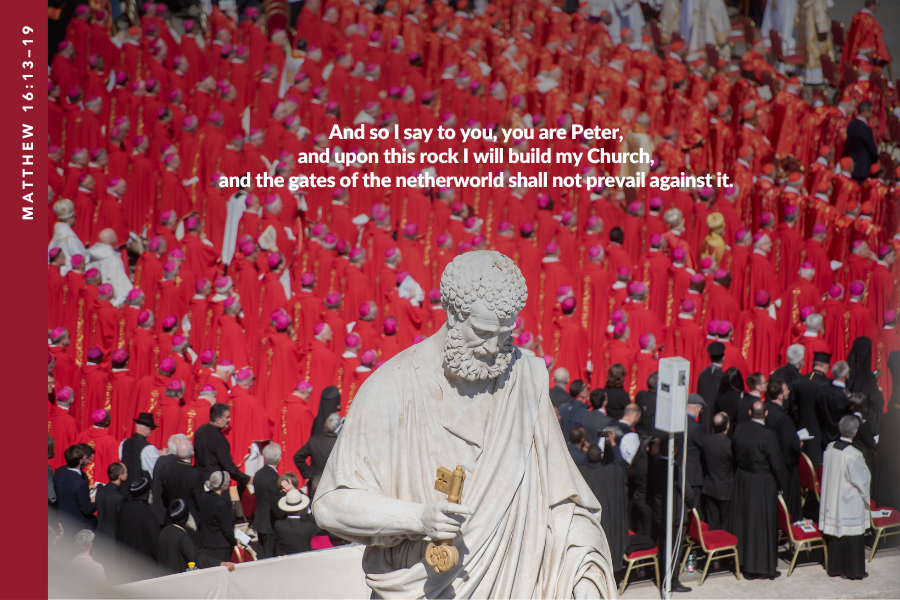
When Jesus went into the region of Caesarea Philippi he asked his disciples, “Who do people say that the Son of Man is?” They replied, “Some say John the Baptist, others Elijah, still others Jeremiah or one of the prophets.” He said to them, “But who do you say that I am?” Simon Peter said in reply, “You are the Christ, the Son of the living God.” Jesus said to him in reply, “Blessed are you, Simon son of Jonah. For flesh and blood has not revealed this to you, but my heavenly Father. And so I say to you, you are Peter, and upon this rock I will build my Church, and the gates of the netherworld shall not prevail against it. I will give you the keys to the Kingdom of Heaven. Whatever you bind on earth shall be bound in Heaven; and whatever you loose on earth shall be loosed in Heaven.”

Opening Prayer: Lord, help me to open my heart to understand more deeply who you are as I spend this time in prayer.

Encountering Christ:

  1. Spiritual Rock Stars: Sts. Peter and Paul are arguably the most important and influential men in the Church and the world, one our first pope, and the other an apostle to the Gentiles. What made them great was not their talent, personalities, or intelligence. They were leaders and saints because they cooperated with the Holy Spirit to do the will of the Lord. This passage gives us an early example of Peter’s sensitivity to the Spirit. He declared Jesus was the son of God, and Jesus called him “blessed,” adding, “Flesh and blood has not revealed this to you, but my heavenly Father.” We need not have a superior intelligence or a winning personality to become a saint. We will be holy to the degree we cooperate with the Holy Spirit in fulfilling God’s will for our lives.

  2. Our Story of Conversion: In these verses, we are introduced to Peter, the Rock. No longer Simon, Peter is now the foundation of the new Church and the keeper of the keys to the Kingdom of Heaven. We can imagine Peter’s awe at having had such a powerful experience of the Spirit, his surprise at the words of Jesus’ anointing, and perhaps a bit of trepidation at the responsibility to bind and loose, if he even understood it at that moment. Peter’s whole ministry was ahead of him, and he likely felt zealous and empowered. We can presume so, because a few verses later Peter was rebuked by Jesus when he boldly objected to the prediction of Jesus’ Passion (cf. Mt 16:22-23). In today’s second reading we heard Paul speaking toward the end of his ministry about being “poured out like a libation” (2 Tim 4:6). Paul was looking back over his life’s work, affirming that “the Lord stood by me and gave me strength, so that through me the proclamation might be completed and all the Gentiles might hear it” (2 Tim 4:17). Their story of their journey from obscurity to sainthood is our story too. Like Peter and Paul, we one day awoke to the Spirit-filled realization that we are personally, unconditionally loved by God. Over time, we exchanged our initial zealousness for a faithful determination to accomplish our unique, unrepeatable mission. We are strengthened by prayer, the sacraments, and our community of believers, until one day we say, like St. Paul, “I have competed well; I have finished the race; I have kept the faith” (2 Tim 4:7). As we work day after day in the Church’s field hospital (cf. Pope Francis, February 5, 2015), may we draw consolation from these words of St. Paul: “From now on the crown of righteousness awaits me, which the Lord, the just judge, will award to me on that day, and not only to me, but to all who have longed for his appearance” (2 Tim 4:8).

  3. The Papacy: Jesus gave Peter the keys to the Kingdom of Heaven and the power to bind and loose. With these few words, Jesus revealed much about the future Roman Catholic Church. According to the Catechism 553, “The ‘power of the keys’ designates authority to govern the house of God, which is the Church. Jesus, the Good Shepherd, confirmed this mandate after his Resurrection: ‘Feed my sheep.’ The power to ‘bind and loose’ connotes the authority to absolve sins, to pronounce doctrinal judgments, and to make disciplinary decisions in the Church. Jesus entrusted this authority to the Church through the ministry of the Apostles and in particular through the ministry of Peter, the only one to whom he specifically entrusted the keys of the Kingdom.” Since these words were spoken by Jesus, there has been an unbroken succession of popes leading our Church. We pray for our Holy Father at every Mass and, out of love for the Church, we also include his intentions in our personal prayer.

Conversing with Christ: Lord, you founded the Church on Peter the Rock and named Paul Apostle to the Gentiles. They had illustrious roles in your divine plan for the Church. Help me to appreciate my role in the Church as well. You have called me to the faith and placed me in my parish, my community, and my family as a member of the Church, for which you are the living Head. By your grace, may I spread the Kingdom and be a fruitful member of the Church.

Resolution: Lord, today by your grace I will offer an Our Father, Hail Mary, and Glory Be for the Holy Father.

For Further Reflection: Catechism Article 9: “I BELIEVE IN THE HOLY CATHOLIC CHURCH.

Maribeth Harper celebrated paying the last tuition bill for her kids’ college by writing a book for parents who have college-aged young adults, A Spiritual Toolbox: Tips for Parenting through  the First Year of College. She is a wife of thirty-five years, mother of four, and grandmother of twelve and counting.
Scroll to Top

Events

Looking for another country?

Contact Regnum Christi near you

News & Resources

News & Resources

The Regnum Christi Mission

The Regnum Christi Identity

Alex Kucera

Atlanta

Alex Kucera has lived in Atlanta, GA, for the last 46 years. He is one of 9 children, married to his wife Karmen, and has 3 girls, one grandson, and a granddaughter on the way. Alex joined Regnum Christi in 2007. Out of the gate, he joined the Helping Hands Medical Missions apostolate and is still participating today with the Ghana Friendship Mission.

In 2009, Alex was asked to be the Atlanta RC Renewal Coordinator for the Atlanta Locality to help the RC members with the RC renewal process. Alex became a Group Leader in 2012 for four of the Atlanta Men’s Section Teams and continues today. Running in parallel, in 2013, Alex became a Team Leader and shepherded a large team of good men.

Alex was honored to be the Atlanta Mission Coordinator between 2010 to 2022 (12 years), coordinating 5-8 Holy Week Mission teams across Georgia. He also created and coordinated missions at a parish in Athens, GA, for 9 years. Alex continues to coordinate Holy Week Missions, Advent Missions, and Monthly missions at Good Shepherd Catholic Church in Cumming, GA.

From 2016 to 2022, Alex also served as the Men’s Section Assistant in Atlanta. He loved working with the Men’s Section Director, the Legionaries, Consecrated, and Women’s Section leadership teams.

Alex is exceptionally grateful to the Legionaries, Consecrated, and many RC members who he’s journeyed shoulder to shoulder, growing his relationship with Christ and others along the way. He knows that there is only one way, that’s Christ’s Way, with others!