Memorial of Saint Francis de Sales, Bishop and Doctor of the Church
Mark 3:22-30
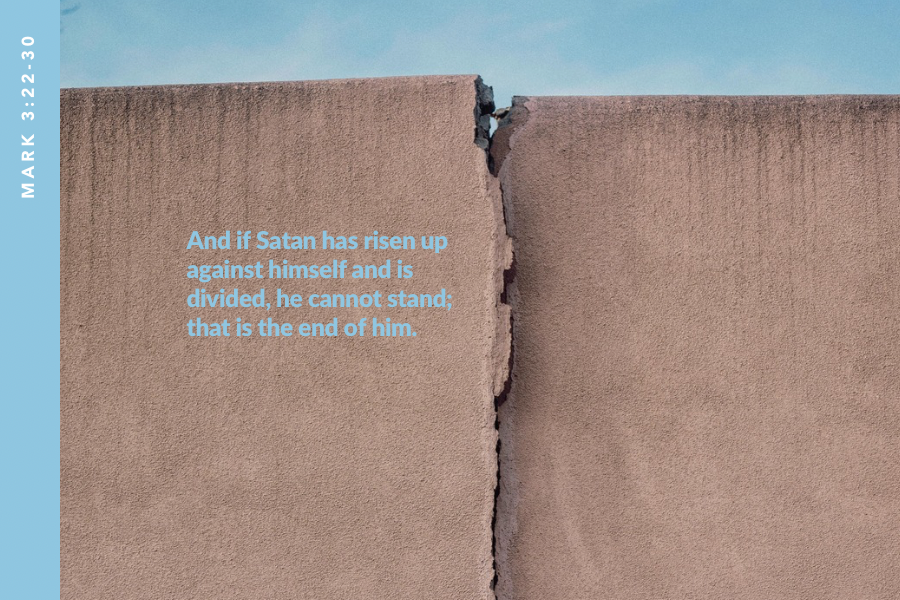
The scribes who had come from Jerusalem said of Jesus, “He is possessed by Beelzebul,” and “By the prince of demons he drives out demons.” Summoning them, he began to speak to them in parables, “How can Satan drive out Satan? If a kingdom is divided against itself, that kingdom cannot stand. And if a house is divided against itself, that house will not be able to stand. And if Satan has risen up against himself and is divided, he cannot stand; that is the end of him. But no one can enter a strong man’s house to plunder his property unless he first ties up the strong man. Then he can plunder his house. Amen, I say to you, all sins and all blasphemies that people utter will be forgiven them. But whoever blasphemes against the Holy Spirit will never have forgiveness, but is guilty of an everlasting sin.” For they had said, “He has an unclean spirit.”
Opening Prayer: Lord Jesus, grant me the grace to be your humble servant, attentive to my faults and full of hope in the promise that you will be with me always, until the end of the age. Thank you for sending your advocate to be the sweet guest of my soul as I make my pilgrim’s journey towards you.
Encountering Christ:
1. Strong Man: At the age of thirty, David was anointed king, and the first reading proclaimed that he grew in power since the Lord was with him. David cultivated the gifts he was given, and his strength, already legendary since his slaying of Goliath, grew immeasurably throughout his forty-year reign. This strong man, however, when he eventually let down his guard, allowed sin to enter in—first lust, then sins of the flesh, then even murder of the tragic figure Uriah. Did the Lord abandon this strong man, leaving him to his own devices? No, David turned his gaze away and fell. Our history of salvation includes many such fallen men and women. Thankfully, David, a man after God’s own heart, came to terms with his evil deeds, and showed each of us how to be meek and humble before God.
2. Merciful Messiah: The Pharisees wanted to detract from Jesus to keep their own power over the people. They desperately wanted to discredit his works of mercy: “the blind regain their sight, the lame walk, lepers are cleansed, the deaf hear, the dead are raised, and the poor have the good news proclaimed to them” (Mt 11:5). The Pharisees knew that these were the works of the Messiah that Isaiah had prophesied (cf. Isa 29:17-19, 26:19, 35:5-6). We recognize Jesus as our merciful Messiah, and we have the honor and joy to continue his redemptive mission through our own works of mercy.
3. The Sweet Guest: The scribes accused Jesus of having an unclean spirit because they did not understand that his power over demons, over illness, even over death, came from the God that they exhaustively studied but did not yet adequately understand. We can make similar mistakes when we fail to attribute our blessings to God, commit offenses against him, and conclude that he will never forgive us. The Holy Spirit, the endless love of the Father for the Son and the perfect reciprocal love of the Son for the Father, wants us to invite him to be the guest of our soul. He wants to bring us power, light, and life, and to forgive even the most wretched of our sins. In the company of the Holy Spirit, we need not fear pharisaical denials of God.
Conversing with Christ: Lord Jesus, thank you for the gift of your Holy Spirit, the sweet guest of our soul. Help me to be attentive to the promptings of the Holy Spirit, particularly as I reflect on how I have been living out my Christian faith. I sincerely want to fortify “my house” with your word and your sacrament; let me not be distracted from opportunities to do just this today.
Resolution: Lord, today by your grace let me perform a good examination of conscience, and see where I have opportunities to improve.
For Further Reflection: Catechism of the Catholic Church 1864, on the mercy of God.
Andrew Rawicki and his wife JoAnna live in Irving, Texas, near seven of their nine grandchildren. A convert from Judaism, Andrew entered the Church in 1991 and has been a member of the Regnum Christi spiritual family since 2001. He has served as the Regnum Christi Local Director for Dallas since July 2020.