November 3, 2026

100-mile-1

Running and the Virtue of Hope: Five Life Lessons from a 100-Mile Race, Fr. Abraham Eo, LC

“I have fought the good fight, I have finished the race, I have kept the faith.”

“Father, I want to do an iron man!” said a student on my first day back after I completed a 100-mile race. His face radiated excitement and the joy of sharing his aspirations. We can never underestimate what Christ can accomplish for others through us. I encountered many different reactions as I walked through campus. Some people were proud of my achievement, some asked how I ran for 31 hours without sleeping, and some asked me with inquisitive faces, “Why did you run a 100-mile race?”

100-mile-2

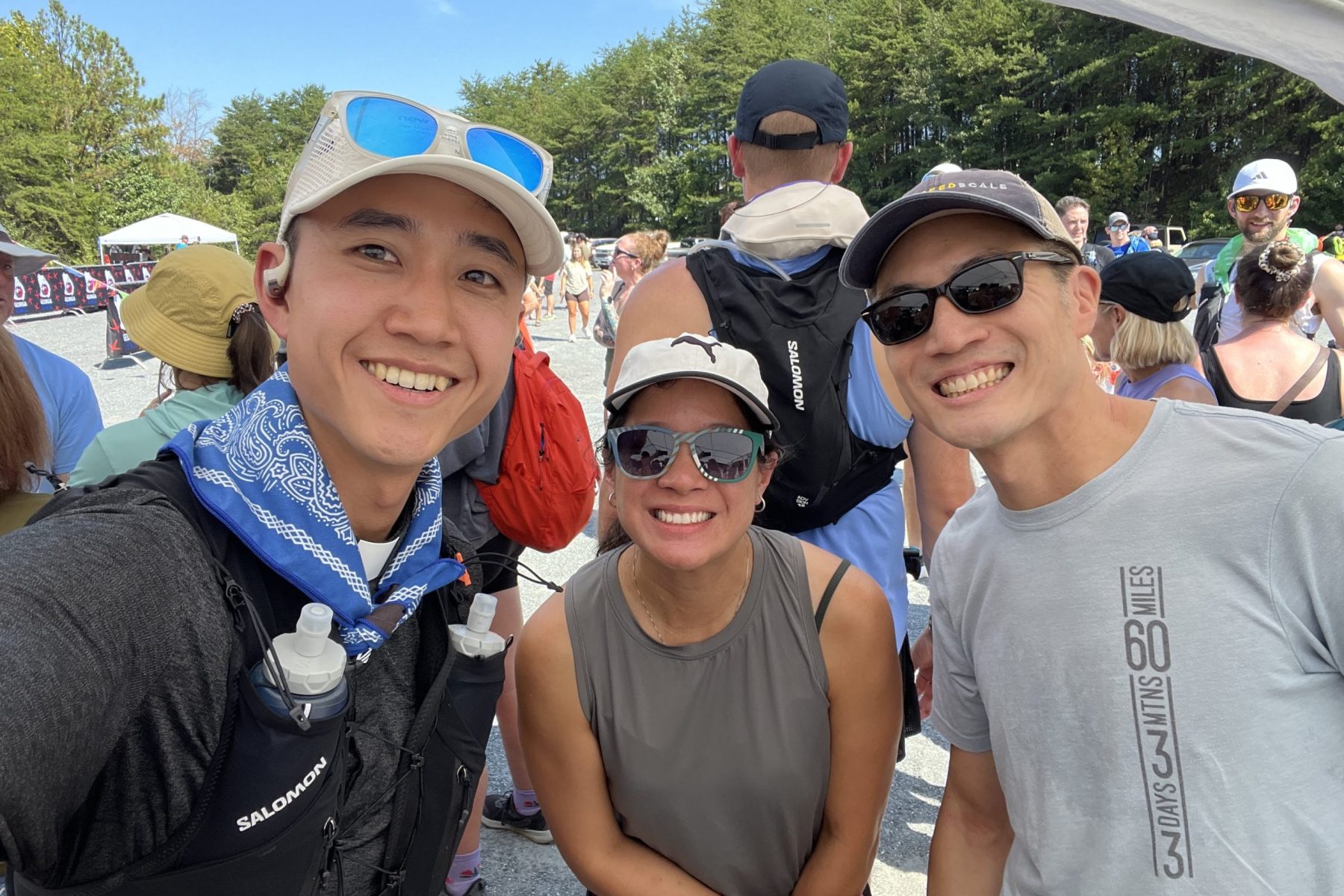
Why did I decide to do the Georgia Jewel 100 race? It was partly due to my runner friend Andy, who introduced me to trail running. I had run in the past, and I even completed a marathon during my last year in the seminary in Rome. And since I moved to Atlanta to work as a chaplain at Holy Spirit Preparatory School, I started to do more trail running, which I found soothing and beautiful. But signing up for such a long race gave me a sense of goal and challenge. It stretched the way I see myself and others through my priestly vocation.

Here are five life lessons I learned from that journey:

1. Seeking Adventure and Magnanimity

I think we live in a world tyrannized by safety. Adventures are dangerous, uncertain, wild, and often painful, but I believe men and women are born with a need to be wild—to seek harsh environments and to grow from the challenge. For me, a 100-mile race was a challenge both physical and mental. It was an experience of walking into unknown territory.

100-mile-3One of the virtues that my school instills in our students is magnanimity, which means the greatness of soul. St. Thomas Aquinas teaches us that a magnanimous person rightly recognizes and pursues great goods and honorable achievements according to their actual worth and capacity. It means that we seek great things, unlocking the limits that we can set on ourselves. It was so daunting when I first conceived the thought of running 100 miles. The furthest I had run prior to my 100-mile race was a 40-mile race two years ago. And yet, it was an opportunity for me to dream big, to walk out of my comfort zone, to be adventurous, and to embrace a challenge in life which helps me to grow. That’s why I decided to give it a try. Having this challenge has been very positive in my personal life. It helped me to have more discipline. I had to be on top of myself to balance my training as well as to be responsible with my duties of being a priest and fulfilling my role as chaplain of Holy Spirit Preparatory School. I found that preparing for the race helped me to live simply. I did fewer things: I prayed, worked, exercised, and encountered people. It helped me to be more intentional with what I do. It also helped me to develop healthier habits of eating and sleeping, which were an important part of the training.

Dream big, live dangerously! I think we all need to embark on our own journey of exodus, of going out of our comfort zones, and ultimately out of our prison of selfishness. It’s in adventure that we encounter God and others, and it’s in challenge that we grow.

2. Finding the Light in the Darkness

I learned that long-distance running is not an individual sport. I could never have finished the race if I had done it all by myself. I had a whole team who supported me, which I will mention shortly. Since a 100-mile race is expected to last over 24 hours, runners are expected to bring headlamps. I didn’t want to carry the headlamp from the start, so as to carry only what I needed at each section. But I forgot to pick up the headlamp at one of the stops. The next time I would catch up to the crew, it would be already too late.

I realized I didn’t pick up the headlamp half an hour after leaving the station. It was already too far back, and I decided to rely on my phone’s flashlight, which was very dim. In the woods, it gets dark even earlier than the sunset hour. As expected, I got into trouble trying to run when it was getting dark. When I was thinking about different solutions, I met another runner, Phil, with whom I shared my concern. He was so kind to have me run together with him. So, I ran right behind him. The terrain was quite technical; it was very rocky and hilly. I had to see in advance what the terrain was like since I would be stepping in the dark. It took a lot from me. It was quite stressful, and I could have easily twisted my ankle for not seeing well. I think it was thanks to so many prayers of people that I didn’t get a single injury throughout the race: I never twisted my ankle, I didn’t have any stomach problems, I didn’t lose any toenails, and I didn’t even get a single blister.
100-mile-4

At one point, Phil and I got lost. He was concerned about me, so he was shedding the light close to his feet, which forced him to look downward. He missed the sign, and we probably lost at least 30 minutes. It was frustrating, but when I finally met up with my crew and got my headlamp, it was a game-changer. I now had the light! I could see clearly!

It was a reminder of why Jesus called himself “the light of the world”: “He who follows me will not walk in darkness!”As a priest, I can experience the importance of light, especially in the confessional. When I hear some people, I sense the lack of light—losing the sense of direction and meaning. Christ is the light; with him, we have clear vision, and we can be relieved from the anguish and anxiety that comes from not knowing where we are going in life. As long as I had the light, I was not afraid, and I had so much confidence. The Lord is my shepherd; I have nothing to fear!

3. Being a Man of Communion

I remember vividly the homily given by Cardinal Luis Antonio Tagle at my Priestly Ordination Mass on April 27, 2024. He said that as priests we are called to be men of communion—that we are called to bring people together, uniting them to God. I really like that image of being a man of communion. One thing I became more aware of during this experience is the fact that I am involved in the lives of many people.
100-mile-5

Some of my friends organized a seven-minute-long video of people from my school and others sending me messages of encouragement. My friend, who drove me to the race, passed me his iPad, and there I watched the video. It was moving, and I was grateful for the love and care that I received, which I do not deserve. I had a community praying for me throughout the race. I was deeply supported by three of my generous friends:

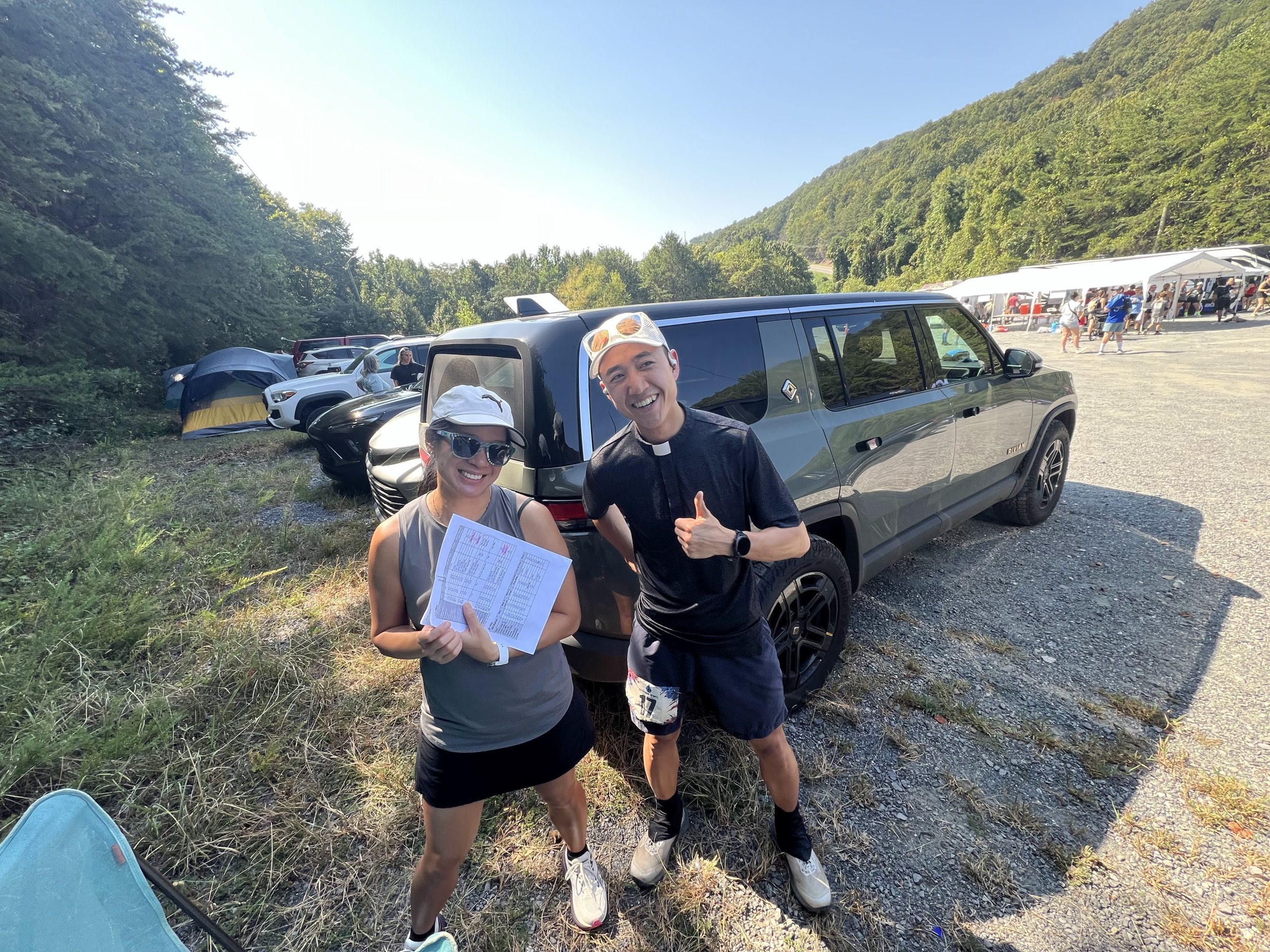
  • A mother of four kids who stayed up all night and waited for me at different aid stations. She helped me to fill my bottles, and prepared some fresh chicken congee which was delicious and sat well in my stomach.
  • A father, who is my good runner friend, and drove me to the race and ran the last 18 miles of the race with me. He encouraged me and gave me good advice on eating and drinking, and I felt supported by the presence of an expert runner.
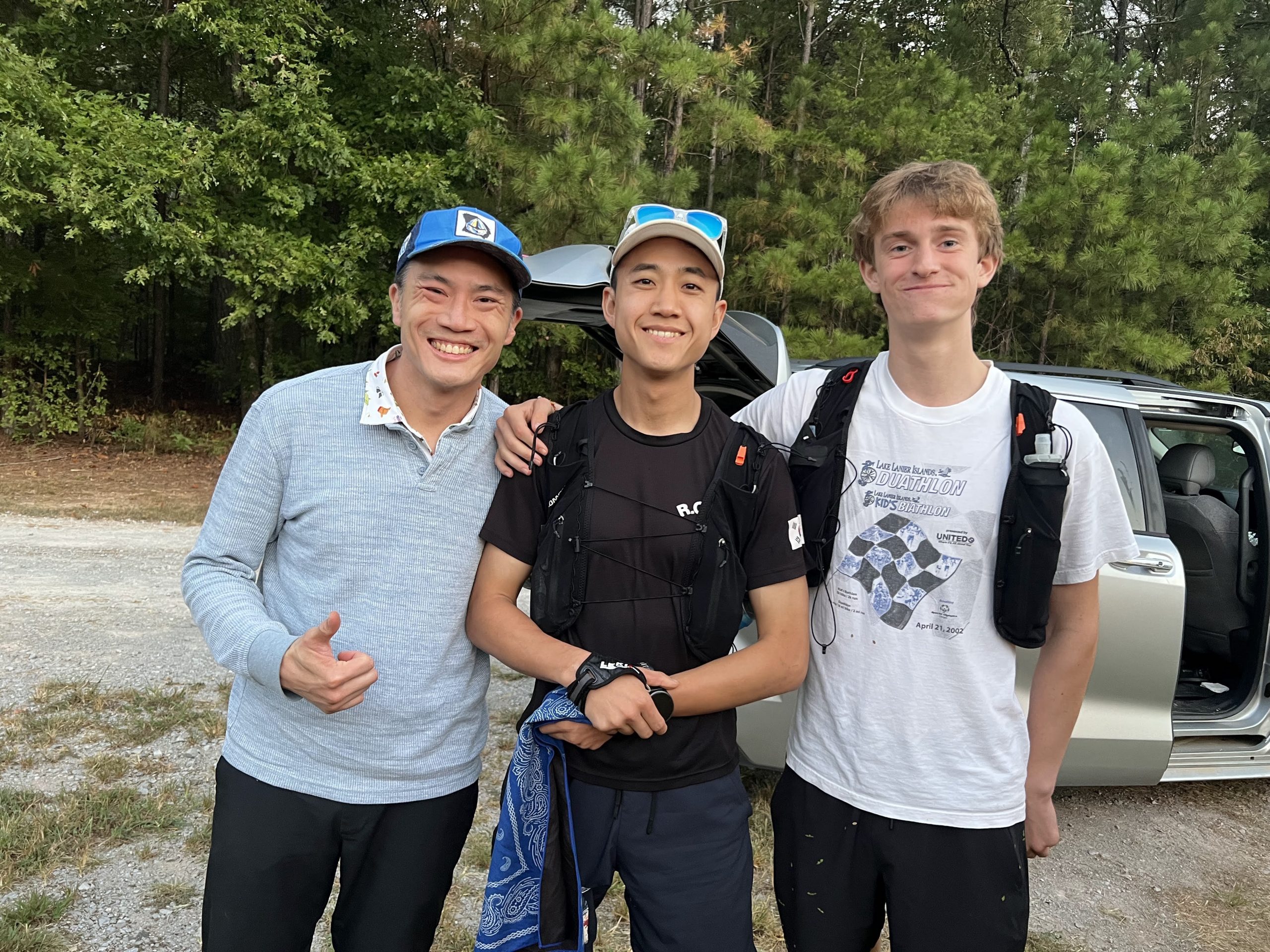
  • A son, a senior student at a neighboring Catholic school. I had met him in other races in the past, and I helped him by being a pacer in his first 100-mile race a few months ago. He came to support me to return the favor, running with me from 3:00 a.m. till 11:00 a.m. and helping me to get through the most difficult part of the race.

When I finished the race, I had some friends and family who waited for me by the finish line. I learned that the race wasn’t really about me. It was an event that brought all of us together. I am eternally grateful to all those who showed me their love and care. Pope Benedict XVI wrote in his encyclical Spe salvi the following:
“We should recall that no man is an island, entire of itself. Our lives are involved with one another, through innumerable interactions they are linked together. No one lives alone. No one sins alone. No one is saved alone. The lives of others continually spill over into mine: in what I think, say, do and achieve. And conversely, my life spills over into that of others: for better and for worse.”

100-mile-6

4. Hypomene, the Spirit of Perseverance

In Spe salvi, Pope Benedict XVI points out that we need the virtue of hypomene, which in English can be translated into patience, perseverance, and constancy. It’s the capacity to wait and endure, taken from the Letter to the Hebrews:

“For you have need of endurance [hypomene], so that when you have done the will of God you may receive what is promised.”

The Christian virtue of hope requires the necessity of having this hypomene spirit—endurance, the capacity of waiting, persevering, and the capacity to suffer. I thought a lot about hypomene during the race. Giving up for me was not an option. I was determined to run unless I got injured, and I was ready to embrace the pain.

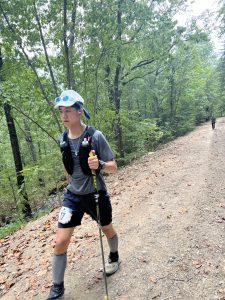
But I did hit a wall a few times during the race. At around 5:00 a.m., I remember not being able to run any longer. I had already been running for 15 hours and hadn’t slept. Running in the dark for a long time had been tiresome, and as much as I would have liked, my legs simply wouldn’t run. It was frustrating. It was the ideal time to run: The trail didn’t have much elevation, and the temperature was manageable. Earlier in the day, the temperature reached 96°F. It was very hot and humid, and some runners dropped out due to dehydration. I couldn’t run as much as I wanted due to such hot weather, so the night was supposed to be the ideal time to run, but my legs just wouldn’t listen.
100-mile-7

Thank God, I had a list of prayer intentions. I read those intentions, especially when I had to endure. It gave me great motivation, and I was almost glad that I could actually offer up something small—some of my physical exhaustion—uniting it to the cross of Christ. I tried to walk fast, and when the sun came up, I had breakfast and started to run again. There was something special about the sun. It gave me strength. It was again a new day, and I was halfway through the race. In spiritual life, we have moments of night and day, of light and darkness, moments when everything seems clear and when we feel lost. The light of the morning sun was a reminder for me that the light is always right around the corner, especially when I am going through a hard time.

How do we look at the different crosses in our life? I naturally tend to avoid the cross, and it’s natural that I see it as something negative. But I am starting to understand the value of the cross and sacrifice in my life. Especially as a priest, I am learning that sacrifice is part of my life. Pope Benedict XVI reminds us, “The capacity to suffer for the sake of the truth is the measure of humanity.” We all need to grow in our capacity to suffer, to embrace the cross out of love. And for me, long-distance running is a constant reminder of this.

5. The Lesson of Gratitude

I think we should always thank God and others more often than we complain. When I was running, there were plenty of moments to complain: Why did I forget to grab the headlamp? Why are my legs giving up now? Why is there an uphill again? And why did I sign up for this in the first place?

But I knew that all these complaints could not reflect the truth of my reality. The reality was that I could also say: I am grateful for the gift of health. I am grateful to have the headlamp once again—it’s a game-changer now! I am grateful that I can offer up some of my sacrifices. I am grateful seeing the beauty of nature. I am grateful to so many people who are praying for me. I am so grateful to many people who love me. I am grateful to God.

I love the part of The Lord of the Rings when Sam and Frodo are in the final stretch in their quest of destroying the ring: “The night sky was still dim and pale. There, peeping among the cloud-wrack above a dark tor high up in the mountains, Sam saw a white star twinkle for a while. The beauty of it smote his heart, as he looked out of the forsaken land, and hope returned to him. For like a shaft, clear and cold, the thought pierced him that in the end the Shadow was only a small and passing thing: there was light and high beauty forever beyond its reach.”
100-mile-8

Just like Sam, I also saw some beautiful stars in the middle of the night. I was grateful to God, and it almost made me forget about how tired I was. There are many things we need to be grateful for in life. Each day, no matter the challenge or cross we may bear, Christ offers us glimpse of his light. Gratitude awaits us at every turn.

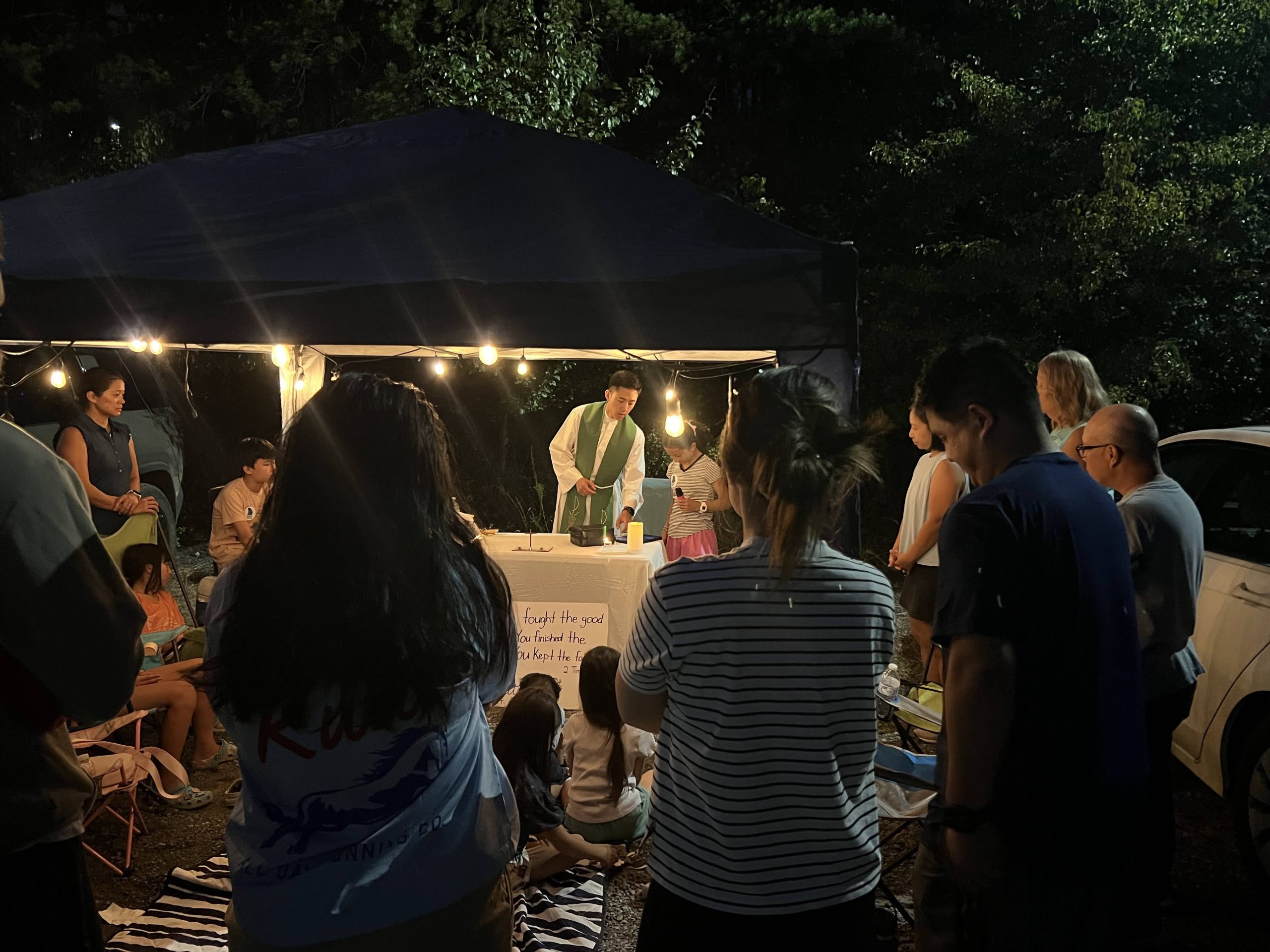
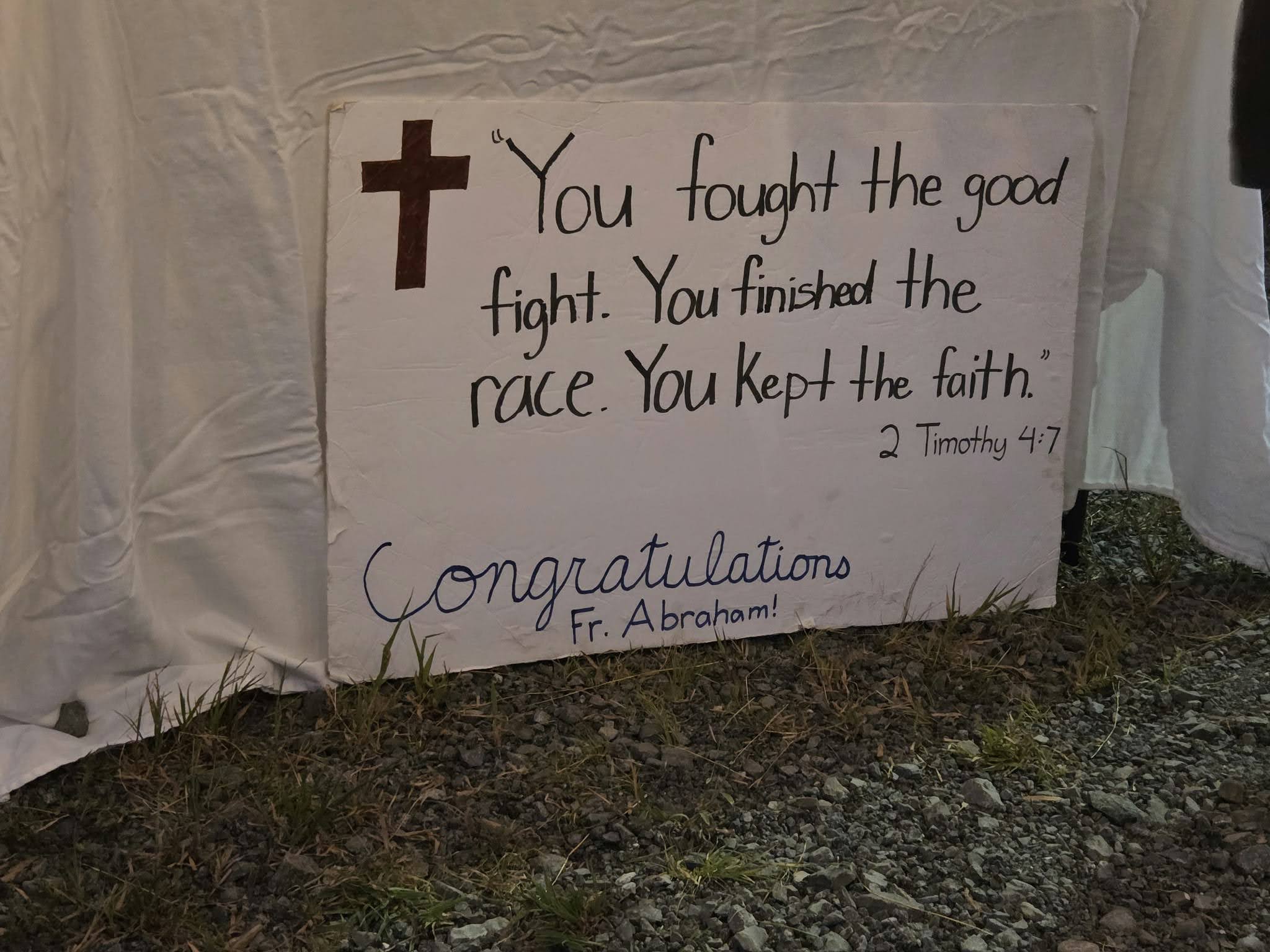
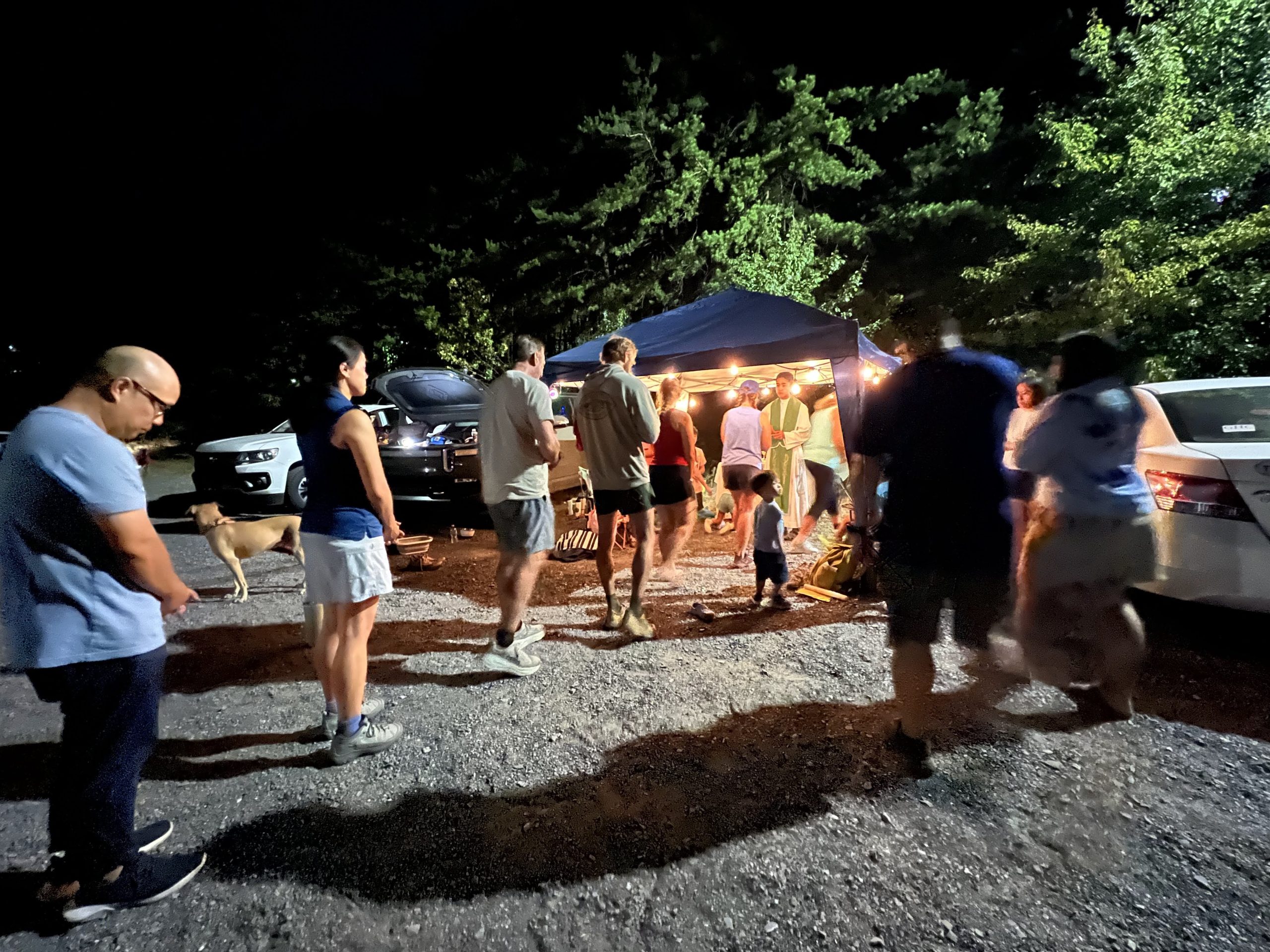
After finishing the race, I celebrated Mass—first, because I didn’t want to skip a day without celebrating the Holy Mass, but also because I wanted to give thanks to God. The Eucharist means “giving thanks!” It was a Mass of thanksgiving. I also wanted to thank the people who drove almost two hours just to congratulate me. And since it was Saturday night, I could celebrate the Sunday Vigil Mass, which was nice because it meant that my friends could sleep in the following day. My friends set up a tent right by the finish line and illumined it with lamps. It was beautiful. There, in the glow of Christ, we prayed together as the joyful cheers of spectators greeted runners at the finish line. Many of these runners and crew members joined us for Mass, at our humble outdoor altar. Cultivating a grateful heart is a key to happiness. It frees our heart from the prison of selfishness and it allows us to see the true reality of our life as a gift from God.
100-mile-9

Running teaches me so much about life. St. Paul talks about running:

“Do you not know that in a race all the runners run, but only one receives the prize? So run that you may obtain it. Every athlete exercises self-control in all things. They do it to receive a perishable wreath, but we an imperishable. So I do not run aimlessly; I do not box as one beating the air. But I discipline my body and keep it under control, lest after preaching to others I myself should be disqualified.”

Our hope teaches us what we need to fight for. At the end of our life’s journey may we proclaim, like St. Paul:

“I have fought the good fight, I have kept my faith, I have finished the race.”

Amen.

Running and the Virtue of Hope: Five Life Lessons from a 100-Mile Race, Fr. Abraham Eo, LC Read More »

WM_Charity_11-3

Charity for All

Dear Friends,


The Church in its liturgy celebrates the life of St. Martin de Porres on November 3.

Martin was born of a Spanish father and a former slave of African or Native American heritage. Because of his background, Martin faced no small amount of discrimination and disdain in his native Peru.

Despite his piety, Martin was barred by Peruvian law from becoming a full member of a religious order due to his mixed race.

None of this kept Martin from leading an exceptional life of service to the poor and sick and to his fellow Dominicans, in whose fold he eventually was allowed to become a lay brother.

In many ways, Martin was a model for Catholics in the New World: He treated all races and ethnic groups with the same delicate charity.

His exemplary life holds special inspiration for a world that now finds itself, of all things, riding the tiger of artificial intelligence. We fear losing a grip on the reins, lest AI turn on us and devour us.

Technology can be a great servant but a lousy master. Fears that AI could replace human beings and leave them without meaningful work are real. The Church reminds us that economies should put humans ahead of “efficiency.”

This is where St. Martin’s example comes in. Empathy, not efficiency, guided his actions.

Likewise, our empathy with the poor and marginalized can help us push back against the steamroller logic of a tech-driven world.

In a word, Christian charity is as important as ever.

So, consider spending time to pray about this keystone of the Christian life. Our Retreat Guide on St. Thérèse’s Little Way might be a helpful resource.

And don’t forget to ask St. Martin to help us imitate his example of charity. That’s one virtue AI will never practice.

In Christ,
Father Edward McIlmail, LC
Ask a Priest contributor

Charity for All Read More »

Regnum Christi Spirituality Center Uncle Eddy

St Martin de Porres

Dear Martin, Still suffering from racial slurs, eh?  It pains me to hear it, but I have to say that it doesn’t surprise me.  Racism is not dead, and, in some form or other, it will always live on.  Certainly, that doesn’t mean that we should condone it or give in to it – on the contrary, we should be the first ones to condemn and undo it, without, of course, falling into the equally deplorable trap of angry resentment.  Racism is sin, and all sin is rooted in rebellion against God.  So only a deeper love for God will enable us to battle effectively for racial justice, and for all justice, as a matter of fact.  Today’s saint shows us the way. Martin was born in Peru, the son of a Spanish knight and a black woman (a former slave).  From his childhood he was scorned for being mulatto.  Perhaps it was this experience that made him so sensitive to the message of Christ.  He used to contemplate the crucifix with extraordinary love and devotion, deeply sorrowful at the suffering Christ had to endure, but deeply joyful that Christ had thereby penetrated our miserable lives with his grace and his love.  The only earthly entity Martin loved more than the crucifix was the Blessed Sacrament, which he tried to receive as frequently as possible (he was helped in this endeavor once he became a Dominican lay brother, where he served as infirmarian and general caretaker of the Friary of Dominican priests in Lima), and which he often accompanied in prayer for hours on end, even entire nights.  This deep appreciation for the sufferings and generosity of Christ was the motor of his own remarkable life.  He spent every waking (and non-praying) hour caring for people in need, seeing in them the needy Christ, the souls for whom Christ had died.  He cared for the sick Dominicans with the gentleness of a mother, and extended that service throughout the city.  He founded orphanages and hospitals, raised money to feed the poor, tended the maltreated slaves, and even took care of stray animals (he kept a “cats’ and dogs’ home” at his sister’s house) – though his Dominican confreres considered his attentions towards the rats and mice a bit exaggerated.  He truly considered others to be God’s children, and himself to be their less worthy brother.  Once when the integrity of the Friary was threatened by heavy debts, he offered himself as payment, “I am only a poor mulatto,” he said, “I’m the property of the order. Sell me.”  It was with this absolute humility, which overflowed in tireless and selfless service, that he won countless hearts to God – and that was his greatest joy. I will ask him to pray for you, my young nephew, so that your response to the evils of this sinful world will always be motivated by humility, faith, and love for God.  Always remember that the foundation of every fault against justice is our injustice towards God.  Real social progress, therefore, can come only from acknowledging the primacy of God’s rights. Sincerely your uncle, Eddy

St Martin de Porres Read More »

What If Dad Opposes My Entering a Seminary?

Q: I want to become a priest someday, and my mom is OK with it. I don’t know about my dad. I told my mom the other night that if Dad wouldn’t want me to enter the seminary, I will still do it, even if it is against his will. Can you please give me some tips? — Nathaniel

Answered by Fr. Edward McIlmail, LC:

It’s great to hear about your interest in the priesthood. It’s a great life!

It sounds as though you aren’t sure where your dad stands. If you are intent on entering the seminary, it might take your dad a while to get used to the idea.

Some parents find it hard to let go of a son. My short advice there is to pray for him and to ask the Holy Spirit to open his heart.

As an adult, you can make your own decision about the seminary.

You won’t disrespect your dad by following what you believe to be God’s will for you. You want to do all this charitably, of course.

Aside from an intense life of prayer and sacraments, be sure to be in touch with a vocation director or seminary official who can help you discern your path.

If God wants you for the priesthood, he will find a way to guide you.

Count on my prayers.

What If Dad Opposes My Entering a Seminary? Read More »

26-11-03-DM

November 3, 2026 – We Are Invited

Tuesday of the Thirty-First Week in Ordinary Time


Luke 14:15-24

One of those at table with Jesus said to him, “Blessed is the one who will dine in the kingdom of God.” He replied to him, “A man gave a great dinner to which he invited many. When the time for the dinner came, he dispatched his servant to say to those invited, ‘Come, everything is now ready.’ But one by one, they all began to excuse themselves. The first said to him, ‘I have purchased a field and must go to examine it; I ask you, consider me excused.’ And another said, ‘I have purchased five yoke of oxen and am on my way to evaluate them; I ask you, consider me excused.’ And another said, ‘I have just married a woman, and therefore I cannot come.’ The servant went and reported this to his master. Then the master of the house in a rage commanded his servant, ‘Go out quickly into the streets and alleys of the town and bring in here the poor and the crippled, the blind and the lame.’ The servant reported, ‘Sir, your orders have been carried out and still there is room.’ The master then ordered the servant, ‘Go out to the highways and hedgerows and make people come in that my home may be filled. For, I tell you, none of those men who were invited will taste my dinner.’”

Opening Prayer: Dear Lord, I thank you for the gift of faith. Please help me to deepen my faith so that I may discover you in all things. Let this time of prayer make me ever more attentive to your voice and to your will in my life. May I grow in awareness of your goodness towards me so that my confidence in you may also grow.

Encountering Christ:

  1. A Man Gave a Great Dinner: “What eye has not seen, and ear has not heard, and what has not entered the human heart, what God has prepared for those who love him” (1 Cor 2:9). We cannot begin to appreciate truly the incredible gift God is offering us with heaven. It is an invitation to communion with the Blessed Trinity. We will contemplate the face of God in union with all the angels and saints. This will be the ultimate fulfillment of all our “deepest human longings” (cf. CCC 1023-1024). Scripture struggles to find words to describe sufficiently the joy associated with heaven: “a great dinner,” “a wedding feast,” “a feast.” Such worldly joys, good though they are, are but a shadow of the joy awaiting us in heaven. As Catholics, we should cultivate our longing for heaven by frequently meditating on our vocation to be with God eternally.


  2. He Invited Many: The man giving the banquet does the inviting. You may not simply “crash” such a party; you must be invited. Alone and through our own effort, we may neither enter into nor merit heaven. It is a gratuitous gift (cf. CCC 1727). God sought us out before we were aware of heaven, or even when we resisted: “But God proves his love for us in that while we were still sinners Christ died for us” (Rm 5:8). God’s invitation may take various forms, such as the sacraments, Scripture, the example of holy people, a conversation, an answered prayer, and even a crisis. God is constantly renewing his invitation to each person in the very depths of our heart. Even when rebuffed, God continues to search for souls who will accept his gift.


  3. They Began to Excuse Themselves: Sadly, we often find ourselves too busy to bother with God’s invitation to communion with him: “But one by one, they all began to excuse themselves.” They had good things to do, but good things can often get in the way of the best options. We might be too busy with work, projects, or even family to find time for God. Our Lord calls these “excuses,” because there should be no real conflict between our duties and God. Lived well, all our responsibilities should lead us to God, not away from him. The key is to put God above all things. We are called to put him first in setting aside some time daily for prayer, to put God first in living out our responsibilities to work, family, and community. We put God first when we remember to rely upon his grace in our lives. By doing so, we live in communion with God in this life and, with his grace, we will live with him for all eternity.

Conversing with Christ: Dear Lord Jesus, I thank you for the countless times you have invited me to an ever-growing communion with you: when you created me, called me into your Church, and invited me to live my particular vocation in life. You continue to ask me to walk with you in the smallest of details in my life—in work, in chores, in prayer, in encountering others, and in rest. Help me to live all my experiences as an offering with Christ for the salvation of souls and the glory of God the Father in the Holy Spirit.

Resolution: Lord, today by your grace I plan to pause briefly once or twice to make a small prayer of self-offering to you.

For Further Reflection: We can contemplate how we give to and receive from God in the offertory during Mass: https://aleteia.org/2018/02/28/why-the-offertory-is-not-mass-intermission-pope-francis-explains/.

Fr. John Bullock, LC, was ordained in 2002 and works with Regnum Christi in Houston, Texas, his hometown. He has worked in youth work, college campus ministry, and as a chaplain to the Regnum Christi movement. He loves his faith, enjoys working with people, and loves riding his bike.

November 3, 2026 – We Are Invited Read More »

Scroll to Top

Events

Looking for another country?

Contact Regnum Christi near you

News & Resources

News & Resources

The Regnum Christi Mission

The Regnum Christi Identity

Alex Kucera

Atlanta

Alex Kucera has lived in Atlanta, GA, for the last 46 years. He is one of 9 children, married to his wife Karmen, and has 3 girls, one grandson, and a granddaughter on the way. Alex joined Regnum Christi in 2007. Out of the gate, he joined the Helping Hands Medical Missions apostolate and is still participating today with the Ghana Friendship Mission.

In 2009, Alex was asked to be the Atlanta RC Renewal Coordinator for the Atlanta Locality to help the RC members with the RC renewal process. Alex became a Group Leader in 2012 for four of the Atlanta Men’s Section Teams and continues today. Running in parallel, in 2013, Alex became a Team Leader and shepherded a large team of good men.

Alex was honored to be the Atlanta Mission Coordinator between 2010 to 2022 (12 years), coordinating 5-8 Holy Week Mission teams across Georgia. He also created and coordinated missions at a parish in Athens, GA, for 9 years. Alex continues to coordinate Holy Week Missions, Advent Missions, and Monthly missions at Good Shepherd Catholic Church in Cumming, GA.

From 2016 to 2022, Alex also served as the Men’s Section Assistant in Atlanta. He loved working with the Men’s Section Director, the Legionaries, Consecrated, and Women’s Section leadership teams.

Alex is exceptionally grateful to the Legionaries, Consecrated, and many RC members who he’s journeyed shoulder to shoulder, growing his relationship with Christ and others along the way. He knows that there is only one way, that’s Christ’s Way, with others!