


Weekly Digest of the Regnum Christi Daily Meditations: November 1st – 8th, 2026
WEEKLY DIGEST OF rc
DAILY MEDITATIONS
Week of November 1 - November 8, 2026
Sunday, November 1, 2026 – Jesus Is Beatitude
Monday, November 2, 2026 – Souls in Need
Tuesday, November 3, 2026 – We Are Invited
Wednesday, November 4, 2026 – Fidelity to Discipleship
Thursday, November 5, 2026 – Hound of Heaven
Friday, November 6, 2026 – Proactive for Christ
November 1, 2026 – Jesus Is Beatitude

Solemnity of All Saints
Matthew 5:1-12a
When Jesus saw the crowds, he went up the mountain, and after he had sat down, his disciples came to him. He began to teach them, saying: “Blessed are the poor in spirit, for theirs is the kingdom of heaven. Blessed are they who mourn, for they will be comforted. Blessed are the meek, for they will inherit the land. Blessed are they who hunger and thirst for righteousness, for they will be satisfied. Blessed are the merciful, for they will be shown mercy. Blessed are the clean of heart, for they will see God. Blessed are the peacemakers, for they will be called children of God. Blessed are they who are persecuted for the sake of righteousness, for theirs is the kingdom of heaven. Blessed are you when they insult you and persecute you and utter every kind of evil against you falsely because of me. Rejoice and be glad, for your reward will be great in heaven.”
Opening Prayer: Dear Lord, I come before you today with the desire to grow in faith, hope, and love, which are at the very heart of my relationship with you. I desire the holiness to which you have called me, and which the saints, whom we celebrate today, have shown me is possible. Open my mind and heart so that I may receive the lights and graces you wish to share with me in this time together.
Encountering Christ:
- Jesus Our Model: The Beatitudes speak principally of Jesus himself. He is our model, the norm of the new law (cf. CCC 459). In him we see a “poverty” that, although rich, emptied himself for our sake (cf. Phil 2:7). Who is meek if not Jesus who said, “Learn from me, for I am meek and humble of heart” (Mt 11:29)? He is merciful like no other, seeking out the lost sheep, which is humanity gone astray (cf. Mt 18:12-14). As Christians, we follow the person of Jesus Christ. Dogmas are an effort to understand him; norms are an effort to follow him. As Our Lord’s self-portrait, the Beatitudes become the Christian’s Magna Carta. They do not replace the Ten Commandments; they go beyond them. The former insists that we do not offend love; the latter insists we love as Jesus did.
- The Saints Have Followed: Our Lord’s invitation to imitate him is daunting. However, Jesus has made it possible through the gift of the Holy Spirit, which we receive in baptism (cf. CCC 1227). Then, as children of God, we are able to cry out “Abba, Father!” (Gal 4:6). All the saints, whom we celebrate today, have preceded us and shown us that sanctity is within our reach. Sanctity is simply allowing the grace God has planted in us through baptism to grow and develop. No situation or circumstance can prevent God’s grace from working powerfully in a docile soul. The saints, men and women from all ages and all walks of life, have modeled the way. Their example and their intercession are powerful aids on our own journey. We know we can make it to heaven because they have. They fortify in us the theological virtue of hope.
- An Invitation to Joy: In the Sermon on the Mount, Jesus’ invitation to blessedness is an invitation to joy. However, Jesus’ joy sets the world’s joy on its head. We want to avoid discomfort and pain at all costs. Jesus says, “Blessed are you when they insult you and persecute you… Rejoice and be glad, for your reward will be great in heaven.” However, the promise of heaven amidst suffering is not merely a promise of future joy, but of a joy already begun even while suffering. This joy amidst suffering was the “insanity” that only the saints understood. St. John Paul II said, “To know that God is not far but close… is reason for profound joy that different daily events cannot affect… An unmistakable characteristic of Christian joy is that it can coexist with suffering, because it is totally based on love.” The saint knows they are secure in God’s love amidst suffering. This experience of God’s love then moves the saint to give everything back to Christ and, in that self-sacrificing gift, to find deep joy.
Conversing with Christ: Dear Lord Jesus, you offer me your joy by concretely showing me how I should imitate your virtues, such as meekness, purity, and mercy. In addition to your grace, you have given me my older brothers and sisters in the faith who are living icons of you. They inspire me with their lives and sustain me with their prayers. May my increased devotion to them augment my devotion to you. Let me embrace the joy of the cross and console your Sacred Heart.
Resolution: Lord, today by your grace I will read at least one brief article about the life of a saint. Then I will say a simple prayer to that saint asking for their intercession for my family and me.
For Further Reflection: To find a brief introduction to one or more saints, go to Catholic Online: https://www.catholic.org/saints/ or My Catholic Life! https://mycatholic.life/saints/#gsc.tab=0.
Fr John Bullock, LC, was ordained in 2002 and works with Regnum Christi in Houston, Texas, his hometown. He has worked in youth work, college campus ministry, and as a chaplain to the Regnum Christi movement. He loves his faith, enjoys working with people, and loves riding his bike.
November 2, 2026 – Souls in Need
All Souls’ Day
John 6:37-40
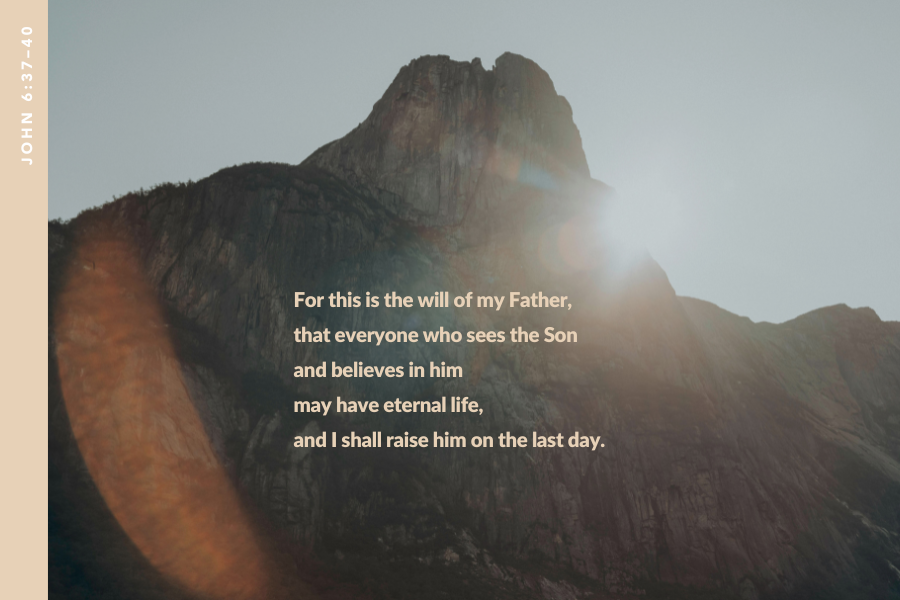
Jesus said to the crowds: “Everything that the Father gives me will come to me, and I will not reject anyone who comes to me, because I came down from heaven not to do my own will but the will of the one who sent me. And this is the will of the one who sent me, that I should not lose anything of what he gave me, but that I should raise it on the last day. For this is the will of my Father, that everyone who sees the Son and believes in him may have eternal life, and I shall raise him on the last day.”
Opening Prayer: Dear Lord, today on All Souls’ Day, I want to offer myself in prayer for all the souls still in Purgatory, especially the souls of my deceased family and friends. Allow me to grow in the faith that recognizes that your love accompanies me throughout my journey—in this life and the next.
Encountering Christ:
- “I Will Not Reject Anyone Who Comes to Me”: The Church’s teaching on hell can seem like a contradiction to its belief in a loving God. “How could God send a soul away to eternal torment?” “Doesn’t God want everyone to be saved?” In essence, a soul that dies “in mortal sin without repenting” freely chooses to reject God (CCC1033). Regarding the “unforgivable” sin against the Holy Spirit, St. John Paul II writes that it is “the refusal to accept the salvation which God offers to man through the Holy Spirit.” Therefore, Jesus will not reject anyone who comes to him, but they must come. Jesus will not force a soul to follow him in this life or the next. We must freely choose, and the time for choosing Jesus is in this life (cf. CCC 1021). God’s radical respect for our freedom is both sobering and awe-inspiring.
- The Freedom to Love: On All Souls’ Day, the Church invites us to pray for those souls who have died and are in purgatory. They died in God’s grace and are assured salvation, but must first go through a period of purification (cf. CCC 1030). This doctrine also strikes people as somewhat vindictive on the part of God, as if a soul needed a bit more punishing before entering heaven. The reality is much simpler. Imagine a young man who broke up with one girlfriend to date another. If, in his conversations with the new girlfriend, he kept referring to the previous one, saying things like “She used to dress like this,” or “She used to talk like that,” it would seem that his attachment to the previous girlfriend hinders his freedom to commit fully to the new one. Having chosen to leave sin and selfishness behind, souls in purgatory have accepted God’s mercy and have chosen to enter into a “new” relationship with God. However, there are residual effects from their previous sins that need purification if they are going to love fully. The souls in purgatory want to have their love purified to be able to love God more perfectly.
- Intercede for One Another: We pray for the souls in purgatory and for each other. The question may arise as to why that is necessary. “Doesn’t God know what they need?” “Doesn’t he already want what’s best for them?” “What do our prayers add?” The answer is that in the Church “all the faithful form one body, [thus] the good of each is communicated to the others” (CCC 947). This doctrine may be difficult for our individualistic society to grasp, but what happens to my brother or sister for good or for bad affects me, and vice versa. Therefore, my prayers, sacrifices, and acts of service increase charity in the entire body, which benefits all. This encourages a harmonious interdependence in which we rely upon and support one another, both in this life and the next.
Conversing with Christ: Dear Jesus, you know that I love you, but you also know that my love needs purification of selfishness and fear. Help me to love you with an ever more perfect love that “drives out fear” (cf. 1 Jn 4:18). Help me to let go of that which keeps me from loving you and my neighbor more fully. May your purifying love form my heart to be more like yours. Finally, I pray for all the souls in purgatory so that they may more quickly enter into your heavenly Kingdom to be with you forever.
Resolution: Lord, today by your grace I will offer up two or three prayers and one small sacrifice for the souls in purgatory.
For Further Reflection: “What Is Purgatory?” is an article in Catholic Answers which explains in greater depth the Church’s teaching on the subject: https://www.catholic.com/tract/purgatory.
Fr. John Bullock, LC, was ordained in 2002 and works with Regnum Christi in Houston, Texas, his hometown. He has worked in youth work, college campus ministry, and as a chaplain to the Regnum Christi movement. He loves his faith, enjoys working with people, and loves riding his bike.
November 3, 2026 – We Are Invited

Tuesday of the Thirty-First Week in Ordinary Time
Luke 14:15-24
One of those at table with Jesus said to him, “Blessed is the one who will dine in the kingdom of God.” He replied to him, “A man gave a great dinner to which he invited many. When the time for the dinner came, he dispatched his servant to say to those invited, ‘Come, everything is now ready.’ But one by one, they all began to excuse themselves. The first said to him, ‘I have purchased a field and must go to examine it; I ask you, consider me excused.’ And another said, ‘I have purchased five yoke of oxen and am on my way to evaluate them; I ask you, consider me excused.’ And another said, ‘I have just married a woman, and therefore I cannot come.’ The servant went and reported this to his master. Then the master of the house in a rage commanded his servant, ‘Go out quickly into the streets and alleys of the town and bring in here the poor and the crippled, the blind and the lame.’ The servant reported, ‘Sir, your orders have been carried out and still there is room.’ The master then ordered the servant, ‘Go out to the highways and hedgerows and make people come in that my home may be filled. For, I tell you, none of those men who were invited will taste my dinner.’”
Opening Prayer: Dear Lord, I thank you for the gift of faith. Please help me to deepen my faith so that I may discover you in all things. Let this time of prayer make me ever more attentive to your voice and to your will in my life. May I grow in awareness of your goodness towards me so that my confidence in you may also grow.
Encountering Christ:
- A Man Gave a Great Dinner: “What eye has not seen, and ear has not heard, and what has not entered the human heart, what God has prepared for those who love him” (1 Cor 2:9). We cannot begin to appreciate truly the incredible gift God is offering us with heaven. It is an invitation to communion with the Blessed Trinity. We will contemplate the face of God in union with all the angels and saints. This will be the ultimate fulfillment of all our “deepest human longings” (cf. CCC 1023-1024). Scripture struggles to find words to describe sufficiently the joy associated with heaven: “a great dinner,” “a wedding feast,” “a feast.” Such worldly joys, good though they are, are but a shadow of the joy awaiting us in heaven. As Catholics, we should cultivate our longing for heaven by frequently meditating on our vocation to be with God eternally.
- He Invited Many: The man giving the banquet does the inviting. You may not simply “crash” such a party; you must be invited. Alone and through our own effort, we may neither enter into nor merit heaven. It is a gratuitous gift (cf. CCC 1727). God sought us out before we were aware of heaven, or even when we resisted: “But God proves his love for us in that while we were still sinners Christ died for us” (Rm 5:8). God’s invitation may take various forms, such as the sacraments, Scripture, the example of holy people, a conversation, an answered prayer, and even a crisis. God is constantly renewing his invitation to each person in the very depths of our heart. Even when rebuffed, God continues to search for souls who will accept his gift.
- They Began to Excuse Themselves: Sadly, we often find ourselves too busy to bother with God’s invitation to communion with him: “But one by one, they all began to excuse themselves.” They had good things to do, but good things can often get in the way of the best options. We might be too busy with work, projects, or even family to find time for God. Our Lord calls these “excuses,” because there should be no real conflict between our duties and God. Lived well, all our responsibilities should lead us to God, not away from him. The key is to put God above all things. We are called to put him first in setting aside some time daily for prayer, to put God first in living out our responsibilities to work, family, and community. We put God first when we remember to rely upon his grace in our lives. By doing so, we live in communion with God in this life and, with his grace, we will live with him for all eternity.
Conversing with Christ: Dear Lord Jesus, I thank you for the countless times you have invited me to an ever-growing communion with you: when you created me, called me into your Church, and invited me to live my particular vocation in life. You continue to ask me to walk with you in the smallest of details in my life—in work, in chores, in prayer, in encountering others, and in rest. Help me to live all my experiences as an offering with Christ for the salvation of souls and the glory of God the Father in the Holy Spirit.
Resolution: Lord, today by your grace I plan to pause briefly once or twice to make a small prayer of self-offering to you.
For Further Reflection: We can contemplate how we give to and receive from God in the offertory during Mass: https://aleteia.org/2018/02/28/why-the-offertory-is-not-mass-intermission-pope-francis-explains/.
Fr. John Bullock, LC, was ordained in 2002 and works with Regnum Christi in Houston, Texas, his hometown. He has worked in youth work, college campus ministry, and as a chaplain to the Regnum Christi movement. He loves his faith, enjoys working with people, and loves riding his bike.
November 4, 2026 – Fidelity to Discipleship

Memorial of St. Charles Borromeo, Bishop
Luke 14:25-33
Great crowds were traveling with Jesus, and he turned and addressed them, “If anyone comes to me without hating his father and mother, wife and children, brothers and sisters, and even his own life, he cannot be my disciple. Whoever does not carry his own cross and come after me cannot be my disciple. Which of you wishing to construct a tower does not first sit down and calculate the cost to see if there is enough for its completion? Otherwise, after laying the foundation and finding himself unable to finish the work the onlookers should laugh at him and say, ‘This one began to build but did not have the resources to finish.’ Or what king marching into battle would not first sit down and decide whether with ten thousand troops he can successfully oppose another king advancing upon him with twenty thousand troops? But if not, while he is still far away, he will send a delegation to ask for peace terms. In the same way, everyone of you who does not renounce all his possessions cannot be my disciple.”
Opening Prayer: Dear Lord, I thank you for the opportunity to spend time in prayer with you. I need your grace to sustain and strengthen my love for you and for my neighbor. Help me to appreciate more deeply the gift of being your disciple.
Encountering Christ:
- Great Crowds Were Traveling with Jesus: It is easy to draw a crowd of curious onlookers. People like to be entertained, catch the latest news, and follow the latest trend. The crowd itself attracts more onlookers: “What’s going on that’s so exciting?” Jesus could clearly draw a crowd. He spoke as no one else had ever spoken. His miracles were fascinating with dramatic cures, exorcisms, and the multiplication of loaves, to name only a few. It was enough to be in his presence to feel close to God. While the people’s interest was for the most part sincere, the excitement of it all ran the risk of people superficially following Jesus as long as the fun remained. We can all be tempted to seek the consolation of God more than the God of consolation. Curiosity is a natural start, but it must develop and grow into a relationship, discipleship, and love.
- “Whoever Does Not Carry His Own Cross”: Jesus has a simple formula for maturing his followers; it is the cross. “Whoever does not carry his own cross and come after me cannot be my disciple.” However, the question may legitimately arise, “Why is the cross a condition of following Jesus?” Jesus provides an answer in this passage. When he speaks of “hating father and mother” and even one’s “own life,” Jesus is indicating that the price of discipleship is to love him above all other things—even good and holy things like mother and father. Only God may have the first place in our lives: “Seek his kingdom, and these other things will be given you besides” (Lk 12:31). Whenever we choose something, we necessarily leave other options behind, and that entails sacrifice. For example, when you pick a job, you leave the other jobs aside. Christ is saying that all of our decisions must be subordinate to love of him and his will. “Will this decision transgress one of the Ten Commandments?” “Is this decision in accord with my vocation or state in life?” “Is this decision God’s will for me at this moment?” That is where we must prayerfully discern what God wants for us. This is not meant to create a scrupulous fear of “making the wrong decision,” but rather seeking to please God in all we do in the light of faith.
- Able to Finish: Now, it is easy to be enthusiastic and even sacrificial for a day. Love proves itself and matures over time. Perseverance is essential to love. Wedding vows beautifully reflect this determination to love for a lifetime: “to have and to hold, from this day forward, for better, for worse, for richer, for poorer, in sickness and in health, until death do us part.” Following Jesus requires calculating the cost of enduring to the end. There is something deeply inspiring about the soul that perseveres in love. We admire the aged couple that still holds hands. We respect the elderly priest or nun who still prays with fervor. Their example gives us the hope of seeing our own journey to the end. God’s grace and the sacrifices that fidelity entail are the means by which we persevere in love.
Conversing with Christ: Dear Lord Jesus, I cannot know what the future holds. To say “yes” to you for a lifetime can be frightening. Do I have what it takes? Help me to understand that your love and grace will sustain me when I am weak. Help me to renew frequently my love for you in the smallest of tasks. Let me keep my eyes focused on you and not on the sacrifices. You have been so good to me. I desire to follow you until you call me to be with you in heaven.
Resolution: Lord, today by your grace I will prayerfully reflect before making any significant decision today: “Lord, what would you have me do?”
For Further Reflection: You can read this article on “What is discernment?” in Aleteia.
Fr. John Bullock, LC, was ordained in 2002 and works with Regnum Christi in Houston, Texas, his hometown. He has worked in youth work, college campus ministry, and as a chaplain to the Regnum Christi movement. He loves his faith, enjoys working with people, and loves riding his bike.
November 5, 2026 – Hound of Heaven
Thursday of the Thirty-First Week in Ordinary Time
Luke 15:1-10
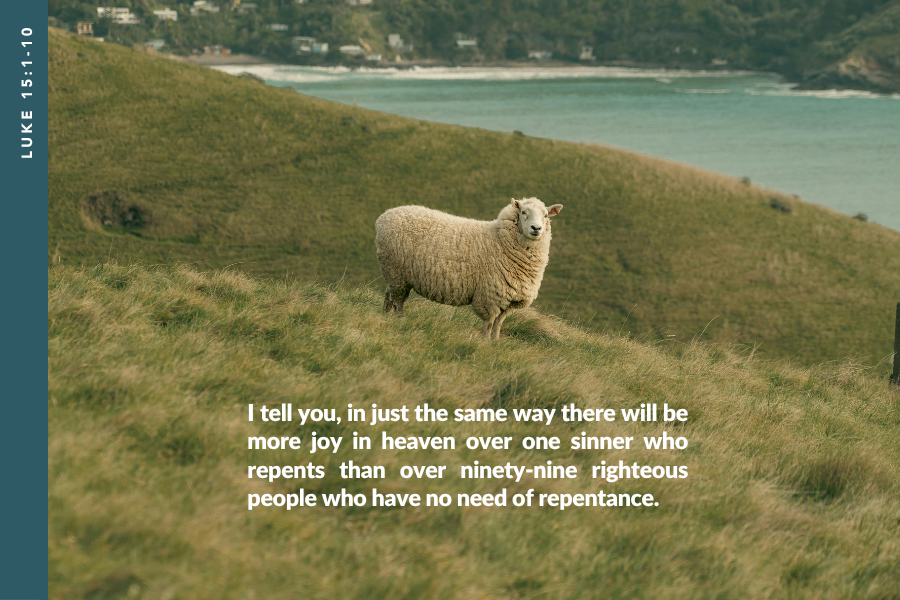
The tax collectors and sinners were all drawing near to listen to Jesus, but the Pharisees and scribes began to complain, saying, “This man welcomes sinners and eats with them.” So Jesus addressed this parable to them. “What man among you having a hundred sheep and losing one of them would not leave the ninety-nine in the desert and go after the lost one until he finds it? And when he does find it, he sets it on his shoulders with great joy and, upon his arrival home, he calls together his friends and neighbors and says to them, ‘Rejoice with me because I have found my lost sheep.’ I tell you, in just the same way there will be more joy in heaven over one sinner who repents than over ninety-nine righteous people who have no need of repentance. Or what woman having ten coins and losing one would not light a lamp and sweep the house, searching carefully until she finds it? And when she does find it, she calls together her friends and neighbors and says to them, ‘Rejoice with me because I have found the coin that I lost.’ In just the same way, I tell you, there will be rejoicing among the angels of God over one sinner who repents.”
Opening Prayer: Dear Lord, I thank you for the grace to be able to spend time with you. Strengthen my faith and inflame my love. Help me to listen attentively to your word, and to be open in both mind and heart. May I continue to seek you out more each day, and may I allow myself to be found by you, the Good Shepherd.
Encountering Christ:
- Lost Sheep: It is easy to imagine a single sheep becoming distracted, disoriented, and lost. Once separated from the flock, it is in danger of not finding its way back, or worse, being attacked by wolves. While such a situation is troublesome, a shepherd really couldn’t be angry at an irrational animal for its actions. However, when man strays from God, he does so by his own free choice. He is responsible; he does not accidentally stray from God due to innocent ignorance. That makes the patience of Christ all the greater than that of a shepherd; he is not pursuing an ignorant animal, but rather a willful and errant soul. That is why St. Paul marveled, “God proves his love for us in that while we were still sinners Christ died for us” (Rom 5:8). Francis Thompson’s “The Hound of Heaven” expresses the errant soul’s perspective well: “I fled Him, down the nights and down the days; I fled Him, down the arches of the years; I fled Him, down the labyrinthine ways… But with unhurrying chase, And unperturbed pace… They beat—and a Voice beat… ‘All things betray thee, who betrayest Me.’
- “No Need of Repentance”: The shepherd left the ninety-nine sheep to seek the lost one. These are those who “have no need of repentance.” Here, Our Lord is speaking with a sense of irony, since we are all in need of conversion. While we may be “in the fold” of the Church and practicing our faith, our conversion remains an ongoing process. However, it is a real danger to begin to think of oneself as “fully” converted, or as having arrived at moral “perfection.” This seems to be Christ’s point in another passage, where the Pharisee prayed, “‘O God, I thank you that I am not like the rest of humanity—greedy, dishonest, adulterous—or even like this tax collector. I fast twice a week, and I pay tithes on my whole income.’ But the tax collector stood off at a distance and would not even raise his eyes to heaven but beat his breast and prayed, ‘O God, be merciful to me a sinner’” (Lk 18:11-13). It was the tax collector who went home justified (cf. Lk 18:14).
- “Rejoice with Me”: “Rejoice with me because I have found my lost sheep.” It is wonderful to hear from Jesus about the joy found in heaven with the recovery of the lost sheep. The Church also celebrates such good news. However, the once lost and now recovered sheep may be tempted not to rejoice. They will be grateful for Our Lord’s help, but often that individual struggles with letting go of the guilt associated with their past. In extreme cases, the person may even question if they were truly forgiven. “But I was so bad—how could I be forgiven?” This is why Our Lord affirms that his mercy is precisely for sinners—like Peter who denied him, like the woman caught in adultery, and like the good thief on the cross. The greater the sins, the greater the conversion, and, therefore, the greater the gratitude. “Rejoice with me!”
Conversing with Christ: Dear Lord Jesus, I know that I am a sinner. As such, I am so grateful to you for patiently and continuously offering your mercy to me. May I neither despair of, nor presume of, your mercy. Increase my reliance upon your grace to strengthen me in the face of temptation and difficulties. Help me also to be your instrument to communicate your goodness to souls in need of your mercy.
Resolution: Lord, today by your grace I will offer one small prayer and one small sacrifice for someone struggling with returning to confession and the Church.
For Further Reflection: Read Francis Thompson’s poem “The Hound of Heaven”.
Fr. John Bullock, LC, was ordained in 2002 and works with Regnum Christi in Houston, Texas, his hometown. He has worked in youth work, college campus ministry, and as a chaplain to the Regnum Christi movement. He loves his faith, enjoys working with people, and loves riding his bike.
November 6, 2026 – Proactive for Christ

Friday of the Thirty-First Week in Ordinary Time
Luke 16:1-8
Jesus said to his disciples, “A rich man had a steward who was reported to him for squandering his property. He summoned him and said, ‘What is this I hear about you? Prepare a full account of your stewardship, because you can no longer be my steward.’ The steward said to himself, ‘What shall I do, now that my master is taking the position of steward away from me? I am not strong enough to dig and I am ashamed to beg. I know what I shall do so that, when I am removed from the stewardship, they may welcome me into their homes.’ He called in his master’s debtors one by one. To the first he said, ‘How much do you owe my master?’ He replied, ‘One hundred measures of olive oil.’ He said to him, ‘Here is your promissory note. Sit down and quickly write one for fifty.’ Then to another he said, ‘And you, how much do you owe?’ He replied, ‘One hundred measures of wheat.’ He said to him, ‘Here is your promissory note;write one for eighty.’ And the master commended that dishonest steward for acting prudently. For the children of this world are more prudent in dealing with their own generation than the children of light.”
Opening Prayer: Dear Lord, I come before you asking to grow in faith, hope, and love. Grant me the grace to know and love you just a little more today. May I listen to your words attentively so that I can respond with deliberate obedience. Lord, I trust that you will give me what I need to fulfill your holy will.
Encountering Christ:
- “The Children of This World Are More Prudent”: We note a tinge of sadness in Our Lord’s comment, “For the children of this world are more prudent in dealing with their own generation than the children of light.” In other words, people strive more intensely for the things of this world than his followers do in pursuit of the Kingdom of God. The children of the world engage their intellect, will, and imagination to gain wealth, popularity, power, and comfort. They know what they want, and they pursue it. While the object they pursue is ephemeral, the intensity with which they pursue it is admirable. Our Lord wants to see his followers live with that same intensity. In the Book of Revelation he says, “I wish you were either cold or hot. So, because you are lukewarm, neither hot nor cold, I will spit you out of my mouth” (Rev 3:15-16).
- Want the Kingdom of God: As Christians, we believe in the primacy of grace; therefore, we must principally rely on prayer and the sacraments to help establish God’s Kingdom in our hearts and in the world. However, it is a frequent temptation to equate confidence in grace with indolence. St. James writes, “What good is it, my brothers, if someone says he has faith but does not have works? […] Demonstrate your faith to me without works, and I will demonstrate my faith to you from my works” (Jas 2:14,18). Activism is relying too much on our work without grace. Our faith should spur us to action. To be obedient to God is to do what he asks, to take action. This does not preclude that at times we must wait; however, eventually we must act. Docility to God’s will and passivity are not the same thing; even when running at full speed, a racehorse can be docile to the jockey.
- Creativity Born of Desire: The Church and the world need Christians proactively seeking to serve where the need is greatest. The saints have been eloquent models of such initiative. St. John Bosco saw the displaced boys in the streets due to the Industrial Revolution, so he started an orphanage and trade schools. St. Giuseppe Moscati served his community as a medical doctor and researcher. St. Katharine Drexel saw the struggles of African-Americans and Native Americans, so she founded schools for them. St. Teresa of Calcutta saw the homeless dying unloved in the streets, so she created homes for the dying. The Holy Spirit speaks to us through prayer and Scripture, but also through our talents and the needs around us. We must prayerfully discern to see where and how God is asking us to serve.
Conversing with Christ: Dear Lord Jesus, you have created me to know, love, and serve you. You have given me the skills, experiences, and opportunities to serve. Open my eyes and heart to discover those souls whom you choose to touch through me, whether it be through corporal or spiritual works of mercy—or both. May I one day, after a lifetime of service, hear you tell me, “Well done, my good and faithful servant… Come, share your master’s joy” (Mt 25:21).
Resolution: Lord, today by your grace I will take some time today to reflect prayerfully on my mission to serve. Am I serving where I ought? Should I keep the course or make some changes? What are some of the unmet needs I see around me where I might be useful?
For Further Reflection: You might read this article on the life of St. John Bosco as an example of someone seeking to serve where needed.
Fr. John Bullock, LC, was ordained in 2002 and works with Regnum Christi in Houston, Texas, his hometown. He has worked in youth work, college campus ministry, and as a chaplain to the Regnum Christi movement. He loves his faith, enjoys working with people, and loves riding his bike.
November 7, 2026 – Jesus Knows Our Hearts

Saturday of the Thirty-First Week in Ordinary Time
Luke 16:9-15
Jesus said to his disciples: “I tell you, make friends for yourselves with dishonest wealth, so that when it fails, you will be welcomed into eternal dwellings. The person who is trustworthy in very small matters is also trustworthy in great ones; and the person who is dishonest in very small matters is also dishonest in great ones. If, therefore, you are not trustworthy with dishonest wealth, who will trust you with true wealth? If you are not trustworthy with what belongs to another, who will give you what is yours? No servant can serve two masters. He will either hate one and love the other, or be devoted to one and despise the other. You cannot serve God and mammon.” The Pharisees, who loved money, heard all these things and sneered at him. And he said to them, “You justify yourselves in the sight of others, but God knows your hearts; for what is of human esteem is an abomination in the sight of God.”
Opening Prayer: Dear Lord, thank you for the gift of another day, thank you for the grace of coming before you in prayer. Please increase my faith, hope, and love so that I may love you above all else. Help me to be receptive to your word. I entrust my needs and the needs of my family to your care.
Encountering Christ:
- Make Friends with Dishonest Wealth: In yesterday’s reading, Our Lord praised the dishonest steward for his ingenuity, and in today’s reading, he is encouraging people to “invest” their dishonest gain in heavenly goods. Even when honestly acquired, we do well to invest in eternal life by putting our wealth and gifts at the service of others. God gives us all we have precisely to fulfill our mission and to build up his Kingdom. Eternal life is the only truly secure investment we can make. Eventually, all material wealth will fail, since we cannot bring it with us beyond the grave. However, the good we do for others can increase the love in their hearts and ours, and such a growth in grace and love is what prepares us for heaven.
- In Small Matters: “The person who is trustworthy in very small matters is also trustworthy in great ones; and the person who is dishonest in very small matters is also dishonest in great ones.” Jesus knows the human heart well. Great vice or great virtue usually begins with very small actions. The corrupt politician or businessperson starts by just bending a few rules. The conscience grows dull, and the transgressions become larger and larger. If these transgressions continue unchecked, the person can become quite corrupt. Thankfully, the inverse is also true. Small acts of honesty and kindness sufficiently repeated can gradually make a corrupt person a virtuous one. Naturally, we must rely upon grace for true conversion. However, grace elevates nature, not replaces it. Therefore, we must persistently work on doing the right thing in small matters. Then, when the larger challenges come, we will be ready.
- You Cannot Serve Two Masters: “No servant can serve two masters.” Only one thing or person can have the first place in your heart. “He will either hate one and love the other, or be devoted to one and despise the other.” Loving God above all things means a willingness to let go of things or relationships if they prove to be obstacles to my relationship with God. In another passage, Our Lord said, “If your right eye causes you to sin, tear it out and throw it away. It is better for you to lose one of your members than to have your whole body thrown into Gehenna” (Mt 5:29). At times, we may have to break off certain relationships that lead us to sin. However, it is more likely that we simply have to change how we live a particular relationship by placing God at the center. For example, perhaps a husband and wife have been relying too much on each other for their ultimate happiness. Once they realize that only God can fulfill their deepest desires, then they can adjust their expectations of each other. They are free to be imperfect companions in life’s journey. God becomes the foundation upon which they can both stand, and yes, hold each other up, too.
Conversing with Christ: Dear Jesus, I want you to be the center and foundation of my life. Please help me to love you above all things, and to love all things in you. Let my money, talents, experiences, and relationships draw me always closer to you. Help me to love you in the smallest of tasks, and in so doing to prepare myself to love you in the greater ones, too.
Resolution: Lord, today by your grace I will offer up three small tasks that I must do with great love for you.
For Further Reflection: Read ‘Be Faithful to God in Little Things’ by Father Jean Nicolas Grou in Catholic Exchange.
Fr. John Bullock, LC, was ordained in 2002 and works with Regnum Christi in Houston, Texas, his hometown. He has worked in youth work, college campus ministry, and as a chaplain to the Regnum Christi movement. He loves his faith, enjoys working with people, and loves riding his bike.
November 8, 2026 – Cardinal Virtue

Thirty-Second Sunday in Ordinary Time
Matthew 25:1-13
Jesus told his disciples this parable: “The kingdom of heaven will be like ten virgins who took their lamps and went out to meet the bridegroom. Five of them were foolish and five were wise. The foolish ones, when taking their lamps, brought no oil with them, but the wise brought flasks of oil with their lamps. Since the bridegroom was long delayed, they all became drowsy and fell asleep. At midnight, there was a cry, ‘Behold, the bridegroom! Come out to meet him!’ Then all those virgins got up and trimmed their lamps. The foolish ones said to the wise, ‘Give us some of your oil, for our lamps are going out.’ But the wise ones replied, ‘No, for there may not be enough for us and you. Go instead to the merchants and buy some for yourselves.’ While they went off to buy it, the bridegroom came and those who were ready went into the wedding feast with him. Then the door was locked. Afterwards the other virgins came and said, ‘Lord, Lord, open the door for us!’ But he said in reply, ‘Amen, I say to you, I do not know you.’ Therefore, stay awake, for you know neither the day nor the hour.”
Opening Prayer: Holy Spirit, fill my heart and my mind in this moment of prayer so that I can appraise my situation in life in your light, and approach each decision with clear-sighted prudence.
Encountering Christ:
- Prudence: “The first of the four cardinal virtues, and the rule for the other three, is prudence. Now it goes against the grain of present-day thinking to see in prudence a virtue, let alone the first of the four cardinal virtues. The reason for this is that we often have an entirely wrong idea of the virtue of prudence. Prudence as virtue has nothing to do with […] the timorous attitude of undue caution […]. Prudence is the quality of clearsightedness. The prudent man approaches each decision with his eyes open, in the full light of knowledge and faith. He discerns reality objectively, sizes up a factual situation for what it is, and weighs the real value of things. Only after careful consideration does the prudent man make his decision” (Josef Pieper, What Catholics Believe, 73).
- Foolishness: Today’s Gospel passage weighs prudence against foolishness. At first glance, the mishap that befell the five foolish virgins might seem coincidental. However, in the light of the explanation of prudence above, we can appreciate that the situation around the virgins’ shortage of oil was preceded by two sets of behavior, by two decision-making processes, and two ways of approaching reality: “Whoever follows the impulse of his will before appraising the facts and the circumstances of a situation accurately and objectively is imprudent and unwise” (idem).
- “Behold, the Bridegroom!”: “Virtue is the utmost of what a man can be; it is the realization of the human capacity for being” (Josef Pieper, A Brief Reader on the Virtues of the Human Heart, 9). If the clear-sighted virtue of prudence is imperative in daily life in order to “realize the human capacity,” in today’s Gospel, Jesus teaches us that it is even more imperative for the spiritual life. Much like the maids-in-waiting, we know that the Lord will come. To be prudent in our spiritual life means that today we “size up this situation for what it is, and weigh the real value of things” in its light.
Conversing with Christ: My Lord, today you invite me to grow in prudence. Help me to approach each situation with my “eyes open, in the full light of knowledge and faith.” Give me the grace to discern proper actions and then follow through for your glory.
Resolution: Lord, today by your grace I will practice the cardinal virtue of prudence by taking a minute before making a decision to consciously discern its implications in the light of faith and reason.
For Further Reflection: “The fire that rekindles the gift is the Holy Spirit, the giver of gifts. So St. Paul goes on to say: ‘Guard the truth that has been entrusted to you by the Holy Spirit’ (2 Tim 1:14). And again: ‘God did not give us a spirit of timidity, but a spirit of power and love and prudence’ (v. 7). Not a spirit of timidity, but of prudence. Someone may think that prudence is a virtue of the ‘customs house,’ that checks everything to ensure that there is no mistake. No, prudence is a Christian virtue; it is a virtue of life, and indeed the virtue of governance. And God has given us this spirit of prudence. Paul places prudence in opposition to timidity. What is this prudence of the Spirit? As the Catechismteaches, prudence ‘is not to be confused with timidity or fear’; rather, it is ‘the virtue that disposes practical reason to discern our true good in every circumstance and to choose the right means of achieving it’ (1806). Prudence is not indecision; it is not a defensive attitude. It is the virtue of the pastor who, in order to serve with wisdom, is able to discern, to be receptive to the newness of the Spirit. Rekindling our gift in the fire of the Spirit is the opposite of letting things take their course without doing anything. Fidelity to the newness of the Spirit is a grace that we must ask for in prayer” (Pope Francis, Homily on October 6, 2019, during the Holy Mass for the opening of the Synod of Bishops for the Pan-Amazon Region).
Father Gabriel von Wendt, LC, is a priest who works as a professor at the Pontifical Athenaeum Regina Apostolorum. He has a passion for philosophy and the role of Catholic faith in contemporary culture. He is a co-founding member of the Catholic Worldview Fellowship, a study-abroad program for talented college students who want to evangelize culture.
- LATEST ARTICLES


View this profile on InstagramRegnum Christi (@regnumchristi_english) • Instagram photos and videos
- RELATED POSTS
Weekly Digest of the Regnum Christi Daily Meditations: November 1st – 8th, 2026 Read More »


