


Weekly Digest of the Regnum Christi Daily Meditations: Mar 15 – 22, 2026
WEEKLY DIGEST OF rc
DAILY MEDITATIONS
Week of March 15 - 22, 2026
Sunday, March 15, 2026 – Christ: The Ultimate Friend
Monday, March 16, 2026 – Faith: Renewal in Christ
Tuesday, March 17, 2026 – Desire Holiness and Healing
Wednesday, March 18, 2026 – Getting Ahead
Thursday, March 19, 2026 – Joseph, Our Model
Friday, March 20, 2026 – Do You Know Him?
March 15, 2026 – Christ: The Ultimate Friend
Fourth Sunday of Lent
John 9:1-41
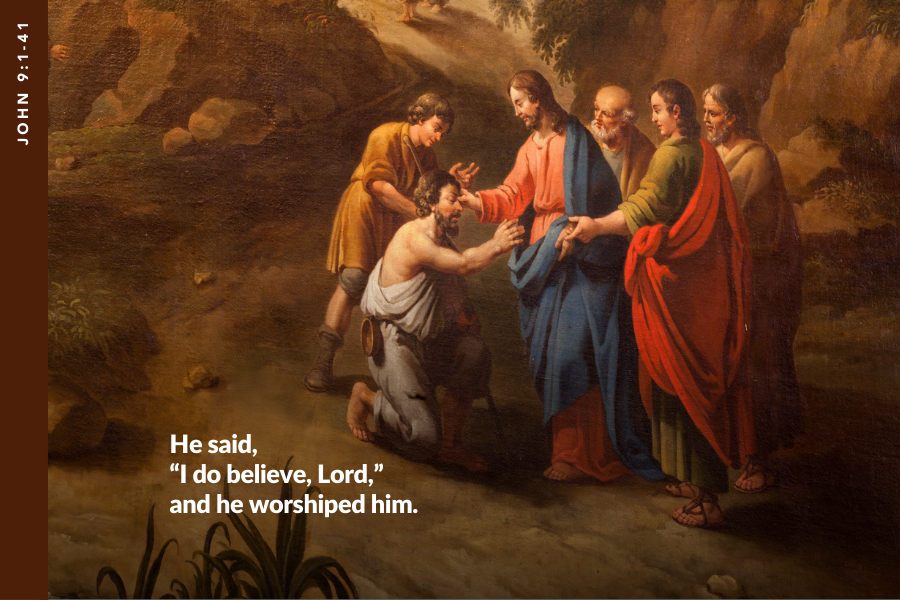
As Jesus passed by he saw a man blind from birth. His disciples asked him, “Rabbi, who sinned, this man or his parents, that he was born blind?” Jesus answered, “Neither he nor his parents sinned; it is so that the works of God might be made visible through him. We have to do the works of the one who sent me while it is day. Night is coming when no one can work. While I am in the world, I am the light of the world.” When he had said this, he spat on the ground and made clay with the saliva, and smeared the clay on his eyes, and said to him, “Go wash in the Pool of Siloam”—which means Sent—. So he went and washed, and came back able to see. His neighbors and those who had seen him earlier as a beggar said, “Isn’t this the one who used to sit and beg?” Some said, “It is, “but others said, “No, he just looks like him.” He said, “I am.” So they said to him, “How were your eyes opened?” He replied, “The man called Jesus made clay and anointed my eyes and told me, ‘Go to Siloam and wash.’ So I went there and washed and was able to see.” And they said to him, “Where is he?” He said, “I don’t know.” They brought the one who was once blind to the Pharisees. Now Jesus had made clay and opened his eyes on a sabbath. So then the Pharisees also asked him how he was able to see. He said to them, “He put clay on my eyes, and I washed, and now I can see.” So some of the Pharisees said, “This man is not from God, because he does not keep the sabbath.” But others said, “How can a sinful man do such signs?” And there was a division among them. So they said to the blind man again, “What do you have to say about him, since he opened your eyes?” He said, “He is a prophet.” Now the Jews did not believe that he had been blind and gained his sight until they summoned the parents of the one who had gained his sight. They asked them, “Is this your son, who you say was born blind? How does he now see?” His parents answered and said, “We know that this is our son and that he was born blind. We do not know how he sees now, nor do we know who opened his eyes. Ask him, he is of age; he can speak for himself.” His parents said this because they were afraid of the Jews, for the Jews had already agreed that if anyone acknowledged him as the Christ, he would be expelled from the synagogue. For this reason his parents said, “He is of age; question him.” So a second time they called the man who had been blind and said to him, “Give God the praise! We know that this man is a sinner.” He replied, “If he is a sinner, I do not know. One thing I do know is that I was blind and now I see.” So they said to him, “What did he do to you? How did he open your eyes?” He answered them, “I told you already and you did not listen. Why do you want to hear it again? Do you want to become his disciples, too?” They ridiculed him and said, “You are that man’s disciple; we are disciples of Moses! We know that God spoke to Moses, but we do not know where this one is from.” The man answered and said to them, “This is what is so amazing, that you do not know where he is from, yet he opened my eyes. We know that God does not listen to sinners, but if one is devout and does his will, he listens to him. It is unheard of that anyone ever opened the eyes of a person born blind. If this man were not from God, he would not be able to do anything.” They answered and said to him, “You were born totally in sin, and are you trying to teach us?” Then they threw him out. When Jesus heard that they had thrown him out, he found him and said, “Do you believe in the Son of Man?” He answered and said, “Who is he, sir, that I may believe in him?” Jesus said to him, “You have seen him, the one speaking with you is he.” He said, “I do believe, Lord,” and he worshiped him. Then Jesus said, “I came into this world for judgment, so that those who do not see might see, and those who do see might become blind.” Some of the Pharisees who were with him heard this and said to him, “Surely we are not also blind, are we?” Jesus said to them, “If you were blind, you would have no sin; but now you are saying, ‘We see,’ so your sin remains.”
Opening Prayer: Lord, you know how blind I am to your presence and your work in my life. In this time of prayer, I renew my faith—I do believe in your enduring presence. I renew my hope in your promise of eternal life. I love you for the work you have already done and are continuing to do.
Encountering Christ:
- The Works of God: Jews of the first century commonly regarded blindness (or any physical ailment, for that matter) a manifestation of sin. They asked Jesus, therefore, who it was who sinned. Jesus responded: “Neither he nor his parents sinned; it is so that the works of God might be made visible through him.” St. Paul recounted that the Lord once told him, “My grace is sufficient for you, for power is made perfect in weakness” (2 Cor 12:9). God’s power becomes perfectly manifest in the poverty and blindness of our human condition, especially when we are open to his grace and his work in us.
- The Transformation of Healing: After Christ healed the blind man, the Pharisees had trouble recognizing him: “Isn’t this the one who used to sit and beg?” The work of Christ in us, which heals and converts us, is a transformative work that can change the way we are perceived by others. The season of Lent is the perfect time to allow the Lord to perfect this transformation in us, but it can come at a cost. People who think they know us might be tempted to criticize us for our Lenten fasts or mortifications, claiming we’re no longer the same person. Are we willing to endure this criticism, if it means transformation into Christ?
- “Even If My Father and Mother Forsake Me…”: The transformation that Christ worked in the blind man had serious repercussions for him: people didn’t recognize him, and his own parents distanced themselves from him. “He is of age; question him,” his parents said. However, he was not totally forsaken. Jesus approached him and revealed himself to be the Son of Man. For the ex-blind man, the words of Psalm 27 came true: “Even if my father and mother forsake me, the Lord will take me in” (Ps 27:10). We need faith to seek out Christ when friends and family seem to misunderstand or reject us.
Conversing with Christ: Lord Jesus, enlighten the eyes of my heart, to see you for who you truly are: the Son of Man, the Savior of the world. Give me the strength to be able to cling to you, even when those I love seem to reject me or distance themselves from me.
Resolution: Lord, today by your grace I will extend my friendship to someone in my workplace or school who seems to be an outcast.
Brian Flanagan is a Regnum Christi member from Atlanta, Georgia.
March 16, 2026 – Faith: Renewal in Christ
Monday of the Fourth Week of Lent
John 4:43-54
At that time Jesus left [Samaria] for Galilee. For Jesus himself testified that a prophet has no honor in his native place. When he came into Galilee, the Galileans welcomed him, since they had seen all he had done in Jerusalem at the feast; for they themselves had gone to the feast. Then he returned to Cana in Galilee, where he had made the water wine. Now there was a royal official whose son was ill in Capernaum. When he heard that Jesus had arrived in Galilee from Judea, he went to him and asked him to come down and heal his son, who was near death. Jesus said to him, “Unless you people see signs and wonders, you will not believe.” The royal official said to him, “Sir, come down before my child dies.” Jesus said to him, “You may go; your son will live.” The man believed what Jesus said to him and left. While the man was on his way back, his slaves met him and told him that his boy would live. He asked them when he began to recover. They told him, “The fever left him yesterday, about one in the afternoon.” The father realized that just at that time Jesus had said to him, “Your son will live,” and he and his whole household came to believe. Now this was the second sign Jesus did when he came to Galilee from Judea.
Opening Prayer: Lord, I believe that you are making all things new in my life, and that the power of your Resurrection is already at work in me through my Baptism. I hope in that same Resurrection, that even now as I unite myself to you, I will one day rise to live with you. I love you, Lord Jesus; help me to love you ever more for who you are, and not simply for what you do.
Encountering Christ:
- In His Native Place: At the very beginning of this Gospel, Jesus identified a very painful truth: A prophet has no honor in his native place. He was coming from Samaria, where he had revealed himself to be the Messiah, “the One who is to come” (cf. Jn 4:1-42). In Galilee, however, Jesus was returning to a people who knew him as the son of Joseph and Mary, a supposed miracle-worker they witnessed at the feast in Jerusalem. Jesus wanted to show them that he is much more than a magic man. He wanted to reveal himself as Messiah, just as he did in Samaria, even though he knew it would lead to his eventual rejection in Nazareth. Christ has an intense desire to make himself known to all, but at the end of the day, he respects our freedom. We are called to put aside any false images of Christ we might cling to and ask him in prayer to reveal himself as he truly is.
- Faith Making All Things New: “Unless you people see signs and wonders, you will not believe.” Jesus wants us to go beyond seeing miracles, for seeing is not the full force of believing. He told the royal official to go home, that his son had been cured—what proof did the man have? He took a leap of faith, left Jesus, and returned home to find that his son had been cured at the exact time he had been dismissed by Jesus. Oftentimes, Jesus asks us to take a similar leap of faith in life—to accept the advice of a spiritual director, to make a pilgrimage, to help start a new business venture, or to begin a new relationship. He wants us to trust in him, even when the results he promises aren’t immediately visible.
- The Whole Household Believed: The royal official’s leap of faith resulted in his son’s miraculous healing. The whole family benefited because they all became believers. The community in Galilee who witnessed the miracle were also given an opportunity to believe. All of the readers of this Gospel passage up until this very moment had heard of this miracle and had been blessed with the grace to believe. How many souls did this one royal official touch by choosing 2,000 years ago to believe in Jesus’ power to heal? We’ll never know. Nor is it possible to guess at the good our sacrifices, prayers, and acts of faith can bring to the world because of the goodness of Jesus. “To pick up a pin for love can convert a soul,” said St. Thérèse of Lisieux.
Conversing with Christ: Lord Jesus, enlighten the eyes of my heart, to see you for who you truly are: the Son of Man, the Savior of the world. Give me the grace to live a sacrificial Lent, trusting that you will bless my efforts for the good of others.
Resolution: Lord, today by your grace I will add one little sacrifice to my day with the hope that you will multiply it for the good of those I love.
For Further Reflection:
“These days,” you were saying, “have been the happiest in my life.” And I answered you without hesitation: that is because you ‘have lived’ with a little more self-giving than usual.”
St. José María Escrivá
Brian Flanagan is a Regnum Christi member from Atlanta, Georgia.
March 17, 2026 – Desire Holiness and Healing

Fourth Sunday of Lent
John 5:1-16
There was a feast of the Jews, and Jesus went up to Jerusalem. Now there is in Jerusalem at the Sheep Gate a pool called in Hebrew Bethesda, with five porticoes. In these lay a large number of ill, blind, lame, and crippled. One man was there who had been ill for thirty-eight years. When Jesus saw him lying there and knew that he had been ill for a long time, he said to him, “Do you want to be well?” The sick man answered him, “Sir, I have no one to put me into the pool when the water is stirred up; while I am on my way, someone else gets down there before me.” Jesus said to him, “Rise, take up your mat, and walk.” Immediately the man became well, took up his mat, and walked. Now that day was a sabbath. So the Jews said to the man who was cured, “It is the sabbath, and it is not lawful for you to carry your mat.” He answered them, “The man who made me well told me, ‘Take up your mat and walk.’” They asked him, “Who is the man who told you, ‘Take it up and walk’?” The man who was healed did not know who it was, for Jesus had slipped away, since there was a crowd there. After this Jesus found him in the temple area and said to him, “Look, you are well; do not sin any more, so that nothing worse may happen to you.” The man went and told the Jews that Jesus was the one who had made him well. Therefore, the Jews began to persecute Jesus because he did this on a sabbath.
Opening Prayer: Lord Jesus, I believe that rivers of living water flow from within you. You are the source of my interior life, and I thank you for your life that you freely give to me. Lord, grant me the grace to see you as the source of living water, and to be grateful for all that you give me.
Encountering Christ:
- Oppressive Self-Pity: Jesus visited the pool of Bethesda specifically to seek out the poor and lame, because his heart is magnanimous and seeks to do good. At the pool he discovered a man who had been ill for thirty-eight years, a tough shake even for sturdy souls. Unfortunately, this man seemed to be focused only on himself. When Jesus approached asking, “Do you want to be well?” the man explained, “I have no one to put me into the pool when the water is stirred up.” We can sometimes complicate our relationship with Jesus by making excuses, overexplaining, or rationalizing, instead of answering his invitation to become saints by saying simply, “Yes, Lord, I want to do your will,” as life’s circumstances present themselves.
- Desire—Healing: The ill man’s self-pity was coupled with a fearful ingratitude. After Jesus healed him, he was questioned by the Pharisees, and he distanced himself from Jesus. He eventually revealed Jesus’ identity to the Pharisees as the one responsible for making him break the sabbath by carrying his mat. Jesus knew the man’s character. Yet, he saw the man’s desire to be healed, and that desire was enough for Jesus’ magnanimous heart to overflow with healing waters.
- Desire—Holiness: Jesus told the man, “Look, you are well; do not sin any more.” He says the same to us every time we go to Confession. Christ wants a total conversion from us, and the graces of Confession are what we need to sin no more. Jesus, grant us the desire for conversion and holiness!
Conversing with Christ: Lord, you know how I want to draw close to you—draw me in, more and more! Increase in me the fire of desire for holiness that you have already lit, and fan the flame with your love. Amen.
Resolution: Lord, today by your grace I will exercise patience with someone I find difficult. I will listen to them sincerely.
For Further Reflection: Do you ever say an act of contrition outside of the confessional? It’s a good practice. There are many versions available or you can use your own words. Here’s one based on the Gospels:
Father of mercy, like the prodigal son I return to you and say: “I have sinned against you and am no longer worthy to be called your child.”
Christ Jesus, Savior of the world, I pray with the repentant thief to whom you promised Paradise: “Lord, remember me in your kingdom.”
Holy Spirit, fountain of love, I call on you with trust: “Purify my heart, and help me to walk as a child of light.”
Brian Flanagan is a Regnum Christi member from Atlanta, Georgia.
March 18, 2026 – Getting Ahead
Wednesday of the Fourth Week of Lent
John 5:17-30
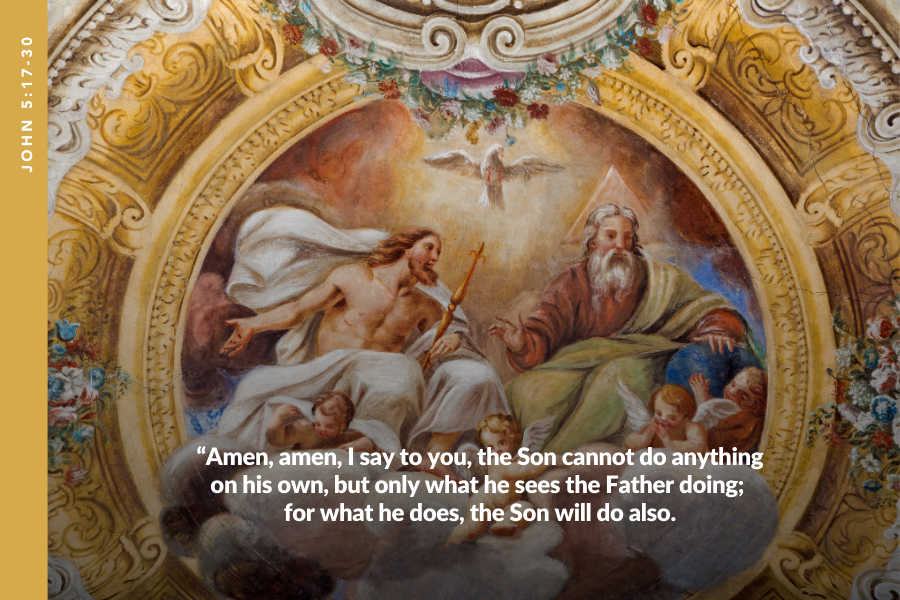
Jesus answered the Jews: “My Father is at work until now, so I am at work.” For this reason they tried all the more to kill him, because he not only broke the Sabbath but he also called God his own father, making himself equal to God. Jesus answered and said to them, “Amen, amen, I say to you, the Son cannot do anything on his own, but only what he sees the Father doing; for what he does, the Son will do also. For the Father loves the Son and shows him everything that he himself does, and he will show him greater works than these, so that you may be amazed. For just as the Father raises the dead and gives life, so also does the Son give life to whomever he wishes. Nor does the Father judge anyone, but he has given all judgment to the Son, so that all may honor the Son just as they honor the Father. Whoever does not honor the Son does not honor the Father who sent him. Amen, amen, I say to you, whoever hears my word and believes in the one who sent me has eternal life and will not come to condemnation, but has passed from death to life. Amen, amen, I say to you, the hour is coming and is now here when the dead will hear the voice of the Son of God, and those who hear will live. For just as the Father has life in himself, so also he gave to the Son the possession of life in himself. And he gave him power to exercise judgment, because he is the Son of Man. Do not be amazed at this, because the hour is coming in which all who are in the tombs will hear his voice and will come out, those who have done good deeds to the resurrection of life, but those who have done wicked deeds to the resurrection of condemnation. I cannot do anything on my own; I judge as I hear, and my judgment is just, because I do not seek my own will but the will of the one who sent me.”
Opening Prayer: Lord, open my mind and heart to hear your words of truth. Please give me the grace to hear and obey, to listen and act in everything according to your will.
Encountering Christ:
- Father and Son: Jesus tells us in this Gospel that he cannot do anything on his own. He always keeps his Father as the point of reference for all that he does. His deepest desire is to please God in everything. Christ’s life is not self-referential but reflects the desires of the Father. Just as a son looks to his dad to learn how to live life, asking the questions of “why” and “how,” so Christ looked to his Father before acting. We are called to imitate Christ’s docility and love of the Father by living for Christ above all things. “And whatever you do, in word or in deed, do everything in the name of the Lord Jesus, giving thanks to God the Father through him” (Col 3:17).
- How to Get Ahead: We live in a world where, in order to get ahead, we are encouraged to put ourselves out there, to make a name for ourselves, to get noticed—even to the point of becoming someone we’re not on social media. Christ wants to be known, not for his own personal aggrandizement, but so to honor his Father. The ultimate sacrifice of the cross was for us, yes, but also to give glory to his Father. Do we try to “get ahead” in order to give glory to God?
- All About Love: Christ’s relationship with his Father is not based on submission to the Father. It is a relationship of supernatural, symbiotic love. Their hearts are united in one course of action. It is their love that engenders the Holy Spirit. It is this love that brought about our existence and won our salvation.
Conversing with Christ: Lord Jesus, thank you for allowing me to reflect on the love that you have with the Father. You have shared with me the confidence and filial trust you share with the Father. Guide me deeper into this relationship, as only you can do. Share with me the intimacy that you have with our Father.
Resolution: Lord, today by your grace I will take some time at midday to reconnect with the Father, asking for the grace to do my tasks for his glory.
Father Joshua West is a Legionary of Christ priest serving as chaplain at North Carolina State University in Raleigh, North Carolina.
March 19, 2026 – Joseph, Our Model
Solemnity of Saint Joseph, Spouse of the Blessed Virgin Mary
Matthew 1:16, 18-21, 24a
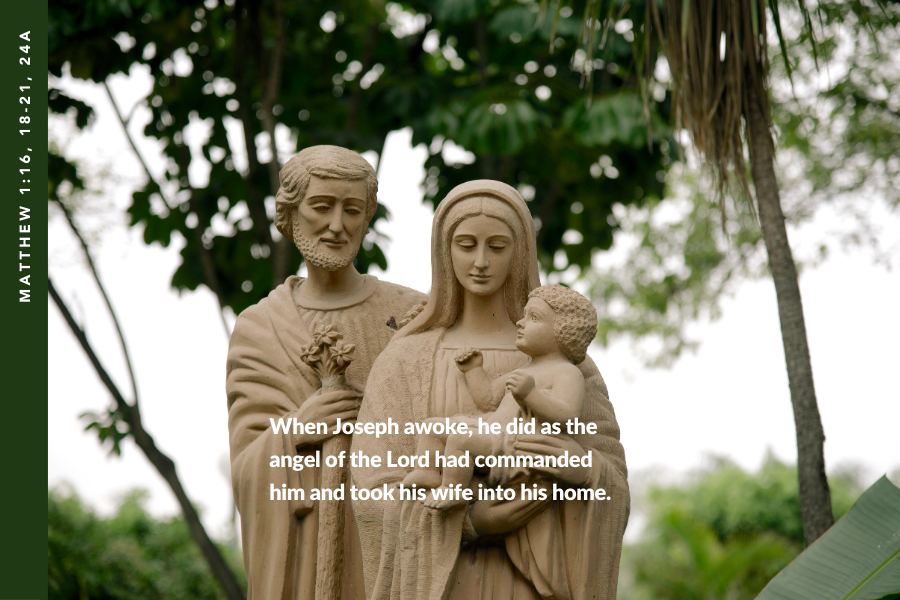
Jacob was the father of Joseph, the husband of Mary. Of her was born Jesus who is called the Christ. Now this is how the birth of Jesus Christ came about. When his mother Mary was betrothed to Joseph, but before they lived together, she was found with child through the Holy Spirit. Joseph her husband, since he was a righteous man, yet unwilling to expose her to shame, decided to divorce her quietly. Such was his intention when, behold, the angel of the Lord appeared to him in a dream and said, “Joseph, son of David, do not be afraid to take Mary your wife into your home. For it is through the Holy Spirit that this child has been conceived in her. She will bear a son and you are to name him Jesus, because he will save his people from their sins.” When Joseph awoke, he did as the angel of the Lord had commanded him and took his wife into his home.
Opening Prayer: Lord, you had a loving earthly father who taught and cared for you. Open my heart to learn from him as I reflect on this episode of Joseph’s life.
Encountering Christ:
- Joseph’s Discernment: How did Joseph discern that the dream he had was from God? Most of us awakening from a dream would not think, “Now I know what God is asking of me.” Yet, Joseph discerned, then acted upon, his dream, promptly and obediently. Pope Francis declared a “Year of St. Joseph,” from December 8, 2020, through December 8, 2021. In his declaration, he noted that in all the dreams through which God spoke to Joseph, “Joseph declared his own ‘fiat,’ like those of Mary at the Annunciation and Jesus in the Garden of Gethsemane” (Patris Corde, 3). So often we reflect upon the “yes” of Mary, but Joseph also offered his “yes” to God. We didn’t hear his audible “yes.” His affirmation of what God was asking of him came through prompt, obedient action.
- Joseph’s Reward: Joseph was rewarded for his virtue with the gift of naming the Messiah. Naming gives authority over the one being named. Joseph must have been awestruck by the gift of earthly authority over the Savior of the world. This delegated authority was a moment of humility for Joseph, and he found the strength to carry out his role knowing that God had called him to this. God always gives us the grace to do his will.
- Joseph’s Courage: Joseph took Mary and eventually Jesus into his home and into his heart. He had no idea what his future held—Herod wanting to kill Jesus, the flight into Egypt, the Holy Family’s return from Egypt, daily life in the carpentry shop, and teaching Jesus to pray. Pope Francis invited us to meditate on the creative courage of Joseph in every circumstance: “This emerges especially in the way we deal with difficulties. In the face of difficulty, we can either give up and walk away, or somehow engage with it. At times, difficulties bring out resources we did not even think we had” (Patris Corde, 5).
Conversing with Christ:
Hail, Guardian of the Redeemer,
Spouse of the Blessed Virgin Mary.
To you God entrusted his only Son;
in you Mary placed her trust;
with you Christ became man.
Blessed Joseph, to us too,
show yourself a father
and guide us in the path of life.
Obtain for us grace, mercy, and courage,
and defend us from every evil. Amen (Pope Francis, Patris Corde).
Resolution: Lord, today by your grace I will muster the courage to take up a task that I know needs to be done but I have struggled to undertake.
For Further Reflection: The Apostolic Letter “Patris Corde” (“With a Father’s Heart”), by Pope Francis.
Father Joshua West is a Legionary of Christ priest serving as chaplain at North Carolina State University in Raleigh, North Carolina.
March 20, 2026 – Do You Know Him?
Friday of the Fourth Week of Lent
John 7:1-2, 10, 25-30
Jesus moved about within Galilee; he did not wish to travel in Judea, because the Jews were trying to kill him. But the Jewish feast of Tabernacles was near. But when his brothers had gone up to the feast, he himself also went up, not openly but as it were in secret. Some of the inhabitants of Jerusalem said, “Is he not the one they are trying to kill? And look, he is speaking openly and they say nothing to him. Could the authorities have realized that he is the Christ? But we know where he is from. When the Christ comes, no one will know where he is from.” So Jesus cried out in the temple area as he was teaching and said, “You know me and also know where I am from. Yet I did not come on my own, but the one who sent me, whom you do not know, is true. I know him, because I am from him, and he sent me.” So they tried to arrest him, but no one laid a hand upon him, because his hour had not yet come.
Opening Prayer: Lord Jesus, enlighten the eyes of my heart, to see you for who you truly are: the Son of Man, the Savior of the world. Give me the strength to be able to cling to you. Lord, give me the courage to proclaim you even in the face of persecution.
Encountering Christ:
- Do We Know Where He Is From?: The inhabitants of Jerusalem—the ordinary people—saw Jesus preaching openly, and it confused them. “Is he not the one they are trying to kill?” they asked. “Could the authorities have realized that he is the Christ?” they wondered. They thought they knew where Jesus was from. They were curious but rudderless, looking for guidance from their leaders about Jesus. Jesus cried out, “You know me and you also know where I am from.” Was he appealing to the simple and pure of heart in the crowd? Asking them to attend to the movements of the Spirit in their hearts as they heard him preach? Inviting them to believe that the Father sent him? Jesus extends the same invitation to us. He asks us to cut through the noise and moral confusion of the culture and really tune into his words by reading and meditating on the Scriptures. This allows the Spirit to imbue us with understanding and a holy desire to draw ever closer to the Father.
- Fearless Proclamation: At the beginning of the Gospel passage, Jesus didn’t go to Judea because he knew the Jews were hunting him there, that they wanted him dead. However, he ended up going. Why? Fulfilling the Father’s will was infinitely more important to him than potential persecution by men. He foresaw the Cross, but he was secure in the knowledge of his Father’s love for him, and this love led him to love in return by proclaiming the Good News to all in Jerusalem. Let us ask the Lord for a deeper knowledge and assurance of his love, that we too may be able to go out and boldly share his love with others.
- “His Hour Had Not Yet Come”: The primary objective of St. John’s Gospel was to illuminate Our Lord’s divinity. John wrote that when the Jews tried to arrest Jesus they couldn’t. Why? Because Jesus was in complete control. He knew his hour and would surrender his life according to the divine timetable—not one minute sooner. As children of God, we can draw great consolation from the divine traits of our Redeemer. He guides us with his incomparable wisdom, heals us by his compassion, rescues us by his might, and loves us with his limitless capacity of divine charity.
Conversing with Christ: Lord, please cut through the confusion in my mind and bless me with a renewed understanding of your divine power and might.
Resolution: Lord, today by your grace I will spend an extra moment reflecting deeply on my favorite passage from the Gospel.
Maribeth Harper celebrated paying the last tuition bill for her kids’ college by writing a book for parents who have college-aged young adults: A Spiritual Toolbox: Tips for Parenting through the First Year of College. She is a wife of thirty-five years, mother of four, and grandmother of twelve and counting.
March 21, 2026 – A Sign to Be Contradicted
Saturday of the Fourth Week of Lent
John 7:40-53
Some in the crowd who heard these words of Jesus said, “This is truly the Prophet.” Others said, “This is the Christ.” But others said, “The Christ will not come from Galilee, will he? Does not Scripture say that the Christ will be of David’s family and come from Bethlehem, the village where David lived?” So a division occurred in the crowd because of him. Some of them even wanted to arrest him, but no one laid hands on him. So the guards went to the chief priests and Pharisees, who asked them, “Why did you not bring him?” The guards answered, “Never before has anyone spoken like this man.” So the Pharisees answered them, “Have you also been deceived? Have any of the authorities or the Pharisees believed in him? But this crowd, which does not know the law, is accursed.” Nicodemus, one of their members who had come to him earlier, said to them, “Does our law condemn a man before it first hears him and finds out what he is doing?” They answered and said to him, “You are not from Galilee also, are you? Look and see that no prophet arises from Galilee.” Then each went to his own house.
Opening Prayer: Lord Jesus, I believe that you have called me to this moment of prayer, now, in the season of Lent. I hope in your victory on the Cross, even as the world contradicts you. I love you, Lord Jesus; help me in my confusion and my weak love.
Encountering Christ:
- Jesus, A Sign to Be Contradicted: As the crowd disputed Jesus’ identity and origin, they quickly grew divided among themselves. We have seen this phenomenon before. In the Gospel of Luke, the prophet Simeon told Mary concerning the child Jesus: “Behold, this child is destined for the fall and rise of many in Israel, and to be a sign that will be contradicted” (Lk 2:34). Christ is a sign that is often contradicted, as are his faithful followers in the world.
- “Never Before Has Anyone Spoken Like This Man”: The community was divided about who Jesus was, and the division ran deep, even to the soldiers who were supposed to arrest Christ. When the soldiers returned to the Sanhedrin empty-handed, they explained, “Never before has anyone spoken like this man.” Christ’s words spoke to their souls, even though Jesus had not spoken in this Gospel passage. When has Christ touched me so profoundly that he left a lasting impression on my soul?
- Twisting the Law: The Sanhedrin found itself confronted with the “Jesus problem,” and asked, “How do we kill him?” They connived to twist the law given to them by Moses. According to that law, no prophet arises from Galilee. Therefore, Jesus could not have been a prophet. They ignored the plea of Nicodemus for fairness and proceeded to plot the murder of Jesus. How many of Our Lord’s commands are twisted, ignored, or rejected in today’s culture? As believers, let us respect and love what the Church teaches, and share with others how beautiful these truths are!
Conversing with Christ: Lord Jesus, your words are Spirit and life, and you speak directly to my soul. The world around me is divided about you—some love you, while many others hate you or are indifferent. Speak to me in my soul through your law so that I may bring this word of yours to all those who suffer without you!
Resolution: Lord, today by your grace I will take a moment to write down my reflections from this meditation.
For Further Reflection: The Colors of the Cross: A Retreat Guide for Lent by Fr. John Bartunek, LC (available on www.regnumchristi.com).
Brian Flanagan is a Regnum Christi member from Atlanta, Georgia.
March 22, 2026 – Take Away the Stone
Fifth Sunday of Lent
John 11:1-45
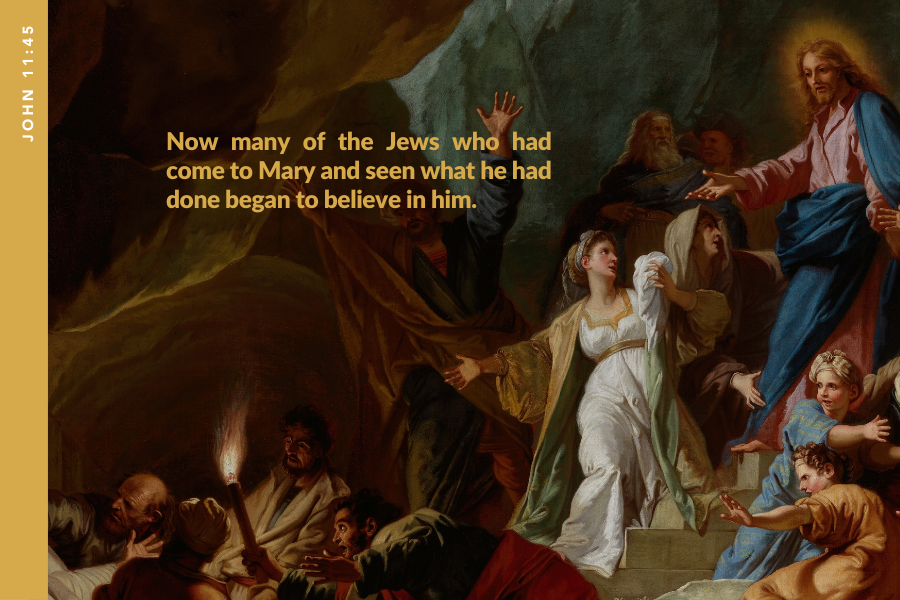
Now a man was ill, Lazarus from Bethany, the village of Mary and her sister Martha. Mary was the one who had anointed the Lord with perfumed oil and dried his feet with her hair; it was her brother Lazarus who was ill. So the sisters sent word to him saying, “Master, the one you love is ill.” When Jesus heard this he said, “This illness is not to end in death, but is for the glory of God, that the Son of God may be glorified through it.” Now Jesus loved Martha and her sister and Lazarus. So when he heard that he was ill, he remained for two days in the place where he was. Then after this he said to his disciples, “Let us go back to Judea.” The disciples said to him, “Rabbi, the Jews were just trying to stone you, and you want to go back there?” Jesus answered, “Are there not twelve hours in a day? If one walks during the day, he does not stumble, because he sees the light of this world. But if one walks at night, he stumbles, because the light is not in him.” He said this, and then told them, “Our friend Lazarus is asleep, but I am going to awaken him.” So the disciples said to him, “Master, if he is asleep, he will be saved.” But Jesus was talking about his death, while they thought that he meant ordinary sleep. So then Jesus said to them clearly, “Lazarus has died. And I am glad for you that I was not there, that you may believe. Let us go to him.” So Thomas, called Didymus, said to his fellow disciples, “Let us also go to die with him.” When Jesus arrived, he found that Lazarus had already been in the tomb for four days. Now Bethany was near Jerusalem, only about two miles away. And many of the Jews had come to Martha and Mary to comfort them about their brother. When Martha heard that Jesus was coming, she went to meet him; but Mary sat at home. Martha said to Jesus, “Lord, if you had been here, my brother would not have died. But even now I know that whatever you ask of God, God will give you.” Jesus said to her, “Your brother will rise.” Martha said to him, “I know he will rise, in the resurrection on the last day.” Jesus told her, “I am the resurrection and the life; whoever believes in me, even if he dies, will live, and everyone who lives and believes in me will never die. Do you believe this?” She said to him, “Yes, Lord. I have come to believe that you are the Christ, the Son of God, the one who is coming into the world.” When she had said this, she went and called her sister Mary secretly, saying, “The teacher is here and is asking for you.” As soon as she heard this, she rose quickly and went to him. For Jesus had not yet come into the village, but was still where Martha had met him. So when the Jews who were with her in the house comforting her saw Mary get up quickly and go out, they followed her, presuming that she was going to the tomb to weep there. When Mary came to where Jesus was and saw him, she fell at his feet and said to him, “Lord, if you had been here, my brother would not have died.” When Jesus saw her weeping and the Jews who had come with her weeping, he became perturbed and deeply troubled, and said, “Where have you laid him?” They said to him, “Sir, come and see.” And Jesus wept. So the Jews said, “See how he loved him.” But some of them said, “Could not the one who opened the eyes of the blind man have done something so that this man would not have died?” So Jesus, perturbed again, came to the tomb. It was a cave, and a stone lay across it. Jesus said, “Take away the stone.” Martha, the dead man’s sister, said to him, “Lord, by now there will be a stench; he has been dead for four days.” Jesus said to her, “Did I not tell you that if you believe you will see the glory of God?” So they took away the stone. And Jesus raised his eyes and said, “Father, I thank you for hearing me. I know that you always hear me; but because of the crowd here I have said this, that they may believe that you sent me.” And when he had said this, he cried out in a loud voice, “Lazarus, come out!” The dead man came out, tied hand and foot with burial bands, and his face was wrapped in a cloth. So Jesus said to them, “Untie him and let him go.” Now many of the Jews who had come to Mary and seen what he had done began to believe in him.
Opening Prayer: Lord, I wish to have you roll away the stone which is sealing my heart and help me to be abundantly alive in you. I pray for the grace of a happy death.
Encountering Christ:
- “The One You Love Is Ill”: There was much activity in the beginning of this account. Jesus received alarming news about a dear friend. Life in Jerusalem was becoming dangerously tense. The disciples still lacked understanding and cohesion. But Jesus always had clarity and did not stumble. When his Father could be most glorified, Jesus acted. Our lives can be complicated, sometimes very complicated. When we find ourselves in troubling circumstances, we can imitate Our Lord by seeking only to glorify the Father with our actions and words. Lord, please help us to see with your eyes; help us to always turn to you in prayer and act in ways that glorify God
- “The Teacher Is Here And Is Asking for You”: Amidst the danger and confusion, Jesus went to Bethany and there encountered Martha. True to form, Martha was anxious, but Jesus was patient and led her to a beautiful confession of faith. Jesus also saw past the obvious intensity of the situation, and with tender sensitivity, asked for Mary, who he knew was quietly at home, mourning the loss of her brother, Lazarus. In this deeply painful moment, he sought her out. And when she went to him and shared her anguish, he revealed the tenderness of his heart. He “became perturbed and deeply troubled,” and wept. It is said that in Jesus’ time, they recognized his humanity but wrestled with his divinity, whereas today we recognize his divinity but wrestle with his humanity. What a gift to read about these moments where Jesus reveals his humanity and his tender love, and to accept his tender and personal love toward us as well.
- “Take Away the Stone”: Jesus was not afraid to enter into the ugliest of places to bring life. He did this on a natural level with Lazarus when he had the gravestone removed, and he does this in our stony hearts as well. There are dark places in our hearts—regrets, painful memories, or festering wounds—which can be likened to an interior death. Too often we seal them in with a heavy stone of denial, when we should instead beg Our Lord to take away the stone, remove the self-protective bandages, and bring us back to the fullness of life.
Conversing with Christ: Dear Lord, what a mess I can be—like the living dead or walking wounded. Help me to turn to you and recognize you as the source of my resurrection and life. Help me to believe and live!
Resolution: Lord, today by your grace I will pray for the souls of those who will die this day, that they may enjoy the grace of a happy death.
Mary Wolff has a unique understanding of “life in the trenches” from many years of motherhood and her years living in the Holy Land. She spends countless hours in Adoration, interceding especially for priests and for all on the front lines of life. She is crazy-in-love with the Trinity, Our Lady, and her son Mike; she loves to laugh, is a devoted fan of chocolate, and enjoys watching Navy beat Army. Mary can be reached at marybwolff@gmail.com.
- LATEST ARTICLES


View this profile on InstagramRegnum Christi (@regnumchristi_english) • Instagram photos and videos
- RELATED POSTS
Weekly Digest of the Regnum Christi Daily Meditations: Mar 15 – 22, 2026 Read More »

 Fr. John Bartunek was ordained in 2003. He has taught moral theology at various ecclesiastical institutions at the graduate and undergraduate levels, and has authored many books, including the Gospel companion, The Better Part, and Inside the Passion, the only authorized behind-the-scenes look at the film, for which he provided on-set spiritual support. His online retreat guides are available in multiple formats at RCSpirituality.org. Fr. John currently resides in Atlanta, where he is serving as territorial vicar for the Legionaries of Christ.
