February 10, 2026

virtual_pilgrimage

Join Us for a Virtual Pilgrimage this Lent
An invitation from Kathleen Nichols, director of the Magdala Institute and your host for a special Lenten virtual pilgrimage:

I have lived in Magdala for more than six years now, blessed by daily sunrises over the Sea of Galilee and a privileged view toward the Mount of Beatitudes from the shoreline where Jesus once taught the crowds. Describing one such moment, Matthew writes in his Gospel:

“That same day Jesus went out of the house and sat beside the sea. Such great crowds gathered around him… And he told them many things in parables…”

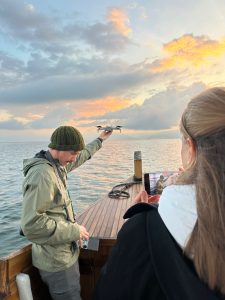
Drone boatFor many years, I thought I knew the parables well—especially those that describe the Kingdom of Heaven in Matthew chapter 13. I had heard them preached, studied them, and prayed with them. But encountering these parables again while standing in on the slopes of Mt. Arbel brought them vividly to life. Seeing the rocky soil, the thorns and thistly growth, the mustard plants, and the fields where wheat and weeds grow side by side—and watching fishermen haul in their nets through the grand windows of Duc In Altum overlooking the water—gave the parables new weight and clarity. They were no longer just stories remembered from childhood, but urgent revelations capable of transforming everyday Christian life. I came to realize more fully that Jesus was not simply explaining the Kingdom—He was inviting His listeners, then and now, to step inside it.

Alex Nevsky

As I prayed with these parables in their original settings in Galilee, I became more aware of how deeply they shape the way we see God, the world, and ourselves. The Kingdom Jesus describes is hidden yet active, small yet powerful, demanding everything and yet offered freely—characteristics we may know in theory, but which, when contemplated in the Holy Land, reveal unexpected nuances that the Lord communicates through His parables. In addition, standing in places associated with David, Judith, Daniel, and Gideon, it became even clearer to me how these biblical lives echo the same Kingdom dynamics revealed in the parables: faith tested, obedience chosen, patience learned, courage embodied and hope sustained.
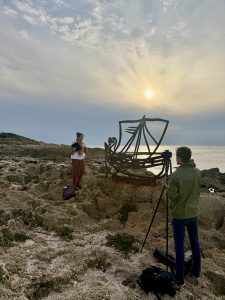
Tel Dor

Out of this prayerful experience grew the desire to share this journey with those who do not live in the Holy Land, leading to the creation of this year’s Lenten video series, A Virtual Pilgrimage of the Kingdom: Seven Parables, following the structure of Matthew chapter 13. Together with Magdala Media, we filmed across the Holy Land, weaving together weekly Lenten reflections grounded in Scripture and set within important archaeological and sacred sites. From Ash Wednesday through Easter, the series invites fellow virtual pilgrims to enter more deeply into the mystery of the Kingdom as it unfolds through real landscapes, biblical history, and ultimately through the Passion, Death, and Resurrection of Christ.

As the pilgrimage reaches Holy Week, the parables find their fulfillment: The Kingdom Jesus spoke of from boats and hillsides is revealed fully in Jerusalem—at Gethsemane, at Calvary, and at the empty tomb. On Easter morning, we return to the Sea of Galilee, where the risen Lord blesses His disciples with eyes that see and ears that hear, sending them forth as witnesses of the Kingdom yet to come.
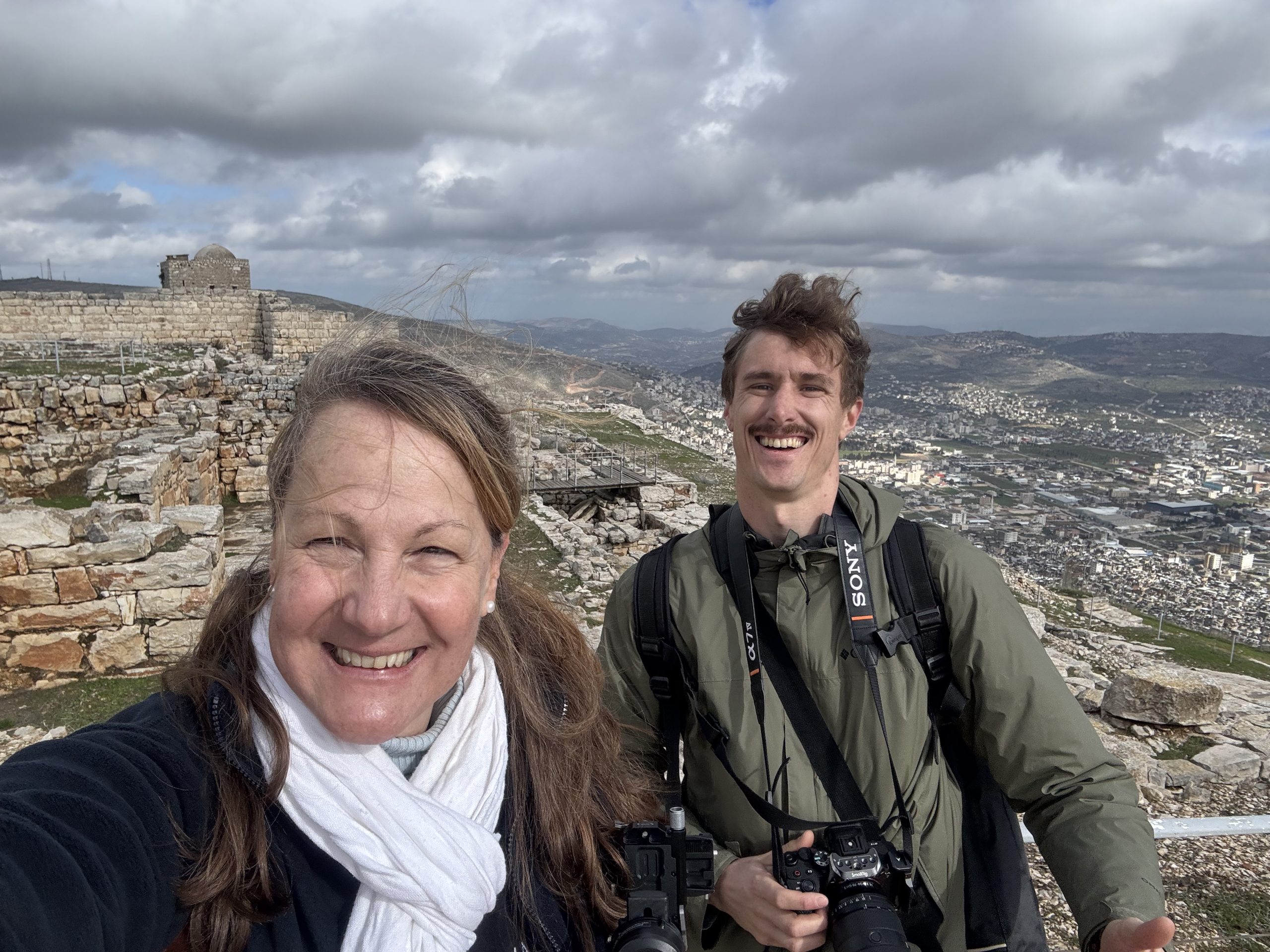
Mt Garazim

I warmly invite you to join us on this virtual pilgrimage this Lent if you are looking for a unique source of prayer and compelling visuals from the Holy Land. This journey offers a way to see with your own eyes the images Jesus used to reveal the Kingdom of Heaven—images that can lead to a deeper relationship with the Lord and a stronger commitment to living and extending His Kingdom. You can find more information and sign up at https://www.magdala.org/

My hope is that The Virtual Pilgrimage of the Kingdom can help all of us listen more deeply to the Lord, encounter Him anew, and allow the mystery of the Kingdom to take root in our hearts and lives. Please know that all of you who follow and pray for our work here in the Holy Land are always in my prayers!

Join Us for a Virtual Pilgrimage this Lent Read More »

Regnum Christi Spirituality Center Uncle Eddy

St Scholastica

Dear Scott, So you’re “restless and pessimistic” in “this dreary winter desolation which these barbaric Yankees call New England,” are you?  I was glad at least to see that you didn’t leave your eloquence back home in sunny Arizona. I hope you realize that feeling restless and pessimistic is morally neutral.  It’s utterly unimportant. What matters is how you respond to those feelings. The way you respond to them now, and throughout your remaining college years, will largely determine how you respond to similar negative feelings later on, when more is at stake (like when your wife and baby children are getting on your nerves because problems at work have worn you down, for instance).  May I make a suggestion? Don’t alter your exterior circumstances, keep going to class, keep fulfilling your assignments, don’t skip rowing workouts, don’t skip First Friday Masses – do everything you normally do, but instead of looking to “get something out of it” in the selfish way you’re used to, look instead to put more into it, more love, especially.  It’s the great secret to personal and spiritual maturity: to love more when you feel like loving less.  And you can love all those activities because you know that they are God’s will for you, and when you put your heart into them, you are pleasing him. This reminds me of the anecdotes that have come down to us about today’s saint, Scholastica.  She was St Benedict’s sister (St Benedict was the father of western monasticism, remember?), born and raised in the vicinity of Rome, just as her brother was.  And when he built the great monastery of Monte Cassino (still around today, by the way, in spite of misdirected American bombs during World War II), she and a group of nuns soon formed a community for women not too far away.  He had the tradition of visiting her once a year. At the end of his last visit to her (she was to die just a little while afterward), she begged him to stay with her that night and continue their conversation. He refused since staying out past sunset would be a breach in his rule.  She buried her face in her hands and began to cry. Right then, a violent storm broke out, so violent that Benedict and his companions couldn’t even step out the door. Then occurred a famous little dialogue persevered for history by St Gregory the Great. Benedict scolded her, “God almighty forgive you, sister; what is this that you have done?”  She looked at him mischievously, “I prayed you to stay, and you would not hear me; I prayed to almighty God, and he heard me!” St Gregory goes on to explain that “No wonder if at that time she were more powerful than he… For according to St John, ‘God is love,’ so with good reason she was more powerful who loved more.” Therefore, my shivering nephew, I suggest you fill up your “dreary” days with lots of love and just watch how that dark New England winter starts to sparkle. Your loving uncle, Eddy

St Scholastica Read More »

WM_Idols

For freedom Christ has set us free; stand fast, therefore, and do not submit again to a yoke of slavery. (Galatians 5:1)

Dear Friends,


In the Book of Micah, the Lord is very clear: “I will destroy your idols…and you shall bow down no more to the work of your hands” (Micah 5:13). God’s absolute intolerance of idols is a constant theme throughout Sacred Scripture: he will not brook anything that separates his people from himself.

But that leads to a question: What, exactly, is an idol? It seems to me that an idol is anything that feels more real than God. An idol is whatever feels more urgent than the Living God. (In this regard, Pope Benedict XVI once observed that even our worry can become an idol!) This is what God wants todemolish, so that we can worship him freely and without fear (cf. Luke 1:74).

What feels more real than God? What feels more urgent than the Lord? This Lent, perhaps we can open that place in our hearts to him. This Lent, perhaps we can pour out our hearts a bit more to the Living God (cf. Psalm 62), and give him permission to continue destroying our idols and drawing usever nearer to himself.

God bless you,
Fr. John Pietropaoli

For freedom Christ has set us free; stand fast, therefore, and do not submit again to a yoke of slavery. (Galatians 5:1) Read More »

26-02-10-DM

February 10, 2026 – Teach Me Your Ways

Memorial of Saint Scholastica, Virgin


Mark 7:1-13

When the Pharisees with some scribes who had come from Jerusalem gathered around Jesus, they observed that some of his disciples ate their meals with unclean, that is, unwashed, hands. (For the Pharisees and, in fact, all Jews, do not eat without carefully washing their hands, keeping the tradition of the elders. And on coming from the marketplace they do not eat without purifying themselves. And there are many other things that they have traditionally observed, the purification of cups and jugs and kettles and beds.) So the Pharisees and scribes questioned him, “Why do your disciples not follow the tradition of the elders but instead eat a meal with unclean hands?” He responded, “Well did Isaiah prophesy about you hypocrites, as it is written: This people honors me with their lips, but their hearts are far from me; In vain do they worship me, teaching as doctrines human precepts. You disregard God’s commandment but cling to human tradition.” He went on to say, “How well you have set aside the commandment of God in order to uphold your tradition! For Moses said, Honor your father and your mother, and Whoever curses father or mother shall die. Yet you say, ‘If someone says to father or mother, “Any support you might have had from me is qorban”’ (meaning, dedicated to God), you allow him to do nothing more for his father or mother. You nullify the word of God in favor of your tradition that you have handed on. And you do many such things.”

Opening Prayer: Lord Jesus, you see my heart. Form it to be sincere and centered on being faithful to all you desire.

Encountering Christ:

  1. The Heart of the Matter: We can easily feel the difference of opinion inside and outside of the Church as to matters of practice and discipline. It takes reflection to distinguish what is unshakeable and essential doctrine and what are recommended practices of discipline and tradition. We need prudence and wisdom to get to the heart of the matter. Jesus is criticized for not following the human traditions, the externals that were set in place at one point in time, to set the Jewish people apart from their pagan neighbors. The purpose was to preserve their fidelity to the one true worship of God. In our pious practices we can reflect, “Does this help to center my heart on God, or is it creating Jansenistic-like heart, that places my salvation in the practice alone, to the exclusion of the Lord at the center?”


  2. The Universal Call: When Jesus challenged the Pharisees, it seems that he opposed the law. But in fact, he helped them to see beyond the human traditions to the true moral intent of the law. The particular practice of kosher laws had become an obstacle for inviting the Gentiles to the table. Peter will discover this in Acts 10 and 11, when he is asked to kill and eat the animals that Jews had been forbidden to eat. God wills all to be saved (cf. 1 Tim 2:4), and Jesus intimated this by entering in and out of the pagan territory beyond Galilee. The Lord calls us all and will try to break down non-essential barriers in our lives to bring more souls into his fold. What barriers do I put up that inhibit people from approaching me so that I can share the Lord with them? Prejudices, negative attitudes, etc.?


  3. Formation As a Child of the Church: Forming our hearts in true doctrine, so that our actions flow from it, is a journey that requires prayer and the study of God’s revelation, passed on to us through Sacred Scripture and Sacred Tradition. The Church, as the universal sacrament, is the extension of Christ’s Incarnation, his presence here on earth. She is also a mother who sets down guidelines for proper moral action grounded in true freedom. To live well the particulars of Church law requires trust in the authority given by Christ to his Church. It also requires assimilating the heart of Christ, so that we strive to love, in the particulars, as he would love, remaining always faithful to the Father.

Conversing with Christ: Lord Jesus, help me to grow in my knowledge and love for the teachings of the Church. Grant me true fidelity to your most holy will. Help me to be faithful without putting up boundaries of prejudice toward those who need encouragement to come to you.

Resolution: Lord, today by your grace I will be attentive to my disposition of charity toward those who hold different beliefs and practices than I do. I will also identify an area of the Church teachings that I need to understand better.

Jennifer Ristine is a consecrated woman of Regnum Christi who is dedicated to spiritual and faith formation through teaching, conferences, writing, and spiritual direction. While serving in Ancient Magdala she wrote Mary Magdalene: Insights from Ancient Magdala.

February 10, 2026 – Teach Me Your Ways Read More »

Ask a Priest: “Shouldn’t a Homily Explain the Readings, Too?”

Q: Why do the homilies after the Gospel at Mass not discuss or explain anything about the Old Testament readings or the second reading and how they tie together? – Therese

Answered by Fr. Edward McIlmail, LC:

In defense of countless priests, I would say that many of them do try to tie together the readings with the Gospel.

A common exception might be the homily at a daily Mass.

During the so-called Ordinary Time of the liturgical year, the first readings and the Gospels follow a cycle of their own; so, it is sometimes a stretch to try to tie them together.

This is especially true on weekdays when a priest might want to keep a Mass short for the sake of time-strapped commuters or those on a lunch break.

On Sundays, solemnities and feasts, a homily should touch on all the readings.

The General Instruction of the Roman Missal says:

“29. When the Sacred Scriptures are read in the Church, God himself speaks to his people, and Christ, present in his own word, proclaims the Gospel.

“Therefore, all must listen with reverence to the readings from God’s word, for they make up an element of greatest importance in the Liturgy. Although in the readings from Sacred Scripture God’s word is addressed to all people of every era and is understandable to them, nevertheless, a fuller understanding and a greater effectiveness of the word is fostered by a living commentary on the word, that is, the homily, as part of the liturgical action.”

Sometimes the homilist might stick with the Gospel because it’s more familiar and has juicier points that are easier to deliver in a brief time frame. It’s a prudential call.

Nevertheless, if you know a priest who usually preaches only on the Gospel, you might encourage him by saying, “I liked that homily a few weeks ago when you tied the Old Testament reading to the Gospel — that helped me see the OT reading in a new light. I always appreciate learning the connection between the Old Testament and New Testament readings.”

This might help nudge the priest in the right direction.

Ask a Priest: “Shouldn’t a Homily Explain the Readings, Too?” Read More »

Scroll to Top

Events

Looking for another country?

Contact Regnum Christi near you

News & Resources

News & Resources

The Regnum Christi Mission

The Regnum Christi Identity

Alex Kucera

Atlanta

Alex Kucera has lived in Atlanta, GA, for the last 46 years. He is one of 9 children, married to his wife Karmen, and has 3 girls, one grandson, and a granddaughter on the way. Alex joined Regnum Christi in 2007. Out of the gate, he joined the Helping Hands Medical Missions apostolate and is still participating today with the Ghana Friendship Mission.

In 2009, Alex was asked to be the Atlanta RC Renewal Coordinator for the Atlanta Locality to help the RC members with the RC renewal process. Alex became a Group Leader in 2012 for four of the Atlanta Men’s Section Teams and continues today. Running in parallel, in 2013, Alex became a Team Leader and shepherded a large team of good men.

Alex was honored to be the Atlanta Mission Coordinator between 2010 to 2022 (12 years), coordinating 5-8 Holy Week Mission teams across Georgia. He also created and coordinated missions at a parish in Athens, GA, for 9 years. Alex continues to coordinate Holy Week Missions, Advent Missions, and Monthly missions at Good Shepherd Catholic Church in Cumming, GA.

From 2016 to 2022, Alex also served as the Men’s Section Assistant in Atlanta. He loved working with the Men’s Section Director, the Legionaries, Consecrated, and Women’s Section leadership teams.

Alex is exceptionally grateful to the Legionaries, Consecrated, and many RC members who he’s journeyed shoulder to shoulder, growing his relationship with Christ and others along the way. He knows that there is only one way, that’s Christ’s Way, with others!