November 18, 2025

More than king

Christ is Far More than a King

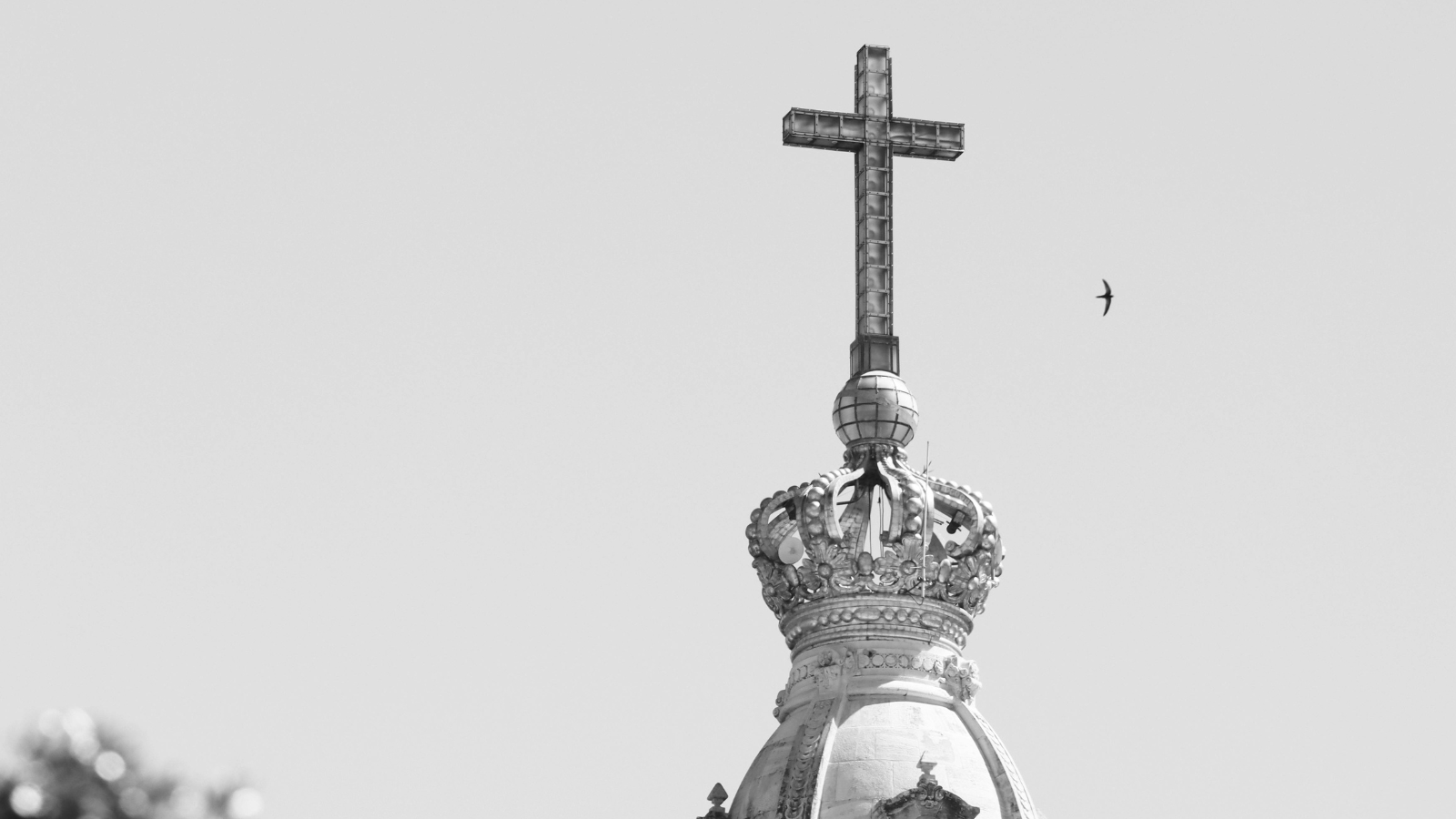
A central meditation in the Ignatian Spiritual Exercises is the call of Christ the King. The idea is to imagine being called by an earthly king and then to see how much more it is to be called by the king of the universe. For the past 100 years, we Catholics have celebrated the Feast of Christ the King, but recent times, in which worldly kings are so unlike Christ’s kingship, make this analogy seem much less straightforward.

I think this analogy still has value, but I now feel a need to nuance it more than I would have done so a few decades ago. Let’s explore what this mediation is, and both the external and internal factors that require more nuance.

The Call of the King

The Call of the King is a key mediation in the second week of Ignatian Spiritual Exercises. This meditation is part of a series in which retreatants explore their own choices in following Christ.
Far more than king 2

Fr. Kevin O’Brien, SJ summarizes it: “Imagine a call from an earthly leader who has inspired us, and then imagine Christ calling us to join him in helping him to realize God’s kingdom on earth. Does that excite us or scare us? Does it make us hopeful?”

The analogy between a worldly and the heavenly king is clear. Jesus is the heavenly king, but how is he like and unlike an earthly king?


Rooted in Church History

The idea of Christ’s Kingship is well rooted in Scripture and Tradition. 1 Timothy 6:15 refers to Jesus as “the blessed and only Sovereign, the King of kings and Lord of lords.” Note: the Hebrew language lacks a superlative suffix (like -est in English), so speakers would express this concept simply by doubling the noun. Thus, a more interpretive translation of the Hebrew could be “the Kingiest king and lordiest lord,” showing that Jesus is not only a king, but so much more. We see this same title in Revelation 17:14, which speaks of Jesus’ final victory: “they will make war on the Lamb, and the Lamb will conquer them, for he is Lord of lordsand King of kings.” If he wins victory over all, he is truly King over all.

Throughout history, Jesus has often been portrayed in glory or majesty, sitting on a kind of royal throne. This is seen in works from as early as the fourth century Sarcophagus of Junius Bassus and medieval icons of Christ Pantocrator. . In the 20th century, various Popes brought “Christ the King” to the fore, as a contrast against secular rulers acting unjustly toward the Church. Regnum Christi and the Legionaries of Christ were founded amid this period and take up this idea, repeating the prayer  “Christ our King, Thy Kingdom come!” This idea of Jesus being above earthly politics is an important theme that continues into the 21st century.

This background of Christian history points to Jesus as a king, but he must be more than an earthly king. The challenge is how to express that.

Modern Ideas of Being a King

In the modern world, the idea of kings is generally dismissed as quaint and antiquated.

As a Canadian, I am technically a subject of King Charles III, but he has no real power over me: Prime Minister Mark Carney is the real ruler. Kings have been replaced by elected prime ministers and presidents. Rather than ruling for life, these leaders have term limits and must get re-elected, and they are often restricted in their power by the courts or parliament in a way that absolute monarchs are not. With our brokenness from original sin, such limits are likely for the good, but Christ does not have that brokenness, so his rule should be without those limitations.

If we try to replace the king in St. Ignatius’s spiritual exercises with the president or prime minister, his role suddenly seems much less forceful. A political leader holds the position for four years until they leave office… At least in recent times, we have also have had very split elections eating away at the elected leader’s authority: it is hard to think of a Canadian prime minister or US president in the 21st century who was not strongly disliked by at least 25% of those he governed, yet Christ is not that kind of ruler. Christ is loved by all over whom he rules.

Even more than the temporary nature of elected officials, what makes Christ’s comparison to an earthly king insufficient is our knowledge of how corrupt both elected and hereditary human rulers have been, both recently and historically. How can I feel honored to be called up by a man who is stealing money or cheating, in the same way that I am honored to be called by Jesus?

Finally, in the modern world, Jesus’s Kingship has been used in contexts that should make sincere Christians blush. While the phrase itself is simply an expression of God’s sovereignty over the world, in today’s politically charged setting, we need to be discerning, and use it within its proper context.

Jesus, my personal King

I reflected on these ideas of modern ideas of kingship in my own spiritual exercises. While I tried to think of Christ as a king, and despite drawing on the many images available portraying him as such, none were attracting me. There seemed to be something missing.

In my reflection, God led my mind in two divergent directions. I could see Jesus, the humble man of Nazareth, asking me to follow him to his carpentry shop or as he walked along the Sea of Galilee. He was dressed simply, asking me to follow simply, and not appearing kingly at all. On the other hand,  could also picture God in a way that extended beyond the limits of normal imagination: as a kind of indescribable power, one that can split an atom, or create the Big Bang. In one case, Christ is too humble to be a king; in the other, his power reaches well beyond one.

I realized that Jesus is calling us to follow him both as a humble man in Nazareth and as the all-powerful God.

Nuancing Christ the King

But there is something different about Christ’s Kingship. The Liturgy reminds us of this every three years (including 2025), when the Gospel reading for the Feast of Christ the King is Luke 23:35-43: the crucifixion. Jesus reigns from the cross. That is not what we usually imagine when we think of a king. However, for us Christians, here lies the real way in which Christ is king:  in his victory over death. Christ is king over life and death.

Christ is our King, but a King who is radically different from earthly kings.

Jesus is for every age, and we don’t want to present an anachronistic vision in which he is portrayed as some king from the Renaissance or age of absolutism, with the accompanying pomp and circumstance. He is a king in a way beyond all earthly kings or rulers, but he is also still the humble carpenter who walks with us in our daily struggles.

Knowing him in his humility, we can sense his closeness. Knowing him in his transcendence, we can declare,

“Christ our King, Thy kingdom come!”

Christ is Far More than a King Read More »

“Ask a Priest: Is It OK to Ask God for Something Specific?”

Q: In the Surrender Novena, we are to surrender ourselves to Jesus and let him take care of everything? I have the impression that we are not supposed to ask for specific help with an issue or problem we may be facing. On the other hand, there are many novenas along with verses in the Bible (like Mark 11:24) and Matthew where Jesus says to ask for what you need in prayer and believe to receive. How would one use the Surrender Novena if there is a specific need in which one is seeking God’s help on? Thank you. — Claudio

Answered by Fr. Edward McIlmail, LC:

I don’t think this is a case of “either-or” — either you make a general act of surrender to God or you ask for something specific.

You can do both: ask for something specific from God as well as make a general act of surrender to his will.

Sometimes God will answer our prayers, not by giving us what we want but by giving us what we most need.

In this sense we can imitate Jesus in the Garden of Gethsemane, who prayed, “Father, if you are willing, take this cup away from me; still, not my will but yours be done” (Luke 22:42).

Jesus at a human level didn’t want the cross, but he was willing to accept it as his Father’s will. This is where he surrendered himself to the Father … which is what we should do, too.

“Ask a Priest: Is It OK to Ask God for Something Specific?” Read More »

25-11-18 DM

November 18, 2025 – Sudden, Yet Anticipated Encounter

Tuesday of the Thirty-Third Week in Ordinary Time


Luke 19:1-10

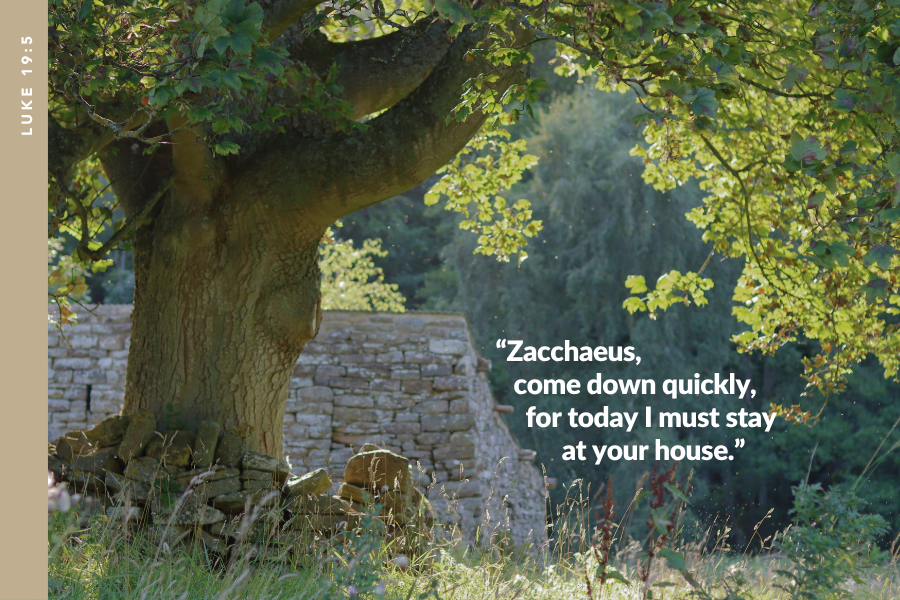
At that time Jesus came to Jericho and intended to pass through the town. Now a man there named Zacchaeus, who was a chief tax collector and also a wealthy man, was seeking to see who Jesus was; but he could not see him because of the crowd, for he was short in stature. So he ran ahead and climbed a sycamore tree in order to see Jesus, who was about to pass that way. When he reached the place, Jesus looked up and said, “Zacchaeus, come down quickly, for today I must stay at your house.” And he came down quickly and received him with joy. When they saw this, they began to grumble, saying, “He has gone to stay at the house of a sinner.” But Zacchaeus stood there and said to the Lord, “Behold, half of my possessions, Lord, I shall give to the poor, and if I have extorted anything from anyone I shall repay it four times over.” And Jesus said to him, “Today salvation has come to this house because this man too is a descendant of Abraham. For the Son of Man has come to seek and to save what was lost.”

Opening Prayer: Lord Jesus, increase my faith, and may your Kingdom come in my heart and in the world.

Encountering Christ:

  1. Suddenly: Today’s Gospel begins by telling us that Zacchaeus suddenly appeared on Jesus’ radar: “He ran ahead and climbed a sycamore tree in order to see Jesus.” While it may have seemed like it was sudden, Jesus was prepared for this encounter. Perhaps he even anticipated this encounter with great joy. Jesus told him, “Come down quickly, for today I must stay at your house.” It was a sudden surprise for his Apostles and even for Zacchaeus, but not for Jesus, who desired a familial and friendly encounter with an apparent sinner, a tax collector. As in the case of Zacchaeus, Jesus can surprise us suddenly. In his divine providence, he is always looking out for opportunities to come to our house.


  2. The Best Vantage Point: This passage leaves us room to imagine the interior state of Zacchaeus. The evangelist tells us that “ran ahead and climbed a sycamore tree in order to see Jesus, who was about to pass that way.” What caused this? What had he heard about Jesus beforehand? Perhaps he had been anticipating Jesus’ arrival. Being a Jew, perhaps a spark of hope was ignited in him, fueled by memories of his parents and grandparents’ faith in the coming of a Messiah. Something interiorly moved him to seek the best vantage point. Just a glimpse of Jesus would be enough for him. His handicap of being too short was converted into an advantage that kindled devotion, and he acted upon it. He was perhaps better prepared to meet the Lord because of it.


  3. The Encounter: When Zacchaeus was accused of being a sinner, he defended himself. He shared with Jesus how he had tried to be a righteous person. Jesus’ response was to profess that salvation had come to his house. Jesus brings salvation. We must anticipate, desire, and open the door of our house to him. What a great gift Zacchaeus had “suddenly” received. A history of two thousand years, since the time of Abraham, had prepared the way for this encounter. Jesus professed to all who heard, “This man too is a descendant of Abraham. For the Son of Man has come to seek and to save what was lost.” In this encounter, a sinner was saved, a son of the chosen people, to be light for others.

Conversing with Christ: Lord Jesus, thank you for the ways in which you come to my rescue. You seek me out when I am lost. Enkindle in me the desire to anticipate your coming and to open the way for you. Thank you for your mercy and goodness.

Resolution: Lord, today by your grace I will reflect on the ways in which divine providence has enkindled faith and hope in my life.

For Further Reflection: Nine Days to Christ the King Novena, Day 5.

Jennifer Ristine is a consecrated woman of Regnum Christi dedicated to spiritual and faith formation through teaching, conferences, writing, and spiritual direction. While serving in Ancient Magdala she wrote Mary Magdalene: Insights from Ancient Magdala and “Nine Days with Mary Magdalene.”


November 18, 2025 – Sudden, Yet Anticipated Encounter Read More »

WM 11-18

The King of our Hearts

Dear Friends,


The liturgical year culminates with the celebration of Christ the King, reminding the faithful that Jesus Christ is the eternal King.

Every king has a throne. Our King reigns over heaven and earth, but he also reigns within the hearts of all mankind.

Many years ago, I heard a homily that posed the question: Who sits on the throne of my heart, me or Jesus? That question came to mind as I sat to write this reflection. If Jesus is not the one who sits on the throne of my heart, what enemy is preventing him from being there?

Let’s consider eight enemies to Christ’s throne. The enemy of mediocrity, who convinces us we can live a good life with minimal prayer, occasional confession, and attendance at Sunday Mass. The enemy of self-reliance, who convinces us we are doing just fine on our own and we don’t really need God. The enemy of acedia or laziness, who tempts us to give up the struggle to live an authentic Christian life in our homes and in society. Then there are selfishness and tepidity, two usurpers who tempt us to indifference when authentic witness is needed, or to choose personal comfort and convenience over generous service. Often, these enemies entice us to do just enough to appease our conscience, but not enough to allow Christ to reign.

Next up, we have hypocrisy, fear, and finally, complacency. All three of these enemies offer excuses to remain noncommittal, living in the kingdom of our own making instead of that of Christ’s. In the words of John the Evangelist, these enemies keep us lukewarm (cf. Rev 3:15-16).

Lord Jesus, you reign forever. Help us defeat the enemies who compete for your throne in our hearts. Flood the world with your peace and fill us with the fire of your love.  Amen.

Yours in the Heart of Jesus,

Donna

The King of our Hearts Read More »

Scroll to Top

Events

Looking for another country?

Contact Regnum Christi near you

News & Resources

News & Resources

The Regnum Christi Mission

The Regnum Christi Identity

Alex Kucera

Atlanta

Alex Kucera has lived in Atlanta, GA, for the last 46 years. He is one of 9 children, married to his wife Karmen, and has 3 girls, one grandson, and a granddaughter on the way. Alex joined Regnum Christi in 2007. Out of the gate, he joined the Helping Hands Medical Missions apostolate and is still participating today with the Ghana Friendship Mission.

In 2009, Alex was asked to be the Atlanta RC Renewal Coordinator for the Atlanta Locality to help the RC members with the RC renewal process. Alex became a Group Leader in 2012 for four of the Atlanta Men’s Section Teams and continues today. Running in parallel, in 2013, Alex became a Team Leader and shepherded a large team of good men.

Alex was honored to be the Atlanta Mission Coordinator between 2010 to 2022 (12 years), coordinating 5-8 Holy Week Mission teams across Georgia. He also created and coordinated missions at a parish in Athens, GA, for 9 years. Alex continues to coordinate Holy Week Missions, Advent Missions, and Monthly missions at Good Shepherd Catholic Church in Cumming, GA.

From 2016 to 2022, Alex also served as the Men’s Section Assistant in Atlanta. He loved working with the Men’s Section Director, the Legionaries, Consecrated, and Women’s Section leadership teams.

Alex is exceptionally grateful to the Legionaries, Consecrated, and many RC members who he’s journeyed shoulder to shoulder, growing his relationship with Christ and others along the way. He knows that there is only one way, that’s Christ’s Way, with others!