Letter from the Legionaries’ General Director on the Solemnity of Our Lady of Sorrows
To all Legionaries of Christ
Dear Brothers in Christ,
I am writing to you on this Solemnity of Our Lady of Sorrows, our Mother who has accompanied us faithfully through these years of purification and renewal. She remains alongside us, just as she was at the foot of the cross, teaching us that pain, when united to Christ’s, is transformed into a source of redemption.
Many of you have asked me about my health. I share with you that although my spirits remain high and I experience the Lord’s closeness and our Blessed Mother’s maternal care from heaven, my medical condition has not improved. My speech is more affected, and I have had difficulty with my balance, with a few recent falls. My doctors had already warned me about this possibility. Since this illness is fairly new, we do not know exactly how it will progress, but it seems to be advancing more slowly than in other known cases.
In this process, the Lord has taught me some profound lessons, possibly the most important ones of my life. My original intention was to share them with you in this letter, but I think we should wait for another occasion. I feel that the Lord is inviting us to reflect together on other lessons, the ones we have been learning as a community in the past 15 years and that present themselves again today.
A Providential Moment
Like many of you, I recently watched the HBO docuseries about the life of our founder. I have spoken with several Legionaries who told me that watching the series was a cathartic experience: By listening to the victims’ testimonies and watching the dramatizations, they were able to piece together bits of information they had heard and face the magnitude of the evil our founder had perpetrated.
My own experience of catharsis occurred years ago, when I participated in the Legionary history course prepared by Fr Jaime Rodríguez, LC, Fr César Tobón, LC, and others. I was filled with an enormous peace on learning the truth of our history. Their work aptly showed how good and evil grew together. It is a real enigma: In the midst of so much evil, there were virtuous priests, men dedicated to God, untouched by the atrocities. Others possibly suspected something, but didn’t know how to take action. Still others were direct victims, silenced and portrayed as traitors. Today, their voices are finally heard with respect and compassion. I then had the grace of being able to meet with some of the victims of the past, which made the pain they suffered make more sense.
In recent years, we have dedicated ourselves to renewing our structures, practices, and customs, in addition to the renewal of Regnum Christi and the works it governs in common with the other branches. However, we haven’t been able scrutinize our history more closely to make sense of it and to fully understand everything that has happened. Nevertheless, the docuseries challenges us to face our history again. Although it is difficult, let us receive this occasion as an invitation from the Lord. As I wrote to you in 2021, God wants to “make all things new” (Rev 21:5). Our history, with its lights and its shadows, is part of the testimony he wants to give to the world: His grace is more powerful than any sin, and his mercy heals the deepest wounds.
Living in the Truth So As to Walk in the Light
The 2020 General Chapter asked us to “continue the task of collecting the sources and testimonies necessary for future studies on the history of the Legion.” I am informing you of the concrete steps we are taking:
First, we are preparing our Historical Archive to be opened to internal and external historians. This process requires time and expertise, so we cannot set an exact date for its opening. Our objective is to facilitate access to primary sources of our history.
Second, we have commissioned an internationally renowned psychiatrist to complete a posthumous study of our founder, in order to better understand the complexities of his personality and behavior.
Third, under the direction of Fr Rodrigo Ramírez, LC and a standing committee, we have transcribed all the audio in our archive and are currently digitizing all written materials, preparing them for future researchers.
Fourth, we are beginning to prepare historical documents for publication, starting with the historical versions of the Constitutions of the Legionaries of Christ and the Statutes of Regnum Christi.
Knowing Our History
If you have not yet made the time to take the history course prepared by Frs Jaime Rodríguez, César Tobón, and their team, I highly recommend it. I plan to review it again. If you are interested, you can write directly to the LC History Course mailbox (cursohistorialcrc@legionaries.org). Several communities also took advantage of the HBO docuseries to discuss it together. For me, the most valuable are the testimonies of the victims, which we haven’t heard for so many years.
From this docuseries comes another resource for learning about our history. The producers asked us to participate through an interview. After a thorough analysis of the application, it was accepted, and Fr Andreas Schöggl, LC, former general secretary, was interviewed for several hours on November 14, 2023, in Mexico City. I personally had low expectations that they would use our testimony, but we wanted to have the opportunity to present a more complete picture and to show that we have nothing to hide.
The positive side of having granted this interview is that we have the transcript, in which Fr Andreas answers several of the questions raised in the docuseries, but which were not used. We will make the transcript available to everyone through the section about the founder on the Legion’s website, which the Legion’s International Communications Office is preparing.
We are also expanding this section of our website about the founder with new questions and answers about aspects of his life. In addition, the channel through the General Directorate is open for you to send your concerns. We will try to answer them by means of the study commission on our history. As I have said, we have nothing to hide, and we want to address the legitimate concerns of our members. Undoubtedly, there are many questions to which we will never have answers, but we will do everything we can to find them.
In addition to all this, there are several sources, especially journalistic ones, for those who wish to access more information and to compare and contrast our history with other external points of view. There has been no shortage of external reports and investigations based on interviews with different people and historical documents. I invite you to approach these materials not out of morbid curiosity, but with a mature spirit of prayer, seeking the truth that sets us free and asking for the grace to integrate our history in a healthy and redemptive way.
From Wounds to the Mission
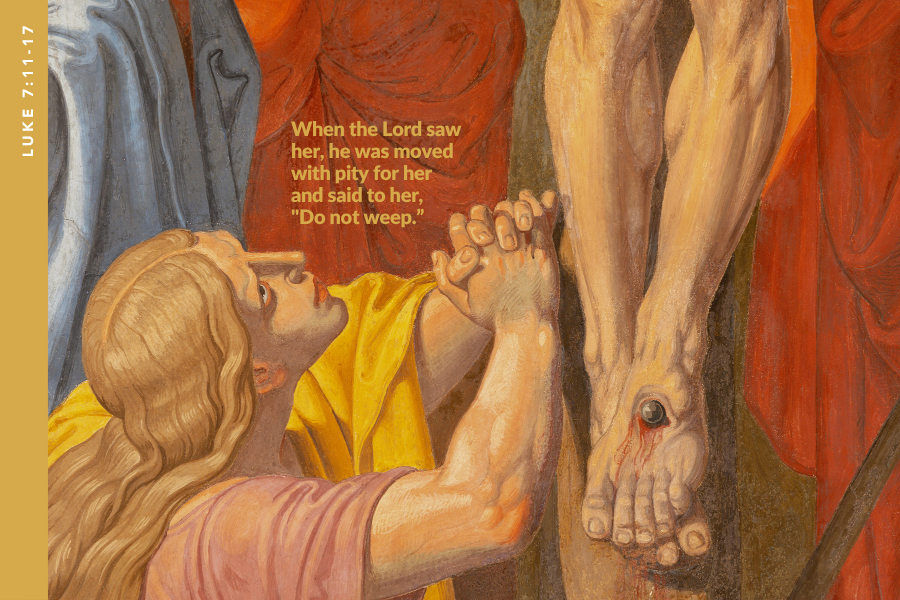
I ask for your patience and attention in what I am about to offer you, because it is the fundamental message I want to leave with you. I invite you to embrace this moment as an opportunity to love more and better. When Simon the Pharisee was scandalized by the sinful woman anointing Christ’s feet with perfume, the Lord compared her to one who has been forgiven a great debt and, therefore, loves much (cf. Lk 7:36-50). Christ’s message is one of redemption, and our own experience, like that of that sinful woman, invites us to be more grateful and to love more.
It is no coincidence that our history has borne the mark of a wound from its beginning. The wound is not a parenthesis or a stain to erase, but a theological reality: Wherever sin has left its mark, there also an overabundance of grace has shone forth (cf. Rom 5:20). From its very beginning, our institutional journey has been marked by a paschal mystery: the experience of a choice not based on human strength or merit, but on the free mercy of God, who delights in lifting up the lowly (cf. Lk 1:52).
In this very humiliation lies a grace: The Lord frees us from institutional and personal pride by allowing us to inhabit a history marked by contradiction. The memory of our founder’s sins and their impact on the institution he founded is not simply a call to justice and reparation—which are necessary—but also a divine pedagogy that preserves us from the temptation to boast about our works. Being part of this family means being continually purified from the mirage of self-sufficiency, from the pretense of being “successful,” and from nostalgia for an unblemished image. It is something we must constantly care for, as the Holy Father pointed out: “The journey of renewal is not over, because a change of mentality in individuals and in an institution requires much time to assimilate, and therefore, a continuous conversion.” [1] This memory is an invitation to a personal examination of conscience, to be sorrowful for our sins and their effects on others’ lives. The cross is not an accident along the way; it is its center. I believe it is for this reason that Our Lady of Sorrows accompanies us intimately as our patroness.
Far from being a curse, this fragility we take on is a gift. Like each cross, though heavy and painful, it is a gift. For us, this particular cross becomes a path to holiness. In it we learn not to rely on prestige, approval, or even visible works, but to let ourselves to be led each day to the generous and humble fulfillment of the mission. Although it may seem to be a contradiction, this truth should give us hope because it enables us to love more, to be more grateful and more passionate about Christ and his Kingdom. How? By taking our focus off ourselves and placing it on him and his people. For when we take advantage of this gift, it enables us to help others carry their cross and walk the path of holiness. We have been called to be witnesses to a hope that is not imposed, but offered by humility and redemption.
Looking Forward With Hope
Dear brothers, the Lord continues to call us. Our history, which we embrace and integrate, is not an obstacle to evangelization, but part of who we are, part of our identity as Legionaries. It is our testimony as apostles: We are forgiven sinners who proclaim the mercy we have experienced and which has transformed us.
We have a story to tell. It is a story that resonates with the people we want to evangelize, a story of wounds and healing, of sin and repentance, of forgiveness and mercy. The world needs our testimony, not in spite of our history, but precisely through it, transfigured by grace, a story of redemption.
My desire is that every Legionary may get to know our history, not just as an object of study, but also of prayer, seeing the providential hand of the Lord, who has acted and continues to act in and through these mysterious events. It is time to tell our story in the light of the Gospel.
On this feast of Our Lady of Sorrows, let us place ourselves under her mantle. She, who remained standing beside of the cross when all seemed lost, teaches us fidelity in the midst of pain and the hope that is born of faith.
May each community take time to pray about and discuss these issues. Let us support one another as brothers on this journey of truth and renewal.
Your brother in Christ and the Legion,
[1] Address of Pope Francis to the participants in the General Chapter of the Legionaries of Christ and the General Assemblies of Consecrated Women and Lay Consecrated Men of Regnum Christi, 29 February 2020
Letter from the Legionaries’ General Director on the Solemnity of Our Lady of Sorrows Read More »