August 20, 2024

Regnum Christi Spirituality Center Ask a Priest

“Ask a Priest: Does Christianity Aim for a Utopia?”

Q: Hello, I am a Jew living in Israel. Lately, I have been thinking about Christianity and Utopia, and how the two might be connected. Becoming a Christian is relatively easy (in comparison to Judaism), and an essential part of Christianity is convincing other people to be Christians as well (to save them and make sure that they arrive in heaven). Due to that fact, one might argue from a materialistic point of view, i.e., a point of view of a nonbeliever, that the purpose of Christianity as a religion is to create a utopia. Because the more people have in common, the less likely they are to fight or participate in warfare. If the entire world were Christian, fewer people would fight and there would be more peace, a thing that resembles a utopia. Please let me know your thoughts. Thank you very much. — Gilad

Answered by Fr. Edward McIlmail, LC

A: Shalom! It’s good to hear of your interest in Christianity. Christians believe that Jesus fulfilled all the hopes expressed in the Hebrew Scriptures. He is the long-awaited Messiah.

The Catholic Church doesn’t aim for a utopia in this world. The word utopia comes from Greek and means “no place” (a tip-off!). The only perfect place is in heaven, with God.

Catholics do aim, however, to improve the world, for a healthy culture helps people more easily lead upright lives. But we don’t believe in the perfectibility of the world, per se.

Man is damaged by original sin. Adam’s fall in the Garden of Eden had an impact on all his descendants.

The Catechism of the Catholic Church says:

402 All men are implicated in Adam’s sin, as St. Paul affirms: “By one man’s disobedience many (that is, all men) were made sinners”: “sin came into the world through one man and death through sin, and so death spread to all men because all men sinned.” The Apostle contrasts the universality of sin and death with the universality of salvation in Christ. “Then as one man’s trespass led to condemnation for all men, so one man’s act of righteousness leads to acquittal and life for all men.”

403 Following St. Paul, the Church has always taught that the overwhelming misery which oppresses men and their inclination towards evil and death cannot be understood apart from their connection with Adam’s sin and the fact that he has transmitted to us a sin with which we are all born afflicted, a sin which is the “death of the soul.” […]

404 How did the sin of Adam become the sin of all his descendants? The whole human race is in Adam “as one body of one man.” By this “unity of the human race” all men are implicated in Adam’s sin, as all are implicated in Christ’s justice. Still, the transmission of original sin is a mystery that we cannot fully understand. […] [end quoted material]

In effect, we inherit a damaged human nature (another name for original sin). We can improve with the grace of God, but life is a battle — and one that we fight till the end.

Unfortunately, Christians haven’t always been the witnesses of Christ’s love that they should be.

History is full of accounts of Christians who did evil and even fought one another. And their treatment of the Jews in the past hasn’t been without fault, either.

If you want to learn more about Catholicism, you might check out the Youth Catechism and the Catechism (a heavy read) or its leaner Compendium.

The Catholic Answers site has lots of helpful resources. And the document Gaudium et Spes gives an overview of the Church’s relation to the modern world.

Above all, the Catholic faith is centered around the person of Jesus Christ. So read the Gospels to get to know him.

I hope some of this helps. Count on my prayers.


“Ask a Priest: Does Christianity Aim for a Utopia?” Read More »

Art for God

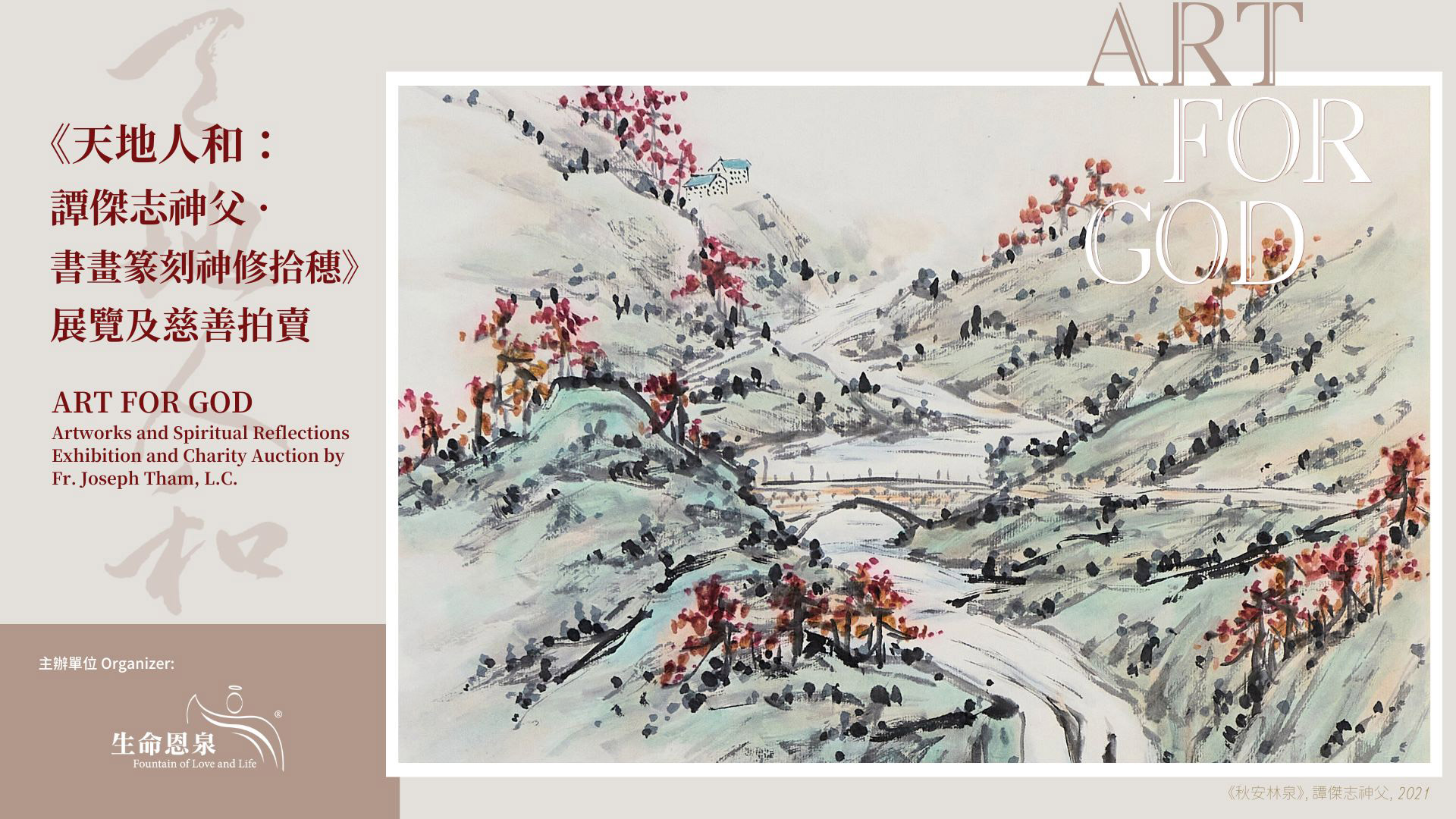
Art for God: A Summer Art Exhibition and Calligraphy Workshop with Fr. Joseph Tham

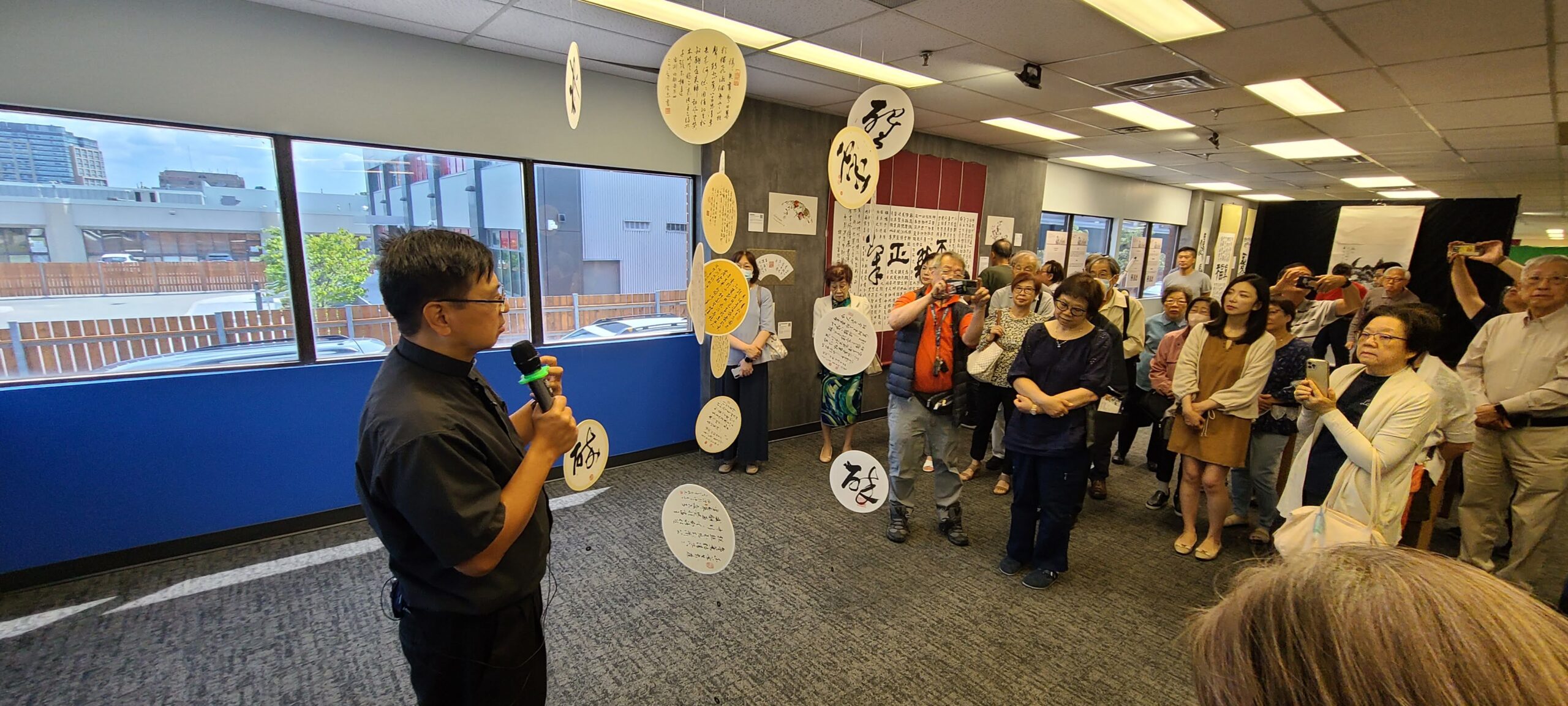
The theme of harmony between heaven, earth, and humanity has been a constant thread throughout the life of Fr. Joseph Tham, from his studies and practice as a medical doctor and bioethics researcher to his vocation as a Legionary priest and his passion for Chinese art and calligraphy. This summer, his artwork, which strives to connect traditional Chinese art and philosophy with Christian spirituality and the mystery of God’s revelation, was on exhibit in Toronto, Ontario from July 20th – August 3rd. The event was hosted by Fountain of Love and Life (FLL), a Chinese Catholic lay apostolate established in 2005 in Toronto, Canada, with the primary mission of spreading the Good News of the Gospel to the global Chinese community through faith formation, missionary discipleship training, and media evangelization.

The exhibit, entitled “Art for God: Artworks and Spiritual Reflections,” was held at the Fountain of Love and Life Evangelization Centre, and began on July 20th with an opening ceremony, children’s calligraphy activity, and a live demonstration and guided tour with Fr. Joseph. On the opening day of the exhibit, Fr. Joseph also hosted two hour-long calligraphy workshops in the afternoon. In the first workshop, participants were invited to reflect on the word for ‘God,’ which in Chinese is similar to the word ‘lightning,’ and explore this word and its shape as a symbol of God’s power and connection between heaven and earth. The second workshop focused on the Chinese word ‘Dao,’ which means “way or truth” and looks like a man on a cross in ancient script, leading participants to explore how this word relates to their own relationship with Christ who says he is “the way, the truth and the life.” And for Fr. Joseph, calligraphy, which is considered the highest form of Chinese art, lends itself effortlessly to prayer. “Calligraphy is writing the word, and as Christians, we know that the Word became flesh. So the Chinese rendering of the word through calligraphy can help us reflect on how God manifests himself through the Word.” The event also included a charity auction, with proceeds going towards Fountain of Love and Life and Regina Apostolorum Pontifical University in Rome.

Fr. Joseph grew up in Hong Kong before emigrating to Canada with his family when he was 15 years old. He pursued a medical degree from the University of Toronto, and as a medical student, he went on several missions to Tanzania, Africa, intending ultimately to become a medical missionary. After working as a family physician for four years, however, Fr. Joseph continued to feel that he was being called to something more, called to bring not just physical healing, but spiritual healing, to the sick and suffering he encountered. In 1994, Fr. Joseph made a pivotal visit to the Legionary seminary in Cheshire Connecticut, and made the decision to close his practice and become a priest. Fr. Joseph was ordained a Legionary priest in 2004, and in 2007 obtained his PhD in bioethics from the Regina Apostolorum Pontifical University in Rome, where he served as the Dean of the School of Bioethics. Today, Fr. Joseph continues to teach, write, and conduct research in the field of bioethics, and is also a Research Scholar of the UNESCO Chair in Bioethics and Human Rights, having recently presented on the topic of governance of reproductive technologies at a conference at the Centre for Medical Ethics and Law at The University of Hong Kong. He has been serving the Regnum Christi section in Hong Kong for over two years.

Art for God

Fr. Joseph began his training in the Chinese arts at the age of 12 and, among his many responsibilities as a priest and academic, he has continued to make time to create art, particularly Chinese calligraphy, seals, and watercolor brush paintings. Through his artwork, he continues to explore the theme that has inspired him throughout his life as a medical doctor, bioethics researcher, and priest: the harmony between heaven, earth, and humanity.

One of Fr. Joseph’s art installations featured at the recent exhibition in Toronto is entitled “Scrolls of Revelation”: consisting of two rolled scrolls, this piece explores the juxtaposition of the hiddenness of Christ and the revelation of his message:

“Chinese art is traditionally stored scrolled up, without display or framing – there is such a high appreciation of calligraphy and painting that they are not meant for exhibition and decoration. Instead, they are humbly hidden away, only shared by connoisseurs or literary friends who visit and who might even add some poetry or comments to the piece. This idea of the unfolding of Beauty resonates with the Christian message of revelation. God’s presence is often missed. He hides himself, so we yearn and seek him. The Word became Flesh, and dwelt among us – yet most of humanity missed this important event. Unrolling a scroll and revealing a veiled but vital message is exhilarating. What lies hidden within the parchment? What beauty awaits discovery?”

Art for God

Fr. Joseph’s artwork has been exhibited internationally in Canada, the United States, Mexico, Malaysia, and Hong Kong and Macau. Recently, his work was shown in Rome at a private event for Regina Apostolorum Pontifical University, and a catalog of those pieces, each accompanied by personal reflections by Fr. Joseph, are available to view here. All paintings, calligraphy, and seals in the exhibit was generously donated by Fr. Joseph and proceeds from their sale of the artwork go to the Regina Apostolorum.

You can read more about Fr. Joseph Tham’s art apostolate, and his book, entitled Art for God, Artworks and Spiritual Reflections, which is written in both English and Chinese here, or order the book here. Read more about the small but dedicated Regnum Christi section in Hong Kong here.

Art for God: A Summer Art Exhibition and Calligraphy Workshop with Fr. Joseph Tham Read More »

Regnum Christi Spirituality Center Uncle Eddy

St Bernard

Dear Ernie,

You underestimate the power of love.  Let me say it again: you are UNDERESTIMATING the power of Christian love!  The world is made of societies, societies are made of communities, communities are made of people, and people do good or evil depending on the direction their heart is turned: inwards, towards themselves; or outwards, towards God and their neighbor.  Original sin made the “inwards” direction the default position of every human heart. So if you want to change the world – which, it seems, you really do, for that I commend you, because it shows that your heart has already overcome its natural selfish bent – if you want to change the world, really change it, you have to change human hearts, because that will have a ripple effect from the inside out, transforming communities, societies, and eventually, the whole world.  Now comes the million dollar question: what is the only way to turn people’s hearts out of their selfish, default position? The answer is simple: love them. Only by showing them the love of Christ in the way you think about them and treat them will they be wooed out of the comfortable interior isolation of egoism. It’s what the Bible teaches, it’s what history teaches, it’s what literature teaches, and it’s what today’s saint embodied as well as any saint.

St Bernard was called the “Honey-sweet Doctor” of the Church, because he was always gushing forth beautiful speeches and sermons about the love of God.  It was a love he had come to know, and that was the real source of his prodigious career – and it really was prodigious. He founded the famous monastery at Clairvaux, which in turn fathered 68 other Cistercian monasteries.  He gave spiritual (and political) guidance to Popes and Emperors, Kings and Barons, Abbots and saints. He resolved wars and schisms by the force of his wisdom and tact. He defended Catholic scholarship against secularism (the infamous rationalist Peter Abelard was his contemporary), rallied all of Europe in an effort to defend fellow Christians in the Holy Land (under the banner of the doomed ”Second Crusade”), and left a wake of miracles in his path as he trekked back and forth across the continent in defense of God’s honor.  True, all he really wanted was to retire from the world and devote himself to prayer and solitude, but he willingly embraced the cross God fashioned for him – much to the world’s benefit.

His most remarkable deed, to my mind, was his first.  And that’s what, I hope, will convince you once and for all that you must never underestimate the power of love.  Bernard was of noble birth, and he showed extraordinary social and intellectual talent and skill from a very young age.  By the time he finished his education (he was 22), all that the luxurious world of the Middle Ages (for nobles, anyway) had to offer was within his grasp.  But he felt God calling him to forsake it all for a higher Kingdom. He struggled at first, but asked the Lord for strength and clarity, and he received both.  And then came the amazing thing. Instead of just marching off on his own to join the newly reformed monastic community at Citeaux, he started talking to friends and family members about his decision.  He spoke so powerfully about the merits of putting one’s life wholly at God’s service that he convinced one after another of them to accompany him. By the time he set out, he had gathered about him 31 young noblemen.  They all showed up together on Citaeux’s doorstep to offer themselves for the Lord’s service, much to the surprised delight of the Abbot, St Stephen Harding, who had not received a new novice for several years. Nothing like it has ever occurred in the history of the Church.

What had achieved such a feat?  Love. Pure love. Christ’s love, which had set St Bernard’s heart on fire with love, which in turn inflamed the others’ hearts.  So if you really want to change the world, let yourself be totally incinerated by the consuming love of Christ.

Your loving uncle, Eddy

St Bernard Read More »

The Imaginary Division between Church and State

Dear Friends, The First Amendment to the Constitution prohibits the government from favoring one religion over another and protects the people’s right to worship. It was never intended as an excuse for the faithful to ignore the Gospel values one holds true on Sunday when one enters the public sector on Monday – Saturday. There is no such thing as a private Catholic: At the end of every Mass, the congregation is sent forth to preach the Gospel with their lives. This is a difficult challenge today as mainstream political views are hostile to Christianity and differing religious sects are openly opposed to each other. It was also true in the days of St. Bernard of Clairvaux, a Cistercian monk in the 12-century, who led the church through his preaching, writings and leadership and whose feast day the Church celebrates on August 20. St. Bernard was sought after as an advisor and mediator by the ruling powers of his age. He helped heal the papal schism that arose in 1130 with the election of the antipope Anacletus II. For eight years he labored and traveled to mediate between warring factions, while also laboring for peace and reconciliation between England and France. His witness led to him being declared a Doctor of the Church in 1830. What was it about St. Bernard that moved thousands of people to live a deeper life in Christ? It was his love of Christ; more accurately, his understanding of Christ’s love for mankind and his ability to preach it. His numerous sermons and reflections on the Song of Songs are read by generation after generation, as is the beautiful bridal language he used to express the gift of holy love and the sacrament of endless union with God. With this intimate love came overwhelming peace. It is through his witness of God’s love that peace came to those he served. Let us all, like St. Bernard, be a stream of peace that flows throughout all of society, not by creating an imaginary separation between our practice of Catholicism and our lives, but by living in one nation under God, indivisible, with liberty and justice for all. Yours in the Heart of Jesus, Donna

The Imaginary Division between Church and State Read More »

Scroll to Top

Events

Looking for another country?

Contact Regnum Christi near you

News & Resources

News & Resources

The Regnum Christi Mission

The Regnum Christi Identity

Alex Kucera

Atlanta

Alex Kucera has lived in Atlanta, GA, for the last 46 years. He is one of 9 children, married to his wife Karmen, and has 3 girls, one grandson, and a granddaughter on the way. Alex joined Regnum Christi in 2007. Out of the gate, he joined the Helping Hands Medical Missions apostolate and is still participating today with the Ghana Friendship Mission.

In 2009, Alex was asked to be the Atlanta RC Renewal Coordinator for the Atlanta Locality to help the RC members with the RC renewal process. Alex became a Group Leader in 2012 for four of the Atlanta Men’s Section Teams and continues today. Running in parallel, in 2013, Alex became a Team Leader and shepherded a large team of good men.

Alex was honored to be the Atlanta Mission Coordinator between 2010 to 2022 (12 years), coordinating 5-8 Holy Week Mission teams across Georgia. He also created and coordinated missions at a parish in Athens, GA, for 9 years. Alex continues to coordinate Holy Week Missions, Advent Missions, and Monthly missions at Good Shepherd Catholic Church in Cumming, GA.

From 2016 to 2022, Alex also served as the Men’s Section Assistant in Atlanta. He loved working with the Men’s Section Director, the Legionaries, Consecrated, and Women’s Section leadership teams.

Alex is exceptionally grateful to the Legionaries, Consecrated, and many RC members who he’s journeyed shoulder to shoulder, growing his relationship with Christ and others along the way. He knows that there is only one way, that’s Christ’s Way, with others!