

December 12, 2023

Regnum Christi Spirituality Center Ask a Priest

“Ask a Priest: Can’t We Be Good Without God?”

Q: Why do we need God? Can’t we just be good humans? What evidence is there that goodness is the result of a higher power and not just human morality? And why is the Catholic faith the true religion? I am Catholic — a convert confirmed as of almost four years ago. I am just undergoing a crisis of faith, spurred by all the darkness in the world right now. Where is God in all of this? – Laura

Answered by Fr. Edward McIlmail, LC

A: It’s understandable that the problems in the world can leave someone feeling pessimistic.

The world has always been a mess. Amazingly, God hasn’t given up on us.

He even sent his Son to suffer and die for our redemption. Jesus taught us to hope for salvation and emphasized the need for charity.

You ask why we need God. It’s like asking why we need food and oxygen. Without God, we wouldn’t even exist. He holds us in existence at every moment.

He also instilled in us a moral sense – a conscience. The Catechism in No. 1776 says:

“Deep within his conscience man discovers a law which he has not laid upon himself but which he must obey. Its voice, ever calling him to love and to do what is good and to avoid evil, sounds in his heart at the right moment …. For man has in his heart a law inscribed by God …. His conscience is man’s most secret core and his sanctuary. There he is alone with God whose voice echoes in his depths.”

The Holy Spirit guides the Church, which in turn guides us so that our conscience doesn’t grow flabby and deformed.

This leads to your next question: Couldn’t we be “good humans” without God?

The short answer is no. All goodness ultimately comes from God. God is the very basis for what is good. He is the Good. The idea of goodness apart from God is empty.

Without God, the good simply becomes whatever someone says it is.

Think of the atheistic regimes in modernity that tried to form “perfect societies” without reference to God. Those regimes led to the deaths of probably 100 million people. A world without God would be a dog-eat-dog nightmare.

You ask why the Catholic faith is the true religion. This can’t be proven scientifically, of course; if it could, religion wouldn’t require faith.

But I’d suggest that all the evidence backs up the Catholic Church: Everything that Jesus did and established — including the papacy and the sacraments — is found only in the Catholic Church. Nowhere else.

Perhaps the solution here is to dedicate yourself more intensely to prayer and the sacraments and to learn more about your Catholic faith.

A few resources to be begin with are the Youth Catechism (or YouCat), the U.S. Catholic Catechism for Adults, and/or the Compendium of the Catechism. Tuning into Catholic radio can help you do deeper, too.

Your other question is why God allows so much suffering.

The short answer is: He respects the freedom us, even when we misuse it. And he allows evil because he can bring something good out of it.

A case in point is the crucifixion of Jesus, the Son of God. By human standards it made no sense. Yet that turned out to be the most powerful act of redemption in history. (It’s what we re-present at each Mass: the sacrifice of Jesus back to the Father for our redemption.)

The upshot is that God is close to us, even amid the darkness of the world. We need to trust him and be confident that he has a plan.

Perhaps a lot of what is mentioned here seems a bit abstract or overly idealistic. To help you move forward in your faith, it might help to seek out a solid, regular confessor or spiritual director.

And don’t despair. Jesus loves you.

Count on my prayers.


“Ask a Priest: Can’t We Be Good Without God?” Read More »
Advent and the Art of Living Dangerously

Advent and the Art of Living Dangerously

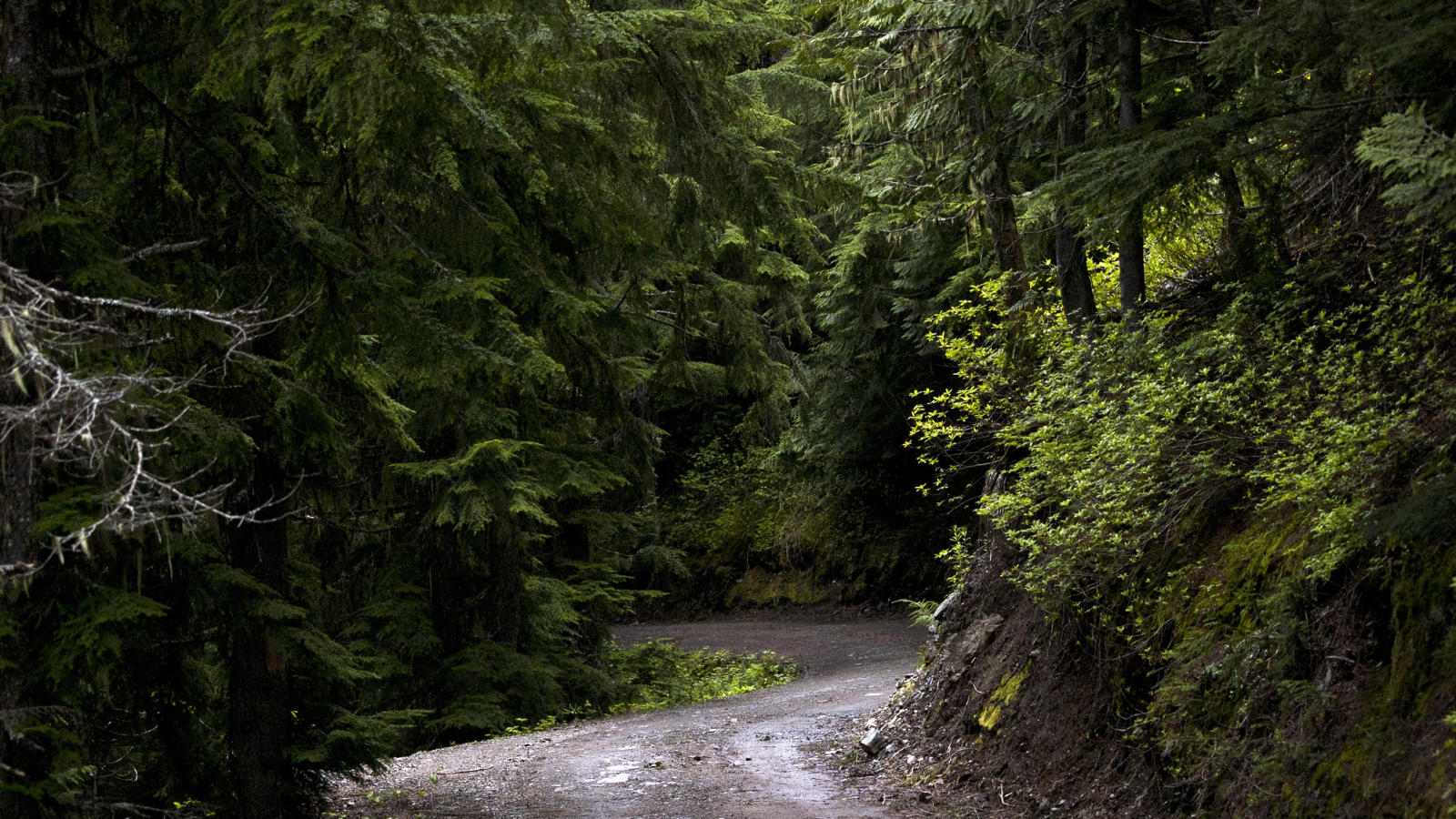
“Two roads diverged in a wood, and I— I took the one less traveled by,
And that has made all the difference.”

-Robert Frost

We have two roads to choose from in Advent.


The first is the safe road. It’s the most obvious; the cozy, comfortable, much-traveled road of busy Christmas preparation with just a touch (ok, maybe more) of fragmentation.  The roadmap is a checklist of ways we plan to make this the #BestAdventEver by accomplishing all of our goals and making our homes look Instagram worthy for the holidays ✨. 


Many of us have been traveling this road every December for our whole lives.  We’re used to it, we look forward to it and the many lovely things along its path, even though we are also slightly exhausted by it…and we also long for something more – or perhaps more accurately, for something ‘less.’  This time-worn and well-travelled road lets us chart out and accomplish our own comfortable spiritual and social plans and goals for advent- what we want to accomplish in our own souls and circles before December 25th, making ourselves the cartographers, navigators, and captains of our own journeys.  We may work hard on some important virtues, and try to keep our eyes on Christ and service to those he loves, but our focus is often a bit lost in the plans, checklists, and work we plunge into as we prepare for Christmas.


We also have the less traveled road, a dangerous road, an unknown but beautiful road, on which we abandon our well-laid plans and built in GPS, and simply follow Christ’s voice.  Our map is the liturgy of the Church, and Christ is the navigator who leads us along it’s paths, telling us in prayer where we must go.  We simply ask our Lord to guide us as he sees fit, to create in us a pure heart to welcome the Christ-Child, and then take one step at a time with him.  The chaos of the first road still exists on this path, but in a way that is more distant and muted because we are intensely focused on listening to the voice of the Shepherd leading us, not getting distracted by the flashing billboards along the way. It’s the Advent road of the prophets who for centuries waited for the Messiah and gave us those incredible ‘O Antiphons.’ We join them in their longing for our Savior, and like them, bravely invite God’s pure and burning light in our souls to illuminate us in ways that we can’t plan or control. We walk with the prophets and like them, experience both God’s extreme tenderness and his powerful purification.


This is the road that truly leads us to Christ in Advent, but it’s dangerous. It’s dangerous because we are guaranteed to be challenged and purified on the journey, often in ways we wouldn’t choose for ourselves.


The love that descended to Bethlehem is not the easy sympathy of an avuncular God, but a burning fire whose light chases away every shadow floods every corner and turns midnight into noon.  This love reveals sin and overcomes it.  It conquers darkness with such forcefulness and intensity that it scatters the proud, humbles the mighty, feeds the hungry and send the rich away emptyhanded (Luke 1:51-53) –Watch for the Light, Plough publications, xvi


A dangerous advent is purifying, and filled with extraordinary love. God invites us to open ourselves to his light, to let him bare our hearts and souls, and heal the sin and wounds there.   If we desire him to scatter our pride, we must let him bring it to the light.  If we want him fill our poverty, we allow him to first take away what riches we hold in his place.  If we ask him to feed us, he will first make us hungry.


A dangerous Advent is uncomfortable, in a beautiful way that promises lasting joy. God draws us close to himself and changes us with his love.  He carves, purifies and prepares the “God-shaped hole in our hearts” to be filled completely by him in his nativity.


Seeing Mary’s Advent, we gain new insights into our blessed mother and watching her, we gain courage to live our own advent dangerously.  The handmaid of the Lord walked God’s path and not her own. She began her advent open to the light and will of God, not knowing what it would be.  She just said YES.  Her serene smile confounds our fearful self-sufficiency when we see that this peaceful mother went forward with courage and perfect trust even though she was afraid (Luke 1:29), and confused (Luke 1:34). She was young, pregnant, and on the verge of divorce as she walked in trusting darkness (Matthew 1:19), hoping in the promise of God.  About to give birth, God’s plan was still hidden from her. As they went from inn to inn during the cold night, looking for a place to welcome the Child, they discovered their Son’s deep humility in choosing to be born in a barn despite all of their efforts (Luke 2:7).


In our dangerous advent, the obstacles may be similar or different.  We may have difficulties with our marriages, our children, our temporal needs.  Or we may be pulled in many directions by circumstances that send us not on a road to Bethlehem, but to the grocery store, to kids activities and social events.  The important thing is to listen to the still small voice of God leading us at all moments.  If we live these circumstances and walk these roads like Mary did, we find the purpose of Christ in all of them. We find what he wants to change in us, we recognize the gaze of love he fixes on us in each moment, and we gain trust to say FIAT to the ways he wants us to serve and love others whom we find along our advent path. Mary lived an Advent of challenges and unknowns with unconquerable peace and brave love.  This allowed God to give His son a warm, welcoming heart that said yes to Him and not her own plans, and soft hands to hold him, empty of any attachments, simply ready to embrace the Christ Child.


He wants to do the same with us.  Are we ready to say yes? This advent, under the surface of all of the external preparations and celebrations, let’s ask God to give us the simplicity, courage, and trust to live advent in a real and dangerous way, the way Mary did. 

Pope St. John Paul II wrote that we are an Easter People, and ‘Alleluia!’ is our song. We are also an Advent people this December, and ‘O Come O Come Emmanuel’ is our song.


Could but thy soul, O man,
Become a silent night!
God would be born in thee
And set all things aright.

-Angelus Silenius, 1657

Advent and the Art of Living Dangerously Read More »

Scroll to Top

Events

Looking for another country?

Contact Regnum Christi near you

News & Resources

News & Resources

The Regnum Christi Mission

The Regnum Christi Identity

Alex Kucera

Atlanta

Alex Kucera has lived in Atlanta, GA, for the last 46 years. He is one of 9 children, married to his wife Karmen, and has 3 girls, one grandson, and a granddaughter on the way. Alex joined Regnum Christi in 2007. Out of the gate, he joined the Helping Hands Medical Missions apostolate and is still participating today with the Ghana Friendship Mission.

In 2009, Alex was asked to be the Atlanta RC Renewal Coordinator for the Atlanta Locality to help the RC members with the RC renewal process. Alex became a Group Leader in 2012 for four of the Atlanta Men’s Section Teams and continues today. Running in parallel, in 2013, Alex became a Team Leader and shepherded a large team of good men.

Alex was honored to be the Atlanta Mission Coordinator between 2010 to 2022 (12 years), coordinating 5-8 Holy Week Mission teams across Georgia. He also created and coordinated missions at a parish in Athens, GA, for 9 years. Alex continues to coordinate Holy Week Missions, Advent Missions, and Monthly missions at Good Shepherd Catholic Church in Cumming, GA.

From 2016 to 2022, Alex also served as the Men’s Section Assistant in Atlanta. He loved working with the Men’s Section Director, the Legionaries, Consecrated, and Women’s Section leadership teams.

Alex is exceptionally grateful to the Legionaries, Consecrated, and many RC members who he’s journeyed shoulder to shoulder, growing his relationship with Christ and others along the way. He knows that there is only one way, that’s Christ’s Way, with others!
